Reviewed · BERLIN TOURS & ACTIVITIES
Discover Berlin Express Tour: 2hr Highlights
Two hours can be a fast rewind of Berlin. This Berlin historical walking tour moves quickly from the Brandenburg Gate area to the Cold War border drama at Checkpoint Charlie, with an academic, English-speaking guide who keeps the story clear and human. I especially like the way it hits major landmarks like the Reichstag while also making time for the heavier WWII remembrance sites, so you get more than photo stops. The content is intense at times, so it might feel like a lot if you prefer lighter, strictly scenic sights.
The main drawback is also the reason it works as an express tour: you do not enter any buildings. If you want museum time, long interior views, or a slower pace around archives and exhibits, you may feel slightly rushed.
In This Review
- Key things that make this 2-hour Berlin Express special
- Two Hours Gets You Oriented Fast, Pariser Platz to Checkpoint Charlie
- Pariser Platz and Brandenburg Gate, Unity in the Same Frame as Conflict
- Reichstag Area and the Politicians’ Memorial, Democracy Under Pressure
- WWII Memorial Stops That Demand Respect, Sinti and Roma, Soviet War Memorial, and More
- Hitler’s Bunker Site and the Finance Ministry, Seeing the Past Beside Modern Berlin
- Topography of Terror Wall Remnants and Checkpoint Charlie, From Division to Escape Stories
- The Guide Experience: Clear Explanations, No Building Rush
- Price and Value: Why $23 Can Actually Make Sense
- Who This Tour Fits, and Who Might Want Something Else
- Quick Practical Tips Before You Go
- Should You Book the Discover Berlin Express Tour?
- FAQ
- How long is the Berlin highlights walking tour?
- Where does the tour start and end?
- Are any buildings entered during the tour?
- What language is the guide?
- What major sights does the route cover?
- What should I bring for the tour?
- Is the tour wheelchair accessible, and what is the cancellation option?
Key things that make this 2-hour Berlin Express special
- Academic English guide who explains what you are seeing without info overload
- Big-name landmarks in a short walk: Brandenburg Gate, Reichstag, and the Wall area
- WWII memorial focus that turns sightseeing into reflection
- A clear Cold War storyline from Wall remnants near Topography of Terror to Checkpoint Charlie
- No interior visits, which keeps the pace brisk and value high
- Wheelchair accessible tour format for many mobility needs
Two Hours Gets You Oriented Fast, Pariser Platz to Checkpoint Charlie
Berlin can feel like a city made of layers. Old kingdoms, modern politics, and the scars of the 20th century all overlap in the same neighborhoods. This express format is built for getting your bearings quickly, so you can later return to the places that pull you in.
You start around Pariser Platz, where the camera-friendly “Berlin postcard” view of the Brandenburg Gate is right in front of you. From there, the walk quickly threads through the political and memorial geography of central Berlin. The pacing is the whole point. You cover a lot of ground in a short window, and the guide’s job is to stitch it all together so you do not just collect landmarks, but understand why each one matters.
One practical thought: because it is a walking tour with no building entries, you will spend most of your time outdoors. Bring comfortable shoes, and if the weather looks moody, dress for it. This is not the sort of tour you want to fight through in slick shoes.
Also holding a platform in Berlin
- Berlin: Reichstag, Dome and Government District Guided Tour
★ 4.7 · 18,288 reviews - Berlin: 1-Hour City Tour by Boat with Guaranteed Seating
★ 4.3 · 16,993 reviews - Berlin: TV Tower Standard Entrance Ticket
★ 4.4 · 15,883 reviews
Pariser Platz and Brandenburg Gate, Unity in the Same Frame as Conflict
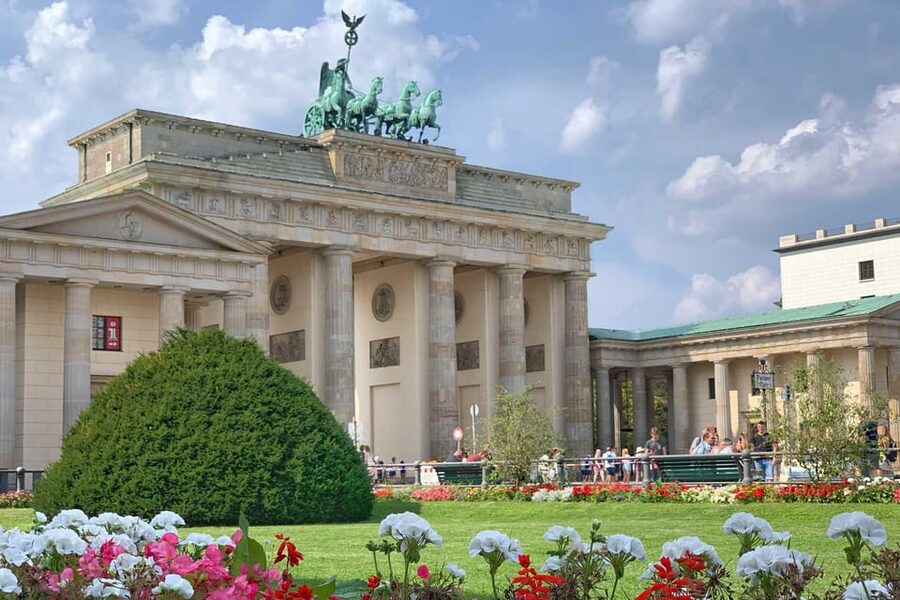
You kick things off near Pariser Platz, where the neoclassical architecture gives you a sense of how the city presents itself. Then you reach the Brandenburg Gate, one of those landmarks that everyone recognizes, even if they cannot place the full context. That is exactly why a guide helps here. The Gate can look like a simple monument, but it has repeatedly served as a symbol in shifting political eras.
What I like about this stop in particular is that the tour treats it as a starting point, not a finish line. You are not meant to stay only in “wow, it is big.” You are meant to connect it to what came after, especially the era of division and the eventual push toward unity. The guide’s framing helps you see the Gate as a marker in a longer story.
If you are the type of traveler who likes to understand the why behind the photo, this first segment is a solid win. You get your bearings fast, then the tour gets heavier.
Reichstag Area and the Politicians’ Memorial, Democracy Under Pressure
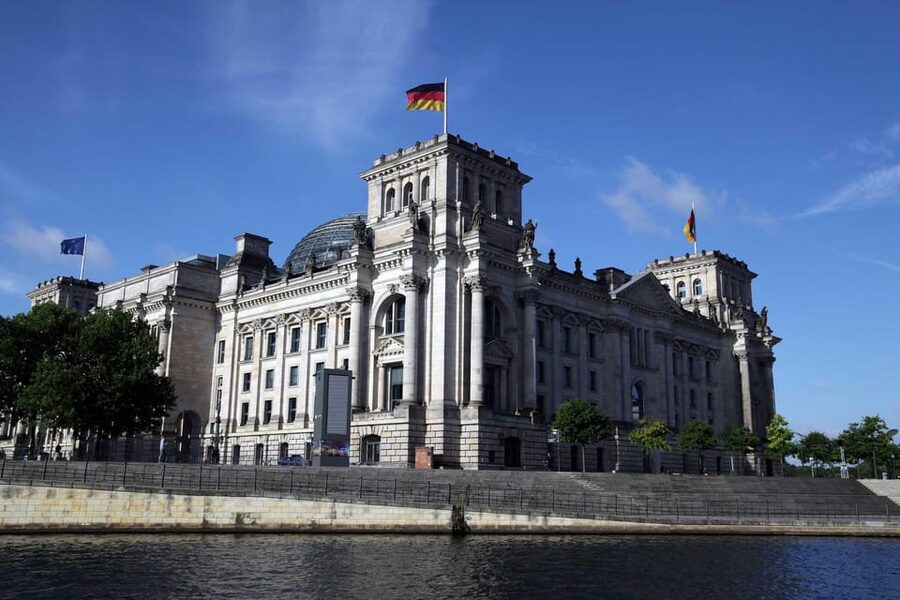
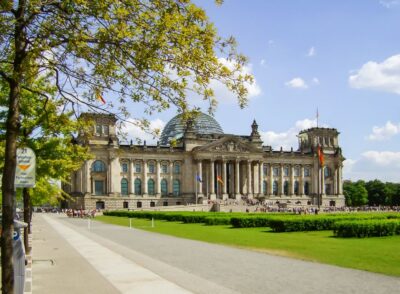
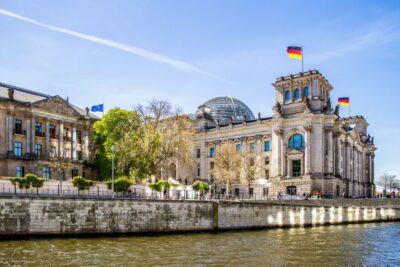
Next comes the Reichstag, Germany’s parliamentary building, and the tour uses it as a gateway into political history. From the outside, you may spot the grand form, but what makes this stop valuable is the explanation of how Germany’s political life has changed over time, from the Weimar era into the present day.
Right alongside, you also encounter the Politicians’ Memorial. This part matters because it moves the discussion beyond events and into people and choices. Political persecution is one of those topics that can feel abstract until you see it honored as a specific kind of loss. The memorial’s presence in this corridor of power makes the point that democracy has always had enemies, not just during one war or one decade.
The drawback to note: this is a stop you will feel more than you will “tour.” You are mostly observing from outside, and the meaning comes from the guide’s narration. If you like to read long plaques on your own, you might want extra time afterward. But as an express overview, it does the job.
WWII Memorial Stops That Demand Respect, Sinti and Roma, Soviet War Memorial, and More
A major reason people book this tour is the memorial emphasis. Berlin has many remembrance sites, but this route intentionally prioritizes WWII suffering and aftermath, with stops that are meant to slow you down.
One of the most important is the Sinti and Roma Memorial, a tribute to Sinti and Roma people who were murdered during the Holocaust. This is not a generic “war memorial” stop. The guide gives enough context to make sure you understand who was targeted and why remembrance matters. If you tend to focus only on the best-known Holocaust narratives, this stop is a needed corrective.
You then move into the Tiergarten area for the Soviet War Memorial. It is solemn, and it links directly to the Battle of Berlin and the soldiers who lost their lives. The tour treats this memorial as part of the same larger WWII aftermath story, not as a separate, disconnected chapter. For many visitors, that continuity is what makes the route feel coherent.
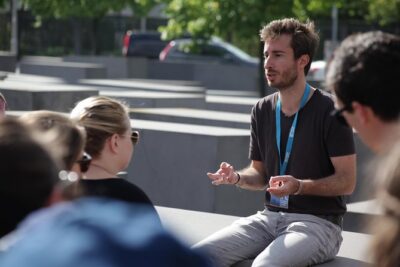
Then you reach the Memorial of the Murdered Jews of Europe. This installation can be hard to describe until you see it in person. The feeling comes from walking among the concrete slabs and realizing how the memorial’s layout creates an experience of scale and disorientation. The guide’s job here is to help you move through it with care, not rush, and not treat it as a quick photo stop.
Important tip for your mindset: these are thought-provoking memorials. Plan to slow your pace mentally, not just physically. If you are carrying fatigue or stress, this might not be the best first outing of the day. It is powerful, and power can be tiring.
Hitler’s Bunker Site and the Finance Ministry, Seeing the Past Beside Modern Berlin
After the major memorial sequence, the tour heads toward the site of Hitler’s Bunker. Even though you are not going underground, standing at the historic location helps you understand the closing days of the Third Reich and how events from that period shaped post-war Berlin. This stop can feel surreal because it is tied to real, specific choices that led to catastrophe.
One detail I appreciate about this stop on an express tour is how the guide keeps it grounded. You are not hunting for conspiracy theories or dramatic reenactments. Instead, you are being reminded that history is not only dates, it is decisions and consequences in real places.
You also pass the Finance Ministry, which offers a modern contrast within the same area. This kind of contrast is useful for travelers because it shows how Berlin has kept building while dealing with what came before. The city does not erase its history. It rearranges it in the streets you walk every day.
You will likely remember these transitions most: grief, then governance, then modern office walls, all in one connected route. It helps you understand why Berlin feels so layered.
Onward connections from Berlin:




Topography of Terror Wall Remnants and Checkpoint Charlie, From Division to Escape Stories
Cold War Berlin is often told as an idea, like a concept. This tour makes it physical.
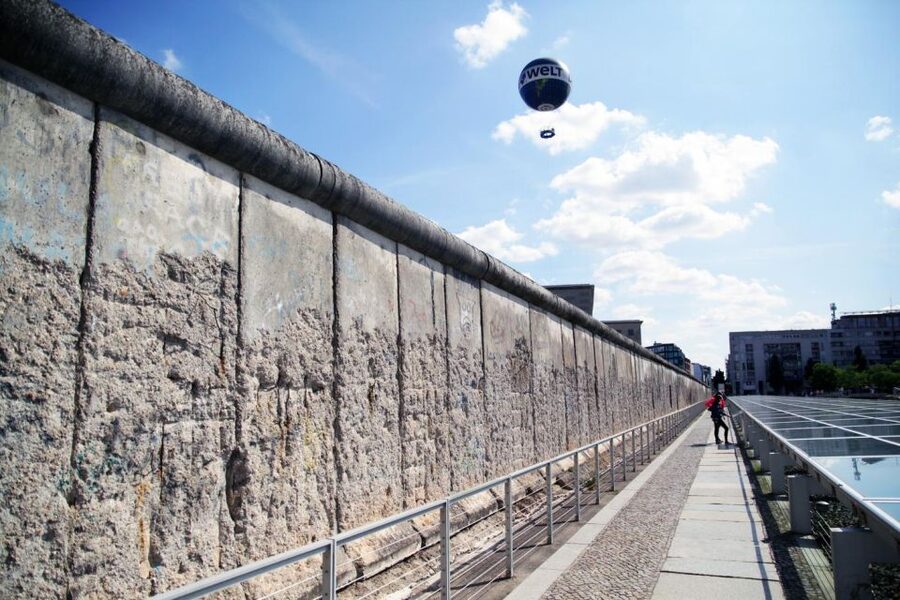
You walk to Wall remnants near the Topography of Terror area. The guide explains what you are looking at in terms of Berlin’s division during the Cold War. The emotional impact comes from the fact that the barrier was not just political. It shaped daily movement, families, and who could go where. Even if you already know the basics, seeing wall fragments in context helps it land differently.
Then you finish at Checkpoint Charlie. This is the place that most visitors recognize, and for good reason. It was a famous border crossing point during the Cold War, and it carries stories of espionage and escape attempts. The tour lands here as a natural ending, because it acts like a summary of the tension and human risk that surrounded the wall.
One practical note: Checkpoint Charlie is also a busy area. Since your tour ends there, you can either stick around for more time on your own or use it as a jumping-off point to head elsewhere in the city. If you want quieter reflection time, you may prefer to pace your final photos and not rush your exit.
The Guide Experience: Clear Explanations, No Building Rush

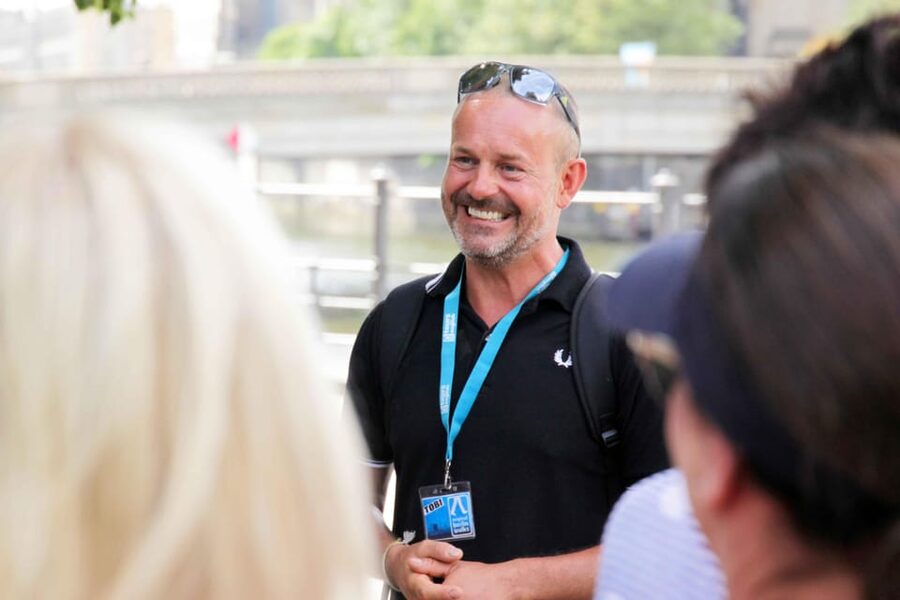
The biggest strength of this tour is how it balances walking with learning. You are not stuck with a nonstop lecture, and you are not left to figure everything out yourself. The tour uses an experienced academic guide speaking perfect English, and that matters because Berlin’s story has a lot of names and eras that can blur together if the narration is messy.
The tour also avoids a common pitfall of short tours: trying to cram in too much museum time. Since you do not enter any buildings, the focus stays on what you can see and understand immediately. That keeps the experience respectful and efficient, and it means you are not wasting your 2 hours in long interior lines or slow-moving exhibits.
If you want a simple measure of whether this is your kind of tour, think about this: do you like history that you can track street by street? If yes, you will probably appreciate this structure a lot. If you only love history when you can read every plaque for an hour, you might want a longer, site-entry-focused option instead.
Also, I noticed one guide name that has come up for this operator is Dylan. In past mentions, he is described as informative and good at answering questions, which is exactly what you want on a compressed route.
Price and Value: Why $23 Can Actually Make Sense
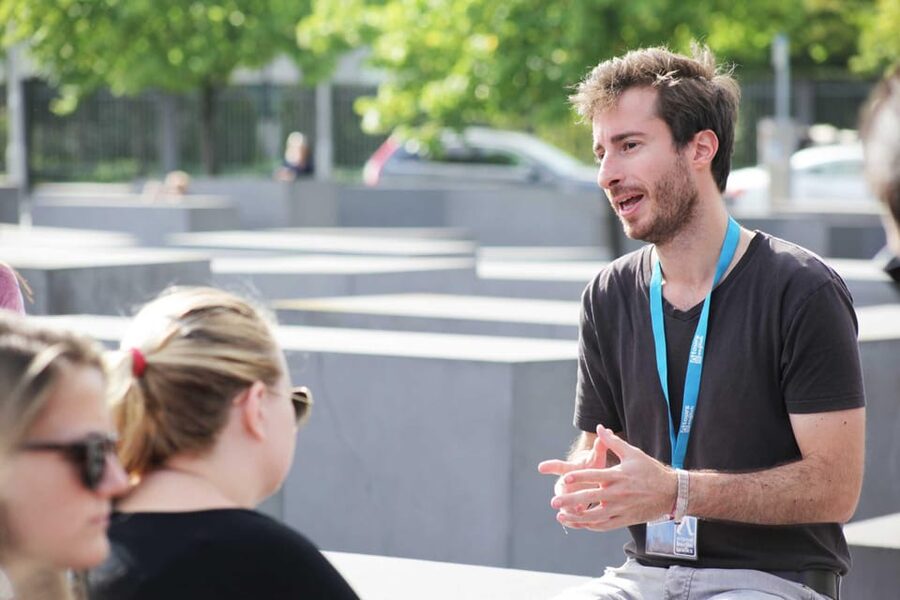
At about $23 per person for a 2-hour walk, this tour sits in the “value sweet spot” for Berlin. The price is not just for walking outdoors. You are paying for an expert academic guide who can connect the dots between major political landmarks and major memorial sites in a limited time window.
Here is the value logic I use:
- If you are already seeing Brandenburg Gate and the Reichstag area anyway, a guide helps you understand those stops beyond the obvious.
- If you are also including WWII remembrance sites, you probably would not want to do all of that without context. The guide provides the missing connective tissue.
- Since you are not entering buildings, your time is protected. You are not spending the session stuck waiting to get into one place.
So for solo travelers and couples who want a high-impact overview, $23 feels fair. It is a cost you can justify against the chance of missing the story while doing a self-guided loop.
Who This Tour Fits, and Who Might Want Something Else
This express tour is best for people who:
- Want a quick Berlin overview focused on WWII and the Cold War
- Prefer walking and explanation over long museum sessions
- Have limited time and want the essentials covered in one go
- Like when history is told clearly, not in scattered fragments
It may not be ideal if:
- You want to go inside major attractions during the tour
- You need very quiet time to process difficult memorials without a group pace
- You are hoping for a mostly light, scenic stroll
It also pairs well with your later planning. Many visitors use an overview like this to decide what deserves an afternoon return. If something hits you, you now know where to go next.
Quick Practical Tips Before You Go
To get the most out of the experience, I recommend these basics:
- Wear comfortable shoes, because it is a walking tour for 2 hours.
- Dress for weather, since you are mostly outside.
- If you use a wheelchair, you should be aware the tour is marked as wheelchair accessible and wheelchair friendly, but you will still want to dress and plan for outdoor walking conditions.
- Bring a small bottle of water if you tend to get thirsty while walking, especially on longer daylight days.
This is not a tour where you stop for long breaks at each stop. You are moving, listening, and looking.
Should You Book the Discover Berlin Express Tour?
Book it if you want a high-impact Berlin historical walking tour that prioritizes the big landmarks and the most important WWII and Cold War memorial themes, all in 2 hours. The value is strongest for time-crunched visitors who want a guided story that makes the sights make sense.
Skip it if your perfect Berlin day includes lots of interior visits, long museum time, or you want a lighter route. For that, you will likely prefer a longer tour with more site entry.
FAQ
How long is the Berlin highlights walking tour?
It lasts 2 hours.
Where does the tour start and end?
It starts at Pariser Platz and finishes at Checkpoint Charlie.
Are any buildings entered during the tour?
No. You do not enter any buildings during the tour.
What language is the guide?
The tour is guided in English.
What major sights does the route cover?
It includes Brandenburg Gate, the Reichstag area, the Berlin Wall remnants near Topography of Terror, and Checkpoint Charlie, along with several WWII memorial sites.
What should I bring for the tour?
Wear comfortable shoes and bring weather-appropriate clothing.
Is the tour wheelchair accessible, and what is the cancellation option?
The tour is wheelchair accessible and wheelchair friendly. Free cancellation is available up to 24 hours in advance for a full refund.
Fresh on the arrivals board for Berlin



Berlin Tours & Activities, compared.

Reichstag, Dome and Government District Guided Tour
Read our review →
1-Hour City Tour by Boat with Guaranteed Seating
Read our review →
Berlin City walk Government District and Places of Democracy
Read our review →