Reviewed · BERLIN TOURS & ACTIVITIES
Berlin: Karl-Marx-Allee Tour of Life and Architecture in GDR
Cold War architecture feels uncomfortably real here. This tour along Karl-Marx-Allee connects East Berlin building plans to the politics behind them, plus filming sites for The Lives of Others and The Queen’s Gambit.
What I love is how the socialist classicism housing blocks are shown at human scale, so grand ideas stop feeling abstract. I also like the way the story turns toward daily life, with details about the surveillance state, including wiretaps in flats and listening stations in attics.
One consideration: it is a 2-hour walking experience, and it is not designed for children under 10, so it works best when you can comfortably keep moving.
In This Review
- Key things to notice on this Karl-Marx-Allee walk
- A boulevard built to prove an ideology
- Meeting at Frankfurter Tor, then getting your bearings fast
- Karl-Marx-Allee and socialist classicism, built on confidence
- June 1953: when workers almost toppled the system
- Stasi surveillance is the quiet theme under the glamour
- Trees, disrepair, and gentrification after the Wall
- Spotting film locations, and why that helps you remember
- Price and value for a focused, story-led walk
- Who this tour suits best
- Should you book? My practical take
- FAQ
- Where do I meet the guide?
- How long is the tour?
- How much does it cost?
- What language is the tour offered in?
- Where does the tour end?
- Is the tour wheelchair accessible?
- What should I bring?
- Is it suitable for children?
- What is included with the ticket?
- Can I change plans if my schedule shifts?
Key things to notice on this Karl-Marx-Allee walk
- Start at U Frankfurter Tor and end at U Strausberger Platz, so you get a true linear feel for the boulevard
- Socialist classicism on parade-scale, built to project confidence in East Germany
- The 1953 uprising context, placed next to the very project that shaped the area
- How Stasi surveillance hid in everyday spaces, not just in police offices
- Tree-lined sightlines, including the idea of buildings being intentionally screened
- Film-location spotting, for The Lives of Others and The Queen’s Gambit
A boulevard built to prove an ideology
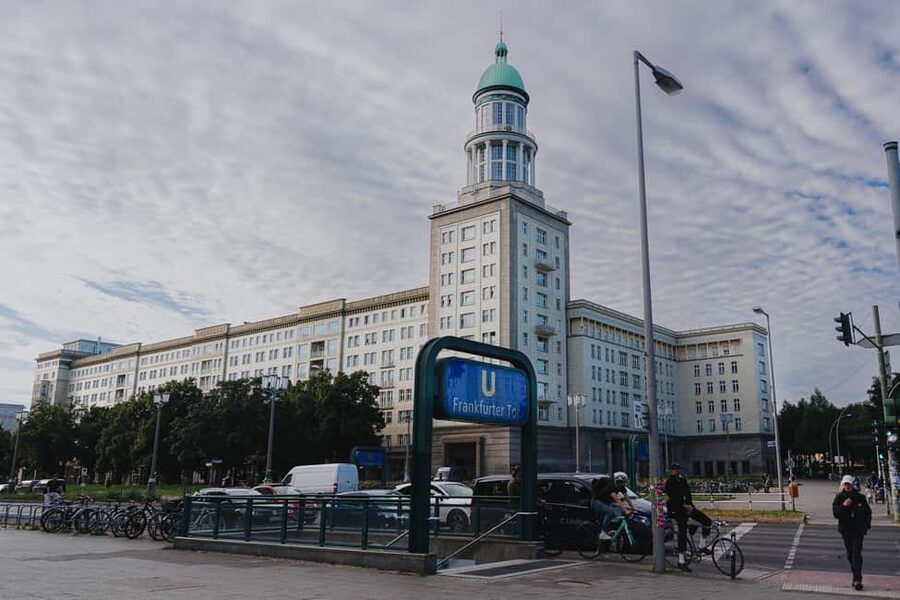
Karl-Marx-Allee is not just “pretty architecture” or a background for photos. It is a statement in stone and concrete, meant to show power, order, and a future that East Germany wanted people to believe in.
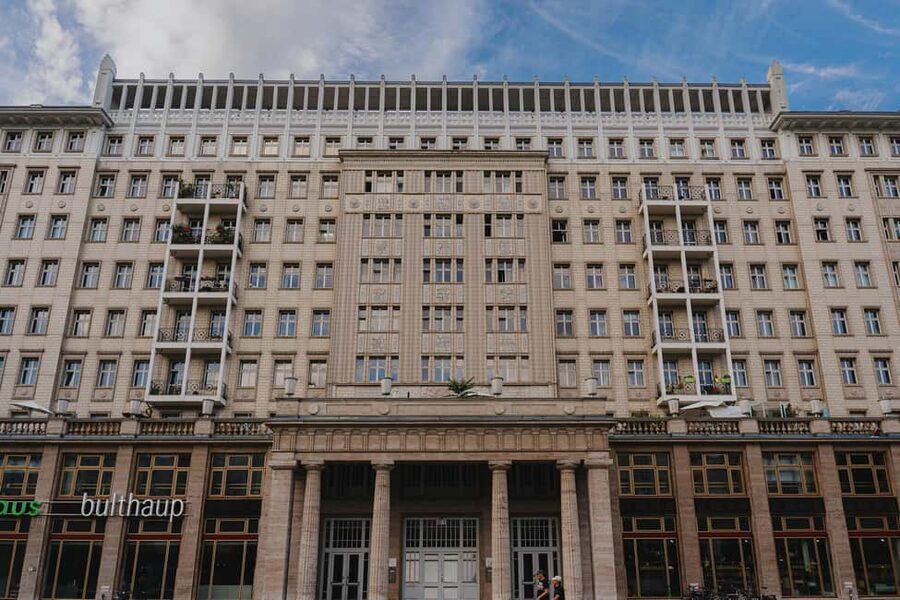
The core idea you will get from this tour is how Cold War ideology shaped the built environment. This street is often called the first socialist street in Germany, and that matters because it set a tone. The buildings you see were planned as the main project of East Germany’s national reconstruction after World War II, rising from the ruins with thousands of volunteers working day and night. When you walk past such grand housing blocks, it is hard not to feel small, not because the city is trying to intimidate you with size alone, but because the design tries to make politics feel inevitable.
And then the tour adds a second layer. You learn that the story did not end with impressive buildings. It bends into fear, control, and unrest, right where you are standing. That is what makes this experience more than a straight architecture walk.
Also holding a platform in Berlin
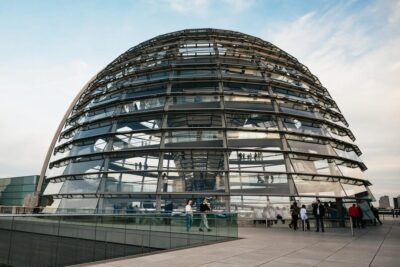
- Berlin: Reichstag, Dome and Government District Guided Tour
★ 4.7 · 18,288 reviews - Berlin: 1-Hour City Tour by Boat with Guaranteed Seating
★ 4.3 · 16,993 reviews - Berlin: TV Tower Standard Entrance Ticket
★ 4.4 · 15,883 reviews
Meeting at Frankfurter Tor, then getting your bearings fast
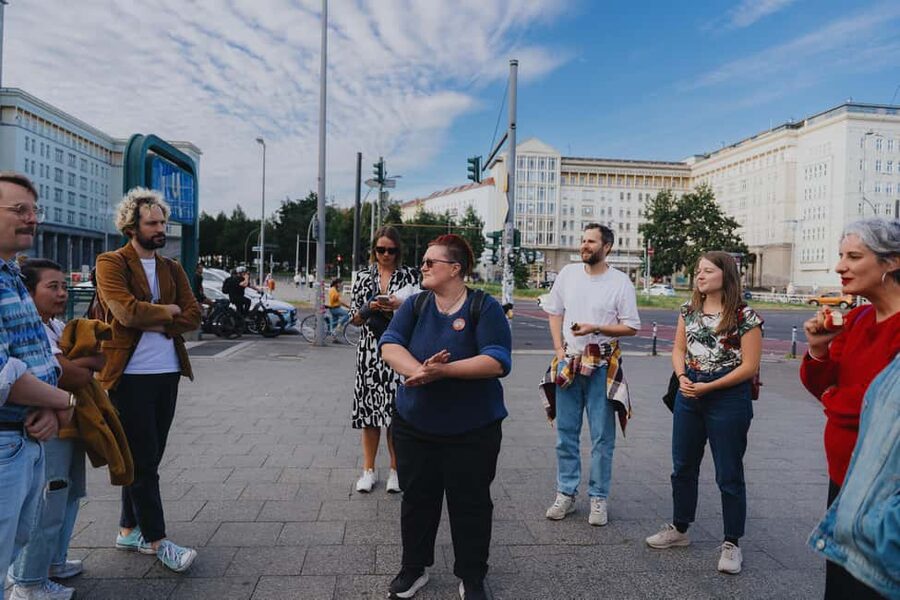
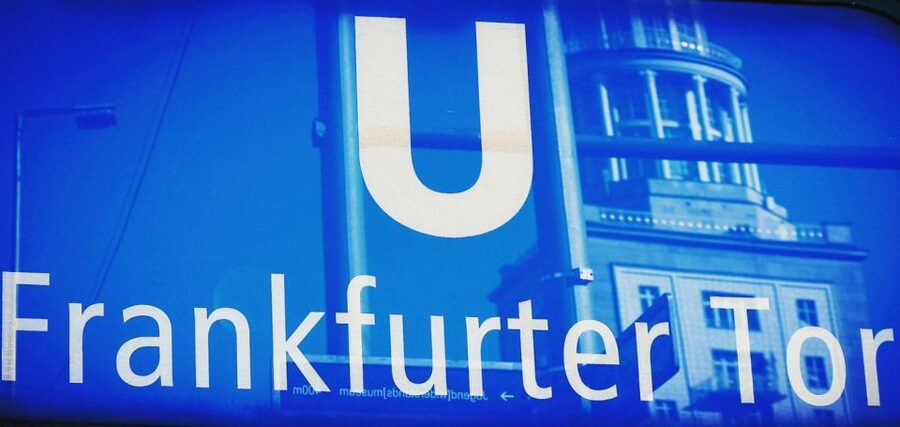
You meet outside the U Frankfurter Tor underground station by the southern tower, on the corner of Warschauer Straße and Karl-Marx-Allee. Your guide will be holding an orange umbrella, so it is easy to spot the start point.
Practically, plan for comfortable shoes. This is a two-hour tour, with a guided walk of about 1.5 hours centered on Karl-Marx-Allee. That rhythm is ideal if you like structured stories but do not want a full half-day commitment.
It is also useful to know the tour runs in English and German, with a live guide. If you prefer clear narrative and direct explanations, this format tends to work well. And if you use a wheelchair, the tour is listed as wheelchair accessible, so you should not have to guess about suitability.
Karl-Marx-Allee and socialist classicism, built on confidence
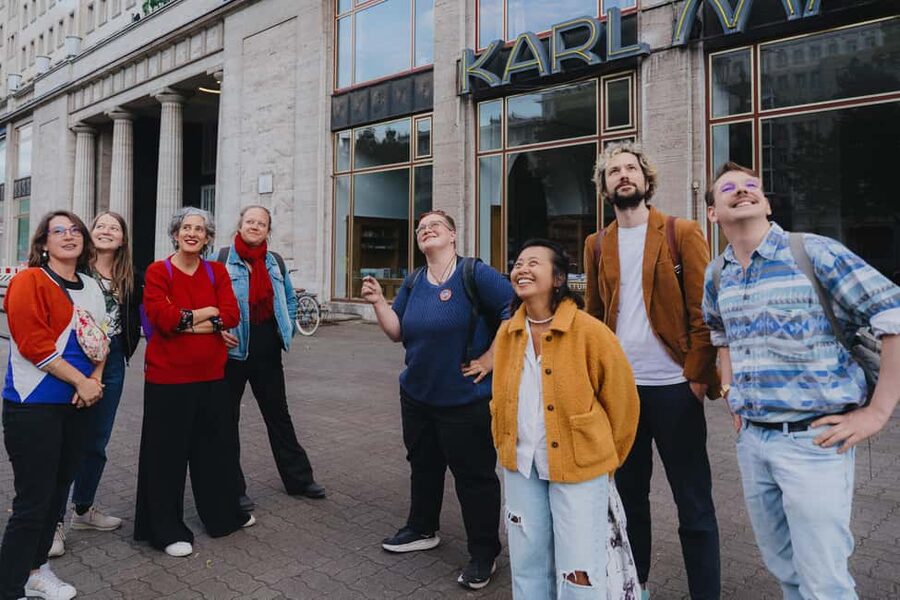
As you move along Karl-Marx-Allee, the biggest visual takeaway is how the architecture is trying to communicate confidence. The street is tied to socialist classicism, a style meant to look solid, formal, and “respectable.” In East Germany, that was not just an aesthetic choice. It was a public message about how the new society should look and operate.
The tour also gives you an angle that helps you see more than facades. The street’s history stretches back farther than the 1950s buildings make it seem. In the immediate post-World War II years, some of the area’s modernist architecture reflects utopian urban planning ideas born from the ashes of a destroyed Berlin. Then the East German regime rejected that direction and pushed a different idea of socialist living, reflected in what got built later.
One of the more memorable details you are likely to hear is how the buildings were later intentionally hidden from passersby by fast-growing poplar trees. That tells you a lot about what the authorities wanted people to see and what they wanted to keep at arm’s length. It is a reminder that urban design is not neutral. It can be about controlling attention as much as providing housing.
Also, you will get a sense that the boulevard projected a life people could envy. The street was designed to offer the best of East Berlin, including cafes, restaurants, and well-stocked shops. That blend of grand architecture and everyday conveniences is part of why the facade could feel convincing.
June 1953: when workers almost toppled the system
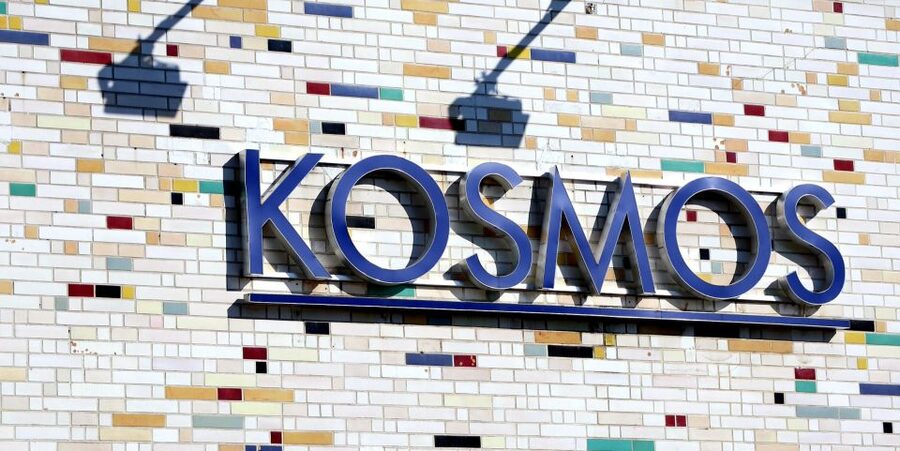
The tour links the street’s ambitious construction story to a turning point that East Germany could not control. In June 1953, disgruntled workers sparked a mass uprising that almost toppled the socialist government. When you connect that to the grand housing project rising from ruins, the contrast lands hard.
This part of the experience is valuable because it keeps you from treating the uprising as a separate “event from a textbook.” Instead, you understand it as part of the same environment: a society rebuilding under pressure, promising stability while living with strain. Even if you already know the broad outline, placing the uprising in the street’s story makes it feel immediate.
If you like political history that is anchored in place, this is the portion you will likely remember. The architecture stops being static. It becomes part of the pressure system people were living inside.
Stasi surveillance is the quiet theme under the glamour
Here is where the tour’s tone becomes more pointed. You are shown how the surveillance state stayed hidden behind the image of idyllic life and affluence in socialism.
The key idea you take away is not just that East Germany had a secret police force. You learn how suppression and monitoring could be built into ordinary apartments. The tour highlights wiretaps in flats and listening stations in attics used by the Stasi police. Those details matter because they suggest surveillance was not limited to public spaces or dramatic raids. It could be close, private, and ongoing.
What I find useful as a visitor is how the guide frames surveillance as a system of control rather than a few spooky scenes. Once you understand that, you start looking at everyday features with a different mindset. Even when you cannot confirm anything about specific buildings, the tour encourages you to connect the dots between architecture, privacy, and power.
And it helps explain why the street could look impressive while the reality underneath was harsh. Cafes and shops may signal normal life, but wiretaps and listening stations signal fear.
Onward connections from Berlin:

Trees, disrepair, and gentrification after the Wall
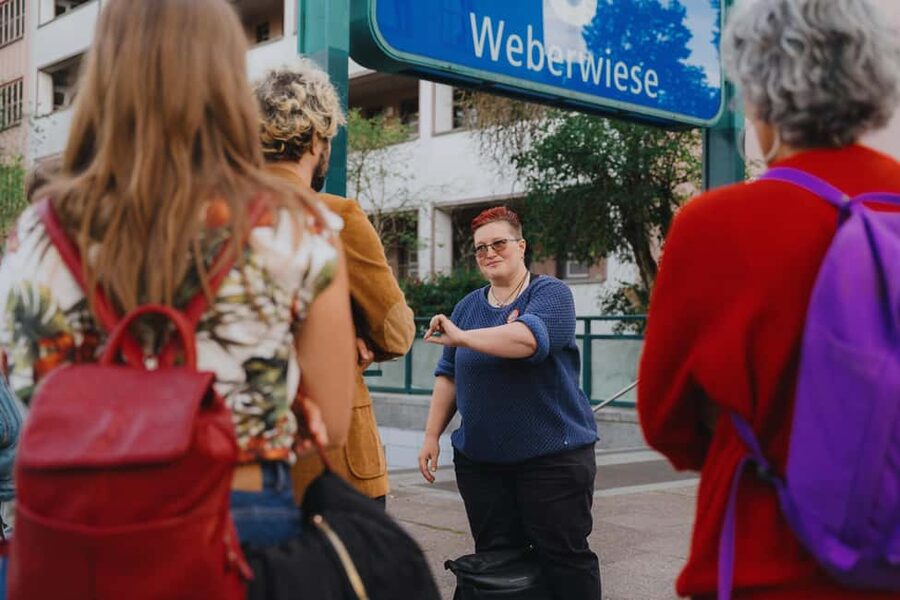
After the fall of the Wall, Karl-Marx-Allee did not neatly turn into a postcard. The street ended up in a kind of in-between phase. The tour describes it as left in a state of disrepair and increasingly looking like an odd curiosity from the past, as if the city had decided to move on without fully addressing what happened there.
But Berlin does not stay still. Attention returned quickly, especially once housing pressure intensified. Real estate agents showed up, and the boulevard began taking on new roles.
Today, it is no longer the stage for socialist parades. Instead, it has become a place where local community protests play out, including against gentrification and rising living costs. That modern layer is important because it keeps you from treating East Germany as sealed-off history. It also shows how architectural identity gets reused in new political fights.
When the tour ends, you will likely look at the street with two simultaneous thoughts. One, the building is a Cold War message. Two, the building still affects people now, because housing, money, and power are always part of the equation.
Spotting film locations, and why that helps you remember
If you watch Berlin-set films or miniseries, this walk offers a fun memory hook. The tour includes filming locations from The Lives of Others and The Queen’s Gambit.
Even if you are not a superfan, these references can help your brain store what you learn. Architecture facts can slide away. But when a street connects to a scene you have seen, the details stick. It is also a reminder that this city is not just “history.” It is still being used, filmed, and interpreted.
In practical terms, keep an eye out for the spots the guide points out along the route. You do not need to be a videographer. You just need to notice angles, building rhythm, and how the street holds that Cold War mood even today.
Price and value for a focused, story-led walk
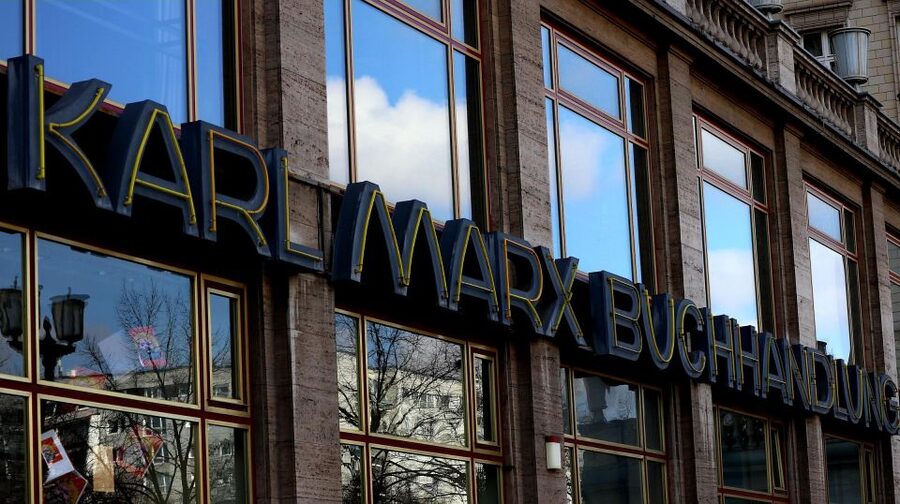
At $29 per person for about 2 hours with a live guide, this is a solid value if your goal is understanding, not just photos. The price is fair for what you get: architecture explained in context, key political events tied to specific places, and a clear thread connecting public presentation to private surveillance.
This tour is also efficient. You do not spend hours commuting across town or bouncing between unrelated stops. Instead, you get a concentrated story anchored along Karl-Marx-Allee, starting at U Frankfurter Tor and finishing at U Strausberger Platz.
A small note on fit: if you want a highly relaxed sightseeing stroll, you might find the themes intense. This is a tour about ideology, suppression, and control. It is balanced, but it is not sugarcoated.
Who this tour suits best

I think this tour is best for you if:
- You like architecture that comes with a political explanation, not just a style label
- You want the 1953 uprising and Stasi surveillance story connected to the physical city
- You enjoy film-location walks and want to see where stories were shot
- You have comfortable shoes and want a two-hour structured experience
It may be less ideal if you are traveling with very young kids, since it is not suitable for children under 10. And if you strongly dislike Cold War themes, you might prefer a lighter architecture walk elsewhere.
Should you book? My practical take
Yes, I would book this tour if you want a Berlin experience that feels specific and grounded. Karl-Marx-Allee can look like a single grand boulevard from afar, but the guided perspective turns it into a layered story: reconstruction ambition, ideological design, the near-collapse of the system in 1953, and the way surveillance hid behind everyday life.
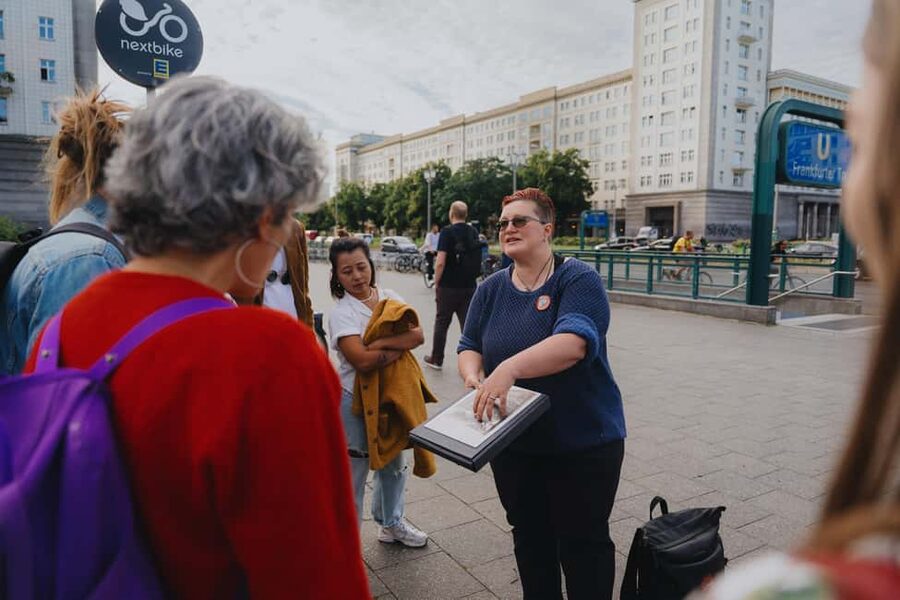
One last detail I like about the experience is the guide style. Guides here tend to tell the story like a narrative, and in the past, a guide named Martina has been highlighted for engaging with curious questions instead of just marching through a script. That kind of interactive storytelling makes the walk feel more personal, even though you are moving through an enormous, official-feeling street.
If you are short on time but want real substance, this is a smart choice.
FAQ
Where do I meet the guide?
Meet outside the U Frankfurter Tor underground station, by the southern tower, on the corner of Warschauer Straße and Karl-Marx-Allee. The guide will be holding an orange umbrella.
How long is the tour?
The tour lasts about 2 hours.
How much does it cost?
It costs $29 per person.
What language is the tour offered in?
The live guided tour is available in English and German.
Where does the tour end?
The tour finishes at U Strausberger Platz.
Is the tour wheelchair accessible?
Yes, the tour is listed as wheelchair accessible.
What should I bring?
Wear comfortable shoes for the walking portion.
Is it suitable for children?
It is not suitable for children under 10.
What is included with the ticket?
A live guide is included.
Can I change plans if my schedule shifts?
Free cancellation is offered up to 24 hours in advance for a full refund. You can also reserve now and pay later.
Fresh on the arrivals board for Berlin
Berlin Tours & Activities, compared.
Reichstag, Dome and Government District Guided Tour
Read our review →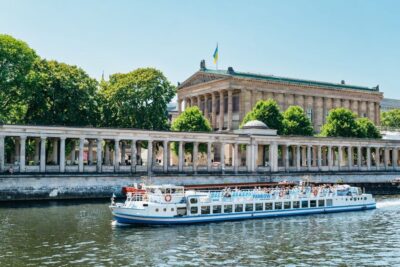
1-Hour City Tour by Boat with Guaranteed Seating
Read our review →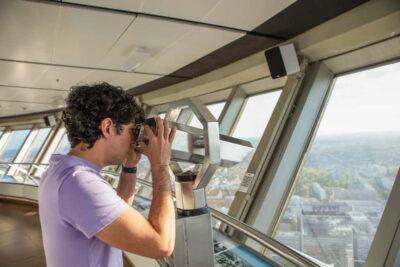
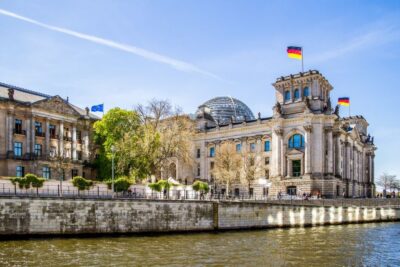

Berlin City walk Government District and Places of Democracy
Read our review →