
Reviewed · 1-DAY TOURS
Berlin in one day – day tour with an expert guide
Berlin can overwhelm fast.
This one-day walk gives you a clear, high-impact route through Mitte, Cold War landmarks, and major memorial sites without wasting time in vehicles. I like the way the guide keeps the story moving from one place to the next, and I like that the pacing still leaves room to actually understand what you are looking at.
One thing to consider: it is a tight 6-hour schedule packed with several major sights, so comfy shoes and a flexible attitude help a lot.
In This Review
- Key highlights at a glance
- One day, zero-transit walking: how the 6-hour plan works
- Mitte first: Brandenburg Gate, Checkpoint Charlie, and Berlin Wall memorials
- East Side Gallery to Museum Island: when art turns into evidence
- Reichstag and Topography of Terror: parliament, propaganda, and punishment
- Unter den Linden, ghost stations, and escape stories
- Humboldt University, Soviet War Memorial, and Cold War Berlin
- Remembering Europe’s murdered: why the route hits
- Price and logistics: is $294.72 worth it?
- Who should book this Berlin in one day walk
- Should you book Birchys Berlin Tours for a one-day Berlin reset?
- FAQ
- How long is the Berlin in one day tour?
- What is the price per person?
- What language is the tour offered in?
- Is transportation included?
- Where does the tour start, and do you return there?
- Is pickup available?
- Are admission tickets included?
- Is this tour private?
Key highlights at a glance
- A no-vehicle format means you stay focused on the sights, not traffic or transfers
- Expert English guiding that stays structured but responsive to your interests
- Wall-era stops plus major memorial context so you see the division and the cost
- Reichstag and Topography of Terror area for a powerful link between politics and persecution
- Convenient starting point in Mitte at Ebertstraße 24, with pickup on foot
One day, zero-transit walking: how the 6-hour plan works
This is a 6-hour, walking-first Berlin orientation with an expert local guide. The key idea is simple: you see a lot by keeping travel time out of the day. The tour is designed around central neighborhoods, and the route loops back to the start at Ebertstraße 24, so you do not feel like you are stranded across town.
You also get a practical rhythm. The stops are spaced so you can move from broad overview to specific landmark, then back to the bigger story again. That matters in Berlin, where signage, street layouts, and building reuses can make it easy to miss the point. With the guide, you start connecting what you see in the present to the political reality that shaped the city.
The experience is offered in English, and it runs as a private tour for your group. That usually helps with attention and pacing, and it also makes it easier to ask questions without feeling rushed.
Price is $294.72 per person, which is not cheap. The value comes from three things that are hard to replicate on your own: a local guide, an admission ticket included during the day, and the time savings from having a route already built for you.
Also holding a platform in Berlin
- Berlin: Reichstag, Dome and Government District Guided Tour
★ 4.7 · 18,288 reviews - Berlin: 1-Hour City Tour by Boat with Guaranteed Seating
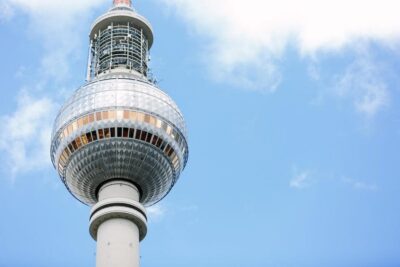
★ 4.3 · 16,993 reviews - Berlin: TV Tower Standard Entrance Ticket
★ 4.4 · 15,883 reviews
Mitte first: Brandenburg Gate, Checkpoint Charlie, and Berlin Wall memorials
Starting in Mitte is smart, because it is where many of Berlin’s most important layers overlap. You begin with the big “anchor” landmarks tied to both World Wars and the Battle of Berlin. That opening sets expectations fast, so later stops do not feel like random monuments.
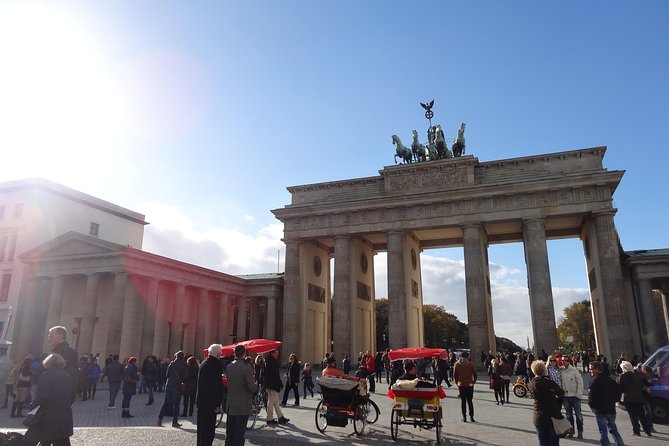
From there, you move into the Berlin Wall story through several high-recognition sites. The Brandenburg Gate is the kind of place where first-time photos are easy, but understanding is harder. With a guide, you get the political swing behind it, and you also get the “why it mattered” logic that connects it to other division-era landmarks.
Then you hit the Checkpoint Charlie and Berlin Wall memorial zone. This area can feel like a museum of itself from the outside, but you get a guided framework for it: what Checkpoint Charlie represented, how the city’s borders changed daily life, and how the Wall became a lived system, not just a wall you can point to.
A strong thing about this route is that it does not stop at the dramatic images. It keeps pulling you back to the day-to-day reality of separation. That focus makes the memorial stops more than sightseeing stops.
Practical note for your day: plan to slow down near the memorial areas. If you rush, you will miss the point of the explanations. This tour keeps moving, but it also gives you cues for what to pay attention to.
East Side Gallery to Museum Island: when art turns into evidence

After the Wall memorial focus, the route shifts to the East Side Gallery and the Museum Island area. This is where Berlin can surprise you: street-level art, river views, and iconic buildings can look like “just scenery” unless someone connects them to the historical function of the surrounding space.
You get the East Side Gallery as a visual language. Instead of only hearing about division, you see how people expressed politics and memory on concrete that was once part of a heavily controlled boundary. That is why this segment works so well on a time-crunch day. It gives you an emotional hook and then ties it back to the larger Wall narrative.
Museum Island is also a helpful pivot. Even if you are not doing full museum tickets, you get the sense of Berlin as a capital city that constantly reframed itself, especially during and after conflict. The guide’s framing helps you see how cultural identity and political power interacted.
If your priority is history with a human angle, this portion usually clicks. You are not just looking at famous names. You are seeing how meaning got painted, built, and preserved.
Reichstag and Topography of Terror: parliament, propaganda, and punishment
The Reichstag area is one of those stops where people often assume they already understand it. You see the building from a distance, you recognize the symbolism, and then you get the real value from a guided explanation that connects the architecture to the political upheaval around it.
Then you move into Topography of Terror. This is a place where context really changes what you take in. Without guidance, it is easy to see it as rows of information. With the guide, it becomes a map of how state power operated, how terror was organized, and how ideology became policy.
This pairing works because it links the “public face” of government with the darker mechanics that ran in the background. The tour structure keeps the tempo steady, so you are not stuck in one mood for too long. But the subject matter stays heavy, and the route makes space for that weight.
If you are sensitive to dark history, go in with expectations. This is not a cheerful stroll. It is also not random either. The way it is placed in the middle of the day helps you connect the earlier Wall and division themes to the later Cold War reality.
Unter den Linden, ghost stations, and escape stories
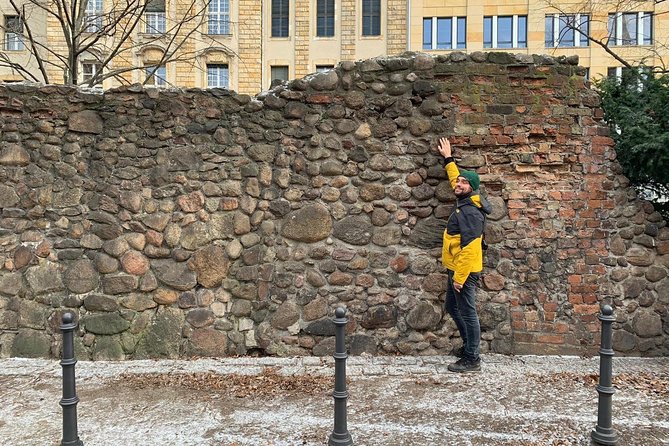
Then the tour shifts from landmark squares into the feeling of “corridors” through the city. Unter den Linden is the kind of avenue that makes Berlin look grand, but you get the point behind that grandness. The guide keeps tying the street to the politics and the travel routes people used, including how movement was controlled.
This is also where the tour leans into the more narrative side: watchtowers, ghost stations, and escape stories. You should expect the guide to focus on the details that explain how surveillance worked and how people tried to get around it. That is not just entertainment. It helps you understand why certain stations, platforms, and infrastructure became symbols.
Berlin has a talent for making infrastructure feel abstract. A ghost station can sound like a spooky concept until you learn what it meant for real people. The guided approach turns that into something specific and memorable.
One drawback here is that the stories are dense. If you want lots of quiet photo time, you might not get it in this segment. But if you care about “what it was like,” this is often the best part of the day.
Onward connections from Berlin:


Humboldt University, Soviet War Memorial, and Cold War Berlin
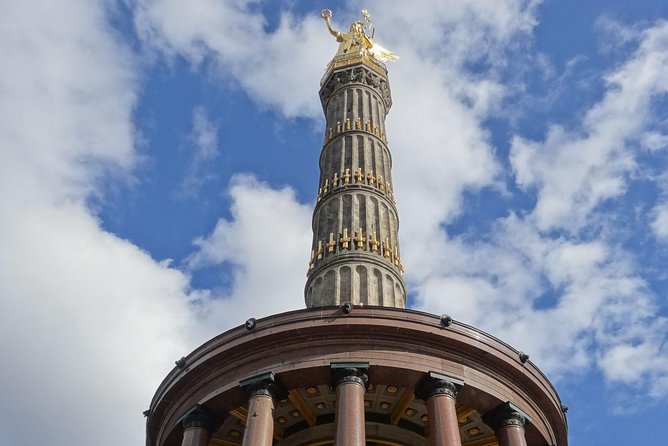
The middle-to-late portion of the tour brings in Humboldt University and the Soviet War Memorial. These are not just “pretty buildings and monuments.” They support the Cold War narrative by showing how different powers left their imprint on daily life and national memory.
Humboldt University gives you an intellectual frame. You can look at it and think, academia. The guide helps you understand how education and institutions fit into Berlin’s broader power struggle, especially as the city fractured.
The Soviet War Memorial is another point where guided context matters. It helps you understand how commemoration functioned politically, and why different sides remembered the war differently. This is where Berlin’s post-World War II identity becomes visible, not just in documents but in how monuments are placed and presented.
The tour then revisits the Wall theme with watchtowers and the broader divided Berlin story, East versus West. This repetition is intentional. You see the same theme through multiple lenses, and you walk away with a clearer mental map of what separation meant in practice.
If you like having a “big picture” by the end of the day, this section is what gets you there.
Remembering Europe’s murdered: why the route hits
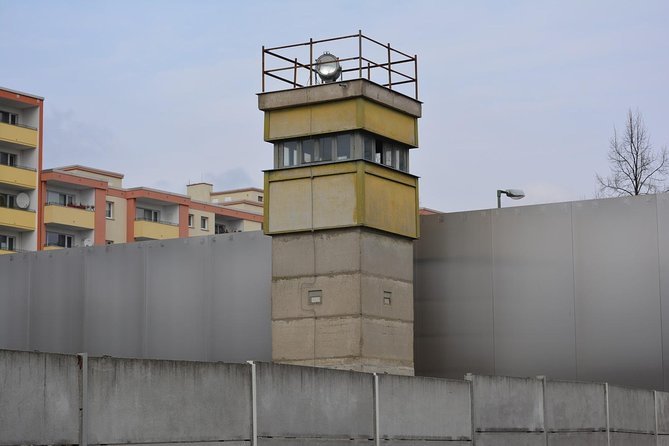
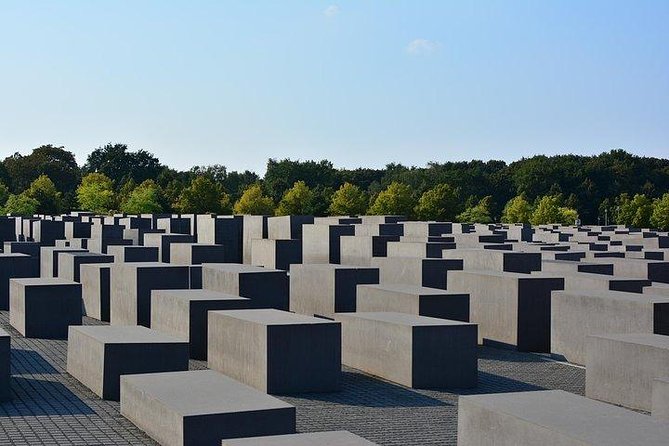
Several stops on this route connect Berlin’s twentieth-century tragedies to how the city remembers. That includes remembering Europe’s murdered as part of the overall story.
This part matters because Berlin’s history is not only about buildings. It is about people and what the systems did to them. A guided walkthrough helps you avoid a common problem in memorial areas, which is turning them into background scenery.
The tour’s value is that it does not treat memorials as an afterthought. They are woven into the narrative you are hearing from stop to stop. That keeps you grounded and stops the day from feeling like a checklist.
I will also say this: if you want your visit to be meaningful, give yourself a little quiet time during this segment. Even in a guided schedule, you can step back for a moment, read carefully, and let the explanations sink in.
Price and logistics: is $294.72 worth it?
At $294.72 per person for about 6 hours, this is a premium option. Here is what justifies the price based on what the tour includes:
- A local guide (not an auto-audio app) who can answer questions on the spot
- An admission ticket included during the day, which reduces the money and friction of planning
- A route built to cover major sights efficiently by walking only, with no private transportation used
- Mobile ticket access and group discounts
- Private tour format, so your group is the only one participating
What you should think about is your goal. If you want a self-guided day, Berlin is full of public transit routes and free viewpoints. But if you want the “why” behind landmarks and want to connect the Wall era to World War II and Cold War threads, the guide is doing real work.
Also, the tour comes with a helpful meeting structure. It starts at Ebertstraße 24, 10117 Berlin, and the guide picks you up on foot from your hotel lobby about 5 minutes before departure. It ends back at the same meeting point, which saves you from last-minute navigation stress.
One more small consideration: the tour is in English and most people can participate, and service animals are allowed. Still, because it is a walking tour with a full schedule, I would plan for a steady pace and bring water. If you are dealing with mobility limitations, you should check with the operator directly.
Who should book this Berlin in one day walk
This is a great choice if you want one day to function like a foundation. You will likely appreciate it if you:
- Want a structured route through major Berlin history sites
- Like learning through stories tied to specific places
- Prefer a private group setup for easier questions
- Are visiting for the first time and need a clear mental map fast
It might be less ideal if:
- You want a slow, open-ended stroll with lots of time in individual museums
- You get overwhelmed by heavy subject matter and would rather mix in lighter stops
- You plan to rely on long breaks and frequent rest stops
The guide quality is a big reason this tour is so highly rated. The experience is described as structured and fun, with a guide who makes sure nothing important is missed. Julian is specifically praised for knowing his stuff and adjusting the tour based on what people care about. That combination of structure plus responsiveness is exactly what you want in a compressed day.
Should you book Birchys Berlin Tours for a one-day Berlin reset?
Yes, if your goal is to get your bearings fast and understand what you are seeing. A well-built walk like this can save you from the most common first-timer mistake in Berlin, which is collecting photos without collecting meaning.
I would book it if you value an expert guide, you like a clear itinerary, and you are ready for an intense day that connects the Wall, the Reichstag area, and memorial themes into one continuous story. If that sounds like your kind of trip, Birchys Berlin Tours is a solid bet. Just do yourself a favor and wear comfortable shoes, because this is a lot to cover in 6 hours.
FAQ
How long is the Berlin in one day tour?
It runs for about 6 hours.
What is the price per person?
The price is $294.72 per person.
What language is the tour offered in?
The tour is offered in English.
Is transportation included?
No. The tour does not use any vehicles. It is a walking tour.
Where does the tour start, and do you return there?
It starts at Ebertstraße 24, 10117 Berlin, Germany, and it ends back at the same meeting point.
Is pickup available?
Yes. The guide will pick you up on foot from your hotel lobby about 5 minutes before the tour.
Are admission tickets included?
Yes. An admission ticket is included in the tour.
Is this tour private?
Yes. Only your group will participate.
Fresh on the arrivals board for Berlin
1-Day Tours, compared.
Neuschwanstein & Linderhof Castle Full-Day Trip
Read our review →
Munich Hop-On Hop-Off Tour: 1-Day or 2-Day Ticket
Read our review →
Salzburg Sightseeing Day Trip from Munich by Rail
Read our review →

Neuschwanstein Castle and Linderhof Palace Day Trip from Munich
Read our review →Browse the lists this tour appears in