Reviewed · BERLIN TOURS & ACTIVITIES
Berlin in a Day Compact Tour
Berlin in six hours, with a history guide. This private guided route is designed to help you connect the dots fast, from the Reichstag dome story to Cold War crossroads like Checkpoint Charlie. I particularly like that you get a human, story-led explanation at each stop, not just a photo lineup, and I also like the compact pacing that still leaves room to ask questions. One consideration: the time at each major site is short, so you should be ready for a brisk walk and quick stops.
You start at 10:00 am and spend about 6 hours covering big landmarks across both former East and West Berlin. The tour is offered in English, includes a professional private guide, and you can arrange hotel pickup if you share your address. You’ll also get a mobile ticket, and the route is near public transportation, which is handy if you want to hop back to your own schedule later.
In This Review
- Key Points That Make This Tour Worth It
- A 6-Hour Berlin Reset, Private and Focused
- Price and Logistics: What $482.52 Per Group Really Means
- Timing: The 10:00 am Start and the Pace Between Stops
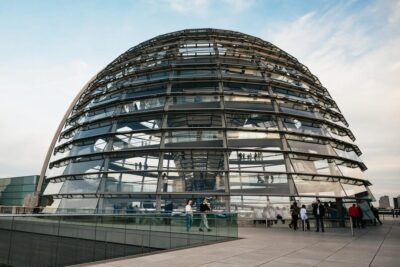
- Reichstag and the Glass Dome Symbolism
- Brandenburg Gate: A Cold War Icon Turned Unity Marker
- Holocaust Memorial: Quiet, Guided, and Not Just a Photo Stop
- Potsdamer Platz and the Sony Center: Berlin Rebuilt in Motion
- Checkpoint Charlie: Stories of Escape and the Tension of a Divided City
- Hackescher Markt: Courtyards, Galleries, and Urban Life
- The Berlin Wall Memorial: Division, Surveillance, and a Peaceful Fall
- Unter Den Linden: Reading the City’s Construction and War Scars
- Alexanderplatz: Socialist Architecture, TV Tower, and the City’s Shift
- Museum Island Finish: Berliner Dom and the Humboldt Forum
- Guides and Day Feel: What Makes the Experience Work
- Practical Tips So You Don’t Rush Your Own Learning
- Is This the Right Tour for You?
- Should You Book Berlin in a Day?
- FAQ
- What is the tour duration and start time?
- Is this tour private, and how big is the group?
- Is lunch included in the tour price?
- Is hotel pickup available, and do I get a ticket on my phone?
- Do the stops require paid admission?
- Can I cancel and get a full refund?
Key Points That Make This Tour Worth It
- Private group up to 8 means the pace and questions can stay personal, not canned.
- A straight-line history story links empire, dictatorship, and democracy at the Reichstag, then flows right into Cold War sites.
- Major memorials are treated with time to absorb, not just a quick photo stop.
- East and West in one loop, with places like Hackescher Markt, Alexanderplatz, and the Wall memorial.
- Museum Island is a smart finish, tying together Berlin’s public institutions and architecture.
- Admission is listed as free at most stops, so you’re not juggling extra tickets all day.
A 6-Hour Berlin Reset, Private and Focused
This is the kind of tour that helps you get your bearings fast. Instead of treating Berlin as a pile of attractions, the route gives you a storyline: how power changed, how neighbors became enemies, and how the city rebuilt itself after the Wall came down.
Because it’s private, I like that you’re not stuck listening to headphones while you wander. Your guide is there to point at the small details that make these places make sense, especially at the Reichstag and the memorial sites. It’s also practical: you get a full day’s worth of highlights without needing a full day’s energy.
Also holding a platform in Berlin
- Berlin: Reichstag, Dome and Government District Guided Tour
★ 4.7 · 18,288 reviews - Berlin: 1-Hour City Tour by Boat with Guaranteed Seating
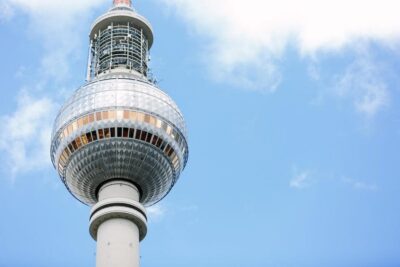
★ 4.3 · 16,993 reviews - Berlin: TV Tower Standard Entrance Ticket
★ 4.4 · 15,883 reviews
Price and Logistics: What $482.52 Per Group Really Means
The price is $482.52 per group for up to 8 people. If you fill all eight spots, that works out to about $60 per person for a private guide for roughly 6 hours. Even if you have fewer people, you’re still buying something that usually costs more once you factor in private guiding time.
What you get for that money is clear:
- a private, professional guide
- a mobile ticket
- an itinerary that moves across central Berlin highlights
- pickup offered if you provide your hotel details
Lunch is not included, but you can plan a break. For a compact tour like this, I recommend you treat food as a mini mission, not an afterthought. Berlin’s central areas are full of options, so it’s easier to fit lunch around your stops rather than waiting until you’re hungry and rushed.
Timing: The 10:00 am Start and the Pace Between Stops

The tour runs about 6 hours starting at 10:00 am. Each stop is timed tightly, generally in the 5 to 15 minute range. That doesn’t mean you’re pushed past the point of understanding. It does mean you should arrive ready to walk, take notes if you like, and accept that you’re learning the map, not memorizing every brick.
This is where having a good guide matters. The stops that need context the most, like the Holocaust Memorial and the Wall-related sites, benefit from explanations you might otherwise miss if you go on your own. Meanwhile, the more architectural or photo-forward stops still make sense because you get the “why it matters” behind the view.
Reichstag and the Glass Dome Symbolism
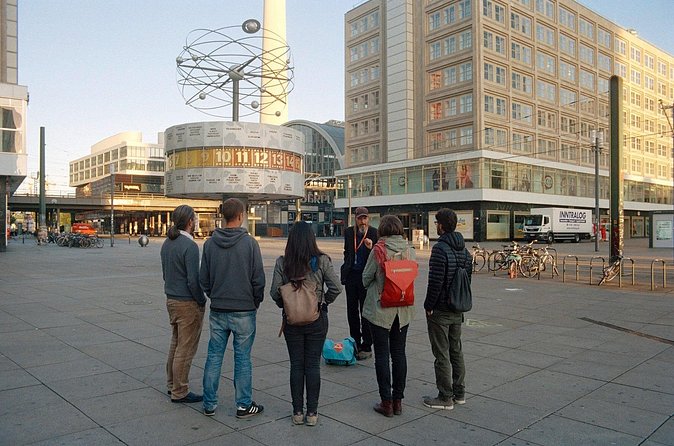
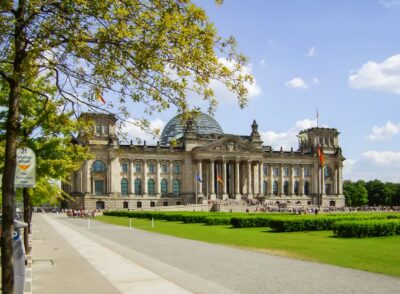
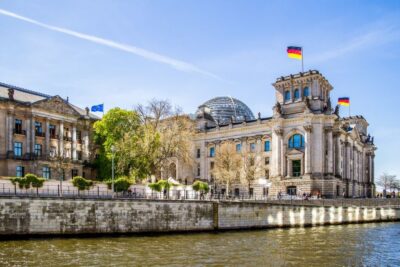
Your tour begins with the German Parliament seat, the Reichstag, and the guide focuses on how it reflects Berlin’s turbulent arc: empire to republic to dictatorship to democracy. You also get the symbolism behind its famous glass dome.
Even if you’re not the type who loves government buildings, this start works because it sets the emotional frame for everything that follows. Berlin’s story in a day can feel heavy, but beginning with a place that embodies political change gives the rest of the itinerary something solid to hang on.
Practical note: the Reichstag is also a good mental warm-up. Once you understand the idea of a building symbolizing political shifts, it’s easier to read the rest of the city’s landmarks as more than scenery.
Brandenburg Gate: A Cold War Icon Turned Unity Marker
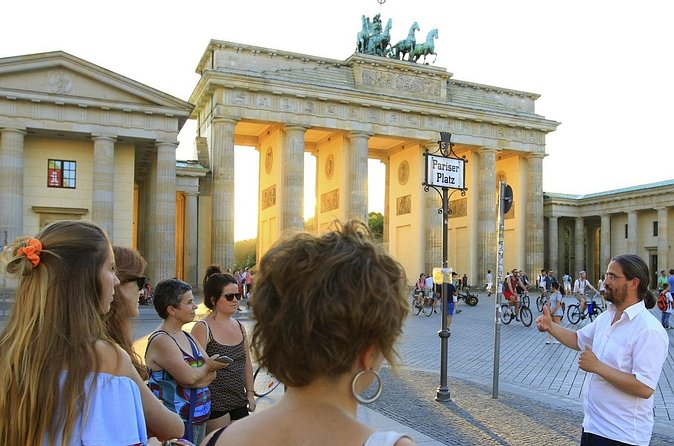
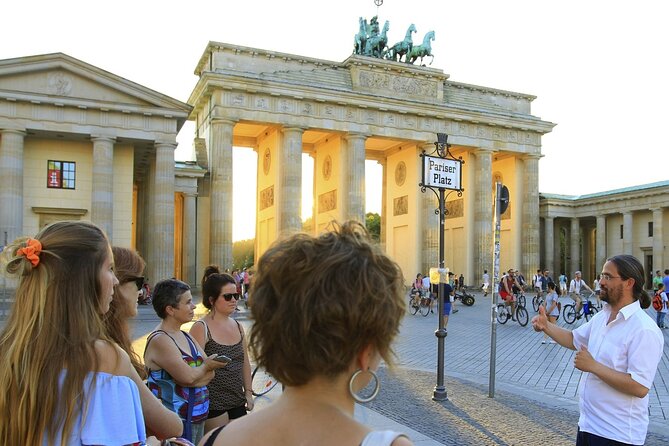
Next up is Brandenburg Gate, the most iconic gateway in Berlin. The guide explains its changing role, including how it once symbolized division during the Cold War and now represents unity and freedom.
This stop is short, but it’s worth treating as a reset moment in your day. You’ll be surrounded by a place that has been used for official symbolism for decades, and the guided framing helps you understand why that matters in Berlin, where memory is part of the streetscape.
Onward connections from Berlin:



Holocaust Memorial: Quiet, Guided, and Not Just a Photo Stop
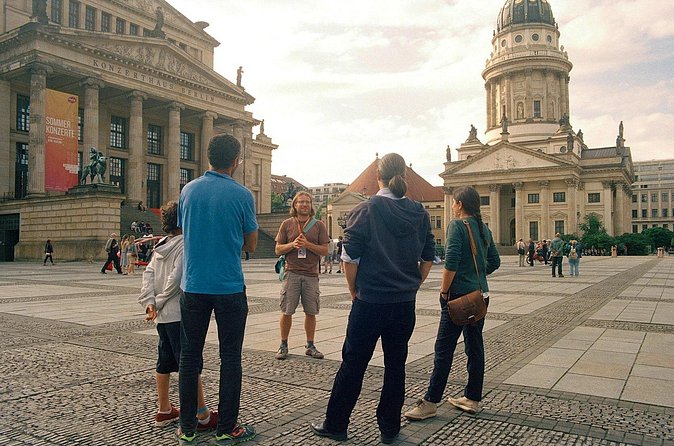
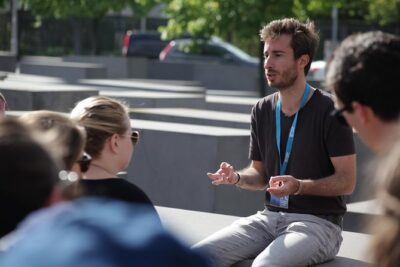
Then the tour heads to the Holocaust Memorial, Memorial to the Murdered Jews of Europe. This is described as a place that carries heavy emotion, and the guide tells stories connected to the memorial.
I like that the schedule gives you time to absorb, not just a brisk pass. Even with a set itinerary, stopping deliberately at a memorial works better than moving fast. The guide’s role here is important because you’re not just seeing shapes on the ground. You’re also learning what the memorial is intended to remember, including the statement that it marks the greatest crime committed by the German state in the time of Nazism.
Potsdamer Platz and the Sony Center: Berlin Rebuilt in Motion
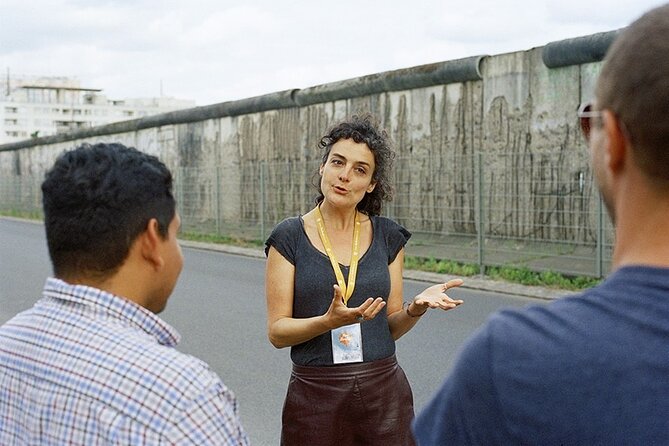
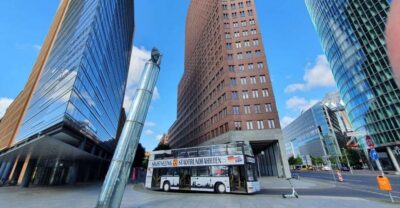
At Potsdamer Platz, the guide talks through a dramatic transformation: a 1920s entertainment hub became a Cold War no man’s land, and today it’s part of Berlin’s modern rebirth story.
You then get a quick look at the Sony Center, described as an architectural highlight of Potsdamer Platz and a symbol of Berlin’s reinvention after reunification. If you’re the type who likes your photos to come with context, this is a good segment. The buildings look striking, but the guide explains the bigger arc too.
One consideration: this part is visually fun, but it’s also moving from emotionally intense stops into more modern Berlin. If you’re sensitive to that contrast, pace yourself mentally. It’s normal for these days to swing tone from one minute to the next.
Checkpoint Charlie: Stories of Escape and the Tension of a Divided City
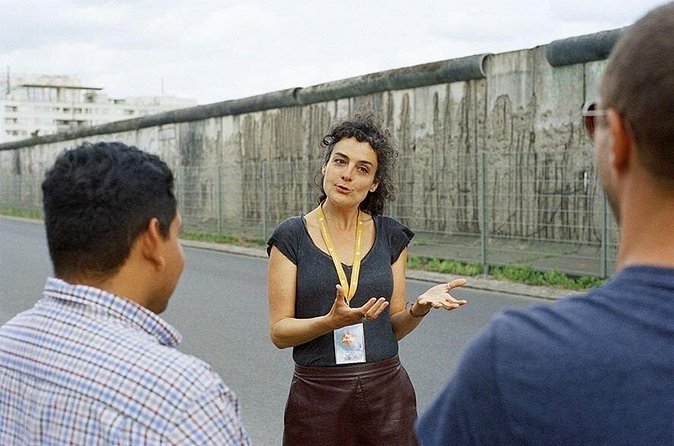
At Checkpoint Charlie, your guide shares dramatic escape stories and explains the tension that filled this Cold War site for decades.
I find this kind of stop works well on a guided tour because Checkpoint Charlie can be visually busy and a bit commercial if you only look at the surface. The guide’s emphasis on what the place meant, and why it was so tense, helps you understand why the city remembers it the way it does.
Hackescher Markt: Courtyards, Galleries, and Urban Life
The tour then heads to Hackescher Markt, a lively square in the former East Berlin known for its courtyards, galleries, and nightlife. The guide introduces how this area fits into Berlin’s cultural and urban transformation.
This is a nice change of pace after the Cold War stops. It’s still connected to the city’s larger story, but it lets you see Berlin as a place people live and wander, not only as a place history happened.
The Berlin Wall Memorial: Division, Surveillance, and a Peaceful Fall
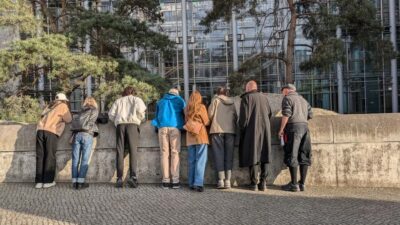
You’ll see a Memorial of the Berlin Wall with original remains and learn about:
- division of the city
- life under surveillance
- the peaceful revolution that led to its fall
Because this segment is one of the most emotionally charged in the entire day, the guided explanation matters. “Original remains” gives it weight, and the guide’s focus on daily life and surveillance adds depth beyond the general idea of the Wall.
I also like that the tour includes both the Wall memorial and other East and West landmarks. You get more than one angle, which helps you avoid thinking of the Wall as only a single location.
Unter Den Linden: Reading the City’s Construction and War Scars
Next comes a walk along Unter den Linden, once the access road to the emperor’s palace. The guide shows you how to recognize different periods of construction and also points out wounds left by the war.
Walking on an avenue like this can feel endless if you do it alone. With a guide, the walk becomes a guided “timeline.” You’re not just moving through space, you’re learning how the city’s layers show up in the built environment.
Alexanderplatz: Socialist Architecture, TV Tower, and the City’s Shift
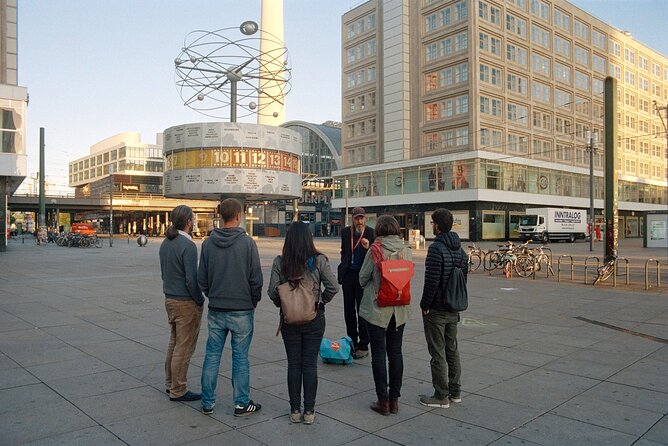
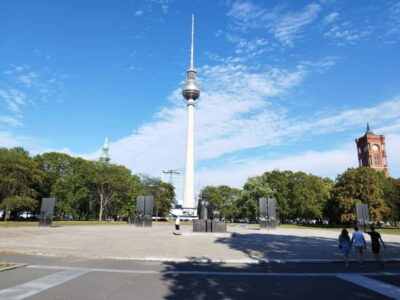
At Alexanderplatz, your guide explains its evolution from a medieval market to a socialist showpiece. The square is also described for its socialist architecture, the TV tower, and lively urban life.
This stop gives you a clear sense of East Berlin’s identity as something planned and built, not only something shaped by restriction. The guide’s narrative helps you see Alexanderplatz as part of Berlin’s long story of changing systems and public spaces.
Museum Island Finish: Berliner Dom and the Humboldt Forum
The tour concludes near Alexanderplatz on Museum Island, with stops focused on the Protestant Cathedral (Berliner Dom) and the reconstructed Humboldt Forum.
I like ending here because it shifts your brain from political and Cold War emotion into public architecture and institutional identity. Even if you don’t have time to go inside everything, you get a sense of Berlin’s cultural stage and what it chose to rebuild.
If you’re continuing your day or your next trip, this finish also makes sense geographically. You end near a major central area, which helps you decide what to do next without feeling stranded.
Guides and Day Feel: What Makes the Experience Work
One of the most praised parts of this tour is the guide’s ability to bring stops to life. In particular, Arthur is singled out for making the key sites, including the Brandenburg Gate and Museum Island area, feel vivid through stories and explanation.
I also like that guides are described as engaging and tuned into questions. If you’re the type who asks why something looks the way it does, or how one era leads to another, a private guide format is where you win.
And yes, this tour can work with families. One review highlights how the guide made the city’s complex history understandable for kids, including a 7 and 10-year-old. That doesn’t mean every guide will do it the exact same way, but it suggests the tour is structured well for turning big history into human-scale stories.
Practical Tips So You Don’t Rush Your Own Learning
A tour like this is built for a moderate physical level, but you’ll still do plenty of walking. Here’s what I’d do to make it feel smooth:
- Wear comfortable shoes and plan for standing time, even at the shorter stops.
- Bring a water bottle and something light to snack on, since lunch is not included.
- If you care about photos, prioritize the memorials and the “why it matters” stops over chasing every angle. The guide’s context will make your photos better later when you remember what you learned.
Also, if you use transit a lot, the “near public transportation” detail can be reassuring. You’re not locked into a remote location all day.
Is This the Right Tour for You?
This is a strong choice if:
- you have limited time and want a guided map of Berlin’s most important sites
- you prefer a story-led approach rather than reading alone
- you want a private experience for a small group up to 8
- you like moving through history in chronological chunks, empire to Cold War to reunification
It might be less ideal if you want long, unhurried time inside sites. The itinerary is intentionally compact, and many stops are only 5 to 15 minutes. If you’re the kind of traveler who likes to linger for an hour at each landmark, you’ll probably want a slower plan or follow-up time on your own later.
Should You Book Berlin in a Day?
If you’re visiting Berlin for a short stay and you want one day that gives you a clear story to build on, I think this is a smart booking. The itinerary is set up to help you connect the emotional weight of memorials with the political architecture of power, and then match that with Berlin’s modern rebuild and everyday city life.
Book it if you want efficient orientation plus guided context, and if you’re comfortable with a brisk but manageable pace. Pass if you want slow sightseeing where every stop turns into a half-day adventure. Otherwise, this is a good way to get your Berlin footing quickly, and then choose what to explore in depth after.
FAQ
What is the tour duration and start time?
The Berlin in a Day compact tour lasts about 6 hours and starts at 10:00 am.
Is this tour private, and how big is the group?
Yes, it is private. The group size is up to 8 people, and only your group participates.
Is lunch included in the tour price?
Lunch is not included. A lunch break can be planned.
Is hotel pickup available, and do I get a ticket on my phone?
Pickup is offered if you share your hotel name and address. You also receive a mobile ticket.
Do the stops require paid admission?
For several stops, the itinerary lists admission ticket free, including Brandenburg Gate, the Holocaust Memorial, Potsdamer Platz, Sony Center, Checkpoint Charlie, Hackescher Markt, the Berlin Wall memorial, Unter den Linden, Alexanderplatz, and Museum Island. The provided info does not specify admission details for the Reichstag stop.
Can I cancel and get a full refund?
Yes, you can cancel for a full refund if you cancel at least 24 hours before the experience’s start time. If you cancel less than 24 hours before, the amount paid will not be refunded.
Fresh on the arrivals board for Berlin
Berlin Tours & Activities, compared.
Reichstag, Dome and Government District Guided Tour
Read our review →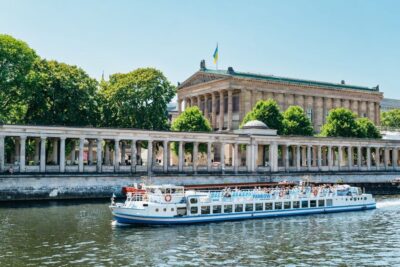
1-Hour City Tour by Boat with Guaranteed Seating
Read our review →
Berlin City walk Government District and Places of Democracy
Read our review →