Reviewed · TICKETS
Berlin: Deutsches Technikmuseum Entry Ticket
Berlin’s tech museum makes history feel physical.
The Deutsches Technikmuseum is a big, hands-on day in Germany’s aviation, railways, and seafaring storylines, plus a Science Center Spectrum jump next door. The setting helps too, with a museum layout spread across 28,500 square meters, so you can pace yourself instead of feeling crammed.
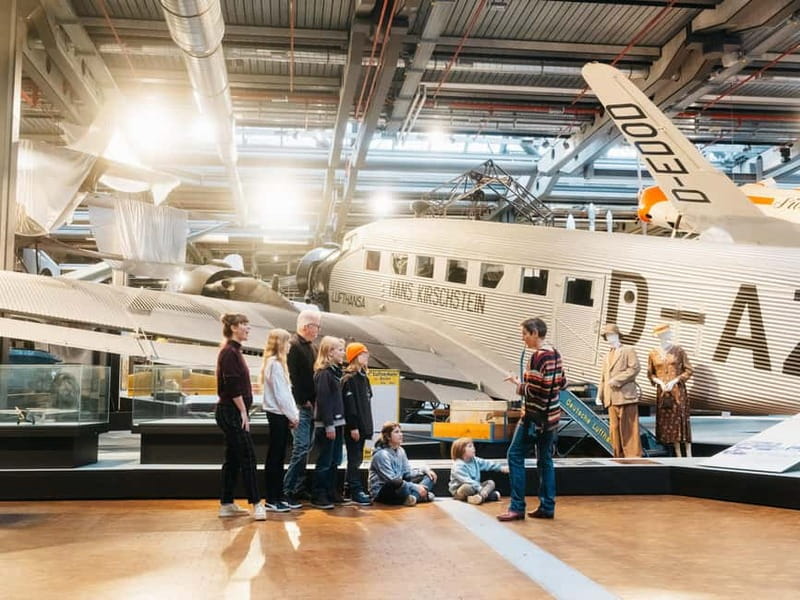
I really like how the museum gives you clear visual anchors, like the Candy Bomber on the roof tied to the Berlin Airlift, and then backs those up with actual machines and timelines. I also love the variety: 40 airplanes alongside a strong railway collection, plus ships and nautical instruments, so you are not stuck in just one nerd lane.
One consideration: if you plan to use Spectrum during your visit, note the Spectrum elevator is out of service until the end of January 2026, and Spectrum is unfortunately not accessible from the 1st floor during repairs. That can matter a lot for anyone planning the day around mobility needs.
In This Review
- Key takeaways before you go
- Deutsches Technikmuseum and Spectrum: the day plan that actually works
- Where to start: aviation, railways, and seafaring without feeling lost
- German aviation, from pioneering days to hard lows
- Railways that feel like a timeline you can walk through
- Seafaring history with ships and nautical instruments
- The Candy Bomber and the museum’s Berlin Airlift connection
- Zuse and the idea of technical networking over 200 years
- Live demonstrations that show how old technology actually worked
- Museum park breaks: windmill, forge, pond, and space to breathe
- Science Center Spectrum next door: more than 150 hands-on experiments
- The Spectrum accessibility catch you should plan around
- Price and value: why $14 can feel like more than one attraction
- How long should you budget for this Berlin tech day?
- Who should book: the smartest match for your interests
- What to know before you go (so your day runs smoother)
- Should you book the Deutsches Technikmuseum and Spectrum ticket?
- FAQ
- How long is the Deutsches Technikmuseum and Spectrum ticket valid for?
- What’s included with this ticket?
- How much does it cost?
- Can I skip the ticket line?
- Is it wheelchair accessible?
- Are pets allowed inside?
- Is flash photography permitted?
- Is Spectrum fully accessible during the elevator repair period?
- Can I cancel if my plans change?
- Is the ticket tied to a specific start time?
- Who should consider the student ticket option?
Key takeaways before you go
- Plan for a full day: there’s enough to read and enough to look at that you will want time buffers.
- 40 airplanes plus big transport exhibits: aviation, rail, and ships are presented as connected stories, not isolated displays.
- The Candy Bomber is your skyline landmark: it helps you orient fast when you arrive.
- Hands-on at Spectrum: more than 150 experiments add a playful second layer to the day.
- Live tech demonstrations: printing, papermaking, and blacksmith work bring old processes to life.
- Accessibility check is crucial: Spectrum access is limited while the elevator is under repair until end of January 2026.
Deutsches Technikmuseum and Spectrum: the day plan that actually works
If you want a Berlin day that feels different from museums that are mostly rooms and paintings, this is a strong pick. The Deutsches Technikmuseum is built around technology you can see, touch with your eyes, and compare across eras. Then Spectrum extends the experience into hands-on science, so your brain switches from “history mode” to “try-it mode” without leaving the area.
Your ticket is for one day, and it includes entry to both the Deutsches Technikmuseum and the Science Center Spectrum on the booked date. That matters because you can treat this like two linked chapters: mechanical transport and industry in the museum, followed by more experimental science at Spectrum.
My biggest practical advice is to plan your day around your energy level, not around a strict checklist. Some sections naturally invite longer stops because they combine artifacts with explanation. Other areas are faster to scan if you are short on time. Either way, the overall scale helps. Even if you do not do every corner, you are still likely to come away with a strong sense of how technology evolved and how it shaped everyday life.
Also holding a platform in Berlin
- Berlin: Reichstag, Dome and Government District Guided Tour
★ 4.7 · 18,288 reviews - Berlin: 1-Hour City Tour by Boat with Guaranteed Seating
★ 4.3 · 16,993 reviews - Berlin: TV Tower Standard Entrance Ticket
★ 4.4 · 15,883 reviews
Where to start: aviation, railways, and seafaring without feeling lost
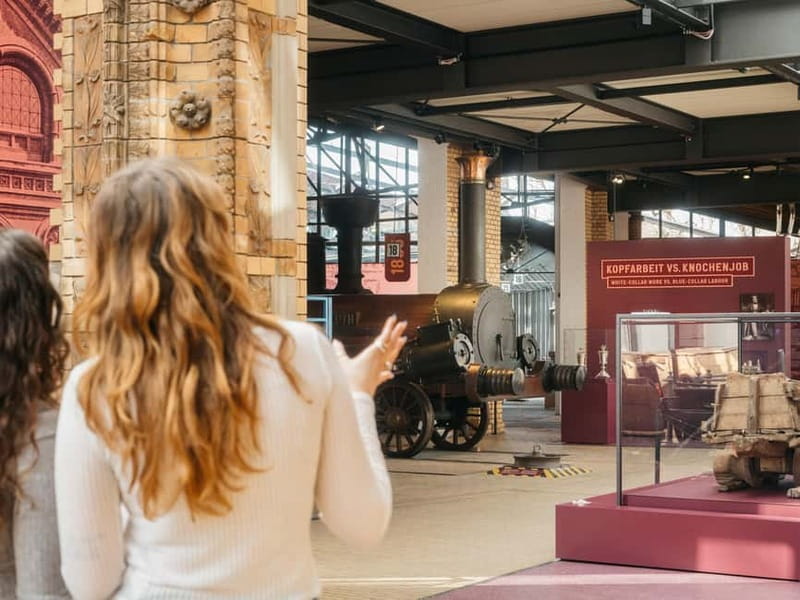
The museum organizes technology into big themes, and you will feel that as you move through the galleries. You are looking at major transport categories, each with its own timeline flavor, and each one gives you a different lens on invention.
German aviation, from pioneering days to hard lows
A standout is the museum’s aviation section, built around 40 airplanes tracing aviation’s path over time. The way this is framed is useful: you are not just learning what existed, you are seeing how aircraft development responded to changing needs and pressures. That makes the section more than a lineup of old models.
If you like aviation, give yourself extra time here. This is where you will likely find yourself pausing to compare aircraft designs and reading more than you planned. If you do not love airplanes, you can still benefit because this section anchors the broader museum theme: technology keeps moving, and the reasons behind it matter.
Railways that feel like a timeline you can walk through
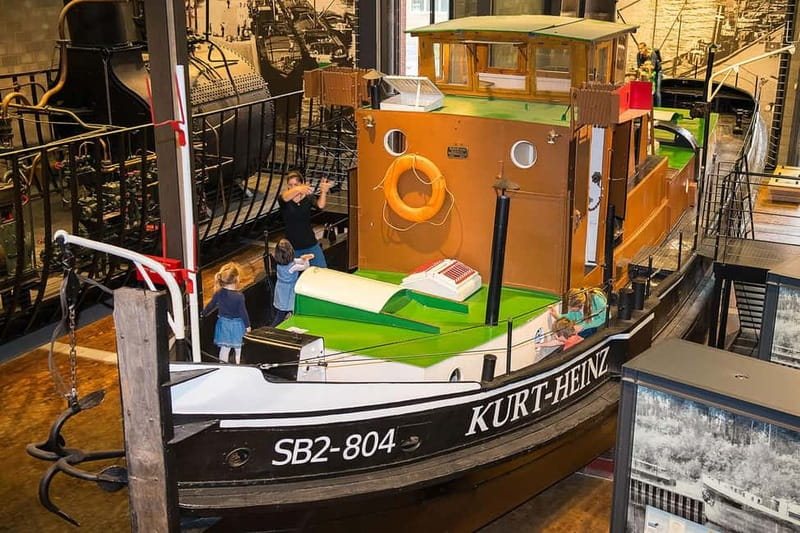
Another big draw is the museum’s railway story. It features an impressive collection of trains, and the practical value here is that rail is easier to visualize as a system. You start connecting how engineering choices affected speed, logistics, and daily life.
Even if you are not a train person, railways help you understand why technical networking became so important over time. The exhibits are set up so you can spot the human side of engineering, the need to connect places efficiently and reliably.
Seafaring history with ships and nautical instruments
The museum also covers seafaring, with ships and nautical instruments. I like this theme because it adds a different kind of constraint: not just building something, but building something that works on water. The nautical instruments give you a clue about how people navigated before digital systems. That contrast makes the bigger story click.
If you have limited time, you can still get value from seafaring by focusing on the instruments and asking yourself what they were for. That turns “objects in a room” into “tools for a job.”
Onward connections from Berlin:



The Candy Bomber and the museum’s Berlin Airlift connection
One of the fastest ways to orient at this museum is the Candy Bomber on the roof. It is a visible landmark across Berlin, and that does two things for you. First, it makes the museum easier to find, even if you are walking around the Kreuzberg area. Second, it signals what you are getting: real technology tied to a real historical moment.
This matters because the Berlin Airlift connection gives the aviation story emotional weight without requiring you to be a specialist. You will see how an aircraft could become part of survival and supply when ground routes were impossible. That framing is a helpful bridge between engineering and human outcomes.
Zuse and the idea of technical networking over 200 years
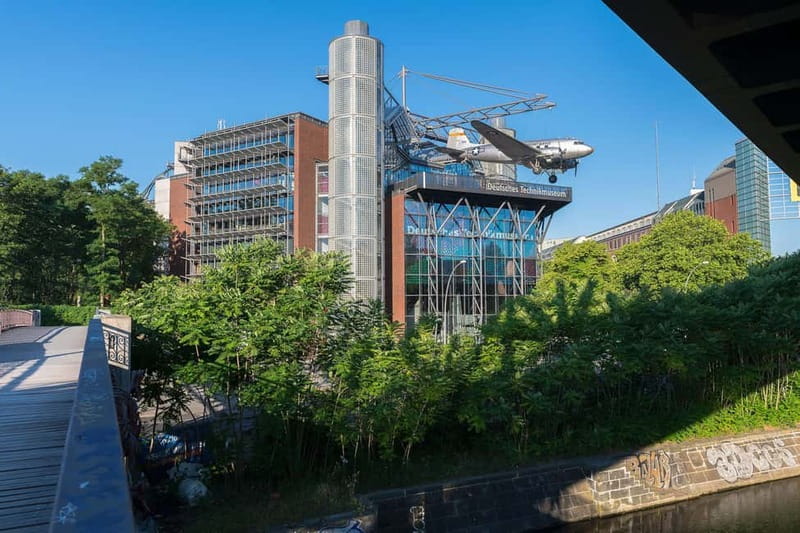
The museum is not only about machines. It is also about systems, communication, and the idea that technical progress feeds on connection.
A key highlight is an interactive exhibition tracing 200 years of technical networking. That might sound abstract, but it is actually practical. When you understand networking as a concept, rail, aviation, ship routes, and even industrial processes start to feel like different expressions of the same need: share information, coordinate action, and reduce uncertainty.
Another must-see for tech fans is Zuse, described as the world’s first computer. You may not need deep computer history to enjoy this. The value here is perspective. Seeing early computing beside other engineering milestones helps you realize that “modern tech” has roots in older problem-solving. You get the line from physical engineering to information handling.
If you want to make this section work for you, do not rush past it. Spend long enough to read the explanations tied to the interactive elements. The payoff is a clearer sense of how ideas traveled and evolved.
Live demonstrations that show how old technology actually worked

A museum with only static displays can feel like a graveyard of inventions. What helps here is that the museum brings older technology to life with demonstrators.
You can see processes such as printing, papermaking, and blacksmith work. These are perfect demo topics because you understand the result instantly, even if you have never made it yourself. Watching hands at work adds context to the history. It turns “industrial process” into something with rhythm, steps, and constraints.
Practical tip: keep your demo schedule flexible. Live demonstrations can become your natural rest breaks too. Instead of forcing yourself to stay in galleries the entire day, you can let the demonstrations reset your attention and keep you engaged.
Museum park breaks: windmill, forge, pond, and space to breathe
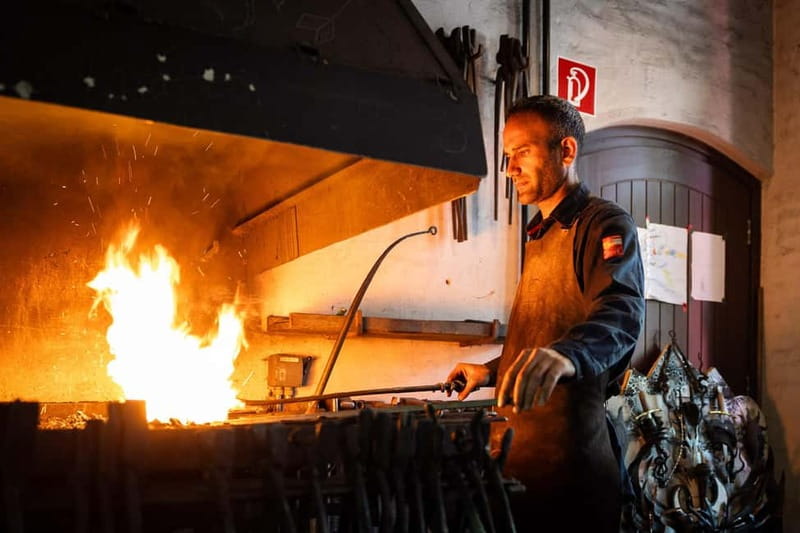
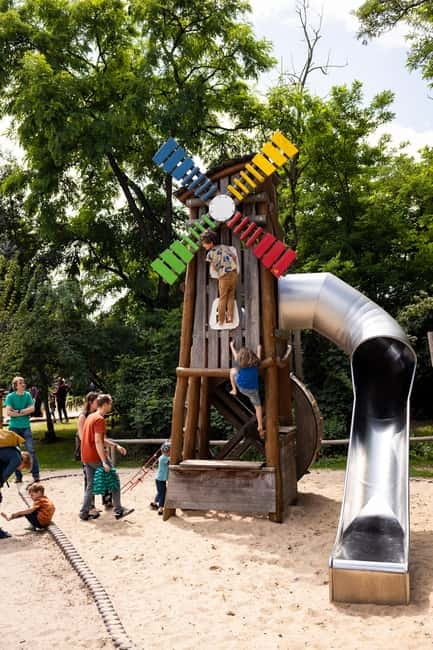
You are not trapped indoors all day. The museum park offers open-air breathing room in the heart of Berlin Kreuzberg, including a windmill, blacksmith’s forge, a pond, and green spaces.
I like park time here because it gives your eyes a change of pace. After long indoor exhibitions full of metal, diagrams, and glass cases, you will appreciate a slower walk and a moment to regroup. This also helps families. Kids can stretch out, and adults can reflect without feeling guilty about skipping one more room.
If blacksmith work is a demo focus during your visit, the park layout makes it easier to connect what you saw indoors with what you see outdoors. That reinforcement is the quiet value of having this kind of extension space.
Science Center Spectrum next door: more than 150 hands-on experiments
After the Technikmuseum, Spectrum is where you switch gears. Your ticket includes Science Center Spectrum, and Spectrum’s big promise is simple: more than 150 hands-on experiments.
This is the best part of the “included” value. If you are visiting mainly for the museum collection, Spectrum can feel like a bonus. If you are visiting with kids, Spectrum may end up being the highlight. Either way, it balances the day nicely.
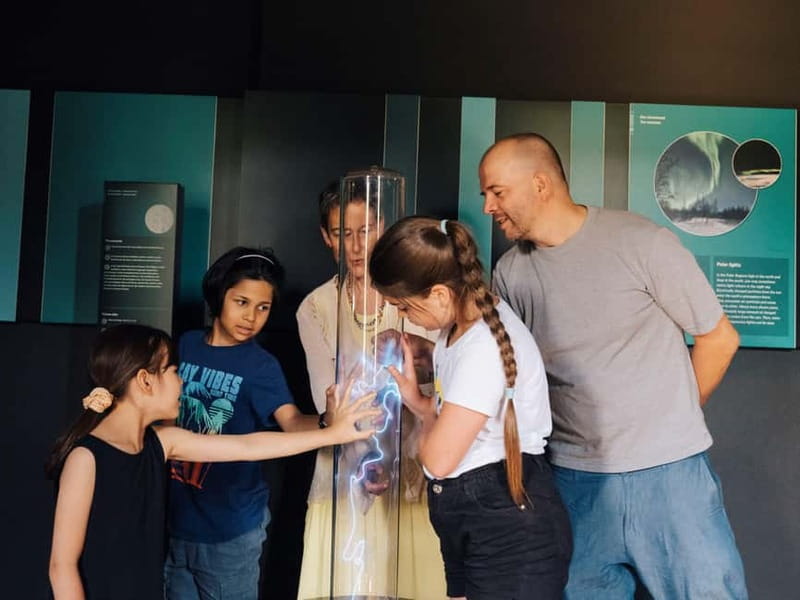
What makes Spectrum especially useful is that it is less about reading timelines and more about testing ideas. That is how science should feel when you are traveling: try it, break it, fix it, and then understand why it worked.
The Spectrum accessibility catch you should plan around
There is one big logistical point. The Spectrum elevator is out of service until the end of January 2026 due to repair work. During that period, Spectrum is unfortunately not accessible from the 1st floor.
If you or someone in your group needs elevator access to reach certain parts of Spectrum, plan around that limitation. It might affect which exhibits you can reach comfortably, or whether you spend less time at Spectrum and more time in the Technikmuseum galleries and park.
Price and value: why $14 can feel like more than one attraction
At about $14 per person, this ticket can feel like a bargain because you are paying for two venues on the same day, and the museum itself is wide-ranging.
Think of it as purchasing time and options, not just “entry.” The Technikmuseum covers multiple transport categories, an interactive networking timeline, and live demonstrations, plus the outdoor park. Then Spectrum adds a big block of hands-on experiments with a separate vibe.
You also benefit from the ticket being valid for one day, so you can actually use the full time window you spend in Berlin instead of rushing. If you are the type who likes to wander until something grabs you, this format rewards that style.
How long should you budget for this Berlin tech day?
The experience is set up as a 1-day outing. My practical recommendation is to treat it like a full day, not a quick hit.
Here’s why: the museum’s layout is large, it has multiple permanent exhibitions, and some sections invite slower viewing because they combine artifacts with explanations. If you also plan to use Spectrum, you need extra time to avoid feeling like you are sprinting between experiments.
If you only have a half day, you might end up seeing highlights rather than absorbing the big themes. With a full day, you can actually connect the dots: how transport engineering relates to networking and industry, then how science experiments turn abstract concepts into physical outcomes.
Who should book: the smartest match for your interests

This ticket fits best if you like learning that feels practical. I think it is especially good for:
- Families who want a museum plus play time at Spectrum
- Engineering and aviation fans who want airplanes, trains, ships, and early computing context
- Travelers who enjoy museums where live demonstrations add an extra sensory layer
- Anyone curious about how communication and coordination shaped modern life through technical networking
Even if you do not identify as a tech person, the museum can still work because it tells the story of systems. People who like history but dislike overly academic museum writing often do well here, because the exhibits keep tying back to real-world tools and machines.
What to know before you go (so your day runs smoother)
A few rules and details can save you hassle at the entrance. Pets are not allowed, though assistance dogs are allowed. Flash photography is also not allowed, so plan to rely on ambient light and your camera without flash.
Also check your own pace and energy. This is a museum day with lots to read and lots to see. If you tend to get museum fatigue, build in breaks at the park, and use live demonstrations as natural stops.
If you have a disability with 50% or more, there is guidance to select the student ticket option. That can make the ticketing decision simpler and likely more accurate for your needs.
Should you book the Deutsches Technikmuseum and Spectrum ticket?
Yes, I think you should book it if you want a Berlin day that mixes big machines with hands-on science. The strongest reason is the combination: you get aviation, railways, seafaring, early computing context, and live demonstrations at the Technikmuseum, then you add Spectrum’s 150+ experiments without extra planning across different locations.
Skip booking only if the Spectrum elevator limitation until end of January 2026 creates a major accessibility issue for you, or if you prefer museums that are smaller and faster paced. If you are flexible and you plan on spending enough time to actually enjoy the exhibits, this ticket is a solid value and a very “Berlin Airlift visible from the city” kind of experience.
FAQ
How long is the Deutsches Technikmuseum and Spectrum ticket valid for?
The ticket is valid for 1 day, on the booked day.
What’s included with this ticket?
Admission is included for both the Deutsches Technikmuseum and the Science Center Spectrum on your booked day.
How much does it cost?
The price listed is about $14 per person.
Can I skip the ticket line?
Yes, the option includes skip the ticket line.
Is it wheelchair accessible?
Yes, it is wheelchair accessible.
Are pets allowed inside?
Pets are not allowed, but assistance dogs are allowed.
Is flash photography permitted?
No, flash photography is not allowed.
Is Spectrum fully accessible during the elevator repair period?
No. The elevator at the Spectrum Science Centre is out of service until the end of January 2026, and Spectrum is unfortunately not accessible from the 1st floor during that time.
Can I cancel if my plans change?
Free cancellation is available, and you can cancel up to 24 hours in advance for a full refund.
Is the ticket tied to a specific start time?
The ticket is valid for 1 day, and availability includes starting times, so you’ll want to check what times are offered for your date.
Who should consider the student ticket option?
If you have disabilities with 50% or more, you should select the student ticket option.
Fresh on the arrivals board for Berlin




Tickets, compared.

Munich Hop-On Hop-Off Tour: 1-Day or 2-Day Ticket
Read our review →