Reviewed · BERLIN TOURS & ACTIVITIES
Berlin Battlefield Tour – Operation Berlin 1945 (Small Group)
Berlin’s last fight is still written in stone.
This small-group Berlin Battlefield Tour (Operation Berlin 1945) walks you through the exact urban geography where armies closed in and decisions mattered. I like that it blends major landmarks with battle-scale context, so you do not just see sights, you understand the pressure points that shaped the fight.
Two things I especially like: first, the route hits Moltke Bridge, the Reichstag area, and the Weidendammer Brücke, so the story stays coherent instead of jumping around. Second, the tour runs with a max group of 15 and includes a real chance for questions, with guides like Jochen standing out for how clearly he handles the details.
One thing to think about: this is weather-dependent. If Berlin is being Berlin, you should expect extra attention to rain gear and a tour that may shift dates if conditions are poor.
In This Review
- Key Highlights Worth Targeting
- Why This Battle Tour Feels Personal, Not Performative
- Your 2.5 Hours Through Berlin’s “Front Line” Sections
- Stop 1, Berlin Central Station: Setting the Battlefield
- Stop 2, Moltkebrucke: Where an Advance Meets Real Resistance
- Stop 3, Bundeskanzleramt and the Himmler House: Point-Blank Hell
- Stop 4, Platz der Republik: 300 Meters That Changed Everything
- Stop 5, Reichstag Footsteps: From Hitler’s Final Moments to the Banner
- Stop 6, Weidendammer Brücke: A Survivng Crossing on May 1, 1945
- Small Group Energy and Why Jochen’s Style Works
- Value Check: Paying $54.01 for a 2.5-Hour Berlin War Walk
- Practical Tips for a Smoother Tour Day
- Should You Book the Berlin Battlefield Tour, Operation Berlin 1945?
- FAQ
- How long is the Berlin Battlefield Tour – Operation Berlin 1945 (Small Group)?
- Where does the tour start?
- Where does the tour end?
- Is the tour in English?
- How big is the group?
- Are tickets required for the stops?
- What is included for comfort in bad weather?
- Does the tour run in any weather?
- What is the cancellation policy?
- Are service animals allowed?
Key Highlights Worth Targeting
- Moltke Bridge’s fighting map, oriented to the Soviet 3rd Shock Army’s advance axis
- Bundeskanzleramt, nicknamed Himmler House, where room-to-room combat followed point-blank shelling
- 300m of No man’s land, discussed at the former Königsplatz before the Reichstag
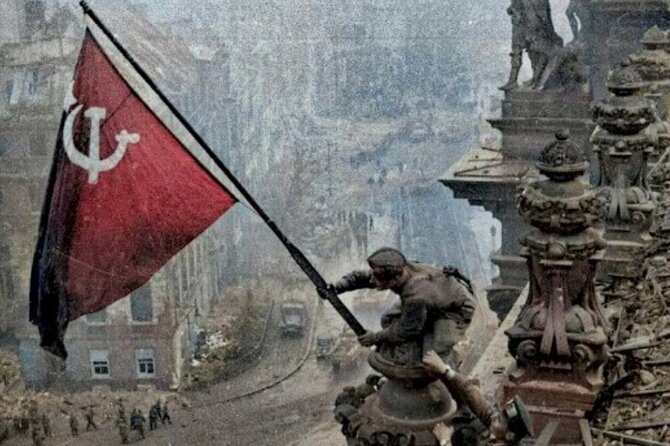
- Reichstag roof moment, including the stories of Sergeant Yegorov and Sergeant Kantariya and Banner No.5
- Weidendammer Brücke on May 1, 1945, one of the last intact crossings over the Spree
Why This Battle Tour Feels Personal, Not Performative
Berlin in 2026 still looks like a city. That is the point, and it makes this tour hit harder. You start at the modern Hauptbahnhof area and work through places that today are streets, ramps, and facades, not front lines.
I like how the tour keeps pulling the conversation back to what movement meant at the time: who could get across, who could not, and why a short distance could become lethal. When your guide explains the battle as a sequence of choices under fire, the map in your head snaps into place fast.
If you are the type who likes history with locations attached, you will get a lot here. And if you are traveling with a history-minded kid, the small-group format helps because questions actually get time.
Also holding a platform in Berlin
- Berlin: Reichstag, Dome and Government District Guided Tour
★ 4.7 · 18,288 reviews - Berlin: 1-Hour City Tour by Boat with Guaranteed Seating
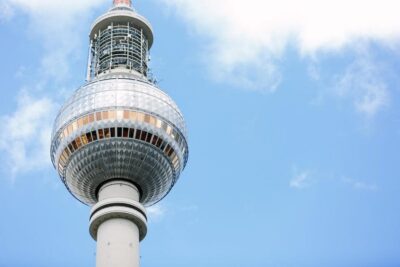
★ 4.3 · 16,993 reviews - Berlin: TV Tower Standard Entrance Ticket
★ 4.4 · 15,883 reviews
Your 2.5 Hours Through Berlin’s “Front Line” Sections
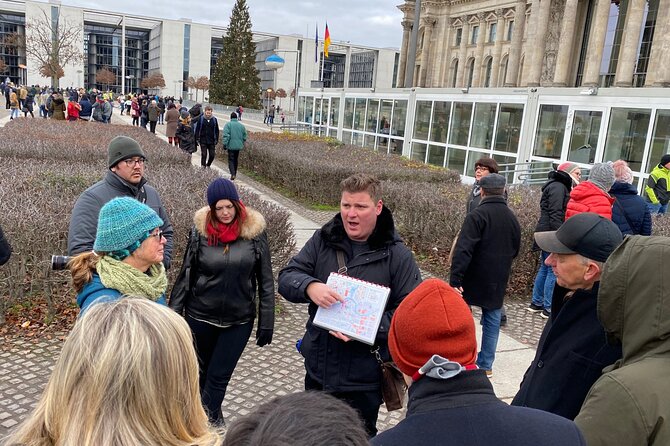
The total duration is about 2 hours 30 minutes, and the pacing is built around short stops followed by guided movement between them. You get a brief orientation at the start, then the tour tightens into the battle route.
You do not need to worry about lining up multiple entries or buying separate tickets for each site. Each stop is listed as admission ticket free, which keeps the tour focused on what your guide is telling you rather than logistics.
One practical note: the tour ends at Weidendammer Brücke, not back at the start. That is convenient because the final area sits close to public transit, but plan your next stop accordingly.
Stop 1, Berlin Central Station: Setting the Battlefield
You begin at Ella-Trebe-Straße 9, 10557 Berlin, on the southern side of the modern Hauptbahnhof. Before you move, you get about a 10-minute introduction to set the scene and orient the story.
This matters more than you might think. Battles in cities are hard to picture because streets do not behave like open fields. That opening helps you read what you are going to see later, especially when the tour transitions from broad movement to specific choke points.
After the intro, you head toward Moltke Bridge. The walk is part of the rhythm, giving you time to settle your bearings before the guide begins the battle layout.
Stop 2, Moltkebrucke: Where an Advance Meets Real Resistance
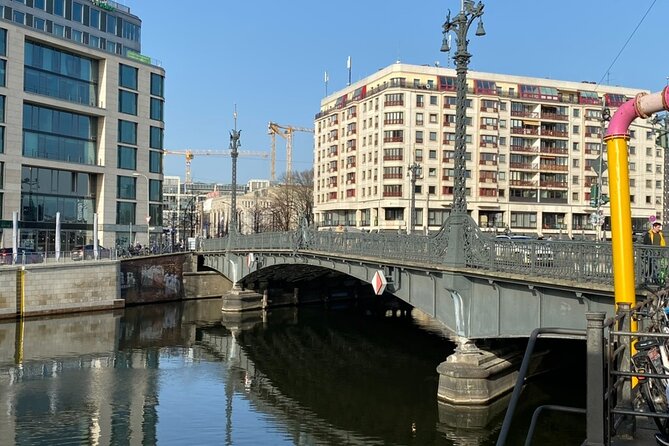
At Moltke Bridge, the tour turns from overview to direction. Your guide spends around 10 minutes here discussing this ornate red sandstone structure as a site of brutal fighting.
What I find useful is how the explanation is tied to an axis of advance. You are oriented to the Soviet 3rd Shock Army and how the attackers approached the area, then you connect that plan to the challenges German defenders faced.
If you like military history that feels grounded, this is a good section. It is not just dates and names. It is about why specific terrain and urban structure create delays and casualties.
Stop 3, Bundeskanzleramt and the Himmler House: Point-Blank Hell
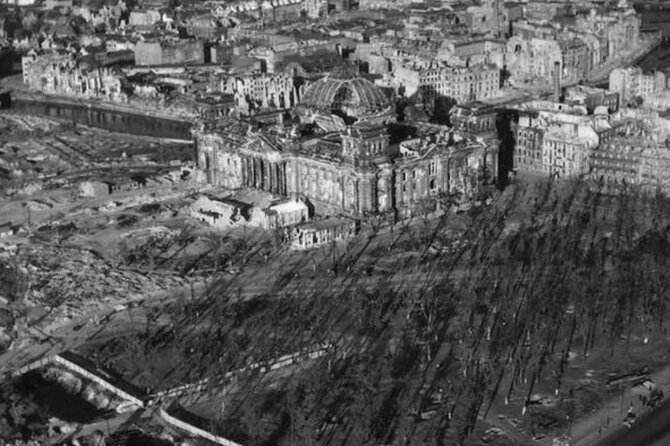
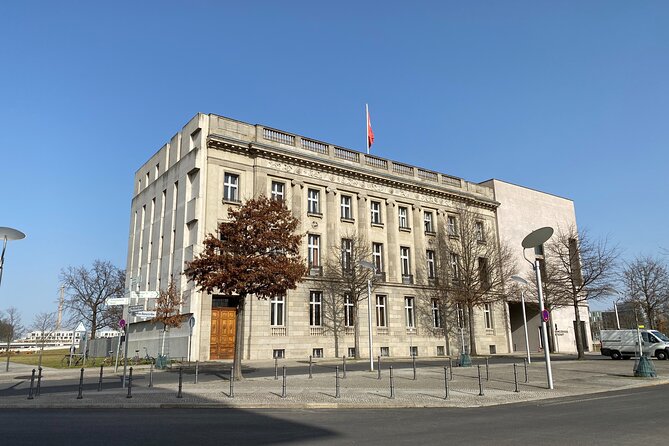
The tour then crosses the bridge area and moves to the Bundeskanzleramt, described as the then Interior Ministry, nicknamed the Himmler House in the old diplomatic quarter. You get another short 10-minute segment focused on what happened there.
The guide discusses the impact of a Soviet artillery barrage at point blank range, followed by horrific room-to-room fighting. This is where the battle becomes claustrophobic in your mind, not just geographic.
A drawback for some people: city-combat explanations can feel heavy. The tour does not shy away from the brutality, because the whole point of retracing Operation Berlin 1945 is to understand what these places meant during the final collapse. If you prefer light and breezy history, you might find the tone intense.
Onward connections from Berlin:


Stop 4, Platz der Republik: 300 Meters That Changed Everything
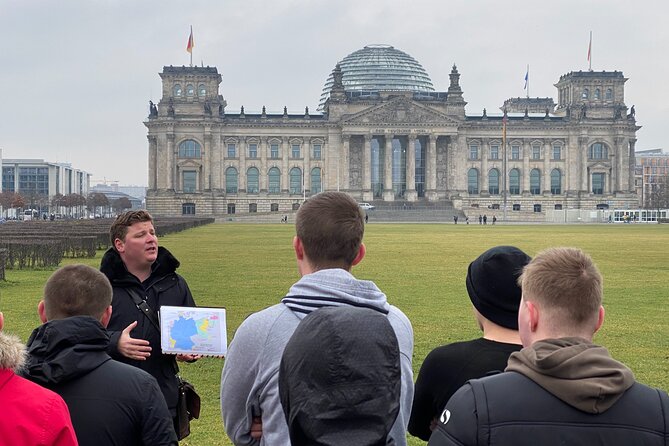
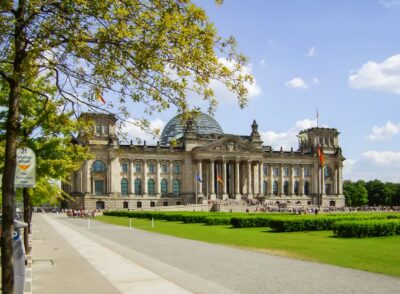
Next you reach Platz der Republik, standing on the former Königsplatz. This is one of the most “tactical” moments in the tour because the guide helps you take stock of distance in a very literal way.
You are guided to consider about 300 meters of exposed ground, described as a moon scape, that the 207th and 150th rifle divisions would have had to cross before reaching the Reichstag. Hearing it framed that way makes the fight feel like math under fire.
This stop is a good example of why a guided walk beats reading alone. In Berlin, it is easy to focus on the architecture. Here, you learn to focus on what the architecture did to visibility, movement, and survival.
Stop 5, Reichstag Footsteps: From Hitler’s Final Moments to the Banner
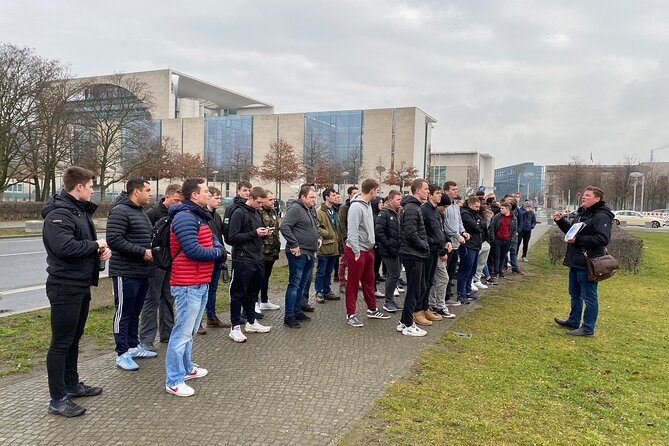
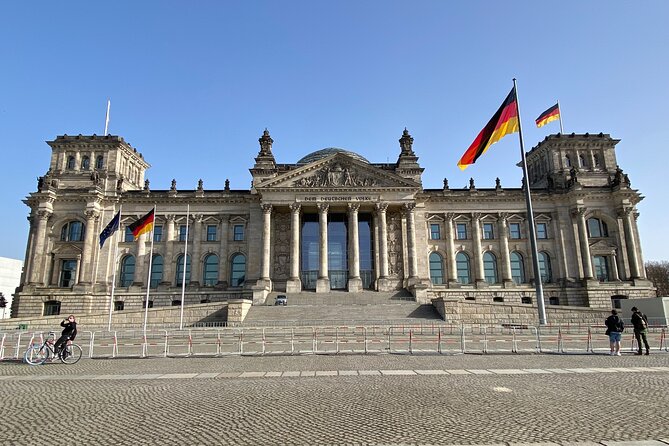
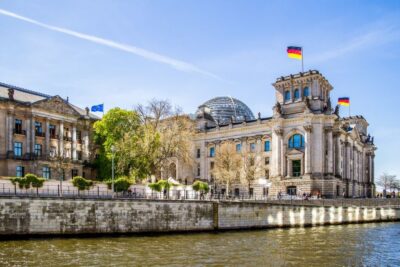
As you approach the Reichstag building, the tour shifts again. You hear discussion of Hitler’s final moments in the Führer bunker, only a few hundred meters away, then you move to the foot of the Reichstag for the centerpiece stories.
This section runs about 20 minutes. Your guide shares the stories of Sergeant Yegorov and Sergeant Kantariya, and explains the special Banner No.5 raised on the roof, a symbolic marker for the end.
What I like here is that the guide treats the moment like a human story without losing the larger context. The banner detail helps you visualize the climax, but the surrounding explanation keeps it tied to the battle’s overall trajectory.
One gentle caution: this part is emotional for many people. The site is nationally meaningful and the subject matter is grim. Give yourself mental room, and if you need a breather, you can usually step slightly aside during the walking approach.
Stop 6, Weidendammer Brücke: A Survivng Crossing on May 1, 1945
The final stop is Weidendammer Brücke. During the last days of the battle, the bridge is described as one of the few bridges still intact over the Spree, which is why it mattered so much.
You get about 15 minutes here, including what happened during the night of May 1, 1945. The bridge is presented as the scene of terrible carnage tied to a breakout attempt from the Führerbunker.
Ending at the bridge gives the tour a full-circle feeling. You start with modern Berlin orientation, then you end at the exact point where the story’s final frantic movement shows up on the ground.
Small Group Energy and Why Jochen’s Style Works
This tour caps at 15 people, which changes how the conversation lands. In a big crowd, battlefield history can turn into a lecture you half-listen to. With this size, the guide can actually track who is engaged and who has questions.
The reviews you provided point to a consistent theme: the guide makes the content usable. In particular, Jochen is singled out for doing an excellent job with depth, and for keeping the tone understandable even when the subject gets complex.
For you, that means you are not just collecting facts. You can ask why a position mattered, why an axis of advance made sense, or what a symbol like Banner No.5 represented beyond the moment itself.
If you are traveling with a teen or a strong history buff, this format is a real advantage. When people want to talk back, the small-group setup gives you that channel.
Value Check: Paying $54.01 for a 2.5-Hour Berlin War Walk
At $54.01 per person, you are paying for guided interpretation of a very specific subject, over about 2.5 hours. That sounds straightforward, but the value comes from what is included.
You get bottled water and rain ponchos if needed, which is not just comfort. In a city tour, those small items can keep you from cutting your day short when weather turns.
You also get a mobile ticket and English instruction, plus admission is free at each listed stop. That combination matters because it reduces surprise expenses. If you are trying to keep Berlin costs controlled, this is one of the easier history add-ons to plan around.
Timing-wise, the tour is on average booked about 27 days in advance. That is a hint to reserve earlier if your dates are tight, especially if you are traveling in shoulder season when small-group tours can fill.
Practical Tips for a Smoother Tour Day
This tour requires good weather. The important part is that rain gear is planned for you with the included ponchos, but if conditions are poor, the operator may cancel and offer another date or a full refund.
Bring the basics you would bring for any walking tour: a jacket you can adjust in changing temperatures, and shoes that handle uneven city surfaces. The itinerary includes multiple stops that feel close on a map, but you are still moving through real sidewalks and crossings.
Because the tour ends at Weidendammer Brücke, think about your next leg. The bridge is about 50 meters from S+U Friedrichstrasse train station, which is one of Berlin’s convenient transit hubs. If you plan carefully, you can turn this into a tight historical loop without losing time.
Also, note that you start in a central, transit-friendly area near Hauptbahnhof. That makes it easier if you are arriving by train or already spending time in Mitte.
Should You Book the Berlin Battlefield Tour, Operation Berlin 1945?
I would book it if you want Berlin history tied to the actual geometry of the last battle. This tour does not treat the Reichstag area and surrounding sites like separate sightseeing stops. It connects them as one shrinking set of routes and impossible decisions.
It is also a great fit if you care about clarity and conversation. With a max of 15, you get a better shot at asking questions, and the guide quality you shared, including Jochen, is a major reason the experience earns such high marks.
Skip it or pick another option if you want a lighter, purely architectural tour. This one stays focused on a violent, final phase of World War II, so it is serious even when the pacing is manageable.
If you are in Berlin and you want to understand what happened here in 1945, this is a smart way to do it in just 2.5 hours.
FAQ
How long is the Berlin Battlefield Tour – Operation Berlin 1945 (Small Group)?
The tour lasts about 2 hours 30 minutes.
Where does the tour start?
The meeting point is at Ella-Trebe-Straße 9, 10557 Berlin, Germany.
Where does the tour end?
The tour ends at Weidendammer Brücke, 10117 Berlin, Germany.
Is the tour in English?
Yes, the tour is offered in English.
How big is the group?
This experience has a maximum of 15 travelers.
Are tickets required for the stops?
Admission ticket free is listed for the tour stops.
What is included for comfort in bad weather?
Bottled water and rain ponchos (if needed) are provided.
Does the tour run in any weather?
It requires good weather. If canceled due to poor weather, you will be offered a different date or a full refund.
What is the cancellation policy?
Free cancellation is available up to 24 hours in advance for a full refund.
Are service animals allowed?
Yes, service animals are allowed.
Fresh on the arrivals board for Berlin
Berlin Tours & Activities, compared.
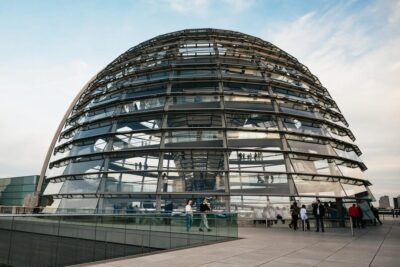
Reichstag, Dome and Government District Guided Tour
Read our review →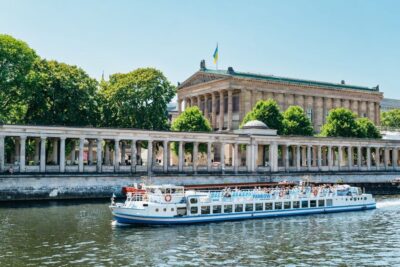
1-Hour City Tour by Boat with Guaranteed Seating
Read our review →
Berlin City walk Government District and Places of Democracy
Read our review →