
Reviewed · 3-HOUR EXPERIENCES
Berlin: 3-Hour Private Tour in French or Italian
Berlin in three hours? Perfect for first-timers. This private city tour is built for getting your bearings fast, pairing big landmark stops like the Reichstag and the Berlin Wall with clear storytelling about WWII and the Cold War. You also control the pace, since you choose what you want to emphasize in those short 3 hours.
What I like most is the comfort and clarity. The tour uses an air-conditioned, business-class vehicle with microphones, so you do not miss the guide’s explanations while you move through the city. In French, guides like Cristina are praised for being especially friendly and flexible, including a VIP feel, which makes a short trip feel personal instead of rushed.
One possible drawback is that entrance tickets and museum time are not included. If you want to go inside major sights, you will need to pay extra, and with only 3 hours, you may have to pick between walking around and adding more stops.
In This Review
- Key highlights you should care about
- Why this 3-hour format works in Berlin
- Your guide, your language, and the advantage of a small private group
- Comfortable, air-conditioned Berlin sightseeing without the hassle
- Reichstag and the Government Quarter, where power is visible
- Brandenburg Gate, Unter den Linden, and Museum Island context
- From Staatsoper and main hubs to the TV Tower views
- Nikolaiviertel and Gendarmenmarkt, where the city looks designed for walking
- Potsdam Square, Philharmonie, and the city’s modern cultural face
- Berlin Wall remains: where the story stops being theoretical
- Charlottenburg Palace, Memorial Church, and KaDeWe for a well-rounded day
- Victory Column, Bellevue Palace, and Kongresshalle for architecture and symbolism
- How the $542 group price adds up for a private 3-hour Berlin day
- Who this tour suits best
- Should you book this private Berlin tour?
- FAQ
- What is the duration of the private Berlin tour?
- What language is the live guide available in?
- How big is the private group?
- How much does the tour cost?
- What’s included in the price?
- What is not included?
- Does the tour include pickup?
- Is there free cancellation?
Key highlights you should care about
- Private group up to 8, so you can ask questions and tailor the route
- Air-conditioned vehicle + microphones, which matters in a city with lots of traffic noise
- Reichstag, Brandenburg Gate, and Berlin Wall remains in one efficient loop
- Flexibility on stops, including 1 to 2 stops you pick
- French or Italian live guide, helpful if you want history explained, not just pointed at
- Comfort-first sightseeing, with pickup and drop-off in central Berlin
Why this 3-hour format works in Berlin
Berlin can be huge in feel, even when you stay in the center. This tour is designed around a simple truth: most first visits fail because people try to do too much, too independently, and then miss the story. In a compact 3-hour window, you get a structured overview that helps the landmarks start making sense.
You are not stuck to a fixed checklist, either. The format is private, with room for 1 to 2 stops at locations you choose. That flexibility is what turns a standard highlights tour into a trip that matches your interests, whether you are more drawn to power and parliament buildings, iconic bridges and squares, or the places where the city’s divided past is still visible.
And yes, the “short tour” idea can sound limiting. In practice, it is valuable because it lets you spend your energy where you will actually return later. After this kind of overview, you tend to know what you want to explore again, with a plan and better context.
Also holding a platform in Berlin
- Berlin: Reichstag, Dome and Government District Guided Tour
★ 4.7 · 18,288 reviews - Berlin: 1-Hour City Tour by Boat with Guaranteed Seating
★ 4.3 · 16,993 reviews - Berlin: TV Tower Standard Entrance Ticket
★ 4.4 · 15,883 reviews
Your guide, your language, and the advantage of a small private group
This is a private tour for up to 8 people, with a driver-guide and live commentary in French or Italian. A small group sounds like a luxury, but it also changes the quality of the questions you can ask. You can stop when something catches your eye, ask for clarification, and get explanations that fit what you are currently looking at.
The tour vehicle is described as business-class and includes microphones. That matters more than people expect. Berlin has wide streets and lots of background noise, and if you are trying to hear history while sitting close to a busy road, you can end up relying on guesswork.
The guide dynamic is a big part of why this tour scores well. One commonly praised theme is a warm, adaptable approach from the guide. For you, that usually means less time waiting for everyone to catch up, and more time hearing the story in a way that feels human, not scripted.
If you are traveling with friends or family and want a shared “get oriented” moment, this small-group setup is also a smart way to avoid the awkwardness of a large group bus where you cannot ask anything.
Comfortable, air-conditioned Berlin sightseeing without the hassle
The tour is built around removing friction. You get pickup and drop-off in the Berlin city center, and the driver holds a sign with your last name. That is a small detail, but it makes a difference when you are trying to coordinate at street level.
Then there is the driving part. You move between major sites in an air-conditioned vehicle, so you are not spending your limited time walking long distances across traffic-heavy areas. Berlin sightseeing works best when you can slow down at the stops you care about most, not when you are forced to rush just to cover ground.
This is also a good option if you want to keep your day flexible. Because you are in control of 1 to 2 locations of your choice, you can shape the tour around your energy level. If you have a strong interest in architecture, you can steer toward the government-area streets and monumental squares. If you prefer memorial context, you can prioritize the places connected to the city’s 20th-century division.
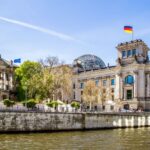
Reichstag and the Government Quarter, where power is visible
A start around the Reichstag and the Government Quarter sets the tone immediately. Berlin’s political landscape is not abstract here. Buildings, street alignments, and sightlines all help you understand how the city represents authority in public space.
The Reichstag area also works well early in the tour, because it gives you a reference point for the rest of the landmarks. From there, you can connect later stops to the story of Germany’s modern history, including how Berlin’s role evolved through WWII and into the Cold War era.
You may also pass by the newer buildings in the Government Quarter. Even if you are not an architecture fanatic, seeing that contrast helps you read Berlin as a living city, not a museum. It shows how decisions made decades ago still shape how people move and gather today.
A practical consideration: if you are hoping to go inside the Reichstag or another major building, plan for extra time and potential entrance fees. This tour is positioned as a guided sightseeing circuit, not a ticketed-entry marathon.
Brandenburg Gate, Unter den Linden, and Museum Island context
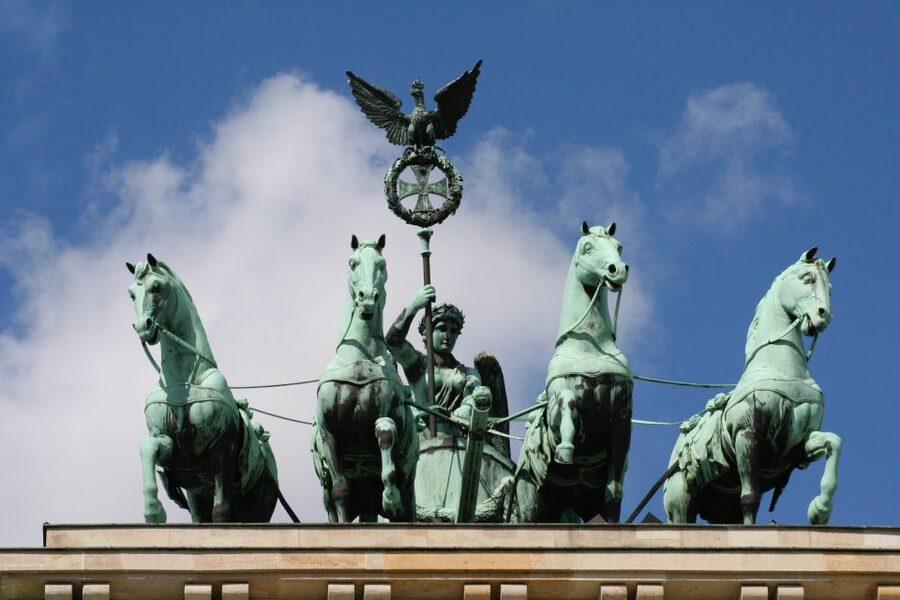
Next comes the classic Berlin center: Brandenburg Gate, Unter den Linden, and the area around Museum Island. This stretch is famous for a reason, but the value of a guide is that you get the meaning behind the postcards.
Brandenburg Gate is more than a photo stop. It is tied to the idea of division and reunification, and it is the kind of place where your understanding improves the moment someone connects the landmark to the city’s Cold War story. Seeing it from the street while you have that context helps the site become a real reference point, not just an icon.
Unter den Linden is the boulevard backbone of the central district. On a tour like this, it becomes a way to interpret the city’s layout: formal promenades, major civic buildings, and the sense of “old grandeur” next to newer layers. The guide can help you notice the rhythm of the space, which is hard to do on your own when you are staring at maps.
If the itinerary includes Museum Island, that stop often clicks for people who like culture but want to avoid guessing where to start. Even without long museum time, seeing the island signals how Berlin became a center for public learning and how cultural institutions sit beside political ones.
One drawback to keep in mind is time. Stops in this area can involve traffic delays and quick viewing. You will get the big-picture value, but you will not have hours for deep exploration of each individual museum building.
Onward connections from Berlin:


From Staatsoper and main hubs to the TV Tower views
The tour can also include the Staatsoper and the Main Train Station. These are different kinds of landmarks, which is part of the point. A city’s main transportation and performance spaces tell you about how locals live and gather.
The Staatsoper area is useful for understanding how Berlin projects culture in grand, visible ways. Even if you do not attend a performance, you can appreciate why the building matters for the city’s identity. It is the kind of stop that can turn a casual sightseeing day into a day with more meaning.
The main train station is a reality check in the best way. It reminds you Berlin is not frozen in history. It is a modern hub. If you have ever felt like Berlin is only about the past, this kind of stop helps balance that feeling.
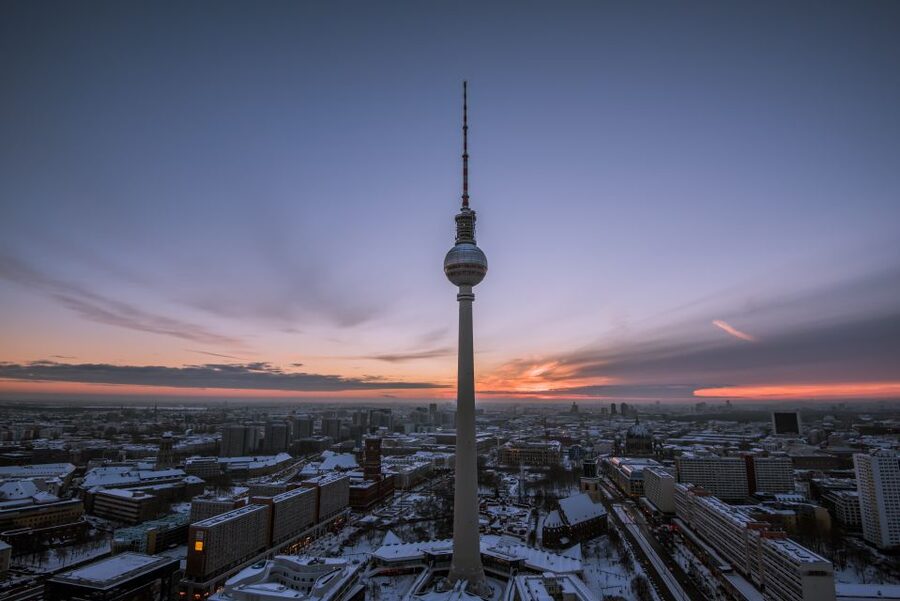
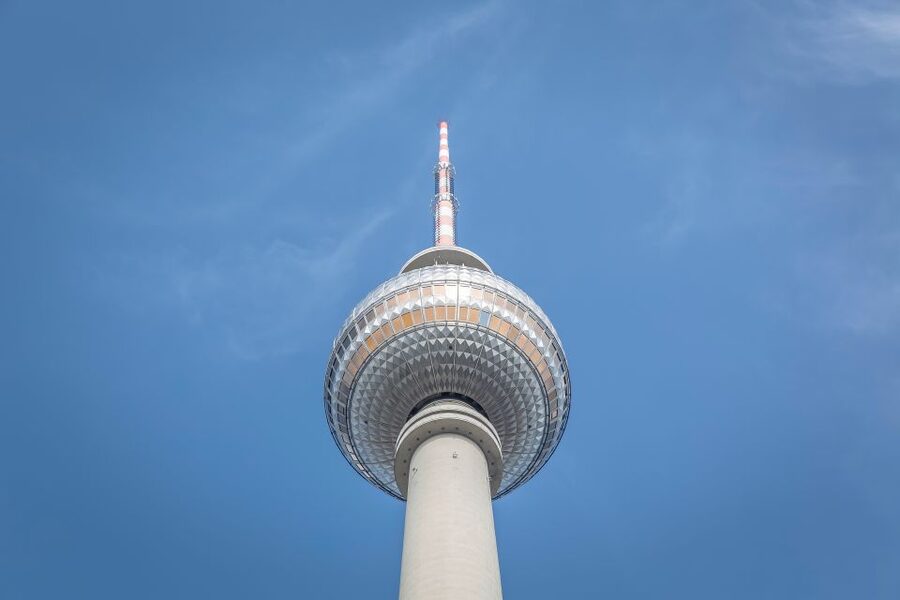
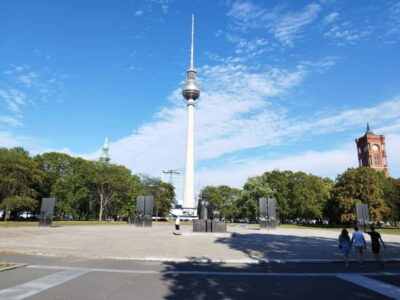
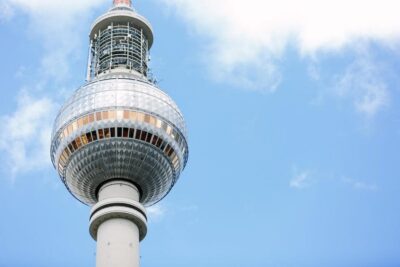
Then there is the possibility of the TV Tower. If you get this stop, it offers an instant “scale” moment. You can understand why the city can feel big, and you get a perspective that helps you place what you will see later on your own.
If the group is tight on time, some of these stops may be more viewing-focused than walk-focused. That is not bad, it just helps you set expectations.
Nikolaiviertel and Gendarmenmarkt, where the city looks designed for walking

Even in a short drive-based tour, you want at least a couple of stops that feel more human at street level. The itinerary commonly includes Nikolaiviertel and Gendarmenmarkt, which are ideal for that.
Nikolaiviertel can feel like an older slice of Berlin, with a more compact, village-like atmosphere compared to the wide official avenues. It is a helpful contrast to the monumental government spaces, and it often makes the Cold War story feel less abstract.
Gendarmenmarkt is one of those “yes, this is why people photograph here” places. The architecture and the open square layout create strong sightlines, and a guide can point out what to notice so your photos do not turn into random angles.
The value for you is that these stops help your brain rest. After looking at heavy history and formal buildings, a beautiful square gives you a lighter moment, and you still come away with real structure for how Berlin’s center is arranged.
Potsdam Square, Philharmonie, and the city’s modern cultural face
Some tours lean only toward the big historic anchors. This one also includes stops like Potsdamer Platz (often listed as Potsdam Square), and it may continue toward the Philharmonie area.
That matters because Berlin’s story is not only about division. It is also about how the city reinvented itself after those difficult decades. When you see a mix of government-linked history and major cultural venues, you start to understand how Berlin uses public spaces to move forward.
Potsdamer Platz is a good example of that. It is a place where you can feel contemporary Berlin in the way streets are laid out and how people move through the space. With a guide, you can connect it to the idea that the city was physically and politically changed, then rebuilt into something that still attracts attention.
The Philharmonie can be a meaningful stop for people who care about music and performance. Even if you do not attend, it helps you see Berlin as a cultural capital, not only a memorial destination.
Berlin Wall remains: where the story stops being theoretical
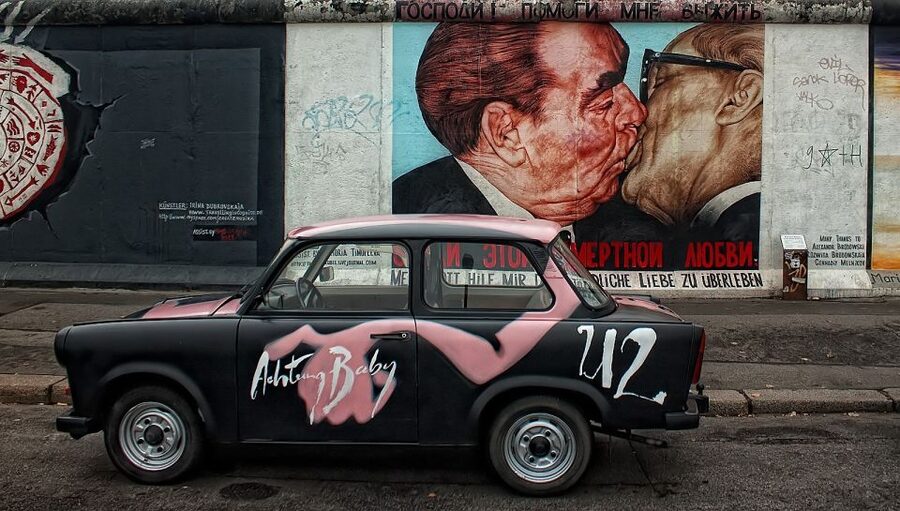
The most important stop in any Berlin visit is the one that turns history into physical reality. This tour includes the remains of the Berlin Wall, with time to learn how Berlin life looked during WWII and the Cold War.
That stop is powerful because you are not dealing with a timeline anymore. You are dealing with traces. Seeing remnants as part of a guided explanation helps you understand why the Wall was so deeply connected to daily life, not just to politics.
For you, this is also the stop that tends to change how you walk around the city afterward. Even after the tour ends, you will likely start noticing patterns: where lines of separation once shaped movement, where memorials encourage reflection, and how the city has chosen to remember.
A practical note: this is a place where photo stops can get quick. If you want extra time to linger, you might need to use one of your flexible selections wisely.
Charlottenburg Palace, Memorial Church, and KaDeWe for a well-rounded day
If your tour includes the Charlottenburg Palace, it adds a layer that is different from war and division. Palaces help you see the older side of Berlin, the side tied to power, lifestyle, and the idea of formal court culture.
The Memorial Church stop can complement that. Memorial sites are where you feel the city’s decision to remember, and a good guide can connect it to the bigger story you have heard earlier.
Then there is KaDeWe, which is very Berlin. It is a retail landmark, not a museum, and that difference matters. It gives you a sense of how the city lives now, what people buy and browse, and how everyday life continues alongside memorial spaces.
If you like variety, this is the winning combination: palace and memorial, then a modern commercial stop. It helps you avoid ending your trip with only one emotional note.
Victory Column, Bellevue Palace, and Kongresshalle for architecture and symbolism
The tour may wrap up with stops such as the Victory Column, Bellevue Palace, and Kongresshalle. These places are strong for architecture and symbolism, and they are a good way to end with visual impact.
The Victory Column is tall and dominant. Even without going inside, you understand its purpose in the surrounding space. A guide can help you connect that monumental design to themes of national pride and historical change.
Bellevue Palace adds another tone. As a government-linked building, it fits naturally after the Reichstag and Government Quarter context. By this point in your tour, you can start comparing how power is expressed through different eras of Berlin’s public architecture.
Kongresshalle is the kind of site that invites interpretation. With the city’s WWII and Cold War history in your head, you can often understand why certain buildings carried huge political weight. It is not just about aesthetics. It is about what the city was trying to project at the time, and what the site means now.
How the $542 group price adds up for a private 3-hour Berlin day
Let us talk value, because private tours can feel expensive until you do the math in your head.
You pay $542 per group up to 8 for about 3 hours. That means the cost is shared within your group. If you are traveling as two or four people, it can feel like a premium, but you are also buying something specific: a guided, air-conditioned route with a private driver-guide, pickup and drop-off in central Berlin, microphones, and the ability to steer to 1 to 2 stops you choose.
This price is especially reasonable if you are the kind of traveler who hates wasting half a day coordinating transit, getting turned around, and trying to connect landmarks to history from scratch. In Berlin, that last part matters. The city has layers, and a good guide helps you see connections quickly.
You should also compare what is not included. Entrance fees and food and drinks are not part of the price. If you plan to go inside multiple major buildings, your final spend will rise. But if your goal is a guided overview with smart stops and no ticket frenzy, this format can be a strong use of time.
For solo travelers, it might feel less like a bargain because it is priced per group. For small groups, it often becomes a practical way to get a high-quality history tour without a car-chasing itinerary.
Who this tour suits best
This is a great match if you want a first-time Berlin orientation with history explained, and you prefer comfort over sprinting between stops.
You will likely love it if:
- You have limited time and want landmarks like the Reichstag, Brandenburg Gate, and Berlin Wall remains in one go
- You want a French or Italian guide who can answer questions in your language
- You prefer private flexibility over a large-group bus schedule
- You value a comfortable, microphone-supported ride through the city center
You might think twice if:
- You want long museum entries and multiple inside visits, since entrance fees are not included and the tour is only 3 hours
- You are traveling on a shoestring budget and prefer to build your own route using trains and walking
Should you book this private Berlin tour?
I think this one is a smart booking when you care about context and you want to spend your short time in Berlin wisely. The private group size, the comfortable vehicle, and the microphone setup make it easy to focus on the story rather than the logistics. And because you can choose a couple of extra stops, it stays personal instead of feeling like a rigid circuit.
If you are coming for first impressions, this tour gives you that foundation. If you are coming back for a deeper dive later, it helps you decide what to prioritize next, with less trial and error.
Book it if you want a guided overview that respects your time. Skip it if your plan is mostly about ticketed interiors and long museum wandering.
FAQ
What is the duration of the private Berlin tour?
The tour lasts 3 hours.
What language is the live guide available in?
The live guide is available in French or Italian.
How big is the private group?
This is a private group for up to 8 people.
How much does the tour cost?
The price is $542 per group (up to 8 people).
What’s included in the price?
Included are a private sedan or minivan with a private driver-guide, plus pickup and drop-off in Berlin city center.
What is not included?
Food and drinks are not included, and entrance fees are not included.
Does the tour include pickup?
Yes. Pickup and drop-off are included in Berlin city center. The driver will hold a sign with your last name, and you must specify your pick up location.
Is there free cancellation?
Yes, free cancellation is offered up to 24 hours in advance for a full refund.
Fresh on the arrivals board for Berlin
3-Hour Experiences, compared.




Munich’s Beer Halls and Breweries: 3-Hour Guided Tour
Read our review →
Browse the lists this tour appears in