
Reviewed · WALKING TOURS
Würzburg: Private Walking Tour With Professional Guide
Würzburg makes more sense on foot. This private walk ties the city’s Baroque Residence to the bigger story of Franconian winemaking, while showing you the highlights without rushing. You get a guide who helps you read the architecture and the river views like a local, from the Old Main River Bridge to the Marienberg lookouts.
The main thing to consider is focus. If you are hoping for only broad sightseeing, the route can lean more into churches and key landmarks than you might expect.
In This Review
- Key things you will notice on this Würzburg private walk
- How this 2-hour Würzburg walk earns its place on your itinerary
- Meeting point and tour style, so you can start without stress
- The winemaking story you will actually remember
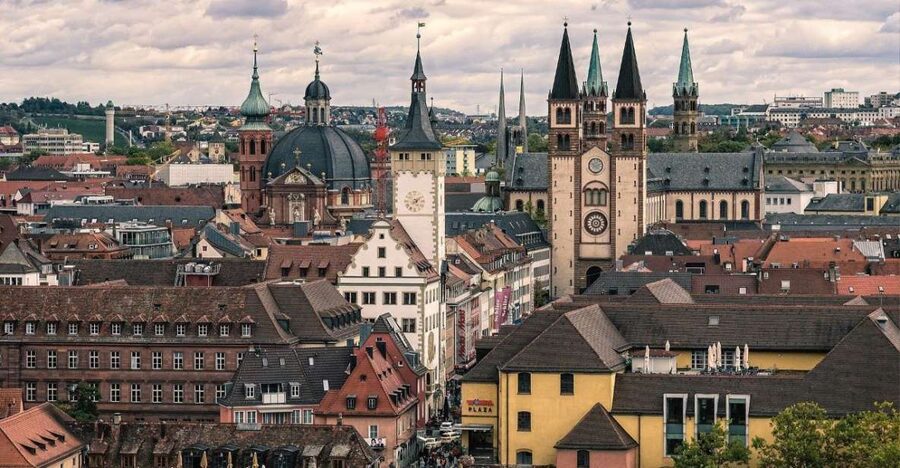
- Market Square and Town Hall, a quick dose of civic Würzburg
- Neumünster church and the Walther von der Vogelweide connection
- Falkenhaus and Rococo flourishes you can actually spot
- Marienberg Fortress viewpoints, why the river bridge is the star
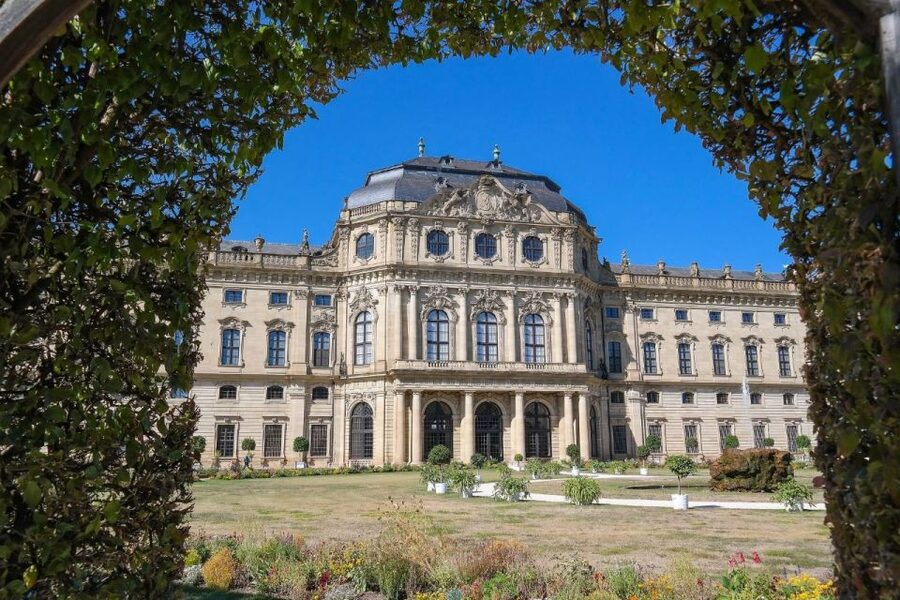
- Residence palace and Balthasar Neumann, the Baroque headline act
- Marienkapelle and the way the route links styles
- Vierröhrenbrunnen and Market Square side scenes
- Practical comfort tips for a smooth 2 hours
- Value for money, private group math that actually makes sense
- Who this tour fits best in Würzburg
- What to do after the tour, so you keep momentum
- Should you book this Würzburg private walking tour?
- FAQ
- How long is the private walking tour in Würzburg?
- Where do we meet the guide?
- What languages are available for the live guide?
- What is included in the price?
- Are entrance fees included?
- Is the tour suitable for wheelchair users or mobility impairments?
Key things you will notice on this Würzburg private walk
- Franconian wine country context tied to what you see in town
- Balthasar Neumann Residence and other Baroque details you can actually spot
- Marienberg Fortress views from the Old Main River Bridge
- Old Town landmarks in a tight 2-hour loop, so you do not waste the day
- Question friendly guiding, with time to ask and follow threads
- Easy customization, depending on what you want to prioritize
How this 2-hour Würzburg walk earns its place on your itinerary
Würzburg is small enough to explore on foot, but big enough to reward good guidance. On this private walking tour, you get a professional guide to connect the dots between the city’s showpiece buildings and why the region became so important for German wine.
What I like most is that the tour is not just a checklist. You learn why the city matters to Franconian wine traditions and how that influence shows up in the way the city developed. You also get a true “see it, then understand it” approach to architecture, especially around the Residence designed by Balthasar Neumann.
The second win is the pacing. Two hours is long enough to cover a strong slice of the Old Town, plus the river viewpoint, yet short enough that you can still plan the rest of your day. You can walk away with a mental map, not just photos.
One practical consideration: this tour is rain or shine, and it is not suitable for wheelchair users or people with mobility impairments. If walking distance, uneven stone, or weather discomfort is a concern, you will want to think twice.
More German cities at walking speed:
- Würzburg: Guided Walking Tour
★ 4.5 · 466 reviews - Discover Berlin Half-Day Walking Tour
★ 5.0 · 9,624 reviews - Berlin City walk Government District and Places of Democracy
★ 4.7 · 8,467 reviews
Meeting point and tour style, so you can start without stress
You meet your guide in front of the Tourist Office. That matters, because it keeps the start simple and reduces the usual “Where exactly are we meeting?” friction.
From there, the tour stays focused: you walk the Old Town highlights, with stops at monumental landmarks and major churches. The guide talks in English or German, so you get the same flow either way, and because it is private, you can ask questions in the moment.
You will also appreciate that the tour is designed for a group up to 15 people. That is a comfortable size for a private experience, and it means you are not packed into a huge crowd while trying to hear architecture details.
The winemaking story you will actually remember
Würzburg is the center of the Franconian wine country, and this tour leans into that. You are not going to get a vineyard field lesson during a walking tour, but you do get the “why this city” context.
Your guide explains that Würzburg is home to three of Germany’s largest wine producers. You also hear how the area connects to one of the best vineyards in all of Franconia. That gives you a useful lens for the city. Instead of seeing buildings as just pretty stone, you can connect them to a place where wine mattered economically and culturally.
If you care about wine, you will enjoy the way the guide folds it into the sights. If you are not a wine person, you may still appreciate the broader result: you understand the region’s identity, not just its attractions.
Market Square and Town Hall, a quick dose of civic Würzburg
The tour spends time in the Market Square, where the city’s day-to-day energy historically met official power. You pass by the Town Hall, which helps you frame Würzburg as more than a baroque postcard.
This stop is especially good for orientation. You leave it with a better sense of where you are and how the Old Town fits together. Even if you plan to return later for shopping or coffee, the Market Square gives you a “start here” reference point.
The guide also helps you look past the obvious. Instead of only pointing at what is in front of you, they tend to explain why that setting matters, so your photos come with context.
Neumünster church and the Walther von der Vogelweide connection
One of the most memorable historic threads is the nearly thousand-year-old Neumünster church. The guide shares a fun and human detail here: it is the resting place of the famous medieval German minstrel Walther von der Vogelweide.
If you love stories that connect buildings to real people, this is a strong stop. It is also a good example of how the tour blends architecture with culture. The Romanesque look of Neumünster gives you a different visual rhythm than the later Baroque style you see in other parts of the route.
Possible drawback: if you are not in the mood for church-focused commentary, this is an area where the tone can feel heavier. One point that came up in feedback is that the tour can lean more church-centric than some people expect. If that would bother you, ask your guide early to balance the mix toward secular landmarks and viewpoints.
Also holding a platform in Wurzburg

Falkenhaus and Rococo flourishes you can actually spot
As you move through the Old Town, you pass the Falkenhaus, known for its Rococo façade. This is the kind of detail that often gets missed when you walk on your own, because Rococo can look like decoration unless you know what to look for.
A good guide makes it practical. You learn how to recognize the style cues quickly, so the façades stop being “nice buildings” and become readable objects.
Think of this stop as training wheels. After Falkenhaus, the rest of the Baroque and Rococo elements around the route become easier to understand in seconds.
Marienberg Fortress viewpoints, why the river bridge is the star
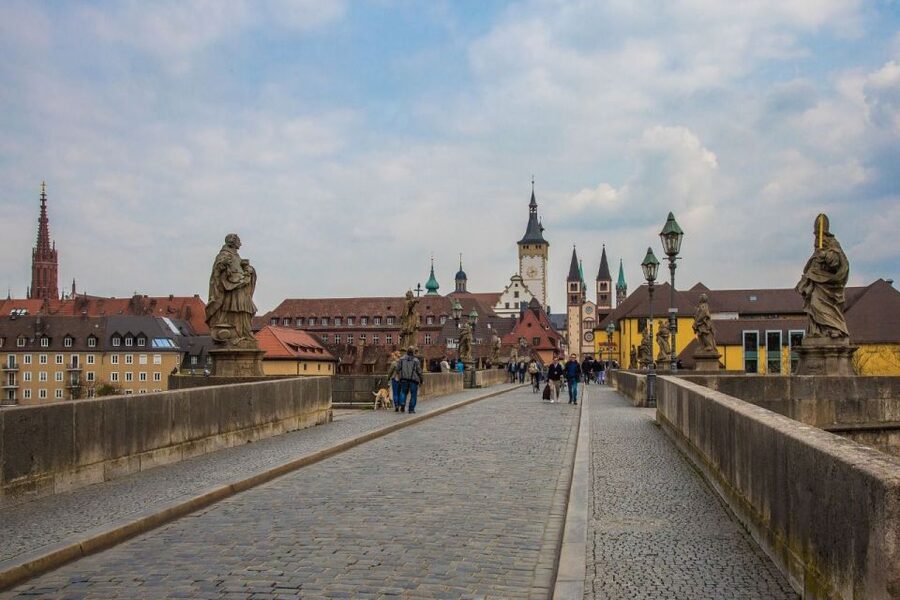
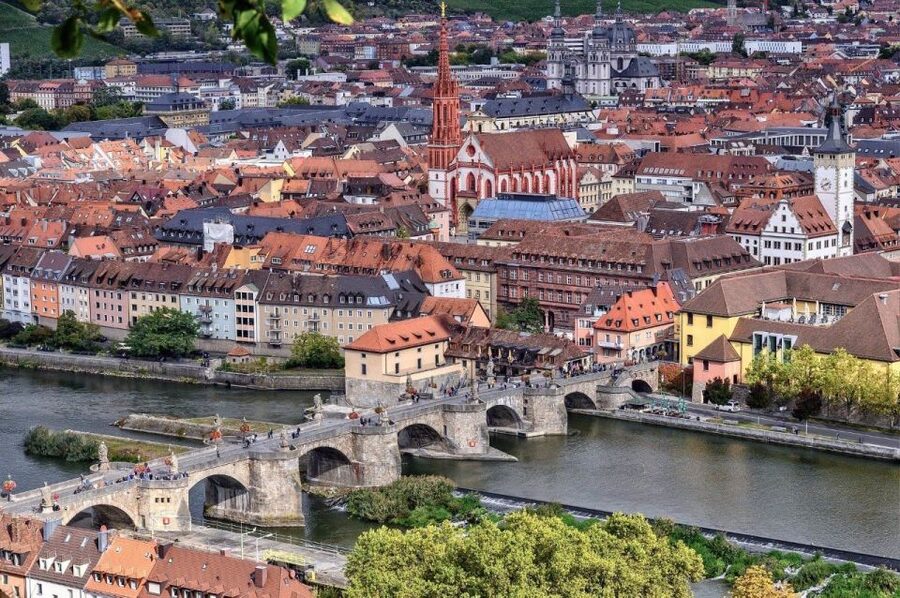
The best view payoff comes near the river. You head to the Alte Mainbrücke, the Old Main River Bridge, where you can marvel at the Marienberg Fortress from below, with the river valley in the background.
This is worth timing and weather awareness. Even in ordinary conditions, the bridge viewpoint gives you depth, and in better light it becomes a perfect orientation shot for the fortress. You can look at the fortification as both architecture and strategy, not just a distant hilltop.
If you like photography, this is one of the few places on the tour where the “look up and then look across” effect really works. You finish understanding where the fortress sits in the city’s geography.
Residence palace and Balthasar Neumann, the Baroque headline act
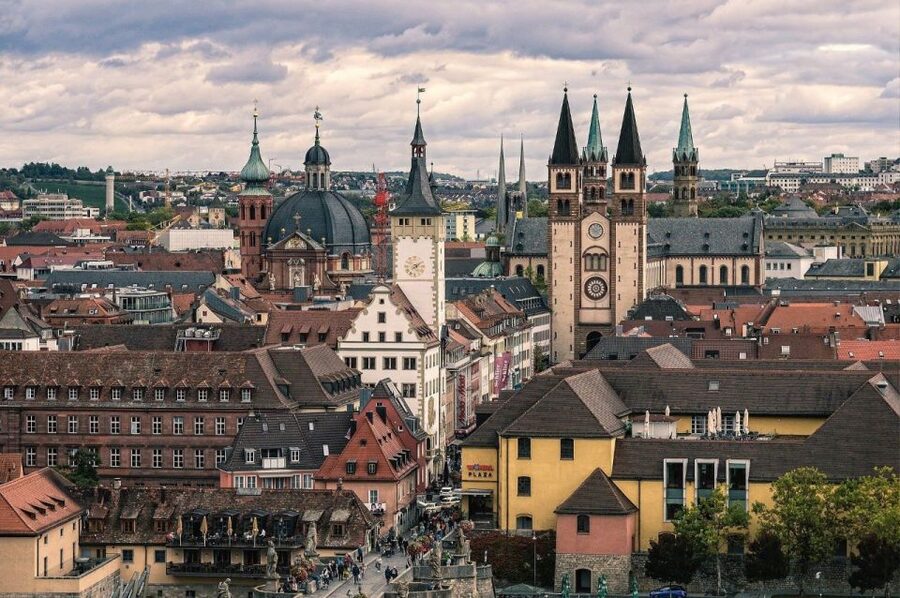
The Residence palace is where the tour turns into big-ticket architecture. Your guide explains that the complex was designed by prominent German Baroque architect Balthasar Neumann.
Even without going inside, you learn to see the building as a system: the scale, the style, and how it fits into the city. This is also one of the stops where a private guide pays off. Neumann is a name you hear in Germany, but here you get enough framing to understand what his work does to the streets around it.
If you plan to visit other palaces in Bavaria later, this stop helps you compare styles with more confidence.
Marienkapelle and the way the route links styles
You also see the Marienkapelle, the chapel of St. Mary. It is described as Gothic, and that contrast matters.
One reason I like this walking route is that it moves through styles fast enough to feel like a timeline, but slow enough that you can notice transitions. You go from Romanesque and church traditions to Rococo façades and then toward Baroque spectacle in the Residence area. The city stops feeling like random sightseeing and starts feeling like a story.
Vierröhrenbrunnen and Market Square side scenes
The tour does not only chase the biggest names. You also pass the Vierröhrenbrunnen fountain. Small stops like this are useful because they keep the walk from feeling like one long monument sprint.
Fountains in central Europe are often more than decoration. They mark public space, daily life, and city identity. Even if you just use this as a reset point, it helps break up the heavier architecture stops so you can keep enjoying the day.
Practical comfort tips for a smooth 2 hours
A few things you can do to make your walk more enjoyable:
- Bring comfortable shoes. Old Town surfaces can be tougher than they look.
- Dress for rain or shine. The tour keeps going, so bring a light rain layer even if the forecast looks friendly.
- If it is hot, you will be glad you can slow down at shaded spots. In feedback, guides were attentive about finding shade when temperatures ran high.
- Use the private format well. Ask your guide follow-up questions. Several guides were praised for knowing answers quickly and clearly.
Value for money, private group math that actually makes sense
At $319 per group up to 15 people, the pricing works best when you treat it as a shared “thinking time” with a real pro, not just a guided stroll.
Here is the practical way to judge the value:
- If you are traveling as a couple or small family, private guiding can beat the cost of two or three separate group-tours, especially when you want flexibility.
- If you are a small group of friends, the per-person cost drops quickly as you fill out the group.
- If you care about wine context and architecture interpretation, the guide’s explanations are the product. This is not a tour where you pay for someone to point at buildings and walk away.
Also, entrance fees are not included. That is normal for walking tours, but it means your total plan depends on what you choose to enter on your own later.
Who this tour fits best in Würzburg
This private walk is a strong fit if you:
- Want a first pass at the Old Town highlights in 2 hours
- Care about the connection between Würzburg and Franconian wine
- Appreciate Baroque and Rococo architecture, especially Balthasar Neumann’s Residence
- Like guides who personalize the experience and adjust pacing
It may not be the best match if:
- You want lots of museum time or lots of interior visits, since entrance fees are not included
- You strongly prefer an even split between secular sights and churches, because the route can lean more into church storytelling
What to do after the tour, so you keep momentum
Once the walking tour ends back at the meeting point, you will be ready to explore with a better map in your head. You will know where the main squares sit, how the river viewpoint connects to the fortress, and why certain buildings matter to the wine story.
A smart next step is to plan your remaining time around the theme you learned. If you are into wine, look for a Franconian wine stop nearby and use the guide’s context to choose what to try. If architecture is your thing, you can return to the Residence area or compare what you saw from the bridge viewpoint.
Should you book this Würzburg private walking tour?
If you want an efficient, high-quality orientation to Würzburg’s Old Town, plus real context for Franconian winemaking and the major architecture names, I think this is a solid booking. The private format helps, and the feedback pattern is clear: guides tend to be friendly, punctual, flexible, and quick to answer questions.
I would book it especially if your travel style is talk-with-a-guide travel, not solo wandering. If you mainly want the broadest possible sightseeing with minimal church focus, you should message your preferences at the start and ask for balance. For the right fit, this tour gives you exactly what you want from a short trip, strong sights plus the meaning behind them.
FAQ
How long is the private walking tour in Würzburg?
The tour duration is 2 hours.
Where do we meet the guide?
Meet your guide in front of the Tourist Office.
What languages are available for the live guide?
The tour is available with a live guide in German and English.
What is included in the price?
The tour includes a local professional tour guide and the walking tour. Possible customizing is also offered.
Are entrance fees included?
No. Entrance fees are not included.
Is the tour suitable for wheelchair users or mobility impairments?
No. It is not suitable for people with mobility impairments or wheelchair users.
Fresh on the arrivals board for Wurzburg

Walking Tours, compared.
Berlin City walk Government District and Places of Democracy
Read our review →
Berlin’s Best: 2 Hour Walking Tour Third Reich and the Cold War
Read our review →
Browse the lists this tour appears in