
Reviewed · HISTORICAL TOURS
Where It All Began: Berlin’s Queer & Trans History Tour
A queer history tour, told block by block. This 3.5-hour walk through Berlin follows LGBTQIA+ stories from early activism to Nazi persecution, post-war organizing, and today’s nightlife energy.
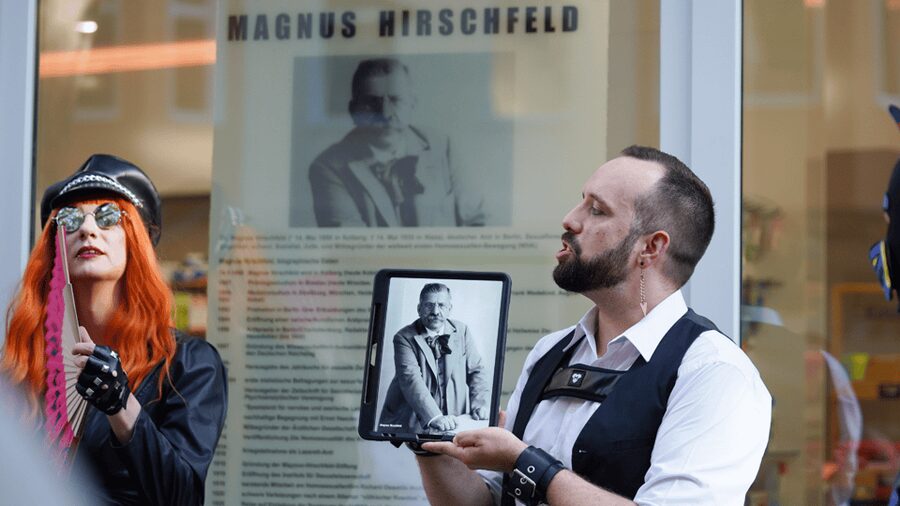
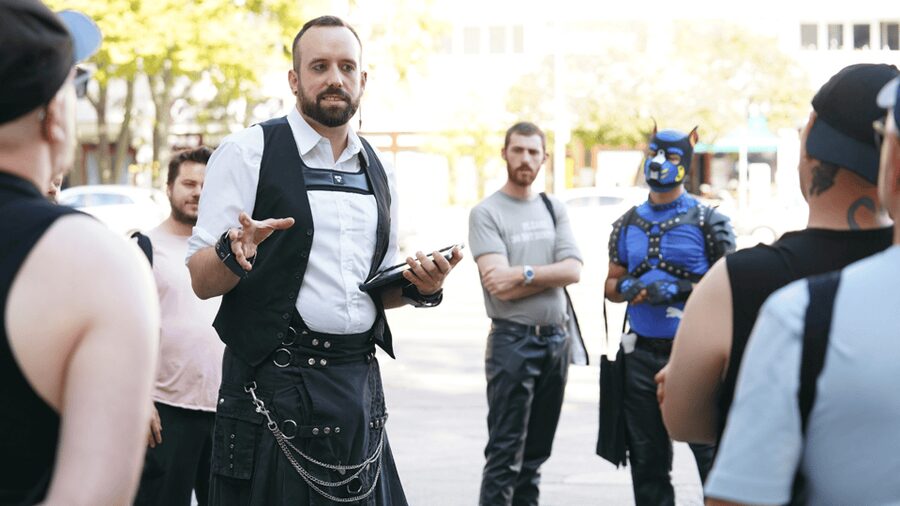
I really like the small group size capped at 10 people, because you actually hear the details instead of tuning out. I also love the iPad augmented reality setup, where historical photos show up in the exact spots you’re standing, plus the tour provides lots of archival media and photo fun.
One consideration: this is a walking tour and it needs good weather, so plan on comfortable shoes and a light layer you can handle if the day changes.
In This Review
- Key Things You Should Notice on This Tour
- Where Berlin’s Queer Rights Story Starts, Karl-Heinrich-Ulrichs-Straße 1
- Nollendorfplatz and Nazi Persecution, Then the Night of the Long Knives
- Schwerinstraße 13: Lesbian Life, Toppkeller, and Music as Resistance
- Nollendorfstraße 17: Christopher Isherwood, Cabaret Inspiration, and Unexpected Police History
- Magnus-Apotheke: Hirschfeld, the Institute for Sexual Science, and Paragraph 175
- Drag and Trans Nightlife, from Eldorado to Chez Romy Haag
- Prinz Eisenherz: Post-War Activism, SchwuZ, and Charlotte von Mahlsdorf
- Internationale Stele GEGEN DAS VERGESSEN: The Aids Crisis and Divided Berlin
- Metropol: Pride, Queer Nightlife, and Gentrification Tensions
- Price and Value: Is $83.13 Worth It for 3.5 Hours?
- Timing, Start and End Points, and How to Plan Your Walk
- Who Should Book This Tour, and Who Might Want Another Option
- Should You Book the Where It All Began Tour in Berlin?
- FAQ
- How long is the Berlin Where It All Began tour?
- How many people are in the group?
- Is the tour offered in English?
- What AR and photo features are included?
- Where do I meet the tour and where does it end?
- Are coffee or drinks included?
- Can I cancel for a full refund?
Key Things You Should Notice on This Tour
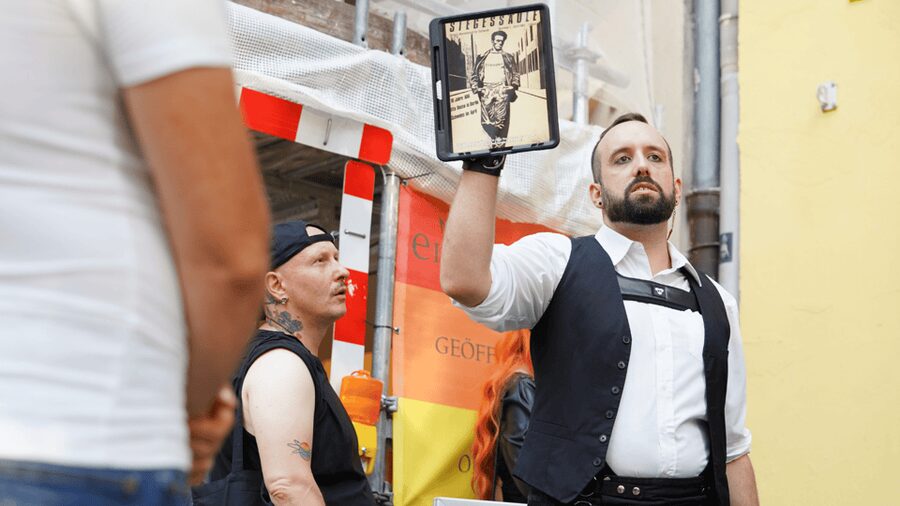
- iPad augmented reality at the street level so you see archival images where the stories happened
- Mixies AR photos for personalized, take-home memory shots with the group
- A guide who blends scholarship and activism, with Jeff highlighted in past tours
- 10 stops across eras, from Karl-Heinrich-Ulrichs to Metropol’s nightlife and Pride links
- Highly emotional material including Nazi persecution and the Aids crisis, handled through real locations
- Free admission at the listed stops, so you can focus on the walk and the stories
Where Berlin’s Queer Rights Story Starts, Karl-Heinrich-Ulrichs-Straße 1
The tour begins at Karl-Heinrich-Ulrichs-Straße 1, named for Karl Heinrich Ulrichs, a key early voice in public debates about homosexuality. The point here is bigger than one person. You get a sense of how long Berlin has been a place where queer identity, rights, and language were being argued in public, long before modern terms existed.
In practice, this first stop sets the tone. It’s also a smart move for your brain. You start with the idea that queer rights did not only appear in modern activism, it grew from long arguments, brave statements, and people pushing back against laws and stigma.
If you’re the type who likes context before emotion, you’ll appreciate how the tour scaffolds everything that follows.
More centuries per city block:
- Berlin: Natural History Museum Entrance Ticket
★ 4.6 · 3,382 reviews - Berlin: 3-Hour World Heritage Cruise to Potsdam
★ 4.5 · 1,569 reviews - Berlin: History of the Third Reich Guided Walking Tour
★ 4.7 · 791 reviews
Nollendorfplatz and Nazi Persecution, Then the Night of the Long Knives
At Nollendorfplatz, the story turns hard. This area is presented as a central location in Berlin’s LGBTQIA+ history, and the tour connects several threads: Adolf Brand and right-wing gay activism, Ernst Röhm’s complicated role as an openly gay figure within the Nazi movement, and how Hitler’s stance led to widespread persecution.
You also learn about the Night of the Long Knives, when Röhm and other queer individuals tied to the Nazi party were executed. The stop doesn’t stop at rhetoric either. It brings in what Nazi persecution looked like on the ground, including the pink triangle used in concentration camps, and the resilience of those who resisted.
What I’d consider as a traveler: this is not a “quick facts” stop. It’s heavy material anchored in specific places. If you’re sensitive to atrocity topics, mentally prepare for that, and pace yourself. The advantage is that real streets make it harder to treat history like a textbook.
Schwerinstraße 13: Lesbian Life, Toppkeller, and Music as Resistance
At Schwerinstraße 13, the focus shifts to lesbian life in 1920s Berlin. That matters because so many queer histories you find elsewhere overemphasize gay male narratives, while lesbian spaces often get squeezed into the background. Here, the tour puts lesbian community and visibility at the center.
You visit the site associated with Toppkeller, described as a famous lesbian bar. The lesson is practical and emotional: places like this weren’t just nightlife. They were safety, community, and a way to exist openly enough to build culture.
The tour also connects queer culture to mainstream artistic memory through names like Claire Waldoff, a lesbian cabaret singer whose songs became anthems of defiance. Josephine Baker also appears here as a bisexual performer whose gender-bending presence made her a sex symbol for all genders. Even if you only know these names lightly, the stop makes you see why art and nightlife mattered as resistance.
Nollendorfstraße 17: Christopher Isherwood, Cabaret Inspiration, and Unexpected Police History
This stop combines literature, popular culture, and a surprising political angle. You explore the homosexual department of the Berlin police force, which is a strange but important detail. It underlines how authorities tracked queerness, even while queer people formed communities anyway.
Then the tour pivots to gay male life in 1920s Berlin through the story of Christopher Isherwood. His writings about being in Berlin are highlighted as the inspiration for the Cabaret musical and film. The tour adds another layer by discussing Isherwood’s relationship with Heinz Neddermeyer and their escape from Nazi Germany as queer refugees.
If you like connecting real people to what later became famous art, you’ll enjoy how this stop links street-level history to a story you might already know from stage or screen. It also helps you understand why art about queerness often carries urgency, not just romance.
Magnus-Apotheke: Hirschfeld, the Institute for Sexual Science, and Paragraph 175
Magnus-Apotheke is where activism becomes science and policy. Magnus Hirschfeld’s work in LGBTQIA+ advocacy is central here, including the Institute for Sexual Science and the Scientific-Humanitarian Committee, presented as the world’s first organization dedicated to queer rights and gender studies.
This stop also covers Hirschfeld’s theories, including ideas about sexual intermediaries and the notion of Berlin’s third gender. You’ll also hear about the world’s first gender-affirming surgeries connected to Dora Richter, Lili Elbe, and Karl M. Baer. That part can feel shocking if you aren’t expecting medical history inside a rights tour, but it’s included to show how early these debates and experiments were.
The most sobering thread is the fight against Paragraph 175, the law that criminalized homosexuality, plus the destruction of the Institute by the Nazis. It’s a painful reminder that when regimes wanted to erase, they didn’t only persecute people. They erased institutions and records too.
Practical tip for your day: take a moment here to slow down. This is one of the most information-dense stops, and it helps to mentally group it into rights, science, law, and erasure.
Also holding a platform in Berlin

Drag and Trans Nightlife, from Eldorado to Chez Romy Haag
Two stops in this tour keep returning to nightlife, but not as a fun afterthought. They show nightlife as infrastructure.
First, at Denns BioMarkt, you hear about the former site of Eldorado, one of Berlin’s most famous drag bars of the 1920s. Eldorado is described as a hotspot for gender-nonconforming people and queer performers, and the stop also points out the paradox of Ernst Röhm frequenting it while being part of a regime that later persecuted LGBTQIA+ people.
Then the tour moves to Connection, focusing on the trans community in West Berlin during the 1970s and 1980s. Chez Romy Haag comes up as a legendary trans-led nightclub that’s described as a revolution for Berlin nightlife. The point is clear: these spaces allowed gender-diverse people to exist with freedom, and they set up the groundwork for modern queer club culture.
If you want a tour that balances joy with realism, this pairing works. It gives you both the pleasure of community spaces and the reasons those spaces had to fight for survival.
Prinz Eisenherz: Post-War Activism, SchwuZ, and Charlotte von Mahlsdorf
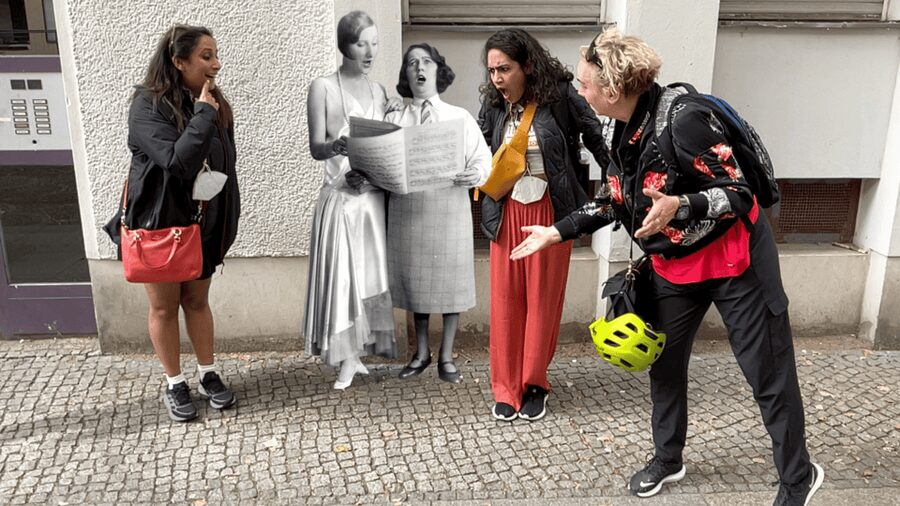
At Prinz Eisenherz, the tour shifts into post-war queer activism. You learn about Homosexuelle Aktion West-Berlin as one of the early queer rights organizations after WWII. Then it moves into the founding of SchwuZ, which is described as one of Berlin’s iconic queer clubs.
The stop also highlights Charlotte von Mahlsdorf, a trans woman who preserved Berlin’s queer history and created safe spaces for the community in East Berlin. That preservation piece is quietly powerful. It reminds you that activism isn’t only protests and laws. Sometimes it’s keeping memory alive so the next generation has something to hold onto.
Drawback to watch for: this stop covers several organizations and names, and if you’re tired from earlier heavy material, you may want to slow your note-taking and just listen carefully.
Internationale Stele GEGEN DAS VERGESSEN: The Aids Crisis and Divided Berlin
Stop 9 brings the tour into the Aids crisis era, with a focus on how it affected a divided city and how queer people organized to survive. You’ll hear about Rita Süssmuth, presented as one of the few politicians advocating for Aids awareness.
There’s also a memorable metaphor included: the Berlin Wall being called the condom of the GDR. The tour uses this to highlight the stark differences in how East and West Berlin handled the crisis.
This is one of those stops where you can feel the emotional weight even if you don’t fully know the facts. The value of the walking format is that you’re learning on location, not in a lecture hall. It also makes the contrasts feel less abstract.
If you’re planning your day, this is a stop where you might appreciate a sip of water, especially if you’re visiting in warmer months.
Metropol: Pride, Queer Nightlife, and Gentrification Tensions
The tour ends at Metropol, linking queer nightlife history to activism and modern events. Metropol is described as important to early gay community and the techno scene, and the tour connects it to today’s world-famous Berghain and Lab.Oratory.
You also hear about SO36’s legendary queer nights, Folsom Europe as Europe’s biggest fetish festival, Kreuzberg Pride, and the Dyke March. Then the tour adds an ongoing fight for an affordable city through the radical Tuntenhaus squat.
This finish is smart because it doesn’t pretend history is finished. It treats today’s culture as something that had to be built, defended, and kept accessible. Even if you never go clubbing, you’ll understand why these spaces matter in a city that keeps changing.
The practical payoff: you end near a nightlife hub, so after the tour you can decide what kind of evening you want, from quiet exploring to party energy.
Price and Value: Is $83.13 Worth It for 3.5 Hours?
At $83.13 per person for about 3 hours and 30 minutes, you’re paying for more than a walking lecture. You’re also paying for a guide, small-group time, and the tech and media components that make the past visible.
Here’s what you get for that price, as presented for this experience:
- A guided walk led by a queer activist and gender scholar, with Jeff called out in past feedback for bringing the material to life
- iPad augmented reality elements that show historical photographs where you are standing now
- Mixies, AR-based personalized photos that help you remember specific spots
- 200+ rare historical photos, videos, and archival materials
- Insider tips on modern queer nightlife and events
That combination is the real value. A typical group walking tour gives you interpretation. This one gives you overlays, photo effects, and a visual archive you can reference again later.
If you prefer self-guided walking, it might feel like you’re paying for dramatized tech. But if you want to see how the past lines up with the present, the iPad AR makes the price easier to justify.
Timing, Start and End Points, and How to Plan Your Walk
The tour starts at 2:00 pm. Your start point is Alnatura Super Natur Markt, Else-Lasker-Schüler-Straße 18, 10783 Berlin, and it ends at Metropol, Nollendorfpl. 5, 10777 Berlin.
It’s near public transportation, which helps on a city like Berlin where you may switch lines mid-day. The itinerary is built around short segments at each site, so you’re not stuck at one location for long. Still, you’ll be outside and moving, so treat it like an active afternoon.
Also, there’s a note that coffee and/or tea isn’t included, though the tour might visit a café for a break. I’d plan on keeping cash or card ready for a quick drink, especially if you want to cool down before the heavier stops.
Who Should Book This Tour, and Who Might Want Another Option
This is a strong fit if you:
- want a queer and trans history tour that covers more than one era
- like small groups and direct conversation with a guide
- want the AR photo element that pairs historical images with current street views
- care about how LGBTQIA+ life and activism evolved into today’s scene
It might be less ideal if you:
- get overwhelmed by heavy topics. The tour includes Nazi persecution and the Aids crisis.
- dislike walking tours in general, since this one is a long, street-level route.
- need a completely relaxed pace with lots of sit-down time, because most stops are brief.
The tour is offered in English, and most travelers can participate. Service animals are allowed too.
Should You Book the Where It All Began Tour in Berlin?
I’d book it if you want Berlin queer and trans history tied to real addresses, not just general themes. The mix of eras makes the story feel continuous, and the iPad AR is not just a gimmick. It helps you see what the tour is talking about in the exact place it happened.
If you’re okay with emotional subject matter and you’re ready for a walk that’s part education, part reflection, part club-culture context, this tour is a strong use of an afternoon. And with the group capped at 10, you’re likely to leave with more than facts, you’ll leave with mental images you can carry around Berlin for a long time.
FAQ
How long is the Berlin Where It All Began tour?
It runs about 3 hours 30 minutes.
How many people are in the group?
The tour has a maximum of 10 travelers.
Is the tour offered in English?
Yes, it’s offered in English.
What AR and photo features are included?
You get iPad augmented reality elements, plus Mixies for fun personalized photos with AR elements. The tour also includes 200+ rare historical photos, videos, and archival materials.
Where do I meet the tour and where does it end?
It starts at Alnatura Super Natur Markt, Else-Lasker-Schüler-Straße 18, 10783 Berlin, and ends at Metropol, Nollendorfpl. 5, 10777 Berlin.
Are coffee or drinks included?
No, coffee and/or tea is not included. A café stop for a break might be part of the experience.
Can I cancel for a full refund?
Yes, free cancellation is available. You can cancel up to 24 hours in advance for a full refund.
Fresh on the arrivals board for Berlin

Historical Tours, compared.
City History Canal Sightseeing Tour on a Motorboat
Read our review →
Browse the lists this tour appears in