
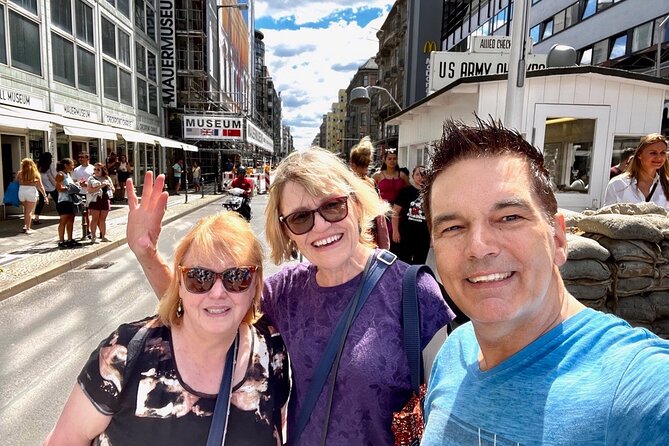
Reviewed · PRIVATE DRIVERS
Welcome/Farewell SightseeingTaxi Tour +Transfer from/to the airport
Berlin looks different when you ride it.
This Welcome/Farewell taxi sightseeing tour is built for speed and comfort, with a guide who explains what you are seeing in plain language. I especially liked the easy pickup and smooth logistics, plus the way Gunter Bauer, GAT-Productions, ties the big landmarks to real turning points in Berlin’s story. One thing to keep in mind is the time is tight, so you get short, smart stops more than long museum wandering.
You also get real value because the price bundles the taxi sightseeing with round-trip airport transfer from BER, not just one city drive. The car stays relaxed, and it is air-conditioned with WiFi on board, so you can recharge between sights. The possible drawback is that if you want lots of indoor time, you will need separate tickets and extra hours beyond this 1 to 3 hour format.
In This Review
- Key Highlights Worth Your Attention
- Why This Taxi Tour Works Better Than a Hop-On Bus
- The Price: What You’re Really Paying For (And When It’s a Steal)
- Getting Picked Up and Getting to Your First Stop Stress-Free
- How the Route Feels on the Ground
- Brandenburg Gate: From Napoleonic Trophy to Reunion Symbol
- The Reichstag and the Parliament World: Power, Glass, and Committees
- Bornholmer Straße Area: Escape Routes and the Wall’s Reality
- Unter den Linden: The Grand Boulevard That Outgrew Its Original Purpose
- Pariser Platz: The Good Room of Berlin, Rebuilt with Purpose
- The Soviet-Era Embassy Building and the CIS Use
- The French and German Cathedral Theaters, and a Tiny Huguenot Story
- Forum Fridericianum and Bebelplatz: Books Burned, Learning Rebuilt
- Royal Palaces and Court Life: Crown Princes, Opera Cafés, Administration
- German Historical Museum Area and the Baroque City Palace Footprints
- Stadtschloss Berlin, the Humboldt Forum, and the Roof-Terrace View
- Berlin Cathedral and Museum Island: Not Old by Age, Old by Feel
- Hackescher Markt and Hackesche Höfe: Small-Scale Berlin Surprise
- The Jewish Life Area Near Hamburger Straße: Places of Worship and Remembrance
- Alexanderplatz and the Socialist-Modern Look
- Red City Hall and Town Hall Spaces You Can Visit
- Nikolaiviertel and Nikolai Church: Reconstructed Old Berlin Feel
- Holocaust Memorial Area: The 2,711 Stelae and What the Space Forces You to Notice
- Potsdamer Platz and the Death Strip Story to Modern Entertainment
- Who This Tour Suits Best
- Quick Tips to Get the Most From Your Ride
- Should You Book It?
- FAQ
- How long is the taxi sightseeing tour?
- Is there pickup from BER airport?
- Is there pickup from my hotel for the farewell option?
- What language is the tour offered in?
- What’s included in the price?
- Are admission tickets included?
- Are snacks provided?
- Is the tour private?
- Can I request a baby car seat or help with stroller space?
- Is the tour friendly for service animals and accessibility needs?
Key Highlights Worth Your Attention
- Airport pickup plus city tour in one package so you start right away
- Photo-friendly photo stops at major landmarks with clear explanations
- English-speaking private guide focused on practical context, not lectures
- Major Berlin “eras” in one route, from Prussian grandeur to the Wall to today
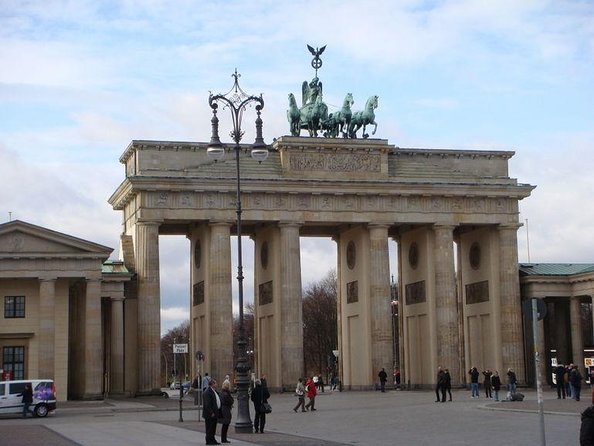
- Stops include free entry photo windows at some famous places (like Brandenburg Gate, Pariser Platz, and Stadtschloss area)
- Comfort details matter, including parking fees, WiFi on board, and an air-conditioned vehicle
Why This Taxi Tour Works Better Than a Hop-On Bus
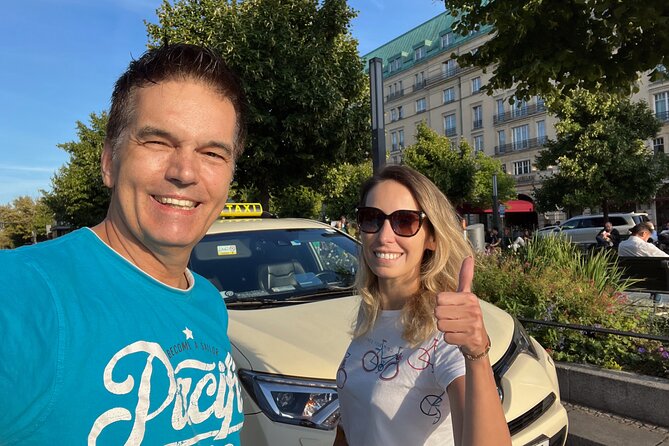
Berlin is wide, and walking all the “best-of” landmarks in one day can feel like a constant sprint. This tour solves that by using a taxi format: you move fast between zones, then you spend just enough time at each place to get it, photograph it, and move on.
I like tours where the guide’s job is to help you understand what you see, not just name buildings. Here, the explanations connect architecture to power, war, and rebuilding, so the city stops feeling like disconnected postcard scenes.
The private setup also helps. It is only your group, so you can ask quick questions, change the emphasis a bit, and keep the day running without the usual crowd friction.
Also holding a platform in Berlin
- Private Berlin Custom Half-Day Tour with Private Driver and Guide
★ 5.0 · 59 reviews - Berlin Private Transfer to/from Berlin Brandenburg Airport
★ 4.0 · 32 reviews - Berlin Private Airport/Hotels Transfer Service | English Speaking
★ 4.5 · 27 reviews
The Price: What You’re Really Paying For (And When It’s a Steal)
At $171.52 per person for about 1 to 3 hours, the headline number can look steep, until you factor in what is included. You are not only paying for guided sightseeing. You are also paying for a taxi ride according to the tariff and the city tour (both with VAT included), plus parking fees.
Then comes the big value driver: the Welcome version includes transfer from/to BER airport. If you were planning an airport taxi anyway, this package often makes the sightseeing part feel like the bonus.
This is also offered with mobile tickets and group discounts, which can help if you are traveling with friends or family. If you are a couple, it is still priced for two people to split the “private ride” advantage.
Getting Picked Up and Getting to Your First Stop Stress-Free
This is where the tour earns points fast.
If you book the Welcome tour, you are picked up at BER airport. You share your flight number and arrival time, and you send a quick SMS/WhatsApp after landing, once you have your bags at the baggage carousel. The guide waits about 5 minutes away from the arrivals hall, in the 2nd lane (not the queue lane for other taxis).
If you book the Farewell tour, pickup is from your hotel or accommodation. You come to the street only after you get the SMS/WhatsApp message from the guide, and including a cell phone number when you book is part of the system.
For you, that means less wandering with luggage, less uncertainty about who is where, and a cleaner start to the day.
How the Route Feels on the Ground
Think of this as a guided “big picture” loop with short exits. Some places are quick, free photo stops. Others are drive past unless you want extra time. The guide also marks which sights are worth stepping out for, and which are better absorbed from the taxi window.
That pacing matches Berlin well. The city is full of signs that reward context, but the city is also full of distances that punish rigid walking plans.
If your group has mixed interests, the flexible structure is useful. You can focus on monuments and architecture, or on the Wall and modern politics, without the whole group losing time.
Brandenburg Gate: From Napoleonic Trophy to Reunion Symbol
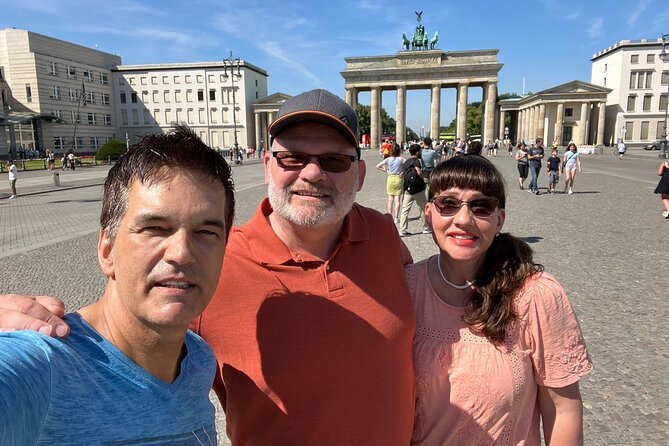
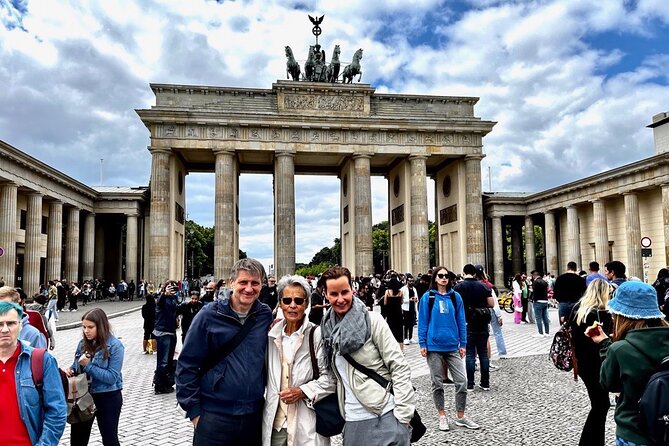
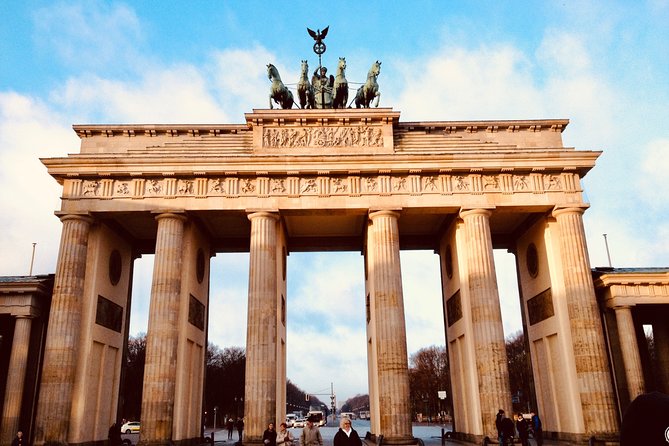
The first major stop is the Brandenburg Gate, and the guide’s explanation turns it into more than a famous photo spot. You learn how it began as a city gate, then later gained new meaning after Napoleon. The story of the Quadriga and the goddess of peace becomes a clue to how empires repurpose symbols.
During the division of Berlin, the gate’s surroundings were cleared away, with the area shaped into a barrier reality. For a long time, it stood kind of alone, separated and inaccessible from the west through the wall, and fenced off from the east.
Only after the turning point, the fall of the Wall, did the gate regain its role as a symbol of German reunion. That shift in meaning is why this stop is worth more than a 30-second snap.
Onward connections from Berlin:

The Reichstag and the Parliament World: Power, Glass, and Committees
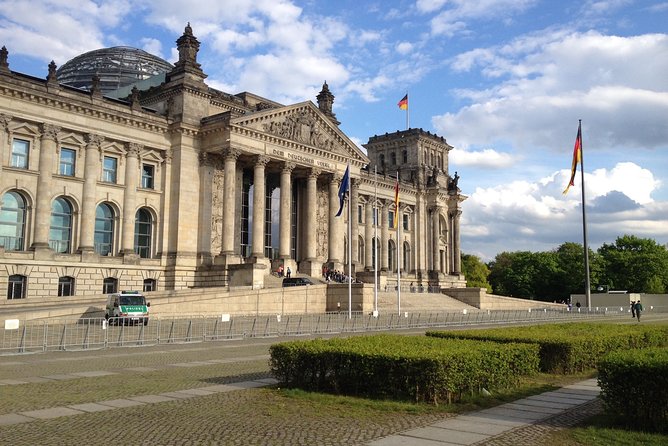
The taxi then shifts toward the parliament area around the Reichstag. The guide points out that this building was rebuilt and redesigned for a reunited Berlin, with the famous glass dome and new presentation choices that now represent the city’s modern political identity.
You also get a helpful “how it works” explanation. The main action happens in committees, with final speeches in the chamber. It makes the whole place feel less like a stage and more like an actual machine for decision-making.
There is also time for the “outside picture” moment. If you are short on time, you still understand what you are looking at: the building is both political workspace and visual symbol.
Bornholmer Straße Area: Escape Routes and the Wall’s Reality
One of the most sobering parts of the route is the stop connected to Berlin Wall crossing history, described as the only point with further travel between East and West at the time of division.
You learn how the station area functioned under barriers and checkpoints, with surveillance in the middle of it. The story focuses on how escape attempts sometimes succeeded, and sometimes did not, and how the Wall turned human plans into high-stakes risk.
If you want one takeaway from Berlin’s 20th-century history, it is this: the Wall was not just concrete. It was procedures, fear, and constant monitoring.
Unter den Linden: The Grand Boulevard That Outgrew Its Original Purpose
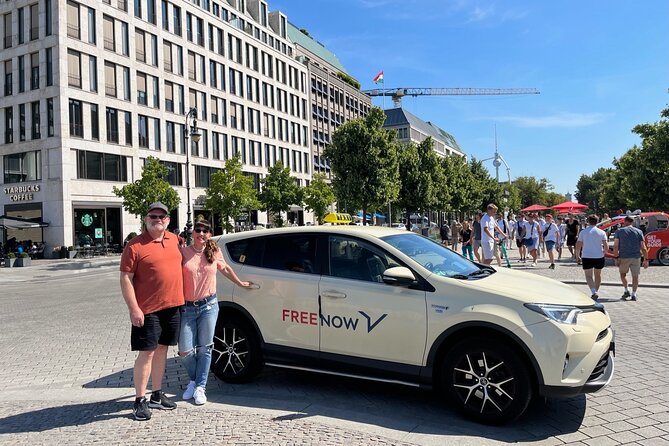
After the heavy Wall history, the route moves to a classic Berlin boulevard experience. The guide explains how this route started as a hunting path tied to the Elector, then grew into the grand tree-lined boulevard you recognize today.
You learn why the trees mattered in the early design debate, walnut versus linden, and you see how the city kept shaping itself around taste, politics, and power.
Along the street, you pass major institutions like the State Library and Humboldt University, plus the State Opera area. Even if you do not stop, the view from the taxi window gives you a sense of Berlin’s “centerline,” the axis that matters.
Pariser Platz: The Good Room of Berlin, Rebuilt with Purpose
The next anchor is Pariser Platz, framed as the good room of Berlin. The guide explains why this square feels like an official stage: war and later decades left it stripped, and the Brandenburg Gate became the key survivor nearby.
You also learn how the Cold War division physically separated movement around the gate, with thick wall remnants from the west and fencing from the east. Then comes the big idea: after the Wall fell, they rebuilt the surrounding structures with modernization, keeping the volume and alignment but updating the architecture.
A key practical moment here is that it is a compact area. You can absorb a lot of embassies and institutions without spending your whole day walking.
The Soviet-Era Embassy Building and the CIS Use
Pariser Platz also includes discussion of the Soviet Union’s large foreign representation in that central position. The guide frames the building’s size as a political statement, especially against the backdrop of other embassies being in debt and ruins after war.
You also hear that the building style could include an inner courtyard, even when alignment rules suggested flush street edges. Later, the guide notes it continued in use in successor-state form as CIS.
This is one of those stops where the city layout itself feels like a timeline. You are not just learning architecture. You are learning how governments broadcast power.
The French and German Cathedral Theaters, and a Tiny Huguenot Story
Next, you get a guided look at the two “cathedral” style buildings that are actually theatre and concert settings. The guide clarifies a detail that makes the place more interesting: they are not cathedrals with bishops seats, but houses that Friedrich II styled with a cathedral-like look.
One side connects to a French-speaking reformed congregation and a small museum tied to Huguenot refugees. If you like Berlin for its layered cultural groups, this is a good stop to slow down for.
Forum Fridericianum and Bebelplatz: Books Burned, Learning Rebuilt
The route then touches the Forum Fridericianum area and the broader “walk-through” feeling of central Berlin. You are guided through how spaces like the St. Hedwig Cathedral, the State Opera, and Humboldt University contribute to one larger civic zone.
Then you reach Bebelplatz, described as a place you can cross easily, unless there is a crowd. The guide points out the glass window in the floor that signals an empty library space, tied to the book burnings on May 10, 1933.
That detail matters because it is physical. You can stand where the event is remembered and then look at the city’s continued education mission around it.
Royal Palaces and Court Life: Crown Princes, Opera Cafés, Administration
The tour also notes the nearby palaces often overlooked once Unter den Linden’s biggest objects grab attention. The guide highlights the names and function: these were linked to crown princes and princesses, with birth and growing up happening here.
You also hear about how the buildings were connected by a corridor, and how the Kronprinzenpalais area had later uses, including functioning as an opera café and exhibition location. The focus here stays practical: why the buildings exist, and how their roles changed across centuries.
German Historical Museum Area and the Baroque City Palace Footprints
At the German Historical Museum setting, the guide explains the evolution from armory tradition into later military history uses, and then into a central museum plan after the Wall fell.
Even more striking is the mention of frescoes with replica dead masks of dying warriors. If you tend to react strongly to visual memorial art, you may feel that moment. It is the kind of symbolism that makes Berlin’s rebuilding story feel personal instead of abstract.
Stadtschloss Berlin, the Humboldt Forum, and the Roof-Terrace View
A major highlight for architecture lovers is Stadtschloss Berlin, rebuilt as the Humboldt Forum and opening in 2021-22. The guide explains that for decades there was basically nothing here but a large parking lot, while the old Berlin Palace silhouette lived on visually even after the war.
Then you hear about the debate and the destruction during the East Berlin era, along with the fact that documentation allowed a more accurate external reconstruction.
If you have time, this is also where the guide points out a typical tour “end-of-line” reward: a view from the roof terrace.
This part feels like a Berlin lesson in cultural memory. The city rebuilt a symbol, but it also rebuilt a question: what do we preserve, and what do we reinterpret?
Berlin Cathedral and Museum Island: Not Old by Age, Old by Feel
Depending on interest, the tour includes time for the Berlin Cathedral and possibly the dome ascent. The guide’s take is straightforward and useful: the cathedral’s current external look suggests age older than it really is, and the real magic is inside, where different beauties are packed together.
After that, you may get a view tour around Museum Island, explained as a UNESCO-protected island in the Spree with five world-famous museums. The guide gives you the classic museum lineup feel: early paintings and the Berlin Palace history, ancient Egypt with Nefertiti, and major sculpture spaces like Pergamon and others.
This is not the time to read every label. It is the time to map the next day you might spend on museum interiors, if you want more.
Hackescher Markt and Hackesche Höfe: Small-Scale Berlin Surprise
One of my favorite parts of Berlin is when the city switches gears, and this tour does it at Hackescher Markt and the Hackesche Höfe.
The guide frames it as a contrast to pomp, showing a smaller, almost small-town feeling. Here you can admire an older Berlin feeling from the 19th century range, while understanding that much older city fabric was destroyed and later restored.
It is also practical: this area helps you understand where to head on a later night for cafés, shopping, and strolling.
The Jewish Life Area Near Hamburger Straße: Places of Worship and Remembrance
Another thoughtful stop route-wise focuses on Jewish life around Hamburger Straße, including Sophienkirche, the Jewish cemetery, and mentions of a Catholic hospital nearby. The guide points out that it was not just one story or a ghetto setup, but a dense patchwork of congregations.
You also get context on a synagogue replacement plan in the 1860s and the fact that the grand hall was lost in bombing. The result is a route that teaches place names and community history without turning it into a checklist.
Alexanderplatz and the Socialist-Modern Look
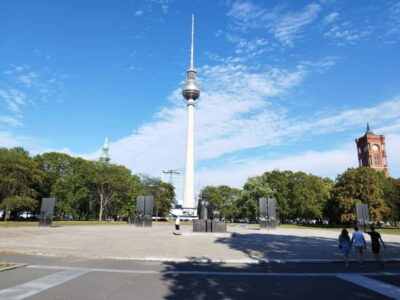
If you want to see Berlin’s modern era in one glance, the taxi route touches Alexanderplatz and the areas built with a GDR redesign mindset. The guide mentions how the original name of the square was Ochsenplatz, and how in the GDR era they wanted a socialist redesign with space and modern buildings as signals of modern life.
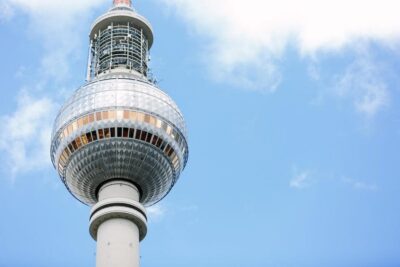
It includes the TV-tower area and the mix of so-called house functions you can spot around the square.
Red City Hall and Town Hall Spaces You Can Visit
The route also covers Rotes Rathaus, with a quick explanation of why it is called that and what role it played in East and West Berlin times. You are told it is possible to visit parts for free, including rooms with statue plaster casts.
If you like civic architecture, you might enjoy how the guide connects the building to governance structures and Berlin’s shifting administrative geography.
Nikolaiviertel and Nikolai Church: Reconstructed Old Berlin Feel
Then you reach Nikolai Quarter with the Nikolai Church, the “garlic house,” and a city museum angle for the oldest church stop. The guide gives context about reconstruction in the 1980s, explaining that the area was rebuilt with the intention of representing old Berlin, even though the original historic fabric was limited.
The practical win is the walking vibe: even if you only do a short segment, you understand why people enjoy this area for atmosphere and old-style street drama.
You also get a note on the old Spree crossing and the church associations with Cologne and Sankt Petri context, which grounds the area beyond its cute looks.
Holocaust Memorial Area: The 2,711 Stelae and What the Space Forces You to Notice
For many visitors, the highlight is the 2711 steles. The guide explains the design confusion first, then tells you what changes once you walk through and experience the space.
The key idea is not just remembrance, it is psychology: you feel uncertainty and disorientation connected to Nazi-era questions about survival, emigration, and recruitment orders leading to extermination. The mention of more information in the basement helps you know where to go if you want details beyond the steles themselves.
Potsdamer Platz and the Death Strip Story to Modern Entertainment
The final big theme stop is a place you likely recognize already: Potsdamer Platz. The guide explains that when the Wall was still standing, this was wasteland, and that earlier traffic was destroyed in war before the creation of an incredibly wide death strip.
Then comes the turn into modern Berlin: development by companies connected to Sony and Mercedes, followed by a full mix of entertainment, museums, cafés, bars, and offices. It is Berlin’s talent for transformation, but it comes with reminders that the transformation sits on top of loss.
Who This Tour Suits Best
This tour is for you if you want to:
- Get oriented fast and understand Berlin’s eras without long planning
- Spend more time learning what matters and less time stuck in transit
- Want airport transfer plus sightseeing with minimal stress
- Prefer a private car with WiFi and air-conditioning over waiting around
It may be less ideal if you want lots of indoor museum time in one sitting, because the format is built for short stops and drive-by context.
Quick Tips to Get the Most From Your Ride
Wear shoes that work for brief stepping out, because you will likely do short photo walks even when the stop is labeled as short. Have your phone ready for the SMS/WhatsApp pickup messages, especially around the airport.
If you have a must-see, tell the guide at the start. With a taxi route, the best use of time is shifting emphasis rather than trying to cover everything equally.
Should You Book It?
Yes, if you are landing at BER and want a smart first impression, or if you are leaving Berlin and do not want your last hours eaten by transport headaches. The strongest reason to book is the combination of airport transfer plus guided sightseeing in one private ride, with comfort details like WiFi and parking handled.
Skip it only if you already know you want to do lots of indoor ticketed museums and you are happy managing airport logistics on your own. In that case, you might prefer separate tickets and self-guided transit.
If you want Berlin to make sense quickly, this is a clean, practical way to do it.
FAQ
How long is the taxi sightseeing tour?
It runs about 1 to 3 hours, depending on timing and what you choose to stop for.
Is there pickup from BER airport?
Yes. For the Welcome tour, pickup is offered from BER Airport. You provide your flight number and arrival time and send a SMS/WhatsApp after landing.
Is there pickup from my hotel for the farewell option?
Yes. The Farewell tour includes pickup from your hotel or accommodation, with the guide sending an SMS/WhatsApp before you step outside.
What language is the tour offered in?
The tour is offered in English.
What’s included in the price?
Included are an air-conditioned vehicle, parking fees, WiFi on board, pickup within the city, transfer from/to BER airport, and both the taxi ride and city tour with VAT included.
Are admission tickets included?
Some stops are listed as free entry for short visits, like Brandenburg Gate and Pariser Platz. Other attractions may depend on what you choose at the time, since only certain items are explicitly marked free.
Are snacks provided?
No. Snacks are not included.
Is the tour private?
Yes. It is a private tour/activity, and only your group participates.
Can I request a baby car seat or help with stroller space?
A baby car seat (MaxiCosy) is available on request. Stroller use is possible if the cradle is removable and the frame foldable, and you should plan for extra space needs for suitcases.
Is the tour friendly for service animals and accessibility needs?
Service animals are allowed, and the tour notes that most travelers can participate. Stroller and baby seat details are available as noted above.
Fresh on the arrivals board for Berlin
Private Drivers, compared.
Shared Arrival Transfer: Munich Airport to Munich Central Station
Read our review →
Private Transfer from Munich Airport to Munich City by Luxury Van
Read our review →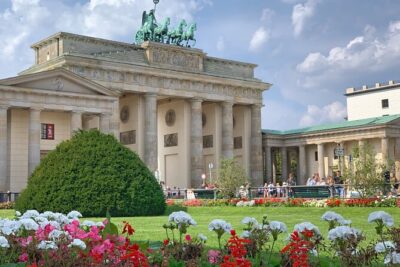
Private Berlin Custom Half-Day Tour with Private Driver and Guide
Read our review →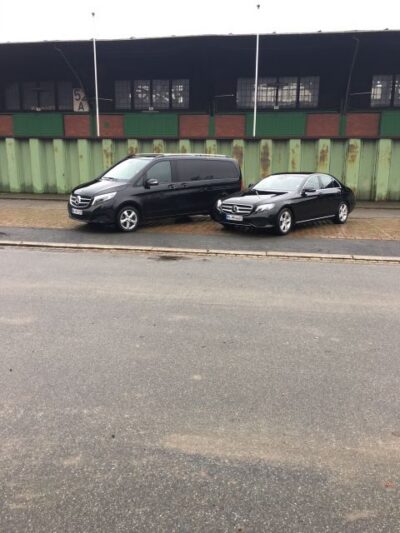
Shared Departure Transfer: Munich Central Station to Munich Airport
Read our review →
Munich Airport (MUC) Private Transfer to Munich City/Hotels
Read our review →
Berlin Private Transfer to/from Berlin Brandenburg Airport
Read our review →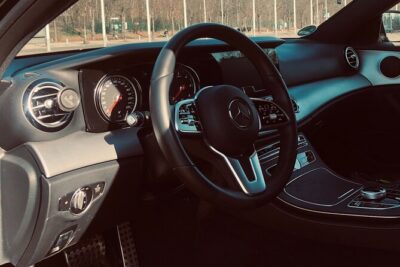
Berlin Private Airport/Hotels Transfer Service | English Speaking
Read our review →Browse the lists this tour appears in