
Reviewed · CITY TOURS
Romantic Berlin Rickshaw City and Photo Tour – incl. pick-up
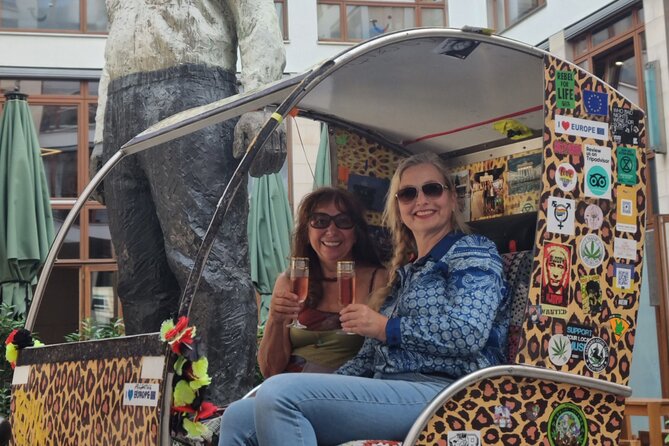
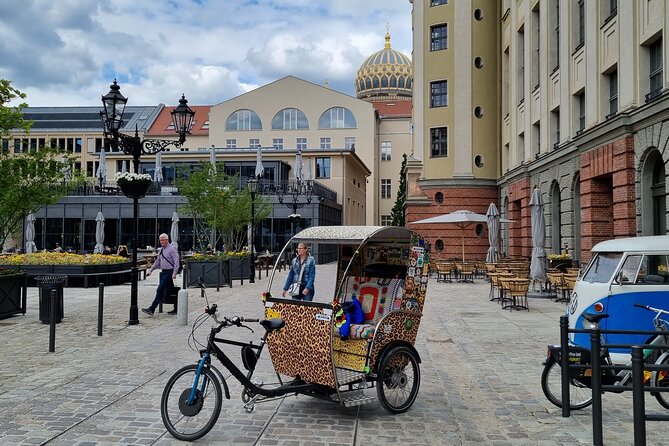
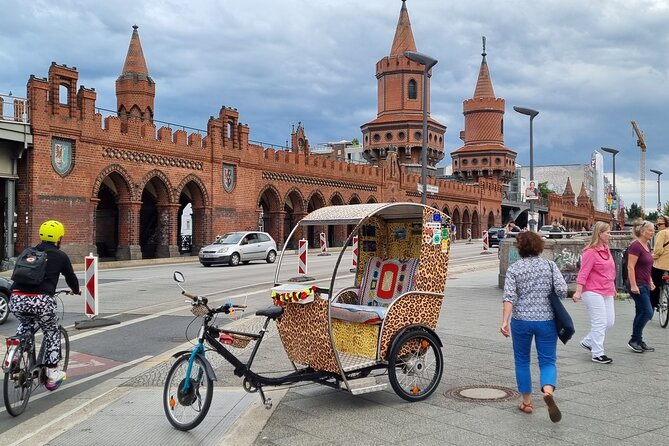
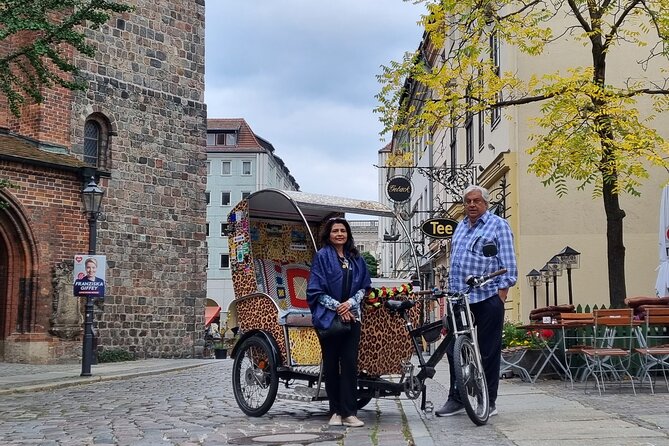
Berlin looks better from a rickshaw seat. This private photo tour mixes headline landmarks and Cold War landmarks, with pickup near the Brandenburg Gate so you can start fast.
I love the private group format for up to 2 people, because it keeps the ride feeling personal instead of crowded. I also like the comfort and “ready-to-shoot” touches, especially the warm blanket, onboard WiFi, and music on request.
The main thing to consider is weather. The tour requires good conditions, and while you’ll get a blanket, you still need to plan for chill days, plus some major sights require tickets you buy separately.
In This Review
- Key moments you’ll care about most
- Why a rickshaw photo tour works so well in Berlin
- Price and what you really get for $183.35 per group
- Pickup from Pariser Platz, and why it matters for your timing
- Brandenburg Gate and Reichstag Building: classic form, dramatic events
- Soviet memorial with T-34 tanks, plus Berlin Zoo grounds for breathing space
- Potsdamer Platz: modern Berlin, rebuilt ambition, and photo-friendly angles
- Topography of Terror and the Wall: history you can photograph, with respect
- Checkpoint Charlie and Friedrichstraße: border reality to shopping streets
- Gendarmenmarkt, German Cathedral exhibition, and Schinkel’s concert hall
- Bebelplatz book burning and Neue Wache: reflection in the open air
- Museum Island and Berlin Cathedral: turning your photos into a gallery
- Nikolaiviertel and Alexanderplatz: end with oldest streets and real momentum
- What to ask your guide to improve your photos
- Should you book this Romantic Berlin Rickshaw City and Photo Tour?
- FAQ
- How much does the tour cost, and is it per person?
- How long is the rickshaw city and photo tour?
- Is pickup included, and how far from the Brandenburg Gate?
- Do I need to buy tickets for stops like the Reichstag?
- What’s included during the tour?
- What happens if the weather is poor or if I cancel?
Key moments you’ll care about most
- Pickup within 2 km of Brandenburg Gate so you do not waste your first hour figuring out transit
- Dedicated photographer support so your photos look planned, not accidental
- Warm blanket, music, WiFi, and drinks that make the ride feel like a date
- A route that pairs big classic landmarks with heavy history without rushing you
- A tight 1 to 2 hour window that works well if you want a highlight loop
- Private experience only for your group which makes flexibility easier
Why a rickshaw photo tour works so well in Berlin
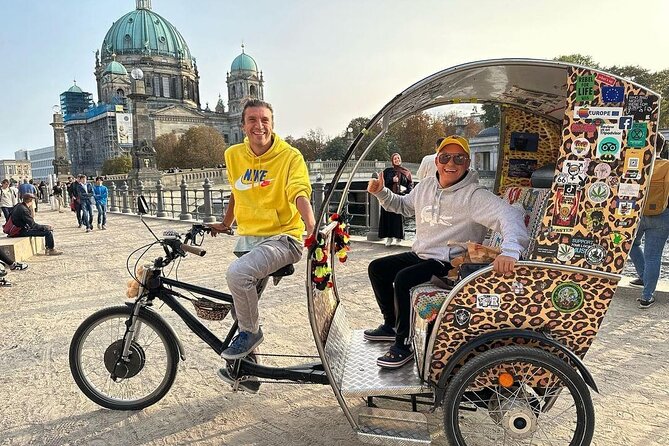
Berlin is a city of layers. You can stand in front of one of Europe’s most famous neoclassical monuments, then turn a corner and be face to face with Germany’s 20th-century scars. A rickshaw format helps because it slows you down just enough to notice details, and it gives you that “moving viewpoint” for photos.
The romantic part is practical, not cheesy. When you are sitting side by side in a private group, the tour naturally feels like an outing, not a checklist. Add in the warm blanket, plus music on request, and it becomes easier to enjoy the ride itself, even when the weather is a bit rude.
For photography, the real value is guidance. You are not just taken from one landmark to the next. You get help thinking about where to stand, what angles work in Berlin’s wide streets and squares, and how to capture the feel of both the grand architecture and the smaller symbolic details.
Also holding a platform in Berlin
- Berlin: Fotografiska Photography Exhibition Ticket
★ 4.6 · 168 reviews - Berlin Essentials: Private Photoshoot at Berlin’s top sites
★ 4.8 · 75 reviews - 5hours: Guide, Chauffeur & Photographer in Berlin private Tour
★ 5.0 · 66 reviews
Price and what you really get for $183.35 per group
The cost is $183.35 per group for up to 2 people. If you go as a pair, that is about $92 each. For a 1 to 2 hour private experience with a guide, a photographer, and included onboard extras, that pricing is easier to justify than a standard public group tour.
What makes the price feel fair is that it is not only sightseeing. You are buying convenience plus photo support:
- private transportation
- a photographer
- guide and travel support
- warm blanket, WiFi onboard, and music on request
- alcoholic beverages included
There is still one “value check” I suggest. If you are the type who wants to spend time inside museums or complete every ticketed attraction, this tour is best as your moving highlight session. Some major sites, like the Reichstag dome area, are not covered by admission here, so you might want to plan a separate visit if you care about interiors.
Pickup from Pariser Platz, and why it matters for your timing
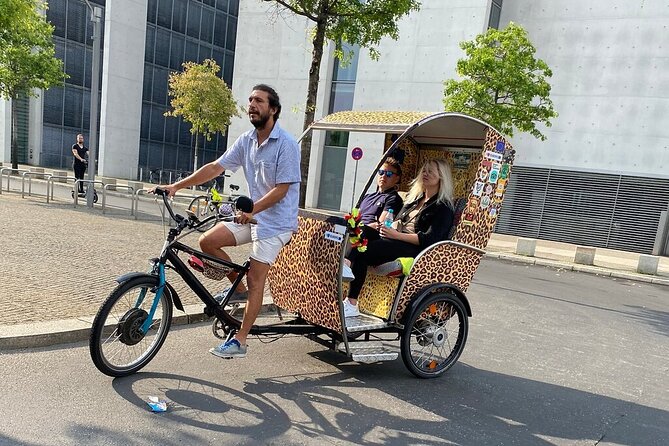
You start at Pariser Platz 4A, 10117 Berlin. Pickup is included within a 2 km radius from the Brandenburg Gate, and anything beyond that can add a 10 Euro per km fee paid on the spot.
That detail matters because Berlin eats time when you have to coordinate transit, street crossings, and meeting points. A pickup near the Brandenburg Gate helps you get to the city’s center quickly, and it reduces your “first day friction,” especially if you are arriving from the airport or juggling other plans.
It also affects the vibe. Starting near the Brandenburg Gate means your first photos already feel iconic, and the ride can immediately shift from classic German monument views into the more reflective stops later in the loop.
Brandenburg Gate and Reichstag Building: classic form, dramatic events
You begin with the Brandenburg Gate, the sandstone masterpiece of German classicism. It was built between 1788 and 1791 based on designs by Carl Gotthard Langhans the Elder, inspired by the Propylaea at the Athens Acropolis. That Greek influence shows up in the symmetry and the strong classical rhythm of the columns.
Why this stop is great for photos: it is one of Berlin’s most recognizable shapes, and it lines up well for wide shots from different angles. If you want your pictures to scream Berlin immediately, this is where you get them.
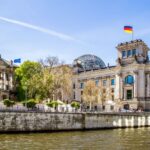
Then you move to the Reichstag Building. This is where you go from architectural beauty to political turning points. In 1918, Philipp Scheidemann of the SPD proclaimed the republic from the balcony at the west portal. In 1933, the Reichstag fire destroyed the plenary hall and the dome. And in 1945, a red flag of the Soviet Union was hoisted by two Red Army soldiers, a symbolic marker of victory.
Two practical notes for you:
- The stop includes time to see and photograph from outside, but admission for the dome or interior areas is not included here.
- This is one of those “sights with weight,” so if you are sensitive to history, you might want a slower pace at this point so the mood does not hit too fast.
Soviet memorial with T-34 tanks, plus Berlin Zoo grounds for breathing space
After the grandeur and political trauma, you reach a memorial scene with very direct symbolism. You’ll see it flanked by two T-34 tanks, a bronze statue of a Red Army soldier holding a rifle on his shoulder. Behind it, names of fallen Soviet soldiers are attached to pillars, and in the rear part of the memorial there are graves of about 2,500 soldiers.
This is not a “quick photo and move on” kind of stop. It lands best when you take a few minutes to look at the text and the setting, because the memorial is designed to keep the focus on individual remembrance, not just a generic monument silhouette.
Then you shift to the zoo park area. This is where the tour becomes more visually relaxing. The grounds trace back to the end of the 17th century, when Elector Friedrich III turned a former hunting ground into a pleasure park for the public. Later, the park was redesigned with different models, and between 1833 and 1838 it became an English public park shaped by Peter Joseph Lenné.
Why you’ll enjoy this section: the tour balances heavy stops with open space. The zoo area covers around 200 hectares, and it includes major sights and landmarks you can spot during the ride and walkabouts, such as the Victory Column, the Federal President’s Office, and the House of World Cultures. The English Garden, laid out around a pond, gives you a calmer place to take photos with softer light and greenery.
Onward connections from Berlin:
Potsdamer Platz: modern Berlin, rebuilt ambition, and photo-friendly angles
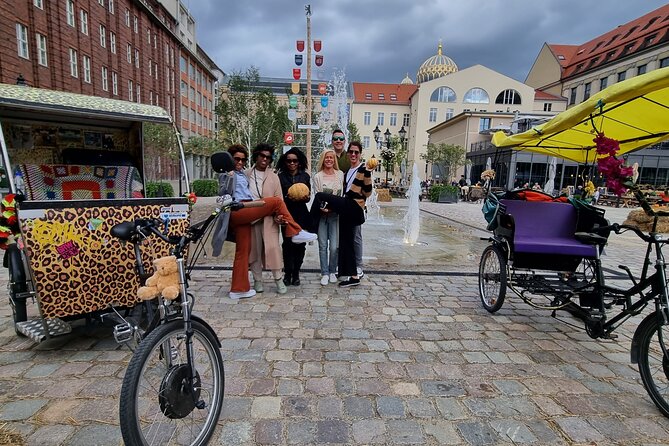
Potsdamer Platz is the transition point into a more modern, kinetic Berlin. The area was planned as an integrated district, and it delivered what planners hoped for: cafes, cinemas, and shops between futuristic skyscrapers are used by both Berliners and visitors.
You’ll hear the story of redevelopment here too, including the creation of a new district on 6.8 hectares between Potsdamer Platz and Reichpietschufer. That kind of urban scale can be hard to understand if you only see it from a bus window, so a rickshaw loop helps. You can adjust your angle as you travel, and you can catch that contrast between older forms nearby and the modern skyline around Potsdamer Platz.
If you care about photos that feel less touristy, this stop helps. The buildings around Potsdamer Platz have lots of geometry, edges, and reflective surfaces that work well for framing without needing to “pose” too much.
Topography of Terror and the Wall: history you can photograph, with respect
One of the most significant parts of the route is Topography of Terror. This site is known for the role it played from 1933 to 1945 as a central location for planning and control of Nazi crimes. The area housed key institutions of the National Socialist terror apparatus of the SS and police, including the Secret State Police Office, the Reich Leadership SS, and the Reich Security Main Office.
Admission for this stop is free, which is a rare bonus in central Berlin. Even if you choose not to spend time reading every display, getting close to the physical space helps you understand why this theme is so central to Berlin’s postwar memory culture.
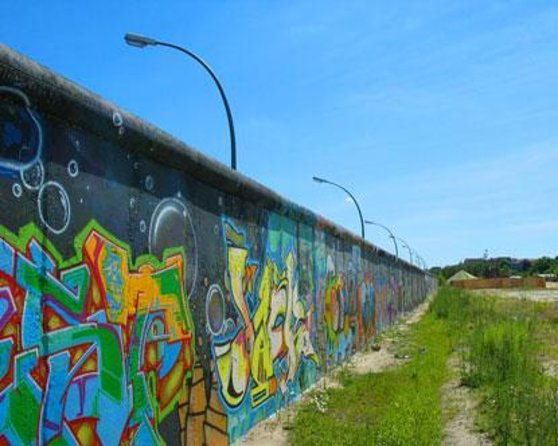
Then you pass the Wall. You may see visible remnants and context around the border concept as you move through the city. The photography angle here is less about getting a perfect postcard shot and more about capturing scale and location, especially where the city layout still hints at what once divided it.
You cannot rush this part, and you should not treat it like background. It is powerful. The best way to handle it is to let it slow your pace for a moment before you move back into more “street scene” photography.
Checkpoint Charlie and Friedrichstraße: border reality to shopping streets
Checkpoint Charlie is one of Berlin’s best-known border crossing symbols. During the division of Berlin, it became the most famous crossing among the three controlled border points run by the Americans, alongside the Glienicke Bridge.
The tour context matters here: during the division, passage was only allowed for foreigners and employees of the permanent representation of the FRG in the GDR, plus GDR functionaries. That fact helps you see the place as more than a movie set.
After Checkpoint Charlie, you move toward Friedrichstraße, a north-south axis. A popular shopping mile developed between Checkpoint Charlie and Friedrichstraße station after the fall of the Wall, and you can feel that shift from political boundary symbolism to everyday city life.
For photos, this section is good if you like “then and now” contrasts. The same corridor can tell two stories: the tense division era and the modern rhythm of Berlin streets.
Gendarmenmarkt, German Cathedral exhibition, and Schinkel’s concert hall
Gendarmenmarkt is a showpiece square, built at the end of the 17th century by Johann Arnold Nering. French immigrants, especially French Protestants known as Huguenots, settled in the quarter, and the square changed names over time before being renamed Gendarmenmarkt in 1799 due to the guard regiment called Gens d´armes.
What I like about this stop for a romantic photo tour is the geometry. It is symmetrical, it frames architecture nicely, and it gives you classic European square shots without needing a long walk.
Nearby, you can see the German Cathedral, which hosts the permanent exhibition Ways – Irrwege – Detours about the historical development of liberal parliamentary democracy in Germany, spread across five floors.
And then you have the concert hall at Gendarmenmarkt, a masterpiece of classical architecture and one of Karl Friedrich Schinkel’s main works. The area’s cultural lineage goes back to 1776, when Frederick the Great helped open a small comedy house there. It was built according to plans by Johann Bouman the Elder, and the theater later became the Royal National Theatre in 1787.
This is a good moment to aim your photos upward or diagonally, because the details on façades and the balance of the square make your shots look intentional, even if you are moving.
Bebelplatz book burning and Neue Wache: reflection in the open air
Bebelplatz is a memorial space tied to one of the most chilling cultural events of Nazi Germany. On May 10, 1933, the Nazis burned more than 20,000 books there. A memorial today marks the act, and the selection was described as books with a non-German spirit, including work by Erich Kästner, the Mann family, Magnus Hirschfeld, Lion Feuchtwanger, Karl Marx, Else Lasker-Schüler, and almost 400 other authors, as well as Heinrich Heine.
If you want a photo that captures meaning, this stop is where you aim for restraint. Look for shots that show the square’s calm space rather than trying to “over-style” the moment. The quote attributed to Heine about burning books and people helps give context if you take a minute to read it on site.
Next to this reflective zone is Neue Wache. Built between 1816 and 1818 based on designs by Karl Friedrich Schinkel, it has served as a central memorial in the Federal Republic of Germany for victims of war and tyranny since 1993.
This part of the route works well after the more architectural stops because it refocuses you. It reminds you that Berlin’s grand buildings also carry memory, and it gives your romantic tour a grounded, honest core.
Museum Island and Berlin Cathedral: turning your photos into a gallery
From Neue Wache, you head toward Museum Island. It is one of the standout museum complexes in Europe and sits on the UNESCO World Heritage list. Even if you are not going inside, the island setting makes your images look like part of a larger art collection.
Then you reach Berlin Cathedral, a must for church lovers, and the Lustgarten. Lustgarten once belonged to the Berlin City Palace, and today it is a popular square where Berliners and visitors come to linger.
The New Synagogue on Oranienburger Strasse adds another powerful layer. What is left of it shines particularly brightly, and it was once the largest and most important synagogue in Germany. This is where a photo tour becomes more than style, because the architecture and remaining structure carry the weight of loss and resilience.
For photography, this zone is strong because you get sweeping views, wide steps, and enough open air space that you do not need perfect timing. You can wait for better light without feeling rushed by the whole group.
Nikolaiviertel and Alexanderplatz: end with oldest streets and real momentum
The route finishes in older Berlin character at Nikolaiviertel, the city’s first and therefore oldest residential area. Alongside the Nikolaikirche, the district offers old town flair with historic houses, restaurants, and coffee shops.
It is a good way to end a romantic tour because it brings you into a neighborhood feel instead of finishing at a monument-only zone. You get that “Berlin after the sightseeing” atmosphere, even if you are just passing through.
Then comes Alexanderplatz, famous and enduring. In the 1920s, in GDR times, and today, it remains one of the liveliest squares in Berlin. Even if you are not staying long, ending here helps your brain reset after the heavier historical stops.
I like finishing with a place that has energy, because it makes the tour feel like a complete story: architecture, politics, memory, and then normal life.
What to ask your guide to improve your photos
You can make this tour noticeably better with a few simple choices. The included photographer helps, so lean into that role.
Here are practical things you can ask for:
- Tell them you want wide shot first, then a closer angle for details at each major landmark.
- Ask for night-or-day thinking if you are unsure when your best light will hit, since Berlin light changes quickly in open squares.
- If you have a phone camera, ask what setting works best for quick landmark shots from a moving seat.
- If you care about romance, ask for photos that include you both in the frame, not just buildings.
Also, because this is weather dependent, you’ll be happiest if you dress for comfort and plan for cold or wind. The warm blanket is included, but you still want layers you can move in.
Should you book this Romantic Berlin Rickshaw City and Photo Tour?
Book it if you want a private rickshaw ride with a photographer and a guide, and you want your Berlin day to feel like a date while still covering the big sights and the important history. It is a strong choice for couples, proposals, birthdays, and anyone who wants their photos to look planned.
Skip it or think twice if you:
- want long interior visits and ticketed experiences, because some places like the Reichstag dome need separate admission
- hate spending time outdoors, since the tour requires good weather
- expect a super deep academic lecture at every stop, because the tour is about seeing and photographing, and you might want to ask follow-up questions if you want extra detail
If you want a highlight loop that feels personal, comfortable, and photo-forward, this one is an easy yes for Berlin.
FAQ
How much does the tour cost, and is it per person?
It costs $183.35 per group, and the group size is up to 2 people.
How long is the rickshaw city and photo tour?
The duration is about 1 to 2 hours.
Is pickup included, and how far from the Brandenburg Gate?
Pickup is included within a radius of 2 km from the Brandenburg Gate. If you are farther than that, there is a 10 Euro per km charge, paid on the spot.
Do I need to buy tickets for stops like the Reichstag?
Admission tickets are not included for the Reichstag stop. Other stops listed as free do not require admission.
What’s included during the tour?
Included are private transportation, WiFi on board, a warm blanket, music on request, a travel guide, a photographer, and alcoholic beverages.
What happens if the weather is poor or if I cancel?
The tour requires good weather. If it is canceled due to poor weather, you’ll be offered a different date or a full refund. You can cancel for free up to 24 hours before the experience for a full refund.
Fresh on the arrivals board for Berlin
City Tours, compared.
1-Hour City Tour by Boat with Guaranteed Seating
Read our review →
Berlin City walk Government District and Places of Democracy
Read our review →
City History Canal Sightseeing Tour on a Motorboat
Read our review →
Browse the lists this tour appears in