
Reviewed · HISTORICAL TOURS
Private Taxi Tour City East & West History and Architecture 3-4h
Berlin history becomes easier in a taxi. This private 3 to 4 hour ride through Berlin East and West strings together famous landmarks and smaller, story-rich details, with plenty of photo moments along the way. I love the warm, air-conditioned comfort when you want to see a lot without constant walking, and I also like how the tour is guided in English by Gunter Bauer, who clearly brings the city to life. One thing to consider: with a route this packed, some stops are brief, so you get a smart taste, not a slow, deep museum day.
The big value for me is the pickup within the S-Bahn ring, which cuts the hassle for both first-timers and travelers staying slightly off the center. Gunter also emails ahead to understand what you care about, and the reviews highlight that he can help when plans change, like rescheduling after delays, while still hitting the key sights. The other plus: you’re not just driven past buildings, you get context and storytelling tied to what you’re actually seeing.
If you’re expecting one long, quiet stop inside every major site, this may feel too fast. It’s designed as a mobile history and architecture overview, so plan to enjoy the close-up views and explanations, then decide later if you want to return to a specific place on foot.
In This Review
- Key highlights you will feel right away
- How the taxi format changes your Berlin sightseeing
- Price and value: what you get for $150.18 per person
- West Berlin first: from the Memorial Church to the Ku’damm boulevard
- Zoo gates, theater elegance, and a city that reads in details
- Museums and memories near the center: Parliament, the Chancellor, and scale
- Under the linden trees: Brandenburg Gate, Gendarmenmarkt, and book burning
- Humboldt Forum and Nikolaiviertel: reconstruction, rivers, and what Berlin chose to show
- Berlin East vibes: Hackesche Höfe, Friedrichstraße, and Wall-era tension
- Areas where history gets heavy: Topography of Terror and the Allied-era layers
- Comfort notes, stopping points, and a tip from how the tour feels
- Who should book this taxi tour
- Should you book this private Berlin East and West taxi history tour?
- FAQ
- How long is the private taxi tour?
- What is the price per person?
- Is the tour offered in English?
- Do I get pickup included?
- Is there WiFi in the taxi?
- Is the vehicle air-conditioned?
- Is this tour private or shared?
- Are tickets digital?
- Are admission fees included for stops like the Humboldt Forum?
- Can kids ride in the taxi with proper seating?
Key highlights you will feel right away
- A private, heated taxi flow that keeps you moving between East and West without transit stress
- Gunter Bauer’s history focus, including WW2 and Cold War context that connects buildings to events
- Big architecture stops with practical photo timing, from the Memorial Church to the Reichstag area
- Iconic city layers you can compare side-by-side, like Kurfürstendamm versus Unter den Linden
- Courtyards and station life in places like Hackesche Höfe and Bahnhof Zoo, beyond the usual postcard list
- Family-friendly pacing with breaks built into the route, plus child seats available for the right ages
How the taxi format changes your Berlin sightseeing
Berlin is one of those cities where the map looks easy, but the logistics can get annoying fast. Distances are real, and public transport can be fantastic, then suddenly not what you wanted after a long day. This private taxi setup solves that. You get a moving base that takes you between districts, keeps you sheltered when weather shifts, and lets the guide steer the day based on what you want to see.
I also like that the tour is built around contrasts. Berlin East and West are not just geography, they are different eras stacked on top of each other, with architecture doing the talking. In one afternoon you can go from grand imperial building plans to postwar reconstructions, then to Cold War memorial spaces, all without losing momentum.
The other underrated benefit is listening time. On a walking tour you’re often stopping, checking your phone, and half-missing the story while you navigate. Here, you can hear the explanation clearly while you roll toward the next stop.
More centuries per city block:
- Berlin: Natural History Museum Entrance Ticket
★ 4.6 · 3,382 reviews - Berlin: 3-Hour World Heritage Cruise to Potsdam
★ 4.5 · 1,569 reviews - Berlin: History of the Third Reich Guided Walking Tour
★ 4.7 · 791 reviews
Price and value: what you get for $150.18 per person
At $150.18 per person, you’re paying for a lot more than a car ride. You’re buying:
- Private transportation with both taxi ride tariff and city tour tariff included
- WiFi on board and an air-conditioned vehicle
- Parking fees taken care of, which matters in central areas
- Pickup within the S-Bahn ring included
That last part is key. If you’ve ever tried to start a tour from the wrong transit stop, you know you lose time before you even begin. With pickup inside the S-Bahn ring, you usually start with less stress.
Is it the cheapest way to see Berlin? No. But it is a strong value if you want to cover both East and West in one shot and prefer comfort and guidance over self navigation. The reviews back that up: people repeatedly call it worth it for seeing a lot and learning more than they could on their own, especially when weather is cold or damp.
West Berlin first: from the Memorial Church to the Ku’damm boulevard
The route naturally starts you in the part of Berlin where West Berlin identity really took shape. One of the early emotional anchors is the Kaiser Wilhelm Memorial Church area. The preserved tower and the west portal tell a story even before you read a sign. You’re meant to understand not just what was built, but what survived and what was altered.
When the tour turns to the modern church building nearby, the guide’s details are what make it click. You’ll hear how Berliners describe it with nickname-style humor, and you’ll learn about the design concept meant to handle sound. Inside, the church can feel surprisingly quiet even with traffic roaring around it, thanks to the double wall construction with a soundproofing air gap.
Then it’s onward to the West’s showpiece streets. The tour passes through Kantstraße and heads to Kurfürstendamm, the famous Ku’damm. This is where Berlin shows its modern shopping and nightlife evolution. You’ll get the historical framing too, including the boulevard model that connects to Paris influence and the way Bismarck’s impressions shaped German urban flair.
One stop worth your attention is KaDeWe, the Kaufhaus des Westens. It’s famous for a reason. The tour highlights it as the largest single department store in continental Europe, spanning about 60,000 square meters, and especially points you to the gourmet floor for food lovers. Even if you only want a quick look, it’s the kind of place where the scale and luxury vibe are hard to replicate by just walking by.
Zoo gates, theater elegance, and a city that reads in details
A Berlin highlights tour without the Zoo area would feel incomplete. Here you’ll see the Berlin Zoo as one of Germany’s oldest, with a large animal collection described as roughly 16,000 animals across about 1,600 species. The way the guide connects its origin to royal hunting grounds makes the story feel less random. You’re not just viewing animals, you’re seeing how power shaped a city institution.
You’ll likely notice the Elephant Gate and the nearby zoo entrances, which act like a visual map. After the zoo, the tour moves to a piece of early 20th century theater glamour: the Theater des Westens. The tour positions it as part of the West Berlin expansion trend, when the city center got too dense and elites and culture started spreading westward into greener space.
Next comes that classic Berlin mix of grand boulevard and current storefront reality. On Ku’damm and along the shopping stretch, you’ll see luxury boutiques alongside modern flagship stores. The tour’s framing here is helpful because it tells you why the boulevard feels different at different times of day, and why the nightlife shift matters.
Museums and memories near the center: Parliament, the Chancellor, and scale
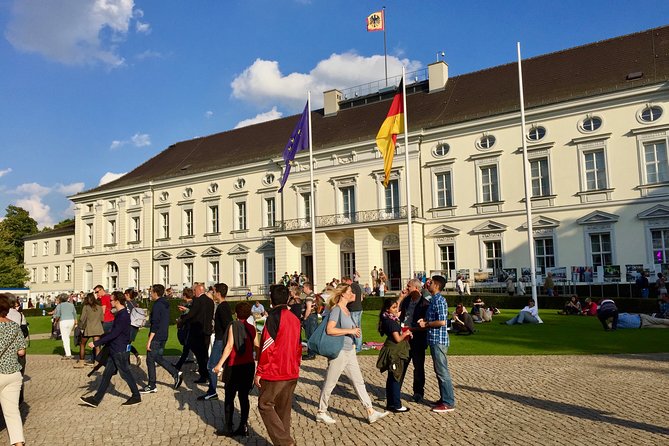
As the tour moves closer to Berlin’s political core, the architecture shifts again. You’ll be in the zone where buildings are meant to communicate power, and the guide does a good job explaining what the form is trying to say.
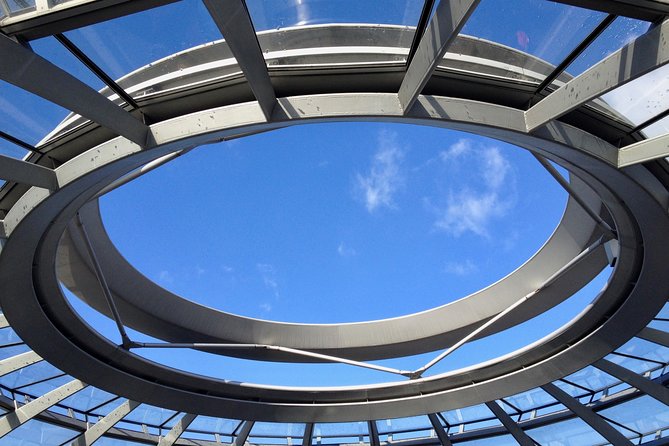
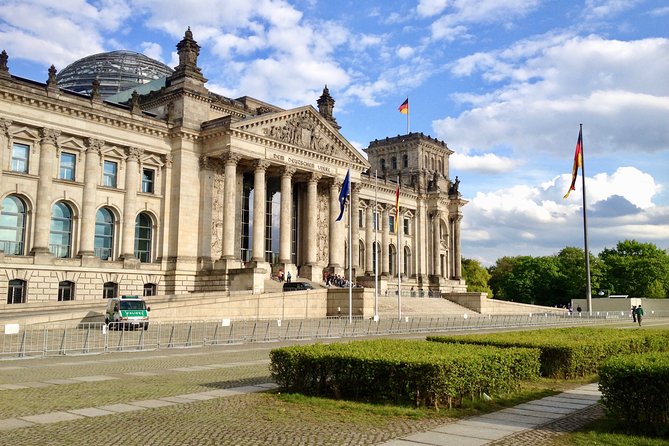
At Reichstag you’ll get the why behind the dome and the story of rebuilding after destruction. You’ll hear about the redesign and the symbolism of glass after the architect’s original plan. The story continues into the wider parliament complex, where the guide points out that real work often happens in committee areas rather than in the main public chamber.
The tour also takes you through the scale of federal power. The description of the Chancellor’s office focuses on mass and function: a large complex with multiple floors, hundreds of office rooms, and a sense of modern administrative seriousness. You’ll also see the adjacent media-related building with the prominent window, where accredited journalists observe government activities behind the scenes.
One more political landmark you should let the guide walk you through is the Victory Column. The tour connects its original form to the wars of unification, and then to the long shadow of resentment, including French anger afterward. It’s the kind of stop where a quick glance is fine, but the meaning lands only once you understand what was inside and how it moved through time.
Also holding a platform in Berlin



Under the linden trees: Brandenburg Gate, Gendarmenmarkt, and book burning
Berlin’s center gets more dramatic when you reach the boulevard of Unter den Linden. This is a long corridor of power and prestige, and the guide gives you historical context that helps you read the street like a timeline. You’ll walk past the palaces and prominent state buildings, and you’ll also hear how this area relates to the city’s former hunting grounds, now tied to the zoo.
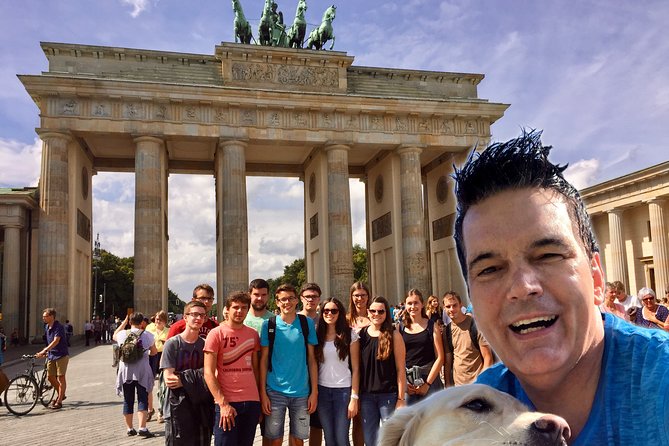
At Brandenburg Gate, you’ll get the classic line everyone knows, but with useful added context: why the gate felt isolated, how walls and separation shaped movement, and how rebuilding after the Wall kept the gate’s volume while modernizing the surroundings. It’s not only a photo spot. With the guide’s framing, it becomes a symbol of a city that tried to separate itself, then had to stitch itself back together.
If you want a contrast stop, the tour spends time at Gendarmenmarkt, which many people consider one of Berlin’s most beautiful squares. The tour explains the German and French cathedrals and clarifies that they function more as meeting houses than bishop seats, and that French-speaking worshippers still use the French cathedral. You’ll also hear about the Huguenot story behind the square, which makes the two sides feel less like decoration and more like cultural memory.
Another “pause and think” moment is near the Memorial for victims of war and tyranny, connected to the Pieta by Käthe Kollwitz. The guide’s description turns it into a place for mourning rather than a roadside monument. This is where your hour of sightseeing starts to feel heavier, in the right way.
And then comes an especially striking educational stop: the Forum Fridericianum area, where you can see how the Nazi book burnings were tied to a specific public square. The guide points out a glass window in the floor that references an empty library space, which is a smart way to make the historical point feel physical.
Humboldt Forum and Nikolaiviertel: reconstruction, rivers, and what Berlin chose to show
The tour reaches the area around the Humboldt Forum, where the story of what was built, destroyed, and reconstructed is impossible to ignore. You’ll hear how decades of absence left the site looking like a big parking lot, and how the palace silhouette remained even when everything else was gone. The guide explains the reconstruction approach and the idea of bringing in non-European art collections along with university collections.
This stop is valuable because Berlin’s reconstruction choices are politically and culturally meaningful. You’re not just seeing a beautiful building, you’re seeing how the city decided what to rebuild and what narrative it wanted to carry forward.
Then it moves into old-city feel with Nikolaiviertel. This is one of the most useful places in Berlin for understanding the limits of reconstruction. The guide frames the area as an 1980s plan meant to create an older look, including the note that it involved limited original structures and a bigger reconstruction vision. Even so, it works well for visitors: you get a compact Old Berlin atmosphere, plus key landmarks like the Nikolaikirche and the Knoblauchhaus with Biedermeier-style interiors.
If you like to connect history to geography, you’ll also hear about Berlin’s water system. The tour explains orientation via waterways and how the city is shaped by dams, drained marshlands, and canals. That context helps later when the route takes you along canal and embassy-adjacent areas.
Berlin East vibes: Hackesche Höfe, Friedrichstraße, and Wall-era tension
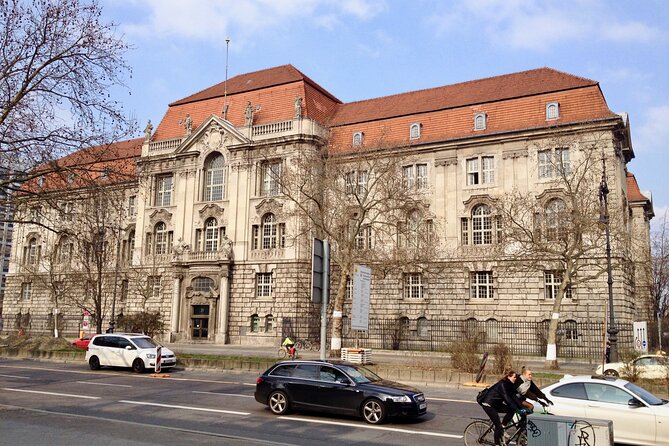
After the West highlights, the mood shifts. The tour goes to Hackesche Höfe, an Art Nouveau courtyard complex restored after the Wall period. The guide points out the original 1908 idea of mixing life and work, with workshops and printing and small manufacturing spaces, plus the large, green atria. Today those workshops feel more like curated shops, but the courtyard design is still the star.
This stop is a great palate cleanser if you’ve been staring at big monuments for hours. Courtyards slow you down. They also make it easy to grab quick photos without running across traffic.
Then the tour heads toward Friedrichstraße, a street known for its changing roles across time. The guide connects it to the Wall era, including how this area functioned as a key crossing point with customs and barriers. You’ll also hear about the Palace of Tears, named for the goodbye scenes for East Berliners leaving for West Germany, often without a clear return.
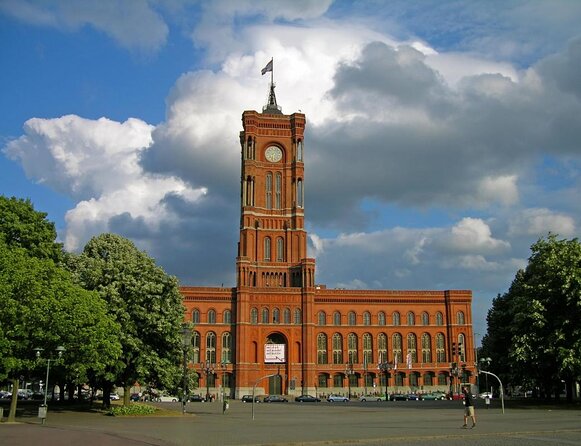
Next up, you’ll come to the Berlin Wall story in miniature at Checkpoint Charlie. The tour is careful here: you’ll see the replica checkpoint, and you’ll hear what parts are original versus replaced and how the museum’s private exhibition history ties into why the site stays famous. It’s a practical stop because it gives you the Cold War heat without forcing you into a longer museum detour if you’re running out of time.
You’ll also get a strong cultural and historical anchor at the Neue Synagoge. The guide’s description includes the Moorish-style elements and the golden dome, plus the fact that the synagogue itself was destroyed in the war and the front building was partly rebuilt. It’s also guarded, and the guide explains the security approach in practical terms. If you want to understand Berlin as a place of multiple cultural layers, this is one of the most direct stops to feel that.
Areas where history gets heavy: Topography of Terror and the Allied-era layers
One of the tour’s most serious segments is at Topography of Terror. The guide structures it as multiple levels of time. You’ll hear about the imperial and Prussian-era buildings, the Nazi era structures tied to Göring’s air force administration, the later excavations that uncovered torture cells, and then the part of the Berlin Wall preserved in the site. Finally, the documentation center is presented as the modern context holder for what happened.
This is where the taxi tour earns its keep. Places like this can feel overwhelming when you go on your own. Having the guide lay out the sequence helps you make sense of what you’re seeing fast.
Comfort notes, stopping points, and a tip from how the tour feels
This experience is designed to avoid the exhausting part of touring. Since the taxi is used for most of the route, you get frequent chances to switch from walking to sitting. Reviews also suggest it works especially well in winter because you stay warm more of the time.
If you do this in cold weather, bring a bottle of water anyway. It’s a simple thing, but the route includes enough explanations and stops that you’ll want hydration even while you’re not standing in the sun for long.
Also, take photos during the photo-friendly moments. The reviews mention that Gunter takes pictures of his group and sends them afterward, which is a nice bonus if you want keepsakes without constantly juggling your camera.
Who should book this taxi tour
This tour fits best if you:
- Want a one-day East and West overview with a guide
- Prefer comfort and clear explanations over self navigation
- Care about WW2 and Cold War context, not just pretty streets
- Have mobility limits or simply want a slower pace than walking everywhere
It might be less ideal if you:
- Want to spend long hours inside multiple major museums
- Prefer to plan your own route with maximum flexibility and minimal cost
Should you book this private Berlin East and West taxi history tour?
If you’re trying to understand Berlin as a city of eras, not just an itinerary, I think this is a smart booking. The price is high only if you compare it to solo sightseeing. Compared to the cost of getting a skilled, English-speaking guide plus a private heated transport day, it’s a practical way to see a lot without feeling rushed in the wrong way.
The best sign is the repeated review theme around Gunter Bauer: he communicates ahead, stays responsive, adapts to interests, and he’s careful with timing. If you want your first Berlin experience to feel organized and meaningful, this is the kind of tour that makes that happen.
FAQ
How long is the private taxi tour?
It runs about 3 to 4 hours.
What is the price per person?
The price is listed as $150.18 per person.
Is the tour offered in English?
Yes, it is offered in English.
Do I get pickup included?
Pickup within the S-Bahn ring is included. Pickup outside the city center or from BER airport is available for an extra charge.
Is there WiFi in the taxi?
Yes, WiFi on board is included.
Is the vehicle air-conditioned?
Yes, the vehicle is air-conditioned.
Is this tour private or shared?
It is a private tour. Only your group participates.
Are tickets digital?
You get a mobile ticket.
Are admission fees included for stops like the Humboldt Forum?
The provided tour details list Humboldt Forum as admission ticket included, and many other stops as admission free.
Can kids ride in the taxi with proper seating?
Child seats are available: a child seat for toddlers from six months to three years, and a booster seat for older children. A baby seat can be brought on request.
Fresh on the arrivals board for Berlin


Historical Tours, compared.
City History Canal Sightseeing Tour on a Motorboat
Read our review →

Browse the lists this tour appears in