
Reviewed · FAIRYTALE CASTLES & PALACE TOURS
Potsdam Tour from Berlin With Guided Sanssouci Palace Visit
Potsdam hits hard, even in just four hours. This guided half-day trip takes you from Berlin into UNESCO-listed Potsdam, with a Sanssouci Palace visit that’s set up to be efficient and easy to follow. You get key stops that explain why this town mattered to Germany and the wider world.
What I like most is the way Sanssouci is handled. You are not left wandering, and you get a proper guided look at the palace, built for Frederick the Great’s summer escape, plus context that makes the gardens and structures feel understandable instead of random.
My one caution is time. It is a half-day, so you’ll see a lot, but you will not have the slow, lingering pace of a full day with a lot of café breaks. Also, food and drinks are not included, so plan on grabbing something before or after.
In This Review
- Key things to know before you go
- Getting from Berlin to Potsdam without the headache
- Sanssouci Palace: Frederick’s summer escape, explained
- Why the Bridge of Spies stops you in your tracks
- The Dutch Quarter (Holländisches Viertel) and its red-brick charm
- Alexandrovka: the surprising Russian colony in Potsdam
- Old Market Square and St. Nicholas Church: Potsdam’s rebuilt heart
- What the 4-hour format really means for you
- Price and comfort: is $77.23 a good deal?
- Who should book this Potsdam tour from Berlin?
- A few practical tips to make your day smoother
- Should you book this Potsdam tour or go independent?
- FAQ
- FAQ
- How long is the Potsdam tour from Berlin?
- What time does the tour start?
- Where do I meet the tour?
- Does the tour include guided entry to Sanssouci Palace?
- Is the tour available in English?
- Are food and drinks included?
- What group size should I expect?
- Is the tour suitable for people with moderate mobility needs?
- Are service animals allowed?
Key things to know before you go
- Skip-the-line Sanssouci access saves your time and keeps the group moving
- Small group size (max 30) makes questions and pacing feel manageable
- Cold War stops that are actually meaningful, like the Bridge of Spies
- Dutch Quarter’s red-brick block of 134 buildings is easy to appreciate with guidance
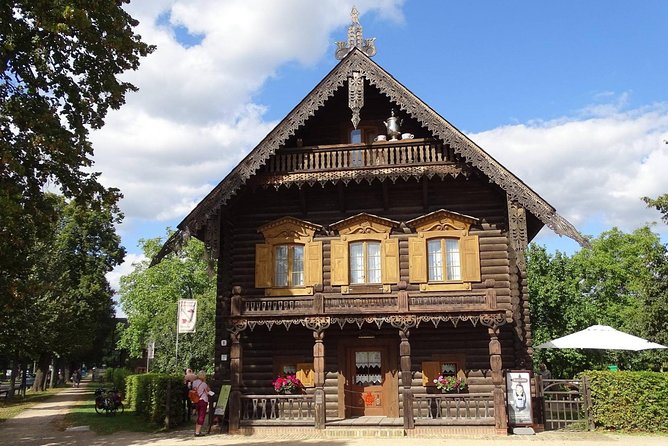
- Alexandrovka (Russian singers colony) adds a surprising, UNESCO-backed layer
- Coach comfort and smooth logistics, including a driver who keeps things safe and punctual
Getting from Berlin to Potsdam without the headache
This is the kind of tour that works when you want Potsdam, but you do not want to plan trains, tickets, and timing. You meet at Kurfürstendamm 216 in Berlin, and you start at 10:00 am. The day is built around a coach ride, guided stops, and a focused chunk of time at Sanssouci Palace.
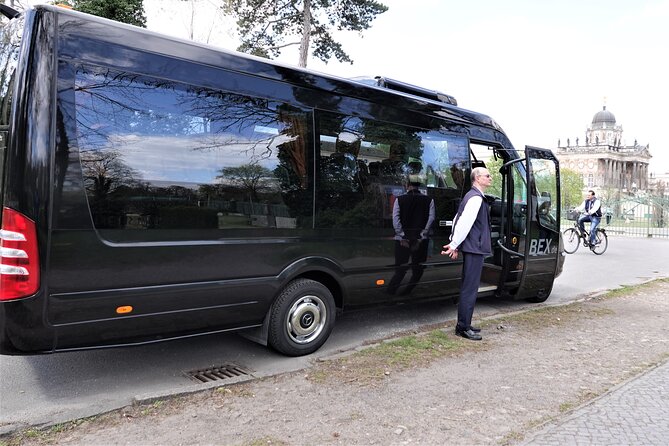
The coach matters more than it sounds. Riding with a driver who handles the route, traffic, and timing means you can listen, look out the windows, and not spend your brainpower on logistics. In the reviews I drew from, guests repeatedly praised smooth, careful driving and guides who stayed on schedule.
This trip is listed for people with moderate physical fitness. Most of the walking is out in the open and along flat or gently changing ground, but you should still be ready for a few active stretches, plus time moving as a group. If you prefer long, unhurried strolls at your own pace, keep that in mind, because this format is designed for coverage.
More turrets against the hills:
- Berlin: Charlottenburg Palace Entry Ticket
★ 4.4 · 2,076 reviews - From Berlin: Potsdam and Sanssouci Palace Tour with Entry
★ 4.7 · 1,219 reviews - Small group Potsdam: A Journey Through History and Palaces
★ 4.7 · 317 reviews
Sanssouci Palace: Frederick’s summer escape, explained
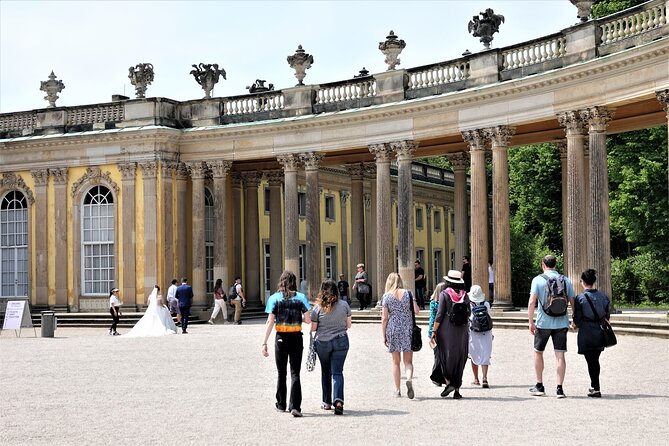
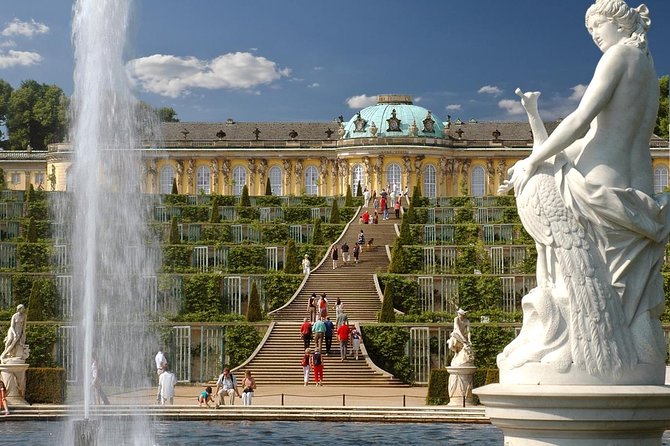
Sanssouci is the main event, and the tour makes a smart move by putting time and guidance here. The palace served as Frederick the Great’s summer residence. It was designed and built by Georg Wenzeslaus von Knobelsdorff from 1745 to 1747, and it was meant to be a more relaxed counterpoint to the formal, ceremonial life of the Berlin court.
Here’s the payoff for you: Sanssouci can look beautiful and slightly “touristy” from the outside, but with the right framing, it becomes a window into power, taste, and propaganda-era politics. Your guide helps connect the dots between Frederick’s personality, his decision to retreat here, and the ways the palace and park design communicate status without screaming about it.
You will likely spend about two hours at Sanssouci, which is enough time to see the highlights without feeling rushed the way many day trips do. You get help interpreting what you’re seeing, including the palace’s role as part of a larger park world full of temples and follies. Those structures can be easy to overlook if you only read a sign, but a guide gives you the why behind them.
A practical note: the palace experience here is designed around skip-the-line entry. That is not just about convenience. It also protects your time budget. You do not want to lose part of your short day just waiting at a gate.
Why the Bridge of Spies stops you in your tracks
One of the most memorable stops on this route is the Glienicke Bridge, the bridge over the Havel River that links Berlin’s Wannsee area with Potsdam. It is named after Glienicke Palace, and the version you see today was completed in 1907. Major reconstruction was needed after World War II damage.
This is not just a pretty bridge stop. During the Cold War, this section of the Havel River became a border area between West Berlin and East Germany, and the bridge became famous as a site for spy exchanges. That’s why it earned the name Bridge of Spies.
If you like history, this stop is strong because it anchors the big story in a real location. You can see how geography became leverage. And even if Cold War history is not your favorite topic, the bridge is one of those places where you instantly understand why people cared.
The Dutch Quarter (Holländisches Viertel) and its red-brick charm
The Dutch Quarter, or Holländisches Viertel, is one of those places that looks simple at first glance, then clicks once you know what you’re looking at. The neighborhood consists of 134 red Dutch brick buildings, and nearly all have been renovated.
This quarter was built from 1733 to 1740 and designed by Jan Bouman under orders from Frederick William I of Prussia. That last bit matters, because it explains why this area in a German city looks Dutch and why it exists in the first place.
On a guided tour, you get two advantages here. First, you get the historical reason behind the architecture, so the details become more meaningful. Second, you get photo timing guidance. On a short schedule, you want to catch the most photogenic angles before the light shifts.
A realistic expectation: the Dutch Quarter is not a single monument you stand in front of. It’s a coherent urban scene. If you are the kind of traveler who enjoys streetscapes, this stop will feel satisfying. If you only want big palace-style icons, you might find it more “pleasant” than “jaw dropping,” but the story gives it weight.
Alexandrovka: the surprising Russian colony in Potsdam
If Potsdam’s royal sites are one side of the story, Alexandrovka is the other. Located in the north of Potsdam, it was built in 1826 to 1827 for the last twelve Russian singers of a choir of 62 soldiers.
This is where your guide can make the tour more than sightseeing. The colony was named in memory of Tsar Alexander I, who died in 1825. The reason it exists at all is the relationship between the Hohenzollern and Romanov royal houses. In other words, this was not random cultural tourism. It was a political and personal connection expressed through people, music, and a dedicated settlement.
Alexandrovka is also part of Potsdam’s UNESCO world heritage context. So yes, it’s worth seeing, but it also adds a human angle to the trip. You are not just looking at rulers and palaces. You’re seeing how culture and diplomacy showed up on the ground.
Also holding a platform in Berlin

Old Market Square and St. Nicholas Church: Potsdam’s rebuilt heart
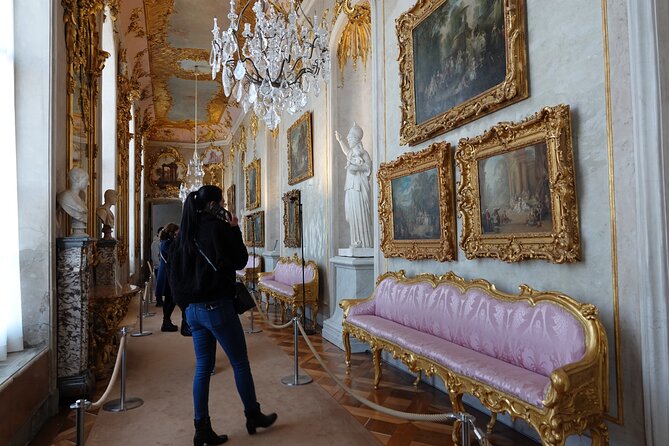
Potsdam’s Old Market Square is the kind of place that helps you understand a city’s center. It’s centrally located in downtown Potsdam and forms the historical core around St. Nicholas’ Church.
St. Nicholas Church is a Lutheran church in a classicist style. It was designed from plans by Karl Friedrich Schinkel between 1830 and 1837. The tower above the roofs reaches about 77 meters, and the tambour of the tower was built from 1843 to 1850, with Ludwig Persius and then Friedrich August Stüler involved in construction work.
Then history hits with the kind of detail that makes a church feel current, not just old. During the final phase of World War II, the church was hit during a British air raid and then badly damaged by Soviet artillery fire. After a long rebuilding process, it was re-consecrated in 1981 and is open to visitors. Concert events also take place there.
This is a good closing stop for many people because it shifts you from palaces back to the lived city. You get to see how Potsdam carried losses, then rebuilt a recognizable center that still hosts community life.
What the 4-hour format really means for you
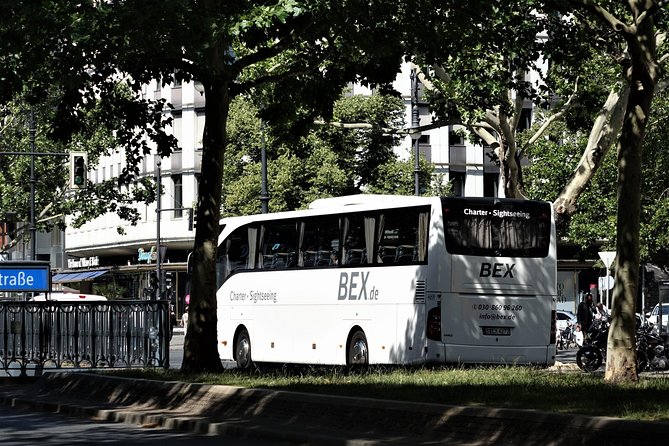
This tour is listed as about four hours. That can sound short, and it is. But here’s how the structure helps you get value:
- The coach time acts like a moving lecture, so you learn on the way rather than only during stops.
- Two hours at Sanssouci is a focused chunk for the main attraction.
- The other stops provide context so Sanssouci does not feel like an isolated palace photo.
One review-related caution you should take seriously: some guests felt the English commentary level could be uneven compared to German. The tour is offered in English, and it’s guided by a local guide in both English and German, but you should still expect that group dynamics can affect how much you hear in your language throughout each segment.
If you are strongly dependent on English commentary the entire ride, consider this your heads-up. Bring curiosity, use your guide’s explanations when they are available, and do not plan on a full uninterrupted, perfectly even narration for every minute.
Also, food and drinks are not included. That means you need a simple plan. If you eat before you go, you’ll enjoy the stops more. And because some facilities may be limited around sites, it’s smart to carry a small amount of cash in case there are paid restroom options at gates or during stops. One practical tip: bring change, since you may be asked for a small fee.
Price and comfort: is $77.23 a good deal?
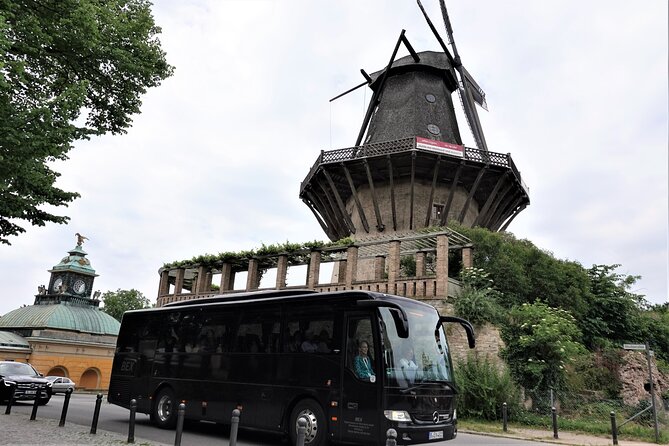
At $77.23 per person for about four hours, this is not the cheapest way to see Potsdam. But it can be good value if you measure it against what you’re buying: guided entry to Sanssouci, skip-the-line help, and multiple high-impact stops you might struggle to coordinate on your own.
Comfort and logistics are also part of the math. You get a coach with driver, and you do not have to worry about parking, timetables, or ticket sequencing for each stop. For first-timers to Berlin, that matters. You get a curated route that hits the key Potsdam story beats.
Where the price question can come up is time. Some people felt the tour was pricey for the short duration. That makes sense. You can only cover so much in four hours, and you cannot buy time at Sanssouci by spending more time on the coach.
So the deal depends on your style:
- If you want a fast introduction with expert context, it feels worth it.
- If you want a slow deep visit where you linger in each garden corner or take a long café break, you might wish you had more time.
Who should book this Potsdam tour from Berlin?
I think this tour fits best if you are:
- visiting Berlin for the first time and want a meaningful Potsdam hit without planning,
- interested in Frederick the Great, German history, and Cold War landmarks,
- the type who likes learning on the move, from the guide plus the structured stop sequence,
- okay with a short day and a pace that prioritizes seeing multiple highlights.
It may be less ideal if you:
- dislike coach travel and prefer total independence,
- want long time in one place, especially at Sanssouci grounds,
- need a very detailed, perfectly balanced English narrative at every moment.
Good news: the coach group size is capped at 30, and the guide format typically keeps things friendly. In the reviews used here, people praised guides like Susan, Karin, Jasmin, Stefanie, and Bridget for being energetic, helpful, and willing to handle questions.
A few practical tips to make your day smoother
- Wear comfortable shoes. You will be on your feet in historic sites and moving between stops.
- Use the restroom strategically before the long palace segment, since restroom options inside or near sites can be limited.
- Bring a small amount of cash or coins for any paid restroom situations you encounter.
- If you drink coffee or tea, plan it before the tour. Food and drinks are not included.
- Bring a light layer. Even in warmer months, gardens and open air can cool down quickly.
Also, you’ll want to keep your phone charged enough for a mobile ticket. The tour uses mobile tickets, so you do not want a dead battery on a tight schedule.
Should you book this Potsdam tour or go independent?
If your goal is to see Potsdam’s big names in a manageable half-day, I’d book this tour. The combination of skip-the-line Sanssouci, guided context for the park and palace, and high-value stops like the Bridge of Spies makes it a strong way to get oriented in Potsdam.
I’d only hesitate if you are the type who needs lots of free time at each stop. In that case, a longer Potsdam day with more flexibility could feel better. But for most Berlin visitors, this is a smart, efficient introduction that saves you planning time and gives you stories that make the sights click fast.
FAQ
FAQ
How long is the Potsdam tour from Berlin?
It runs for about 4 hours.
What time does the tour start?
The start time is 10:00 am.
Where do I meet the tour?
You meet at Kurfürstendamm 216, 10719 Berlin, Germany.
Does the tour include guided entry to Sanssouci Palace?
Yes. It includes skip-the-line entry and a guided Sanssouci Palace visit.
Is the tour available in English?
Yes. It is offered in English, with a local guide in English and German.
Are food and drinks included?
No, food and drinks are not included.
What group size should I expect?
The tour has a maximum of 30 travelers.
Is the tour suitable for people with moderate mobility needs?
It’s recommended for travelers with a moderate physical fitness level.
Are service animals allowed?
Yes, service animals are allowed.
Fresh on the arrivals board for Berlin



Fairytale Castles & Palace Tours, compared.
Neuschwanstein & Linderhof Castle Full-Day Trip
Read our review →
Neuschwanstein & Linderhof Castle-Fairytale Day Tour from Munich
Read our review →

Premium Neuschwanstein Castle and Linderhof VIP Tour from Munich
Read our review →
Browse the lists this tour appears in