Reviewed · WALKING TOURS
Oberammergau Private Guided Walking Tour
Oberammergau can look like storybook Bavaria, then turn into something darker as you walk. This private guided stroll weaves together the village’s monastery origins, wood carving tradition, and the famous Passion Play, all tied to the streets, house frescoes, and the local Märchenhäuser fairy tale façades.
I especially like how the guide connects small details you can see, the frescoes on the houses and the carved wood culture, to big historical forces. You get two-way conversation energy in a group size that stays personal, and I love that your guide can tailor questions to your interests on the spot. When Ekaterina led a small group, her storytelling style was clear and interactive, with enough historical notes to satisfy curious minds without turning into a lecture.
One possible drawback: you only have 90 minutes, so if you want a slow, linger-everywhere pace or lots of museum-style stops, you may feel a bit rushed.
In This Review
- Quick Reasons to Book This Oberammergau Walk
- Where Oberammergau Makes Sense in 90 Minutes
- Meeting at Eugen-Papst-Straße and Getting Your Timing Right
- From Late Bronze Age Roots to a 9th-Century Monastery
- Pilgrims to Rome, Markets, and Why Wood Carving Went Viral
- Märchenhäuser: Fairy Tales Painted on the Town
- 30 Years War and the Black Plague, How Fear Shaped Performance
- WWII Secrets: Wehrmacht Headquarters and a Messerschmitt Thread
- The Passion Play Origin and the Idea of an Exclusive Cast
- What You Actually Do on This Walk
- Private Means You Get to Tailor the Focus
- Price, Group Size, and Value for Money
- What to Wear and Bring for an Ammer Valley Walk
- Should You Book This Oberammergau Private Guided Walking Tour?
- FAQ
- Where does the tour meet?
- How long is the Oberammergau private walking tour?
- What is the price?
- Is this tour private?
- What languages are available?
- What is included in the tour price?
- Are entrance fees included?
- Can I customize the tour during the walk?
- Is there free cancellation?
- Is there a pay later option?
Quick Reasons to Book This Oberammergau Walk
- Private and small-group feel that lets you ask questions and stay flexible
- Märchenhäuser and fairy-tale connections tied to Brothers Grimm folklore and local lore
- Monastery-to-pilgrims context starting from a 9th-century religious foundation linked to Ettal
- Wood carving explained through history, not just as a craft souvenir
- WWII-era surprises like Wehrmacht headquarters and a Messerschmitt factory thread
- Passion Play origins made human, including how the town became famous for its portrayal of Christ’s last days
Where Oberammergau Makes Sense in 90 Minutes
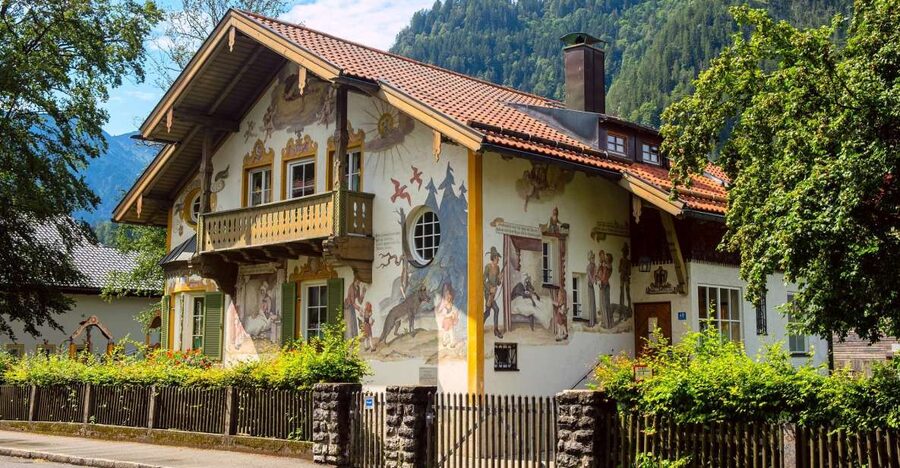
If you’re short on time but want Oberammergau to click, this is a smart format. The town is famous for sacred performance, but it also grew through trade routes, war, and public life. A guide helps you read the village like a living document, where a carved style or a painted façade can point back to centuries of cause and effect.
You’re walking through the Ammer valley area, and the town itself is named for the river Ammer that cuts through the landscape. That geography matters because it helps explain why the village became a natural stop for pilgrims traveling through Europe, including routes that went toward Rome. Once you understand that, even the quieter side streets feel purposeful.
And because it’s private, you’re not stuck with a one-size-fits-all script. If your focus is the Passion story, the wood carving, or the darker wartime details, you can steer your guide.
Meeting at Eugen-Papst-Straße and Getting Your Timing Right
The meeting point is right in the center area, in front of the tourist office at Eugen-Papst-Straße 9A, 82487 Oberammergau, Germany. Starting here is helpful because it’s easy to find, and it sets you up to walk into the older core without wasting time searching for where history “starts.”
Plan to arrive a few minutes early. In 90 minutes, those extra minutes matter because you’ll want to pause, look closely at house fronts, and listen while you walk. If you show up late, your guide will still cover the key ideas, but you lose some of the small visual moments that make the story stick.
Also, go into it with a quick mental checklist: frescoed house fronts, Märchenhäuser façades, and anything that looks like carved ornament. Your guide will point out what to notice, but your eyes still need a target.
From Late Bronze Age Roots to a 9th-Century Monastery
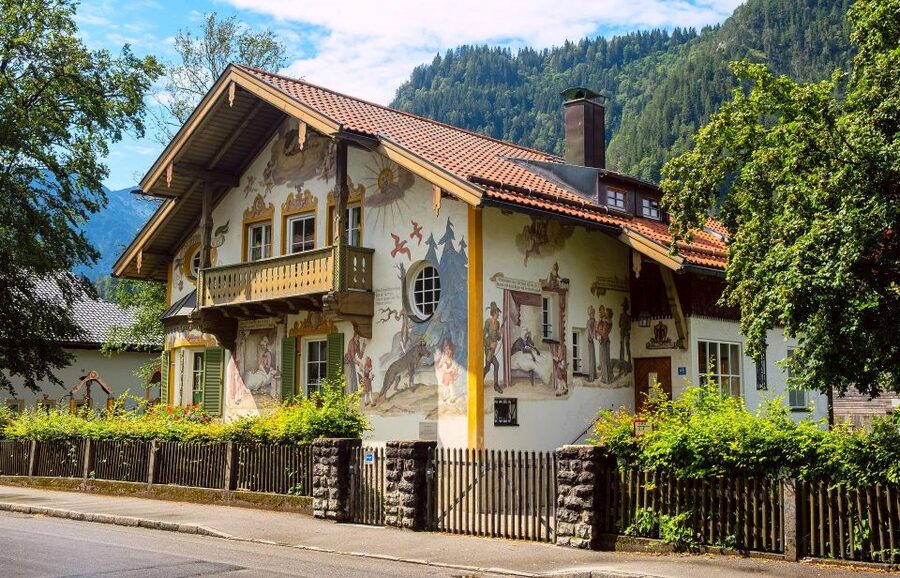
Oberammergau is often introduced as a Passion Play town, but the timeline goes deeper. The earliest roots are said to date back to the late Bronze Age, long before the village took on its later identity.
What really shapes Oberammergau as a place you would recognize is the 9th-century start. That’s when you get the small monastery foundation that later links to the nearby Ettal Monastery. Your guide walks the connection in a practical way: monasteries didn’t just pray, they influenced education, land use, and how people moved through the region.
There’s also an Ettal angle that matters beyond “religious background.” The area had elite boarding-school ties, which helps explain how ideas and culture traveled through these institutions, not just through merchants. When you understand that, you stop viewing Oberammergau as isolated and start seeing it as part of a broader network.
Pilgrims to Rome, Markets, and Why Wood Carving Went Viral
A big part of the story here is movement. Oberammergau’s position between Germany and Italy helped it become a stopping place for pilgrims en route to Rome. Your guide uses that to explain why traditions could spread through a small town.
Then comes the wood carving. Oberammergau became a fulcrum point for wood carving art from the 14th century onwards, and the “how” is tied to pilgrimage and markets. Pilgrims and visitors needed souvenirs and devotional items, and wood carvings fit that role perfectly. People could buy, bring home, and share what they saw.
The practical takeaway for you: don’t treat Oberammergau carvings as random decorative goods. Ask your guide about the styles and how the carving tradition grew alongside markets. You’ll understand why certain looks became common, and you’ll be better at spotting quality when you shop.
Märchenhäuser: Fairy Tales Painted on the Town
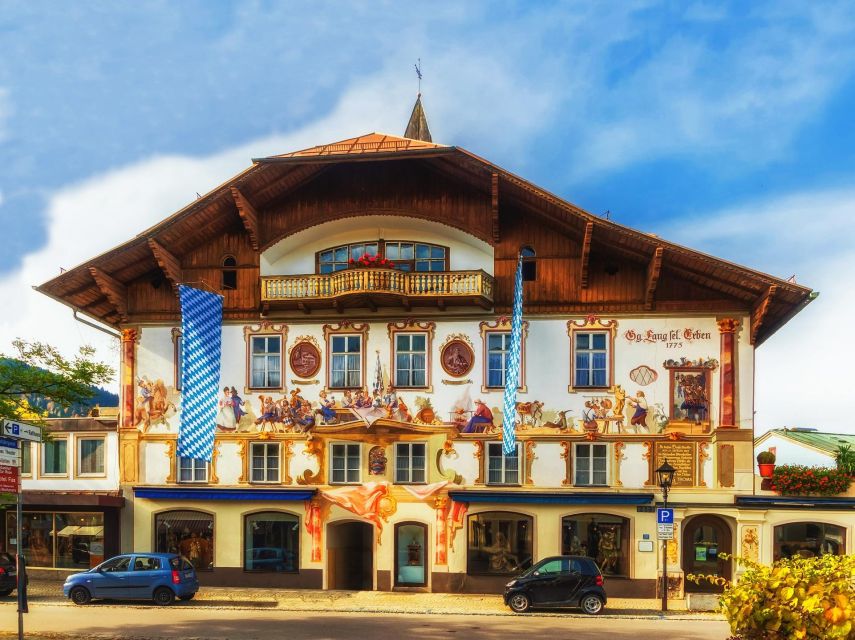
One of the most fun parts is the Märchenhäuser, literally fairy-tale houses. These are part of what makes Oberammergau feel like it has a second set of pages, not just the Passion story.
Your guide connects the Märchenhäuser concept to the early 19th century, when the Brothers Grimm gathered fairy tales based on older oral German folklore. That means you’re not only looking at pretty façades. You’re seeing how local stories were preserved, organized, and then put on display in a way that became part of the town’s identity.
Look for the idea more than the accuracy of any single character. The point is that Oberammergau uses storytelling as an architectural feature. Once you see that, the village makes more sense as a place that turns tradition into public art.
And because this is a walking tour, you get the advantage of context. You’re not just viewing one façade. You’re seeing how the fairy-tale theme lives next to other layers of sacred and profane culture.
30 Years War and the Black Plague, How Fear Shaped Performance
History gets heavy here, and your guide handles it in a way that doesn’t feel like doom scrolling through dates. The village experienced the 30 Years War, and in the wake of that conflict, the Black Plague returned.
This matters because it helps explain why the Passion Play became more than theater. When communities suffer, people look for meaning, ritual, and a shared narrative. Your guide shows how the return of the plague is part of the background that shaped the Passion of Christ play as one of the most well-known representations of Christ’s last days.
Here’s what you’ll likely appreciate: the guide ties big events to why a town would commit to long-term public tradition. The Passion Play isn’t an abstract religious story. It’s tied to a community’s need to make sense of catastrophe through a repeated performance and a shared emotional language.
If you prefer to keep things light, you can still enjoy this section, but mentally brace yourself. It’s part of what makes Oberammergau more than a pretty postcard.
WWII Secrets: Wehrmacht Headquarters and a Messerschmitt Thread
Then the tour adds a jolt. Oberammergau has WWII-era secrets your guide shares, including references to a Wehrmacht headquarters and a Messerschmitt factory connection.
Important note: you are not touring a museum exhibit with artifacts. You’re learning the historical presence behind the walls and the landscape. That means the details are more like a map in your head than a collection on display.
Still, this is valuable because it prevents the town from becoming one-note. A place can be known for sacred art and also carry wartime shadows. Your guide’s job is to show you how both realities belong in the same story.
If you like history that connects the present to what came before, this section will land well.
The Passion Play Origin and the Idea of an Exclusive Cast
The Passion Play is the headline, but the tour doesn’t stop at “it’s famous.” You’ll hear about the origins of the Passion Play and the way the cast is exclusive to the tradition in the town.
This is where the guide’s explanation becomes practical for you. Instead of treating the play as a generic religious performance, you understand it as a village-scale commitment, built around who participates and why that matters culturally. That helps you see why Oberammergau’s identity stays so tightly linked to the Passion theme across centuries.
Also, because the tour includes both sacred themes and the Märchenhäuser fairy-tale layer, you get a broader view of how Oberammergau uses performance and storytelling in multiple forms. The Passion Play is serious, but the town’s overall communication style is about making stories visible.
What You Actually Do on This Walk
You’re in motion for the full 90 minutes, using the town’s core streets as your “timeline.” The experience is built around seeing features close up while your guide narrates what they mean.
Expect:
- Time spent on places tied to the monastery and pilgrimage narrative
- Stops focused on the Märchenhäuser and the Brothers Grimm story connections
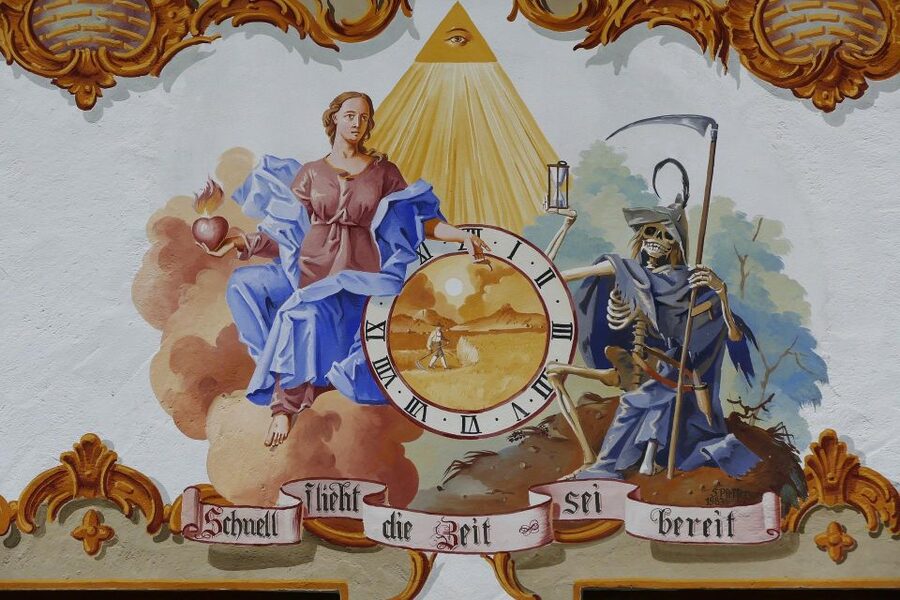
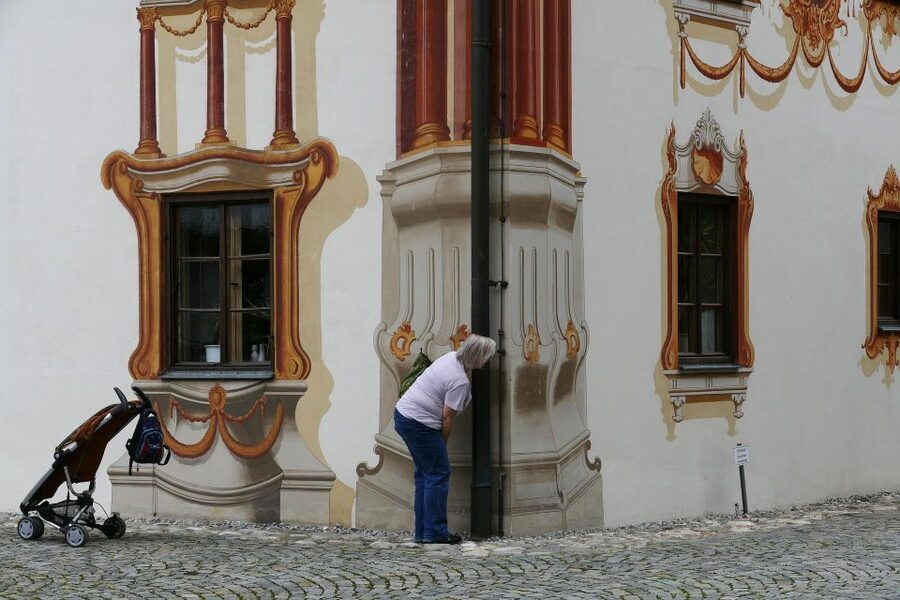
- Visual and storytelling cues for the town’s 18th-century frescoes painted on house fronts
- A guided historical thread that links conflict and plague to the Passion tradition
- WWII context that references the Wehrmacht headquarters and a Messerschmitt factory
The walking pace is friendly, and because it’s private, the guide can keep the flow based on your pace and attention. In a small group, it’s easier to slow down when someone spots a detail on a façade, or speed up when you are eager to cover the next era.
Private Means You Get to Tailor the Focus
This is a private group experience, with a local professional guide who will stay with your group only. The big value is control. You can ask follow-up questions as they come up, instead of trying to catch the end of someone else’s conversation.
You can also customize the tour on the spot with your guide. That’s especially useful in a town where you might have different priorities:
- Passion Play origins and how the tradition works
- Wood carving history and why it became such a signature craft
- WWII-era facts and what they imply about the town’s role in bigger events
In one small group scenario led by Ekaterina, the experience was described as very personal, and the guide made history come alive with clear storytelling and lively interaction. That kind of energy is exactly what I’d look for when I book a private walking tour, because it turns information into understanding.
Price, Group Size, and Value for Money
The price is $280 per group, for up to 15 people, and the duration is 90 minutes. That pricing can be a strong value if you have a small crew and want the flexibility of a private guide.
Here’s how I think about it as a practical buyer: you are not paying per person in a strict sense, you’re paying for a private speaking time with a guide. If you’re traveling as a couple, a family, or a small friends group, your per-person cost can land far lower than a “solo” style guide in many European cities.
The key is group size. Up to 15 people means you can keep costs reasonable, but you might lose some of the close, conversational feel if everyone wants different things. If you want the experience to stay personal, consider keeping your group smaller within that limit.
Also remember: entrance fees are not included. That means you’re paying for the guiding and the walking narrative, not for ticketed sites. If you have a must-visit museum stop in mind, you may want to plan that separately.
What to Wear and Bring for an Ammer Valley Walk
You’re walking a village, so bring comfortable shoes. Oberammergau is in the alpine region, and even if the weather is mild, old streets can still be uneven.
Pack basic essentials:
- Water, especially if it’s warm
- A light layer, because mountain weather can shift
- A camera, but give your eyes time first, then take photos once you understand what you’re looking at
If you like notes, bring a small notebook or save space in your phone. The tour covers a lot of eras, late Bronze Age roots, 9th-century monastery beginnings, 14th-century wood carving fame, plague and war, and WWII connections. A few quick notes help you remember which story connects to which street detail.
Should You Book This Oberammergau Private Guided Walking Tour?
Yes, if you want a smart “all angles” introduction to Oberammergau in one focused 90-minute walk. This tour is best for you if you like understanding why a place looks the way it does, not just taking it at face value.
Book it if:
- You want both sacred and profane elements, Passion Play roots plus Märchenhäuser fairy-tale façades
- You care about how traditions grew, from pilgrimage stops to wood carving markets
- You want the less obvious side, including WWII references to Wehrmacht headquarters and a Messerschmitt factory connection
- You prefer a guide who can keep the experience personal, like Ekaterina’s lively, interactive style
Skip it or pair it with more time if:
- You want lots of museum-level stops or long ticketed visits, because this is a guided walk experience
- Your schedule allows more than 90 minutes in town and you want to wander without any time pressure
If you’re visiting Oberammergau as part of a longer Bavaria trip, this is a great way to get oriented fast, then go explore on your own with sharper questions and better instincts.
FAQ
Where does the tour meet?
The meeting point is in front of the tourist office at Eugen-Papst-Straße 9A, 82487 Oberammergau, Germany.
How long is the Oberammergau private walking tour?
The tour lasts 90 minutes.
What is the price?
It costs $280 per group, for groups up to 15 people.
Is this tour private?
Yes, it is a private group experience with your local professional guide staying with your group only.
What languages are available?
The live tour guide offers English and German.
What is included in the tour price?
A local professional guide is included, and your guide will be with your group only. The tour may be customizable on the spot.
Are entrance fees included?
No. Entrance fees are not included.
Can I customize the tour during the walk?
Yes, the guide can customize parts of the tour on the spot based on what your group wants to focus on.
Is there free cancellation?
Yes, you can cancel up to 24 hours in advance for a full refund.
Is there a pay later option?
Yes, you can reserve now and pay later to keep your travel plans flexible.
Cities at Walking Speed
- Discover Berlin Half-Day Walking Tour
★ 5.0 · 9,624 reviews - Berlin City walk Government District and Places of Democracy
★ 4.7 · 8,467 reviews - Berlin: Third Reich & Cold War Guided Walking Tour
★ 4.9 · 8,378 reviews - Munich: Third Reich & WWII Walking Tour
★ 4.6 · 6,181 reviews
Walking Tours, compared.
Berlin City walk Government District and Places of Democracy
Read our review →

Berlin’s Best: 2 Hour Walking Tour Third Reich and the Cold War
Read our review →