
Reviewed · CITY TOURS
Night magic city tour in Berlin
Berlin night walks can feel magical for a reason.
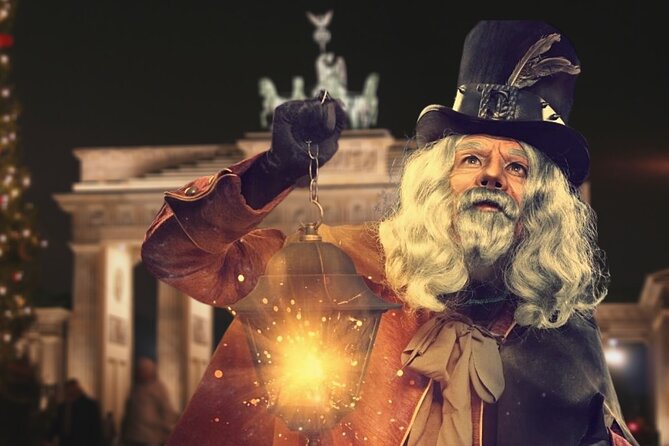
This one, run by Farolero, turns a simple stroll through Mitte into a story-led tour with audio and theatrical touches that help you pay attention instead of fighting traffic noise. You’ll hit some of Berlin’s most recognizable symbols, then wander through the reconstructed historical heart of the city, all in about 90 minutes.
I especially like two things. First, the pace feels built for learning without boredom, with interactive moments and even small bits of role-play that make the street corners stick in your mind. Second, the route hits big-name sights you can easily recognize later, like the Neptune Fountain and Berlin’s Red City Hall, but it also adds context so you understand what you’re actually looking at.
One drawback to consider: this is a walking tour, and if conditions are rough or you need the guide to be punctual, you’ll want to dress for the weather and double-check meeting spots. The tour also depends on good weather, since it’s designed to happen outdoors.
In This Review
- Key things you’ll notice on this Night magic tour
- A night tour that keeps your attention
- Start at St. Marienkirche, then head into Mitte’s core
- Neptune Fountain (1891) and the symbolism you can actually spot
- Red City Hall (Rotes Rathaus): government, bricks, and Berlin’s showpiece look
- Ampelmännchen: the little pedestrian light with big political meaning
- Nikolaiviertel and St. Nikolai-Kirche: Alt-Berlin’s reconstructed medieval heart
- Humboldt Forum: non-European art, and why this stop works at night
- Mühlendamm and the Spree: closing in the historic city foundation zone
- Price and logistics: does $46.99 feel fair for 90 minutes?
- Who this Night magic tour is best for
- Should you book Farolero’s Night magic city tour?
- FAQ
- How long is the Night magic city tour in Berlin?
- What language is the tour offered in?
- Do I get a mobile ticket?
- What is the group size limit?
- Where does the tour start and where does it end?
- What if the weather is bad?
Key things you’ll notice on this Night magic tour
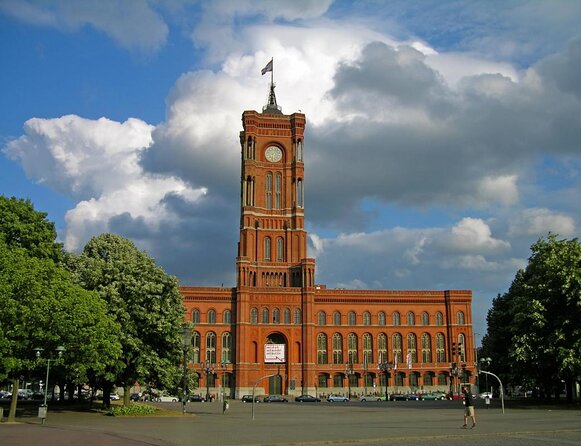
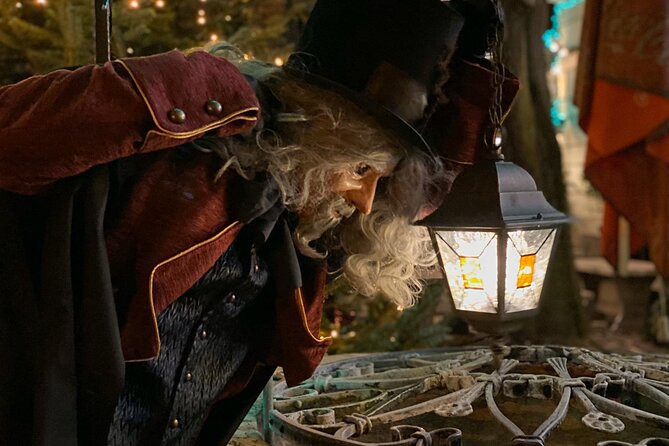
- Theatrical audio style, paired with actors and visual effects, so the history feels like a performance, not a lecture
- Small group size (up to 20), which makes it easier to hear your guide and stay together
- Mitte-focused route that bundles major landmarks with the Nikolaiviertel area’s medieval look
- Ampelmännchen context, where the famous pedestrian light symbol ties into Germany’s divided past
- Costume and playful interaction moments, which several people highlight as a fun twist
- Finish near the Spree, so you have an easy option to keep exploring after the tour
A night tour that keeps your attention
If you’ve ever done a classic “stand here, listen for 20 minutes” tour, you know how easy it is to drift. This one is built differently. The format leans on an audio-guide style experience, then adds actors and visual effects at points where it helps the story make sense.
What that means for you is simple: you’re not just looking at buildings, you’re learning how to read them. And because it’s happening at night, the sights feel closer together, more atmospheric, and easier to remember as a single loop through central Berlin.
I also like the practical angle. The experience is designed to keep distractions down. People mention that the setup helps reduce the usual annoyance of city noise, so you can actually follow what’s going on without constantly tuning the world back out.
More German evenings after the offices close:
- Berlin: Solar Powered Sunset Catamaran Cruise & Audio Guide
★ 4.6 · 1,043 reviews - Berlin: Live-Guided Evening Sightseeing Tour by Open-top Bus
★ 4.1 · 783 reviews - Berlin: Kreuzberg Guided Walking Evening Tour
★ 4.7 · 555 reviews
Start at St. Marienkirche, then head into Mitte’s core
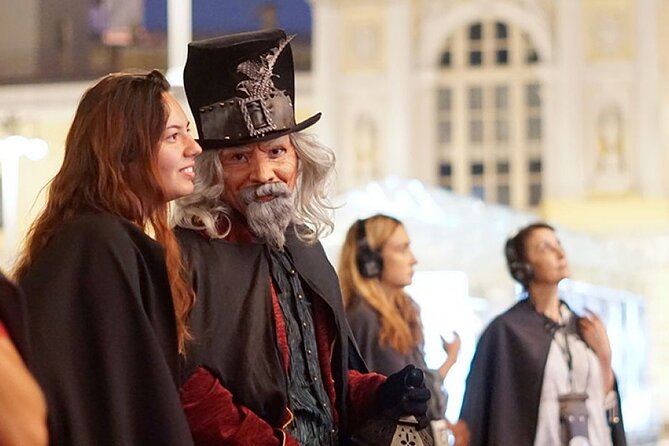
The meeting point is St. Marienkirche (Karl-Liebknecht-Str. 8, 10178 Berlin). From there, you’ll move through central Berlin toward the tour’s main stops. Expect a short walk between key sights, with enough stops that you can rest your legs briefly and take pictures when the group pauses.
Why I think the starting location matters: St. Marienkirche sits in a part of Mitte where you can feel Berlin’s layers right away. Even if you’re not a history buff, you’ll notice that the buildings around you don’t all belong to the same era. That sets you up for the tour’s biggest trick, which is connecting the past and present without making it heavy.
Also, since the tour is offered in English and is capped at 20 people, you’re not stuck in a huge crowd. That makes a difference if you care about hearing details rather than just absorbing silhouettes.
Neptune Fountain (1891) and the symbolism you can actually spot
One of the first major visual stops is the Neptune Fountain (built in 1891, designed by Reinhold Begas). The center figure is Neptune, the Roman god of the sea and waters, which already sets a mythic tone for a night walk.
Here’s the practical part you’ll remember: the fountain includes four women representing the four main rivers of Prussia at the time it was built. The tour helps you read each river’s allegory through objects and details:
- Elbe: a figure holding fruits and ears of corn
- Rhine: fishnet and grapes
- Vistula: wooden blocks symbolizing forestry
- Oder: goats and animal skins
Even if you’re just walking past during your first Berlin trip, understanding these details changes how you look at the fountain. You stop seeing it as “a cool landmark” and start seeing it as a map of power, trade, and resources.
There’s also a built-in historical contrast you’ll get during the stop. The tour notes that the Vistula is now entirely in Poland, and the Oder forms part of the border between Germany and Poland. That kind of info turns a pretty statue into a conversation about shifting borders over time.
Red City Hall (Rotes Rathaus): government, bricks, and Berlin’s showpiece look
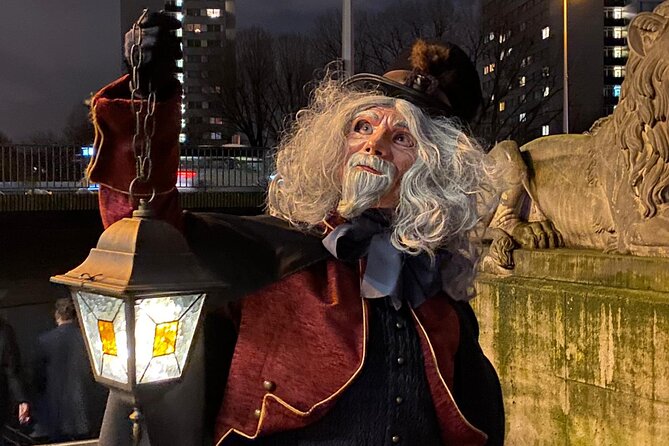
Next up is Rotes Rathaus, Berlin’s Red City Hall, located in Mitte near Alexanderplatz on Rathausstraße. The name comes from the façade design using red clinker bricks.
This is one of those places where the building itself is a clue. Berlin wanted a government seat that looked official and hard to ignore. In the dark, the red brick color reads even stronger, and it’s the kind of landmark that gives you a quick orientation boost.
What makes the stop valuable is not just the building trivia. It’s the way it connects civic power to the city’s layout. Since the tour stays in central areas, you start mapping Berlin as you go, which is how night walks become more than a one-off experience.
Ampelmännchen: the little pedestrian light with big political meaning
Then you’ll meet Ampelmännchen, the famous little traffic light man. This is the kind of thing you see everywhere in Germany and often never think about beyond a cute design.
The tour gives you the context: before German reunification in 1990, West and East Germany had different forms for the Ampelmännchen. The West version used a more generic human figure, while the East version was generally more “male,” including a hat.
If you like street-level symbols, this stop is a standout. It’s small, but it’s a reminder that everyday design can carry identity. And because the tour is moving at a human pace through the center, the meaning lands naturally rather than feeling like a lecture.
Also holding a platform in Berlin

Nikolaiviertel and St. Nikolai-Kirche: Alt-Berlin’s reconstructed medieval heart
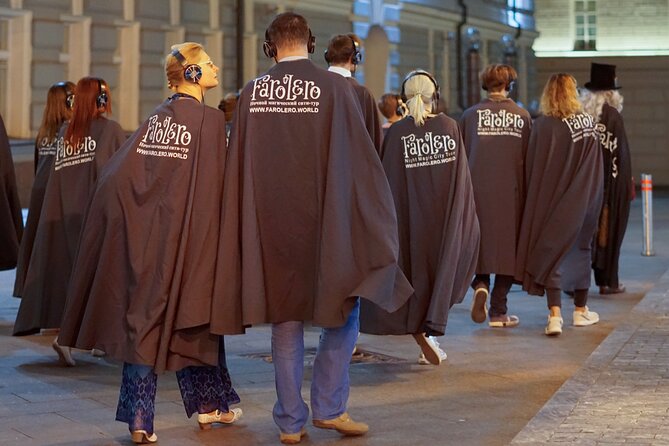
The tour heads into Nikolaiviertel, the reconstructed historical quarter of Alt-Berlin, about five minutes away from Alexanderplatz. This area, together with nearby Cölln, is described as Berlin’s rebuilt historical core.
From a “should I pay attention” perspective, Nikolaiviertel is ideal on a night tour. The streets feel like a story set. And because the area is explicitly tied to the idea of Alt-Berlin, you get an easier contrast between what Berlin used to feel like and what it became.
Right near the heart of this quarter is the St. Nikolai-Kirche (Nikolaikirche, St. Nicholas’ Church). The tour notes it as the oldest church in Berlin, built between 1220 and 1230. The surrounding area around the church, bounded by Spandauer Straße, Rathausstraße, the River Spree, and Mühlendamm, is also known as the Nikolaiviertel, or Nicholas quarter.
So what should you focus on here? Don’t treat it like a random church stop. Use it as an anchor point for the whole experience. When you hear about medieval Berlin alongside the reconstructed quarter concept, you start seeing why Berlin’s central neighborhoods often feel like “time travel,” even when you know parts of the streets were rebuilt.
Also, if you’re the type who likes to photograph religious architecture at night, this is a strong moment for pictures because the church is a focal point and the surrounding streets are designed to frame it.
Humboldt Forum: non-European art, and why this stop works at night
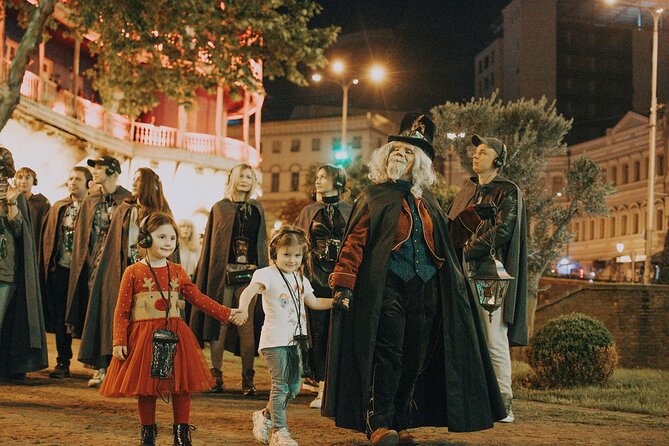
Next is the Humboldt Forum on Museum Island. The tour frames it as a museum of non-European art and explains why its name matters, honoring Prussian scholars Wilhelm and Alexander von Humboldt.
You’ll also learn that the Humboldt Forum combines rebuilt baroque façades of the former Royal Palace with a modern interior designed by Franco Stella. The exterior overlooks the Spree, which gives the building a prominent river-facing presence even in low light.
The reason this stop is a smart fit for this particular tour is that it pulls you beyond the typical “Berlin greatest hits.” Instead of only focusing on German political landmarks, you get a cultural context, centered on world art collections.
If you’re trying to decide whether to include a museum visit on another day, this tour gives you a quick orientation. You’ll leave with enough knowledge to decide whether Humboldt Forum should go on your Berlin list for daytime hours too.
Mühlendamm and the Spree: closing in the historic city foundation zone
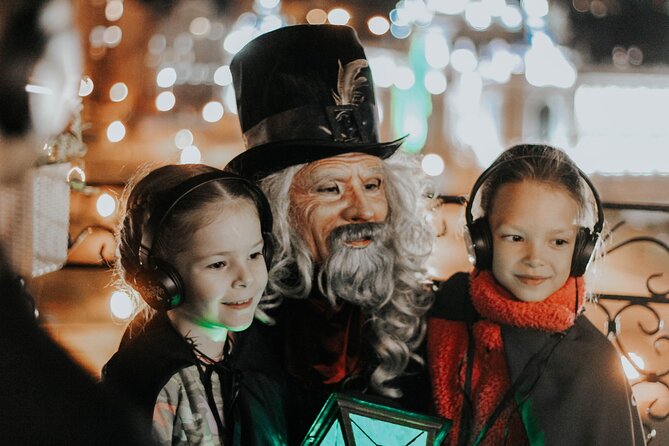
The tour concludes near Mühlendamm, a major thoroughfare in Mitte that runs from the historic Cölln and Fischerinsel quarters to Molkenmarkt square via the Mühlendammbrücke crossing the Spree. The area is named after watermills that once existed there, and it became the nucleus of Berlin’s late medieval city foundation.
Why this matters: it’s a reminder that Berlin grew around practical geography, not just monumental architecture. A river crossing and a milling area created the kind of location where commerce and communities formed.
Your tour’s end point is listed as Ephraim’s, at Spreeufer 1 (10178 Berlin). That’s a helpful finish line, because it places you near the water. Even if you don’t plan a long night out, you’ll likely find it easier to keep moving or take a transit option from the Spree area rather than wandering back blindly.
Price and logistics: does $46.99 feel fair for 90 minutes?
The price is $46.99 per person for about 1 hour 30 minutes. In Berlin, that places this tour in the mid-range for a focused, guided experience. The value comes from two things you don’t always get together.
First, you’re paying for more than sightseeing. The format includes audio, actors, and visual effects, plus interactive moments like people being dressed up at the start. That kind of production costs more than a basic walking tour.
Second, the route is tight. You’re covering a cluster of major stops in central Berlin, including Neptune Fountain, Rotes Rathaus, Nikolaiviertel, St. Nikolai-Kirche, and Humboldt Forum. You get multiple “anchor points” you can revisit mentally after the tour, and you’re not spending your time zigzagging across the city.
The one thing to watch is expectations. This is a walking experience, not a bus tour, and it needs good weather to run as designed. If it’s cold and damp, dress for it. If you’re hoping for purely passive, sit-down viewing, this setup may feel more energetic than you want.
Who this Night magic tour is best for
This is a great choice if you want Berlin to feel like a story you can follow, rather than a checklist.
It fits well for:
- First-time visitors who want the Mitte core without spending all day planning
- People who enjoy theatrical touches, role-play, and interactive audio formats
- Those who like landmarks but also want the meaning behind them, from rivers at Neptune to politics in Ampelmännchen
- Anyone who wants a night activity that still teaches you something real
It may be less ideal if:
- You dislike walking in the cold or want lots of long indoor breaks
- You need a traditional, quiet, museum-style guide tone the entire time
Should you book Farolero’s Night magic city tour?
I think it’s worth booking if you’re the type who learns best when you’re actively engaged. The standout strengths are the theatrical, interactive approach and the way it connects specific details like river allegories, German reunification symbolism in Ampelmännchen, and the historical meaning of the Nikolaiviertel area.
If you’re on a short Berlin trip and you want a single night plan that covers several major stops in a coherent route, this delivers. Just go in dressed for outdoor walking, and arrive at the meeting point on time so you do not stress the beginning of the performance.
FAQ
How long is the Night magic city tour in Berlin?
It runs for about 1 hour 30 minutes.
What language is the tour offered in?
The tour is offered in English.
Do I get a mobile ticket?
Yes, the tour uses a mobile ticket.
What is the group size limit?
The tour has a maximum of 20 travelers.
Where does the tour start and where does it end?
It starts at St. Marienkirche, Karl-Liebknecht-Str. 8, 10178 Berlin, Germany, and ends at Ephraims, Spreeufer 1, 10178 Berlin, Germany.
What if the weather is bad?
This experience requires good weather. If it’s canceled due to poor weather, you will be offered a different date or a full refund.
Fresh on the arrivals board for Berlin
City Tours, compared.
1-Hour City Tour by Boat with Guaranteed Seating
Read our review →
Berlin City walk Government District and Places of Democracy
Read our review →
City History Canal Sightseeing Tour on a Motorboat
Read our review →
Browse the lists this tour appears in