
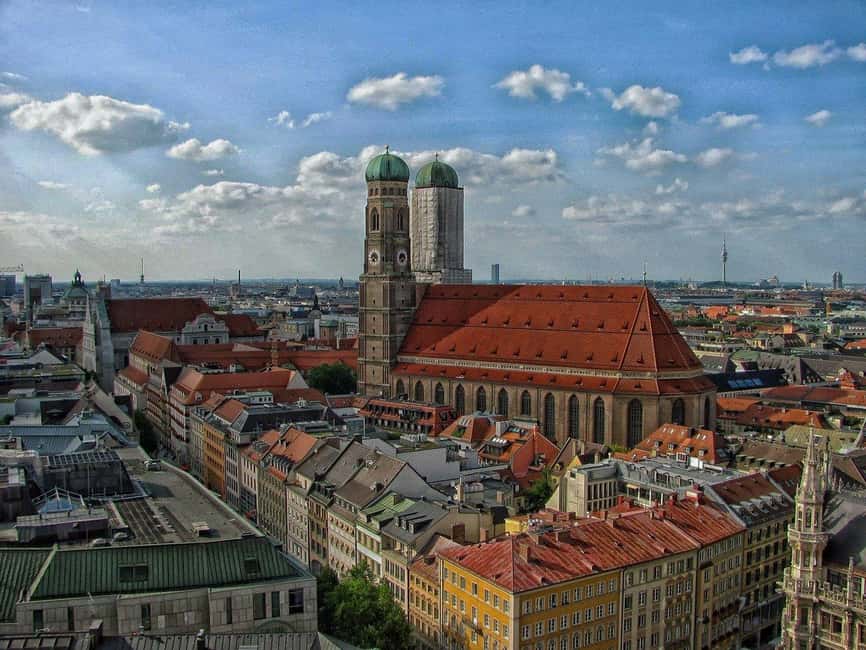
Reviewed · GUIDED WALKS IN MUNICH
Munich Old Town – Guided Walking Tour in English
Munich tells two stories at once. I love how this guided walk anchors you at Marienplatz and then keeps pulling you into the bigger picture, from Bavaria’s beer obsession to the people and power behind it. I also love the way Hofbräuhaus comes to life through local legends and the sort of details that make a landmark feel personal, not just photographed.
One possible drawback: if you want a purely cheerful, beer-and-palaces tour, the darker chapters tied to Nazism can take more time and emotional space than you might expect, and there is also a quirky stop that some people find less exciting than the major sights.
In This Review
- Key highlights worth circling
- Meeting at St. Peter Church, then getting your bearings fast
- Marienplatz and the town hall views that set Munich’s mood
- Hofbräuhaus, the Aloisius lore, and why beer is political here
- Odeonsplatz and the State Opera area, where grandeur teaches geography
- Max Joseph Platz and the Wittelsbach thread
- The darker path: Beer Hall Putsch, Nazi origins, and Ratzinger’s link
- The carillon knight fight, and why odd stops can still help
- Pacing, price, and getting value from a narrative guide
- Who this tour is perfect for, and who should reconsider
- Should you book the Munich Old Town guided walking tour?
- FAQ
- Where do we meet for the tour?
- How long is the Munich Old Town walking tour?
- What language is the tour guide?
- How much does the tour cost?
- Is hotel pickup or drop-off included?
- Is this a private tour?
- What major sights will we see?
- What history topics does the guide cover?
- Is free cancellation available?
- Can I reserve without paying right away?
Key highlights worth circling
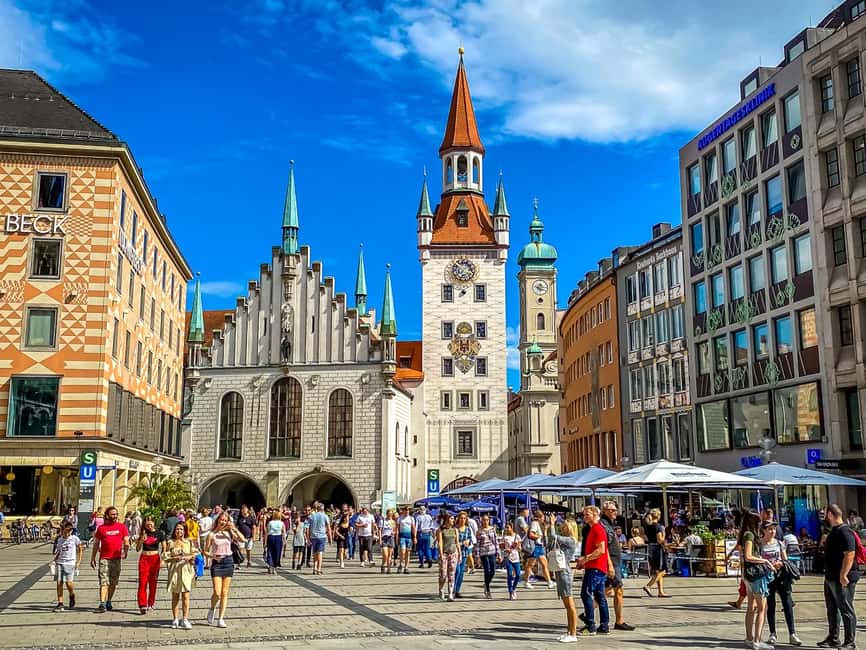
- Marienplatz town squares with both the old and new town hall views as your orientation hub
- Hofbräuhaus beer culture explained as Bavarian identity, not just tourist trivia
- Odeonsplatz and the State Opera area for the grand, ceremonial side of Munich
- Wittelsbach royal residences to understand how Munich’s power center worked for centuries
- Beer Hall Putsch and NSDAP origins handled with care, through a guided narrative that connects events and places
Meeting at St. Peter Church, then getting your bearings fast
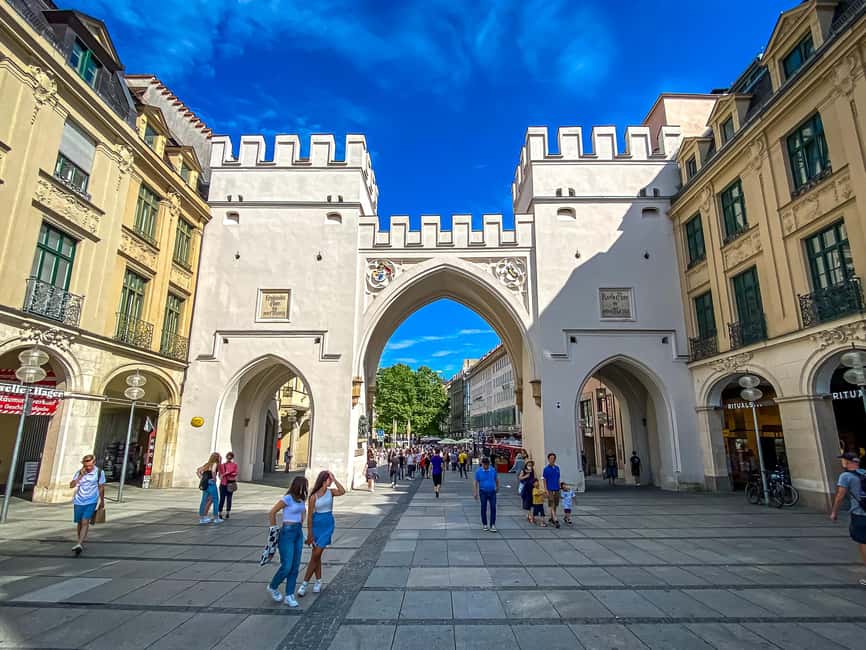
You start at the main gate of St. Peter Church, right where the Old Town energy funnels toward the big squares. The guide waits with a yellow umbrella of Walkative, so you can spot the group even before you know the landmarks.
This is a straight walking tour. No hotel pickup, no car to rescue you. That is good for value because your time goes into moving through the center and understanding what you are actually seeing. Plan on comfortable shoes, and bring layers if you are traveling in winter. The tour’s background imagery often feels very Bavaria, even when you are not at Oktoberfest.
Most important, this is not a random string of photos. It is built around a storyline that moves from ancient beginnings to royal rule, then into the 20th century. That format helps you connect places, not just collect stops.
More Guided Walks in Munich
- Munich: Third Reich & WWII Walking Tour
★ 4.6 · 6,181 reviews - Third Reich Walking Tour Munich
★ 4.5 · 4,291 reviews - Munich: Old Town & Viktualienmarkt City Walk in German
★ 4.7 · 2,304 reviews
Marienplatz and the town hall views that set Munich’s mood
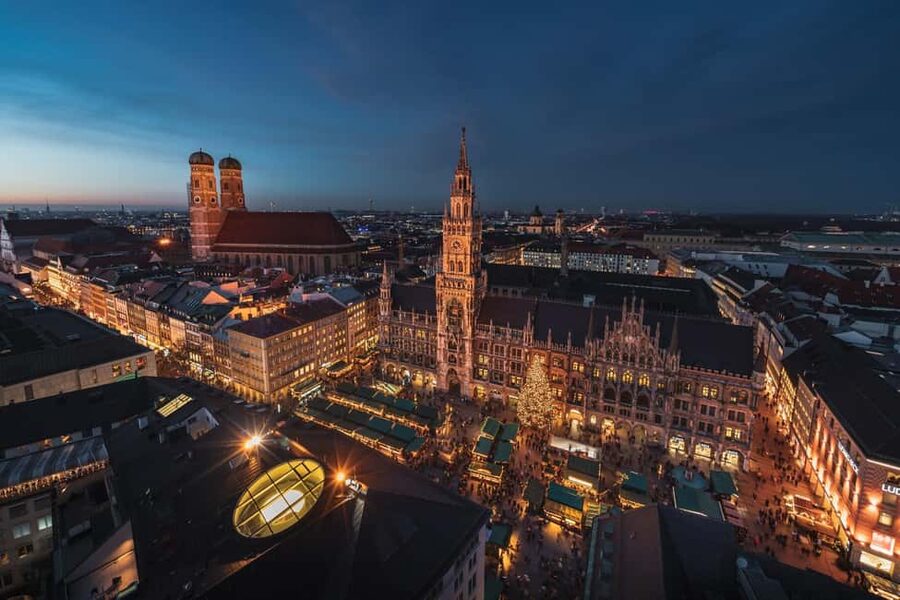
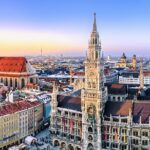
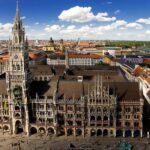
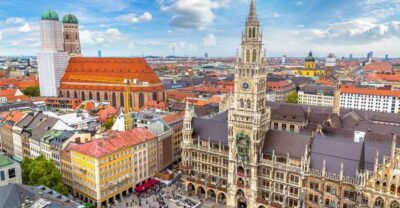
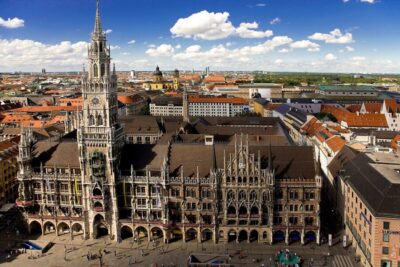
Marienplatz is where you feel Munich’s “main character” energy. You get both the New Town Hall and Old Town Hall areas, and your guide uses them to explain how the city’s civic life and royal influence shaped the street-level experience.
Here is what I like about starting at a place like this: you can instantly map the rest of the walk. Once you understand where Marienplatz sits in relation to the surrounding squares, the Old Town stops making you feel lost. You see how wide the streets are, where people gather, and why certain buildings matter.
You also get those quick cultural signals that make Munich feel like Bavaria, not Germany-as-a-whole. If you are the kind of traveler who likes symbolism, this is where you start picking up the recurring names and icons you will notice later on menus, plaques, and emblems.
If you take one takeaway from the early part of the walk, it is this: Munich’s center is laid out for viewing power. The architecture is a message, and the guide helps you read it.
Hofbräuhaus, the Aloisius lore, and why beer is political here
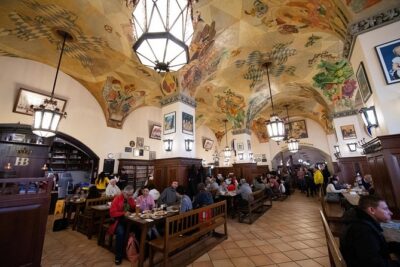
The tour’s beer chapter is not just about beer. It is about identity, industry, and how Bavaria built a culture around a product that became a social language. Hofbräuhaus is the anchor for that.
You learn the story behind Bavarian beer culture in a way that connects the dots between celebration and commerce. And if your guide brings local legends, you may hear references to things like the famous Aloisius story that shows up in Hofbräuhaus lore. It is the kind of detail that turns a famous hall into a place with personality.
This is also a good moment to think about how you will eat later. The city practically invites you into Bavarian comfort food, from schnitzel and pork knuckle to other classics. One useful tip you might get is about where to find something simple but very Munich, like Leberkase in sandwich form at Viktualienmarkt. Even if you do not follow that exact suggestion, it helps you know what to look for when you start scanning menus.
A practical note: Hofbräuhaus can be busy, so you might not linger inside as long as you would on a food tour. But the point is timing and context. You walk in with questions, then you walk out understanding what you are seeing.
Odeonsplatz and the State Opera area, where grandeur teaches geography
After the beer hub, the walk shifts into a more ceremonial zone. Odeonsplatz and the National Theater and State Opera area show Munich’s grand face, the one that looks made for parades, performances, and big moments.
This section is valuable because it teaches you how Munich layers eras side by side. The Old Town is not frozen in time. It is a living city where newer power and older prestige share the same stage.
Your guide also helps you notice small things you might otherwise miss, like why these buildings sit where they do and what they were designed to signal. If you care about art and architecture, this is where you get direction. Instead of wandering aimlessly, you learn what to look at and why.
For photography, this is usually the stretch where your eye starts lining up facades with square space. If the light is decent, you will get better pictures here than you would hustling through narrow lanes.
Max Joseph Platz and the Wittelsbach thread
Then the walk tightens toward the story of rulers. Max Joseph Platz and the residence of Bavarian kings give you the framework for understanding 700 years of rule by the Wittelsbachs.
What makes this section click is that you are not only hearing dates. You are getting a sense of how power operated in everyday space. These buildings were not built for private thoughts. They were built to project authority and shape how Munich functioned.
And it matters for your trip. If you understand the Wittelsbach era, you understand why Munich feels like a Bavarian capital with a strong court influence. You also start seeing why the city’s major institutions and grand spaces evolved the way they did.
If you like football culture, you will probably notice how the city’s pride shows up in modern life too. That confidence is not random. It is part of the long-running Bavarian style your guide keeps tying back to place.
More German cities at walking speed:
The darker path: Beer Hall Putsch, Nazi origins, and Ratzinger’s link
This tour does not skip the darkest parts of Munich’s past. The guide brings in the Beer Hall Putsch of 1923, including Adolf Hitler’s attempted seizure of power in Munich, and the fact that he ended up behind bars afterward. You also get the broader arc that Nazi ideology came from that criminal movement that spread across Germany and led to World War II.
You might worry that this section will feel blunt or overly intense. Many guides on this route are praised for handling complex events sensitively, and the storytelling approach helps. You get context, not shock value.
You also hear how the city connects to unexpected people, including Joseph Ratzinger, who later became Pope Benedict XVI, and the time he worked as an archbishop. It is a reminder that history happens in overlapping layers, not separate boxes.
One more useful thing: your guide ties this thread to other moments in German history, including Roman beginnings and later unification of Germany in the 19th century under Bismarck. That context makes Munich’s role feel less like a random tragedy and more like part of a larger machine of events.
If you are traveling with teens or history-minded adults, this part is often the moment when the walk becomes more than scenery. It becomes a map for understanding.
The carillon knight fight, and why odd stops can still help
Not every highlight is equal, and that is fine. One stop that can feel disappointing is a show of knightly figure fights in the city’s carillon. Some people expect a major attraction and get a quirky moment instead.
But even if you skip the spectacle in your head, the stop still serves a purpose. It shows how Munich keeps its local traditions and oddities in the mix, even while the walk covers big, heavy events. That contrast is exactly what makes Munich feel like Bavaria.
This is also a good reminder to keep your expectations flexible. The guide is not only collecting monuments. They are showing you the city’s rhythm, including the moments that are playful or slightly strange.
If you want a strong photo at this stretch, do it quickly. The rest of the walk is where your attention will get rewarded most.
Pacing, price, and getting value from a narrative guide
The price is about $29 per person for a 150-minute guided walking tour. That is not just a ticket for movement. It buys you an expert local guide plus a carefully constructed narrative, which matters in Munich more than you might think.
The Old Town is packed. On your own, you can absolutely see the landmarks. But you may miss why they connect, or you might only learn the surface version of beer culture, royalty, and politics. Here, the guide provides the structure so you leave with a mental map of cause and effect.
There is also a participation model worth knowing about: this tour joins a general pay as you wish walking tour. The amount you pay covers a reservation fee and the guide’s payment in advance. If you want a smaller private version, you can contact the supplier. On the street, that usually means you are dealing with a group format and a fixed time window.
Pacing tends to work well for people who want a solid introduction without burning an entire afternoon. The most common praise you will hear around this kind of tour is about story quality and timing, with guides setting a pace that keeps you together and still allows you to look at churches and buildings long enough for photos.
If you have limited time, this is a strong “first Munich walk” because it covers major squares and the big symbolic sites in roughly two and a half hours.
Who this tour is perfect for, and who should reconsider
This tour is ideal if you want to understand Munich instead of only visiting it. If you like history with real place markers, the storyline across Roman beginnings, the Wittelsbach era, and modern German history will help you connect what you see to what it means.
It is also a good fit if you care about local culture, especially Bavarian beer identity, and you like guides who share practical eating ideas like where to find Leberkase sandwiches after you have done the main sightseeing.
You might reconsider if you prefer a lighter tone. One clear theme from the experience is that the tour includes the rise of Nazism and the Beer Hall Putsch, and some people who want mostly cheerful sightseeing may find that shift too heavy for their taste. In that case, you can still enjoy the architectural parts, but go in with your expectations set.
Should you book the Munich Old Town guided walking tour?
Yes, I think you should book it if you want a fast, organized understanding of the city. For $29 and 150 minutes, you get an Old Town overview that ties together Munich’s iconic beer culture, royal power, and the darker chapters that shaped modern Germany.
Book it early in your trip. That way, the rest of your days are easier. You will know where to wander next, what buildings matter, and what food ideas to chase when you hit Viktualienmarkt or nearby spots.
Skip it only if you want a purely upbeat sightseeing walk. If you can handle a serious historical thread and you want context with your photos, this tour is one of the best ways to start seeing Munich clearly.
FAQ
Where do we meet for the tour?
You meet at the main gate of St. Peter Church. The guide will be waiting with the yellow umbrella of Walkative.
How long is the Munich Old Town walking tour?
The tour lasts 150 minutes.
What language is the tour guide?
The tour is led by a live guide in German and English.
How much does the tour cost?
The price is $29 per person.
Is hotel pickup or drop-off included?
No. Hotel pickup and drop-off are not included.
Is this a private tour?
It joins a general pay as you wish walking tour. If you want a smaller private tour, you can contact the supplier to help organize it.
What major sights will we see?
The tour includes Marienplatz (New and Old Town Hall), Hofbräuhaus, Odeonsplatz, the National Theater and State Opera, Max Joseph Platz, and the residence of Bavarian kings, plus more.
What history topics does the guide cover?
Expect stories from Roman beginnings, 700 years of Wittelsbach rule, German unification in the 19th century, the Beer Hall Putsch and Nazi origins, and Joseph Ratzinger’s work as an archbishop.
Is free cancellation available?
Yes. You can cancel up to 24 hours in advance for a full refund.
Can I reserve without paying right away?
Yes. You can reserve now and pay later.
Fresh on the arrivals board for Munich

Guided Walks in Munich, compared.
Old Town & Viktualienmarkt City Walk in German
Read our review →
Munich Ghosts and Spirits Evening Walking Tour
Read our review →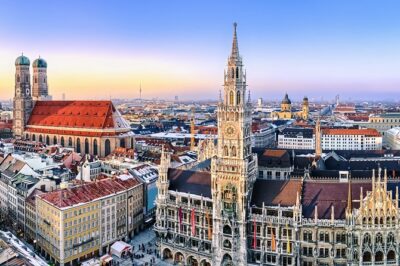

Birthplace of the Third Reich Guided Walking Tour
Read our review →Browse the lists this tour appears in