
Reviewed · HISTORICAL TOURS
Munich: National Socialism Historical Tour in GERMAN
Munich’s streets explain how power took root. This 2-hour National Socialism historical walking tour follows the city’s propaganda trail through key sites and guided commentary. I especially like the black and white photo stops that help you picture Munich in the 1920s and 30s, and I like that the route tracks the story geographically, from Königsplatz toward Odeonsplatz. One consideration: the tour is in German, so if your comfort level is limited, you may feel rushed through the details.
You’ll start outside the Staatliche Antikensammlungen, and your guide is easy to spot, wearing a BIG BLUE BAG with the white words Weis(s)er Stadtvogel on it. You walk rain or shine, so plan for real pavement time, not museum chairs.
This is a compact tour, and it stays focused. For many people, that’s the point, you cover a lot of meaning without turning it into a half-day lecture.
In This Review
- Key things to know before you go
- Why this Munich route matters for understanding National Socialism
- Starting at Staatliche Antikensammlungen and spotting your guide
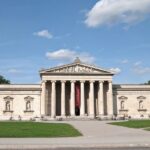
- Königsplatz: where political theater meets the city
- Former Führerbau and the Munich Agreement of 1938
- Briennerstrasse: the walk becomes part of the lesson
- From former Gestapo headquarters to Feldherrnhalle at Odeonsplatz
- How the tour uses black and white photos in the 1920s and 30s
- Price and value: what $34 covers, and what to plan for
- German language tour: who will enjoy it most
- Weather, walking time, and the practical side of “rain or shine”
- Should you book this Munich National Socialism tour?
- FAQ
- How long is the Munich National Socialism historical tour?
- What is the price per person?
- Where do I meet the tour?
- How do I recognize the guide?
- Is the tour in German?
- Does the tour run in bad weather?
- Is it wheelchair accessible?
- Are food, drinks, and entrance fees included?
Key things to know before you go
- German live guide that ties the route together with clear explanations
- Königsplatz to Odeonsplatz route mapped to turning points in the National Socialist rise
- Historic black and white photos used while you stand at key locations
- November 9, 1923 and November 9, 1933 both covered as major dates in the story
- Private or group tour option so you can choose your preferred style
- Comfortable shoes required, since it’s a walking tour that runs rain or shine
Why this Munich route matters for understanding National Socialism
Munich earned the nickname City of the Movement, and this tour tackles why. National Socialism didn’t just spread across Germany in the abstract. It gained momentum in specific streets, meeting halls, and public squares, and Munich played a central role during the 1920s and 30s.
What I like about this experience is that it treats the city like a primary source. You’re not just hearing dates. You’re connecting events to places like Königsplatz, the former Führerbau, Briennerstrasse, and Feldherrnhalle at Odeonsplatz.
That location-first approach is practical for your brain. When you later read about the NSDAP’s rise or the Beer Hall Putsch, you can mentally return to what you stood in front of in Munich.
Also, this is honest history, not a sanitized brochure. You’ll cover the rise of the NSDAP, what Germany looked like during National Socialism, and major events tied to November 9. That makes the tour heavier in subject matter, but it also means it’s more useful.
More centuries per city block:
- Munich: Guided Tour of the historic Town Hall on Marienplatz
★ 4.8 · 63 reviews - Munich Craft Beer & Cultural Tour With Snack
★ 5.0 · 46 reviews - Munich History Tour: Private & Personalized with a Local Guide
★ 4.5 · 33 reviews
Starting at Staatliche Antikensammlungen and spotting your guide
The meeting point is straightforward: meet in front of the main entrance of the Staatliche Antikensammlungen. If you’re wandering, aim for the main entrance rather than side doors.
Your guide will be wearing a BIG BLUE BAG with the white words Weis(s)er Stadtvogel. That’s a nice detail because it reduces the usual stress of matching a face to a description.
Before you set off, do one small thing that helps: get comfortable with the walking pace. The tour is only 2 hours, so you’ll likely spend most of your time in motion between stops, not waiting around.
Königsplatz: where political theater meets the city
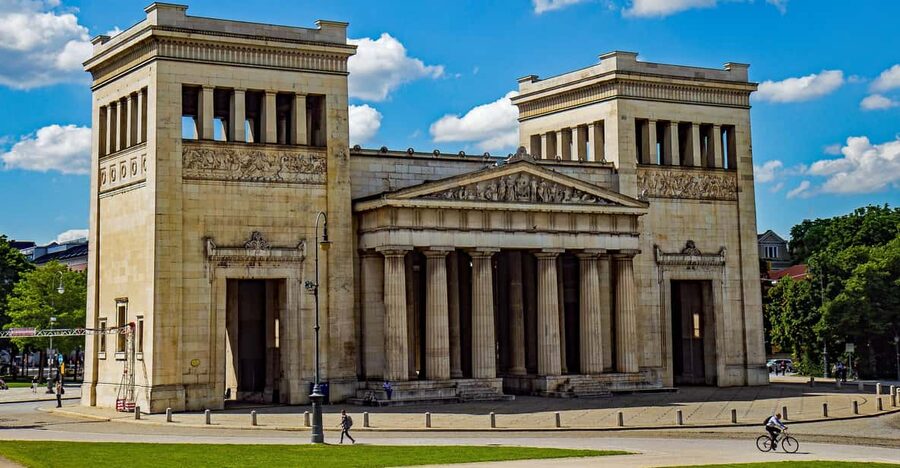
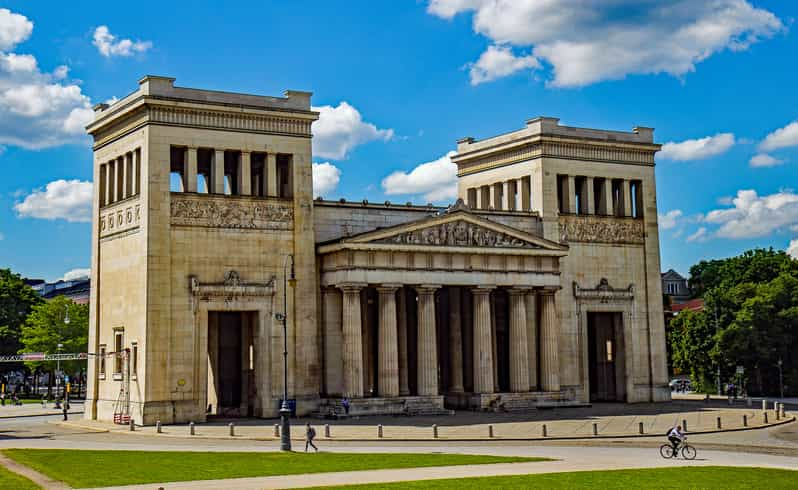
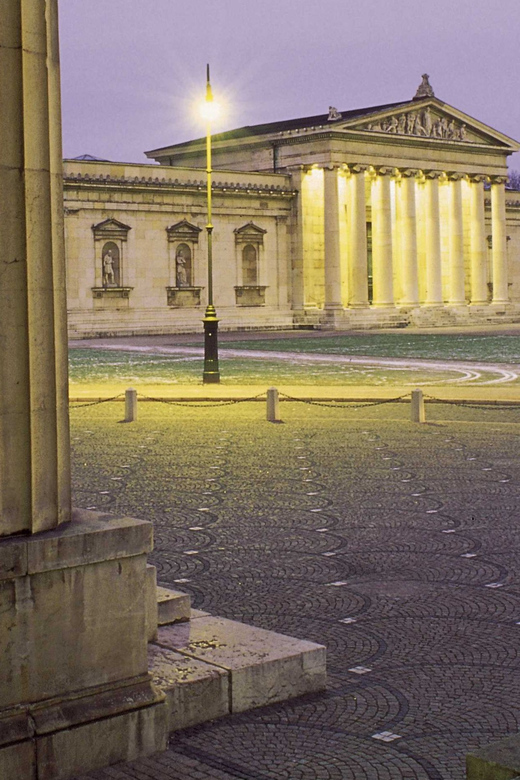
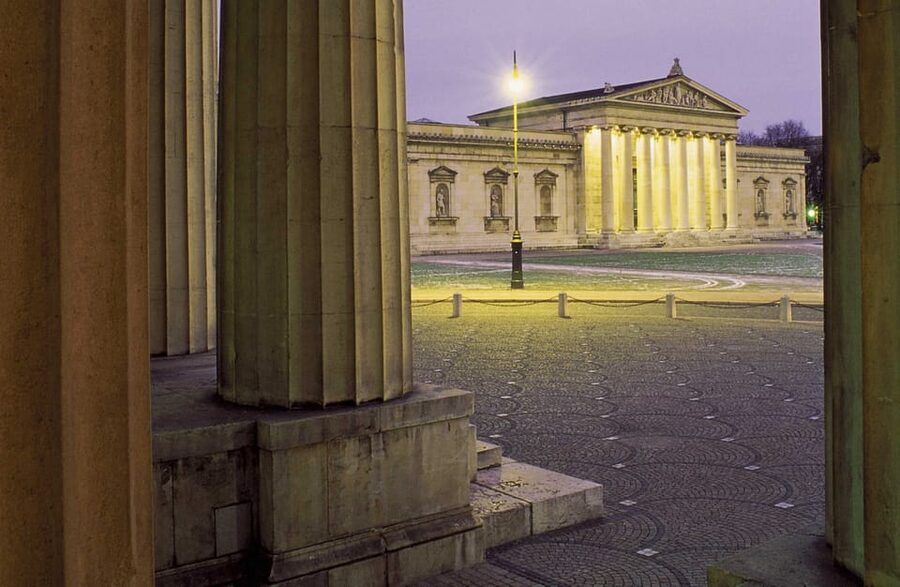
The tour begins at Königsplatz, and that’s a smart first move. Königsplatz is the kind of place where you immediately notice how public space can be used for mass messaging. With the guide leading, you’re not guessing about what you’re seeing. You’re hearing how the movement used the city’s visibility to grow.
This is where the tour frames Munich’s importance in the National Socialism story. You start at a location tied to how the NSDAP and supporters presented themselves in the 1920s and 30s.
Because the tour is limited to 2 hours, the Königsplatz stop is likely one of your first big orientation moments. I’d treat it as your baseline. After this, the other sites will click faster because you understand what the guide is building toward.
Former Führerbau and the Munich Agreement of 1938
Next, you walk to the former Führerbau, the location associated with the Munich Agreement signed in 1938. That single detail matters because it brings the story from street-level politics into high-stakes diplomacy and decision-making.
The tour also links this spot to what is today the Munich Documentation Centre for the History of National Socialism. Even if you don’t go inside on your own, the connection helps you understand how Munich has processed this past over time.
What to watch for while you’re there: the contrast between what the city is today and what these buildings represent in the historical timeline. This is one reason I find this kind of walking tour valuable. You see the same urban fabric, but the meaning changes when a guide explains why.
Also, since entrance fees are not included, you should assume the tour may focus on what you can learn from the exterior and the walk-by explanations. If you want extra time at a site that charges an entrance, budget separately.
Briennerstrasse: the walk becomes part of the lesson
After the Führerbau stop, you pass along Briennerstrasse. I like stretches like this on a tour because they act like a bridge between major checkpoints. You’re not just moving from one plaque to another. You’re absorbing the guide’s narrative while the city carries you forward.
Bridging matters here. The topic is Germany during National Socialism, and that’s not a single event. It’s a process. Moving down a recognizable route helps your understanding stay chronological instead of jumping around.
This is also a practical point. In two hours, you’re likely to appreciate any segment where you can mentally reset. The walk along Briennerstrasse can serve that purpose, letting your brain catch up before you reach the more charged end of the tour.
Also holding a platform in Munich
From former Gestapo headquarters to Feldherrnhalle at Odeonsplatz
One of the most important legs of this experience connects two kinds of history: repression and uprising.
You’ll pass the former Gestapo headquarters on your way to Feldherrnhalle at Odeonsplatz. The tour then anchors one of its biggest dates here, because it’s the location where Hitler’s Beer Hall Putsch took place on November 9, 1933.
That 1933 stop matters, but the tour doesn’t stop there. It also covers the events of November 9, 1923. Those two dates are part of the same arc, which helps you understand that this wasn’t only one failed attempt, then later success. It was an evolving struggle for control, carried out with different tactics over time.
When you reach Feldherrnhalle, pay attention to how the guide uses the space. Places like this are often remembered through photographs and textbooks. Standing there is different. You can see the scale and imagine crowds in motion, not just a single dramatic scene.
A small practical note: the tour is described as wheelchair accessible, but it is also listed as not suitable for people with mobility impairments. That means you should not assume it will work comfortably for every mobility need. If you have any limitations, ask the provider before you book so you can match your needs to the actual route.
How the tour uses black and white photos in the 1920s and 30s
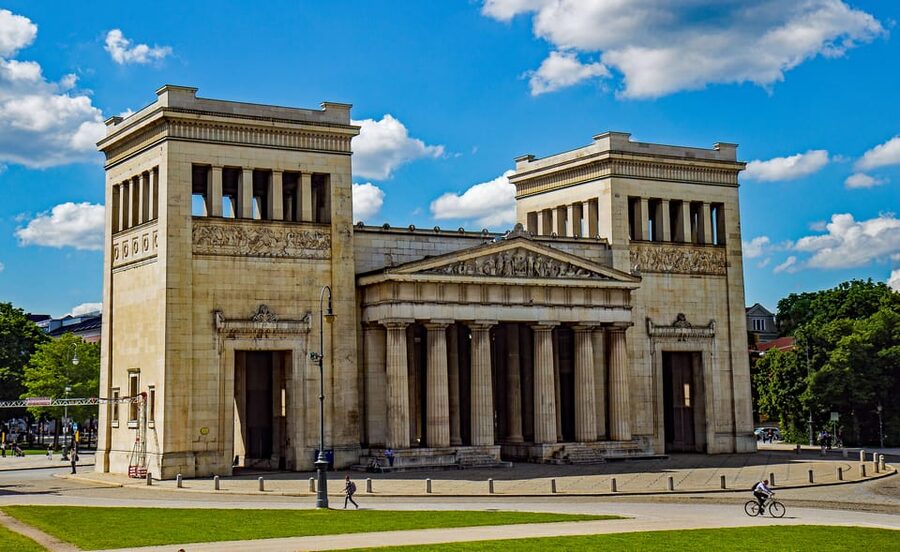
One of the highlights is the use of historic black and white photographs depicting Munich in the 1920s and 30s. This is more than a gimmick. For this kind of history, images help you connect your modern-day surroundings to the past without guessing.
In practice, you get the guide’s explanation, then the photo supports it. That format helps you avoid a common problem with walking tours: you hear the story, but the city doesn’t match what you expected.
The photos are especially useful for understanding the atmosphere around major political moments, including the events of November 9. Instead of imagining propaganda rallies out of thin air, you can compare what you see now with how the city looked back then.
If you’re the type of traveler who likes to learn and then remember, this photo element is a big part of why this tour is worth the time.
Price and value: what $34 covers, and what to plan for
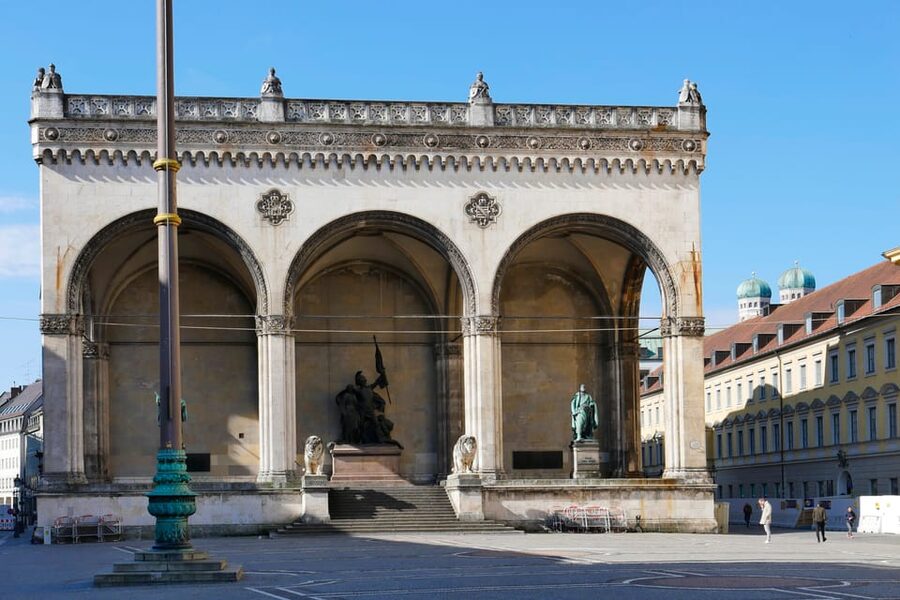
At $34 per person for a 2-hour guided walking tour, the value is mostly in the guided storytelling and the use of historic photos. You’re getting a professional guide and a route tied to specific locations across Munich’s National Socialism era.
Here’s what is included: a city guide. That’s it. No food or drinks. No hotel pickup or drop-off. And entrance fees are not included.
So what should you plan for?
- If you’re hungry afterward, eat before you go or plan your meal after. This tour does not supply snacks.
- If a stop catches your interest enough that you want to go inside somewhere ticketed, you’ll likely pay separately since entrance fees are not included.
- Bring comfortable shoes because the tour takes place rain or shine. Even if the weather is kind, you still need foot comfort for a 2-hour walk.
For many people, the best value here is the focus. You spend 2 hours learning key sites tied to the NSDAP rise and major November 9 events, instead of doing a long self-guided slog where you have to supply the context.
German language tour: who will enjoy it most
The tour is listed as live tour guide, German. That’s not a small detail. It affects how much you take in, especially for a subject where wording and context matter.
This tour is a great fit if you:
- Read or speak German enough to follow a live explanation
- Like historical context tied to real city spaces
- Want a structured overview of Munich’s role in National Socialism, not just a few monuments
If you’re not comfortable in German, you might still see the route and learn from the photos, but the deeper narrative could pass you by. In that case, consider whether you can find another language option for the same concept.
Weather, walking time, and the practical side of “rain or shine”
This tour takes place rain or shine. That means your biggest practical upgrade is footwear. Comfortable shoes are required, and that’s especially true if the pavement is wet.
Also, keep in mind that you’re covering multiple stops in a relatively short time window. Even if the route is well planned, it’s still a walking tour, so dress like you’re going to be outside for a full segment, not like you’ll duck in and out of buildings constantly.
Should you book this Munich National Socialism tour?
I think this is worth booking if you want a focused, location-based way to understand how National Socialism rooted itself in Munich during the 1920s and 30s. The combination of specific stops, professional guidance, and black and white photo support makes it easier to turn facts into mental images.
Book it if you:
- Want a guided walking route linking key sites like Königsplatz, the former Führerbau, Briennerstrasse, and Feldherrnhalle
- Care about major November 9 events, both 1923 and 1933
- Appreciate photo-based context while you stand in the places being discussed
Skip or double-check if you:
- Need the tour in a language other than German
- Have mobility needs beyond what you can comfortably handle on a walking route, since it is marked wheelchair accessible but also listed as not suitable for people with mobility impairments
- Want an experience that includes food, hotel pickup, or entrance fees, because those are not included
FAQ
How long is the Munich National Socialism historical tour?
It lasts 2 hours.
What is the price per person?
The price is $34 per person.
Where do I meet the tour?
Meet in front of the main entrance of the Staatliche Antikensammlungen.
How do I recognize the guide?
The guide will be wearing a BIG BLUE BAG with the white words Weis(s)er Stadtvogel on it.
Is the tour in German?
Yes, the live tour guide language is German.
Does the tour run in bad weather?
Yes, it takes place rain or shine.
Is it wheelchair accessible?
It is listed as wheelchair accessible, but it is also listed as not suitable for people with mobility impairments. If you have mobility concerns, it’s smart to ask the provider what will work for you.
Are food, drinks, and entrance fees included?
No. Food and drinks are not included, and entrances fees are not included.
Fresh on the arrivals board for Munich


Historical Tours, compared.
City History Canal Sightseeing Tour on a Motorboat
Read our review →
Browse the lists this tour appears in