
Reviewed · GUIDED WALKS IN MUNICH
Munich Macabre Group Walking Tour
Munich has a dark side, and this tour lets you touch it. The Munich Macabre Group Walking Tour uses archaeology and real objects to explain the stories under the city you think you know.
What I like most is the hands-on part, from examining ancient coins to holding replica medieval arms. I also like that the guide is an archaeologist and historian, not a reciter, so the talk feels grounded in what can actually be found and proven.
One thing to consider: this is spooky history, with some sensitive material and darker topics. If you are traveling with little kids, plan for a gentler approach, and if you have an over vivid imagination, this may not be your best fit.
In This Review
- Key highlights you will feel in this Munich evening walk
- Starting at Marienplatz, meeting archaeologist Taff Simon
- Landschaftstraße and the medieval Jewish quarter, fear turned into lies
- St. Peter’s Church, grave symbols, burial rites, and ancient coins
- Viktualienmarkt, outcasts, medieval beer samples, and the penalties for bad food
- Alter Hof, Wittelsbacher drama, sword-master ideas, and a 1944 bomb discovery
- Old Town Hall, witch trials, and what counted as evidence
- Why this Munich Macabre tour is strong value at about $42
- Timing, footing, and how to prepare for the 6:00 pm start
- Who should book this darker Munich walk, and who should skip it
- Should you book the Munich Macabre Group Walking Tour?
- FAQ
- What language is the Munich Macabre Group Walking Tour offered in?
- Where do we meet for the tour?
- How long is the tour?
- Is medieval beer included?
- Does the tour include hands-on elements?
- Is this tour suitable for families with children?
- How big is the group?
- What kind of footwear should I wear?
Key highlights you will feel in this Munich evening walk
- Guide-led, no navigation stress, with a small group and a clear start and finish at Marienplatz
- Hands-on archaeology, including original coins and examples of burial finds from excavations
- Taff Simon’s living history, archaeology background plus humor, and answers to questions along the way
- Munich’s darker chapters, from Black Death claims to the city’s most famous witch trial
- Medieval beer sampling tied directly to Munich brewing history, not a random add-on
Starting at Marienplatz, meeting archaeologist Taff Simon
The tour begins at Fischbrunnen, Marienplatz 8, with a 6:00 pm start. In practice, that is a smart way to begin, because Marienplatz is easy to orient around, and your first job is just to spot your guide and get settled. This is also a small group experience, capped at 15 people, so you are not lost in a crowd.
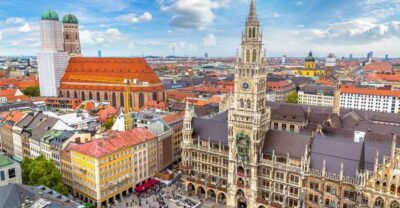
At the first stop, Marienplatz, Taff Simon sets the stage with the origins of Munich and why the city looks the way it does today. You get the basic map in your head early, so later stories make sense instead of feeling like random spooky stops. If you like history that explains cause and effect, you will appreciate this approach.
I also like the tone. It is not a lecture. You are walking, handling objects at certain points, and hearing stories that connect streets and buildings to real lives, trade, and belief systems.
More Guided Walks in Munich
- Munich: Third Reich & WWII Walking Tour
★ 4.6 · 6,181 reviews - Third Reich Walking Tour Munich
★ 4.5 · 4,291 reviews - Munich: Old Town & Viktualienmarkt City Walk in German
★ 4.7 · 2,304 reviews
Landschaftstraße and the medieval Jewish quarter, fear turned into lies
Your second stop moves you to Landschaftstraße, which is easy to miss in a normal walk. The point here is the contrast: a street that looks fairly unremarkable now sits beside an area that once ran alongside the Medieval Jewish quarter.
This section focuses on two big things. First, how Jewish communities contributed to Munich’s economic and cultural life. Second, how those same communities became targets of baseless accusations, including claims about spreading the Black Death and other false allegations like criminal or witchcraft involvement. The method of scapegoating is the through-line, and it is a sobering reality check.
The tour also brings in evidence from modern digging. Recent archaeological excavations connected to a new U-Bahn project added to what we understand about this part of Munich. That is the tour’s theme in miniature: not just dramatic storytelling, but how we know what we know.
St. Peter’s Church, grave symbols, burial rites, and ancient coins
At St. Peter’s Church, the experience turns hands-on in a very tangible way. The church is described as the oldest in Munich, and the tour uses that to connect you to early burial traditions and how those customs changed over time.
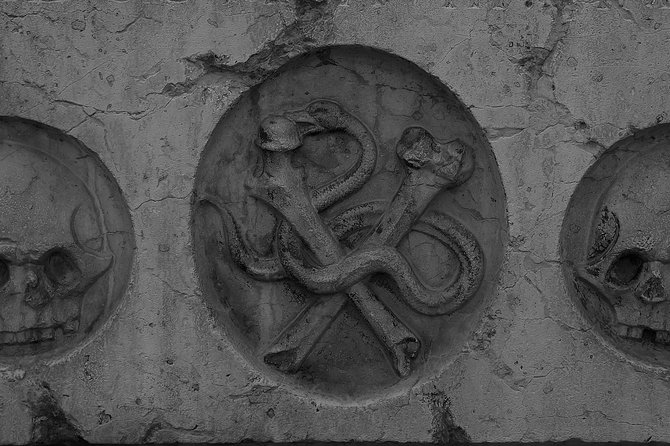
You learn how to interpret symbols on gravestones, which matters because it is easy to walk past cemeteries and see only decoration. Here, you start noticing what the markings could have meant, and how burial practices reflected social structure: class, trade, and guild connections.
The tour also touches on a darker detail, the idea that “Rest in peace” could sometimes mean “Rest in pieces.” That is part of the educational message here, how burial conditions and time can alter the story of what was once whole.
One of the best parts is that you get to examine original ancient coins that would have been given as alms. Holding coins that once moved through real hands changes the scale of history. It is no longer abstract dates, it is small metal objects tied to daily religion, charity, and community life.
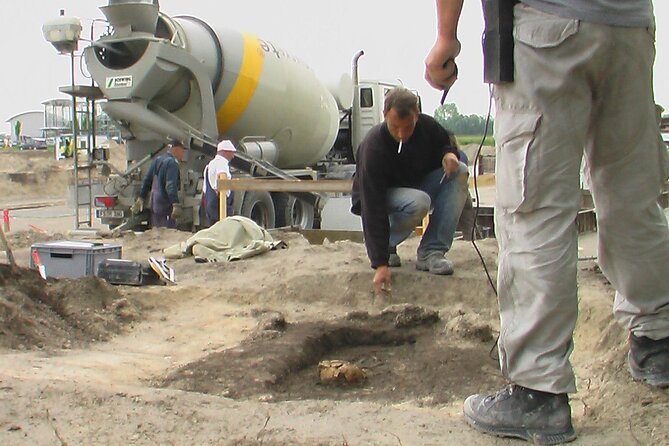
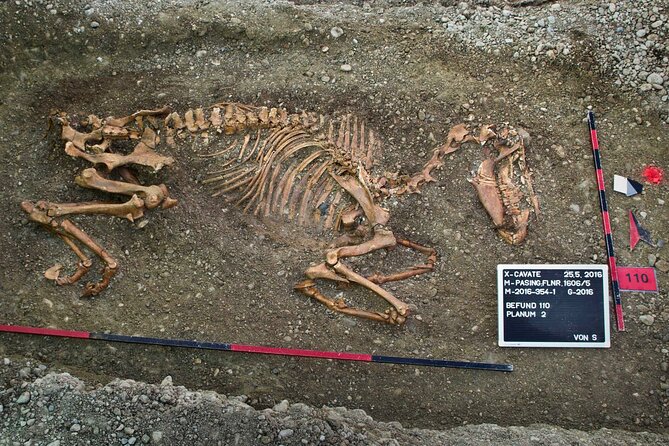
Important sensitivity note: this stop uses example photos of early medieval burial rites from excavations, often linked to construction sites. That is not meant to be sensational. The educational aim is to show how people treated their dead and what that suggests about belief and social structure. If you are sensitive to grave-related imagery, you should know this is included.
Viktualienmarkt, outcasts, medieval beer samples, and the penalties for bad food
Next you head to Viktualienmarkt, which today feels like a friendly market with pretzels, cheese, and the kind of beer garden energy Munich does so well. The tour flips the script. In medieval times, the message was darker: you could end up in trouble here if you were the wrong kind of person.
This stop explains why beer mattered so much historically, and you also get to try authentic medieval beer as samples. The sampling is part of the lesson, not a free-for-all. You are learning what brewing history looked like before modern standards, and why Munich’s beer culture grew into something people built their lives around.
You also hear about medieval penalties for making bad beer and pretzels. That might sound funny at first, but it is actually a window into how serious quality control was when beer was not just a drink, it was a daily staple and a major economic product.
Practical note: because this is a walking tour with a set evening pace, it helps if you already know you will enjoy standing, listening, and then grabbing food after the tour when you have more time.
Alter Hof, Wittelsbacher drama, sword-master ideas, and a 1944 bomb discovery
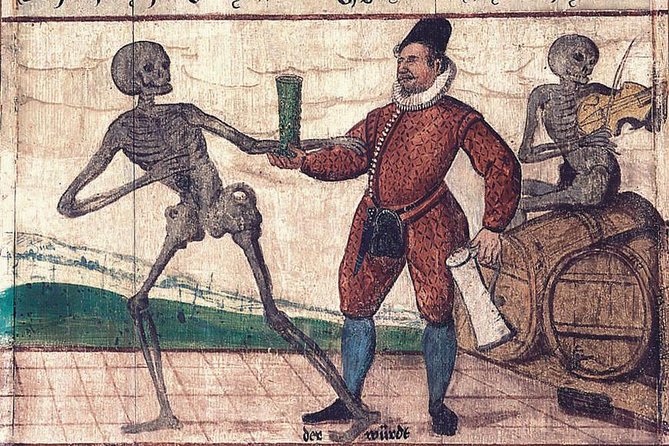
Your walk continues to Alter Hof, originally linked to the Wittelsbacher family, Bavaria’s royal line. This stop brings in a murder story that shocked medieval Europe and examines how it echoed through later generations of Munich residents.
From there, the tour shifts into combat history. It discusses medieval combat theories associated with Hans Talhoffer, known as a late medieval sword master. The payoff is tactile: you get to handle replica swords and may also see or handle replica armor depending on timing and what is on hand.
Then, if time allows, you get a fascinating archaeology twist. The tour describes an archaeological discovery in 1944, when an Allied bomb inadvertently unearthed seriously ancient artefacts. You get to handle and compare different types of ancient pottery and other artefacts. That contrast is powerful, war making space for discovery, modern catastrophe revealing older layers of everyday life.
This stop is one of the reasons the tour works. It is not only dark stories. It also gives you objects that connect violence, craftsmanship, and daily material culture.
More German cities at walking speed:



Old Town Hall, witch trials, and what counted as evidence
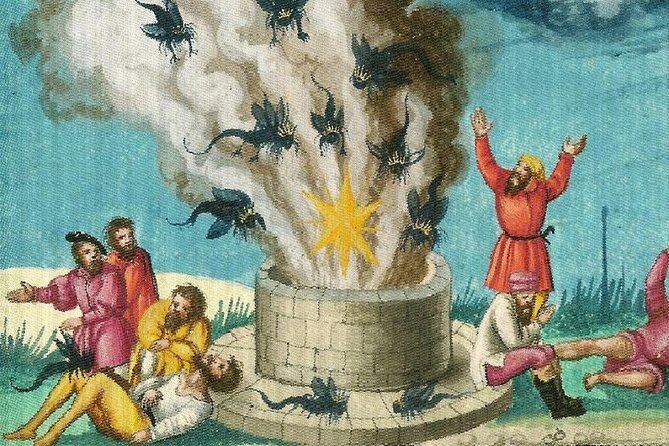
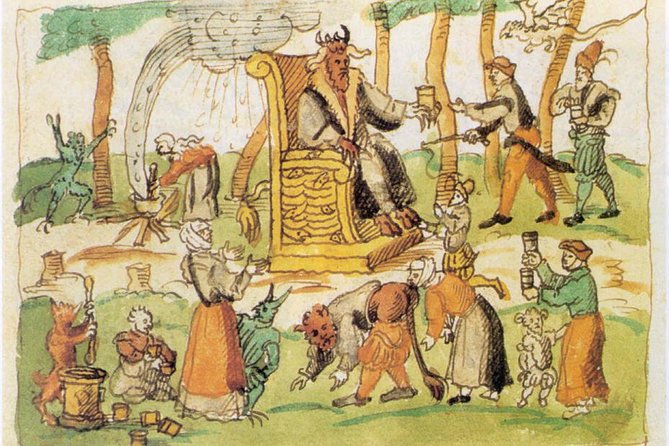
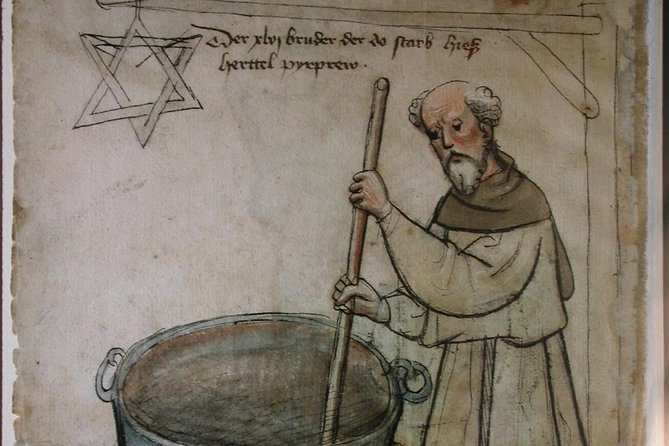
The climax for many people is Old Town Hall, where the tour discusses the most vicious witch trial in German history, with the focus on the Pappenheimers. You do not just hear that a witch trial happened. You hear the background, the charges, and the methods used to gather what were presented as evidence, plus what happened to those accused.
One detail that adds context is the reach of those events, described as having consequences felt as far away as a small town in colonial Massachusetts. That turns local Munich history into a bigger European story, the way fear and rumor could travel.
The tour also frames the trial as a system, how accusations were turned into a process, how proof could be manufactured. You will likely leave this part thinking about the modern meaning of evidence and how societies can be manipulated.
Because the tour balances humor with seriousness, you are not left in a doom spiral. Instead, you come away with something useful: the ability to spot patterns in how fear becomes action.
Why this Munich Macabre tour is strong value at about $42
At $42.24 per person, this is not a budget snack tour. But it also is not overpriced for what you actually get on the ground.
Here is the value math that matters:
- You get a live guide who is an archaeologist and historian, with an interactive style built around explanation and questions
- You get included hands-on access to original artefacts like ancient coins, plus handling replica medieval arms and armour
- You get medieval beer samples, tied to the lesson on brewing history
- You get a small group cap of 15 people, which makes it easier to ask questions and get direct attention
A standard walking tour can be mostly visual and verbal. This one adds tactile learning. When you can hold an object, or examine a coin, the cost feels easier to justify, especially in an expensive city like Munich where museums can add up.
Timing also helps. You should expect about 2 hours 30 minutes to 2 hours 45 minutes. That is long enough to feel like a real evening activity, short enough to still enjoy dinner afterward.
Timing, footing, and how to prepare for the 6:00 pm start
The tour runs in the evening, starting at 6:00 pm. Dress for Munich weather, and plan on uneven surfaces. Comfortable walking shoes are not optional here, especially since you are moving between old-town corners and church and courtyard-type areas.
Because it is an outdoor walk with indoor or object-focused stops, bring layers. Also, keep an eye on the weather. The tour requires good weather, and if conditions are bad, you may be offered a different date or a full refund.
A practical detail that can help: seating is not consistent across stops. If seating matters for you, you should tell the operator at booking time so the route can be adjusted as much as possible.
If you want beer, remember the samples are samples, not a full bar plan. You are better off using this tour as an educational tasting, then ordering a proper meal after.
Who should book this darker Munich walk, and who should skip it
This experience is a great match if you like history that connects archaeology to real people. It is also a strong pick if you enjoy tours where you can ask questions and get answers tied to real finds, not just general facts.
It is also a good option for teens and older kids, but with a caution. The tour notes that some content is not really suitable for younger children. It also says the tour team will try to temper the more descriptive elements. In other words, if you bring kids, focus on age appropriateness and be ready for a darker tone.
This tour is only in English. If you want German, the provider points to Weis(s)er Stadtvogel as a different option, but not the same hands-on style.
It is not recommended for anyone with an over vivid imagination. That is a fair heads-up. The tour goes into plague-era fear, scapegoating, medieval brutality, and witch trial procedures.
Should you book the Munich Macabre Group Walking Tour?
If you want Munich that feels more honest than postcards, book it. The combination of hands-on archaeology, a guide like Taff Simon who can explain and interact, plus a medieval beer tasting makes this more than a standard city stroll.
I would pass if you want gentle, upbeat sightseeing only. I would also think twice if you are traveling with very young kids or you get uncomfortable with grave-related topics. And if you dislike walking on uneven ground, plan on that factor before committing.
For everyone else, this is a memorable way to spend an evening in Munich. You walk away with stories that connect the city’s hidden layers, and with a few physical objects in your mind that make the past feel real.
FAQ
What language is the Munich Macabre Group Walking Tour offered in?
The tour is offered in English only.
Where do we meet for the tour?
You meet at Fischbrunnen, Marienplatz 8, 80331 München.
How long is the tour?
It lasts about 2 hours 30 minutes to 2 hours 45 minutes.
Is medieval beer included?
Yes. You get to sample authentic medieval beer. The samples are included, and they are described as samples rather than full pours.
Does the tour include hands-on elements?
Yes. You will get to handle original ancient artefacts and also replica medieval arms and armour, where the tour notes them as examples.
Is this tour suitable for families with children?
The tour notes that some content is not really suitable for particularly young children, but the team will try to temper more descriptive elements.
How big is the group?
The tour has a maximum of 15 travelers.
What kind of footwear should I wear?
The tour notes some uneven surfaces. Good footwear is recommended.
Fresh on the arrivals board for Munich

Guided Walks in Munich, compared.
Old Town & Viktualienmarkt City Walk in German
Read our review →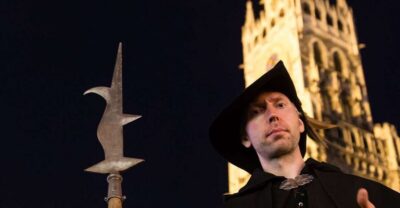
Munich Ghosts and Spirits Evening Walking Tour
Read our review →

Birthplace of the Third Reich Guided Walking Tour
Read our review →Browse the lists this tour appears in