

Reviewed · WALKING TOURS
Leipzig: Guided Crime-Themed Walking Tour
Crime stories turn Leipzig into a living timeline. This crime-themed walking tour guides you through the city center, using real cases and civic scandals to explain how justice, passion, and corruption shaped everyday life. I especially like how it hits both the darker side of history and the stranger side, including Karl May’s brush with theft.
The tour also has a strong storytelling engine: public executions on the market square, vivid cases like Christian Woyzeck, and even odd details like last meals that make the past feel concrete. One drawback to consider is hearing, since you are outside and the city can get noisy, which can make parts harder to catch if you are not close to the guide.
In This Review
- Key takeaways before you go
- Starting under the old Town Hall, Leipzig’s center comes alive
- The market square and public executions: where justice was a spectacle
- Christian Woyzeck’s stabbing story, jealousy made historical
- Karl May and the fur coat: when a famous writer becomes a suspect
- Late-1980s painting theft and the Leipzig-Museum connection
- 18th-century corruption: forged city bonds and a mayor’s misuse of power
- Treason, last meals, and why the stories feel so immediate
- Tour pace, duration, and what to wear for 1.5 hours outside
- Price and value: is $16 worth it for a themed walk?
- Who this tour is best for
- Should you book the Leipzig crime-themed walking tour?
- FAQ
- Where do I meet the guide?
- How long is the tour?
- Is the tour in English?
- Is transportation included?
- Does the tour run in bad weather?
- What is included in the price?
Key takeaways before you go
- Old Town Hall meetup: start under the tower so you know exactly where the story begins
- Market square executions: you hear how Leipzig’s justice system worked in public
- Christian Woyzeck’s case: jealousy and violence get explained with real historical weight
- Karl May, the wanted thief: the famous writer’s fur coat story adds a twist
- Painting heist talk: you learn about a late-1980s theft tied to the Leipzig-Museum
- 18th-century bond forgery: corruption shows up through mayoral financial deception
Starting under the old Town Hall, Leipzig’s center comes alive
Your tour begins outside the Old Town Hall, under the tower, which is perfect for orientation. Once you’re there, the guide sets the tone fast: Leipzig is not being treated like a museum of dates. Instead, you’re walking through civic space where crime reports, court outcomes, and political wrongdoing all intersected with ordinary city life.
I like this setup because it keeps you moving through places that feel meaningful in the moment. You are not just memorizing names. You are connecting story to street, then letting each new case add another layer to how the city functioned.
Because it runs rain or shine, plan to wear something you can move in and that will handle damp weather. The walking pace is part of the show, so bring shoes you’re comfortable in for a steady 1.5-hour stroll.
More Walking Tours in Leipzig
- Leipzig: 1.5-Hour Historical Walking Tour in German
★ 4.7 · 2,217 reviews - Leipzig: 2-Hour Guided Walking Tour in German
★ 4.8 · 1,612 reviews - 1.5 hour walking tour through beautiful Leipzig
★ 4.6 · 292 reviews
The market square and public executions: where justice was a spectacle
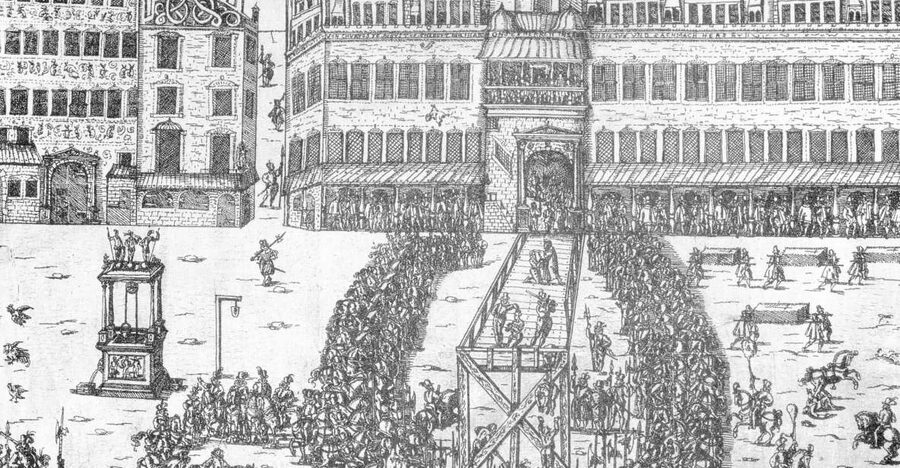
One of the tour’s anchors is the story of the justice system in Leipzig, especially the era of public punishment. You hear about Christian Woyzeck, including the detail that he was the last person publicly executed on the market square. That fact matters, because it marks a shift in how society was willing to handle punishment in public view.
What I find useful is how the guide uses this setting to explain not only what happened, but what it meant to be judged in public. The market square was where people passed by, shopped, argued, and gathered, so an execution was not hidden. It shaped perceptions of authority, morality, and order.
Practical note: if there are crowds or events in the area, you may have more trouble hearing. One review specifically wished for headsets. I’d handle this the same way you would at any outdoor presentation: arrive a bit early, pick a spot where you can face the guide, and consider bringing basic ear protection or just being ready to lean in when the guide speaks from the move.
Christian Woyzeck’s stabbing story, jealousy made historical

The tour doesn’t treat crime as tabloid entertainment. With Christian Woyzeck, you get a blunt and personal account of violence, including that he stabbed his lover. The power of the story is that it connects a specific act to larger themes the guide keeps returning to: jealousy, passion, and how quickly private emotion can become a public case.
I also like how the narrative approach makes the subject easier to process. You are not forced to sit through endless chronology. Instead, the guide parcels the story into focused chunks tied to Leipzig’s real locations and civic context.
If you prefer true-crime stories that are heavy on context instead of gore, this part tends to work well. It also pairs nicely with the later discussions of other kinds of wrongdoing, so by the time you move on, you’re comparing different motives and different systems for dealing with them.
Karl May and the fur coat: when a famous writer becomes a suspect
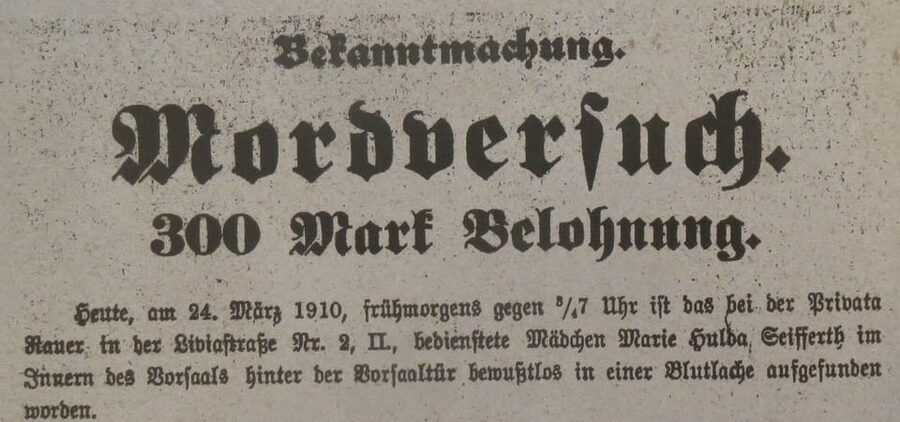
Then comes one of the more surprising threads: Karl May. You hear that he was wanted as a thief after stealing a fur coat, and that he spent four years in the workhouse.
I love this turn because it breaks the rhythm of the darker, violence-centered narrative. It also shows you that “crime” in Leipzig’s story is not only violent episodes. It can be petty theft, legal consequences, and the way a person’s future can be shaped by one bad decision.
There’s value here even if you are not a Karl May fan. The story acts like a human-size reminder that court systems and punishment were part of everyday risk for ordinary people and famous people alike. Leipzig’s legal and social pressures show up through the biography, not just through official records.
Late-1980s painting theft and the Leipzig-Museum connection
Another standout theme is the real-life heist of valuable paintings from the Leipzig-Museum, tied to events in the late 1980s. This is a smart inclusion because it brings the tour out of “old-timey” history and into a Leipzig you can still picture with modern eyes.
You get the sense that the city has carried its share of high-stakes crime across time, not just during centuries when punishment looked different. The guide frames this as part of the same Leipzig story, where valuable objects, institutions, and public trust can become targets.
If you’re the type who likes a mix of eras, this is where the tour earns its keep. It helps you see how crime changes form while still relying on greed, opportunity, and a system’s blind spots.
More German cities at walking speed:




18th-century corruption: forged city bonds and a mayor’s misuse of power
The tour also looks at corruption, including an 18th-century case where a mayor forged city bonds. That detail is compelling because it shows wrongdoing that is not about knives or theft-by-night. It’s about financial trust, civic planning, and the risk of leadership abusing the city’s public credit.
I find this especially relevant for modern travelers, because it maps neatly onto a question you can’t stop asking while walking through Europe’s historic centers: who paid for what, who benefited, and what happens when officials lie?
As you move through the city heart, the guide ties this theme back to the other stories, so the bond forgery doesn’t feel like random trivia. It becomes part of a broader pattern: jealousy and passion can lead to violent crime, but power and paperwork can also drive serious harm.
Treason, last meals, and why the stories feel so immediate
A big part of what makes this tour fun is the way the guide strings cases together around recurring human motives. You hear reports of jealousy, passion, treason, and even last meals. Those details can sound like “just story flavor,” but they work because they make the people in the past feel specific, not abstract.
This is where the walking format matters. As you change locations, the tone shifts naturally from one kind of crime to another. You’re not reading a case file in a room. You’re moving through the geography that shaped outcomes and witnesses.
One more practical thing: since the tour is in German, bring the right mindset. If you understand German, you’ll get more of the nuance in phrasing and character descriptions. If you don’t, you may still follow the main plot beats, but you might miss some of the finer connections the guide makes. Either way, being close to the guide and staying attentive helps.
Tour pace, duration, and what to wear for 1.5 hours outside
The walking tour runs for 1.5 hours. That’s a sweet spot for a city-center experience: long enough to build a real storyline, short enough that you can keep the rest of your day flexible.
For comfort, dress for weather since it runs rain or shine. Think light layers, a compact umbrella if you like them, and shoes with good grip. The tour is also wheelchair accessible, so the route is designed to accommodate mobility needs.
Transportation is not included, so plan to reach the meeting point on your own. The meeting point is outside the Old Town Hall under the tower, which is easy to find once you’re standing in the center and looking for the tower area.
Price and value: is $16 worth it for a themed walk?
At $16 per person for a guided, story-driven 1.5-hour walk, the value depends on what you like. If you enjoy local storytelling, true-crime atmosphere with historical context, and a guided route through recognizable places, it’s a good fit for the price.
It’s less of a value play if you want a heavy facts-only lecture with constant “quick hit” details, because this tour’s rhythm leans into narrative. One consideration from real feedback is that the theme can feel closer to general city history than pure crime trivia. If you’re hoping for a nonstop parade of quick “case facts,” you may want to adjust your expectations and focus more on the overall story arc.
For most visitors, though, this price level makes it a low-risk way to see Leipzig through a different lens, and that can be a great way to break out of the standard sightseeing loop.
Who this tour is best for
I’d recommend it to you if you like:
- crime stories with real places and civic context
- history that feels human, with motives and consequences
- a short guided walk instead of a museum session
It may not be ideal if:
- you need very quiet conditions to enjoy narration
- you want a strictly genre-driven “detective facts only” style with no civic or historical digressions
Should you book the Leipzig crime-themed walking tour?
Book it if you want Leipzig to feel like a story with teeth, not a list of landmarks. The combination of public executions, Christian Woyzeck’s case, Karl May’s theft background, the painting heist connection to the Leipzig-Museum, and a financial corruption episode gives you a wide angle on how crime touched the city. For $16 and 1.5 hours, it’s a practical, affordable way to make Leipzig more memorable.
Skip or rethink it if you expect a perfectly airtight crime-only theme with easy-to-hear audio in a noisy outdoor setting. If you do go, bring patience, show up early, and get a good position near the guide.
FAQ
Where do I meet the guide?
Meet your guide outside the old Town Hall under the tower.
How long is the tour?
The tour lasts 1.5 hours.
Is the tour in English?
The live tour guide language is German.
Is transportation included?
No, transportation is not included.
Does the tour run in bad weather?
Yes, the tour operates rain or shine.
What is included in the price?
The tour includes the guide and the walking tour.
Fresh on the arrivals board for Leipzig




Walking Tours, compared.

Berlin City walk Government District and Places of Democracy
Read our review →


Berlin’s Best: 2 Hour Walking Tour Third Reich and the Cold War
Read our review →
Browse the lists this tour appears in