
Reviewed · HISTORICAL TOURS
Historical city tour in the African Quarter in Berlin
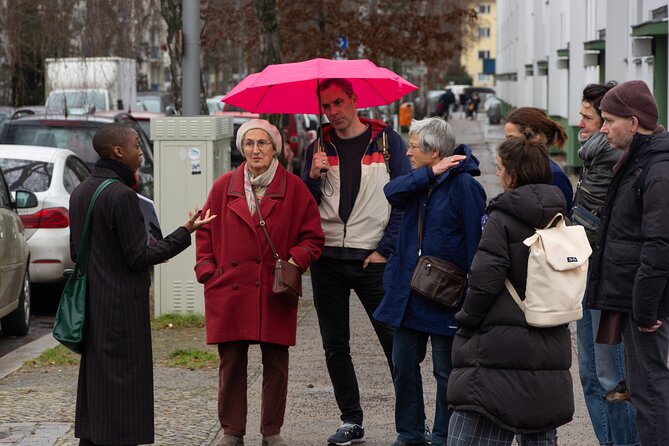
Street names can tell darker stories. This 2-hour walking tour in Berlin’s African Quarter turns ordinary street signs into a way to understand Germany’s colonial-era connections to Africa, with clear explanations at four focused stops in the north of the city. Instead of a museum lecture, you get a street-level story that asks simple questions: why are these names here, and what did colonial rulers do with them?
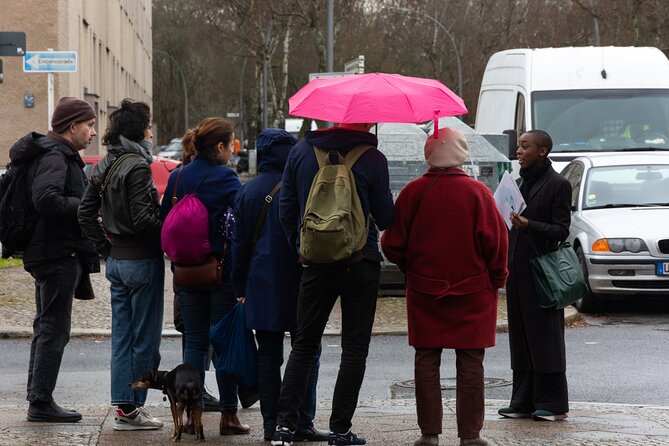
I like the way the tour stays practical and specific, using the street names themselves as the starting points for each topic. I also appreciate the small-group feel, capped at 20 people, which makes it easier to keep questions going rather than getting stuck in a passive line-walk.
One thing to consider: this is an outdoor walking experience that requires good weather, so plan for comfort if the forecast looks shaky. Also, with only about two hours, you’ll likely leave wanting more time to wander the 22 streets that define the quarter.
In This Review
- Key things that make this African Quarter tour worth your time
- African Quarter Berlin: street names that act like a classroom outdoors
- Price and timing: a short walk that targets big themes
- Meeting points and the walking flow in the north of Berlin
- Stop 1: Swakopmunder Straße and the Namibia connection to Berlin
- Stop 2: Anna-Mungunda-Allee, Petersallee, and the renaming debate
- Stop 3: Manga-Bell-Platz and why Gustav Nachtigal appears here
- Stop 4: Kongostraße, Berlin 1884, and the Congo Conference map moment
- How this fits with a Berlin itinerary (and what to do before or after)
- Who should book this tour, and who might skip it
- Practical value notes you should know before you go
- Should you book this African Quarter tour with Dekoloniale Stadtführung?
- FAQ
- How long is the African Quarter historical city tour?
- How much does the tour cost?
- Where does the tour start and end?
- What ticket type do I get?
- How big is the group?
- What stops are included on the walk?
- What if the weather is bad?
- What is the cancellation policy?
- Is the tour near public transportation, and are service animals allowed?
Key things that make this African Quarter tour worth your time
- Street names as clues, linking places like Namibia and the Congo to what Germany was doing overseas
- Stop-by-stop pacing, four short stops that still cover big ideas without turning into a lecture marathon
- The Petersallee renaming question, which makes the tour feel present-day, not just historical
- Gustav Nachtigal and local memory, centered on why a main square carries his name
- Berlin 1884 and the Congo Conference, including the point that no one from Africa was present
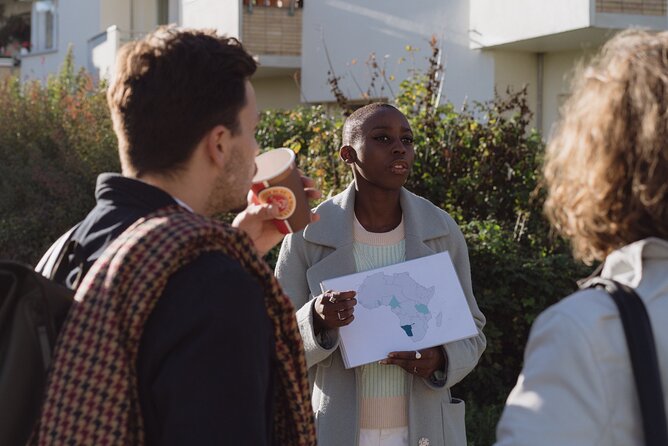
- A map comparison moment, showing Africa before and after the Berlin conference for quick, visual context
African Quarter Berlin: street names that act like a classroom outdoors
The African Quarter in Berlin is not just a neighborhood nickname. It’s a recognized monument area made up of 22 streets, where the street names reflect African countries, European cities, and colonial-era figures tied to imperial governance. On this kind of tour, you don’t treat those names as trivia. You treat them like evidence.
That matters because street names are permanent. They stay long after political eras change, and they shape what gets remembered. When you walk, you can feel the contrast: everyday Berlin streets carrying the echoes of colonial decisions made far away. The best part is that you do not need specialist background. The tour’s structure is question-driven, so you get context built right into each stop.
More centuries per city block:
- Berlin: Natural History Museum Entrance Ticket
★ 4.6 · 3,382 reviews - Berlin: 3-Hour World Heritage Cruise to Potsdam
★ 4.5 · 1,569 reviews - Berlin: History of the Third Reich Guided Walking Tour
★ 4.7 · 791 reviews
Price and timing: a short walk that targets big themes
At about $33.57 per person for roughly two hours, the value comes from focus. You are not paying for endless sightseeing stops. You’re paying for guided interpretation, at four specific locations, where the tour connects street names to larger events and policies.
This also helps you plan. If you have limited time in Berlin, two hours fits neatly into an afternoon. If you have more time, this tour works as a set-up act. It gives you a framework for what you see later when you notice the same naming patterns elsewhere in the city.
Two more practical points that affect the experience: it’s designed for good weather, and it’s capped at 20 travelers. That small ceiling usually makes it easier to ask follow-up questions when a topic hits a nerve, especially for subjects like colonial naming and representation.
Meeting points and the walking flow in the north of Berlin
You start at Swakopmunder Str. 44 (13351 Berlin). The walk ends in the Rehberge area, listed as 13349 Berlin. The route itself is built around short, timed stops, with about five minutes at each place before moving on.
Because the duration is short, I recommend showing up a few minutes early. You’ll get more out of the first stop when you are already settled and not trying to catch up while the group starts. Also, wear comfortable walking shoes. This is a city-street walk, not a slow scenic stroll, and the topics move quickly.
Stop 1: Swakopmunder Straße and the Namibia connection to Berlin
Swakopmunder Straße is where the tour starts asking the obvious-but-important question: what does Swakopmund have to do with Berlin? The name points toward German involvement in Namibia, and the tour uses that link to explain Germany’s role there during the colonial period.
This stop works well because it’s not abstract. You see the name, you say it out loud, you connect it to a real place in Africa, then you hear the historical relationship. That simple loop is one of the best learning tools on walking tours like this.
A potential drawback here: if you’re expecting a long, detailed Namibia deep-dive at the first stop, you might feel the time is brief. The goal is to plant the idea, not to cover every historical detail. Think of it as a foundation stone.
Stop 2: Anna-Mungunda-Allee, Petersallee, and the renaming debate
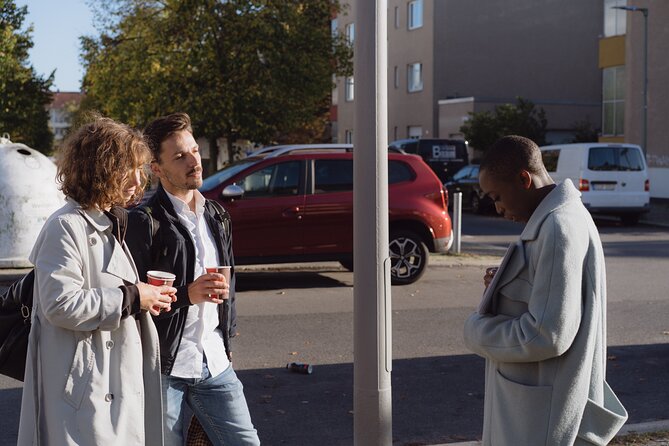
Next comes Anna-Mungunda-Allee, a stop that shifts from “what happened” to “how should we name and remember.” The tour raises a set of questions about Petersallee, including who it was named after and whether the street should be renamed, plus why.
This is where the walking tour starts to feel less like a history facts lesson and more like a conversation about memory. Colonial naming often celebrates people and power structures from one side of the story. When you question those names, you force a reckoning with who gets honored and who gets ignored.
You do not need to come in with a strong opinion. The tour frames the renaming question so you can understand the reasoning behind it. If you like tours that connect past decisions to present-day thinking, this stop is a highlight.
Also holding a platform in Berlin


Stop 3: Manga-Bell-Platz and why Gustav Nachtigal appears here
At Manga-Bell-Platz, the tour turns to Gustav Nachtigal, asking who he was and why a central square in the African Quarter carries his name. A central square is the key here. Names at crossroads and gathering places tend to become part of everyday life, which can normalize historical power even when people do not question it.
This stop helps you see how colonial-era figures can remain visible in modern urban life. The tour does that by keeping the focus tight: identity of the person, and the logic of naming the space. If you have ever walked past a statue or named plaza and wondered why that figure, this part gives you a way to interpret the answer without needing a separate guidebook search.
Stop 4: Kongostraße, Berlin 1884, and the Congo Conference map moment
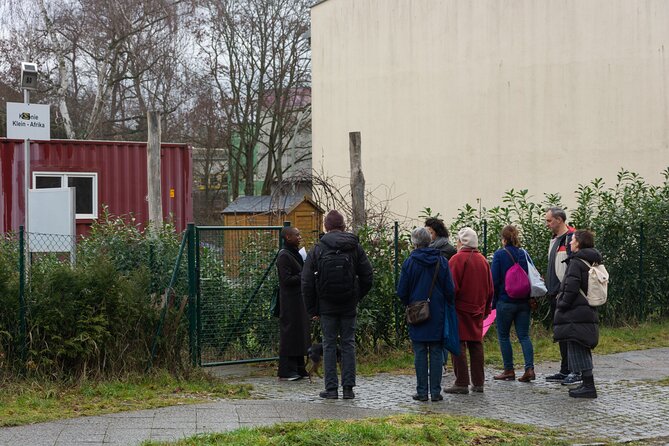
Kongostraße is where the tour tackles one of the big turning points in European colonial administration: what happened in Berlin in 1884. The tour also addresses what the Congo Conference was and why no one from Africa was present.
This is one of the most meaningful parts of the walk because it explains the mechanics of decision-making. Conferences sound like paperwork and diplomacy, but the tour connects them to real outcomes by pointing out who was included in those decisions, and who was not. When Africa was absent from the table, the map could be redrawn without consent.
Then comes the strongest learning aid mentioned in the tour details: the guide shows you a map of Africa before and after the Berlin conference. That visual comparison does heavy lifting fast. You go from discussion to a concrete before-and-after view, which makes it easier to understand the scale of change.
How this fits with a Berlin itinerary (and what to do before or after)
This tour is short, but it’s not light in ideas. I’d treat it like a lens rather than a full day plan. Before you go, scan a couple of street names in the African Quarter area so you’re primed to notice patterns. After the tour, slow down when you see street names that sound unfamiliar. Don’t just read them. Ask what story they’re carrying.
If you’re spending time in Berlin’s central sights, you can still benefit. The city can feel like layers of different eras, and colonial history is often not the first layer people look for. This walk gives you a way to connect what you learn here to the city’s naming habits.
Who should book this tour, and who might skip it
This is a strong fit if you like history that shows up in daily life. If you’re the type of traveler who notices street signs, street names, monuments, and plaques, you’ll get more out of the experience because the tour is built around those details.
It’s also a good match if you want an on-foot format without a long time commitment. Two hours is enough to learn the core story without exhausting your day.
You might want to think twice if you prefer purely scenic walking tours or tours that focus only on one well-known historical theme. This experience is pointed and interpretive. It asks questions that can feel uncomfortable because it deals directly with colonial power and representation.
Practical value notes you should know before you go
A mobile ticket keeps things simple once you’re there. The tour runs as a group walk, and it allows service animals. It’s also described as being near public transportation, which helps if you’re combining it with other plans.
The most important practical factor is weather. Since it’s a walking tour with a set time window, check the forecast. If rain or cold winds hit hard, you’ll feel it. Bring what you’d bring for a typical short outdoor Berlin walk, and give yourself a little buffer time.
Should you book this African Quarter tour with Dekoloniale Stadtführung?
If you want a Berlin experience that feels thoughtful and street-specific, I’d book it. The value is in the structure: four short stops, each tied to a street name, each raising questions about colonial relationships, renaming, and conference decisions. You also get the map comparison for the Berlin 1884 Congo Conference moment, which turns abstract events into something you can actually picture.
The one reason not to book is if you are worried about outdoor weather or if you only want mainstream, postcard-style sightseeing. This tour is history with teeth, presented through the city itself. For many travelers, that’s exactly what makes it memorable.
FAQ
How long is the African Quarter historical city tour?
It runs for about 2 hours.
How much does the tour cost?
The price is $33.57 per person.
Where does the tour start and end?
The tour starts at Swakopmunder Str. 44, 13351 Berlin, and ends in the Rehberge area, 13349 Berlin.
What ticket type do I get?
You receive a mobile ticket.
How big is the group?
The tour has a maximum of 20 travelers.
What stops are included on the walk?
The tour focuses on four stops: Swakopmunder Straße, Anna-Mungunda-Allee, Manga-Bell-Platz, and Kongostraße.
What if the weather is bad?
This experience requires good weather. If it’s canceled due to poor weather, you’ll be offered a different date or a full refund.
What is the cancellation policy?
You can cancel for a full refund if you cancel up to 24 hours in advance of the experience start time. If you cancel less than 24 hours before, the amount paid is not refunded.
Is the tour near public transportation, and are service animals allowed?
Yes, it is near public transportation, and service animals are allowed.
Fresh on the arrivals board for Berlin
Historical Tours, compared.
City History Canal Sightseeing Tour on a Motorboat
Read our review →
Browse the lists this tour appears in