
Reviewed · WALKING TOURS
Hanover: Guided Walking Tour of the Linden-Limmer District
Hanover’s Linden-Limmer district tells stories in plain sight. I loved how the tour connects the Küchengarten and preserved weavers houses with the bigger industrial shift that turned a royal area into a workers quarter. The walk also spends real time at the Faust cultural center, where a former bed factory life carries on through concerts and exhibitions. One thing to consider: you need to be happy with an urban, industrial vibe, including the controversial architecture of the Ihme center.
This is the kind of tour where a neighborhood stops being a blur. You’ll learn why the kitchen garden mattered to the royal family, how factories began with (lime) Johann Egestorff, and why Prussian annexation in 1866 changed the land use. The details help you read what you see on the street, not just pass it by.
It’s also paced to feel manageable. With a live German guide waiting at TAK – Die Kabarett Bühne (you’ll notice them with a Hannover Marketing & Tourismus GmbH badge), the experience feels friendly and relaxed, especially for a 2-hour format. Wear comfy shoes, because the best parts are spread across multiple stops.
In This Review
- Key things you’ll notice on this Linden-Limmer walk
- Starting where culture meets a working neighborhood, TAK to the first scenes
- Küchengarten and the pavilion story, how a royal supply garden became a neighborhood clue
- Weavers’ houses and the rhythm of craft, why Linden’s buildings still talk
- The Ihme center and the brutalist argument, art you can debate with your feet
- Prussia, 1866, and the land switch that shaped everything around Lichtenbergplatz
- Faust cultural center, turning a bed factory into a stage for today
- Nedderfeldstraße: graffiti, pubs, and the Apollo arthouse cinema next door
- Limmerstraße and the simple joy of kiosks, cafés, and people-watching
- Price and value: what $17 buys in a 2-hour guided experience
- Who should book this tour, and who might skip it
- Should you book Hanover’s Linden-Limmer guided walking tour?
- FAQ
- How long is the Hanover: Guided Walking Tour of the Linden-Limmer District?
- How much does the guided walking tour cost?
- Where is the meeting point?
- What language is the tour guide?
- What is included in the price?
- Is the tour wheelchair accessible?
- Can I cancel and get a full refund?
- What are some of the highlights I’ll see?
Key things you’ll notice on this Linden-Limmer walk
- Küchengarten details that survived, including preserved weavers houses at Weberstraße 20/21 and a kitchen garden pavilion dating to 1749
- A royal-to-industrial land-use story, from supply gardens for the court to later freight and housing around Lichtenbergplatz
- Ihme center reactions, a brutalist construction that some Hanoverians call an eyesore, yet it draws strong curiosity, including from younger people
- Faust cultural center reuse, now hosting concerts, exhibitions, readings, and other events in the former Werner & Ehlers bed factory
- Nedderfeldstraße energy, with graffiti art, pubs, and right next door the Apollo cinema, one of the earlier arthouse cinemas in Germany
- Limmerstraße foot traffic and food stops, known for a high density of kiosks, restaurants, and cafés
Starting where culture meets a working neighborhood, TAK to the first scenes
Most tours begin at a landmark. This one begins at TAK – Die Kabarett Bühne, which already hints at the mix of art and everyday city life you’ll keep seeing across Linden-Limmer.
Right away, the guide sets the tone. You get a straightforward, guided walking format with live German interpretation, and the pace stays easy enough to absorb facts without feeling rushed. The meeting point matters because this district is all about small shifts in character block by block, from historic remnants to newer urban forms.
You’re also walking into a neighborhood where the past is not hidden in museums. The preserved buildings, the repurposed sites, and even the architecture some people dislike all serve as cues. The guide helps you connect those cues to the district’s real arc: a place shaped by the royal court, then factories, then workers’ housing, then later reinventions.
More German cities at walking speed:
- Hannover: Guided City Walk
★ 4.5 · 486 reviews - Hannover: Crime Walking Tour
★ 4.6 · 387 reviews - Hanover: Flashlight Guided Walking Tour at Night
★ 4.7 · 52 reviews
Küchengarten and the pavilion story, how a royal supply garden became a neighborhood clue
The tour’s heart is the kitchen garden area, the place that once supported the royal family. This is where I think the tour delivers its best “wait, that makes sense” moment.
You’ll see:
- The preserved weavers houses at Weberstraße 20/21, linked to the weaving trade
- A kitchen garden pavilion from 1749, which was moved to the Lindener Berg in 1913
That pavilion detail is more than a trivia nugget. It explains why the landscape and the buildings feel slightly staged, like the area evolved around forced changes rather than a slow, continuous organic growth. When something gets moved like that, it often means the city had bigger plans for the original location.
Then the guide ties it to the industrial start of the district. Factories began with (lime) Johann Egestorff, and from there Linden’s identity shifts hard. The neighborhood that could be described as a standout village in the Kingdom of Hanover turns into a workers’ quarter as the textile and machine industries expand.
What you’ll love here is how the story sticks to concrete places. You’re not just hearing that the area industrialized. You’re seeing preserved remnants that make the transformation feel legible.
Possible drawback: if you’re mainly hunting for medieval architecture or grand monuments, this part may feel more “working city” than “storybook old town.” But if you enjoy understanding how cities really become what they are, this is a strong match.
Weavers’ houses and the rhythm of craft, why Linden’s buildings still talk

After the royal supply garden narrative, the tour moves you toward the weaving side of Linden’s past, including the preserved houses at Weberstraße 20/21.
Weavers’ homes are a useful lens because they sit right at the boundary between daily life and industrial output. You can understand a district faster when you see where work and home overlapped. Instead of treating “industry” as something remote, you learn to picture how families lived close to the production world.
The tour’s biggest strength is that it doesn’t stop at dates. It connects the craft economy to what came next: the machine and textile industry growth that changed Linden from a celebrated village to a workers’ quarter.
If you like reading city history through everyday spaces, you’ll appreciate this stop. It’s a good example of why a walking tour matters here. On your own, you might see the buildings and move on. With a guide, you get the context to notice what’s important.
The Ihme center and the brutalist argument, art you can debate with your feet
Next comes the Ihme center, and this stop comes with built-in conversation. Many Hanoverians call it an eyesore, yet it also attracts strong interest, especially from younger people, including fascination with the brutalist construction method.
That tension is exactly why I think this stop belongs on the route. It teaches you how to look at architecture as a social object, not just a style. Even when a building doesn’t win everyone over, it can still spark curiosity and become part of local identity.
You’ll also get a sense of how the district’s story continues beyond the royal and factory eras. The neighborhood isn’t a closed historical exhibit. It’s still making choices, still building, still arguing.
Consideration: if you dislike modern architecture or you’re not in the mood for controversial opinions, this part might feel like a detour. But the guide’s explanation helps you understand why the building creates such strong reactions instead of treating it as random ugliness.
Prussia, 1866, and the land switch that shaped everything around Lichtenbergplatz
One of the key historical turning points on this tour is the annexation by Prussia in 1866.
Before that, the area tied to the royal kitchen garden was still controlled as part of court property. After 1866, the land freed up. The result: a freight station was built, and a middle-class residential area developed around Lichtenbergplatz.
This is one of those moments where the facts make the urban layout start to click. If you’ve ever wondered why a neighborhood seems to mix worker buildings, transit edges, and middle-class streets, this is the kind of explanation that fills the gap.
For you, the value is simple: you stop walking like you’re just collecting photos. You start walking like you’re building a mental map of why each area looks the way it does.
And it keeps the story moving. You’re not stuck in “old times.” You’re shown how policy and economics changed land use, which then changed who lived where.
Also holding a platform in Hanover


Faust cultural center, turning a bed factory into a stage for today
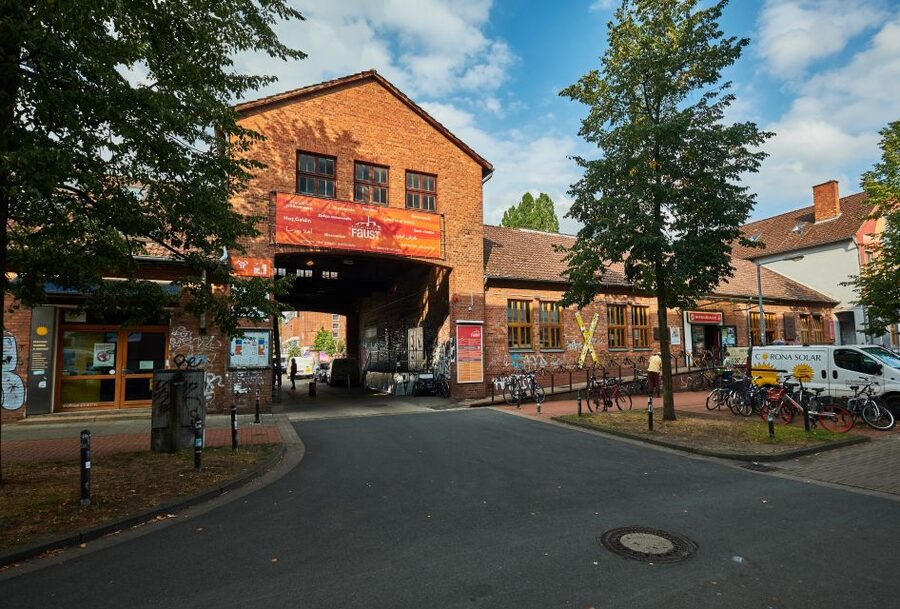
The tour’s cultural centerpiece is the Faust cultural center.
Here’s the key detail that makes the stop feel meaningful: it houses the former Werner & Ehlers bed factory. Today, the site is used for concerts, exhibitions, readings, and other events.
That is reuse at a practical, local scale. It’s not about erasing the past. It’s about keeping the industrial shell in play while giving it a new job in the community. And because the district’s identity already revolves around craft, machines, and factory growth, this repurposing lands naturally in the narrative.
What I like is the way it reframes industrial space as cultural space. If you’re worried that industrial districts feel cold, this stop gives you a different angle. A former bed factory is still connected to everyday life, and now it also supports art and ideas.
Potential drawback: if your interests are mostly architecture or history and you’re not the “show and exhibitions” type, you may treat this as a story stop rather than a must-see cultural venue. Still, it’s one of the best explained parts of the route because the contrast is so clear.
Nedderfeldstraße: graffiti, pubs, and the Apollo arthouse cinema next door
Then the tour shifts from factories and gardens to street culture.
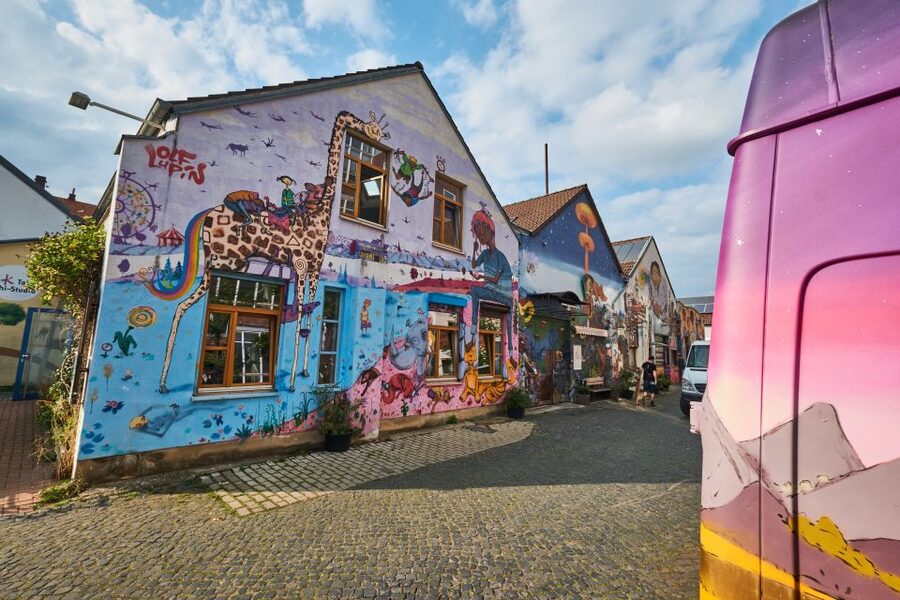
On Nedderfeldstraße, you’ll walk through an area known for graffiti art and numerous pubs. The guide helps you see why this kind of creative street presence fits Linden-Limmer’s character. It’s another layer in the district’s ongoing evolution.
Right next to this area, you’ll learn about the Apollo cinema, noted as one of the first arthouse cinemas in Germany. Even if you don’t plan to watch a film during your visit, it’s a powerful marker. It shows that artistic taste and alternative culture have deep roots here, not just a recent trend.
This stop is also a real-world advantage. When you’re traveling, you want at least one or two areas where you can continue your day after the tour. Between pubs and the cinema story, Nedderfeldstraße gives you a clear “what to do next” feeling.
Limmerstraße and the simple joy of kiosks, cafés, and people-watching
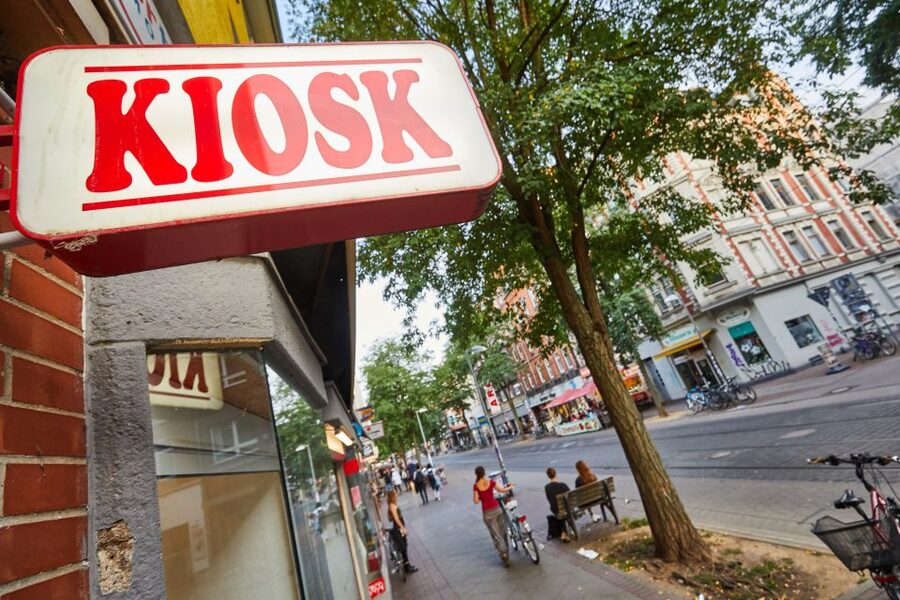
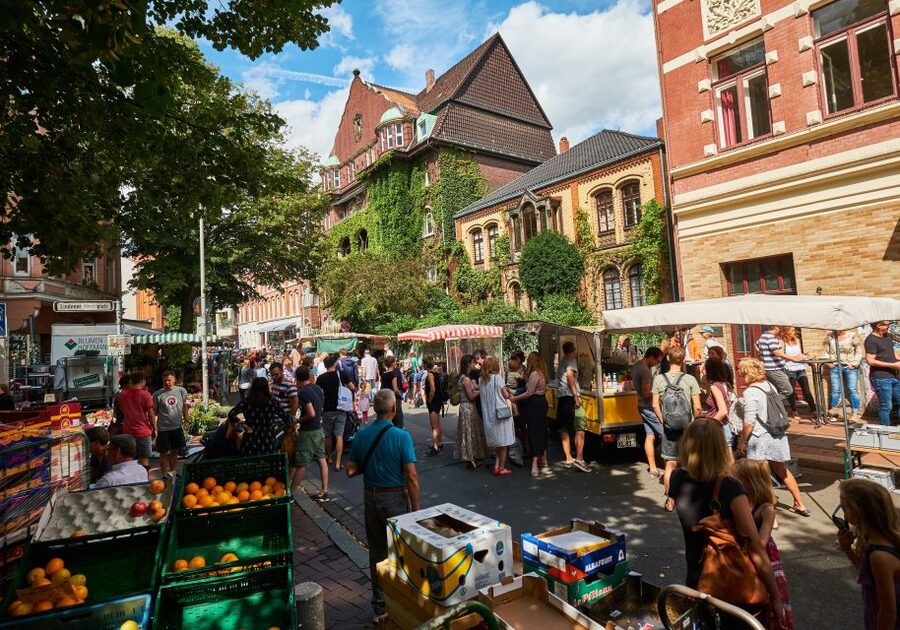
Finally, the tour wraps you into Limmerstraße, which is very popular thanks to a high density of kiosks, restaurants, and cafés.
This part is less about a single monumental sight and more about atmosphere. It’s where you can reset your brain after the history and architecture. And it’s where you can put the tour into practice: take a break, grab something to drink or eat, and watch how the neighborhood feels now that you understand its earlier phases.
I like that the guide doesn’t treat this as filler. The route ends in a way that lets you use what you learned. You notice who’s around, what people are doing, and how the district’s “workers quarter” legacy translates into today’s street life.
Price and value: what $17 buys in a 2-hour guided experience
At $17 per person for a 2-hour guided walking tour, you’re paying for two things: interpretation and time.
A neighborhood like Linden-Limmer is easy to misunderstand if you only look at what’s visually obvious. This route connects preserved buildings, land-use changes, and repurposed industrial sites into one coherent story. For that, $17 is a strong deal, especially because the guide is live and the language is German, not audio-only.
You’re also getting practical pacing. Two hours is long enough to cover multiple meaningful stops without turning into a grind. You can still enjoy the rest of the day afterward.
My rule of thumb: if you like context, not just sightseeing, this price feels fair.
Who should book this tour, and who might skip it
This tour is a good fit if you want:
- Urban history you can read on the street, not only in museums
- A guided explanation of how royal property, factories, and later architecture shaped Linden-Limmer
- A mix of preserved buildings and modern cultural reuse, especially at the Faust cultural center
You might skip or be cautious if you:
- Want only famous tourist landmarks and grand sights
- Dislike neighborhoods with heavy industrial and modern architectural elements
- Prefer a longer tour, since this one is intentionally compact at two hours
Should you book Hanover’s Linden-Limmer guided walking tour?
If you enjoy learning how cities grow, this is an easy yes. I especially recommend it for anyone who likes the “why” behind neighborhoods: how royal gardens can become freight zones, how factories can become cultural venues, and how brutalist architecture can still attract attention even when people argue about it.
Book it if you want a relaxed, well-explained walk with German guidance, starting at TAK – Die Kabarett Bühne and ending in the lively feel of Limmerstraße. Skip it only if you are mainly chasing postcard landmarks or you want fewer modern architecture and industrial-history stops.
FAQ
How long is the Hanover: Guided Walking Tour of the Linden-Limmer District?
The tour lasts 2 hours.
How much does the guided walking tour cost?
The price is $17 per person.
Where is the meeting point?
The guide will meet you at TAK – Die Kabarett Bühne.
What language is the tour guide?
The live guide speaks German.
What is included in the price?
The included item is the guided tour.
Is the tour wheelchair accessible?
Yes, the tour is wheelchair accessible.
Can I cancel and get a full refund?
Yes. You can cancel up to 24 hours in advance for a full refund.
What are some of the highlights I’ll see?
You’ll see places such as Küchengarten, Ihme center, the Faust cultural center, and Limmerstraße, plus sights connected to weavers houses and the kitchen garden story.
Fresh on the arrivals board for Hanover
Walking Tours, compared.
Berlin City walk Government District and Places of Democracy
Read our review →


Berlin’s Best: 2 Hour Walking Tour Third Reich and the Cold War
Read our review →
Browse the lists this tour appears in