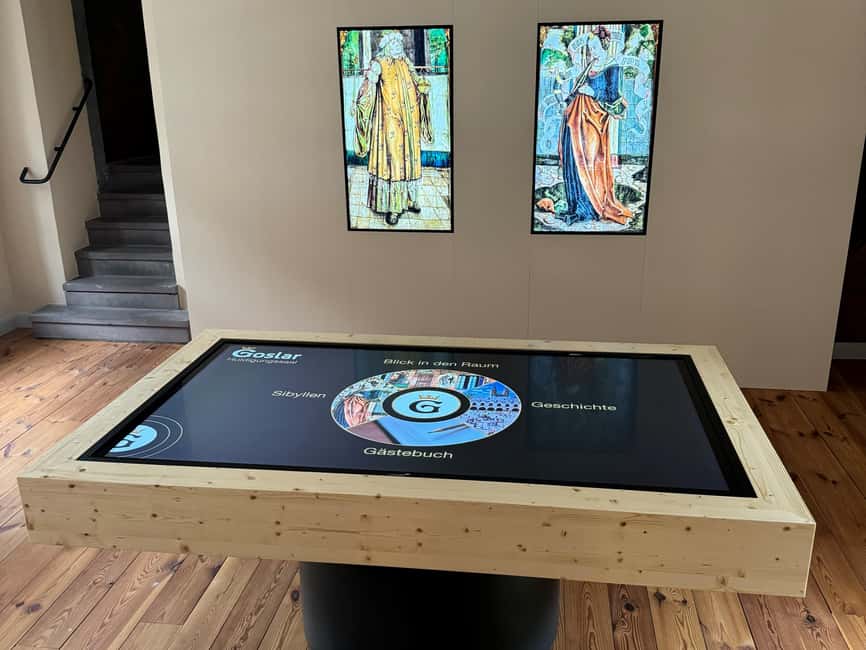
Reviewed · GERMANY
Goslar: Hinter den Rathaustüren
A town hall, but make it theatrical. Goslar’s Hinter den Rathaustüren tour is a quick, focused look inside one of Northern Germany’s most layered medieval buildings, with a standout stop in the Huldigungssaal. I love how the old room art is still treated like a living masterpiece, protected by serious tech after careful restoration. I also like the extra context you get in the basement, from the UNESCO Harz materials to the Rathaus building story. One catch: the town hall has lots of stairs, so it is not suitable for rollators or wheelchairs.
If you can handle steps, this is a lot of culture for very little time. The guide keeps things clear and human, and the visit moves at a pace that feels like it was built for real attention spans. Just remember it is a German-language experience, so plan accordingly if your German is limited.
In This Review
- Key things to know before you go
- Goslar’s Rathaus: why this tour feels special
- Entering behind the Rathaustüren, then stepping into the Rathausdiele
- The Huldigungssaal: late Gothic room art, protected like a museum
- The multimedia moment: why it works better during Advent
- UNESCO Harz context in the Welterbe-Infozentrum (basement)
- Beinkeller: the Rathaus building story you can actually use
- Duration and pacing: how this fits real travel days
- Price and value: why $10 feels fair here
- Who this tour suits best
- Practical tips so you enjoy it fully
- Should you book Hinter den Rathaustüren in Goslar?
- FAQ
- How long is the Hinter den Rathaustüren tour?
- What will I see during the tour?
- Is there a tour guide, and what language is it?
- Is this experience wheelchair accessible?
- How much does it cost?
- Can I reserve now and pay later, and what about cancellation?
Key things to know before you go
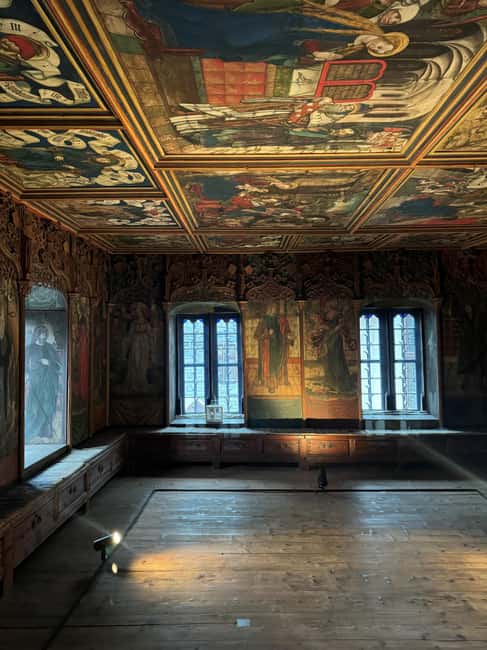
- Huldigungssaal (1505-1520) with full wall-to-ceiling panel painting you can look at for a long time
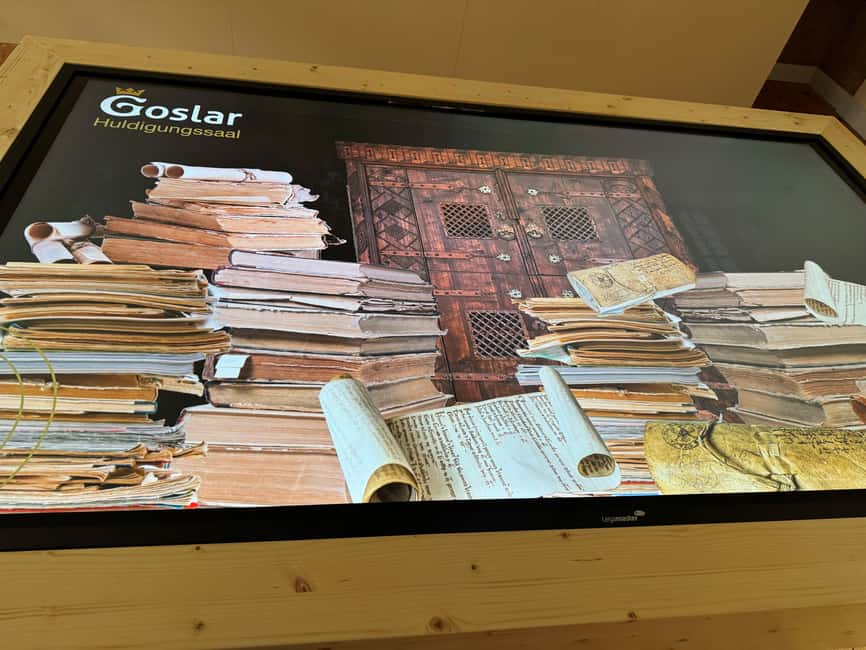
- Multimedialer Blick in den Huldigungssaal that helps the restored room feel active again
- Rathausdiele mit Sternenhimmel for a wow moment before you even reach the council hall
- Kellergeschoss stop with UNESCO-Weltkulturerbe Harz info that ties Goslar to the wider region
- Beinkeller presentation on the Rathaus Baugeschichte so you understand how the building grew over centuries
Goslar’s Rathaus: why this tour feels special
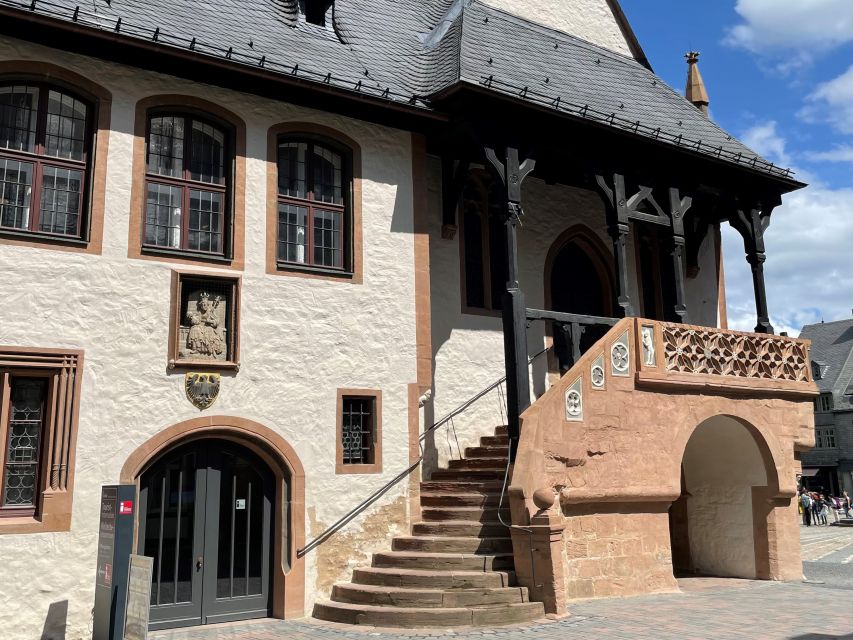
Goslar’s Rathaus is not a single snapshot. It is a building that grew, changed, and got new parts added over a long stretch of time, starting in the 15th century. What makes the visit fun is that the tour does not just point at a few highlights. It gives you a sense of how the town used this space as it evolved.
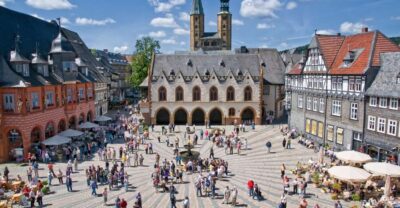
The experience is built around contrast. You move from public-facing areas, like the Rathausdiele opening toward the Marktplatz with its arcade setting, into more careful, almost protected interiors. Then you go underground for context. That rhythm matters. It keeps the visit from feeling like a checklist, even though the whole outing is about 1 hour.
And yes, at $10 per person, it is good value. You are paying for access, interpretation by a live guide, and free World Heritage materials on site. For the time you spend, you end up with more than just a pretty room. You get a framework for understanding what you are seeing and why it mattered to Goslar.
Next departures posted for Goslar:
- Goslar: Tausend Schritte durch die Altstadt
★ 4.7 · 417 reviews - Goslar: Führung durch die Kaiserpfalz
★ 4.5 · 50 reviews - Goslar: On the road with the night watchman’s wife
★ 4.6 · 34 reviews
Entering behind the Rathaustüren, then stepping into the Rathausdiele
Your tour starts inside the town hall, where the mood shifts quickly from street life to wood, stone, and history. One highlight is the Rathausdiele with its Sternenhimmel, the starry-sky ceiling moment that makes people pause. It is one of those details that makes you think, someone really wanted this to feel different.
This is more than decoration. Ceiling scenes like this were often designed to shape how people behaved in the space. In a town hall, that means a sense of ceremony, order, and importance. So when you see the stars overhead, you can read it as part of the building’s role, not just a cool visual.
Practical tip: bring the habit of looking slowly. Start by taking in the whole room, then focus on one section at a time. The star ceiling is visually striking, but the best payoff is when you notice how it sets the tone for the rest of the visit.
The Huldigungssaal: late Gothic room art, protected like a museum
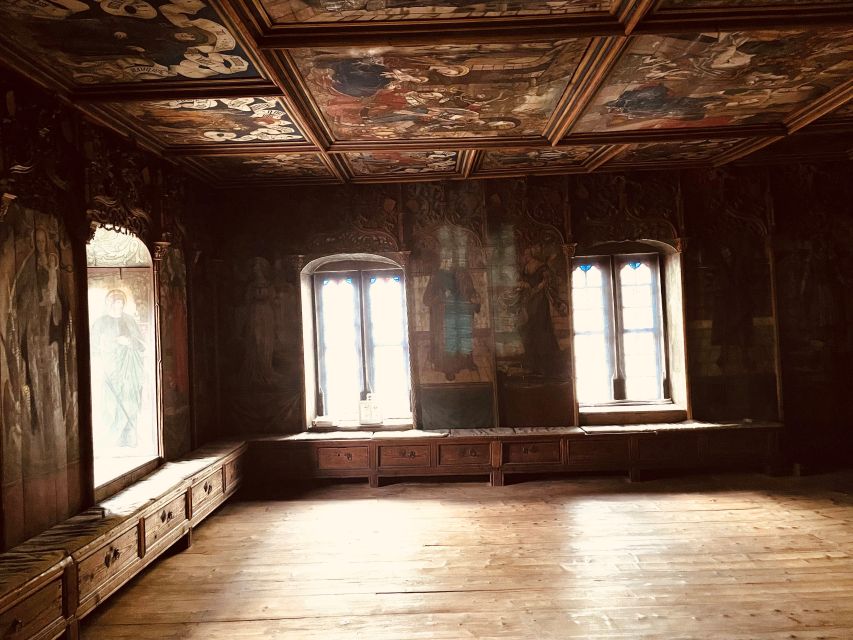
The centerpiece is the Huldigungssaal, set up between 1505 and 1520 as a council meeting hall. This is a small-room art experience in the best way. The walls, ceiling, and even window niches are fully covered with panel paintings.
That detail is the reason the room is so impressive. You are not looking at a few artworks hanging nicely on a wall. You are inside a picture-world. The paintings are high quality individually, but what really lands is how they work together as one overall effect. After a restoration period, the room is now protected by an advanced system for security, climate, and lighting, which is exactly what you want when artwork is meant to survive for centuries.
Now comes the helpful part. A multimediale Inszenierung makes the hall feel playable again. Think of it as a guided activation of the space, not a gimmick that steals the spotlight. It helps you connect what you see with the original purpose of the room, so you do not just stare at paintings. You interpret them.
Why I like this stop for your visit: a lot of historic interiors are either too plain to carry meaning, or too chaotic to understand. Here, you get both. The room is detailed, and the interpretation makes it understandable. You also spend enough time to let your eyes adjust to the density of the imagery.
Possible consideration: if you rush, you will miss what makes this room special. This is not a 30-second photo moment. Give yourself the mental space to look at corners and niches, because the paintings extend beyond the obvious surfaces.
The multimedia moment: why it works better during Advent
The multimedia element is one of those add-ons that can either help or distract, depending on the execution. Here, it tends to work especially well during Advent season, when Goslar’s atmosphere already leans ceremonial and reflective.
The practical value is that it lowers the learning curve. Even if you are not fluent in every iconographic detail, you can follow the story the space is telling. It turns restoration and protection into something you can experience, not something you only hear about.
Also, when a room like this is protected with specialized lighting and climate systems, the multimedia layer can help you experience the atmosphere without harming the art. That is a win for conservation and for visitors.
UNESCO Harz context in the Welterbe-Infozentrum (basement)
A short walk takes you to the Welterbe-Infozentrum in the Kellergeschoss, where you find a free exhibition about the UNESCO World Heritage Harz. This stop matters because it stops the visit from being only about Goslar as a standalone postcard.
Instead, you learn to see the Rathaus as part of a bigger regional identity. The Harz region has its own cultural and historical logic, and the materials in the info center help you connect why this area is recognized at the UNESCO level. You get context without paying extra, and it gives your brain something new to chew on after the visual intensity of the council hall.
What to do here: do not treat it as a quick glance. Spend a few minutes choosing one theme to focus on, then let the rest support it. If you do that, you come away with a clearer sense of what UNESCO is protecting and why Goslar fits into the wider picture.
Onward connections from Goslar:
Beinkeller: the Rathaus building story you can actually use
Next comes the Beinkeller, where the tour includes a presentation on the Baugeschichte of the Rathaus, basically how the building was constructed and expanded over time. This is where the tour becomes especially practical.
If you have ever stood in a historic building thinking, when was this part added, and why does it look different, you will appreciate this. Goslar’s town hall grew starting from the mid-15th century, beginning with the Ostflügel, with arcades opening toward the Marktplatz. Over more than 400 years, it kept expanding through later additions.
That growth story is not just trivia. It explains why buildings like this can feel layered instead of uniform. It also helps you understand the town’s priorities as they changed. The Rathaus was a working space for decisions, ceremonies, and civic life. So the building adapted like a living institution.
In the Beinkeller presentation, you get the thread that ties everything together: the big medieval growth, the specific council hall art, and the reason the whole place still feels coherent even though it is centuries old.
Duration and pacing: how this fits real travel days
At about 1 hour, this is an easy add-on to a day in Goslar. It fits well if you want something cultural but do not want to commit to a long museum session. The layout also helps you keep momentum: you move from the star ceiling, to the council hall, then to the basement context.
The key is that the experience is guided. A live guide in German makes the information land. You are not left to decode everything alone, which is a big deal in places where the room details are complex.
If you are traveling with limited time, this is a smart choice because the tour targets what is most distinctive in the Rathaus complex, not everything in every room.
Price and value: why $10 feels fair here
$10 per person for an hour inside a protected historic interior, plus access to the World Heritage information materials, is strong value. You are essentially paying for three things at once:
- entry into the town hall spaces that are the real show
- interpretation by a live guide, which turns visuals into understanding
- the free UNESCO Harz context in the basement
This matters because the best value in historic sites is not only the admission. It is whether you leave with meaning. This tour is designed so you do.
Who this tour suits best
This is ideal if you like:
- historic interiors with serious detail, especially painted rooms
- cultural context, not just a view
- short, focused tours with a clear storyline
It is less ideal if:
- you need wheelchair access or rollator-friendly routes, because there are many stairs
- you only want an English-language experience, since the guide is German
If you are a “just let me see it” visitor, you will still enjoy the Rathausdiele and the Huldigungssaal. But if you are the type who asks why something exists and how it evolved, you will likely find the Rathaus building story especially satisfying.
Practical tips so you enjoy it fully
- Wear shoes that handle indoor stairs comfortably.
- Plan your body for climbing, because the town hall has a variety of stairs.
- Use the first couple minutes to get your bearings, then slow down for the Huldigungssaal paintings.
- In the basement info space, pick one theme to focus on so the UNESCO section sticks.
- If your German is basic, bring a few questions and let the guide’s storytelling do the heavy lifting.
Should you book Hinter den Rathaustüren in Goslar?
Book this if you want a compact, high-impact look into Goslar’s Rathaus, with the Huldigungssaal as the big unforgettable moment and the basement UNESCO Harz context giving it meaning. The pacing is friendly, the price is reasonable, and the guided approach helps you understand the building as something that evolved over centuries.
Skip it if stairs are a dealbreaker for you, or if you need a non-German tour. Otherwise, it is the kind of experience that leaves you with real mental pictures, not just a few photos. And once you see the painted niches and the starry ceiling, you will understand why people make time for this part of Goslar’s civic center.
FAQ
How long is the Hinter den Rathaustüren tour?
The tour lasts about 1 hour.
What will I see during the tour?
You’ll enter the Goslar town hall, get a view of the Huldigungssaal with its multimedial presentation, and visit the Welterbe-Infozentrum in the basement with a free exhibition about the UNESCO World Heritage Harz. There is also a presentation about the Rathaus building history in the Beinkeller.
Is there a tour guide, and what language is it?
Yes, there is a live tour guide, and the tour is in German.
Is this experience wheelchair accessible?
No. The town hall has a variety of stairs, so it is not suitable for rollators or guests in a wheelchair.
How much does it cost?
The price is listed as $10 per person.
Can I reserve now and pay later, and what about cancellation?
You can reserve now and pay later. Free cancellation is available if you cancel up to 24 hours in advance for a full refund.