
Reviewed · WALKING TOURS
Freiburg: Private Guided Walking Tour
Freiburg history lives in the streets. This private guided walking tour is a sharp, 90-minute way to understand how a Black Forest gateway city became modern, and how wars and ideas left marks you can still see around you, including at Freiburg Münster.
I especially like two things: the way you spot medieval Gothic craft up close, from gargoyles to the filigree steeple on Münsterplatz, and the calm way your guide ties architecture to big turning points like the Protestant revolution, secularization, and later 20th-century upheaval. If you like walking with context instead of memorizing dates, this works.
One consideration: this is a walking tour through old-town streets and viewpoints, so it is not suited for wheelchair users or people with mobility impairments. Bring comfortable shoes, because you will be on your feet.
In This Review
- Key highlights to watch for on this Freiburg walk
- Why Freiburg makes a great 90-minute walking lesson
- Meeting on Rathauspl., then getting oriented fast
- Freiburg Münster and Münsterplatz: Gothic details you can actually see
- The oldest hotel stop, Zum Roten Bären, and why it matters
- Bächle water drains, Rheinkiesel mosaics, and daily-life Freiburg
- Schlossberg viewpoints, the castle hill ruin, and the idea of power
- From Protestant revolution to Weimar and Nazism: history explained without chaos
- Price and logistics: is $247 per group good value?
- Practical tips so your 90 minutes feel smooth
- Should you book this Freiburg private walking tour?
- FAQ
- What is the duration of the Freiburg private guided walking tour?
- How much does the tour cost?
- Is this a private tour?
- Where is the meeting point?
- What languages are available for the live guide?
- Are entrance fees included?
- Is the tour suitable for wheelchair users or mobility impairments?
- Can the tour be customized?
Key highlights to watch for on this Freiburg walk
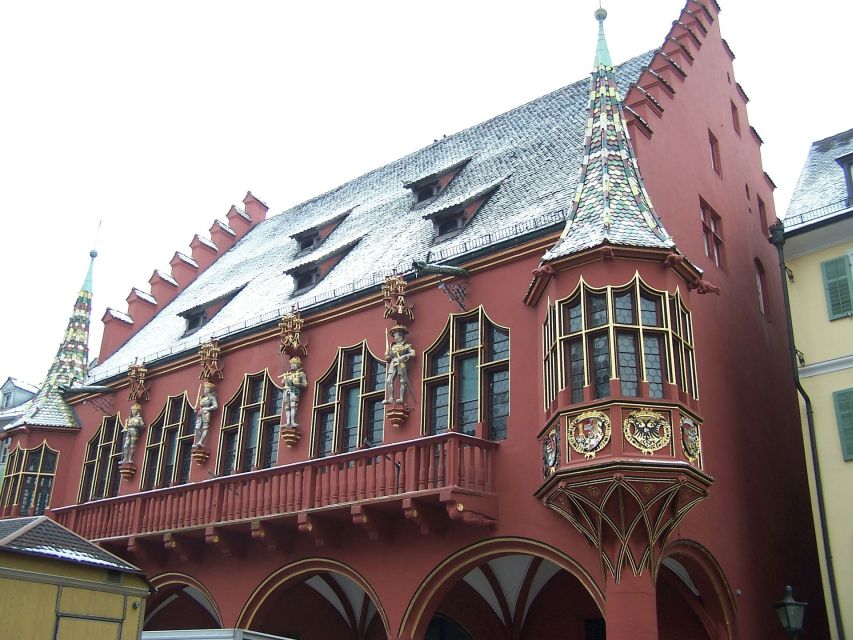
- Freiburg Münster in red sandstone Gothic, plus gargoyles and a filigree steeple you can actually study up close
- Münsterplatz farmers market area, a classic old-town stop for local rhythm and color
- Zum Roten Bären, described as Germany’s oldest hotel, for a sense of long continuity
- Bächle water drains and Rheinkiesel mosaics, small details that explain how locals move through the city
- Schlossberg viewpoints, where the castle hill’s ruins connect the present to older Freiburg
- A history thread that links Protestant revolution to Weimar and the Nazi era while you are still looking at the streets
Why Freiburg makes a great 90-minute walking lesson
Freiburg is the kind of city where the past does not sit behind glass. It shows up in stonework, street quirks, and the way the city is arranged around a few key places. Even if you are only here for a short stop, this tour gives you a framework you can reuse the moment you step out on your own.
The big win is the pace and format. You are not trying to cover everything in town. Instead, you focus on a handful of sights that each answer a different question: Who lived here? What did the city build? What did it fear? What did it decide to become? That makes your time feel useful, not like another photo sprint.
Also, because this is a private group, you get a guide who can match your questions in real time. Guides can be especially warm and flexible, and names like Yvette and Herr E come up in feedback as people who keep things engaging and informative.
More German cities at walking speed:
- Freiburg: Drag Queen Show Walk with Betty BBQ
★ 4.6 · 605 reviews - Freiburg: Christmas Drag Show Walk with Betty BBQ
★ 4.6 · 55 reviews - Freiburg: Ghost walk with Historix-Tours “Murderers, graves, and ghosts”
★ 4.4 · 20 reviews
Meeting on Rathauspl., then getting oriented fast
You start at Freiburg Town Hall Square, Rathauspl., in the historic center. This matters more than you might think. Town Hall Square is not just a convenient pin on a map. It is the right place to begin because it anchors the old town, and it helps you understand what the city considers its civic core.
From here, your guide leads you through medieval-era streets and key stops that explain how Freiburg’s layout developed over time. You will also learn how to read small city features without needing a guidebook in your lap. After about the first part of the walk, you start to notice the patterns: transitions in architecture, shifts in street width, and why certain corners feel designed for gathering.
Expect a smooth flow with your guide moving as a local storyteller. This is a live tour in English or German, and the guide stays with your group only. That is a big advantage in a city like Freiburg, where the details are easy to miss if you are trying to keep up with a large crowd.
Freiburg Münster and Münsterplatz: Gothic details you can actually see
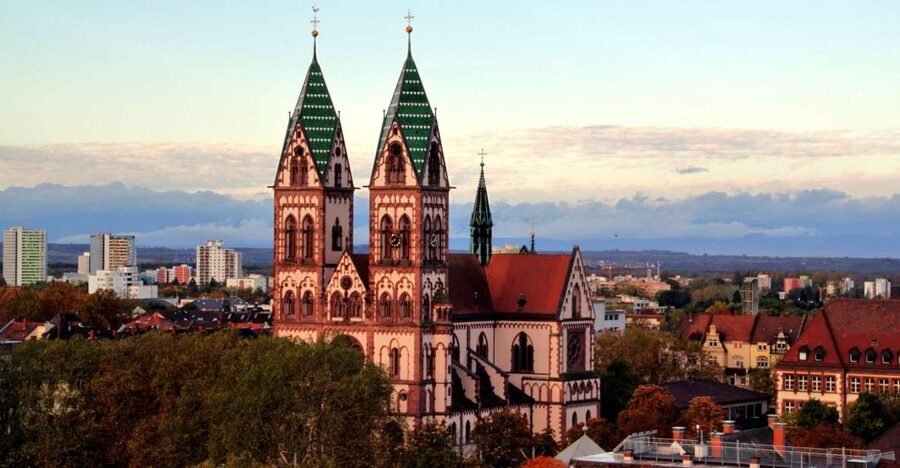
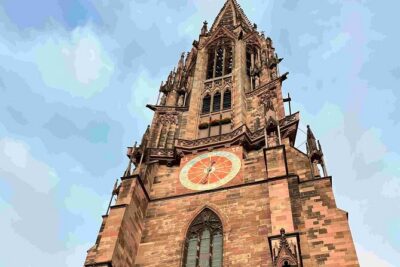
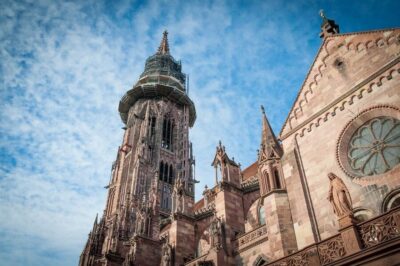
The star stop is Freiburg Münster, the red sandstone Gothic cathedral that dominates the old town. Even from a distance, the building communicates something serious and deliberate. Close up, it becomes a lesson in craftsmanship.
Your guide points out features that many people walk past without noticing. You get to see the gargoyles, including oddly shaped ones, and you can look at the filigree steeple as more than decoration. It is the kind of Gothic expression that feels like it has personality, not just style.
Then there is Münsterplatz, where your walk connects to everyday old-town life. If you visit around market hours, the area around Münsterplatz is known for farmers market energy. Even when it is not in peak market mode, this square still works as a visual “reset.” You stand, orient, and get your bearings before continuing toward smaller streets and side details.
This stop is a strong reason to book. Cathedrals can become a blur on a quick tour. Here, you get attention on the specific parts that make Freiburg Münster feel distinct.
The oldest hotel stop, Zum Roten Bären, and why it matters
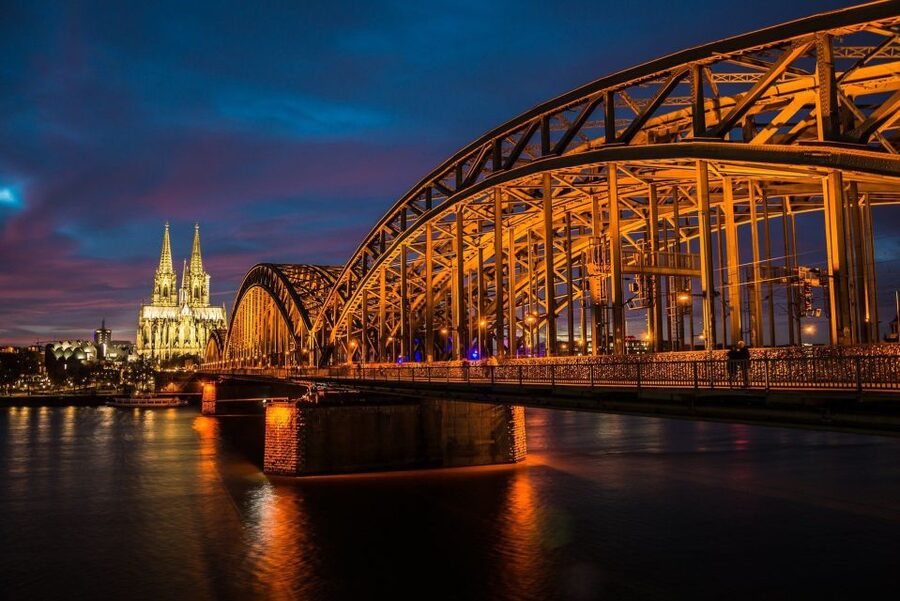
One of the fun and meaningful moments is Zum Roten Bären. It is described as Germany’s oldest hotel, and that alone gives you a gut-level sense of continuity. A building like this is not just lodging. It is a witness.
Your guide uses this stop as a hinge between the old town and the surrounding higher ground. From the area around the hotel, you get a view toward Schlossberg, the hill where Freiburg’s castle once stood. That makes the walk feel layered. You are not just looking at objects. You are connecting levels of the city, from everyday streets to the symbolic height of power.
Why this matters for you: old cities can feel like a list of landmarks. Stops like Zum Roten Bären help you understand why people chose these places long ago. It also helps your eyes. Once you have a viewpoint and a reference point, you start spotting clues in the streets that you would otherwise ignore.
And because your guide can customize on the spot, you can spend extra time here if you want to focus on buildings and human-scale history rather than the broader timeline.
Bächle water drains, Rheinkiesel mosaics, and daily-life Freiburg
This tour gets pleasantly specific with the city’s quirky urban details. Freiburg is famous for the Bächle, those small water channels that run alongside certain streets. The idea sounds simple until you realize how it shapes the street scene. It is a local feature that turns a walk into something active, because it affects how you interpret the space.
You also learn about Rheinkiesel mosaics, the decorative mosaics set into walkways. Again, it might sound like “just decoration” until your guide explains the context and why these patterns matter to how the city feels. They give you a sense of identity at ground level.
Then there are the winding streets. This part of the walk is where you start to feel Freiburg’s rhythm. Your guide points out how the street bends, where you tend to pause, and how the city’s history can be read through small changes in the built environment.
The practical takeaway for you: after this segment, you can walk Freiburg on your own with better eyes. You will notice the city’s design logic instead of only chasing big sights.
Also holding a platform in Freiburg



Schlossberg viewpoints, the castle hill ruin, and the idea of power
After the Münster area and old-town details, you move toward the castle hill area of Schlossberg. Even though Freiburg’s castle is now a ruin, the hill still explains why the location mattered. The castle was demolished in the 18th century, but the spot kept its importance.
This is where the tour rewards you with a panoramic perspective, the kind that makes you understand the city’s relationship to surrounding mountains. You get a view that helps the earlier parts click. The cathedral and old-town streets no longer feel isolated. They become part of a bigger system, with Schlossberg acting as the historical reference point.
For many visitors, this is the emotional highlight. Looking up at the hill makes history feel physical. And history makes walking feel purposeful.
Also, if your group wants flexibility, this is the moment where customization on the spot can make sense. If your guide sees you are into views and city planning, they can adjust focus around the viewpoint.
From Protestant revolution to Weimar and Nazism: history explained without chaos
The tour does more than point at buildings. It walks you through how Freiburg’s story changed with religion, empire, and political collapse. The guide covers the Protestant revolution and secularization that shaped the city. Then you move into the trauma and turning points around the Franco-Prussian War and the rise of Nazism.
The timeline continues with the legacy of the Treaty of Versailles and the Republic of Weimar. Your guide connects these events to how societies transform, so the history does not feel like random facts. It feels like a chain of causes and consequences, shown while you are still in the center of the city.
Why this section is valuable for you: Freiburg can seem calm at street level. A good history explanation helps you understand what that calm cost. But the key is delivery. A tour like this works best when the guide keeps the tone steady and the pacing clear.
Feedback often highlights guides who are engaging and informative. People mention warmth and competence, and that matters here. Political history can get heavy fast. A guide who keeps you oriented makes the lesson stay readable instead of overwhelming.
Price and logistics: is $247 per group good value?
This tour costs $247 per group, for groups up to 15 people, and it lasts 90 minutes. The value comes from how the price is structured and what you get inside that time.
Because it is a group rate rather than a per-person fare, your per-person cost drops fast as you add people. More importantly, you get a local professional guide who stays with your group only. That means more speaking time, more chances to ask questions, and less time wasted waiting for everyone to catch up.
The other value piece is that entrance fees are not included. That might sound limiting, but it often fits a walking format well. You will mostly experience sights from the outside, in squares and streets, plus viewpoints. You spend time learning and looking, not lining up.
So, ask yourself: do you want a short, guided “orientation plus context” stop in Freiburg? If yes, this price is reasonable for what you gain, especially if you can go as a small group.
Practical tips so your 90 minutes feel smooth
Here are the small things that make a big difference on a walking tour like this.
- Wear comfortable shoes. Old-town streets and viewpoint areas usually mean uneven footing and frequent pauses for explanation.
- Plan for steady walking. This is 90 minutes, and the rhythm includes both looking and moving.
- Bring curiosity about details. The tour’s payoff is in the specifics, like gargoyles, street channels, and mosaics, plus the history thread tied to where you stand.
- If you want more or less history focus, ask your guide. Customizing is possible on the spot.
Also, note the languages: the tour runs in English or German. If you have mixed-language needs, pick the language your group can follow best so you do not miss the important connections.
Guides also seem to have a knack for adapting in the moment. One theme in feedback is that guides pay attention to everyone in the group and work to show the best corners, even if people get briefly sidetracked. That is the kind of service that turns a good tour into a memorable one.
Should you book this Freiburg private walking tour?
Book it if you want three things at once: great old-town sights, a real understanding of how Freiburg changed over centuries, and a walking pace that lets you take in details like Gothic stonework and street-level urban features.
Skip it or reconsider if accessibility is an issue. This tour is not suitable for wheelchair users or people with mobility impairments, and the route includes walking and viewpoint areas.
If you are traveling with a group of friends or family, you should feel confident. A private format keeps the experience personal. And if you are the type who likes history, this tour handles it in a clear, street-based way, connecting the Protestant revolution, secularization, and later events like the Treaty of Versailles, Weimar, and the rise of Nazism to the city you see around you.
FAQ
What is the duration of the Freiburg private guided walking tour?
The tour lasts 90 minutes.
How much does the tour cost?
It is priced at $247 per group (up to 15 people).
Is this a private tour?
Yes, it is a private group experience with a local professional guide who stays with your group only.
Where is the meeting point?
You meet at Freiburg Town Hall Square (Rathauspl.), 79098 Freiburg im Breisgau, Germany.
What languages are available for the live guide?
The tour is available in English and German.
Are entrance fees included?
No, entrance fees are not included.
Is the tour suitable for wheelchair users or mobility impairments?
No. It is not suitable for people with mobility impairments and it is not for wheelchair users.
Can the tour be customized?
Yes, customizing is possible on the spot with your local guide.
Fresh on the arrivals board for Freiburg

Walking Tours, compared.
Berlin City walk Government District and Places of Democracy
Read our review →
Berlin’s Best: 2 Hour Walking Tour Third Reich and the Cold War
Read our review →
Browse the lists this tour appears in