Reviewed · WALKING TOURS
Duisburg: Guided Walking Tour through the inner harbour
Duisburg’s harbor makeover is surprisingly easy to picture. On this guided inner harbour walk, I liked how the story moves from working grain port to today’s water-level district shaped by the plan of British architect Sir Norman Foster. You get buildings, views, and context in one stroll.
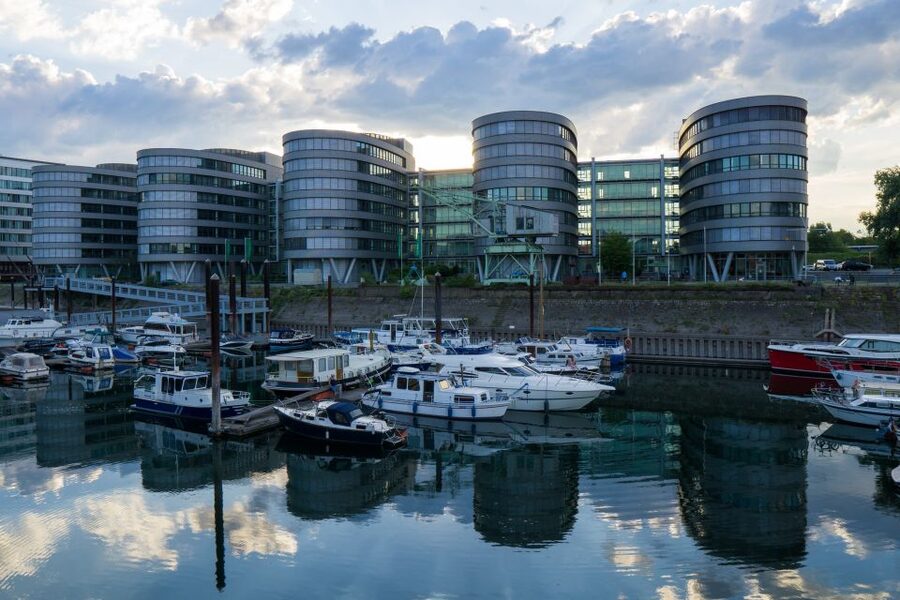
I especially enjoyed spotting the modern waterfront moments, like the Five Boats, the marina setting, and the mix of museums and restaurants along the water. The second thing that stayed with me was how clearly you can see the change in use, freighters gave way to yachts, and the area got a new kind of everyday energy.
One consideration: the tour is German-language, and it runs even when it is raining. Plan on bringing a rain layer and expect the guide’s explanations to be in German throughout the 1.5 hours.
In This Review
- Key highlights worth your time
- Duisburg’s inner harbour feels like a real-life city lesson
- Starting at the Mercator fountain, you get your bearings fast
- The mid-1990s master plan, why it matters on the ground
- From freighters to yachts, the waterfront mood changes for a reason
- Seeing the Five Boats and the modern waterfront details
- Museums at the water’s edge, what to add before or after
- Why office complexes and warehouses can share the same street
- The district’s energy, and who will feel at home here
- Timing, comfort, and rain-proof tips for your 1.5 hours
- Price and value: $16 for a story-heavy walk
- Language and pacing, how to know if you’ll enjoy it
- Should you book this Duisburg inner harbour walking tour?
- FAQ
- How long is the Duisburg inner harbour guided walking tour?
- What is the meeting point for the tour?
- What language is the guided tour in?
- Is the tour wheelchair accessible?
- Does the tour run in the rain?
- How much does the tour cost?
- What will I see during the tour?
- What is the main design story you learn about?
- Are nearby museums included in the tour?
Key highlights worth your time
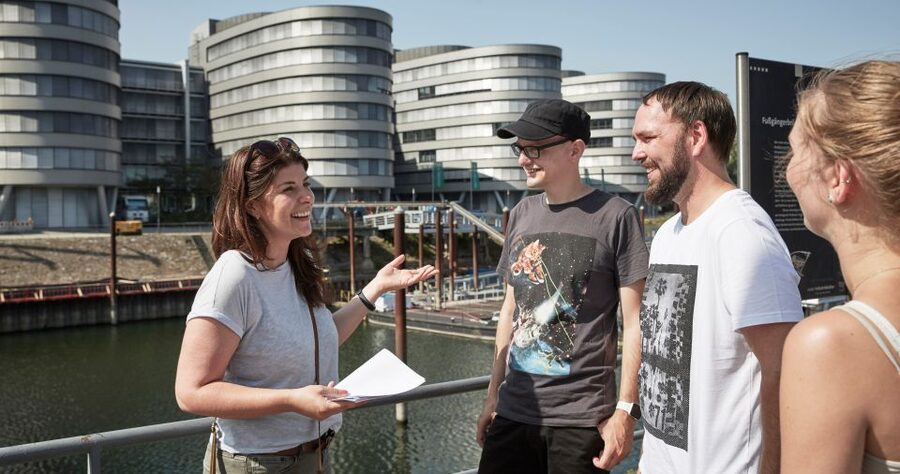
- Sir Norman Foster’s mid-1990s plan explains how a working harbor reshaped into a modern district
- From grain to marina, you’ll connect the inner harbour’s past with its Mediterranean-style feel today
- Iconic waterfront views, including the Five Boats and the waterline atmosphere
- Museum pairings nearby, with Küppersmühle and the city and urban history museum as strong add-ons
- Good value for a short walk, with plenty of story packed into 1.5 hours
- Rain does not stop this, so bring a small umbrella and wear grippy shoes
Duisburg’s inner harbour feels like a real-life city lesson
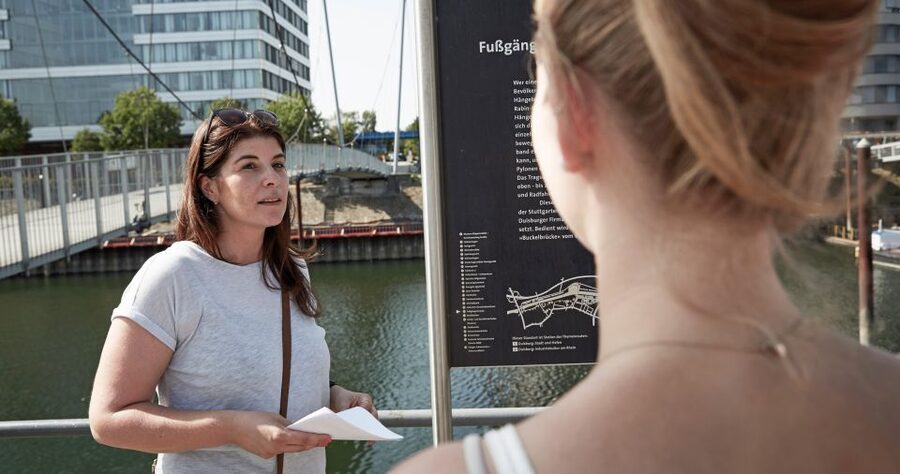
There are waterfronts you just walk past. Then there is Duisburg’s inner harbour, where the past and present sit side by side in a way you can actually read. This walk is built around one big theme: structural change. You start in a place that once focused on grain handling, and you end up in a harbor district that now feels more like a marina quarter with restaurants and offices nearby.
I liked that the tour doesn’t treat the harbor like a museum piece. It treats it like an ongoing urban project. You learn what changed and why, then you see the results with your own eyes as the architecture and waterfront use shift around you.
For you, the payoff is practical. Even if you are not a hardcore architecture person, you’ll leave with a clearer sense of how cities reinvent themselves after industries fade.
More German cities at walking speed:
- Discover Berlin Half-Day Walking Tour
★ 5.0 · 9,624 reviews - Berlin City walk Government District and Places of Democracy
★ 4.7 · 8,467 reviews - Berlin: Third Reich & Cold War Guided Walking Tour
★ 4.9 · 8,378 reviews
Starting at the Mercator fountain, you get your bearings fast
The meeting point is right in the center of the action: in front of the town hall, at the Mercator fountain. If you arrive a few minutes early, you’ll have an easy time lining up before you move toward the inner harbour.
Why this helps: starting near a landmark makes the rest of the walk feel more connected. You are not wandering. You are being guided across a stretch of Duisburg where every turn supports the story.
Also, since the tour is wheelchair accessible, it is set up for a straightforward walking pace. That matters if you want to enjoy the waterfront without feeling like you are racing between photo stops.
The mid-1990s master plan, why it matters on the ground
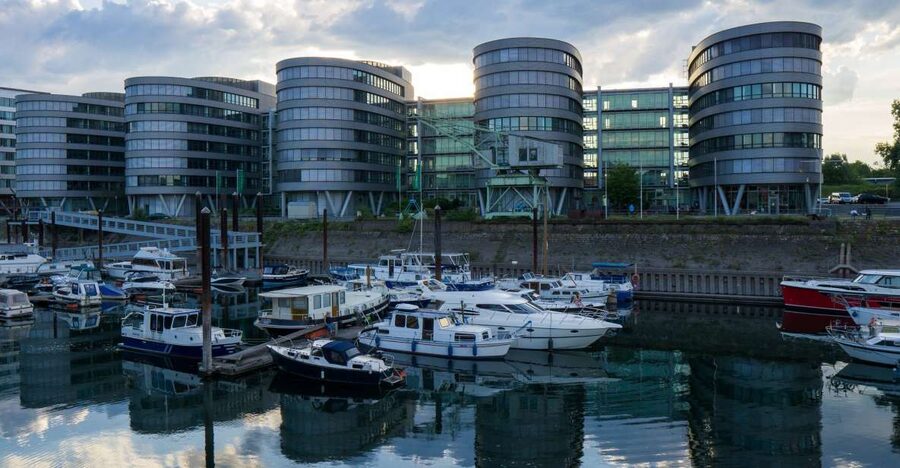
The heart of this tour is the plan that changed the area from the mid-1990s onward, linked to British star architect Sir Norman Foster. You’ll learn how that plan influenced the new character of the inner harbour, turning an older industrial waterfront into something usable for modern life.
Here’s what I found useful to understand: it is not just a makeover of buildings. It is a shift in function and layout. The harbor had once been the bread basket of the Ruhr area because of massive grain handling. When those grain mills declined at the end of the 1960s, the old harbor role faded. At that point, change became inevitable.
That’s the key idea you’ll carry while walking. The inner harbour did not “decide to be pretty.” It had to adapt because the original economic engine slowed down. Once you connect that cause and effect, the waterfront you see today makes more sense.
From freighters to yachts, the waterfront mood changes for a reason
As you move along the inner harbour, you’ll get a strong sense of the difference between what the place used to do and what it does now. In the past, you’d expect loading and unloading tied to grain. Today, the visual language is different.
Now you’ll see yachts lying at anchor, and the waterfront setting gives off a Mediterranean atmosphere. That phrase is not just marketing. It’s the way the water, the marina feel, and the restaurant-forward edge work together. Instead of an industrial edge, you get an everyday leisure edge.
I like how this contrast shows up naturally during the walk. You’re not asked to imagine the past too hard. The tour frames it, then you watch the present waterfront take over your senses.
Seeing the Five Boats and the modern waterfront details
One of the fun parts is how quickly the architecture signals the district’s new identity. You’ll pass impressive buildings with modern architecture, including the Five Boats. It’s the kind of structure that makes you stop for a photo without being forced.
Then the tour expands from icons to the wider scene. You’ll also take in a marina setting plus museums and restaurants that sit along the water. That matters because the harbour district works as a whole. A striking building is great, but the atmosphere comes from the combination: water access, public spaces, and day-to-day uses.
A practical note for you: bring your phone camera, yes, but also slow down your walking pace for a few moments. The details, especially the way buildings face the water, are part of the lesson. If you zip through, you’ll miss what makes the contrast click.
Also holding a platform in Duisburg
Museums at the water’s edge, what to add before or after
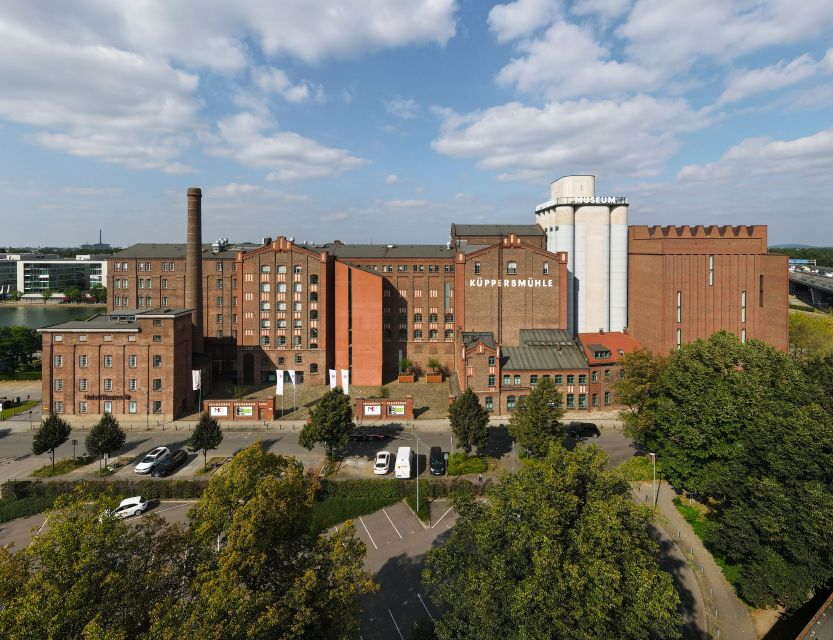
This is a guided walking tour, so you’re not meant to spend the whole time inside. Still, the museum options nearby are worth building into your day.
Two museums get singled out as especially good companions to the harbour walk:
- Küppersmühle, the museum of modern art
- The cultural and urban history museum
Here’s why I think this pairing works. The harbor walk gives you the urban change story in outdoor form. Then the museums give you either the artistic lens (in the case of modern art) or a more direct historical and city-development lens (in the case of cultural and urban history).
If you have limited time, aim for one museum only. The inner harbour area can take up your whole attention, so choose the one that matches your mood that day.
Why office complexes and warehouses can share the same street
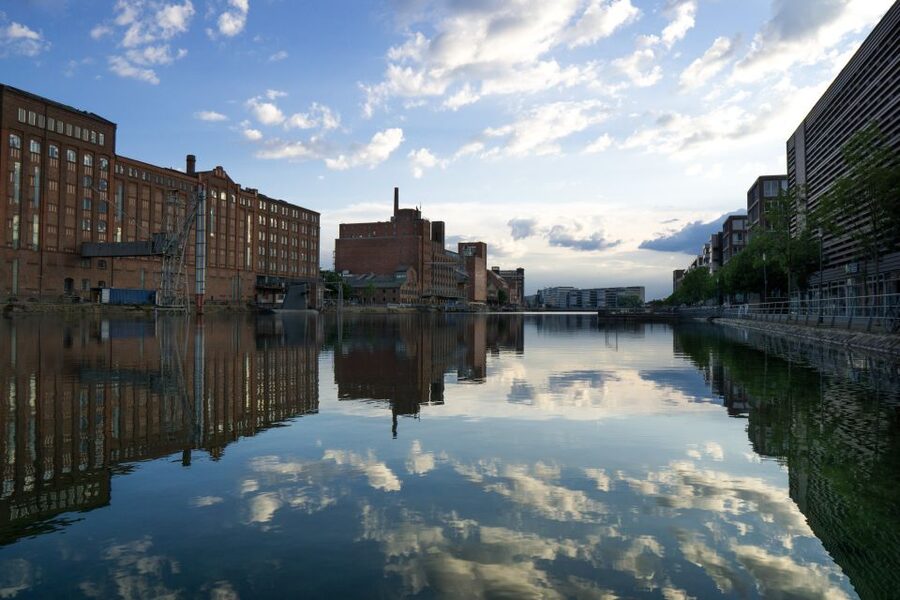
One of the most interesting ideas you’ll hear is that the inner harbour became a booming district, while older warehouse rows still shape the atmosphere. You’ll notice glittering office complexes alongside more nostalgic industrial structures. That mix can feel strange at first, but it is actually a common pattern in successful waterfront renewals.
The tour helps you see that the “new” does not erase the “old.” Instead, the old becomes part of the texture of the new. When you can interpret why those warehouse rows remain visible, the area starts to feel honest. It’s not a themed set. It is a working city transformation.
For you, this matters because it changes how you experience the walk. You’re not just looking at what looks new. You’re reading the urban layers.
The district’s energy, and who will feel at home here
The inner harbour today supports restaurants right on the water and events for young and old. Even if you are visiting outside peak event times, the presence of food spots, museums, and office buildings makes the area feel active.
I found that this helps the tour land with different types of visitors. People who love city stories get the transformation narrative. People who love architecture get the visual contrasts. People who just want an enjoyable afternoon walk get the waterfront atmosphere and places to pause.
If you come in expecting only scenery, you’ll still have a good time. If you come in expecting a practical explanation of how Duisburg changed, you’ll get that too.
Timing, comfort, and rain-proof tips for your 1.5 hours
The tour lasts 1.5 hours, which is a sweet spot. It’s long enough to give context and move through multiple waterfront scenes. It is short enough that you can still add a museum visit afterward.
It also runs in rain. That detail sounds minor, but it changes your preparation. You’ll want shoes with grip and a waterproof jacket. If you forget, you’ll spend the first part of the walk thinking about your discomfort instead of the story.
Wheelchair accessibility is also noted. Even if you are not using a wheelchair, that usually means the route is easier underfoot and less likely to be a slalom of uneven surfaces. You can focus on the waterline and the buildings.
Price and value: $16 for a story-heavy walk
At $16 per person for a 1.5-hour guided walk, the value is fairly strong, especially because you’re buying more than just movement. You’re paying for context: the inner harbour’s grain-port background, the industrial decline, and the transformation plan linked to Sir Norman Foster.
This is not a “stand and point” tour. The highlights are tied to what you can see as you walk, like the Five Boats, the marina feel, and the museum-and-restaurant waterfront setup. The guide also keeps the tone engaging, and the feedback I’ve taken from the tour’s reception points to a sense of good mood and humor even when weather is bad.
So if you want a quick, meaningful overview without spending half a day commuting between sights, this is a good fit.
Language and pacing, how to know if you’ll enjoy it
The live guide speaks German. If you understand German well enough to follow explanations, you’ll probably get the most out of the planning story, including the why behind the harbor change.
If your German is basic, you can still enjoy the architecture and waterfront visuals. Just keep your expectations realistic. A lot of the meaning comes from the guide’s explanation of how the harbor became what it is.
Pacing is built around a walk, with enough stops to take in key scenes. You’re not being rushed through a checklist. You’re being walked through an urban transformation story.
Should you book this Duisburg inner harbour walking tour?
I’d book it if you want an easy, structured way to understand Duisburg’s waterfront change. The combination of Sir Norman Foster’s plan, the grain-to-marina story, and the mix of modern design with older warehouse texture is exactly the kind of thing that makes a short guided tour worth it.
Skip it if you only want museums inside and you dislike guided explanations in German, since the tour is explicitly German-language. Also skip if you are not in the mood for a steady 1.5-hour walk in whatever weather shows up.
If you do book, pair it with one museum afterward, ideally Küppersmühle for modern art or the cultural and urban history museum if you want more context to go with what you just saw outside.
FAQ
How long is the Duisburg inner harbour guided walking tour?
It lasts 1.5 hours.
What is the meeting point for the tour?
Meet your guide in front of the Mercator fountain, located in front of the town hall.
What language is the guided tour in?
The live tour guide speaks German.
Is the tour wheelchair accessible?
Yes, the tour is listed as wheelchair accessible.
Does the tour run in the rain?
Yes, the tour also takes place when it is raining.
How much does the tour cost?
The price is $16 per person.
What will I see during the tour?
You’ll explore Duisburg’s inner harbour, including modern architecture such as the Five Boats, the marina, museums, and restaurants. You’ll also learn about how the harbour district changed.
What is the main design story you learn about?
You learn about the plan by British star architect Sir Norman Foster that shaped the inner harbour from the mid-1990s onward.
Are nearby museums included in the tour?
The museum of modern art Küppersmühle and the cultural and urban history museum are suggested as excellent visits before or after the tour. The tour itself is described as a guided walking tour.
Fresh on the arrivals board for Duisburg


Walking Tours, compared.

Berlin City walk Government District and Places of Democracy
Read our review →
Berlin’s Best: 2 Hour Walking Tour Third Reich and the Cold War
Read our review →