
Reviewed · DORTMUND TOURS & ACTIVITIES
Dortmund: Skywalk and blast furnace scenery
Industrial sights can be surprisingly personal.
This 2-hour Dortmund Skywalk tour turns a former metallurgical site into a clear, human-scale story about steel, mining, and regional change. I love how the views from the Skywalk make the whole industrial layout click, and I also love the way the guide turns structures into real working lives you can picture.
You’ll likely spend a lot of the time on your feet, and the 99-step climb is real. If stairs or long walking are an issue for you, this one is not a good fit.
In This Review
- Quick Take: What Makes This Dortmund Industrial Tour Work
- First, Get Your Bearings at Phoenixplatz
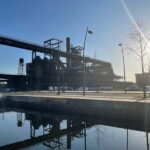
- Following the Former Blast Furnace Gas Pipeline to the Skywalk
- Climbing the Skywalk, 99 Steps, and the Payoff Views
- Steel Structure and the Viaduct: Seeing Engineering as Storytelling
- Hympendahl Slag Heap, the Visual Weight of Production
- Housing Estate and Former Farming Community: Work and Life Were Tied
- Switchgear House 101 and Blower Hall 1: Industrial Buildings With Purpose
- What the Tour Feels Like in Real Life (Gear, Pace, and Weather)
- Price and Value: $41 for a 2-Hour Structural Story
- Who Should Book This Tour, and Who Should Skip It
- Should You Book This Dortmund Skywalk and Blast Furnace Tour?
- FAQ
- How long is the Dortmund Skywalk and blast furnace scenery tour?
- Where does the tour start?
- What is included with the ticket?
- What should I bring?
- What language is the tour guide?
- Is the tour suitable for wheelchair users or mobility impairments?
Quick Take: What Makes This Dortmund Industrial Tour Work
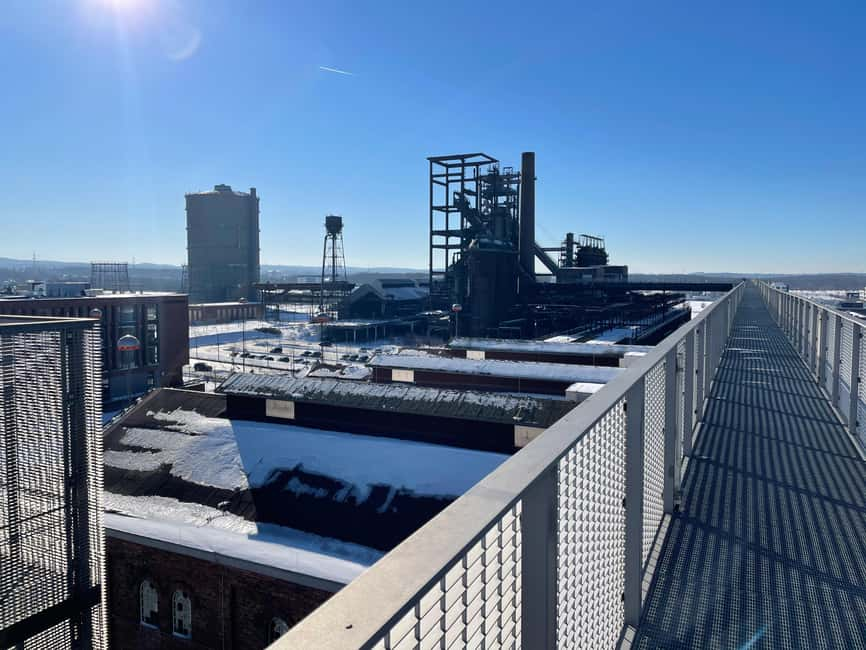
- 99 steps to the Skywalk, then wide views over Dortmund’s skyline
- Steel structure viewing, including a viaduct and the site’s industrial engineering
- Hympendahl slag heap stop, a striking reminder of what steel production leaves behind
- Worker life and change over time, told through housing and former community spaces
- Real building stops like Switchgear House 101 and Blower Hall 1 that frame Dortmund’s transformation
First, Get Your Bearings at Phoenixplatz
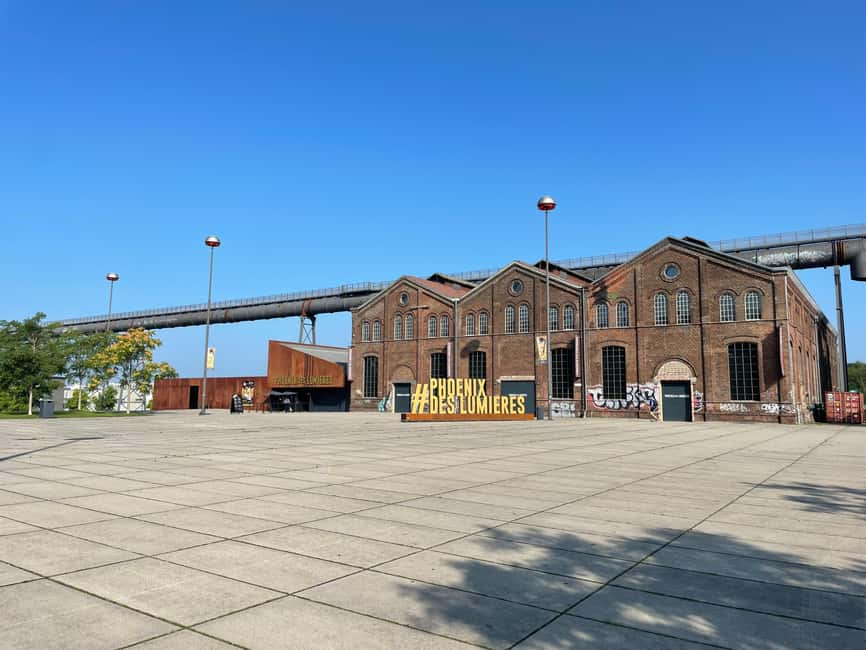
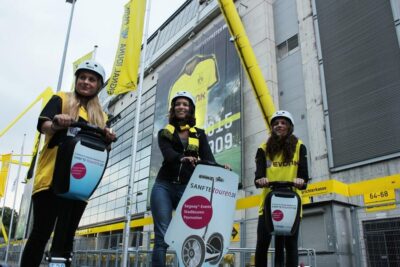
Most industrial tours start in the middle of nowhere. This one starts with a proper anchor: Phoenixplatz. The meeting spot is Phoenixplatz 2a, 44139 Dortmund, easy to find because there’s a big magenta sign for sanfte-touren.de.
Right away, you’re set up for a guided route with purpose. You’re also given practical gear for the walk, including a helmet and a safety vest, plus a live audio system that keeps the story coming even when you’re looking up at big structures.
This is a good format if you like your history with orientation. You’ll move from place to place while the guide explains what you’re seeing and why it mattered, instead of watching from a distance.
Also holding a platform in Dortmund
- Dortmund: BVB Self-Guided Stadium Walk
★ 4.5 · 3,195 reviews - Dortmund: German Football Museum
★ 4.6 · 484 reviews - Dortmund: Borusseum Borussia Dortmund Museum Entry Ticket
★ 4.6 · 315 reviews
Following the Former Blast Furnace Gas Pipeline to the Skywalk
After you start at Phoenixplatz, you follow the route tied to a former blast furnace gas pipeline. That detail matters, because it connects the city’s visible landmarks to the hidden “plumbing” of heavy industry.
As you walk, you’re not just passing by old steel. You’re tracing how an industrial system worked and how it shaped where people lived, worked, and later changed their lives. That’s the tour’s main theme: Dortmund didn’t just have factories, it had whole infrastructure built around them.
One of the nice parts here is that the route builds momentum. By the time you reach the Skywalk area, you already understand that the scenery is not random. It’s a functional industrial map.
Climbing the Skywalk, 99 Steps, and the Payoff Views
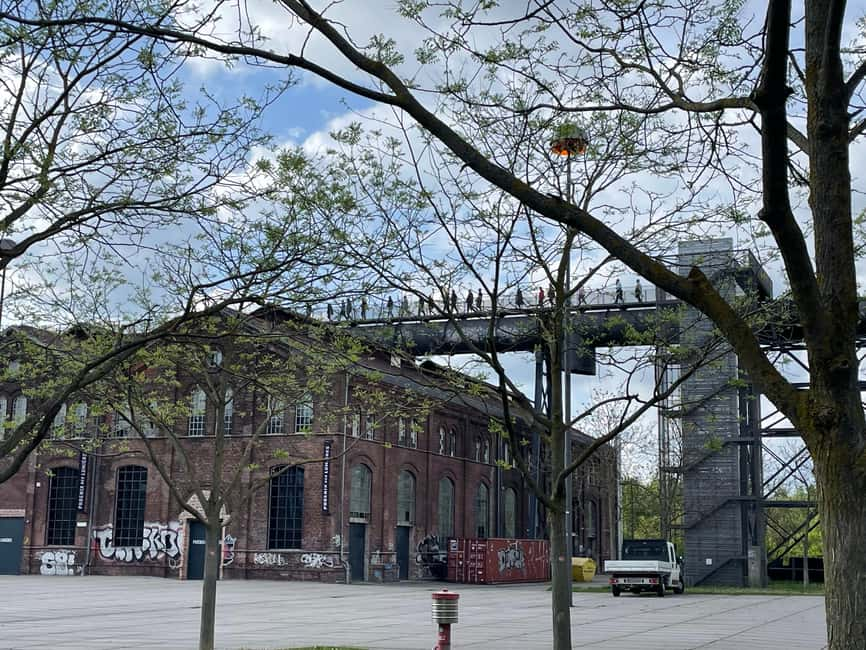
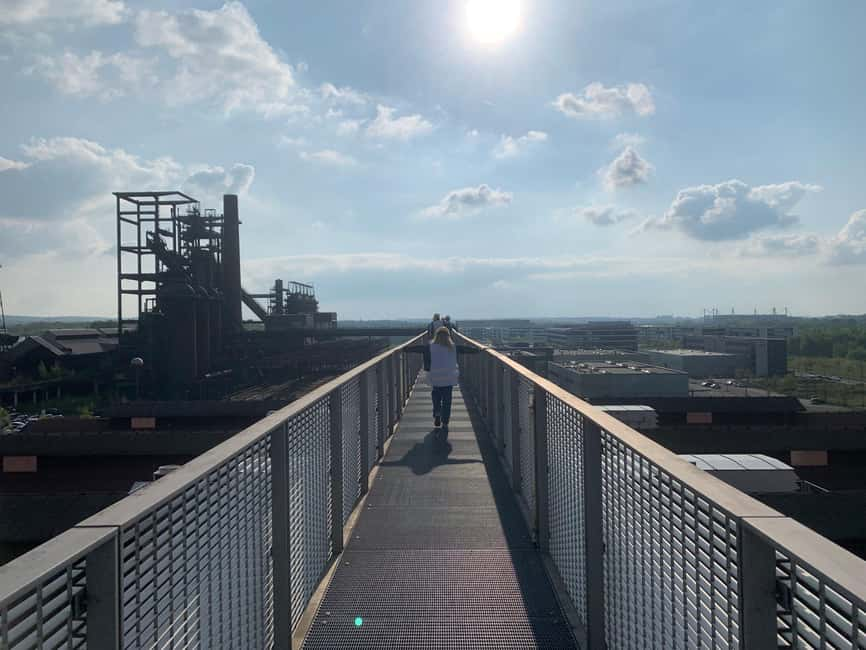
Then comes the signature moment: you climb 99 steps to the Skywalk. This is the part you feel in your legs, but it’s also where the tour earns its ticket.
Once you’re up, you get a broad, practical view of Dortmund’s skyline and the surrounding industrial areas. The Skywalk doesn’t just give a pretty photo moment. It helps you connect the different stops into one story: steel production, the structures that supported it, and the changing urban fabric around it.
If you’re used to city viewpoints where everything looks like it belongs together, this feels similar, just with more industrial context. You start noticing patterns. You can see how different parts of the site relate to each other, and the guide’s explanations become easier to remember because you can now “place” them on the view.
Steel Structure and the Viaduct: Seeing Engineering as Storytelling
After the Skywalk, you shift from viewing distance to closer structural appreciation. You’ll check out the impressive steel structure and a viaduct, and the guide’s job is to translate that engineering into plain language.
This is where I liked the most how clear and lively the explanation can be. In one group, the guide was Teresa, and her delivery made the story feel grounded, with a sense of how work actually shaped daily life.
A good steel structure tour can easily turn into abstract facts. This one tries to do something better: connect the structure to the lives working around it. You’re essentially learning what people used these spaces for, and what those jobs demanded from the region.
Hympendahl Slag Heap, the Visual Weight of Production
You’ll also visit the Hympendahl slag heap. It’s not a “pretty” stop in the usual sense, and that’s exactly why it’s powerful.
A slag heap is a tangible result of making steel, and it turns an industrial process into something you can stand beside and understand. The guide frames it as part of how the region was shaped by production, and how change came later.
I find these stops valuable because they avoid the sanitized version of industrial heritage. You’re seeing what industry really means: output, waste, and the long-term marks left on the environment.
If you’re the kind of traveler who likes history that you can sense with your eyes, this is a key moment. It also gives balance to the tour’s skyline view. Up high, the city looks coherent. Down here, you see how hard industry worked and what it left behind.
Onward connections from Dortmund:


Housing Estate and Former Farming Community: Work and Life Were Tied
One of the most human parts of the tour happens after the big industrial points. You’ll look at the Hympendahl area alongside housing and community traces, including the Felicitas housing estate and a former farming community.
This section is about a big idea: in industrial regions, work and daily life were tightly linked. Housing wasn’t a separate story. It was built for workers and families within the same economic system.
Then the former farming community adds an extra layer. It hints at what came before, and it helps you understand the scale of change. You’re not only seeing steel. You’re seeing the transition in how people lived in the region.
When the guide tells stories about steelworkers’ lives and the structural change, these stops make those stories feel more concrete. It’s easier to grasp how a single industry could shift jobs, neighborhoods, and regional identity.
Switchgear House 101 and Blower Hall 1: Industrial Buildings With Purpose
Two named stops stand out for me because they sound specific and practical, not generic: Switchgear House 101 and Blower Hall 1. You’ll also pass through other stations that show Dortmund’s transformation.
Even without getting lost in technical jargon, these buildings help you understand that steelmaking wasn’t just furnaces. It required power systems, mechanical force, and coordinated operation. Those functions lived in distinct buildings, and that’s why visiting them on foot works so well.
This part also gives the tour a nice pacing. After viewing larger scenery and piles of materials, you move into spaces tied to equipment and operations. It’s like going from the big picture to the working engine room, with the guide connecting the dots step by step.
If you’re the type who likes museum logic, this tour has it. Each stop answers a simple question: What did this do, and what does it tell us about how the region worked?
What the Tour Feels Like in Real Life (Gear, Pace, and Weather)
The tour lasts about 2 hours, so it’s not a slow, museum-only experience. It’s a guided walk built around several key outdoor points and a climb, with the guide keeping you on track.
Because it happens in all weathers, plan accordingly. Bring comfortable shoes and closed-toe shoes, and treat wet or windy conditions like they’re part of the deal. You’re dealing with an outdoor industrial site, not a polished walkway.
The safety gear is there for a reason, and it also makes the experience feel more involved than a typical walking tour. You’ll get your helmet and safety vest so you can focus on the story without worrying about the basics.
Price and Value: $41 for a 2-Hour Structural Story
At $41 per person, the value depends on what you want from the experience.
If you like industrial history that explains more than just dates, this price makes sense. You’re paying for a guided route, live narration in German, a live audio system, and the chance to climb and view the area from the Skywalk where everything clicks into context.
You’re also not just getting scenery. You’re getting interpretation: mining and the steel industry, plus how Dortmund shifted from an industrial center toward innovation and culture. That kind of storytelling is hard to recreate solo, especially when your goal is to connect multiple sites into one coherent narrative in a short time.
If you’re trying to do this as a cheap outdoor stroll, you might feel the cost more. But if you want the “why” behind the structures, the guide-led structure makes the time worth it.
Who Should Book This Tour, and Who Should Skip It
This is a strong match if you enjoy:
- Industrial architecture and engineering details
- Stories about work culture and regional change
- A short walking tour that stays focused on the key stops
It’s not for everyone. The tour is not suitable for people with mobility impairments or wheelchair users. And if you have knee or balance issues, the 99-step climb is the big consideration.
If you’re traveling with kids, it could work if they handle stairs and you’re okay with an outdoor industrial setting. But keep expectations realistic: the experience is educational and structural, not hands-on in a playground way.
Should You Book This Dortmund Skywalk and Blast Furnace Tour?
I’d book it if you want an industrial sightseeing plan that feels guided, not random. The Skywalk climb gives you the context, and the stops afterward explain what you’re looking at, including the Hympendahl slag heap and the human side of steelworker life through housing and community traces.
I wouldn’t book it if stairs are a hard limit for you, or if you expect a fully accessible route. Also, if you hate cold wind or rain, you’ll want to reconsider since it runs in all weather.
If you can handle the walking and the stairs, this is one of those experiences where the structures stop being intimidating and start telling a clear story. And once you’ve seen Dortmund from the Skywalk, the rest of the city’s industrial footprint becomes easier to understand.
FAQ
How long is the Dortmund Skywalk and blast furnace scenery tour?
The tour lasts 2 hours.
Where does the tour start?
The meeting point is Phoenixplatz 2a, 44139 Dortmund (look for the big magenta sign that says sanfte-touren.de).
What is included with the ticket?
It includes a tour guide, helmet, safety vest, and a live audio system.
What should I bring?
Bring comfortable shoes and closed-toe shoes.
What language is the tour guide?
The live tour guide is in German.
Is the tour suitable for wheelchair users or mobility impairments?
No. It is not suitable for people with mobility impairments or for wheelchair users.
Fresh on the arrivals board for Dortmund
Dortmund Tours & Activities, compared.


Borusseum Borussia Dortmund Museum Entry Ticket
Read our review →


Dortmund German Football Museum Skip-the-Line Admission Ticket
Read our review →Browse the lists this tour appears in