
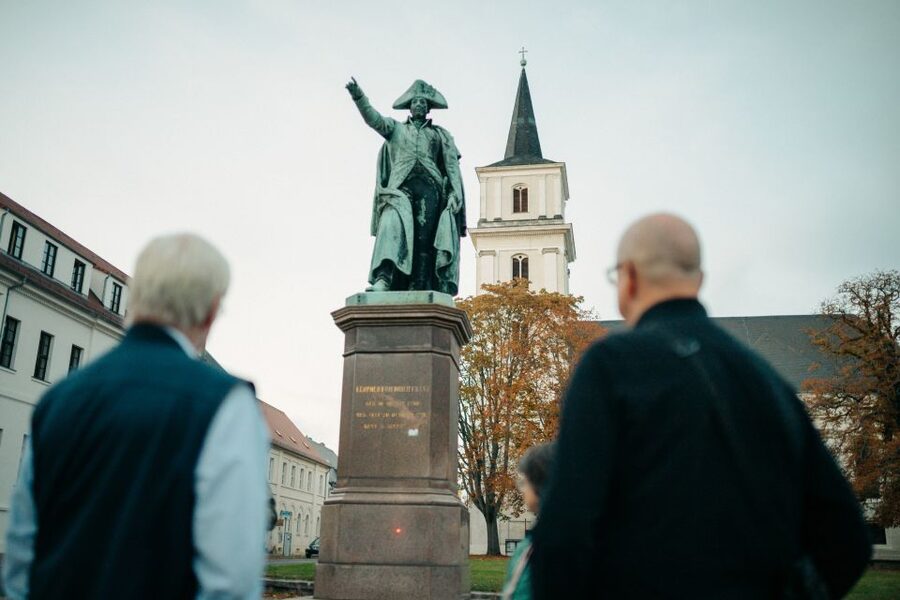
Reviewed · HISTORICAL TOURS
Dessau: Guided Walking Tour through History
History walks, and Dessau explains itself fast. In Dessau-Roßlau, a trained guide threads together centuries of change, with anecdotes that make the city center feel personal instead of textbook.
You also get a clear sense of why names like Walter Gropius and Wassily Kandinsky belong to Dessau, not just to art history books. One thing to consider: this tour runs rain or shine, so pack something that handles real weather.
In This Review
- Key things you will notice on this guided history walk
- How Dessau turns 800 years into a 90-minute walk
- Bauhaus, the Basic Law, and famous names with local roots
- Finding the city center’s hidden treasures, one story at a time
- Why the guide’s stories matter more than memorizing dates
- Route pacing and what 1.5 hours actually gives you
- Price value: what $13 buys you in time and insight
- Practical tips for a smooth walk, including weather and language
- Should you book this Dessau history walking tour?
- FAQ
- How long is the Dessau guided walking tour?
- Where does the tour take place?
- What is the price?
- What language is the live guide speaking?
- Will the tour run in bad weather?
- Where do I meet the group?
- Is the tour wheelchair accessible?
- Is there a ticket line to wait in?
- Can I cancel for a refund?
Key things you will notice on this guided history walk
- Eight hundred years, told in street-level detail, so big topics feel grounded
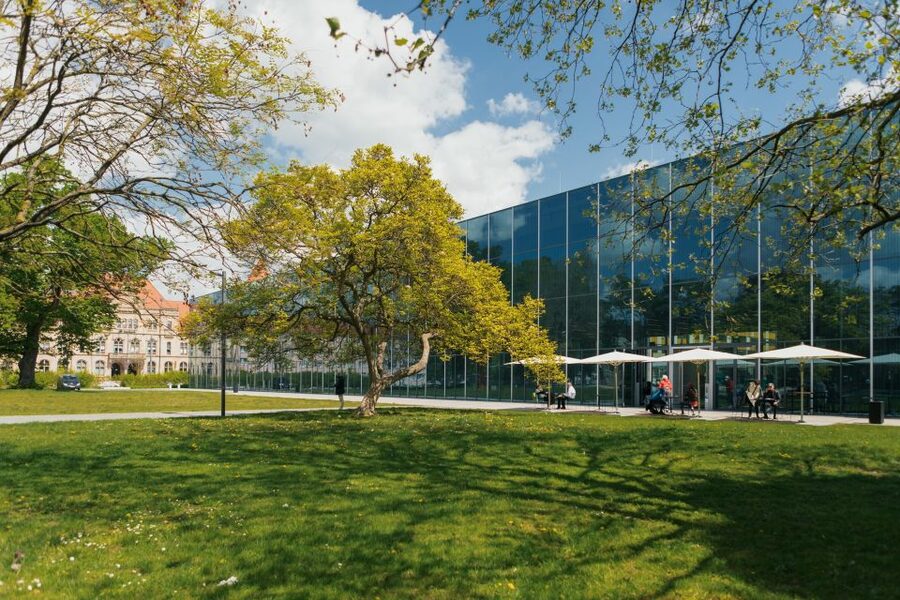
- Bauhaus in Dessau, explained as part of the city’s longer story
- The Basic Law connection, tied back to Dessau through the guide’s narrative
- A parade of important figures, including Walter Gropius, Wassily Kandinsky, Hugo Junkers, and Kurt Weill
- Prince Leopold III. Friedrich Franz and other local names, connected to how the city shaped culture
- Hidden treasures in the city center, with stories that point you toward what to look for
How Dessau turns 800 years into a 90-minute walk
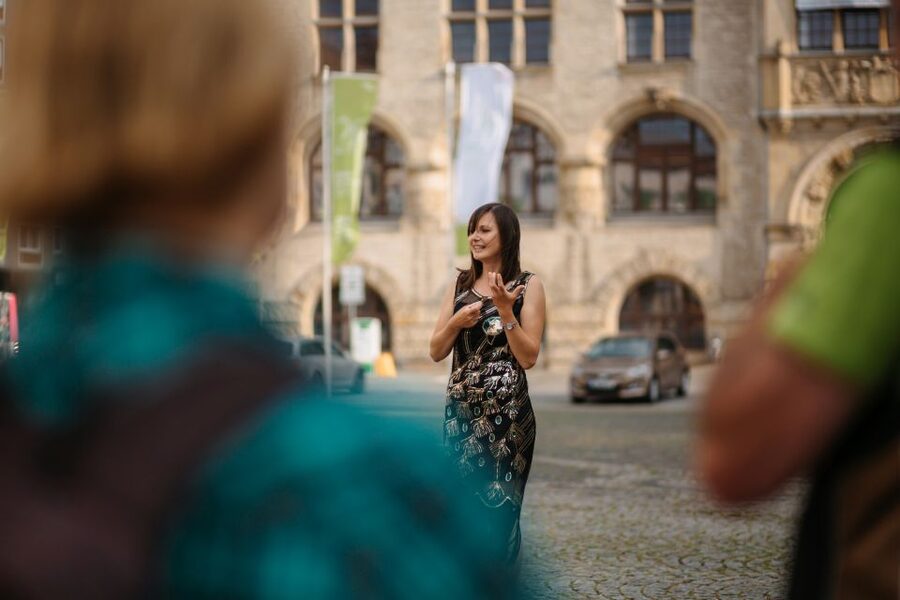
Dessau is not the kind of city where history lives only in museums. It lives in layout, in street corners, in the way buildings and urban spaces hint at the eras that shaped them. That is exactly why this 1.5-hour guided walking tour feels like such a smart way to start: you get a storyline fast, and you learn how to see the city while you are still in the middle of it.
This is a guided walk through Dessau-Roßlau’s changeful history, built around themes rather than random facts. The guide pulls you from early local identities into later cultural turning points, so you can understand the “why” behind what you are seeing. And because it is a walking tour, the history does not sit still. You notice transitions. You get small context clues as you move.
Another big advantage is that the tour aims to connect people from very different epochs into one picture. That means you are not only learning about a single period like Bauhaus. You are learning how the city became a meeting point for different kinds of minds, from architects and artists to composers and thinkers.
Bauhaus, the Basic Law, and famous names with local roots
The tour specifically explains how the Bauhaus came to Dessau, which is the headline most people want, but it does not stop there. You also hear how Dessau relates to the Basic Law, connecting political and social change to the same urban stage where cultural movements took shape. Even if you already know Bauhaus basics, this approach helps you place it in a wider civic story.
What I like about this structure is that it prevents the common “famous name checklist” problem. Instead of dropping names and moving on, the guide uses them as anchors for understanding. You hear about people who are widely known abroad, and the tour frames a quiet, local question: why are some of its children better known outside their birthplace than at home?
The tour also ties together a long roster of influential figures, including Prince Leopold III. Friedrich Franz, Friedrich Wilhelm Erdmannsdorff, Moses Mendelssohn, Kurt Weill, Max and Wilhelm Müller, Hugo Junkers, Walter Gropius, Wassily Kandinsky, and many others. That list could feel overwhelming in a museum brochure. On a walking tour, it works better because the guide can connect each person to the city’s changing roles over time.
Finding the city center’s hidden treasures, one story at a time

“Hidden treasures” can mean lots of things, from secret courtyards to obscure monuments. In this tour, the hidden part is mainly about attention. You are shown what to look for in the city center, and then the guide gives you the narrative hook that makes those details click.
Expect the route to bring urban spaces to life. You will move through parts of the city center where the guide can explain contrasts between epochs. That contrast matters because Dessau is a city of transitions. It is not only about one style or one era. The tour helps you see how different times left their marks side by side.
A key ingredient here is that the guide uses numerous anecdotes and stories. Those are not filler. They are how the city’s history sticks in your head. The stories also help you notice what a building or space is trying to communicate, even if you are not an architecture expert.
If you are the kind of traveler who likes to walk away with practical “what to look for later” cues, this fits. You will likely start recognizing recurring themes in the streets after the first segment, because the guide is constantly pointing you back to the bigger storyline.
Why the guide’s stories matter more than memorizing dates
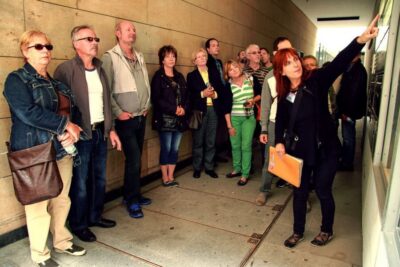
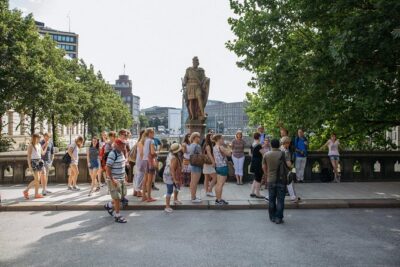
This is a live tour with a trained guide, and it is told in German. Even if you speak some German, the main value is the way the guide organizes information. Instead of sounding like a lecture, the tour turns history into something you can follow while walking.
From the tone of the experience, it is clear the guide leans into storytelling, with plenty of anecdotes. That matters because walking tours are short. You do not have the luxury of stopping every five minutes. Good guiding fills those gaps so you understand what you are looking at before the next landmark moves into view.
The tour also includes contemporary witnesses from a wide variety of epochs, giving voices to different time periods. That approach helps you stop thinking of history as a single line. It becomes a set of overlapping perspectives. And when the guide threads that through a physical walk, the city starts to feel like a living argument between eras.
Route pacing and what 1.5 hours actually gives you
At 1.5 hours, you should treat this as an orientation and context tour. You will get enough background to understand why Dessau matters historically, and you will come away with a sharper lens for exploring on your own afterward.
The short duration is also why the tour format works. You are not expected to absorb everything. Instead, you get the “big connections” laid out clearly: Bauhaus’s arrival, the city’s tie to the Basic Law, and the way notable figures relate back to Dessau itself. Those are broad strokes, but they are the kind of broad strokes that make future sightseeing more meaningful.
Who does this suit best? I think it fits well if you:
- Want a guided start in Dessau-Roßlau without committing to a full day
- Enjoy stories, not just facts
- Like history that connects art, politics, and people
- Prefer to explore by walking and learning as you move
If you are looking for a deeply technical architectural critique at every stop, you might find it more narrative than academic. But if you want a clear, human explanation of why the city’s names and ideas matter, this is a strong match.
Price value: what $13 buys you in time and insight
The price is $13 per person for a guided 1.5-hour walking tour. That is good value for two reasons.
First, you are paying for a trained guide who explains the connections between major themes, not just for the act of walking. The guide’s work is the product here: weaving Dessau’s eight hundred years into a route you can follow.
Second, the format is efficient. In a short time, you get a framework that makes further exploration easier. When you understand how Bauhaus and other key influences relate to Dessau, later museums, buildings, and neighborhoods make more sense. You end up spending less time trying to guess what you are looking at.
One small practical note: the tour includes a skip-the-ticket-line style step, and you show your voucher at the ticket counter before the tour begins. If you enjoy smooth start-to-finish logistics, that helps.
Practical tips for a smooth walk, including weather and language
This tour takes place rain or shine, so plan for real weather. Bring a light rain layer, and wear shoes you trust on sidewalks. Since it is only 1.5 hours, you do not need heavy camping gear. You just need to stay comfortable enough to listen.
The tour is in German, and that is not a minor detail. If you speak little German, you may catch the main themes, but you will lose part of the story flavor. For the best experience, be ready to follow German narration, even if you do not catch every sentence.
Meeting point is at the ticket counter. Show your voucher before the tour starts. Also, the tour is wheelchair accessible, which is helpful if you need step-free routes.
Should you book this Dessau history walking tour?
I would book it if you want a short guided experience that turns Dessau into a story you can actually remember. The combination of Bauhaus, the Basic Law connection, and the way the guide ties global-famous names back to their place of origin makes this more than a sightseeing loop. It is an explanation tour.
Skip it only if you strongly prefer tours in your native language, or if you get uncomfortable walking in changing weather. Otherwise, it is a solid way to get your bearings fast and start seeing the city center with better context.
FAQ

How long is the Dessau guided walking tour?
The tour lasts 1.5 hours.
Where does the tour take place?
It takes place in Northern Germany, Germany, in Dessau-Roßlau.
What is the price?
The price is $13 per person.
What language is the live guide speaking?
The live tour guide speaks German.
Will the tour run in bad weather?
Yes, the tour will take place rain or shine.
Where do I meet the group?
Please show your voucher at the ticket counter before the tour begins.
Is the tour wheelchair accessible?
Yes, the tour is wheelchair accessible.
Is there a ticket line to wait in?
The tour includes skip-the-ticket-line.
Can I cancel for a refund?
Free cancellation is available up to 24 hours in advance for a full refund.
Centuries Per Block
- Leipzig: City History Canal Sightseeing Tour on a Motorboat
★ 4.7 · 7,671 reviews - Berlin: Natural History Museum Entrance Ticket
★ 4.6 · 3,382 reviews - Leipzig: 1.5-Hour Historical Walking Tour in German
★ 4.7 · 2,217 reviews - Berlin: 3-Hour World Heritage Cruise to Potsdam
★ 4.5 · 1,569 reviews
Cities at Walking Speed
- Discover Berlin Half-Day Walking Tour
★ 5.0 · 9,624 reviews - Berlin City walk Government District and Places of Democracy
★ 4.7 · 8,467 reviews - Berlin: Third Reich & Cold War Guided Walking Tour
★ 4.9 · 8,378 reviews - Munich: Third Reich & WWII Walking Tour
★ 4.6 · 6,181 reviews
Historical Tours, compared.
City History Canal Sightseeing Tour on a Motorboat
Read our review →

Browse the lists this tour appears in