
Reviewed · WALKING TOURS
Cologne: Old Town Virtual Reality Walking Tour
VR turns Cologne’s past into something you can see. I love the way virtual reality scenes snap to real street corners, and I love that the tour centers on major landmarks like Cologne Cathedral instead of only blurting facts. One possible drawback: the live guide speaks German, so you will want a little patience if you are not comfortable there.
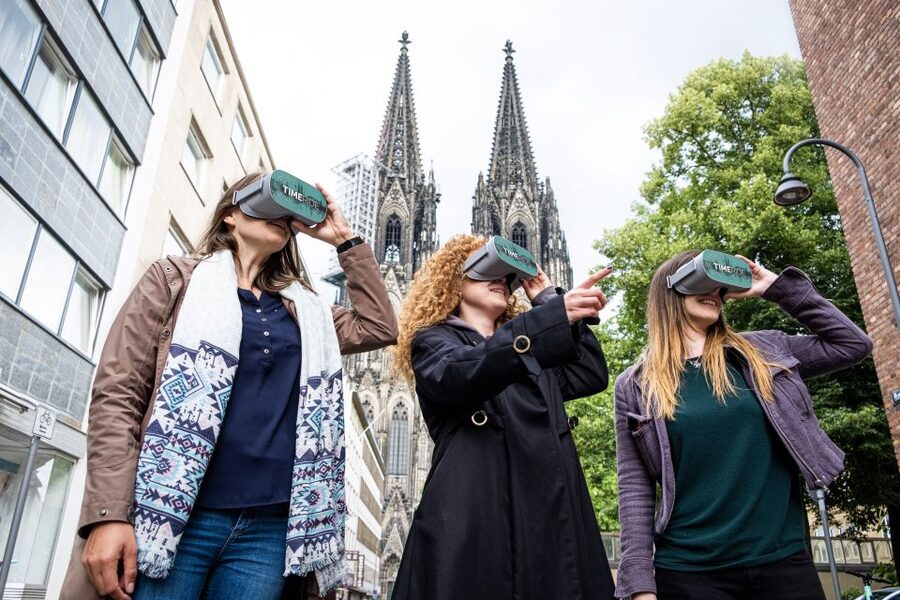
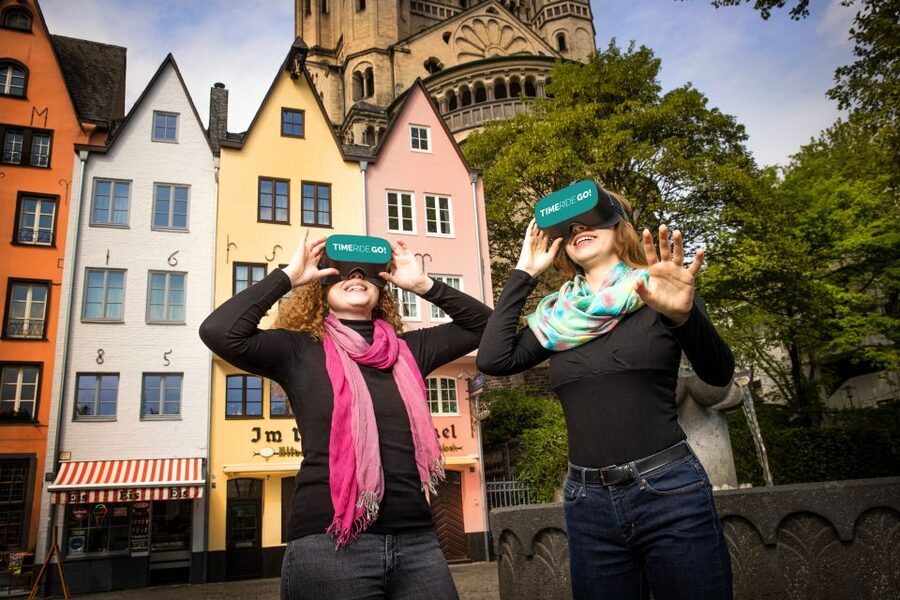
You will cover about 2.1 km at an easy walking pace over roughly 90 minutes, with seven stops that cover Cologne across 2,000 years. At each station, you put on the headset glasses and look straight into earlier centuries, from Roman days to medieval cathedral building, to World War II destruction, and then to how Cologne brings traditions back, including carnival life.
In This Review
- Key things to know before you go
- Starting at TimeRide: what makes this VR walk click
- Alter Markt and Heumarkt: finding the city’s earlier “anchors”
- Roncalliplatz to Cologne Cathedral: from city growth to medieval building power
- St. Kolumba and Hohe Straße: preservation and the feel of everyday Cologne
- WWII and carnival life: why the tour keeps its human center
- Pace, walking distance, and who should do this tour
- Price and value: is $38 a fair trade?
- Choosing a guide style: Carlo and Kat(h)rin notes
- Should you book the Cologne Old Town Virtual Reality tour?
Key things to know before you go
- Seven VR stops in 90 minutes, so you stay active instead of sitting through a lecture
- Cologne Cathedral gets a dedicated moment, including a photo pause plus guided context
- Roman, medieval, WWII, and carnival themes all show up as part of one story line
- You walk about 2.1 km, so comfortable shoes matter, especially in cold or wet weather
- Family-friendly timing, designed for ages six and up (not for kids under 6)
Starting at TimeRide: what makes this VR walk click
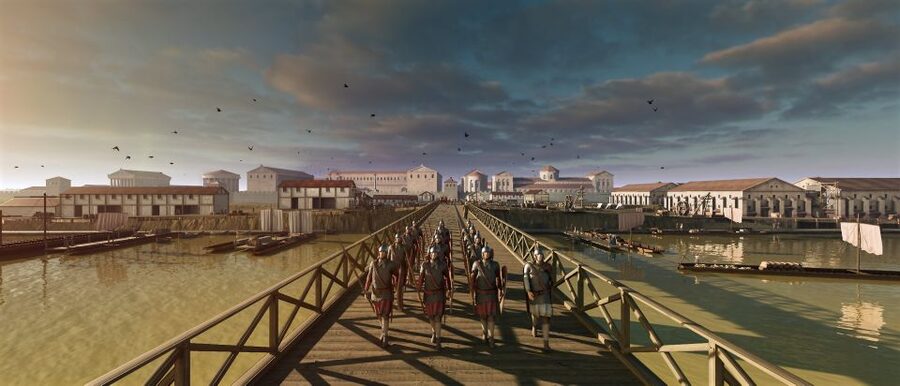
This tour is built around a simple idea: you walk the Old Town, but you do not just look at the buildings. You stop in specific places, put on the headset glasses, and the view changes so you can picture what was happening there long ago. It is like time travel with good shoes.
The practical magic is timing. Each station feels short and focused, with guided info while you are standing in the exact spot where the story should make sense. That matters because Cologne’s landmarks can look “static” if you only rely on plaques. Here, you get a visual cue first, then you understand what you are looking at in the real world.
You also get both kinds of attention: the street-level walk keeps you engaged, and the VR moments do the heavy lifting of showing centuries you can’t physically see. If you like history, this structure helps you connect the dots fast. If you just want something different on a day in Cologne, it gives you an easy, self-contained experience.
A small note on comfort: you will be wearing glasses/headsets outdoors. If you hate anything on your face in the cold, dress accordingly so the experience feels fun, not irritating.
More Walking Tours in Cologne
- Cologne: Night Watchman Old Town Walking Tour
★ 4.6 · 1,638 reviews - Cologne: Old Town Highlights Walking Tour
★ 4.6 · 1,093 reviews - Cologne: Südstadt Guided Foodie Walking Tour
★ 4.6 · 624 reviews
Alter Markt and Heumarkt: finding the city’s earlier “anchors”
Your tour begins at TimeRide, then you head into the Old Town with guided stops at Alter Markt and Heumarkt. These two places work well at the start because they help you get your bearings before the heavier historical scenes begin.
At Alter Markt, you get a guided sightseeing pause, then you move on. The value here is the pacing. Rather than starting with the biggest landmark right away, the tour gently sets up the timeline so later scenes, like medieval construction and wartime destruction, land with more impact.
Heumarkt follows with another short walk and sightseeing window. Streets here are a great stage for “then and now” thinking because you can look around and notice how the urban layout holds patterns over time. Even if you do not catch every detail immediately, the headset scenes are designed to help you reimagine what used to be in the frame.
Practical drawback: these early stops rely on you paying attention while standing outdoors. If the weather is awful, you may feel a bit rushed. That’s why comfortable shoes and weather-appropriate clothing are not optional.
Roncalliplatz to Cologne Cathedral: from city growth to medieval building power
Roncalliplatz is next, another guided sightseeing stop that keeps the rhythm going. Think of this section as the tour turning the page from early Cologne into the big statement era, when the city’s identity became strongly tied to monumental building and religious life.
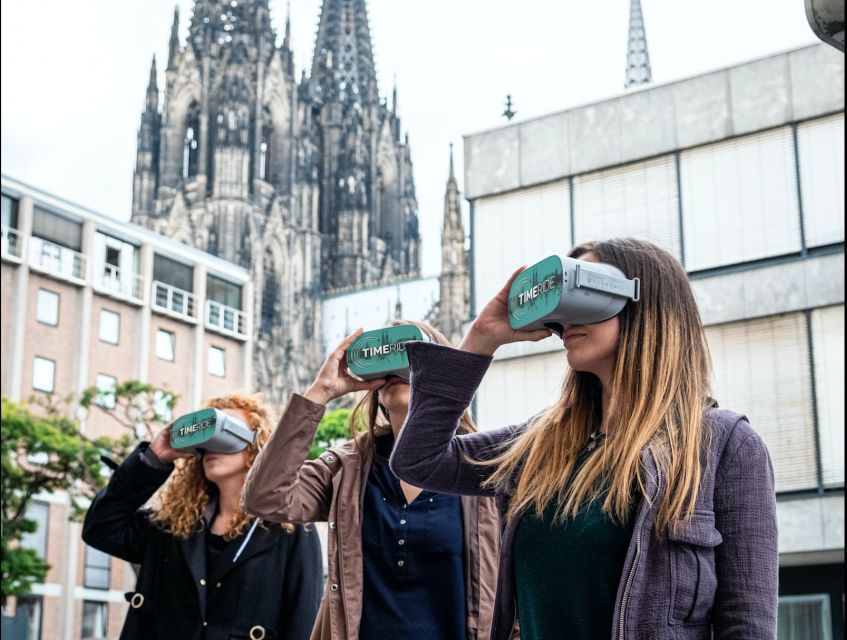
Then you reach the moment many people come for, the Cologne Cathedral. You get a photo stop plus a guided tour and sightseeing time here. In practice, this is one of the best parts of the entire 90 minutes because you are not only learning, you are also physically positioned at a landmark that dominates the skyline. The VR headset scenes at this stage help you connect why the cathedral project mattered, and how that medieval ambition shaped how people experienced Cologne.
You also get that short, useful reset time to look up, take in details, and try to remember what you just learned. One reason the cathedral moment feels valuable is that the tour does not treat it as a “photo and leave” stop. It ties it back to the wider timeline, which is what prevents cathedral visits from becoming just sightseeing.
Potential drawback: cathedral time can feel concentrated. You will likely want to linger on your own after the headset moment, but the schedule is tight. If you enjoy lingering, plan to add extra time after the tour ends back at TimeRide.
St. Kolumba and Hohe Straße: preservation and the feel of everyday Cologne
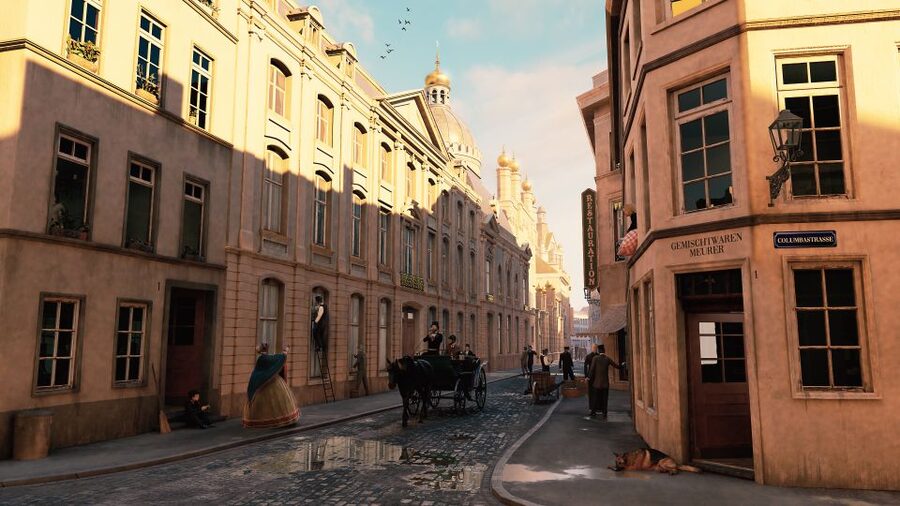
After the cathedral, the story shifts toward how Cologne carries layers forward. St. Kolumba gets a dedicated stop with a guided visit and sightseeing. This is where the tour’s message clicks for me: the past is not only something you watch on a screen. It is also something the city chooses to keep, reframe, and protect through time.
St. Kolumba is also a nice contrast in tone. After the cathedral’s scale, you get a stop that feels more human and grounded. If you like history but you also like “small scale” moments that make a city feel real, this is a good place to pause your brain.
Then comes Hohe Straße, with a short sightseeing window. It’s brief, only a couple minutes, but it works as a practical punctuation mark. You finish with a feel for modern streets, which helps you transition from “headset centuries” back to the city you will keep walking tomorrow.
Possible drawback: if you are expecting a long, meandering shopping-street stroll, Hohe Straße is not that. It is a quick, atmospheric finish. Use it to orient yourself for where you want to go next.
WWII and carnival life: why the tour keeps its human center
Not every VR history experience moves beyond spectacle. This one aims for a storyline that connects big events to what life felt like. After the medieval construction theme, the tour addresses destruction during World War II, then moves into a revival of Cologne’s customs in a way that includes carnival festivities.
Why I like this structure: it avoids treating history as only buildings and dates. You get the dramatic breaks in the city’s story, then you see how the city reclaims identity afterward. When the carnival element comes up, it helps you understand Cologne as a place with memory, but also a place that keeps celebrating.
This section also has emotional weight. VR can make events feel immediate, but you still control the pace at each station by stepping on and off when the headset cues end. If you feel sensitive to wartime themes, it can still be manageable because the tour’s time at each station is contained.
Small caution: if you are visiting with younger kids who do fine in headsets for short bursts, it should work. But the tour is not intended for children under 6, so you should match the age range carefully.
More German cities at walking speed:


Pace, walking distance, and who should do this tour
You walk about 2.1 km total across seven stops, with multiple short walking segments that feel manageable for most people who can handle a city stroll. The duration is 90 minutes, which is a smart length. It is long enough to feel like a full experience, yet short enough that you can still enjoy the rest of your day on foot.
This tour is ideal for:
- history lovers who want context tied to real places
- families with kids age six and up who do not want a long museum day
- anyone curious about how VR can teach without turning into a sit-and-watch show
It is also friendly to language learners in the sense that you still get guided storytelling, and the visual VR cues do part of the work. Still, the live guide is German, so plan for that.
Group size can matter for comfort and attention. On quieter days, you may get more personal pacing with the guide, and that can make the explanations feel especially clear. I’d treat it as a “better with the right timing” experience.
Price and value: is $38 a fair trade?
At about $38 per person for a 90-minute guided walk with VR headsets, the price makes sense if you value guided context plus a structured VR component. You are not paying just for the headset. You are paying for the combination of:
- a live guide
- VR headset glasses at multiple stops
- a guided route that connects Roman origins, medieval cathedral construction, wartime destruction, and later revival customs
It is also practical that the tour skips the ticket line for the experience itself. That saves time on a sightseeing day.
What is not included is the entrance to the TimeRide museum. That matters because it means your $38 focuses on the walking tour experience and the VR moments, not a broader museum visit. If you want more VR or extra exhibitions afterward, you would need to plan that separately.
So here is how I think about the value: if you like learning with your feet on the ground, and you are open to wearing headsets outdoors, $38 is a reasonable way to get a fast overview of Cologne’s timeline without needing multiple museum tickets.
Choosing a guide style: Carlo and Kat(h)rin notes
The tour runs with live guides, and guide delivery can change the whole feel. Names like Carlo and Kat(h)rin have been part of this experience, and their common strength is pacing the story so it is easy to follow while you switch between walking and headset moments.
If you care about storytelling tone, it is worth checking which guide is scheduled for your time slot. You might not know the name in advance unless the booking system shows it, but when you do, it can help you match your preferences.
Also, I like the fact that the tour can create room for conversation, especially when fewer people show up. More back-and-forth questions often means you remember details better later.
Should you book the Cologne Old Town Virtual Reality tour?
Book it if:
- you want a 90-minute way to understand Cologne’s timeline, Roman origins through WWII and carnival revival
- you like the idea of learning at landmarks instead of only reading plaques
- you have kids age six and up who can tolerate a short headset experience
Skip it if:
- you mainly want cathedral time in silence for photos and wandering, without a guided narrative
- you do not want German guidance at all
- you dislike wearing headsets in public or feel uncomfortable in outdoor crowds
My practical call: this is a solid “first or middle of trip” activity when you want to build context fast. And if you are the type who likes to remember what you learned while you are still in the city, consider fitting it earlier rather than later, then adding extra self-guided time to the stops that stick with you most.
Fresh on the arrivals board for Cologne
Walking Tours, compared.
Berlin City walk Government District and Places of Democracy
Read our review →
Berlin’s Best: 2 Hour Walking Tour Third Reich and the Cold War
Read our review →
Browse the lists this tour appears in