
Reviewed · HISTORICAL TOURS
Berlin: Urbex Abandoned Places & History Tour
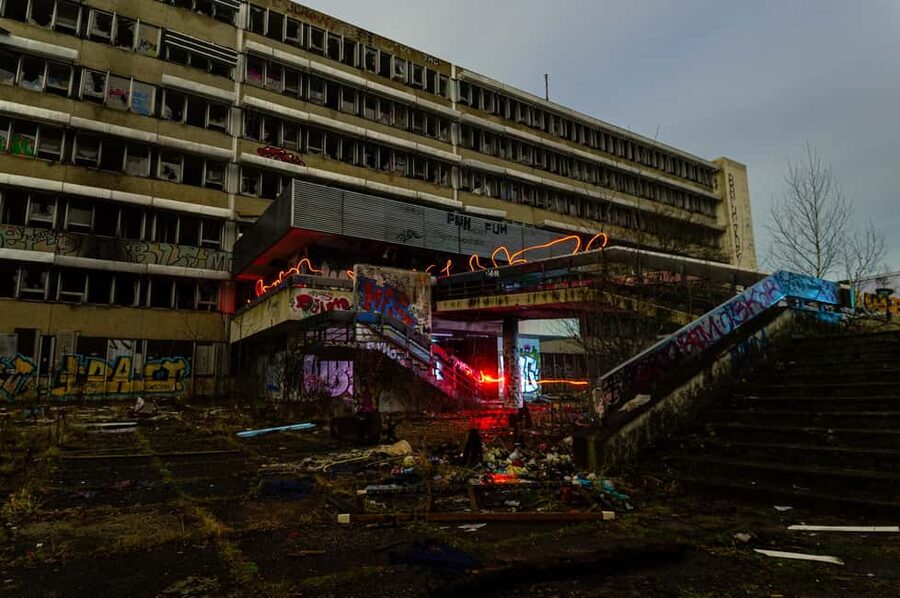
Berlin turns your stomach and your camera on. In 3 hours, you’ll move through abandoned Stasi hospitals, descend into dark spaces with torches, and climb back up for rooftop views, all with an English guide in a small group of six. It has that post-apocalyptic feeling without the chaos, because you get a framework for what you’re seeing and why it matters.
I love the way the route forces you to change gears, from tight underground corridors to open air on top. The second big win for me is Yoorii’s energy, with humor and real care for the group so nobody gets stuck or left behind in complicated, room-to-room spaces. One drawback to weigh: the site can be rough and partially damaged, so some areas may feel less intact than the photos you’ve seen, and certain features like a bunker may not be accessible.
In This Review
- Key things you’ll notice on this Urbex Stasi Hospital tour
- Berlin’s abandoned Stasi hospitals: why this tour hits different
- The 3-hour flow: abandoned wards, dungeons, and rooftops
- 1) Getting oriented at S-Bahn Buch
- 2) Entering the abandoned hospital complex
- 3) Underground sections: tunnels and darker spaces
- 4) Rooftops and viewpoints
- Stasi context you’ll actually use while you walk
- Photography rules and tripod strategy (so your shots look sharp)
- Comfort, safety, and the reality of damaged buildings
- Dress for dirt and uneven ground
- Don’t bring oversized bags
- Health and stability matter here
- Accessibility can change for specific spaces
- Price and value: is $116 for 3 hours worth it?
- Who this tour is best for
- Should you book the Berlin Urbex Stasi Hospitals tour?
- FAQ
- How long is the Berlin Urbex Abandoned Places and History Tour?
- What language is the tour guide?
- How many people are in the group?
- Where do I meet the tour guide?
- Are torches included?
- What will we explore during the tour?
- Is the tour suitable for children?
- Is the tour suitable for wheelchair users or pregnant women?
- Are there rules about what I can bring or do during the tour?
Key things you’ll notice on this Urbex Stasi Hospital tour
- Small group size (up to 6) keeps the pace under control when you’re moving through complex buildings
- Stasi hospitals you can still read in fragments, with things like old documents and original flooring in parts of the site
- Torches are included, so you can explore darker sections without scrambling for gear
- Tunnels, deeper areas, and rooftop viewpoints give you variety in a short 3-hour window
- Yoorii’s guiding style balances story, safety, and humor, which matters a lot when places feel maze-like
Berlin’s abandoned Stasi hospitals: why this tour hits different
This tour is about more than urban exploration photos. You’re walking through one of Berlin’s most unsettling leftovers from East Germany, the kind of place built for secrecy. The focus is Stasi hospitals, facilities that were not public medicine. They were designed around controlled access, treating Stasi operatives and high-ranking officials, and keeping sensitive medical work out of sight.
That context changes how the buildings feel. On a normal ruins visit, you see decay. Here, you see intent. Even when doors are broken or rooms are scraped empty, you can still sense the logic of the place: closed-off corridors, secured spaces, and areas that were meant to keep information away from prying eyes.
And the structure of the tour helps you keep that big picture. Instead of wandering alone, you get a guide who can connect physical details you notice in the moment to the story of the Stasi and the system it protected. When the Berlin Wall fell and East Germany collapsed, the hospitals lost their purpose. The result is silence, long abandonment, and a site that now reads like a warning sign.
More centuries per city block:
- Berlin: Natural History Museum Entrance Ticket
★ 4.6 · 3,382 reviews - Berlin: 3-Hour World Heritage Cruise to Potsdam
★ 4.5 · 1,569 reviews - Berlin: History of the Third Reich Guided Walking Tour
★ 4.7 · 791 reviews
The 3-hour flow: abandoned wards, dungeons, and rooftops
The tour runs for about 3 hours. In that time, you’ll do three things that most abandoned place visits struggle to fit in one outing: go inside abandoned sites, spend time in darker underground areas, and reach higher ground for views.
1) Getting oriented at S-Bahn Buch
You start near S-Bahn Buch, at the exit side toward Netto Supermarked. You turn left after going downstairs. This matters because these tours depend on tight timing and not losing the group at the first step. A small group of six moves faster than larger bus-style tours, so you’ll want to arrive ready and early enough to feel relaxed.
2) Entering the abandoned hospital complex
Once you’re inside, your main job is to pay attention to transitions. Rooms can feel similar, corridors can repeat, and empty areas can look like they’re all the same at first glance. The guide’s role becomes practical here: you follow a route that keeps you moving toward the more interesting pockets, rather than getting stuck in the boring kind of repetition.
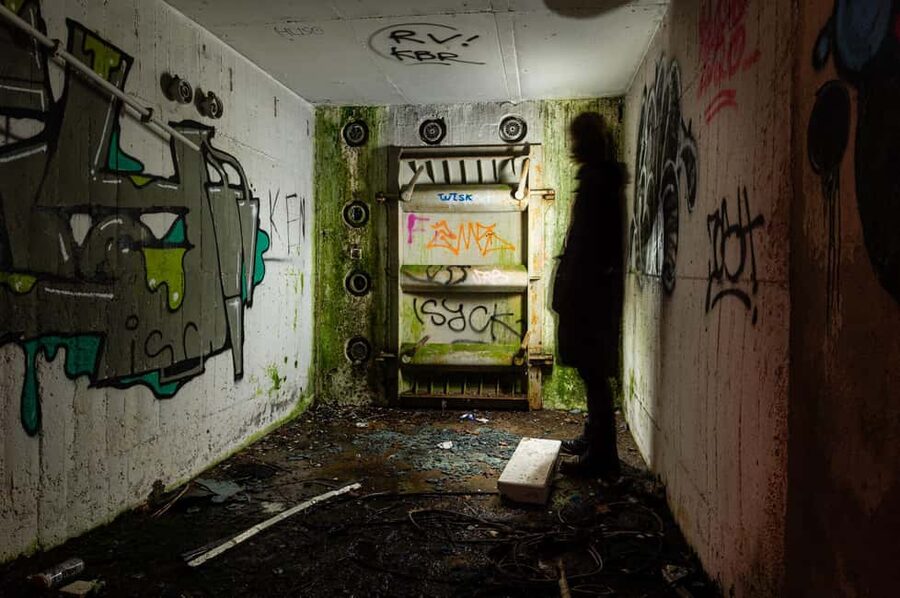
You can also expect to see leftover traces that make the place feel real instead of purely scenic. In parts of the complex, there are artifacts like old documents and original flooring, plus graffiti that has turned some surfaces into a collage of eras.
3) Underground sections: tunnels and darker spaces
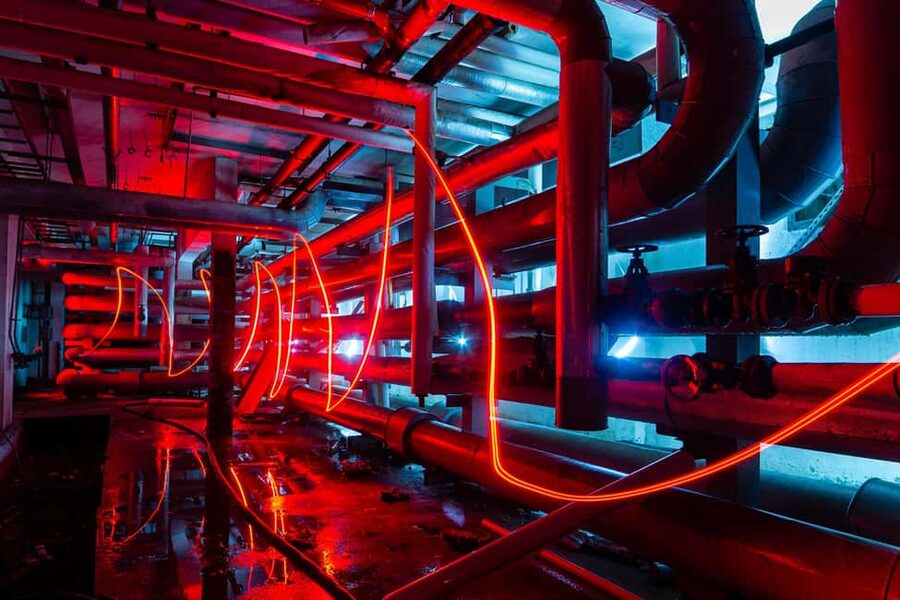
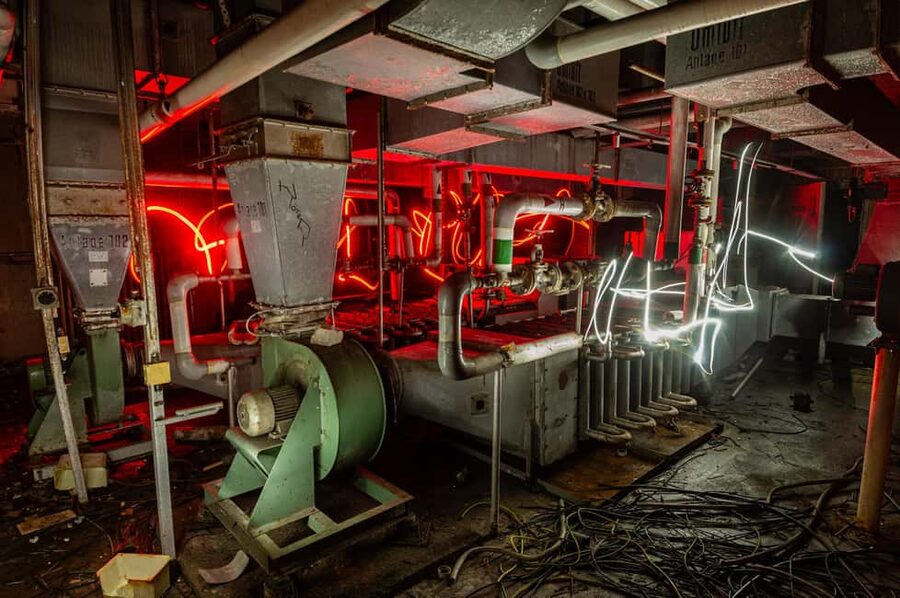
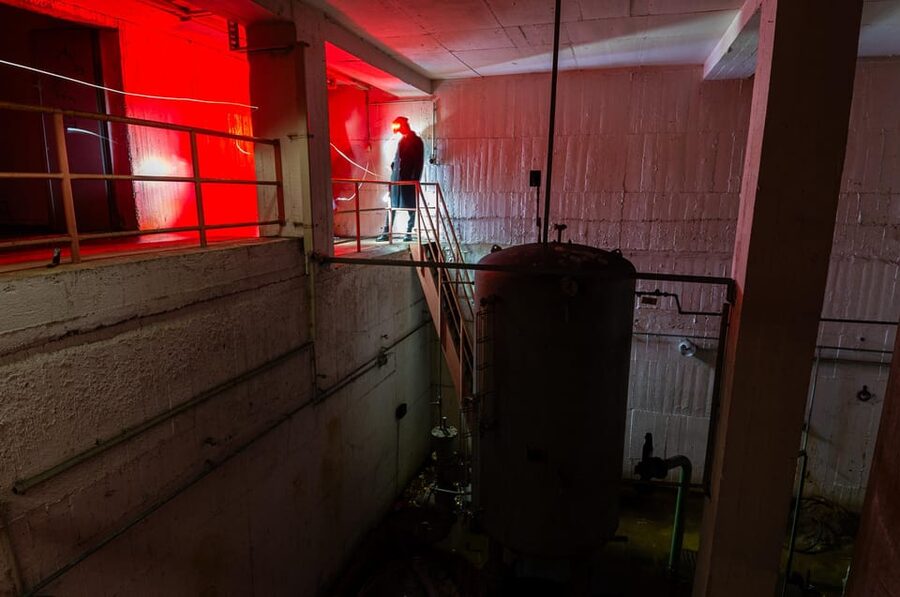
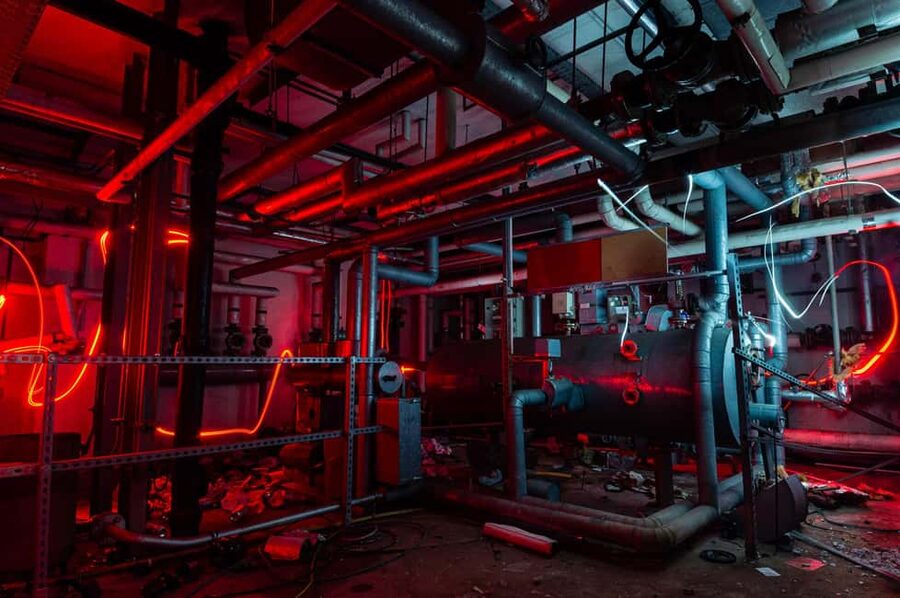
A major highlight is the descent into dungeons and deeper tunnels. Torches are included, and you may also encounter headlamp-style lighting during the darker stretches. This is where the tour turns from exploring to navigating. You’re walking where visibility drops, and the guide helps you keep pace and stay oriented.
This is also where you’ll likely spend time looking for small details. The darkness makes even ordinary marks feel intentional, and graffiti and scrawled art can look surprisingly strong once you’re under the right light.
Also holding a platform in Berlin



4) Rooftops and viewpoints
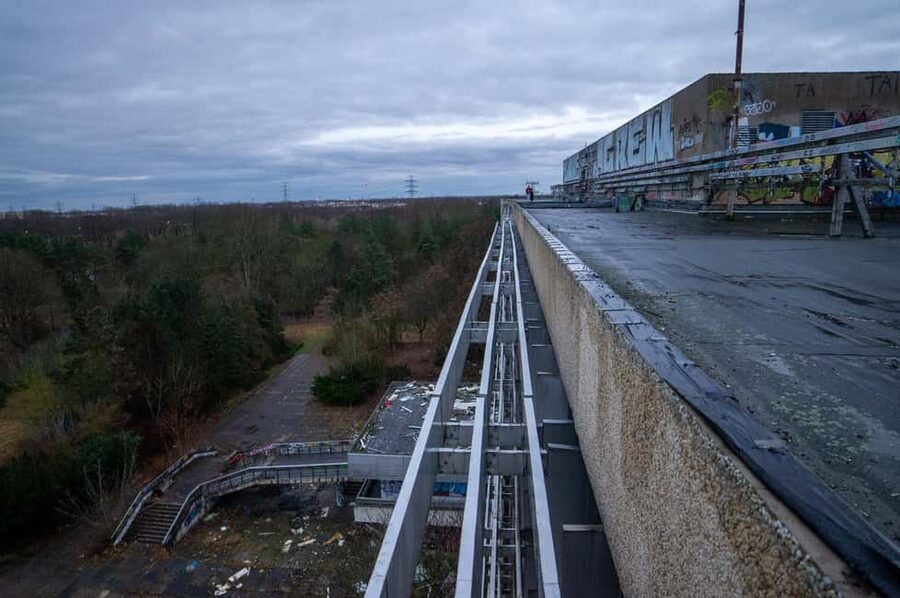
By the time you climb back up, the experience changes tone. Rooftops bring air, light, and angles that make the whole complex easier to understand. Even if you’re not a photographer, you get a mental map of scale.
This is also a good moment for photos, because open views reduce the clutter that you get when you’re stuck at ground level among broken glass and debris.
Stasi context you’ll actually use while you walk
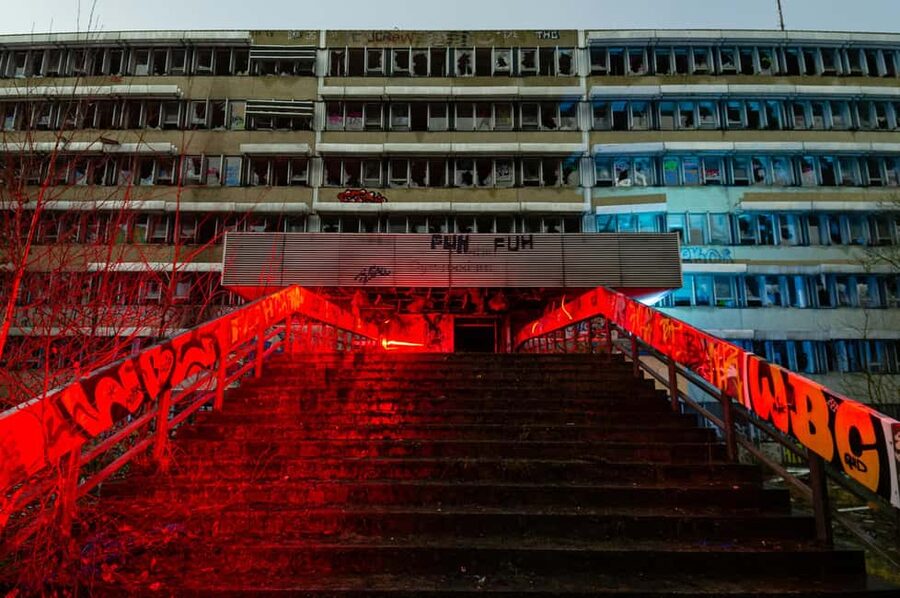
It’s easy to treat a Stasi site like a horror set. That’s not the best way to experience it. The more valuable approach is to understand what these hospitals were meant to do.
From what the tour explains, Stasi hospitals operated as a closed medical system for insiders. They were equipped with advanced facilities for their time, and they were staffed by professionals sworn to secrecy. The hospitals worked as a secure hub for treating operatives injured during clandestine work and for conducting medical experiments away from public view and intelligence scrutiny.
Then came the abrupt shift after 1989. Once the Berlin Wall fell and East Germany collapsed, the Stasi regime vanished. The hospitals became abandoned relics, no longer protected by the system that sustained them. That is why the site feels haunted in a specific way. It wasn’t just neglected. It was left behind because the machine that justified it stopped.
When your guide connects these points to what you see, your brain starts reading the building differently. You stop thinking, this is old. You start thinking, this was built for control.
Photography rules and tripod strategy (so your shots look sharp)
This tour is made for cameras, but it’s also made for movement. You’ll be walking through spaces where footing matters, and you’ll likely spend time stopping for photos. If you want clean shots rather than shaky phone pics, the guidance is simple: bring a tripod if you’re serious about pictures.
Torches are provided, and lighting in these places is low and uneven. A tripod helps you keep the camera stable while you adjust exposure. It’s also useful in darker tunnels where the contrast between light and shadow can throw off handheld autofocus.
One practical reality: you’ll be moving through a site that can include broken surfaces and uneven ground. That means you should think about tripod safety. Keep it short, watch where the legs go, and never place it where it could tip from debris.
Comfort, safety, and the reality of damaged buildings
This is urbex, so comfort rules aren’t optional. The tour comes with clear guidance on what to wear and how to pack.
Dress for dirt and uneven ground
You’ll want comfortable clothes you don’t mind getting a little dirty. Avoid tuxedo-level outfits and high heels. A cap helps, too, especially if you’ll spend time on rooftops or moving through sun and shade.
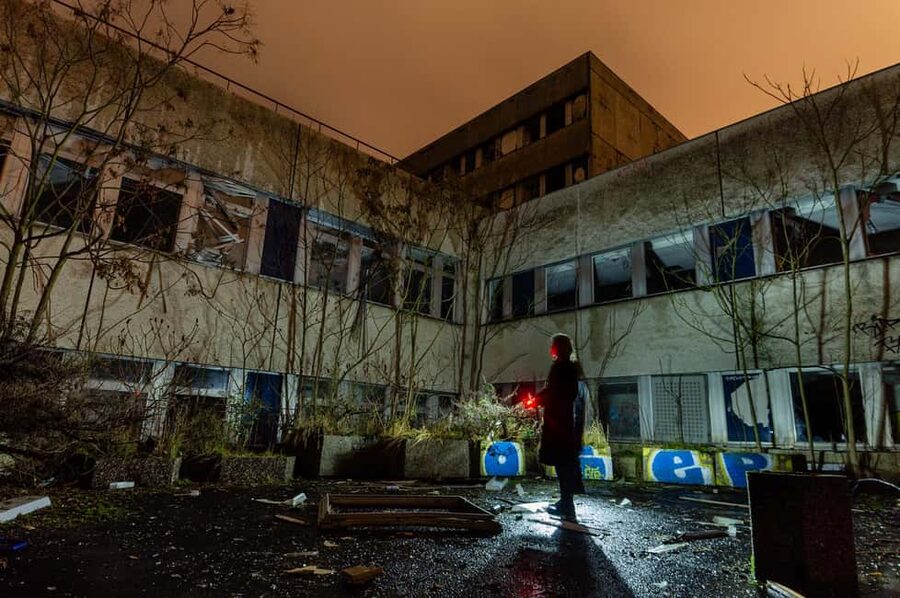
Most importantly, wear footwear that can handle uneven surfaces. One caution worth taking seriously: parts of the site may be heavily damaged, with areas that can include broken glass underfoot. Even if your route avoids the worst spots, you should assume the ground can be messy and plan for slow steps.
Don’t bring oversized bags
Try not to bring massive backpacks. You’ll be in tight areas where extra bulk makes it harder to navigate and easier to bump into walls or other people. Pack light, keep essentials accessible, and keep your hands free when you need them.
Health and stability matter here
The tour is not suitable for wheelchair users. It also lists limits for people over 287 lbs (130 kg), people with high blood pressure, and people over 70. It is not suitable for children under 10 years, and it’s not suited for pregnant women.
If you’re unsure whether the walking or stair-like movement will work for you, treat this as an active exploration rather than an easy sightseeing stroll.
Accessibility can change for specific spaces
One review noted that the bunker was not accessible at the time of their visit. Since access can be affected by on-site conditions, treat this as a tour of the main route, not a promise that every possible feature will be open. If there’s something specific you hope to see, ask your guide during the briefing for what’s accessible today.
Price and value: is $116 for 3 hours worth it?
At $116 per person for about 3 hours, you’re paying for three things: expert guidance, a controlled route through a difficult environment, and included torches.
In plain terms, this isn’t the cheapest Berlin tour, but it can be good value if you care about safety and context. A self-guided exploration can be risky, and even when it’s legal and safe, you might spend time wandering in repetitive rooms instead of reaching the most interesting sections efficiently. Here, the guide helps you stay on track, and you get explanations that add meaning to what you’re looking at.
The small group size of up to six also matters for value. Less crowding means less time waiting at bottlenecks, and more flexibility for the guide to manage pacing.
That said, if you’re expecting a perfectly intact, museum-like building, you might feel disappointed. Parts can be damaged and partially scraped. This doesn’t ruin the experience for everyone, but it changes the balance between spectacle and story. For me, the best value comes when you’re there for the Stasi setting, not just the photo hunt.
If you want a “best rooms only” feeling, this guided format helps a lot. If you want to roam freely for hours, the time limit will feel short.
Who this tour is best for
This fits well if you:
- like history that you can touch, even when it’s uncomfortable
- enjoy photography and low-light scenes where planning matters
- want a structured route so you don’t lose time in repetitive areas
- are okay moving through uneven, darker places
It’s not the right match if you need full accessibility, if health limits apply, or if you want a gentle stroll with guaranteed pristine interiors.
Also, if you’re traveling with kids, the minimum age listed is 10. For anyone outside the recommended physical range or with health concerns, it’s better to choose a different style of Berlin history tour that stays fully on safer ground.
Should you book the Berlin Urbex Stasi Hospitals tour?
I’d book it if you want Berlin history with teeth, and you like being guided through complicated spaces rather than wandering alone. The combination of abandoned Stasi hospitals, underground sections, and rooftop viewpoints makes the 3-hour format feel packed in a way that self-exploring usually can’t match.
You should pause before booking if you’re sensitive to damaged structures, broken surfaces, or uneven footing. Expect rough edges, and remember that access to certain areas can vary, like bunker access.
If your plan includes time for photography, bring that tripod, wear sturdy shoes, and keep your pack light. Then you’ll get the best experience from this kind of tour: controlled exploration, strong atmosphere, and a clearer story behind the walls.
FAQ
How long is the Berlin Urbex Abandoned Places and History Tour?
The tour lasts 3 hours.
What language is the tour guide?
The tour is guided in English.
How many people are in the group?
It’s a small group limited to 6 participants.
Where do I meet the tour guide?
Meet at the exit from S-Bahn Buch on the side toward Netto Supermarked, and turn left after going downstairs.
Are torches included?
Yes, torches rental is included.
What will we explore during the tour?
You’ll explore abandoned sites including Stasi hospitals, go into dungeons and tunnels, and ascend to rooftops.
Is the tour suitable for children?
No, it is not suitable for children under 10 years.
Is the tour suitable for wheelchair users or pregnant women?
No. It is not suitable for wheelchair users or pregnant women.
Are there rules about what I can bring or do during the tour?
Yes. Baby strollers, bikes, alcohol, and drugs are not allowed. Baby carriages are also not allowed.
Fresh on the arrivals board for Berlin

Historical Tours, compared.

City History Canal Sightseeing Tour on a Motorboat
Read our review →




Browse the lists this tour appears in