
Reviewed · SEGWAY RIDES IN BERLIN
Berlin : Unique Segway Tour – Time Travel through the Capital
Berlin without stairs, finally. This Segway loop is a fast, fun way to thread together some of the city’s most meaningful sites, from Checkpoint Charlie to the Brandenburg Gate, while you ride modern boards with hands-on safety instruction. I like the practical Segway intro and the chance to cover a lot in about two hours.
Two things I really like are the stop choices and the way the guide keeps the pace friendly. I found the tour history-heavy without feeling like a lecture, and guides such as Fais bring in personal, local touches, including pop-culture references like the hotel linked to Michael Jackson’s famous stunt. If you get another guide (like Freis), you may also get extra help settling in, plus a couple of photo moments.
The main consideration is that this is a moving Segway tour, not a slow museum day. Some stops are brief, so you need to be comfortable riding and okay with quick look-and-learn timing rather than lingering.
In This Review
- Key things to know before you book
- Why this Berlin Segway loop makes sense
- Getting started at City Riders on Lindenstraße
- Stop 1: Checkpoint Charlie, division that you can picture
- Stop 2: Topography of Terror and the weight of evidence
- Potsdamer Platz: ruins to modern Berlin
- Stop 3: Führerbunker, why the site feels quiet
- Stop 4: The Holocaust Memorial and the information center below
- Stop 5: Brandenburg Gate, the classic photo stop with meaning
- Stop 6: Reichstag building and the glass dome view
- Stop 7: Museum Island, UNESCO and famous collections
- Stop 8: Bebelplatz and the 1933 book-burning reminder
- Stop 9: Gendarmenmarkt, Berlin’s elegant square break
- Stop 10: Jewish Museum Berlin, great but not included
- Price, time, and value for $70.89
- What the Segway ride feels like in real Berlin weather
- Who should book this Segway tour, and who should skip it
- Should you book this time-travel Segway tour?
- FAQ
- How long is the Segway tour?
- How much does it cost per person?
- Is the tour offered in English?
- Where do I meet the guide?
- Is a mobile ticket used?
- Is Segway training included?
- Are meals included in the price?
- Is the Jewish Museum Berlin included?
- Can I enter the Reichstag glass dome?
- Is cancellation free?
Key things to know before you book
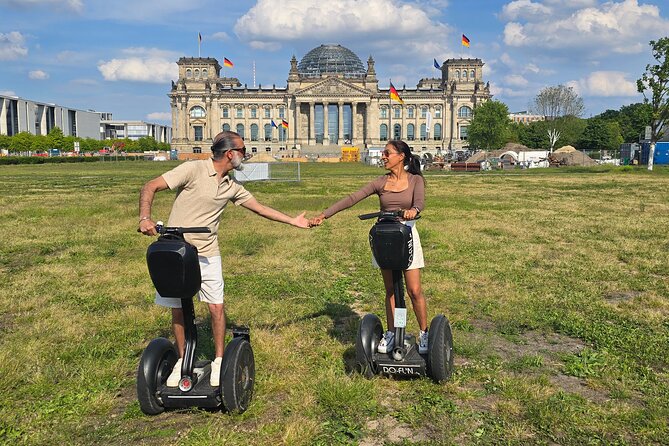
- Modern Segways + safety training are included, so you are not thrown on a machine with zero instruction.
- English-speaking guide, with a group capped at 25.
- Mobile ticket makes check-in simpler, and the tour loops back to the start.
- Most sites have free admission as built into the stops, but the Jewish Museum Berlin is not included.
- Reichstag glass dome access is free, but registration is required.
- Outdoor winter riding can still work, if you dress warm and follow your guide’s pace.
Why this Berlin Segway loop makes sense
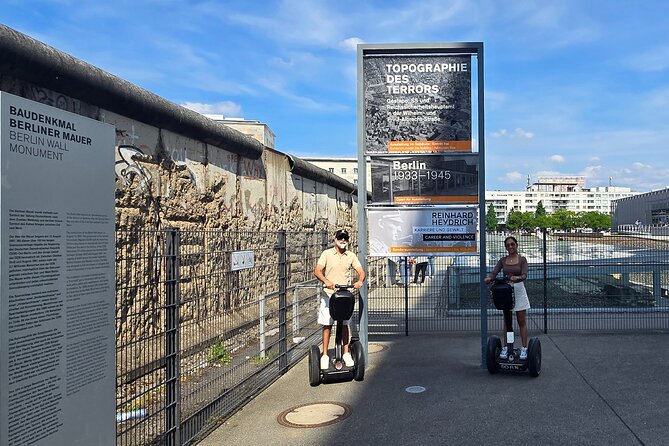
Berlin can be big. Even when you stay central, walking between major landmarks eats time fast. This tour solves that with Segways, letting you move smoothly while still stopping at the places you came for.
What makes it especially good is the theme. You do not just see postcard views. You get a linked story across eras, starting with Cold War division, moving through Nazi documentation, and ending at Germany’s political and cultural center near the Brandenburg Gate. You also pass through key public spaces, so the tour feels like you are traveling through the city, not only around it.
It is also a smart format if you want momentum. In about two hours you see a lot of names and locations that would otherwise take you a full day to stitch together. The trade-off, as you might guess, is that you do not get long museum-style time inside every stop.
More Segway Rides in Berlin
- Berlin 2-Hour Segway Tour
★ 4.6 · 238 reviews - Berlin: 2-Hour Premium Segway Tour
★ 4.5 · 185 reviews - 2-Hour Segway Discovery Tour Berlin
★ 5.0 · 154 reviews
Getting started at City Riders on Lindenstraße
Your meeting point is City Riders – Sightseeing & more on Lindenstraße 28, 10969 Berlin. The location is near public transportation, which matters because you want an easy start without stress. The tour uses a mobile ticket, and it ends back at the meeting point.
Once you arrive, the tour includes an introduction and instruction for safe Segway handling. That is important, because a Segway is not like renting a scooter and guessing. You should expect a real training moment before you roll out, with guidance on balance and control.
The group size is capped at 25, which is not tiny, but it is manageable for a guided ride. If your guide is the patient type, you will feel it right away, because the first few minutes on a Segway set the tone for the whole experience.
Stop 1: Checkpoint Charlie, division that you can picture
Checkpoint Charlie is one of Berlin’s best-known Cold War border crossings. Today, you see a replica of the control barracks, plus information boards and museum-style exhibits that explain escape attempts and the political context behind this flashpoint.
Why it works on a Segway tour: it is not just a photo stop. You get just enough orientation to understand why this corner mattered, and then you glide away before the moment turns into a long queue or a vague sightseeing blur.
Time is on the shorter side, so go in ready to focus. If you want deeper reading, save that for a separate visit. On this tour, you are building the big picture so the rest of Berlin makes more sense as you ride.
Stop 2: Topography of Terror and the weight of evidence
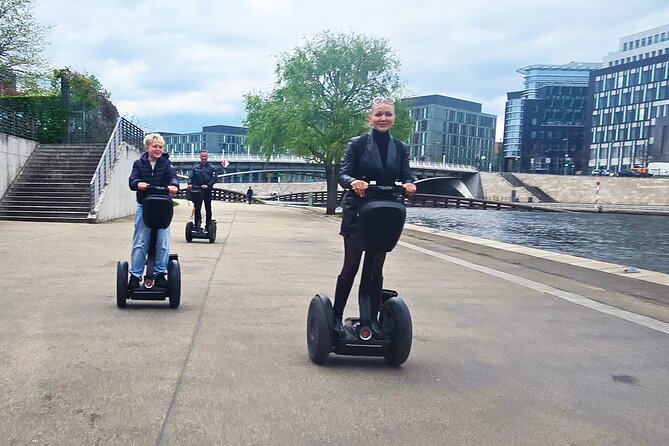
Next comes Topography of Terror, tied to the former Gestapo and SS headquarters. The site documents Nazi crimes through photos, documents, and audio evidence, with parts of the experience outdoors and additional material in a modern documentation center.
This is where the tour’s tone changes. Checkpoint Charlie sets the stage for division. Topography of Terror confronts the machinery behind persecution and terror. Even with brief stop time, the site hits because the story is grounded in records, not only monuments.
A practical note for your comfort: parts of this area are outdoors, so wear layers and plan for wind if the weather is sharp. Also, keep your expectations realistic. You are seeing the site overview, not reading every panel.
Potsdamer Platz: ruins to modern Berlin
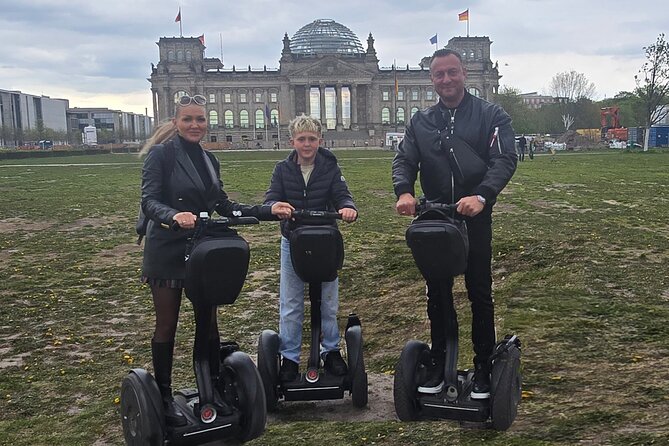
Then you shift to Potsdamer Platz, which is basically Berlin’s transformation in one stop. This area represents the move from a major transport hub, through war damage, to a modern zone of high-rises, cinemas, restaurants, and the Sony Center.
This portion is useful because it gives your brain a breather. After the heavy stops, you get a sense of how Berlin rebuilt and repurposed space. It also helps you connect historical themes to what you can see today, instead of treating the past as a closed chapter.
You may only get a short pause here, but it is still a worthwhile switch in mood. If you like cities that show layers rather than erasing them, Potsdamer Platz delivers.
More kilometres covered standing up:


Stop 3: Führerbunker, why the site feels quiet
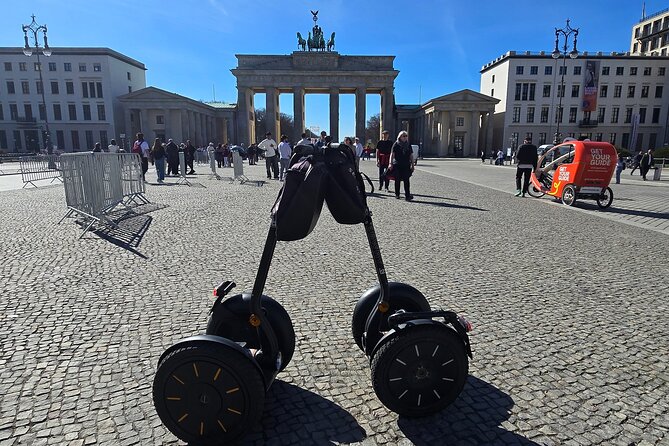
Führerbunker is Hitler’s last retreat during World War II. Today, the location is modest and easy to miss, with more information than spectacle, including a plaque explaining the bunker construction and the last days of the Nazi regime.
This stop is sober by design. It is not trying to impress you with a big monument. Instead, it keeps the focus on what happened there and what that final period meant.
On a Segway tour, the risk is moving too fast past something heavy. Keep your head up and slow your attention here. Even a short visit can land if you treat it as a moment to absorb, not just check a landmark off.
Stop 4: The Holocaust Memorial and the information center below
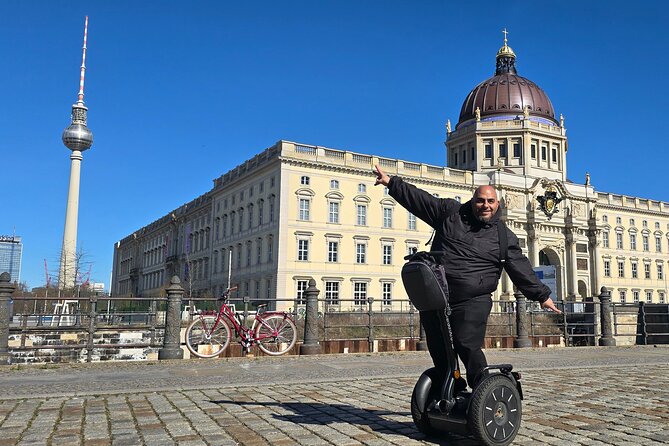
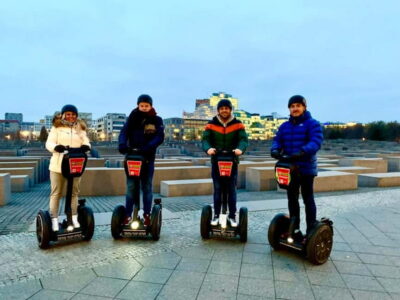
Near the Brandenburg Gate, you reach the Memorial to the Murdered Jews of Europe. It features 2,711 concrete steles, creating a space that feels intentionally silent and unsettling. Underneath is an information center that documents the Shoah.
This is one of the most powerful segments on the whole route, and it is also one of the clearest examples of why this tour format can be effective. You do not spend all day here, but you do get oriented at the exact place where the memorial’s experience turns into learning.
If you prefer a more controlled pace, take your time moving through the steles and then head to the information center. Even a quick reading sprint can give you a better understanding of what you are looking at.
Stop 5: Brandenburg Gate, the classic photo stop with meaning
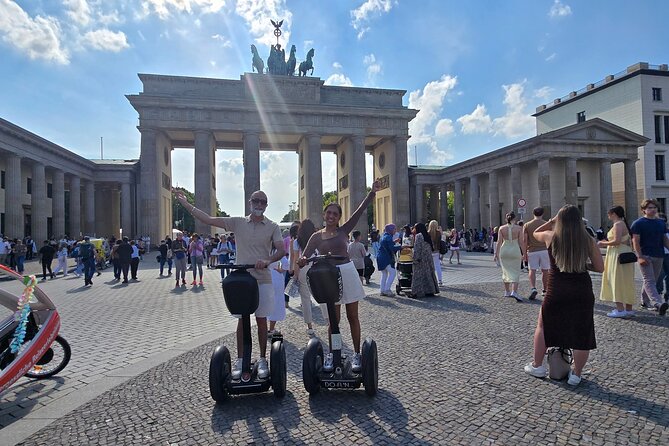
The Brandenburg Gate is Berlin’s best-known landmark. It started as a symbol of division, and it later became a symbol of reunification. The classicist structure dates to 1791, and it sits on Pariser Platz, which is also a popular starting point for sightseeing.
What I like about pairing this with the prior stops is contrast. After memorials and dark history, you arrive at a landmark that people still use as a meeting place and a reference point. That shift helps you understand Berlin as a place where remembrance and daily life share the same streets.
Plan for the usual photo demand around this area. You are on a schedule, so focus on getting your main shots and moving on.
Stop 6: Reichstag building and the glass dome view
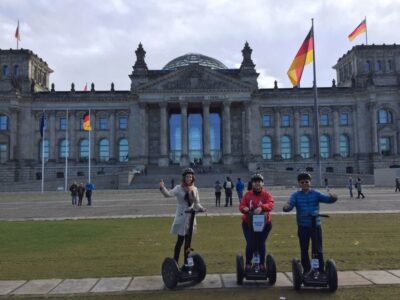
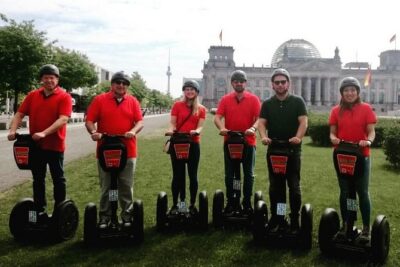
Next is the Reichstag building, home of the German Bundestag. The modern glass dome designed by Sir Norman Foster is a major draw, and you can enter for free, but registration is required.
This stop gives you a chance to connect your sightseeing with how the country governs today. It is also a rare moment where Berlin’s architectural story includes both age and modern design, without requiring a long museum ticket.
Because registration is required for entry, treat this as a planning point. If you want to go up, make sure you handle the registration step in advance. If you do not, you can still enjoy the exterior and the general political context the tour provides.
Stop 7: Museum Island, UNESCO and famous collections
Then you ride into the Museum Island area, a UNESCO World Heritage Site with five major museums, including the Pergamon Museum and the Neues Museum. Even with a short stop window, it is a good place to understand that this part of Berlin is a major cultural engine, not just a pleasant river-adjacent walk.
Why it fits here: the tour has been building historical context and memory sites. Museum Island acts like a pivot, pointing you to the art and archaeology side of Berlin’s identity.
If you want museum time, this tour can help you choose what to prioritize later. You are not stuck guessing which collections are worth your limited days.
Stop 8: Bebelplatz and the 1933 book-burning reminder
Bebelplatz sits on Unter den Linden and is known for a memorial to the burning of books from 1933. It is also surrounded by institutions such as the State Opera, Humboldt University, and St. Hedwig’s Cathedral, giving it a calm, anchored feel.
I like this stop because it connects censorship to the idea of public culture. It is not abstract. You can stand in the square and feel how ideas can be targeted, and how societies later choose to remember those attacks.
Time here is brief, so focus on the memorial itself and the surrounding architecture. Then keep riding, because your next stop is about beauty and atmosphere.
Stop 9: Gendarmenmarkt, Berlin’s elegant square break
Gendarmenmarkt is considered one of Berlin’s most beautiful squares. It is framed by the German and French cathedrals and the Konzerthaus, and it tends to look especially good in the evening or at Christmas time.
This is a smart pacing move. After memorials and political sites, you get a light contrast without losing context. Even if you only have a few minutes, the geometry and symmetry of the square make it easy to slow down for a moment.
If your ride happens in warmer weather, you might also get a calmer break through greener areas like the Tiergarten. That kind of change of scenery can make the whole Segway experience feel less like a checklist and more like a route.
Stop 10: Jewish Museum Berlin, great but not included
The tour stops near Jewish Museum Berlin, one of Europe’s important museums on Jewish history and culture. Its building by Daniel Libeskind is distinctive, and the permanent exhibition covers 1,700 years of Jewish life in Germany.
The key detail: this stop’s admission is not included. So you will likely see it from outside or at least have the option to decide separately. If you want to go inside, plan to add a ticket and time on your own.
This is also where your tour planning matters. If Jewish history is a top priority for you, you may want to budget more than one day or at least make a dedicated museum plan.
Price, time, and value for $70.89
At $70.89 per person for about two hours, this tour competes well with private walking tours because the Segway portion adds real value. You are paying for the machine use and the instruction, plus a structured route through major sites that would be time-consuming to line up yourself.
A big value lever here is that many of the stops are listed with admission tickets that are free. That means you are not juggling multiple paid entrances during your short tour window. The Reichstag dome can be free too, but it depends on registration, so it is not a guaranteed add-on unless you plan.
On the other hand, you should not treat the experience like a substitute for museum days. Some elements, especially the Jewish Museum, require separate planning and paid entry. If you like slow reading and long exhibits, you will get more out of this tour by using it as your orientation and then adding one or two follow-up visits.
What the Segway ride feels like in real Berlin weather
Berlin weather can be unpredictable, and the tour includes outdoor stops and open areas. In winter, you will be riding with cold in the air, so dress for wind and keep your gloves situation sorted.
The good news is that the format still works when conditions are tough. One standout detail from guide feedback is how the experience can stay safe and enjoyable even when there is snow, as long as you take the training seriously and follow your guide’s pacing.
If you are new to balance, treat the intro as the main event. Once you are comfortable, the ride becomes a smooth, efficient way to get between sites without the strain of constant stopping and restarting.
Who should book this Segway tour, and who should skip it
This tour is a strong fit if you want a guided route that covers major historical and memorial landmarks with clear context, without spending the whole day walking. It is also a great option when you have limited time and you do not want to sacrifice the big names like Checkpoint Charlie and the Brandenburg Gate.
You may want to skip it or choose another format if you cannot comfortably ride a Segway or if you need long time at museums and memorial information centers. The stop windows are short, so you will likely want return visits if you want deeper study.
It also works well for families and mixed groups, including teens, as long as everyone is comfortable with the Segway portion. The guide style matters here, and names like Fais and Freis suggest a hands-on approach that can help first-timers feel settled.
Should you book this time-travel Segway tour?
I would book it if your priority is seeing Berlin’s landmark story in a tight window, with practical guidance and a route that helps you connect Cold War sites, remembrance spaces, and modern political landmarks. The mix of history and movement is exactly why Segway tours can be a smart first Berlin day plan.
I would not book it if your main goal is deep museum time at the Jewish Museum Berlin or you hate the idea of brief stops. In that case, you might prefer a walking route tied to specific ticketed sites.
If you do book, wear layers, expect outdoor segments, and decide ahead of time whether Reichstag dome registration is something you want. Then use the tour as your backbone, and build your follow-up visits around what moves you most.
FAQ
How long is the Segway tour?
The tour runs for approximately 2 hours.
How much does it cost per person?
The price is $70.89 per person.
Is the tour offered in English?
Yes, the tour is offered in English.
Where do I meet the guide?
The meeting point is City Riders – Sightseeing & more, Lindenstraße 28, 10969 Berlin, Germany. The tour ends back at the meeting point.
Is a mobile ticket used?
Yes, the tour uses a mobile ticket.
Is Segway training included?
Yes. The tour includes an introduction and instruction for safe Segway handling, and modern Segways are used throughout.
Are meals included in the price?
No. Food and drinks are not included.
Is the Jewish Museum Berlin included?
No. The Jewish Museum Berlin admission is not included.
Can I enter the Reichstag glass dome?
Entry to the glass dome is free, but registration is required.
Is cancellation free?
Yes. You can cancel up to 24 hours in advance for a full refund.
Fresh on the arrivals board for Berlin
Segway Rides in Berlin, compared.
Berlin Small Group Segway Adventure: Explore in 2 Hours!
Read our review →
Browse the lists this tour appears in