
Reviewed · HISTORICAL TOURS
Berlin Uncensored: A History of Sex & Freedom
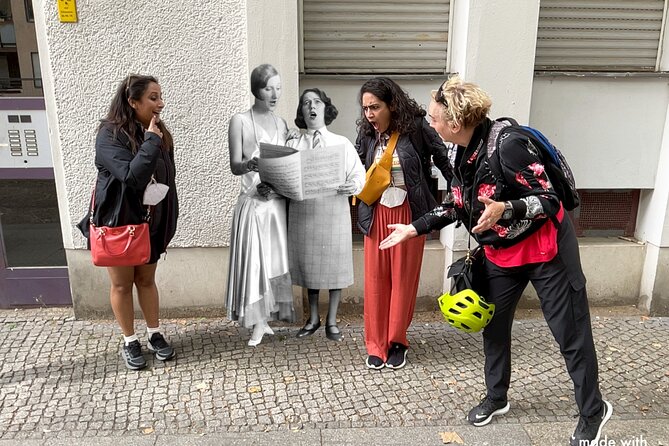
Berlin gets a little uncomfortable, in a good way. This walking tour strings together sex, science, censorship, and nightlife through real street corners, then adds iPad AR overlays to show what used to be there. The result is a history lesson that also feels like a guided street map for the city’s private life.
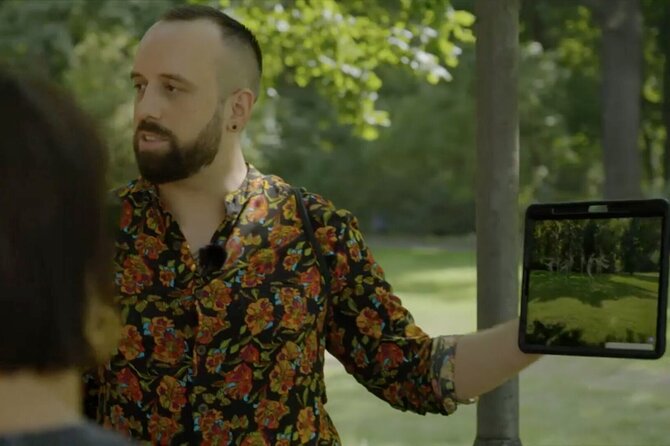
I especially love that Jeff, a certified social scientist and sex educator, explains the big ideas with a human tone, not a textbook voice. And I like how the tech is used to support the story, not take over, since you get a steady mix of photos, videos, audio clips, and quick on-the-walk questions. One caution: the tour is 3.5 hours and you do spend time standing outside while Jeff talks and the AR kicks in, so if you hate lingering in one spot, plan for that.
In This Review
- Key points before you walk
- Walking the streets where Berlin policed, studied, and celebrated sex
- Start at Nollendorfplatz, then get your bearings fast
- Magnus-Apotheke: Berlin’s medical side of freedom
- Memorial to the Homosexuals Persecuted Under Nazism: where history turns serious
- Kurfürstenstraße, Schwerinstraße, Nollendorfstraße: AR helps you see lost places
- Denns BioMarkt and Prinz Eisenherz: tech photos, but also meaning
- Metropol: connecting today’s scene to the long timeline
- Why Jeff’s approach matters more than the gadgetry
- Price and time: does $81 feel fair for 3.5 hours?
- What to pack mentally and practically
- Who should book Berlin Uncensored, and who might want another tour
- Should you book Berlin Uncensored?
- FAQ
- How long is Berlin Uncensored: A History of Sex & Freedom?
- Where do I meet for the tour?
- What language is the tour offered in?
- Is the tour wheelchair accessible?
- What is the group size?
- Does the tour use augmented reality?
- What’s included in the price?
- What is not included?
- Is the tour suitable for children?
- Are the tour videos subtitled?
Key points before you walk
- Sociologist-led storytelling with Jeff, a certified sex educator who connects eras instead of listing dates
- AR on real locations, bringing historic clubs and lost places to life right in the streets
- 200+ archival media including rare photos, videos, audio, and provocative quotes
- A full timeline from the 1920s through Nazi repression and the Cold War split, to today’s scene
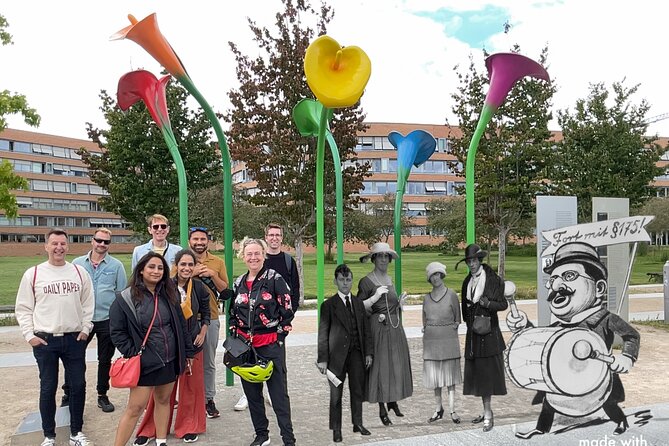
- Made-for-memories tech, including Mixies AR photos plus guide-supported media throughout
Walking the streets where Berlin policed, studied, and celebrated sex
Berlin has always been more than museums and beer halls. It has been a place where sexuality got discussed out loud, sometimes celebrated, sometimes controlled, and sometimes punished. That is the core idea behind this tour, and it keeps you alert because you are not just reading about the past. You are seeing how it sits inside the present-day city.
What makes it work is the structure. You move chronologically, but you also keep noticing themes: bodies, health, laws, and identity. The tour walks you through early sexual science and contraception innovation, then pushes into Nazi censorship, and later into the Cold War divide. Finally, you end with what Berlin looks like now in its sex-positive scene, including well-known nightlife and kink events named right on the route.
One practical thing I recommend: treat this like a cultural history walk, not a party crawl. You’ll get modern references, but the goal is understanding, including the hard parts.
More centuries per city block:
- Berlin: Natural History Museum Entrance Ticket
★ 4.6 · 3,382 reviews - Berlin: 3-Hour World Heritage Cruise to Potsdam
★ 4.5 · 1,569 reviews - Berlin: History of the Third Reich Guided Walking Tour
★ 4.7 · 791 reviews
Start at Nollendorfplatz, then get your bearings fast
You meet in front of the organic supermarket Alnatura at Nollendorfplatz, at Else-Lasker-Schüler-Straße 18. That location is handy because the tour begins in a busy, central spot, so you can arrive, orient yourself, and get into the rhythm without fuss.
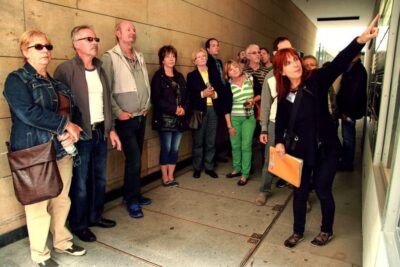
The format is small group, limited to 10, and it runs for 210 minutes. That matters because Jeff needs space to explain context, then trigger AR elements at the right moments. In a large group, this kind of tech-and-story combo can turn into chaos. Here, you have a better chance of actually seeing what the iPad brings up and hearing the explanation clearly.
If you want to prepare mentally, know the tone will include repression and persecution, not just cheeky history. The tour is also not suitable for children under 18. That is less about the venue and more about the subject matter and how sensitively it has to be handled.
Magnus-Apotheke: Berlin’s medical side of freedom
One of the first guided stops is Magnus-Apotheke, around the 20-minute mark. Pharmacies and clinics are where sexuality meets policy in real life, so this is a strong starting point for the theme of health, innovation, and access.
The tour ties Berlin’s role in early sexual science and contraception innovation into this part of the story. You are learning how sexual behavior became a topic for study, not just gossip. And you’ll hear why some of that scientific progress mattered for everyday life, especially for contraception and sexual health.
What I like here is the pacing. Instead of jumping straight from the 1920s to the darkest chapters, you get a sense that there was a practical, real-world agenda behind some of the early openness. It’s not just art and nightlife. It is also medicine, public health, and changing social ideas about relationships and desire.
Memorial to the Homosexuals Persecuted Under Nazism: where history turns serious
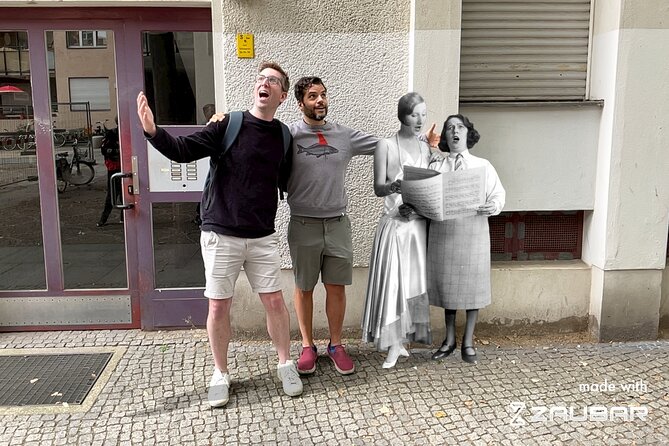
Next you visit the Memorial to the Homosexuals Persecuted Under Nazism. This is a guided stop and it sets the emotional temperature of the tour in a clear way.
From here, the narrative becomes about censorship and persecution. You learn how the Nazi regime criminalized erotic expression, shut down erotic magazines, cabarets, and clubs, and sent people to concentration camps because of their sexuality. You also get the double standard logic, because the story is never just one simple rule. It is a system of control applied selectively, and you get help understanding how that worked.
This is also a good moment to pay attention to tone. Jeff is presenting facts and context, but you can feel when the tour stops being about ideas and becomes about consequences. If you get uncomfortable, that is normal here. The point is to understand what repression looked like, not to soften it into something cute.
Kurfürstenstraße, Schwerinstraße, Nollendorfstraße: AR helps you see lost places
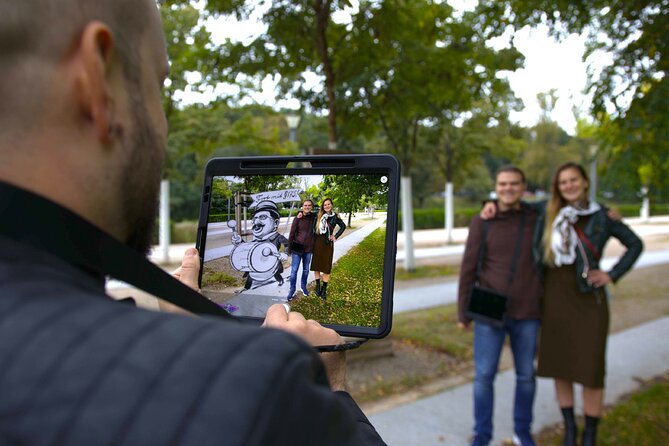
After the memorial, you move through Kurfürstenstraße, Schwerinstraße, and Nollendorfstraße for guided segments. These stretches of street are where the tour’s design really shines, because it’s about locating memory in space.
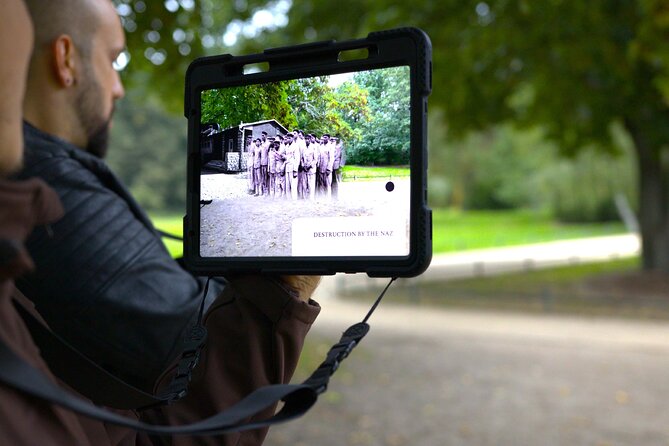
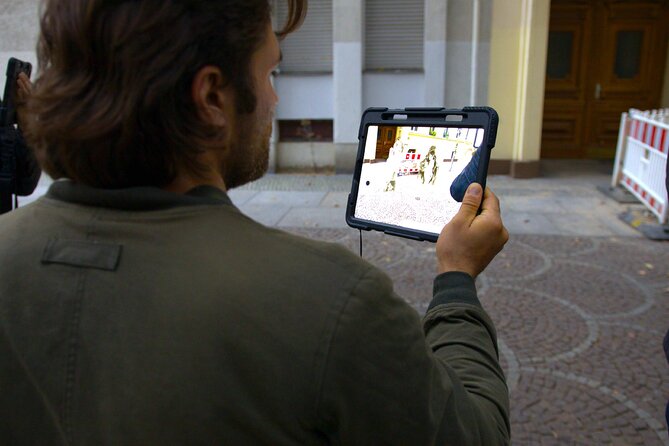
This is where you get augmented reality overlays on historic clubs, cabarets, and institutes. The streets in front of you are not labeled as sex-history sites, so the AR is doing a practical job: it shows you what used to operate nearby and why those places mattered.
A helpful way to experience these stops is to watch for the contrast. First, look at the modern street scene. Then, when the AR appears, compare what you see with what you previously assumed about the area. That contrast is the lesson. It underlines how sexuality culture changes, but also how it can be erased and later rediscovered.
You’ll also build a sense of the queer and feminist liberation threads that Berlin became known for, and how those threads connected to mainstream debates about morality and gender roles.
Also holding a platform in Berlin

Denns BioMarkt and Prinz Eisenherz: tech photos, but also meaning
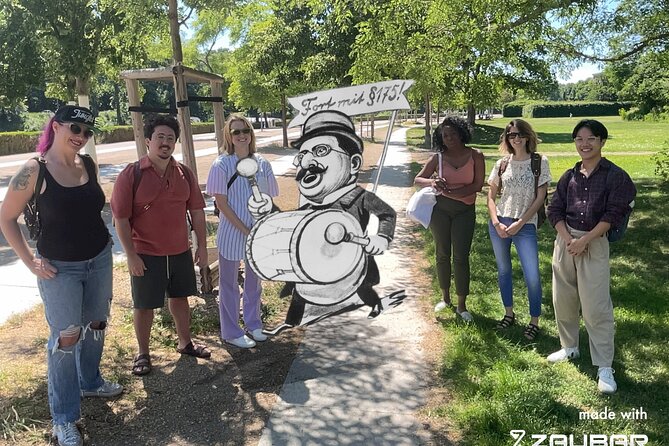
Two more guided stops are Denns BioMarkt and Prinz Eisenherz. These are shorter segments compared to some earlier stops, so they work well as transitions.
Denns BioMarkt is a good place to think about how everyday spaces can become part of a broader social story. Then Prinz Eisenherz feels like a pivot toward the modern city. This tour does not treat the past as a sealed museum exhibit. It uses the route to show how the contemporary sex-positive scene grows from earlier movements and earlier conflicts.
One concrete feature you should look forward to is Mixies, which provides personalized AR photos. That is not just a gimmick. The photo acts like a timestamp, so you can later remember what era you were in when you saw a specific AR reconstruction. It’s also a nice break from pure standing and listening, even though the tour remains guided throughout.
Metropol: connecting today’s scene to the long timeline
You end with a guided stop at Metropol, then you return to the start point at Alnatura. Metropol gives you another bridge between history and today.
This is where the tour ties in Berlin’s present-day reputation as a sex-positive city and the named nightlife institutions and events that people talk about. You’ll get context around big names such as KitKat Club, Berghain, and Lab.Oratory. The tour also references Europe’s largest fetish festival, Folsom Europe, to show how modern subcultures build community and identity around desire, not shame.
What I like about placing these modern references at the end is that you stop seeing them as random nightlife myths. You instead understand them as the latest chapter in a city that kept renegotiating freedom, health, and social boundaries.
Why Jeff’s approach matters more than the gadgetry
Jeff leads the tour, and the credentials listed for him are a certified social scientist and sex educator, plus journalism experience, with a long focus on Berlin’s sexual history. That combination shows in how the tour talks about sex: as a social topic with politics, stigma, and changing norms.
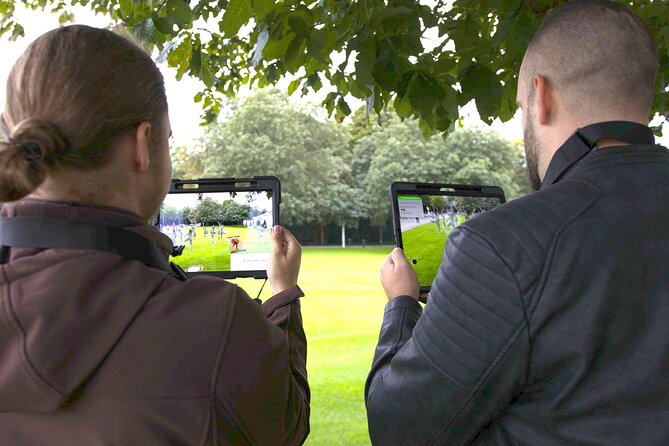
The tech is important, but Jeff seems to use it with restraint. That’s backed up by feedback you’ll likely appreciate before you go: people usually worry AR will get annoying, but it is used at the right moments and supports the story rather than interrupting it.
You’ll also encounter interactive bits like quizzes, and that helps you stay awake through the full 210 minutes. One practical note from the way the tour is described: it includes a plan for when conditions change, like rain, so don’t panic if the weather is bad. The route is designed to keep the momentum.
If you want to get your money’s worth, come with one attitude: curiosity over judgment. Jeff’s tone is described as sensitive, and the content covers serious persecution and repression, so a respectful mindset makes the whole walk work better.
Price and time: does $81 feel fair for 3.5 hours?
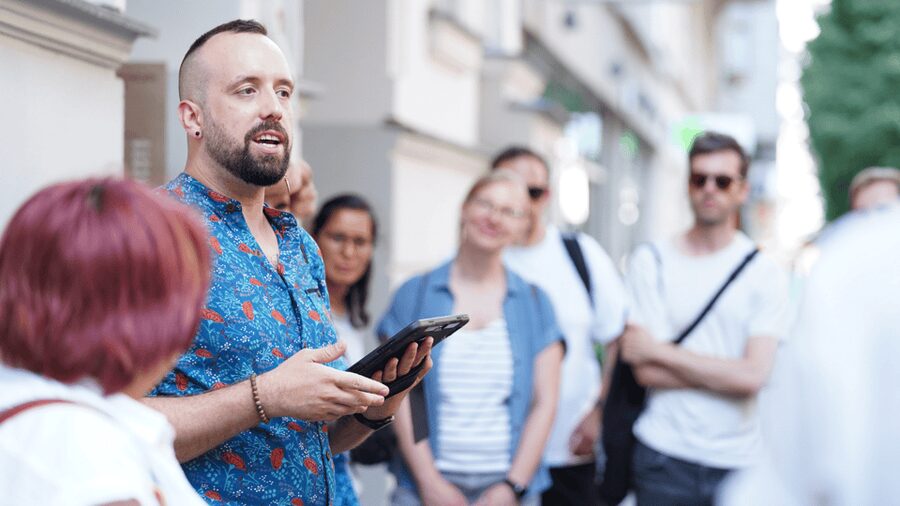
At $81 per person for 210 minutes, you are paying for three things: a small group format, an expert guide, and the 200+ archival media plus AR toolset.
If you compare it to a standard walking tour, the price is higher. The difference is that you are not just walking and hearing stories. You are also seeing historical reconstructions, photos, videos, and audio clips tied to exact locations. You also get the Mixies AR photos, which means you leave with something more than notes in your phone.
It also helps to look at the group size. With a maximum of 10 participants, the guide can pause, reset attention, and keep everyone aligned with the AR prompts. That kind of coordination takes time and skill, and it is part of what you are paying for.
A possible drawback to keep in mind: some people expected more walking inside the exact historical footprints instead of stopping outside for reading and AR triggers. Also, the tour runs long enough that you might want more structured breaks. If you know you need frequent refreshment stops, plan to handle that on your own before or after, since a long continuous walk is part of the deal.
What to pack mentally and practically
You are covering topics that range from the 1920s to Nazi repression and modern scenes. That can be emotionally heavy. The tour also includes high-stimulation environments in some parts, with strong sensory input, so if you get overwhelmed easily, pace yourself and take advantage of any moments the guide builds for catching up.
On the practical side, you should bring your public transport ticket, since it is listed as not included. For subtitles, the tour notes that all videos have English, German, or both languages available, which helps if you prefer reading along.
Finally, the tour is wheelchair accessible, though some paths may be bumpy, and accessible toilets can be arranged upon request. If you need extra support, it’s smart to plan ahead so the route and timing work for you.
Who should book Berlin Uncensored, and who might want another tour
This is a great fit if you enjoy history with edge, and you like social history that explains why laws and stigma shaped everyday life. It’s also a solid choice if you want Berlin’s sex-positive reputation contextualized through real events, like sexual science, contraception innovation, Nazi censorship, and the Cold War divide.
You might skip it if you dislike standing outside for long segments or if AR tech on a phone or tablet annoys you. You might also decide against it if you are looking for a lighthearted nightlife tour, because the narrative includes persecution and repression.
Because it is not suitable for children under 18, it’s mainly for adults who can handle sensitive topics and prefer respectful education over shock value.
Should you book Berlin Uncensored?
Book it if you want more than a headline about Berlin being free-minded. The strength here is the timeline, the expert-led context, and the way AR helps you notice how today’s streets connect to places that were once central to sexuality culture.
Also book it if you like learning that includes the tech layer, since the AR is described as useful, not intrusive. And book it if you will feel comfortable with serious subject matter, because the tour does not skip the Nazi era or the consequences for people targeted by the regime.
Skip it if you need frequent breaks, hate long outdoor walking segments, or want a strictly party-focused experience. If your goal is mostly clubbing, you’ll likely prefer a nightlife outing instead.
FAQ
How long is Berlin Uncensored: A History of Sex & Freedom?
The tour lasts 210 minutes.
Where do I meet for the tour?
Meet in front of the entrance to the organic supermarket Alnatura at Nollendorfplatz, Else-Lasker-Schüler-Straße 18, 10783 Berlin.
What language is the tour offered in?
The tour is guided in English.
Is the tour wheelchair accessible?
Yes, it is wheelchair accessible. Some paths may be bumpy, and accessible toilets can be arranged upon request.
What is the group size?
The tour is a small group limited to 10 participants.
Does the tour use augmented reality?
Yes. It includes AR elements that bring historic clubs and lost locations to life through your guide’s iPad.
What’s included in the price?
Included items are the guided walking tour led by a sociologist and certified sex educator, AR elements, Mixies AR photos, and 200+ rare historical photos, videos, and archival materials, plus insider tips on modern sex-positive nightlife and events.
What is not included?
A public transport ticket is not included, and you should bring one to the tour.
Is the tour suitable for children?
No. It is not suitable for children under 18.
Are the tour videos subtitled?
Yes. All videos have English, German, or both languages available.
Fresh on the arrivals board for Berlin
Historical Tours, compared.
City History Canal Sightseeing Tour on a Motorboat
Read our review →
Browse the lists this tour appears in