
Reviewed · HISTORICAL TOURS
Berlin Protest History Tour: Rebels, Resistance, and Revolution
Berlin has protest built into the bricks. This Berlin Protest History Tour uses visible places to explain how rebellion, resistance, and revolution shaped the city. I really like the way the walk turns street-level details into big ideas, and the small group size keeps the guide’s attention on you.
I also appreciate the focus on actions, not just slogans, from the 1943 Rosenstraße protest to the youth-led T-shirt protest of 1989. One thing to think about: it is a 2-hour walking tour, so you will want decent shoes and a weather window, since it is built for good conditions.
In This Review
- Key highlights you will feel on the ground
- Tour at a Glance: small group, English guide, and a strong focus
- Starting at Rotes Rathaus and the terracotta timeline of Berlin uprisings
- Nikolaiviertel and the Palace of the Republic legacy in socialist Berlin
- Gasthaus Mutter Hoppe timeline, and why the Berlin Wall is missing
- Marx-Engels-Forum to Humboldt Forum, manifesto ideas through real protests
- Rosenstraße and St. Mary’s Church, resistance under Nazism and a civil rights echo
- The TV Tower as a communist power symbol you can’t miss
- Peaceful Revolution at Brunnen der Völkerfreundschaft, then the Weltzeituhr finish
- Who should book this Berlin Protest History Tour
- Should you book it?
- FAQ
- How long is the Berlin Protest History Tour?
- Is the tour offered in English?
- How much does the tour cost?
- Where do I meet the guide?
- Where does the tour end?
- Will I receive a mobile ticket?
- What is the maximum group size?
- Do I need admission tickets for the stops?
- Are service animals allowed?
- What happens if I cancel or the weather is bad?
Key highlights you will feel on the ground
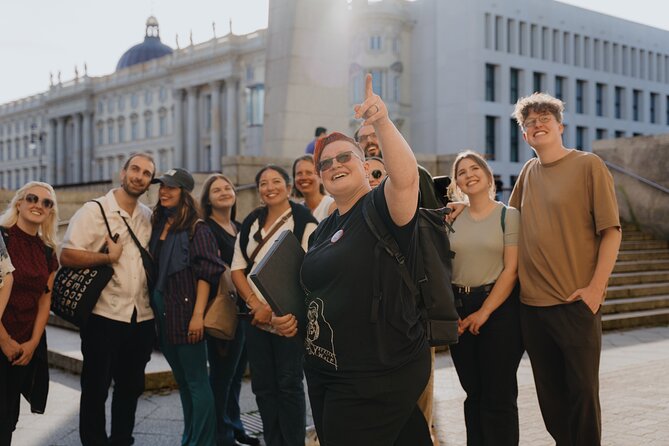
- Rotes Rathaus terracotta timeline that connects Berlin’s early uprisings to later conflicts
- Nikolaiviertel and the Palace of the Republic legacy in a tightly packed setting
- Gasthaus Mutter Hoppe timeline with an intentional missing piece that sparks questions
- Rosenstraße monument and the 1943 civil disobedience story tied to Nazi-era life
- Brunnen der Völkerfreundschaft and 1989 Peaceful Revolution moments, including the T-shirt protest
- Finish at the Weltzeituhr at Alexanderplatz, a classic East Berlin meeting spot
Tour at a Glance: small group, English guide, and a strong focus
This is a 2-hour walking history in Berlin with Beyond and Beneath Tours, priced at $30.04 per person. It is offered in English, and you get a mobile ticket. The group stays small, with a maximum of 15 travelers, which matters because the story depends on noticing what is right in front of you.
What makes this tour feel practical is the through-line: protests did not happen in some distant textbook world. They show up in architecture choices, monuments, and even what gets included or left out. Stops are marked as Admission Ticket Free, so you are not juggling extra entry fees while you are trying to follow the narrative.
Most travelers can participate, but keep in mind this is still a city walk. If you are sensitive to cold or rain, plan for that. The tour runs only when the weather is workable.
More centuries per city block:
- Berlin: Natural History Museum Entrance Ticket
★ 4.6 · 3,382 reviews - Berlin: 3-Hour World Heritage Cruise to Potsdam
★ 4.5 · 1,569 reviews - Berlin: History of the Third Reich Guided Walking Tour
★ 4.7 · 791 reviews
Starting at Rotes Rathaus and the terracotta timeline of Berlin uprisings
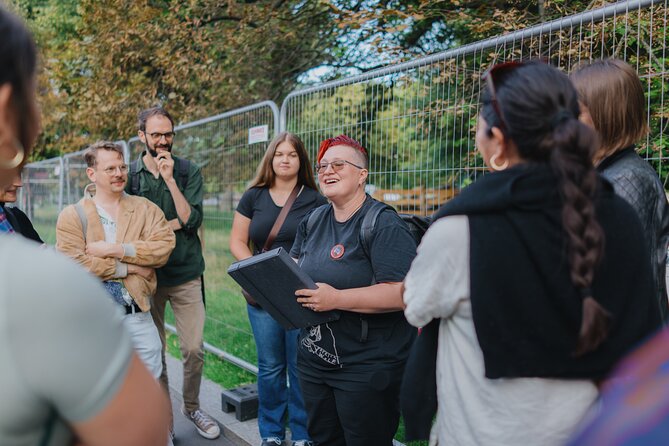
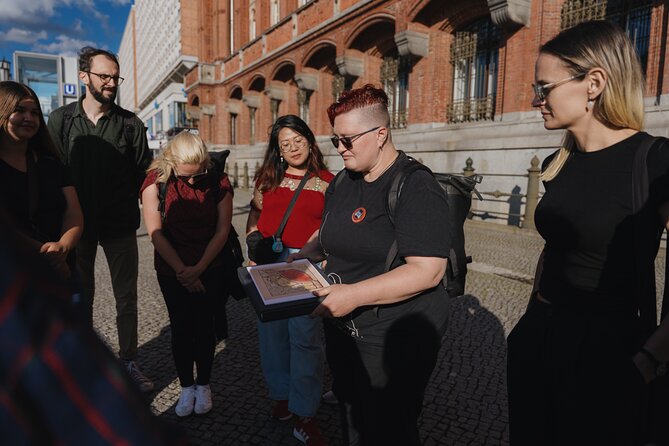
You begin near the sculpture Aufbauhelferin by Fritz Cremer at Rotes Rathaus (Red Town Hall). From the start, the guide trains your eyes on a terracotta timeline circling the building. It is the kind of design that sounds like decoration until you realize it is political storytelling in stone and clay.
The focus here is the origins of the city and the cause behind one of Berlin’s major early uprisings. The key value for you is not memorizing dates. It is learning the way Berlin marks turning points. Once you understand that visual language, the rest of the walk makes more sense, because other stops do the same job in different styles.
A small drawback of this kind of stop: if you expect a “look, listen, move on” tour with zero time to pause and read, you might find yourself wanting more space to take it in. The good news is the guide keeps the timeline readable by pointing out what to track as you walk the route.
Nikolaiviertel and the Palace of the Republic legacy in socialist Berlin
Next you head to Nikolaiviertel, where the guide points out a prime example of what people sometimes call socialist kitsch, built for Berlin’s 750th anniversary. It is not just about the vibe. The stop is tied to the Palace of the Republic, and you will learn how that building became both a seat of East German parliamentary life and a famous entertainment venue.
For your experience, this matters because it shows a contrast. Many people think of East German history as only about restrictions and grayness. Here you get a reminder that the socialist state also invested in public spaces that felt designed for everyday life. That makes the story feel less abstract and more human.
One practical note: Nikolaiviertel is compact. That is good for a short tour, but it also means you are moving while trying to absorb context. If you like to linger, you may need to let the guide set the pace and then circle back later on your own.
Gasthaus Mutter Hoppe timeline, and why the Berlin Wall is missing
At Gasthaus Mutter Hoppe, the guide shows another East German answer to the terracotta idea: a timeline that frames key moments in socialist history. The stand-out detail here is the absence of the Berlin Wall. That missing element is not a random oversight, and the guide uses it as a conversation starter about messaging, memory, and what regimes choose to spotlight.
This stop is a strong fit if you like interpretive history. The guide helps you think in terms of propaganda mechanics, not just facts. You will probably start noticing similar patterns in other cities too, because this is the skill the tour trains: look for what is said, and also for what is carefully left out.
A potential consideration: if you want every point to be strictly chronological with every event spelled out, the missing Wall detail may feel like it “opens” the story more than it “closes” it. Still, that is exactly why this tour works. It makes you read the city like a document.
Marx-Engels-Forum to Humboldt Forum, manifesto ideas through real protests
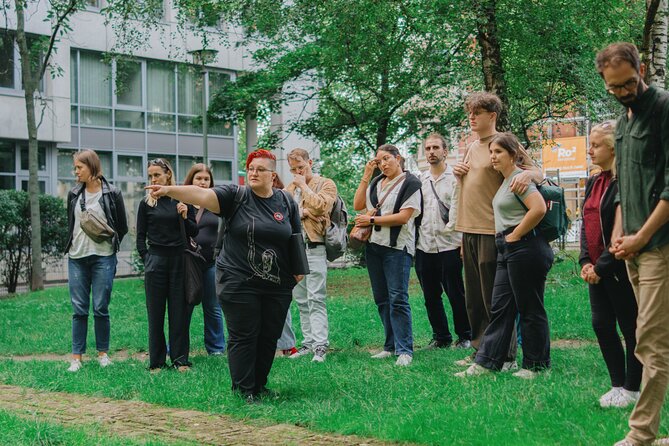
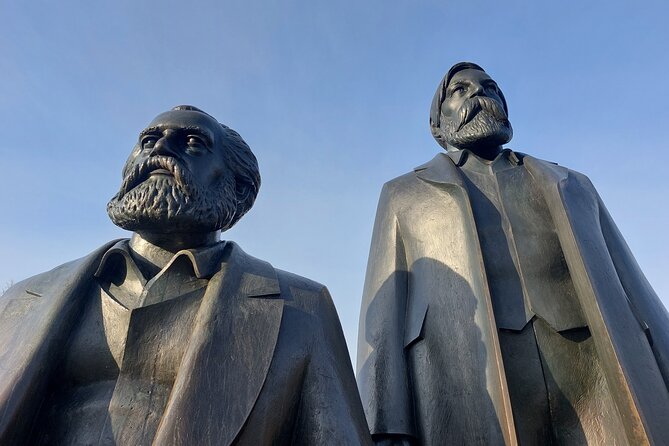
At Marx-Engels-Forum, you meet Karl Marx and Friedrich Engels through their statues. The guide also points out that the monument has been debated over the years. That debate piece is more useful than it first sounds, because it tells you how symbols can change meaning over time, especially when political systems shift.
Then the walk brings you to Humboldt Forum, where you see the reconstructed Berlin Palace. The guide explains how the original palace was a witness to protests and revolutions, including the March Revolution of 1848. For you, this is where the tour’s big idea clicks: protest history is not only tied to battles on the street. It is tied to power centers, where citizens gather, argue, and demand change.
One drawback to plan around at this stage: reconstructed spaces can feel like they are asking you to accept a version of history. The guide’s job is to keep it grounded by linking the building to the kinds of public pressure that shaped democracy in Germany. If you are okay holding two thoughts at once, you will enjoy it.
Also holding a platform in Berlin
Rosenstraße and St. Mary’s Church, resistance under Nazism and a civil rights echo
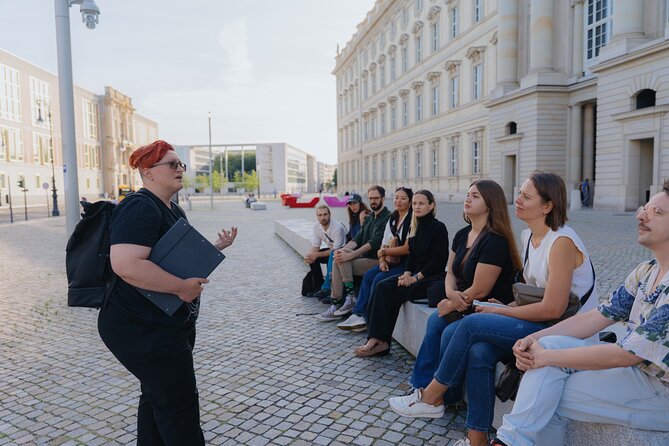
The most emotionally powerful stop is Rosenstraße. The guide discusses the women who staged courageous civil disobedience in the cold winter of 1943, and the story is framed as the only protest by Germans against the Final Solution. You also get context on Jewish life under Nazi rule and a look at the foundations of what is described as the oldest synagogue in Berlin.
This stop is not there for shock value. It is there to show courage as strategy. You will likely find yourself listening for the details the guide chooses, because the takeaway is about how people acted under extreme fear, and how public disobedience can still matter even when the odds look impossible.
Then you move to St. Mary’s Church, one of the oldest churches in Berlin. The guide highlights that Martin Luther King delivered a sermon there to a huge crowd in 1964. This creates an interesting bridge from one fight for human rights to another. It is a reminder that protest culture travels across time and place.
A consideration here: this is a heavy part of the walk. If you prefer lighter pacing, mentally prepare for a quieter, more reflective stretch.
The TV Tower as a communist power symbol you can’t miss
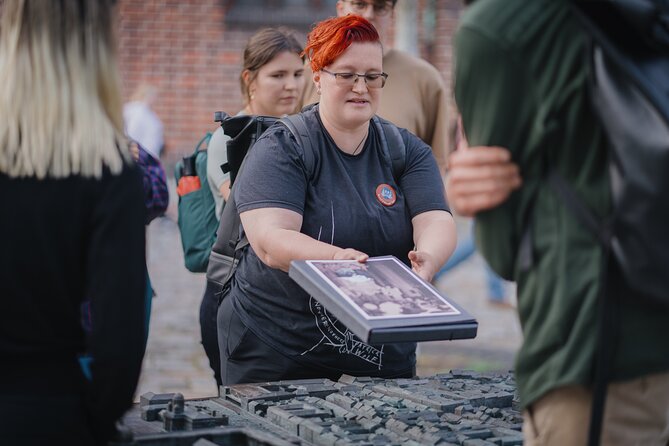
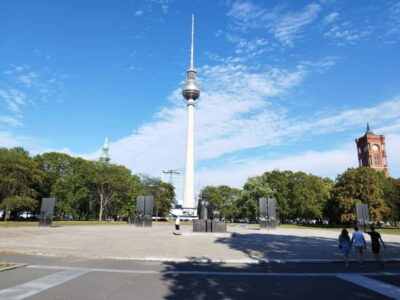
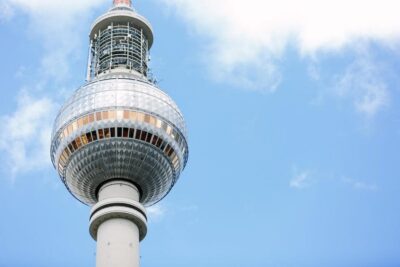
After the church, you get a view of Berlin’s Television Tower, the landmark that also acts as a symbol of communist power. Even if you have passed it a dozen times on your own, the tour approach changes what you notice. Instead of only seeing a skyline icon, you start seeing the tower as part of a political visual system.
This moment is useful because it makes you step out of “individual protest stories” and look at how states communicate. Big monuments and famous silhouettes are not only for tourists. They are for identity building, for projecting modernity, and for claiming authority.
It is a brief stop, so do not expect a long lecture. Think of it as a visual signpost, setting up the final act of the story about East German resistance and the end of the Wall era.
Peaceful Revolution at Brunnen der Völkerfreundschaft, then the Weltzeituhr finish
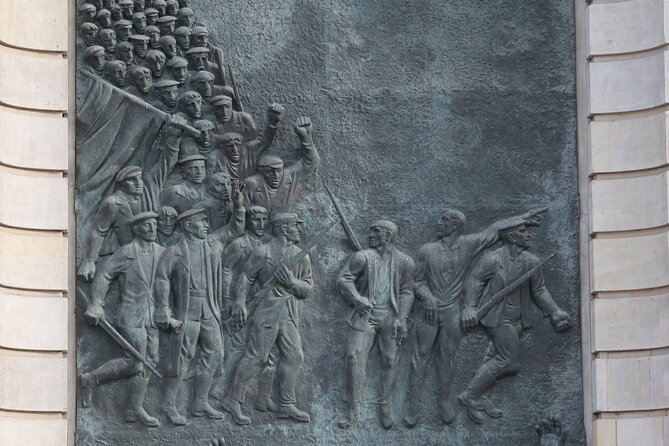
Next comes Brunnen der Völkerfreundschaft, where the guide traces the events leading to the Fall of the Wall as part of the Peaceful Revolution of 1989. You will hear about young East German oppositionists and the T-shirt protest held there in autumn 1989, which helped spark momentum.
What I like about ending here, for your sake, is the realism. You are not just learning about an abstract revolution. You learn about how small actions, done in public, can create a visible shift. That makes the story feel closer to how movements start in real life.
Finally, you wrap at the Weltzeituhr, the rotating world clock at Alexanderplatz. The guide explains it as a popular meeting spot in East Berlin, and it is a fitting finish because it pulls you into everyday city life again. You end the tour in a place where people once crossed paths, waited, and connected.
Who should book this Berlin Protest History Tour
Book this if you want meaningful street-level history and you like guides who point out details you would normally walk past. It is especially good for anyone focused on Berlin’s East German experience, because the walk connects political symbolism, civic spaces, and human behavior across decades.
It is also a nice fit if you live in Berlin or are returning. Several guides from Beyond and Beneath Tours, including Martina and Simone, are praised for making less obvious corners feel understandable. Even if you already know the major landmarks, this kind of tour trains you to spot the story behind the facade.
Skip it if you want only light, casual sightseeing. This is a protest history walk, so the emotional range is real, and you will spend time processing serious stories.
Should you book it?
Yes, if your goal is to see Berlin as a place where protest history is literally built into what you can touch. For $30.04, you get a focused 2-hour walk with an expert guide, a small group, and multiple stops marked Admission Ticket Free, so you are paying mainly for interpretation and context.
I would book it with good shoes and a calm head for the Rosenstraße section. If you do that, you will come away with a sharper sense of how power changes, how memory is controlled, and how ordinary people still find ways to push back.
FAQ
How long is the Berlin Protest History Tour?
It runs for about 2 hours.
Is the tour offered in English?
Yes, it is offered in English.
How much does the tour cost?
The price is $30.04 per person.
Where do I meet the guide?
The meeting point is at the Sculpture Aufbauhelferin – Fritz Cremer at Rotes Rathaus, Jüdenstraße, 10178 Berlin, Germany.
Where does the tour end?
It ends at the World Time Clock (Weltzeituhr) at Alexanderpl. 1, 10178 Berlin, Germany.
Will I receive a mobile ticket?
Yes, the tour includes a mobile ticket.
What is the maximum group size?
The tour has a maximum of 15 travelers.
Do I need admission tickets for the stops?
The listed stops are marked as Admission Ticket Free.
Are service animals allowed?
Yes, service animals are allowed.
What happens if I cancel or the weather is bad?
There is free cancellation up to 24 hours in advance for a full refund. The experience requires good weather. If it is canceled due to poor weather, you will be offered a different date or a full refund.
Fresh on the arrivals board for Berlin
Historical Tours, compared.
City History Canal Sightseeing Tour on a Motorboat
Read our review →
Browse the lists this tour appears in