Reviewed · GERMANY
About Vikings, kings and cheeky monks (Medieval Schleswig)
Medieval Schleswig hits you fast. This 1.5-hour guided stroll pairs hygge Nordic calm with stories of Vikings, kings, and monks, as you move from landmark to landmark in the open air. I especially like the Schleswig Cathedral exterior portion, because you still get the big picture without needing to line up inside.
Next, the tour turns personal in a good way. You spend real time around the Holm fishing settlement and then end at St. John’s Monastery, where the medieval atmosphere feels intact rather than staged. One heads-up: the cathedral visit is outside only, with the interior possible only as an additional paid option depending on timing.
The guide keeps the pace friendly and the information clear. The tour scores high for being informative and also for being fun, with guides who respond to questions instead of reading a script. If you want a compact history walk that still feels like Schleswig, this is a strong pick.
In This Review
- Key Highlights You Should Not Miss
- Meeting at Rathausmarkt, Start Where the Town Breathes
- Schleswig Cathedral Exteriors: Danish Kings in Stone and Brick
- Walking the Old Town Like a History Map
- Holm Fishing Settlement and the Schlei Story
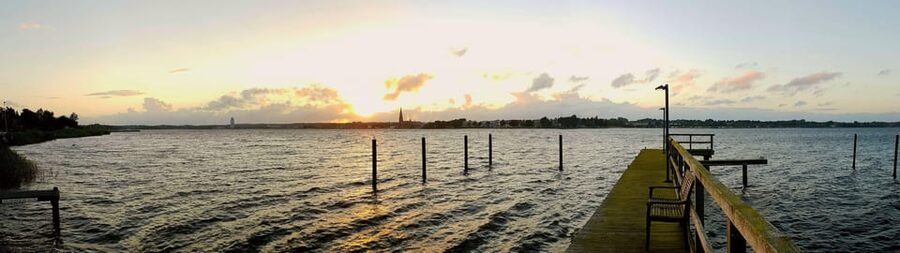
- The Cozy City Harbor: Where You Can Pause
- St. John’s Monastery: Best-Preserved Medieval Calm
- Price and Value for About $17 in 1.5 Hours
- Who This Tour Suits Best in Schleswig
- Should You Book This Medieval Schleswig Walk?
- FAQ
- What is the duration of the tour?
- Where is the meeting point?
- Is the Schleswig Cathedral interior included?
- How much does it cost?
- What language is the guided tour offered in?
- Is the tour wheelchair accessible?
- Can I cancel for a full refund?
- Is there an option to reserve without paying right away?
Key Highlights You Should Not Miss
- Schleswig Cathedral exterior tour that still explains why it mattered far beyond town borders
- Schleswig old town walk with clues about trade, shipping, and medieval power
- Holm fishing settlement and the story of the Schlei, the harbor routes, and local privileges
- Schleibrief of King Christian I (1480) confirming special rights for Holm fishers
- St. John’s Monastery as one of the best-preserved medieval monasteries in Schleswig-Holstein
- Cozy city harbor mood, perfect for slowing down and taking photos between stops
Meeting at Rathausmarkt, Start Where the Town Breathes
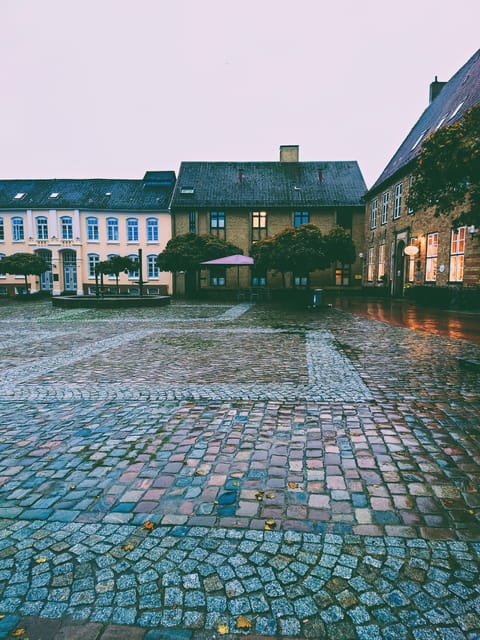
The tour starts in the heart of Schleswig at Rathausmarkt, right in front of the local place called Alte Apotheke. That location matters. You begin in the same zone where you can naturally “read” the town, not in some far-away drop-off spot.
In 1.5 hours, you will not be sprinting across town. You are walking through a tight set of sights in a sequence that makes history easier to follow. Expect an open-air experience most of the time, so plan for normal outdoor walking weather, not a museum sprint.
One practical tip: arrive a few minutes early and take a quick look around the square. It helps you get your bearings, and it sets the tone for the whole medieval storyline the guide will build.
Next departures posted for Germany:
- Dresden: Paddle Steamer Winter Cruise to Pillnitz
★ 4.5 · 178 reviews - 1h Berlin-Cruise with 140 year old electrified steamship
★ 4.7 · 91 reviews - Reil, Mosel: Guided organic wine tasting and cellar tour
★ 4.8 · 84 reviews
Schleswig Cathedral Exteriors: Danish Kings in Stone and Brick
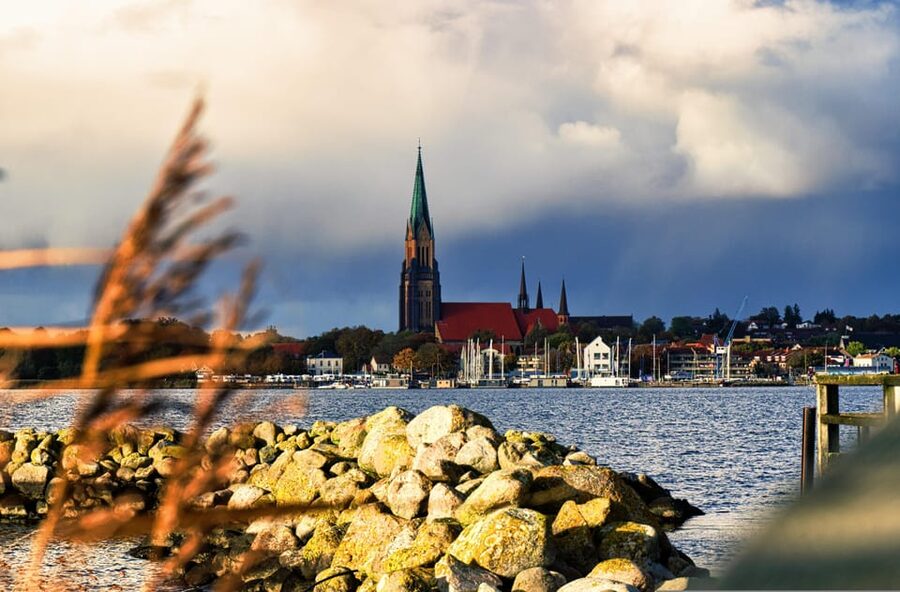
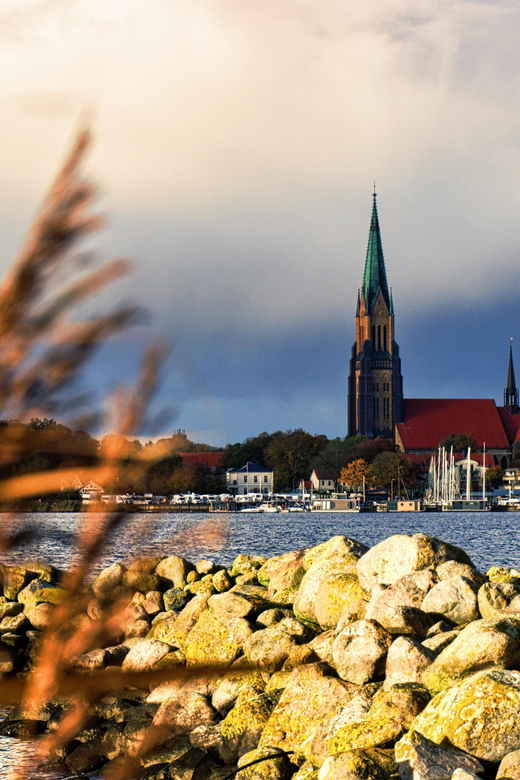
You will see the historic Schleswig Cathedral from the outside. That might sound limiting, but it is a smart way to start, because the cathedral is tied to wider politics, not just local worship.
The tour frames Schleswig as a major early medieval trading town. The harbor zone was active, and the Schlei was a busy shipping corridor. With that context, the cathedral becomes more than a pretty building. It is part of how power and influence took shape in the city, including the connection to Danish kings.
Even without going inside, you can still spot how a site like this works as a “statement.” Gothic-era ambitions do not appear out of nowhere. They reflect the wealth and attention that a place like Schleswig attracted when it mattered in trade routes.
If you want the extra interior time, the option is there. Interior access can be added for an additional charge depending on the time of day, so it is worth asking the guide if it fits your schedule once you are on the ground.
Walking the Old Town Like a History Map
After the cathedral exterior, you move into Schleswig’s picturesque old town. This is where the tour does something many history walks forget to do: it explains why you are seeing what you are seeing.
The story focuses on early medieval prominence and then the changes. You get the practical question in the background, Why did Schleswig lose its standout position in the trading network? And what shifted in the city when that role faded?
You do not just hear dates and names. You get a cause-and-effect feeling. Trade depends on routes. Routes depend on politics and shipping patterns. When those change, a town’s role changes too, and you start to understand why the modern streets and landmarks look the way they do.
This segment is also good for photos. The old town character tends to reward slower looking, and the guide’s pacing gives you small breaks to capture angles, facades, and street corners without constantly falling behind.
Holm Fishing Settlement and the Schlei Story
Then comes the heart of the local feel: the Holm fishing settlement. This is where you stop thinking only about kings and start thinking about work. Fishing communities have their own logic, routines, and rights, and the tour highlights both the geography and the rules that shaped daily life.
Holm is tied to the Schlei, the waterway that served as a vital early medieval route. When the Schlei is part of the explanation, it stops being a vague scenic body of water. It becomes the reason certain people prospered, the reason certain privileges existed, and the reason ships and goods moved the way they did.
You will also learn about old special rights for Holm fishers. The key moment is the Schleibrief, a document issued by King Christian I of Denmark in 1480, which reaffirmed those rights. That is the kind of detail that makes the waterfront feel more concrete. It turns into a story about authority, not just scenery.
A practical note: because this part is outdoors, keep an eye on your shoes. You will be walking through streets and paths that can vary in surface. Nothing extreme is implied, but comfortable walking footwear helps you enjoy the time without thinking about your feet.
The Cozy City Harbor: Where You Can Pause
One of the highlights is the cozy city harbor. This stop is valuable because it provides a reset between heavier history topics. The tour has plenty of medieval politics, but this harbor moment brings it back to everyday life.
You can use this time to do the simplest helpful thing: look outward. Even from ground level, you can relate the town’s past to its water setting. The early medieval importance of harbor activity makes more sense when you see the setting in daylight.
It is also a good moment to ask your guide a question if you have one. The tour format keeps you together, and the guide can connect what you just learned to what you are seeing now, instead of treating the history as detached facts.
Onward connections from Germany:


St. John’s Monastery: Best-Preserved Medieval Calm
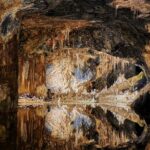
The tour ends at St. John’s Monastery, also described as one of the best-preserved medieval monasteries in Schleswig-Holstein. That matters. Preserved buildings help you understand the scale of the past, even when you are only seeing exteriors and parts of the site during a walking tour.
The guide connects the monastery to the tour’s quirky theme, Vikings, kings, and cheeky monks. You do not need to treat that as a joke. It is a way of saying the monastic world was not just holy and distant. It had personalities, reputations, and politics, too.
You will hear why not all of the Schleswig monks had a good reputation. That is a refreshing angle because it prevents the story from becoming overly tidy. History rarely stays polite.
For me, this is the part that makes the tour feel calm at the right moment. After walking around trade routes and fishing privileges, the monastery stop gives you a slower, more reflective finish.
Price and Value for About $17 in 1.5 Hours
At $17 per person for a 1.5-hour guided walk, this tour is priced like a practical local insight session, not an all-day excursion. You are paying for a guided structure plus access to the key storylines that connect the sights.
What you get is efficient:
- outdoor views of the cathedral
- time around the old town
- the Holm fishing settlement focus
- St. John’s Monastery
- a coherent explanation that ties it together with trade on the Schlei and royal influence
I like value like this when it is not trying to cram too much in. You leave with clearer context, not just a photo set. And the guide’s German-language delivery seems to land well, since the tour holds a 4.9 rating across 11 reviews.
If you are the type who enjoys history but does not want to spend half a day reading plaques, this fits. It is also a solid choice if you want a guided orientation that helps you explore Schleswig afterward on your own.
Who This Tour Suits Best in Schleswig
This tour is a good fit for history lovers who enjoy stories grounded in place, not just timelines. You will appreciate the way the guide connects medieval commerce, water routes, and royal documents like the Schleibrief.
It is also stated to be suitable for families and groups, and the reviews back up that it stays engaging. Still, I would use one bit of caution: if you travel with younger kids who lose interest quickly when the topic turns to medieval politics and documents, this might feel more adult than they prefer. For older kids, the storytelling style and clear stops should work better.
Language matters here. The live guide is German only. If your German is limited, you can still follow some of the landmarks and atmosphere, but you will miss a chunk of the explanation unless you have a translation app handy.
Good news for mobility needs: the tour is listed as wheelchair accessible, which is a real advantage for Schleswig sightseers who want the guided benefits without losing comfort.
Should You Book This Medieval Schleswig Walk?
Book it if you want a compact, well-paced history walk focused on the places that define Schleswig today. The outside-only cathedral approach is not a weakness, it is smart. It keeps the tour moving and helps you connect the cathedral to the bigger story of trade on the Schlei and Danish influence.
Skip it or consider something else if you mainly want indoor museum time. Interior access to the cathedral is not included in the standard walk, and any additional interior booking depends on timing.
If you like your travel with Nordic coziness and a guide who responds to questions, this one is likely to match your style. For $17 and 1.5 hours, it is a very reasonable way to leave Schleswig understanding the why behind its landmarks.
FAQ
What is the duration of the tour?
The tour lasts 1.5 hours.
Where is the meeting point?
You meet on Rathausmarkt in the heart of Schleswig in front of the Alte Apotheke location.
Is the Schleswig Cathedral interior included?
The tour includes an outdoor visit to the cathedral highlights. An interior tour is not included but can be booked for an additional charge depending on the time of day.
How much does it cost?
The price is listed as $17 per person.
What language is the guided tour offered in?
The live tour guide speaks German.
Is the tour wheelchair accessible?
Yes, the tour is listed as wheelchair accessible.
Can I cancel for a full refund?
Yes, free cancellation is available up to 24 hours in advance for a full refund.
Is there an option to reserve without paying right away?
Yes, you can reserve now and pay later.