Reviewed · WALKING TOURS
Aachen classic walking tour
Aachen has a way of feeling ancient fast. This 1.5 hour walking tour compresses Roman baths, Charlemagne power, and UNESCO-level sights into a route you can actually finish without rushing your day.
What I love most is the guide, Sara, a certified, native Italian speaking professional who keeps the story lively and easy to follow. I also like how the tour points you at major landmarks you can recognize instantly, then explains why they mattered to Aachen and the Holy Roman Empire.
One thing to consider is that this is an outside monuments walk. If you are hoping for lots of interior time and on the spot explanations inside churches or museums, you may feel a bit limited compared with tours that go fully indoors.
In This Review
- Key points to know before you lace up
- Why this 1.5 hour Aachen classic is a smart value
- Meet Sara at the tourist board, with an Italian flag
- Elisenbrunnen, Aquae Granni, and the thermal water story
- Bad Aachen bath culture and why it still shapes the city
- Palatine Chapel and Aachen Cathedral, the UNESCO anchor
- City Hall on old palatine foundations, politics in plain sight
- Market Square, fountains, and those small stops that add texture
- Granus Tower and the Couven Museum stop
- The archaeological site and Palatine courtyard moments
- What the guide quality adds to the whole experience
- Route coverage, in plain language: what you will likely see
- Who this walking tour suits best
- Tips to get more from the 1.5 hour walk
- Should you book this Aachen classic walking tour with Sara?
- FAQ
- What is the duration of the Aachen classic walking tour?
- How much does the tour cost?
- What language is the live guide?
- Where do I meet the guide?
- What will I see during the walk?
- Are monuments visited inside?
- Is free cancellation available?
- Can I reserve without paying immediately?
- Is the tour route limited to specific sights?
Key points to know before you lace up
- Italian speaking, native guide (Sara), with stories and anecdotes that keep things moving
- A Roman baths setting at Aquae Granni, tied directly to the evolution of Aachen
- Charlemagne and imperial symbolism explained through the sites connected to coronations
- UNESCO World Heritage Aachen Cathedral and Palatine Chapel area on the route, with time to look and orient
- A focused 1.5 hour loop that fits well between other Aachen plans
- Fountains and city details like Elisenbrunnen and other stops that add local atmosphere, not just big monuments
Why this 1.5 hour Aachen classic is a smart value
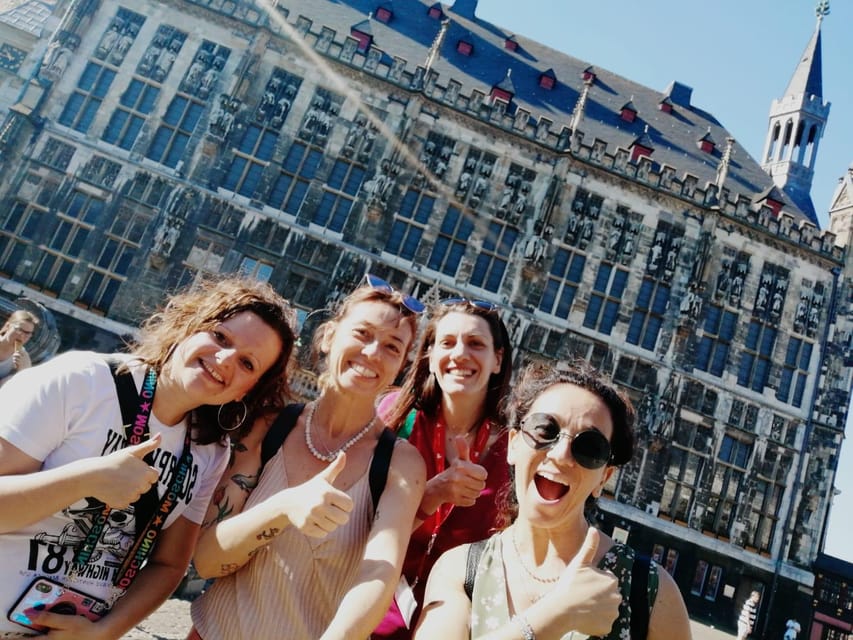
At $29 for about 90 minutes, this works because it is not trying to do everything in Aachen. It picks the places that explain Aachen’s identity, then builds meaning as you walk. You get the payoff of big names, without the time trap of a full day.
The pacing matters. A short tour keeps you attentive. It also lets you keep the rest of your afternoon flexible. After the walk, you will likely want to return on your own to one or two highlights, now that you know what you are looking at.
More German cities at walking speed:
- Aachen: Private Walking Tour With A Professional Guide
★ 4.8 · 22 reviews - Aachen: Express Walk with a Local in 60 minutes
★ 4.6 · 6 reviews - Discover Berlin Half-Day Walking Tour
★ 5.0 · 9,624 reviews
Meet Sara at the tourist board, with an Italian flag
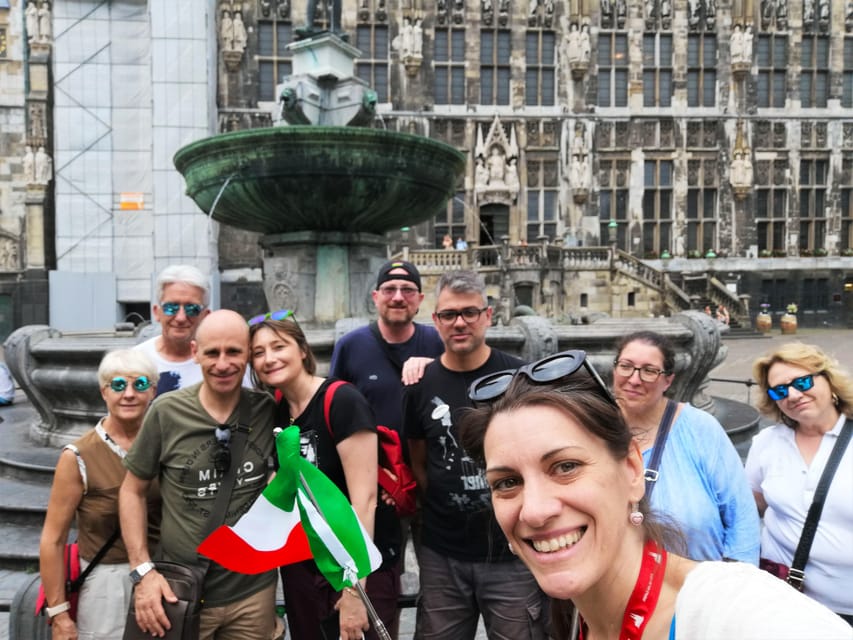
Your start is simple: you meet in front of the tourist board, and the guide has the Italian flag. That might sound tiny, but in a new city it helps you get your bearings fast. You can focus on the route instead of playing guessing games with streets.
Language is Italian only. That is a deal breaker for some people, and a huge plus for others. If you speak Italian comfortably, you will probably enjoy the flow of the storytelling more than you would on a multilingual tour with slower translation.
Elisenbrunnen, Aquae Granni, and the thermal water story
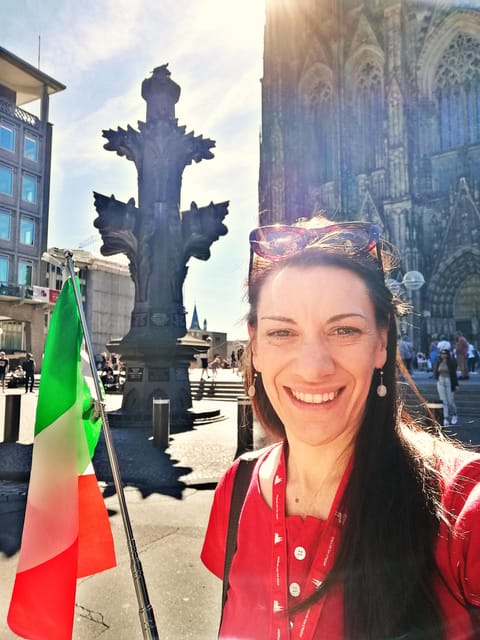
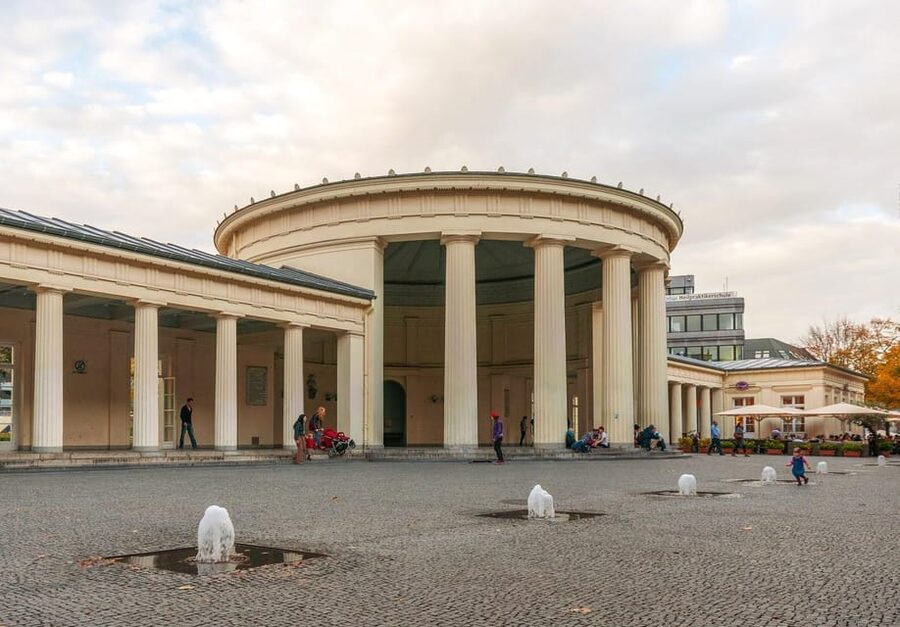
The tour opens with the Elisa Fountain, Elisenbrunnen, at the entrance to the old town. This is your clue that Aachen is not only about medieval emperors. It is also about water.
The fountain area ties to sulphurous vapours and to the idea that the hottest thermal waters in north-central Europe flow here. That matters because it explains why people showed up in the first place, long before Charlemagne. When your guide connects the steam and the bathing culture to the city’s later importance, it stops being a random landmark and becomes a theme.
From there, you move toward Aquae Granni, the Roman baths area. Even if you are not a Roman history specialist, the Roman site gives you the physical baseline for what comes later. You are walking through layers of time, and the guide’s job is to show the thread that connects them.
Bad Aachen bath culture and why it still shapes the city
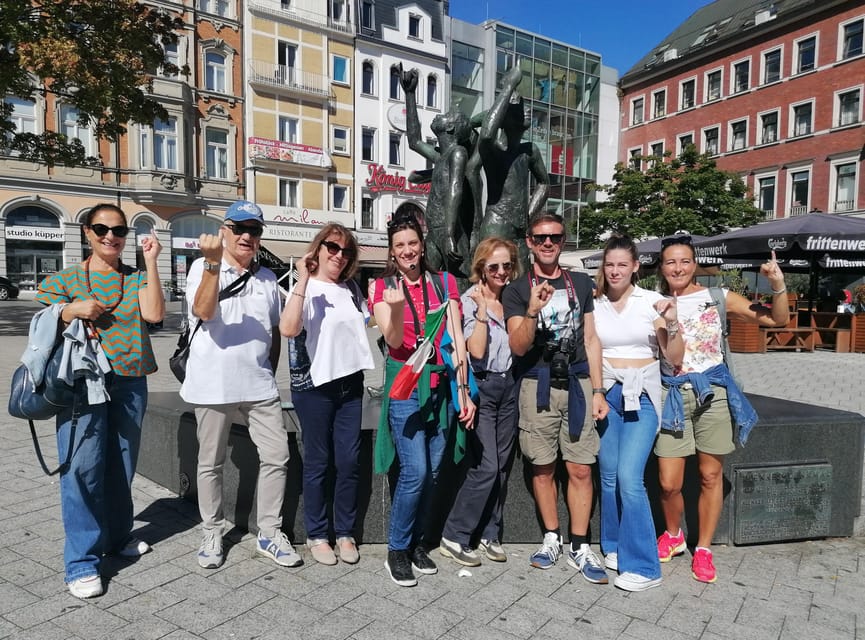
Aachen has a reputation tied to baths and health. The tour specifically points you to the 18th century nobility who loved to frequent the baths of Bad Aachen. You are not just learning dates. You are learning how a city’s “reason to exist” can stay alive across centuries.
What I like about this part is that it gives your brain a timeline to hold onto. You see a thermal starting point, then you get the shift to historical power and ceremonial importance. Even after 90 minutes, you leave with a clearer sense of why Aachen gained status.
Palatine Chapel and Aachen Cathedral, the UNESCO anchor
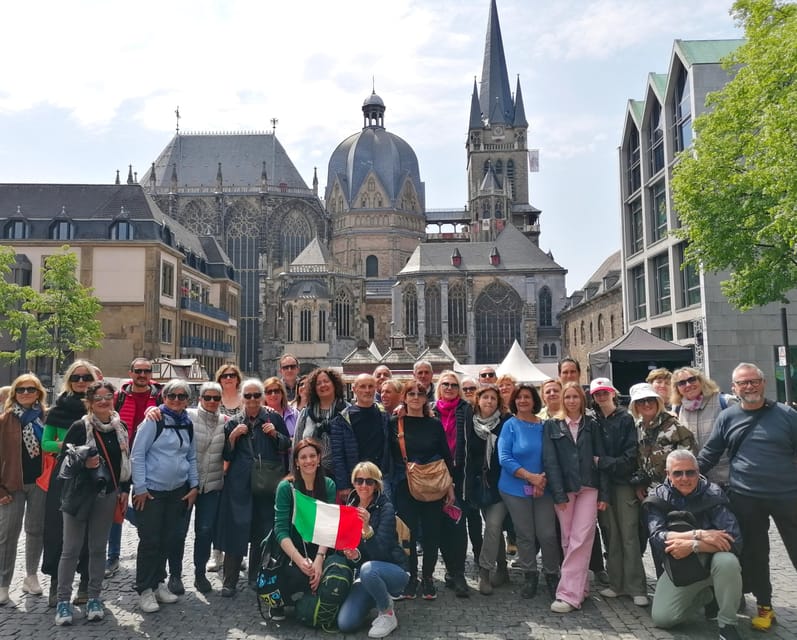
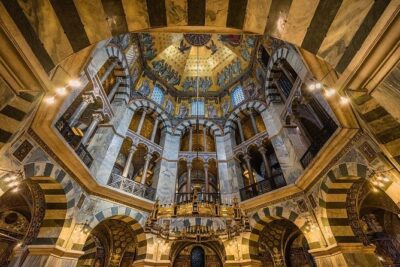
This is the big moment on the route: you will see the Palatine Chapel and the Aachen Cathedral area. Your guide frames it as an architectural masterpiece and the first UNESCO World Heritage site in Germany.
Why that matters for you as a visitor: UNESCO labels are common, but this one connects directly to the city’s most famous ruler. The tour emphasizes that this is the final resting place of Charlemagne and that the site houses amazing treasures and artworks. Even from the outside, this should help you understand why the building style, the ceremony, and the political symbolism matter.
Practical tip: at these stops, slow down. Your eyes will want to jump ahead to the next photo spot. Instead, take a minute to look at the façade and the immediate surroundings. The stories make more sense when you line them up with what you can actually see.
Onward connections from Aachen:


City Hall on old palatine foundations, politics in plain sight
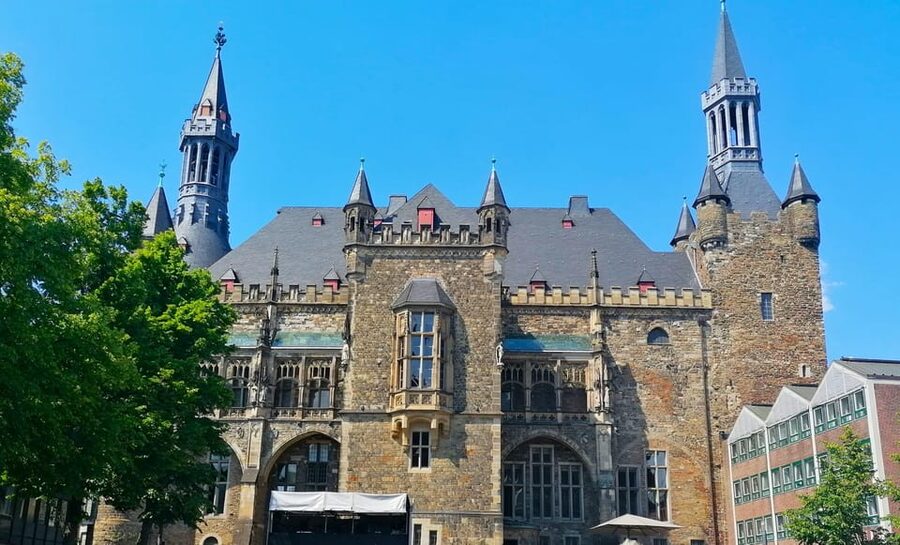
Next up is the historic City Hall, Rathause. The tour connects it to the palatine hall from the 8th and 9th centuries. It is on the foundations of that earlier building, so you get a rare kind of continuity: modern civic space tied to imperial-era power.
This part is important because it stops Aachen from feeling like a museum city. It highlights the political and historical role of Aachen at the heart of Europe, yesterday and today. That is a useful mental adjustment. You start noticing how today’s streets and squares grew out of decisions made centuries ago.
Market Square, fountains, and those small stops that add texture
The itinerary includes stops like the Coin Fountain and the Puppet Fountain, plus Am Hof and the Market Square area. On paper, these look like background details. In practice, they are what keep the tour from turning into a lecture.
Fountains are also a fast way to understand local culture. Elisenbrunnen gives you the thermal identity. The other fountains help you feel the city’s character in everyday public space. You are learning how people meet, look, and move through Aachen.
One highlight here is Charles Fountain. Pair it with what you learned about Charlemagne, and it stops being just a pretty structure. Your guide’s stories help you read the city as a set of symbols.
Granus Tower and the Couven Museum stop
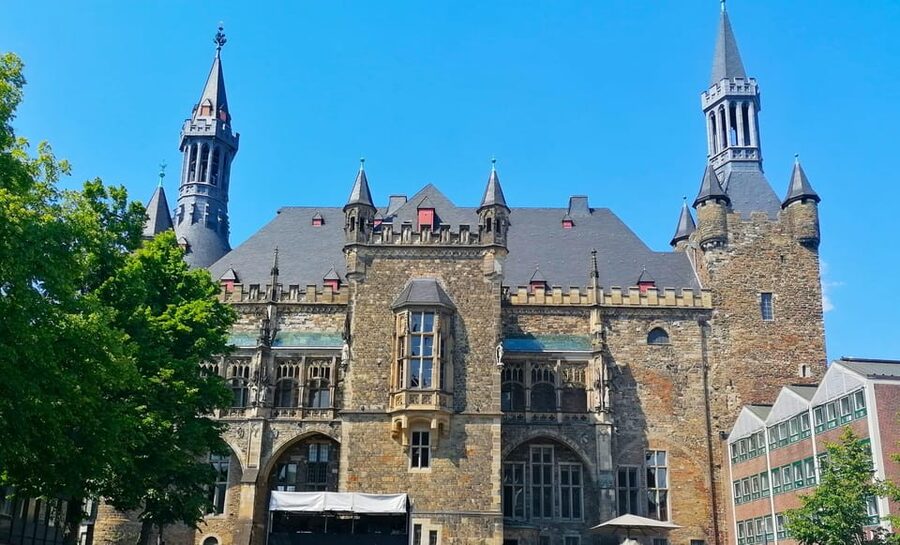
You also get a route that passes by Granus Tower and includes the Couven Museum area as part of the walk. These stops work best if you treat them as orientation points, not as full museum visits.
Because the tour is designed as an outside monuments route, you will not get to linger inside every place. But your guide can still help you understand what these landmarks represent, so you know what to chase later if you want deeper time.
If you do plan a follow up visit: choose one museum or one interior site to match what your guide emphasized. That way, you do not spread your attention thin.
The archaeological site and Palatine courtyard moments
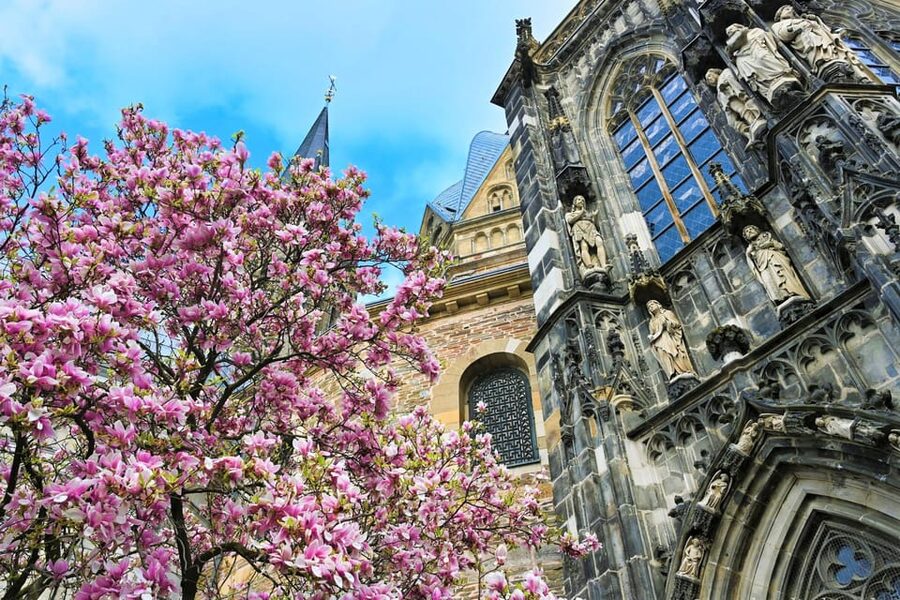
The itinerary mentions an archaeological site and then moves through the Palatine Courtyard and the Treasury Chamber areas. Even if you only see them from outside, the names tell you what kind of experience this city offers.
The archaeological stop helps you feel how much is still layered under the surface. The Palatine spaces give you the ceremonial and protective context around imperial power. When your guide strings these together, you get a clearer picture of how Aachen functioned, not just how it looked.
What the guide quality adds to the whole experience
The star here is clearly Sara’s way of teaching. Reviews you can take seriously highlight that she is prepared, fun, approachable, and passionate about Aquisgrana, with lots of stories, curiosities, and anecdotes tied to Charlemagne. That kind of guide makes a difference because Aachen is full of names and symbols. A good guide helps you connect them without overloading you.
There is also a key practical note that shows up: this tour is mainly outside. One reviewer wished for more explanations inside monuments. That matches the structure of the experience. If your top priority is interior access and guided entry, this might not be your best fit.
Route coverage, in plain language: what you will likely see
Here is the flow, simplified:
- You start at Elisenbrunnen, then connect the thermal water theme to Aachen’s later importance.
- You move toward Aquae Granni, the Roman baths area, to anchor the earliest layer of the story.
- You continue through the key imperial and UNESCO highlights tied to Charlemagne and the cathedral complex.
- You pass key civic and public spaces like the City Hall and Market Square.
- You collect texture with fountains and landmark stops, then finish with more Palatine and archaeological area context.
Seeing all of that in about 90 minutes is the point. You end with a map in your head, not just a handful of photos.
Who this walking tour suits best
This is a strong pick if you:
- Want a concentrated introduction to Aachen’s most famous themes: Romans, Charlemagne, imperial symbolism, and UNESCO-level architecture
- Prefer an outside walking route that fits into a busy day
- Speak Italian well enough to enjoy a fully Italian guided story
- Like learning through anecdotes and context, not just a list of dates
You might choose something else if you:
- Need lots of interior entry time and guided explanations inside monuments
- Want a tour in a different language
Tips to get more from the 1.5 hour walk
You can make the most of this experience with a few small moves:
- Wear comfortable shoes. You will be walking through multiple stops without long breaks.
- Bring a notepad or use your phone notes. Write down one or two sites you want to revisit.
- At the big cathedral and chapel areas, slow your pace. Let the story land with what you can see.
- If you speak Italian, lean in. The tour quality improves when you are catching the details, not translating them mid-sentence.
Should you book this Aachen classic walking tour with Sara?
If you want a smart first taste of Aachen, I think this is an easy yes. The value comes from how much meaning the guide packs into a short walk, plus the fact that you get an Italian speaking native guide, Sara, telling the story with humor and clarity.
Book it if you are happy with an outside monuments format and you want to leave oriented. You can always return later for deeper interior time on the one or two places that grab you most.
Skip it only if your main goal is inside-the-building access, or if Italian is not a language you can comfortably follow for 90 minutes. Otherwise, you are going to get a memorable, story-driven route that makes Aachen feel logical, not random.
FAQ
What is the duration of the Aachen classic walking tour?
The tour lasts 1.5 hours.
How much does the tour cost?
The price is $29 per person.
What language is the live guide?
The live tour guide speaks Italian.
Where do I meet the guide?
You meet in front of the tourist board. The guide will have the Italian flag.
What will I see during the walk?
The tour includes the Elisa Fountain (Elisenbrunnen), Aquae Granni Roman baths area, and major sights around the Palatine Chapel, Aachen Cathedral, Granus Tower, Town Hall, Market Square, and several fountains and nearby landmarks. It also includes stops such as the Coin Fountain, Puppet Fountain, Am Hof, Couven Museum, Charles Fountain, Palatine Courtyard, and Treasury Chamber.
Are monuments visited inside?
The tour is described as a walking guided tour of monuments from the outside.
Is free cancellation available?
Free cancellation is available up to 24 hours in advance for a full refund.
Can I reserve without paying immediately?
Yes, it offers reserve now & pay later, so you pay nothing today.
Is the tour route limited to specific sights?
It focuses on a set route of classic Aachen landmarks connected to Aachen’s Roman baths, Charlemagne sites, and the Holy Roman Empire coronation context, plus additional fountains and historic areas included on the walk.
Fresh on the arrivals board for Aachen

Walking Tours, compared.

Berlin City walk Government District and Places of Democracy
Read our review →
Berlin’s Best: 2 Hour Walking Tour Third Reich and the Cold War
Read our review →