

Reviewed · CITY TOURS
Women in socialist Potsdam – a feminist city tour
Touring Potsdam through women’s lives is a sharp way in. You get a guided walk that connects official GDR women’s policy with what it meant day to day, and it all ends in the city center at Luisenplatz. The guide, Antonia, keeps the stories clear and answers questions without rushing you.
What I love most is the tour’s human scale. You start with policy and then you see the gap between theory and life, including the idea of the triple burden for working women. I also liked how it treats the Stasi topic as more than history trivia, with attention to women who worked for the Ministry for State Security and women who were victims of persecution.
One possible drawback: the material can feel heavy, and the tour is outdoors only, covering about 5 km in roughly 2.5 hours, so it may not feel ideal if you have low stamina.
In This Review
- Key takeaways before you go
- Women in socialist Potsdam: why this walk feels different
- Route basics: Max-Planck-Straße start to Luisenplatz finish
- How the GDR sold equality through official women’s policy
- The triple burden of working women, and why it’s not an old story
- Inside the Ministry for State Security: women who worked there, women harmed by it
- The women’s movement before, during, and after the Peaceful Revolution
- Antonia’s guiding style: clear, human, and question-friendly
- Price and value: is $29 worth 2.5 hours?
- Who should book, and who should skip
- FAQ
- Is this tour outdoors only?
- How long is the Potsdam women’s policy city tour?
- What is the price per person?
- Where does the tour start?
- Where does the tour end?
- How far will we walk?
- What language is the live guide?
- Is wheelchair access available?
- Is it suitable for people with low fitness?
- What should I bring?
- Is guided city tour included in the price?
Key takeaways before you go
- Starts at Max-Planck-Straße 8 and ends at Luisenplatz, so it is easy to anchor in the center.
- 2.5 hours outdoors, about 5 km total, with a steady walking pace.
- Official GDR women’s policy meets reality, including the triple burden of working women.
- Stasi women in the picture, both employees and victims of persecution, with a focus on personal stories and broader social context.
- Women’s movement across time, before, during, and after the Peaceful Revolution.
- German live guide with some content shown in original language, so plan on German being part of the experience.
Women in socialist Potsdam: why this walk feels different
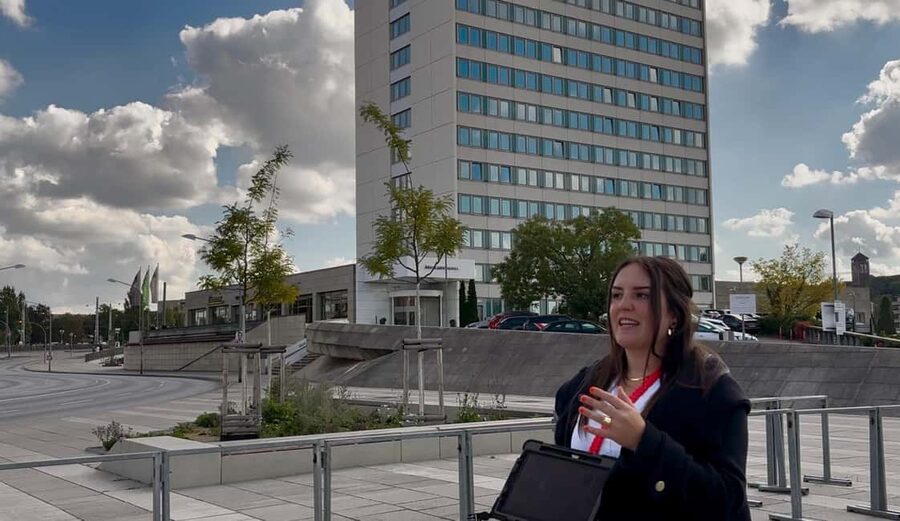
Potsdam is often sold as pretty facades and palace views. This tour changes the angle. It uses the city center and its historical layers to ask a simple question: what did the GDR say about women, and what did women actually face?
I like that the tour does not treat women’s history as a side note. Instead, it treats gender equality as something politics tried to manage, shape, and control. That is why it feels useful even if you already know the general DDR story. You get an extra lens that makes familiar buildings and public spaces feel like part of a bigger social system.
The theme is also very grounded. You will hear about equality and equal treatment as official ideals, then see how those ideals collided with daily life, including the triple burden of working women. And you also learn about women inside and harmed by state security, which is where the topic stops being abstract and becomes emotionally real.
Also holding a platform in Potsdam
- Potsdam: City and Castles Tour
★ 4.7 · 3,721 reviews - Potsdam: Palace Tour by Boat
★ 4.5 · 2,369 reviews - Potsdam: Sanssouci Palace and Prussian Palaces Entry Ticket
★ 4.5 · 2,101 reviews
Route basics: Max-Planck-Straße start to Luisenplatz finish
The tour begins at Max-Planck-Straße 8, at the stone benches. That is a practical starting point because you can meet up in a public spot and get going quickly. From there, you walk through Potsdam’s city center and finish at Luisenplatz.
Plan around 2.5 hours and about 5 km. That is a solid city-walk distance, even without a formal hill challenge. The pacing also matters because the tour is designed to connect buildings and places to themes like state women’s policy, women’s working lives, and persecution under the Stasi.
This is outdoors only, so dress for the weather. If you are the type who plans clothing based on sun and wind rather than hope, you will feel comfortable. If you are easily cold or you hate long time outside, consider bringing a light layer, even in mild weather.
Wheelchair access is listed, which is a big plus for a topic-heavy walk like this. Still, the tour is not suitable for people with low fitness, so if you know you struggle with 5 km, treat that as your deciding signal.
How the GDR sold equality through official women’s policy
One of the tour’s main engines is the official women’s policy in the GDR. Instead of giving you a disconnected lecture, the guide links the idea of policy to visible places in Potsdam. You can see how the state projected an image of equality, and you can start noticing the difference between what a system claims and what people live.
The key concept you will hear is equality and equal treatment. That matters because the GDR presented itself as modern and fair compared to the past. On this tour, you do not just learn the label. You learn what officials were trying to do with it, and why policy language can sound convincing even when it does not guarantee daily freedom.
I also like that the tour keeps returning to the gap. That gap is the point. It helps you understand why equality talk can coexist with pressure, limits, and surveillance. If you leave with a clearer sense of how state ideology works in everyday life, the tour has done its job.
The triple burden of working women, and why it’s not an old story
Another central theme is the reality of women’s lives in the GDR between 1949 and 1990. You will talk about equality, yes, but the tour focuses hard on what working women had to carry. The phrase you will hear is the triple burden of working women.
The idea is simple, and it is also uncomfortable: even when a country promotes women’s work, household and care responsibilities do not always shrink in parallel. So you get a mismatch between political promises and lived time. That mismatch is why the topic feels relevant. It is not about scoring points. It is about showing how policy and power can shape schedules, roles, and expectations.
A practical benefit for you: this lens helps you read the GDR era with more precision. Instead of only tracking laws and big political events, you start paying attention to the daily machinery of life. And because the tour uses individual biographies as examples, the triple burden becomes something you can picture, not just something you nod at.
Inside the Ministry for State Security: women who worked there, women harmed by it
This is the part of the tour that may feel emotionally intense. The highlights specifically call out female employees at the Ministry for State Security, and women as victims of persecution by the Stasi.
Why that matters is that it complicates a common mental shortcut. People sometimes expect oppression to be only about faceless male power. Here, you learn that women were part of the system in different roles, and that persecution hit women in specific ways too. The tour does not treat this as a trivia category. It frames it as part of how a state security apparatus functioned.
You will also hear about female prisoners at the Ministry for State Security. The tour’s approach is described as using biographies as examples but focusing on the general social situation. That balance is important. Personal stories keep the topic humane. The broader frame helps you understand that the situation was structural, not random.
For your comfort level: if you know you do not handle dark history well, you should take that seriously before booking. The tour is respectful and focused, but the subject itself is heavy. Still, if you want to understand the GDR beyond poster slogans, this section is where the learning becomes sharp.
Onward connections from Potsdam:




The women’s movement before, during, and after the Peaceful Revolution
The tour also tracks women’s political energy across the years around the Peaceful Revolution. This is not just a timeline lesson. It is about movement, change, and the question of who gets to speak when history shifts.
You will learn about the women’s movement before, during, and after the Revolution. That approach matters because social movements rarely appear out of nowhere. They build networks, arguments, and courage over time. By looking at women’s organizing across those phases, you get a more realistic sense of how transformation happens.
This part also gives the tour a different ending than many history walks. It does not stop at state control and oppression. It points toward activism and shifts in social life after the Revolution. If you are the kind of traveler who wants both truth and momentum, this helps you balance the darker content earlier in the walk.
Antonia’s guiding style: clear, human, and question-friendly
The guide name that comes through in the experience is Antonia. Based on how the tour is described, her strength is making complex social history feel understandable while still staying grounded in real details.
I like tours where the guide answers questions instead of treating them like interruptions. Here, questions are actively welcomed, which makes it easier to tailor the walk to your interests, whether you come for urban history, women’s history, or a feminist perspective.
You also get individual biographies used as examples. That is a teaching style choice, and it works well in a city walk. Facts land more reliably when you attach them to people. Antonia’s delivery seems designed to keep the topic accessible without flattening it.
And one more practical point: the tour includes some content shown in its original language, and the live tour guide is German. If you are comfortable with basic German context, you will probably follow smoothly. If you are not, still expect that the guide can keep the thread clear, but plan on hearing German terms.
Price and value: is $29 worth 2.5 hours?
At $29 per person for about 2.5 hours, this is not a bargain sightseeing deal. It is a specialized, theme-led walking tour focused on a specific historical perspective.
So, when is it worth it? If you want more than general Potsdam landmarks and you like hearing how politics shows up in everyday life, it is a strong value. You are getting a dense topic list: official women’s policy, equality ideals, the triple burden, women connected to the Stasi, and the women’s movement around the Peaceful Revolution. All of that in a city-center walk is efficient.
If you only want light sightseeing, or if you dislike heavy topics, $29 might feel steep for the emotional weight. Also, because it is outdoors only and about 5 km, you should factor in your comfort with walking.
Who should book, and who should skip
This tour fits well if you like urban history, women’s history, and a feminist lens on the GDR. It is also a smart pick if you already know Potsdam basics and want to see familiar places with a new meaning.
You might want to skip it if you:
- have low stamina for walking about 5 km
- want only upbeat, surface-level history
- strongly prefer tours not focused on persecution and state security
If you can handle serious history and you enjoy learning by walking, you will likely find the structure satisfying. The start at Max-Planck-Straße 8 and the end at Luisenplatz make the experience easy to plug into a day in Potsdam.
FAQ
Is this tour outdoors only?
Yes. The tour takes place exclusively outdoors, so dress for the weather.
How long is the Potsdam women’s policy city tour?
It lasts about 2.5 hours.
What is the price per person?
The price is $29 per person.
Where does the tour start?
It starts at Max-Planck-Straße 8.
Where does the tour end?
The tour ends at Luisenplatz.
How far will we walk?
The tour length is about 5 km.
What language is the live guide?
The live tour guide speaks German.
Is wheelchair access available?
Yes, the tour is wheelchair accessible.
Is it suitable for people with low fitness?
No, it is not suitable for people with low level of fitness.
What should I bring?
Bring weather-appropriate clothing. Provisions are not included.
Is guided city tour included in the price?
Yes. A guided city tour is included.
Fresh on the arrivals board for Potsdam




City Tours, compared.

1-Hour City Tour by Boat with Guaranteed Seating
Read our review →
Berlin City walk Government District and Places of Democracy
Read our review →
City History Canal Sightseeing Tour on a Motorboat
Read our review →

Browse the lists this tour appears in