
Reviewed · BAMBERG TOURS & ACTIVITIES
Witch Trials in Bamberg
Witches in Bamberg left real scars. I like how this walk links old-town streets with the mechanics of the 17th-century witch hunts, including what happened to people sent to the Trudenhaus. You also get a guided look at the medieval prison history, not just vague spooky stories.
I also appreciate that the guide keeps it grounded, correcting the usual clichés about who was accused and why. The one thing to consider is the subject matter is dark, so this is not a light entertainment stroll through picturesque lanes.
In This Review
- Key highlights you should know before you go
- Bamberg’s witch trials: why the story feels personal
- Where you meet on Domplatz and how the walking route works
- Old Court Bamberg: power, procedure, and local authority
- The short walk segments: why the timing feels right
- Geyerswörth Palace area: placing the witch-trial story in real city space
- Lochgefängnisse and the medieval prison mindset
- The wider witch-hunt story includes Nuremberg
- Ending at the Malefiz-Haus site, ca. 1627 to 1650
- Price for $15 and how the value really works
- Who should book this tour, and who might skip it
- Should you book Witch Trials in Bamberg?
- FAQ
- How long is the Witch Trials in Bamberg tour?
- Where do I meet the tour guide?
- What language is the tour in?
- Is the tour wheelchair accessible?
- How much does the tour cost?
- What places or topics does the tour include?
- Where does the tour end?
- Can I book for a group of 10 or more people?
Key highlights you should know before you go
- Old alleys, pointed clues: you walk through Bamberg’s historic lanes while the guide shows where the story happened.
- Witch-hunt myth vs reality: accusations weren’t limited to one stereotype, and the tour explains that clearly.
- Trudenhaus and Lochgefängnisse: you learn about the medieval prison system tied to witch trials.
- Connections to Nuremberg: the history includes the wider witch-hunt context, including Nuremberg.
- Short and focused (1.5 hours): enough time to understand the case history without turning it into a long slog.
Bamberg’s witch trials: why the story feels personal
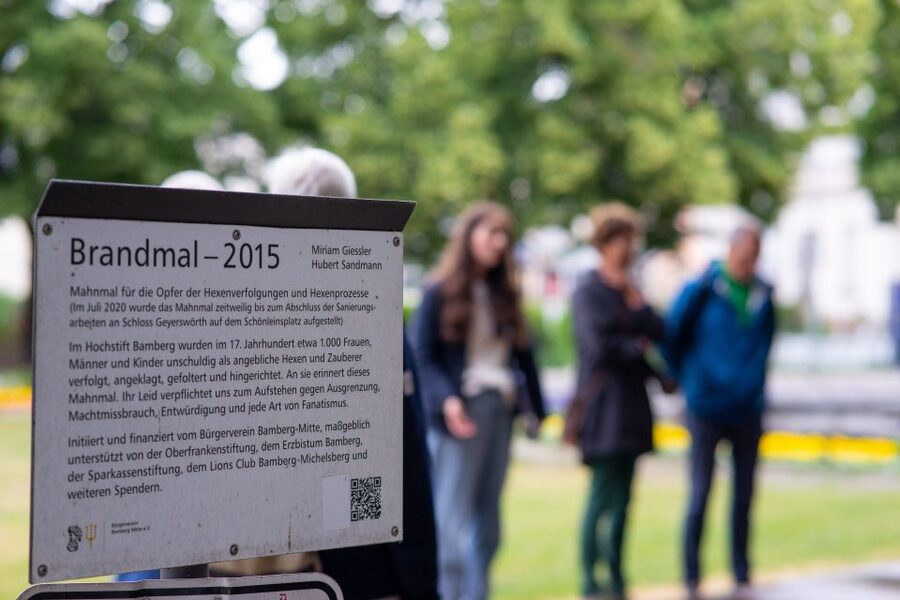
Bamberg’s witch trials are one of those topics that sound like distant European folklore until you see how local and specific it was. This walk puts you in the city’s real spaces tied to the hunts, so the history lands as lived experience, not just abstract facts.
What I found most useful is the tour’s emphasis on how accusations spread across society. The persecution of witches and so-called sorcerers in the 17th century targeted hundreds of citizens, and it wasn’t confined to a single social group. Men and women, and people high enough to include mayors, could end up caught in the machinery of fear.
Also, this isn’t built on the usual simplifications. The tour makes a point that the classic image of a specific kind of woman doesn’t explain what actually happened. If you’ve heard the stereotype version before, you’ll get a more accurate picture here.
Also holding a platform in Bamberg
- Bamberg: Guided Walking Tour
★ 4.6 · 3,202 reviews - Bamberg: Guided Beer History Tour with Optional Tasting
★ 4.6 · 772 reviews - Bamberg: City Highlights Walking Tour
★ 4.6 · 679 reviews
Where you meet on Domplatz and how the walking route works
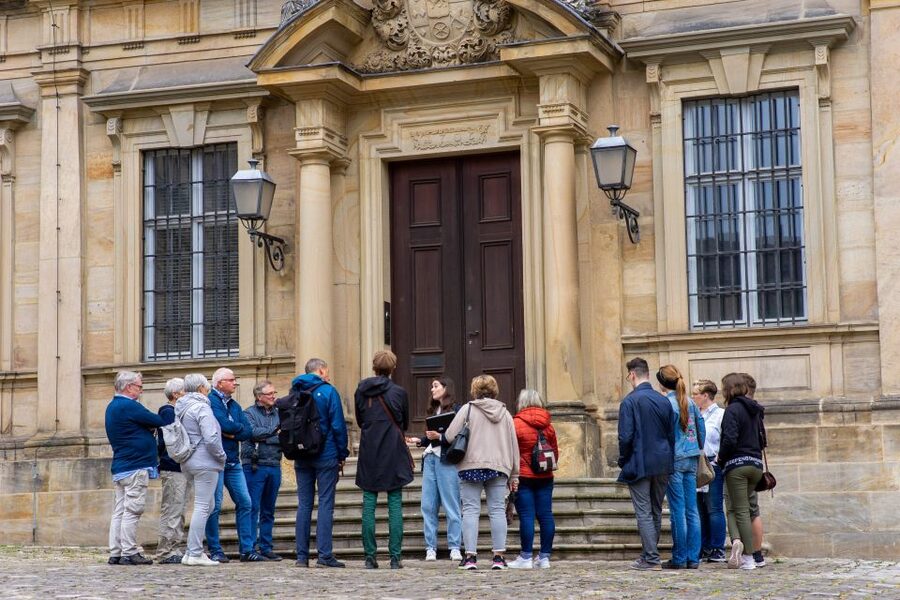
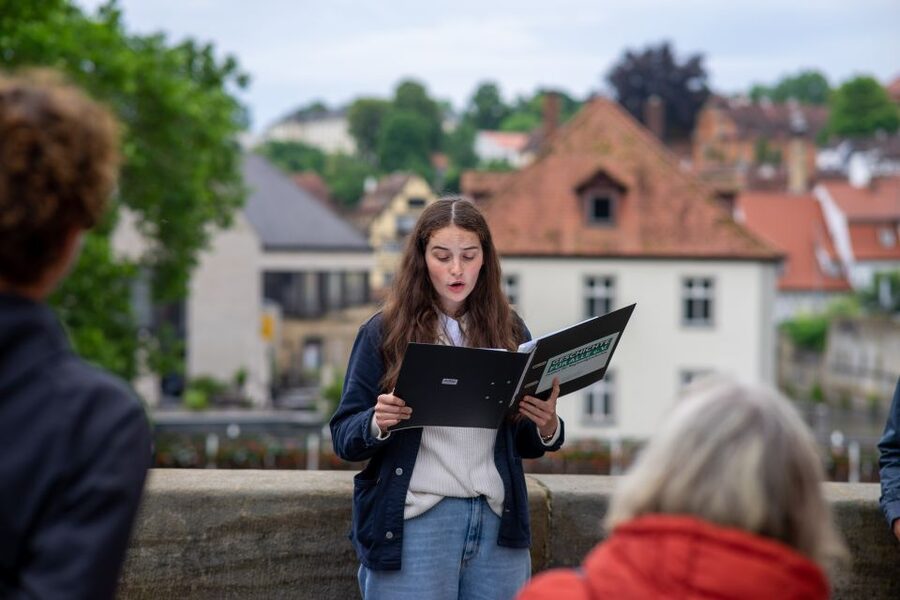
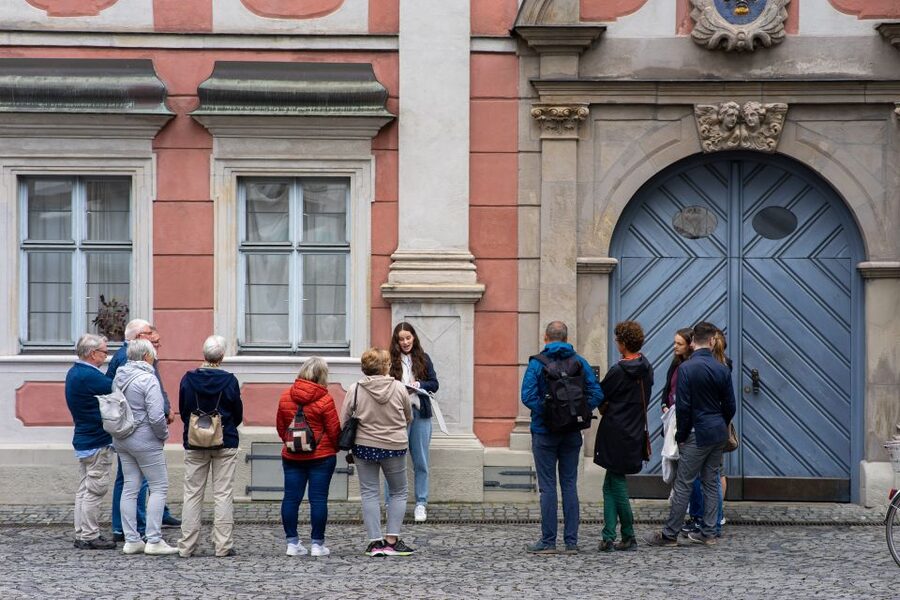
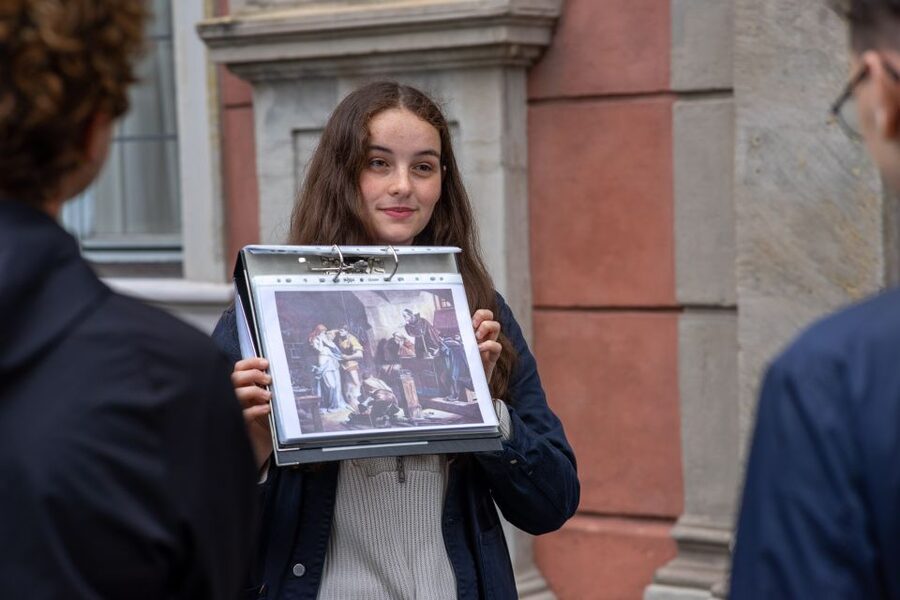
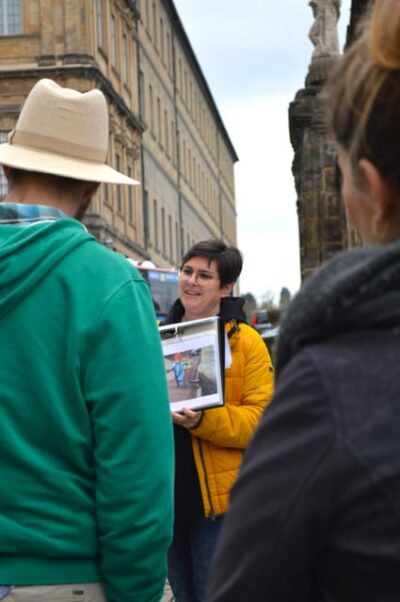
You meet at the cathedral square (Domplatz), in front of the entrance to the Alte Hofhaltung. The guide is easy to spot, holding a picture folder and wearing a name tag that says Geschichte Für Alle e.V.
From there, the tour moves through central old Bamberg with short walking segments between guided stops. Expect a pace that stays friendly for most people, with brief on-foot connections like a few minutes at a time rather than long stretches without explanations.
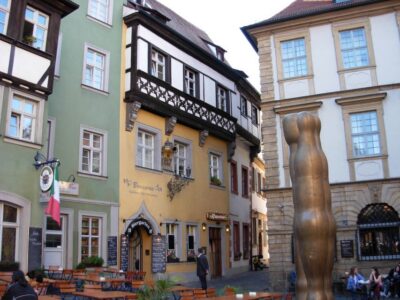
You’ll also notice the tour starts from the area associated with Schöne Pforte as the walk gets underway. If you get a little turned around, don’t panic. Focus on Domplatz first, then let the guide’s route stitch the streets together.
Practical note: it’s outdoors for much of the experience. Dress for weather. Even on cold days, the tour can still feel worthwhile because the stops are informative and keep moving.
Old Court Bamberg: power, procedure, and local authority
One of the early segments takes you to Old Court Bamberg for a guided explanation. This matters because witch trials were not just rumors floating around. They were formal actions connected to local authority and court life.
At this stage, you’re learning how a community can move from suspicion to punishment. The guide frames the witch hunts as a system that grew, not a random one-off. That helps you see why accusations could snowball so quickly when social pressure aligned with legal enforcement.
This is also where you start to understand why the tour spends time in historic civic spaces. You’re not only learning names and dates. You’re getting the setting behind them, which makes later prison references feel less like a horror movie scene and more like a documented process.
The short walk segments: why the timing feels right

Between the guided stops, you move on foot for just a few minutes at a time. Those quick connections might sound minor on paper, but they keep the tour from dragging. You’re constantly transitioning between explanation points, old alleys, and the next “where was that?” moment.
This timing is a big part of why the tour fits well into a normal day in Bamberg. You get a complete arc in about 1.5 hours, without needing to plan a whole half-day dedicated to one grim topic.
If you’re traveling with limited time, this format is a win. If you want a slower, longer photo-walk, you might prefer something else. But if you want clarity fast, this pacing is built for it.
Geyerswörth Palace area: placing the witch-trial story in real city space
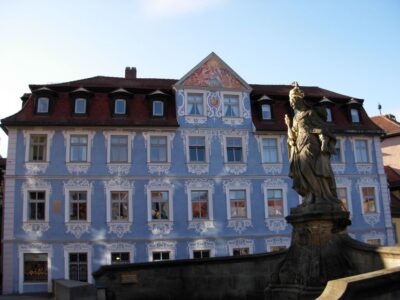
Another guided stop is at Geyerswörth Palace. Even if you’re not there to admire the building style itself, the stop helps anchor the bigger theme: witch hunts were not happening on the edges of town. They were tied to the same civic world as property, status, and power.
For me, this kind of location-based storytelling is where tours can either fall apart or get strong. Here it works because the guide uses place to explain relationships. You start linking what you see in Bamberg’s old streets with what the accusations meant for real people.
This part of the walk is useful if you like history that connects streets to context. You’ll leave with a sense that the city’s layout is part of the story, even if you’re not standing inside a courtroom.
Onward connections from Bamberg:



Lochgefängnisse and the medieval prison mindset
The most intense part of the tour focuses on the medieval prison called Lochgefängnisse. The tour also references the Trudenhaus, Bamberg’s witch prison, and the reality that being sent there meant you were in a very serious situation.
This is not presented as sensational trivia. It’s explained as part of the broader history of witch hunts and what the punishment system looked like. You get a clearer sense of how a person’s fate could shift once authorities decided guilt was possible.
If you’re wondering what kind of educational tone to expect, it’s structured to help you connect details to the larger pattern: accusations, legal action, and imprisonment. That’s also why this tour is better than a simple “dark alleys” walk. You learn why these places mattered.
And because the tour is built around a guide who can answer questions, you’re not left guessing when a term or practice sounds confusing. The overall tone stays focused and factual while still acknowledging how brutal the topic was.
The wider witch-hunt story includes Nuremberg
The tour doesn’t limit itself to Bamberg alone. You also learn about the history of witch hunts in Nuremberg, giving you context for how these events fit into a broader regional pattern.
This extra step is valuable because it prevents the story from feeling like a one-city accident. Witch hunts in early modern Central Europe shared features and ideas. By including Nuremberg, the guide helps you understand that what happened in Bamberg was part of a wider climate.
If you like comparative history, you’ll appreciate this. If you just want the Bamberg details, it still works, because the Nuremberg part is used to explain why the local story made sense to people living then.
Ending at the Malefiz-Haus site, ca. 1627 to 1650
The tour finishes at the Standort des Malefiz-Haus von 1627 – ca. 1650. That ending point is important because it pulls the story toward the physical place tied to punishment and criminal justice history.
You get a sense of closure, not a cliffhanger. The guide uses the final stop to connect earlier explanations about legal authority and imprisonment with the way the city has processed that dark chapter over time.
By the end, you should be able to answer two questions: what the witch hunts did in real human terms, and how Bamberg’s historic spaces helped carry that outcome. That is a strong way to end a 1.5-hour experience.
Price for $15 and how the value really works
At about $15 per person for a 1.5-hour guided walk, this is one of the better value types of tours in a city like Bamberg. You’re not paying for a long day, and you’re not paying for just a generic overview. You’re paying for a trained guide, a tight route through specific locations, and explanations focused on witch-trial history, including prison history like Lochgefängnisse.
For the money, you’re also getting something many low-cost tours miss: direct question support. The tour is described as very informative, and the guide can answer questions in a way that helps you keep up with the details.
Is it worth it for everyone? Not if you want a relaxing sightseeing loop. But if you want a clear understanding of how witch hunts operated and where they touched Bamberg’s streets, the price feels fair.
Who should book this tour, and who might skip it
This tour is a good fit if you:
- want place-based history tied to Bamberg’s old alleys
- care about correcting the easy stereotypes about who was accused
- like structured explanations, including prison history like Lochgefängnisse
- want a compact 1.5-hour activity that still covers more than one stop
It might be less ideal if you:
- prefer light, upbeat topics during your sightseeing time
- need an English-language tour, since it runs in German
- have trouble with walking between short segments outdoors
That said, the tour is wheelchair accessible, which widens who can consider it. The short timing also helps if you need to manage energy.
Should you book Witch Trials in Bamberg?
If your goal is to understand Bamberg in a fuller way, including the dark side of its past, I’d book it. You’ll get a guided walk through historic spaces, a more accurate view of accusations across society, and specific instruction about the witch prison Trudenhaus and the medieval Lochgefängnisse.
If you are sensitive to heavy historical topics, you should still consider it, but plan emotionally. This is not horror entertainment. It’s history with real consequences.
FAQ
How long is the Witch Trials in Bamberg tour?
The tour lasts 1.5 hours.
Where do I meet the tour guide?
You meet on Domplatz in front of the entrance to the Alte Hofhaltung. The guide holds a picture folder and wears a name tag that says Geschichte Für Alle e.V.
What language is the tour in?
The tour is in German.
Is the tour wheelchair accessible?
Yes, it is wheelchair accessible.
How much does the tour cost?
The price is $15 per person.
What places or topics does the tour include?
You’ll stroll through Bamberg’s old alleys, discover the old town, find hidden clues of the witch hunt, learn about the history of witch hunts in Nuremberg, and get to know the medieval prison called Lochgefängnisse.
Where does the tour end?
The tour finishes at the Standort des Malefiz-Haus von 1627 – ca. 1650.
Can I book for a group of 10 or more people?
Yes. If you have 10 or more people, contact the provider by email at [email protected].
Fresh on the arrivals board for Bamberg

Bamberg Tours & Activities, compared.



Beer & Brewery Tour – 2 Hour – English Or German
Read our review →
Browse the lists this tour appears in