
Reviewed · 2-HOUR EXPERIENCES
St. Michael’s, Elbe Tunnel & Harbor 2-Hour Hamburg Tour
Hamburg can feel big and fast, but this tight route keeps you focused. I love how St. Michael’s Church turns into a mini lesson in art, sound, and 17th-century life, then quickly sends you toward the harbor. I also love the classic Hamburg move of walking under the river through the Old Elbe Tunnel, not just looking at it from afar. One drawback to plan for: you only get around 2 hours total, so tower entry is optional and not included, and you may have less time than you want if you’re the type who lingers.
Guiding this is Jutta Hülsmann, often called Paddy, and the best part is how smoothly she weaves practical details with stories you can actually use while you look around. With a private group setup, you also get real Q and A instead of rushing past questions. Just remember this is a walking tour, so dress for Hamburg weather and be ready for stairs at the tunnel unless you choose the lift.
In This Review
- Key highlights to zero in on
- St. Michael’s Church, Michel, and the organ details you’ll actually notice
- Krayenkamp behind the church, where 17th-century widow homes tell a real story
- The Portuguese quarter walk, from church-to-harbor flavor
- Landungsbrücken shorelines and the ships you can name
- Old Elbe Tunnel 1911, walking under the river and feeling the scale
- Steinwerder views and how the route ends with perspective
- Why this 2-hour format works, and the one thing to watch for
- Price and value for a private group in Hamburg
- Language and guide style, what you gain beyond facts
- Organ music tip if you plan your timing
- Who should book this St. Michael’s and Elbe Tunnel tour?
- FAQ
- FAQ
- Where does the tour start?
- How long is the tour?
- Is this a private group tour?
- What sights are included?
- What language is the guide available in?
- Are entrance fees included for the tower?
- How much time do you spend at the Elbe Tunnel?
- Is free cancellation available?
- Should I book this tour?
Key highlights to zero in on
- St. Michael’s Church, called Michel: baroque interiors, the bell tower, and organ attention points that make you look in the right places
- Organ no. 5 and the 1762 crypt: a specific, memorable stop you can’t replicate on your own in the same way
- Hamburg’s clock and viewpoints: the church clock stands out in scale, and you can reach the observation deck by lift or on foot
- Krayenkamp widow courtyards: a rare peek at typical courtyard buildings tied to merchant widows in the 17th century
- Portuguese quarter near the harbor: restaurants close to the water, plus the sense of a working port neighborhood
- Old Elbe Tunnel 1911 to Steinwerder: walk under the Elbe (stairs or elevator) and finish with panoramic harbor views
St. Michael’s Church, Michel, and the organ details you’ll actually notice
You start at St. Michael’s Church, the one locals call Michel. It’s hard to miss from the outside, but the real payoff is what happens when you step in. This church is baroque, so think dramatic shapes, deep visual layers, and a sense that everything was designed to steer your eyes toward the center.
What I like about this stop is that you’re not left with vague sightseeing. You get pointers for specific things to find, including organ no. 5 and a look into the crypt dating to 1762. That kind of direction matters. Without it, you can stand in a huge space and still feel like you missed the best bits.
You’ll also hear about the church clock, noted as the largest church clock in Germany, and the bell tower. Those are good anchors because they help you place the building’s scale fast, even if you’re not a church-architecture person.
One practical note: if you want the observation deck view, you can reach it by walking or by lift (optional). And the tower entrance is a separate item because entrance fees are not included. If you’re chasing the best view, it’s worth deciding ahead of time whether you want to add that extra expense.
Also holding a platform in Hamburg
- Hamburg: Sex and Crime in St. Pauli Tour for Ages 18 +
★ 4.7 · 17,793 reviews - Hamburg: 1.5-Hour Harbor and Speicherstadt Day Cruise
★ 4.6 · 14,200 reviews - Hamburg: 90-Minute Evening Lights Harbor Cruise
★ 4.5 · 7,728 reviews
Krayenkamp behind the church, where 17th-century widow homes tell a real story
After the grand church interior, the tour shifts to the quieter but more human side of Hamburg. Behind St. Michael’s you’ll see the Krayenkamp area, where you can find widow homes from the 17th century. The idea here is simple: don’t just admire a monument. Learn what the city built around everyday life.
These courtyard buildings are described as the last remaining examples of typical Hamburg courtyard housing. That phrase matters, because it tells you you’re seeing something close to original urban fabric, not a recreated street scene.
It’s also the kind of detail that clicks with how Hamburg developed. A major port city had a merchant economy, and households had to be structured for long stretches of uncertainty. The tour guide explains the fate of the widows of merchants and what life could look like. Even if you only catch parts of that story, it changes how you interpret the buildings. They stop being just pretty old walls and become evidence of how people lived.
The Portuguese quarter walk, from church-to-harbor flavor
Next comes the harbor approach, and the route intentionally passes through the Portuguese quarter. You’ll walk in the direction of St. Pauli Landungsbrücken, which is where the water energy really ramps up.
What makes this section useful is the way it sets you up for what you’ll see at the shore later. You’re moving from a monumental church setting into a working district vibe, where it’s easy to understand why harbor neighborhoods develop their own identity.
The Portuguese quarter is also where you’ll notice the neighborhood’s restaurant scene. You get the sense that people come here not just to tour, but to eat and hang around close to the waterfront. If you’re the sort of traveler who likes to plan one meal wisely, this is a good time to start forming ideas for where you might want to return.
Landungsbrücken shorelines and the ships you can name
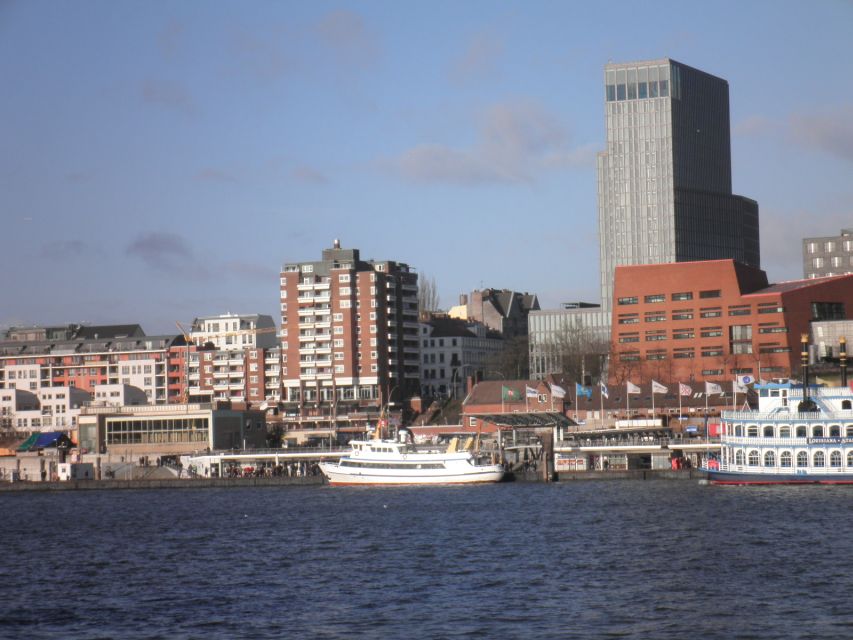
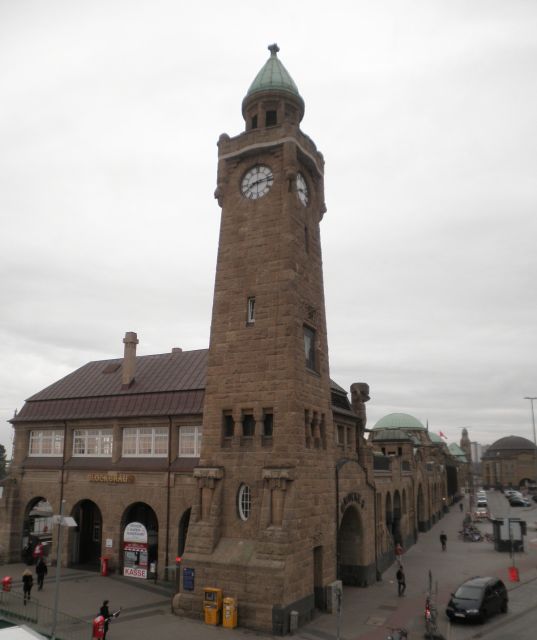
As you head toward St. Pauli Landungsbrücken, you’ll get a close view of the two ships: Rickmer Rickmers and Cap San Diego. These are not random dockside silhouettes. They’re famous harbor presences, and having names attached to what you see makes the whole scene feel less accidental.
This part of the tour also teaches you a small but powerful travel skill: when a place is busy, you choose one or two anchors and learn them deeply enough to keep your bearings. Landungsbrücken can be lively, so the guide’s focus on the ships helps you keep your attention on memorable landmarks rather than getting swept up by noise.
Then, instead of lingering too long, you keep moving toward the Old Elbe Tunnel.
Old Elbe Tunnel 1911, walking under the river and feeling the scale
This is the signature move of the tour: the Old Elbe Tunnel of 1911. You walk underneath the river, which is a dramatically different experience than looking at a bridge or watching boats pass overhead.
There are two ways to handle the tunnel descent. You can climb the stairs in the older construction (it’s described as over 100 years old), or you can take the elevator. That choice matters if you’re traveling with mobility considerations or just want the energy saved for the views afterward.
The tunnel visit is timed at about 30 minutes, which is long enough to feel the change in setting, but short enough that you don’t burn your whole tour on one stretch.
Here’s the practical reason this stop feels valuable: it’s not just history. It’s geography in a physical form. Hamburg sits around water and waterways, and the city’s big projects reflect how strongly the river shapes daily life. By going under the Elbe, you understand that relationship immediately.
Onward connections from Hamburg:


Steinwerder views and how the route ends with perspective
After you go under the Elbe, the tour moves toward Steinwerder. This is where you get panoramic views back over Hamburg.
You’ll often see advice online to “go for the views,” but this approach is better because the views are earned. You just passed through the tunnel experience, so when you look back over the harbor and city, you see the layout more clearly. You understand where the water sits and how the urban neighborhoods relate to the river.
If you’re someone who likes photos, this is a good place for them, but it also works if you’re more of a “look with your own eyes” traveler. The whole point is perspective.
Why this 2-hour format works, and the one thing to watch for
Two hours in Hamburg can vanish if you’re not strict with priorities. This tour is built to protect your time. You hit three big anchors: St. Michael’s, the Portuguese quarter area, and the Old Elbe Tunnel, with a harbor-facing ending at Steinwerder.
The upside is focus. The downside is simple: you can’t expect to slow-walk every stop. If you plan to add the optional tower entrance, you’ll need to decide how much time you want to spend there versus elsewhere.
I also think it’s smart to go in with one mindset: pick what you want to learn, not just what you want to see. Here, the organ notes and the widow home story give you that “learn something real” track, and the tunnel gives you a “feel something real” track.
Price and value for a private group in Hamburg
The price is $294 per group, up to 15 people, for a 2-hour tour. That structure is often the difference between a tour feeling pricey and feeling practical.
If you’re coming as a family or small group, the cost per person can drop fast compared with individual tour tickets. And since this is a private group, you don’t have the same pressure to keep up with strangers. You can ask questions, and you get a guided flow that helps you avoid dead ends around churches, waterfronts, and older infrastructure.
Is $294 a bargain in absolute terms? Not always. But value comes from the mix of access and interpretation: you get the guided look at specific organ details, the context for widow homes, and the physical experience of walking under the Elbe. If you were trying to stitch this together yourself, you’d spend time figuring out what to look for at St. Michael’s and how to plan a tunnel visit and harbor walk efficiently.
Language and guide style, what you gain beyond facts
The tour runs with a live guide available in Spanish, English, French, and German. That matters because you can actually understand the stories, not just follow along with gestures.
The guide for this experience is Jutta Hülsmann. One nice detail: she’s described as both personable and very informative, and people specifically noted that she answered questions and added background in an easy, relaxed way. Another practical comment was that meeting up was smooth and precise, so you’re less likely to waste the first minutes trying to match faces.
For me, the real value of a good guide is not just knowing facts. It’s choosing the right facts. Here, the tour points you to things like organ no. 5, the crypt year 1762, the clock scale, and the widow courtyard context. Those are the details that make a short tour feel longer in your memory.
Organ music tip if you plan your timing
If you love organ music, there’s a specific bonus you can consider. The church offers a 20-minute organ concert at noon Monday through Friday. The tour can start directly after, at 12:30, which is a clever way to turn your visit into one continuous music-and-sightseeing block.
Even if you don’t go to the concert, it helps to know that the church’s organ culture is part of the way this place operates. When you’re listening with a little background in mind, the interior feels less like a museum and more like a living venue.
Who should book this St. Michael’s and Elbe Tunnel tour?
This tour fits best if you want:
- A 2-hour hit of Hamburg highlights without spending your day planning routes
- A guided focus at St. Michael’s, including organ and crypt details
- A memorable experience that’s more than photos, the walk through the Old Elbe Tunnel
- A harbor ending with ships like Rickmer Rickmers and Cap San Diego plus views from Steinwerder
- Real discussion, since it’s a private group format
It might be less ideal if you want a slow museum-style pace or if you hate stairs even with an elevator option at the tunnel.
If you’re short on time, this is a strong way to make the most of a partial day in Hamburg.
FAQ
FAQ
Where does the tour start?
It starts in front of the main entrance to St. Michael’s Church in Hamburg.
How long is the tour?
The tour is 2 hours long.
Is this a private group tour?
Yes, it’s listed as a private group.
What sights are included?
You visit St. Michael’s Church, see the Old Elbe Tunnel area (including going under the river), and you also walk through the Portuguese quarter toward the harbor.
What language is the guide available in?
The live tour guide is available in Spanish, English, French, and German.
Are entrance fees included for the tower?
No. Entrance fees are not included, including the visit to the tower.
How much time do you spend at the Elbe Tunnel?
The tunnel visit is listed as 30 minutes.
Is free cancellation available?
Yes, you can cancel up to 24 hours in advance for a full refund.
Should I book this tour?
If you want an efficient Hamburg overview with two big wow factors, I’d book it. St. Michael’s isn’t just architecture here, you’re guided to specific organs, including organ no. 5, and you get the crypt context from 1762. Then you get the tactile, memorable part of Hamburg, walking under the river through the Old Elbe Tunnel and finishing with Steinwerder views. The only reason to hesitate is if you need more time at one place, because 2 hours goes quickly in a concentrated route.
Fresh on the arrivals board for Hamburg

2-Hour Experiences, compared.
Berlin’s Best: 2 Hour Walking Tour Third Reich and the Cold War
Read our review →


Browse the lists this tour appears in