
Reviewed · CITY TOURS
Private City Leipzig Tour
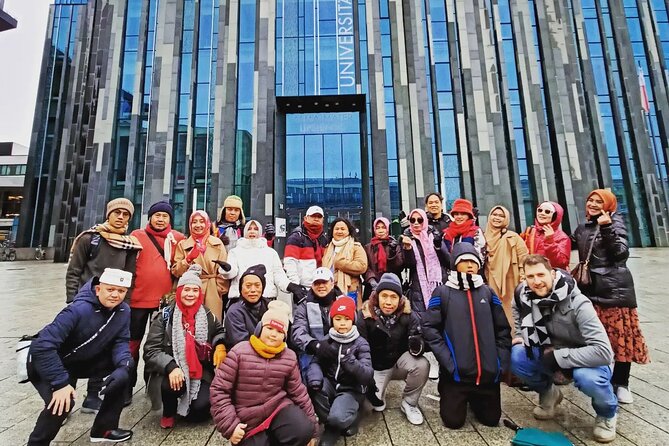
Leipzig feels personal on foot. This private city walk strings together the biggest names in town, with stories that help it all make sense, and it’s led in English by Florian. You’ll move through music places, city-center architecture, and key squares at a pace that keeps you oriented without rushing.
I especially love the mix of major sights and small in-between stops, like the passages and photo-worthy corners that make Leipzig feel walkable and lived-in. The other big win for me is how tightly the tour connects Leipzig to Bach and Goethe, so you do not just see buildings, you understand why they matter. The one drawback to plan for: admission tickets are not included at the stops, and several segments are short, so if you want to go deep inside one place, you may need extra time on your own.
In This Review
- Key highlights worth your attention
- Getting your bearings fast in Leipzig’s compact core
- Universitat Leipzig, founded in 1409, not some random campus stop
- Gewandhaus zu Leipzig and the sound of Leipzig’s pride
- Moritzbastei, a 16th-century bastion turned cultural hub
- Neues Rathaus (New Town Hall) and the view from neo-Renaissance ambition
- Altes Rathaus (Old City Hall), Renaissance style, and the story in the clock tower
- The passage moments in the city center you can actually feel
- St. Thomas Church, Bach’s workplace, and the Thomanerchor effect
- Auerbach’s Keller and how Goethe’s Faust created a Leipzig legend
- Riquet Haus, Art Nouveau charm, and a coffee-shaped detour
- Speck’s Hof and the practical pleasure of arcade wandering
- Nikolaikirche and the meaning of peaceful protests in 1989
- How this tour fits your day, from timing to value
- Who should book this private Leipzig walk
- Should you book this tour?
- FAQ
- How long is the private city tour in Leipzig?
- How much does the tour cost?
- Is the tour private?
- What language is the tour offered in?
- Where does the tour start and where does it end?
- Are admission tickets included for the stops?
- Is coffee or tea included?
- Are service animals allowed?
- What is the cancellation policy?
Key highlights worth your attention
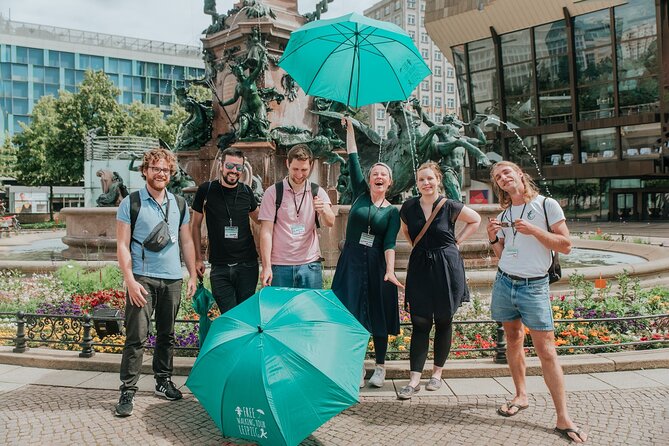
- Florian’s storytelling energy makes the center feel clearer and more human
- A music-focused route ties Gewandhaus and St. Thomas Church to Leipzig’s reputation
- City hall contrasts show how power and style shifted from old to new
- Passages and iconic eateries help you experience the city rhythm, not just monuments
- Nikolaikirche’s 1989 role adds real meaning beyond architecture
- Pictures and maps included so you can remember and retrace easily later
Getting your bearings fast in Leipzig’s compact core
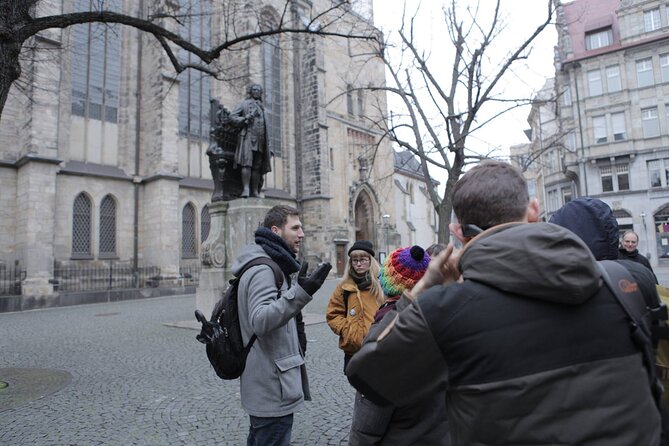
This tour is built for people who want to understand Leipzig without playing museum roulette. In about 2 hours 15 minutes, you cover a string of landmarks that sit close enough to connect with a simple walking mindset. The group stays small, and because it’s private, the guide can keep the pace sensible for your team instead of herding everyone like luggage.
You start right in the center at Mendebrunnen on Augustusplatz (Augustuspl. 15). That matters because Leipzig’s core is best explored in chunks, and beginning here means the rest of the walk feels like a logical route, not a chain of random stops.
Also, you get pictures and maps included. That is practical travel magic. You leave with something to jog your memory later, which is especially helpful in a city where the streets and facades can blur together after a few sightseeing days.
Also holding a platform in Leipzig
- Leipzig: City History Canal Sightseeing Tour on a Motorboat
★ 4.7 · 7,671 reviews - Leipzig: The Original Night Watchman Bremme Tour
★ 4.5 · 3,815 reviews - Combo Tour in Leipzig: Guided City Tour & City Sightseeing
★ 4.7 · 2,317 reviews
Universitat Leipzig, founded in 1409, not some random campus stop
Your first stretch takes you to Universitat Leipzig. The big fact to remember is the founding year, 1409, which instantly frames Leipzig as a long-standing academic center rather than a modern city built only in the last century.
This stop works well because it sets a tone early. Before you hit churches and concert halls, you get the sense that ideas and institutions have been shaping Leipzig for centuries. Even if you only linger for a short moment, the guide’s framing helps you notice the formal vibe of the area and understand why the city attracted thinkers in the first place.
If you are hoping for a long, inside-your-everything campus visit, this is not that kind of tour. The stop is brief and ticketed entry is not included, so think of it as a guided orientation moment.
Gewandhaus zu Leipzig and the sound of Leipzig’s pride
Next comes Gewandhaus zu Leipzig, the concert hall famous for excellent acoustics. This is one of those places where you can feel the purpose even without going inside. Leipzig treats music like something serious, and Gewandhaus is a headline in that story.
What I like about including it in a short city walk is that it gives you a hook you can carry all the way to St. Thomas Church. You start to connect the dots: music is not a side hobby here. It’s a city identity, backed by real institutions and major performers.
As with the other stops, admission tickets are not included. If you want to do an interior visit or a specific event, plan separate time. For most people, the best value is the outside viewpoints and the guide’s context.
Moritzbastei, a 16th-century bastion turned cultural hub

Moritzbastei is where the tour gains personality. You’re looking at a historic structure dating back to the 16th century, originally tied to city fortifications. That detail matters because it explains why the building feels both solid and slightly unusual compared to more straightforward civic architecture.
Today it functions as a cultural center, with spaces used for concerts, theater, art exhibitions, and festivals. The guide’s framing helps you see this is not just a leftover wall, it is a functioning part of Leipzig’s public life. It’s also tied to nightlife, so if you are walking through Leipzig after dinner, Moritzbastei is the sort of place you might circle back to later.
One consideration: the stop is short. So treat it like a snapshot, then decide whether you want to come back when the event calendar matches your interests.
Neues Rathaus (New Town Hall) and the view from neo-Renaissance ambition
At the New Town Hall, you get a clear hit of Leipzig’s civic confidence. The building was completed in 1905, and it’s known for neo-Renaissance style plus a distinctive tower.
Even if you do not go up for views during the tour, the tower presence is hard to miss. The guide uses it to explain how city leadership wanted Leipzig to look modern and organized in the early 1900s, not just historic and academic.
Because admission tickets are not included, you should not count on entering or climbing during the tour. If panoramic views are a top priority, consider arriving with some extra time before or after the guided walk.
Onward connections from Leipzig:




Altes Rathaus (Old City Hall), Renaissance style, and the story in the clock tower
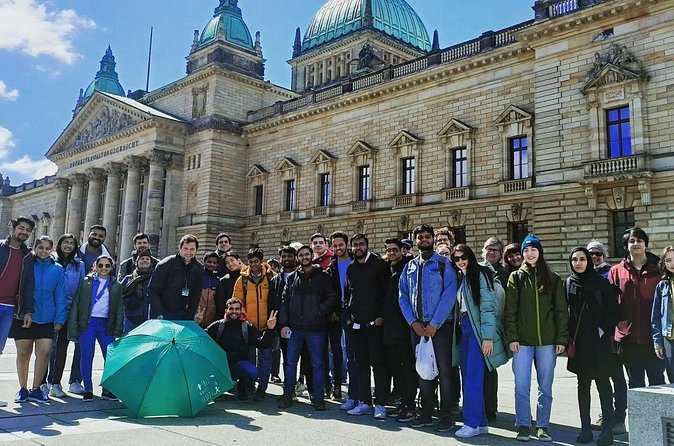
Old City Hall is a nice contrast right after Neues Rathaus. Altes Rathaus was completed in 1556, and its Renaissance style makes the earlier era feel more grounded and decorative. The clock tower and ornate facade, with statues and reliefs, give you something to look at while the guide explains the shift in governance over time.
This stop also connects to how Leipzig shaped its civic identity. The Old City Hall served as the seat of city council until the construction of the New Town Hall in 1905. That single timeline is a useful way to understand the city’s evolution without needing a thick guidebook.
The tour gives you context, but the stop time is limited. If the museum inside is a must-see for you, you will likely want to add an extra independent visit.
The passage moments in the city center you can actually feel
In between the big landmarks, you spend time in Leipzig’s passage world. The guide points out a passage area often described as among the most beautiful in town. It’s not just a pretty corridor.
Passages like these tell you how people used to shop, move, and socialize in the center. They also create a different walking texture. Instead of open squares and broad streets, you get a more sheltered, indoor-outdoor feel, which can be a lifesaver if the weather turns.
And because the tour keeps segments short, these passage stops are perfect for quick photos and a change of pace. If you love architectural details, this is where you can slow down slightly, then rejoin the group.
St. Thomas Church, Bach’s workplace, and the Thomanerchor effect
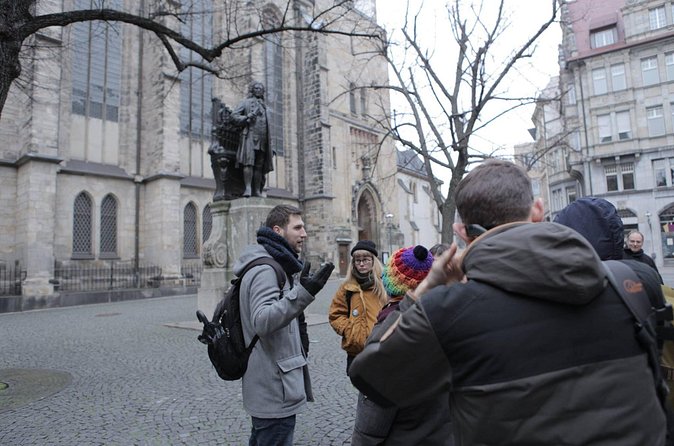
St. Thomas Church is one of the stops that explains why Leipzig became synonymous with serious music. The church dates back to the 12th century and is tied directly to Johann Sebastian Bach, who worked here as cantor from 1723 until his death in 1750.
You’ll also hear about the Thomanerchor, a boys’ choir Bach himself led. This is not just trivia. It helps you understand why a single church could shape a whole city’s reputation for centuries. When you look at the twin-towered Gothic facade and stained-glass windows, the setting starts to feel like part of a larger musical machine rather than a random landmark.
The stop time is long enough to absorb the exterior details and the guide’s connections. Admission tickets are not included, so if you want to attend services, concerts, or organ recitals at a specific time, check schedules and plan your day around that.
Auerbach’s Keller and how Goethe’s Faust created a Leipzig legend
Then you go to Auerbach’s Keller, one of Leipzig’s most famous restaurants. It’s best known for its connection to Goethe, who started writing his drama Faust there.
This is a fun stop because it blends literature and everyday city life. You are not just reading about authors in classrooms. You are standing where the story got its early spark, which makes the whole Goethe thread feel more real.
Because the guided stop is short and admission tickets are not included, think of this as a guided marker. If you want to linger for food or a drink, you can plan to do that after the tour, especially if your timing lines up with an open table.
Riquet Haus, Art Nouveau charm, and a coffee-shaped detour
Riquet Haus is the kind of building you remember even if you forget every date the guide shared. The cafe is noted for Art Nouveau style, and the tour uses it as a visual palate cleanser after churches and city halls.
You may be tempted to grab a coffee here, and you might find it useful that coffee or tea is not included in the tour price. That means you’re free to choose your own place and timing rather than being forced into a set stop.
The stop is brief at about 5 minutes, so you mostly get to appreciate the facade and the idea behind it, then move on with the group.
Speck’s Hof and the practical pleasure of arcade wandering
Speck’s Hof is described as a fair palace with many passages, and it’s another reason this walk feels easy to enjoy. The arcades and connected lanes create that “I can keep walking and see something new” effect.
This is the sort of stop that rewards you if you like independent wandering. The guide points out what makes the space special, then you get a taste of the network. If you want more, you can return later and explore longer at your own pace.
Again, admission tickets are not included, and the guided time is short, so it’s best as a highlight stop, not a full exploration.
Nikolaikirche and the meaning of peaceful protests in 1989
You finish at St. Nicholas Church, Nikolaikirche. This is the most emotionally weighted stop on the route, even if you spend a short amount of time here.
The church’s 12th-century origins are impressive, but its modern importance is what you remember. It played a key role in peaceful protests against the East German government in 1989, protests that helped lead to the fall of the Berlin Wall and Germany’s reunification.
The guide’s context makes the architecture feel linked to real human choice, not just stonework. You’ll also see references to the soaring nave, stained-glass windows, and a large organ, but the real takeaway is the story of public courage.
This is the longest stop on your walk at around 20 minutes, which gives you enough time to absorb the setting. Admission tickets are not included, so if you want a specific interior experience, confirm your timing separately.
How this tour fits your day, from timing to value
Let’s talk money and what you actually get. The price is $190.84 per group, up to 15 people, and it lasts about 2 hours 15 minutes. In other words, the cost is not per person in the usual way. If you are traveling with a small group, this can become very reasonable, especially compared with paying separate guides.
Even for solo travelers, the main value is control. You get a private group experience with a real route through the city center, plus maps and pictures. That saves you time, because you are not guessing which streets connect the best landmarks.
One more practical point: the tour is offered in English, and it’s near public transportation. That matters for Leipzig, because you can easily connect this walk to other plans without complicated logistics.
What about food and drink? Coffee and tea are not included, so you’ll want to plan your caffeine stop on your own. The good news is the route passes through places like Riquet Haus and Auerbach’s Keller, so you are not far from options.
Who should book this private Leipzig walk
Book this if you want a structured overview that still feels personal. It’s ideal for couples, friends, or small groups who like church architecture, music connections, and city-center architecture without spending your whole day indoors.
It’s also a good choice if you care about meaning. Leipzig is known for art and sound, but Nikolaikirche adds a moral and historical layer that makes the walk more than sightseeing.
Skip it if you want lots of ticketed interior time at each stop. This is built as a walk-through with short segments, and you’ll likely want to return later if you want deeper access.
Should you book this tour?
If you like guided context and want the Leipzig highlights stitched into one clean route, this tour is a strong yes. The 5-star feedback makes sense: the guide’s engagement (including Florian, mentioned by name) is part of the package, and the balance of music, civic buildings, and meaningful history is a solid formula.
If you only want deep museum time or you are planning to enter multiple ticketed spaces, you may need extra hours on your own after the tour. For most people aiming to understand Leipzig quickly, efficiently, and with good storytelling, this private walk is a smart booking.
FAQ
How long is the private city tour in Leipzig?
It’s approximately 2 hours 15 minutes.
How much does the tour cost?
The price is $190.84 per group, up to 15 people.
Is the tour private?
Yes. This is a private tour/activity, and only your group participates.
What language is the tour offered in?
The tour is offered in English.
Where does the tour start and where does it end?
It starts at Mendebrunnen, Augustuspl. 15, 04109 Leipzig, Germany, and ends at St. Nicholas Church, Nikolaikirchhof 3, 04109 Leipzig, Germany.
Are admission tickets included for the stops?
No. Admission tickets are not included at the listed stops.
Is coffee or tea included?
No. Coffee and/or tea are not included.
Are service animals allowed?
Yes, service animals are allowed.
What is the cancellation policy?
Free cancellation is available. You can cancel up to 24 hours in advance for a full refund. If you cancel less than 24 hours before the start time, you will not be refunded.
Fresh on the arrivals board for Leipzig


City Tours, compared.
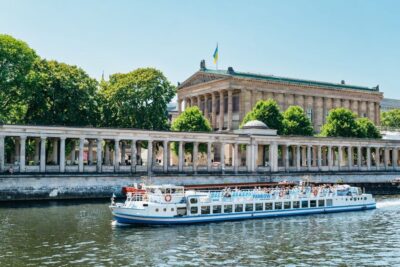
1-Hour City Tour by Boat with Guaranteed Seating
Read our review →
Berlin City walk Government District and Places of Democracy
Read our review →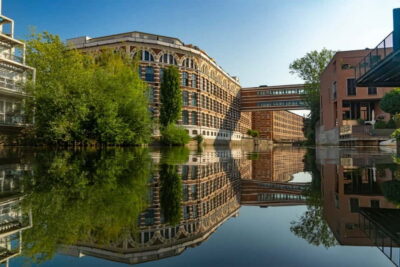
City History Canal Sightseeing Tour on a Motorboat
Read our review →
Browse the lists this tour appears in