
Reviewed · LEIPZIG TOURS & ACTIVITIES
Leipzig: Bus Tour
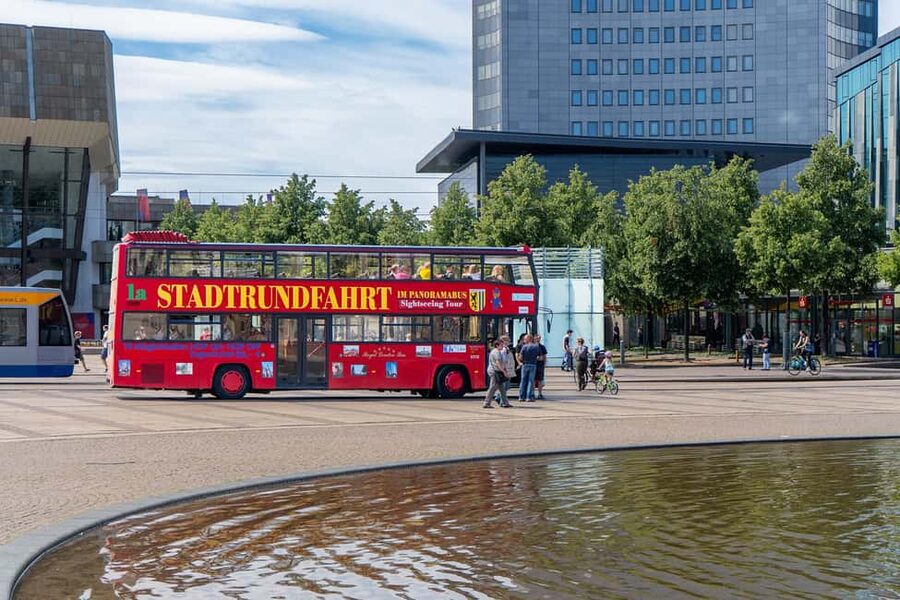
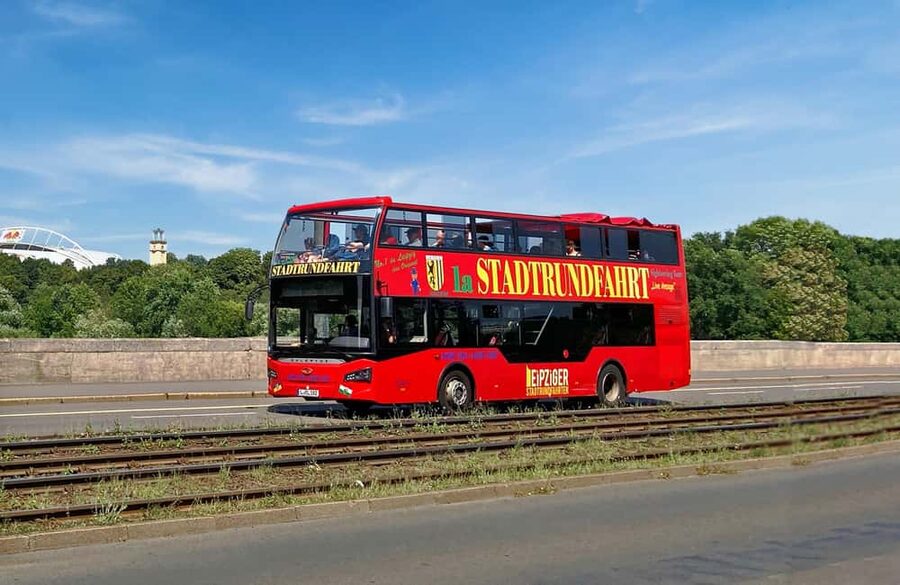
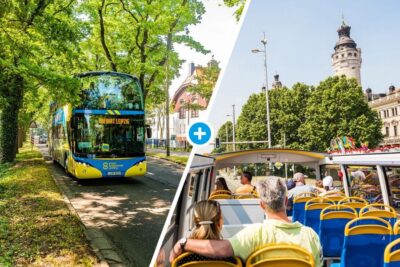
Leipzig moves fast, but you get the big picture. This relaxed red double-decker bus tour uses Leipzig’s Messemännchen mascot and German live guides to show you the city’s key sights without the hassle of planning.
I really like two things right away: the German live guides on every bus, and the fact that the upper deck is where the best views happen.
One thing to consider, though, is comfort. On at least one bus, the bus heater was reported as running very hot, so pack something you can layer.
In This Review
- Key highlights you will care about
- Starting at Richard-Wagner-Straße: where the day begins
- The upper deck advantage: how you get better angles fast
- Winter Garden, Old City, and the Central Station area
- Zoo and Gondwanaland: a change of pace without walking
- Schiller House Leipzig and the Gohliser Castles area
- Waldstraßen Quarter, Rosental, and the zoo display window
- Cityharbor Leipzig and the riverfront vibe
- Capa House, Palm Garden, and Tankbar area
- Federal Administrative Court and the library Albertina
- MDR premises and Panometer: tech and visual culture
- Battle of the Nations Monument, Southern Cemetery, and Old Market
- Bavarian Station (Old Train Station) for a food-and-atmosphere break
- Augustusplatz: Concert Hall, Panorama Tower, Opera, and the pedestrian zone
- Price and value: what $28 buys you in real sightseeing time
- Comfort, pacing, and who this suits best
- Should you book the Leipzig: Bus Tour?
- FAQ
- How long is the Leipzig bus tour?
- Where is the main meeting point?
- Is the tour guided?
- Do I need to give prior notice to join?
- Is the price $28 per person?
- Are entrance fees included?
- Is food and drink included?
- Is the tour wheelchair accessible?
- How often do the buses run?
Key highlights you will care about
- German live guides on all buses for real explanations, not just a playlist
- Best viewpoint from the upper deck for skyline and monument sightlines
- Regular bus intervals so you can settle into the route at your own pace
- Day pass value that works well if you want more than one ride
- Wheelchair accessible for a more stress-free day
- A compact loop of major sights that helps you orient fast
Starting at Richard-Wagner-Straße: where the day begins
Your day starts at Richard-Wagner-Straße 2, right across from Leipzig’s main train station (Central Train Station, East Hall). If you’re arriving by train, this is one of those locations that makes everything easier. You are already where the action is, so you can start sightseeing without a long transfer.
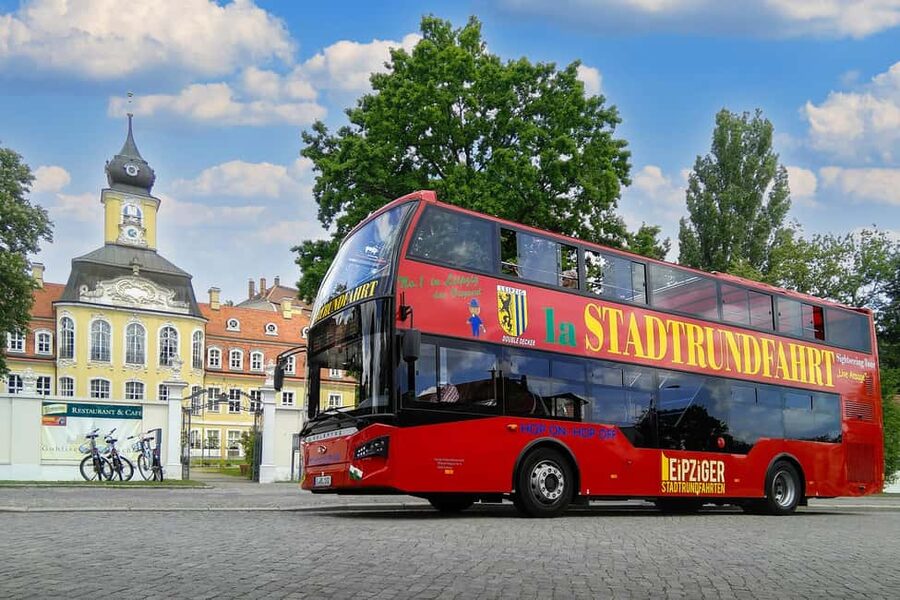
The buses are red, double-decker style, and they run as part of a hop-on style setup with regular intervals. That matters because Leipzig can feel like a lot if you try to do everything on foot on day one. Here, you get a steady rhythm: ride, look, listen, repeat.
Also, keep an eye out for the Messemännchen mascot. It is a small detail, but it fits the vibe of this tour: Leipzig with a sense of identity, not just a list of landmarks.
Also holding a platform in Leipzig
- Leipzig: City History Canal Sightseeing Tour on a Motorboat
★ 4.7 · 7,671 reviews - Leipzig: The Original Night Watchman Bremme Tour
★ 4.5 · 3,815 reviews - Combo Tour in Leipzig: Guided City Tour & City Sightseeing
★ 4.7 · 2,317 reviews
The upper deck advantage: how you get better angles fast
If you have any flexibility in where you sit, choose the upper deck. The tour notes it as the best view, and that matches the real-world logic. On a double-decker, you naturally gain distance and line of sight, which is especially helpful for broad city scenes like squares, monuments, and the long approach roads that connect different neighborhoods.
This also affects how much you enjoy the ride. When your view is good, you are not just passing time waiting for the next stop. You are actively “reading” the city as it moves by. You will likely find yourself taking fewer detours later, because the bus tour helps you understand where things are.
One practical tip: if you are sensitive to heat, pay attention to the bus temperature once you board. A report mentioned a bus with the heater turned up and not easy to switch off. Layering is the easy fix.
Winter Garden, Old City, and the Central Station area
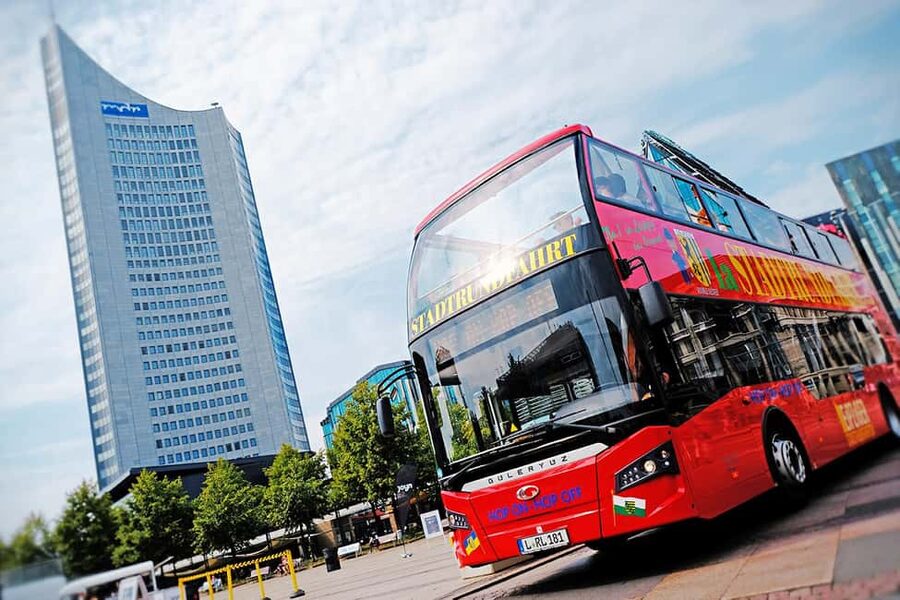
The early portion of the route gives you Leipzig’s basic orientation: Central Train Station and nearby highlights, including the Winter Garden Skyscraper. Even if you do not go inside, seeing these landmarks from the road gives your brain a reference point. It is the “start here” moment, and it helps the rest of the day click into place.
From the station side, you also get an initial look at the Old City area. This matters more than it sounds. A city tour works best when you understand what parts are “nearby roots” versus “later growth” zones. Even without stepping out of the bus, the geography starts to make sense.
If you are arriving with limited time, this early segment is a smart payoff. It sets the stage so later stops, like monuments and major squares, do not feel random.
Zoo and Gondwanaland: a change of pace without walking
Next up, you head toward the Zoo/Gondwanaland area. This is a nice contrast point in a city tour because it is a clear shift from civic buildings and central streets to a leisure-focused destination.
Why I like this stop area: it signals that Leipzig’s sightseeing isn’t only about architecture and landmarks. It also has an everyday side, where families and visitors go for fun time. Even if you do not plan to enter the zoo, seeing the area helps you map where the city’s “day trip energy” lives.
The bus approach also keeps your legs fresh. If your schedule includes other walking days, you’ll be grateful you still got a meaningful stop without a long hike.
Schiller House Leipzig and the Gohliser Castles area
Then you move into the cultural and residential spine of Leipzig with Schiller House Leipzig on Menckestraße 42. This is one of those places where the name itself is a clue: the tour is leaning into Leipzig’s literary and cultural identity, not only its modern faces.
In this same broader stretch, you will also pass through named landmarks tied to the Gohliser Castles area, plus stops including Gosen Tavern and the Chocolate Palace. You might think of these as separate attractions, but from a city-tour perspective they work as an area marker. They tell you where you can find themed interiors, historic structures, and “wander and snack” style spots if you want to extend the day after the bus loop.
What makes this part work is that it adds texture. The tour is not just saying, “Here is a building.” It is giving you a sense of Leipzig as a place with distinct zones and local flavors.
Onward connections from Leipzig:

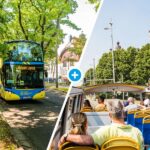

Waldstraßen Quarter, Rosental, and the zoo display window
After the castle and culture area, the bus heads toward Waldstraßenknolle and the Waldstraßen Quarter. This is where you start to feel Leipzig’s neighborhood character more clearly. You get a change in mood, more of a “living city” feel, and less of a purely monumental rhythm.
You also pass by Rosental, with a noted zoo display window. Even if you never stop in that exact moment, it helps to know it is there. It connects the tour’s earlier zoo stop to this surrounding area, so the city feels like it has repeating themes, not one-off stops.
Nearby is the Sport Forum, which adds another layer. Leipzig is not frozen in one era. You are seeing a mix of culture, leisure, and everyday facilities rolling past your window.
For many first-time visitors, this section is where the tour becomes more memorable. It stops feeling like a checklist and starts feeling like a city you could actually live in or revisit.
Cityharbor Leipzig and the riverfront vibe
The route continues to Cityharbor Leipzig on Schreberstraße 20. A harbor stop is valuable in a bus tour because it changes the visual plane. Water-adjacent areas tend to open up the view and create a different kind of sense of space.
Even without detailed explanations of how the harbor operates, seeing it from the bus helps you understand where the city’s “public gathering and movement” energy may be. If you like to plan your own walking loop later, a harbor zone is often a good anchor.
This is the kind of stop that turns a one-day orientation tour into a platform for a second day of exploring.
Capa House, Palm Garden, and Tankbar area
Next, you will come through Capa House on Jahnallee 61, plus the Palm Garden and Rockers Café Tankbar area. This segment is a reminder that Leipzig has places where food and atmosphere are part of the identity, not just an afterthought.
If you enjoy combining sightseeing with short breaks, this is a practical area to remember. You are not only absorbing sights from the bus, you are also collecting potential “stop later” spots. A city tour works best when it helps you decide where to spend time after the formal guidance ends.
And because this is on a bus route with regular intervals, you are more likely to come back to the area later rather than losing track of it entirely.
Federal Administrative Court and the library Albertina
The tour then passes by the Federal Administrative Court, including the library Albertina. I like this kind of stop because it introduces you to institutional Leipzig, the side of the city that does not always get top billing in travel marketing.
Why it matters for your planning: once you have seen where major institutions sit, you get a better sense of which parts of town are administrative and which parts are more visitor-centered. That can help you choose your next transit or walking direction.
It also gives the bus tour a balanced feel. You have monuments, culture, leisure areas, and then the administrative anchor that rounds out the picture.
MDR premises and Panometer: tech and visual culture
Toward the later middle portion, you pass Eisfichte Coffee on Fichtestraße 66, the MDR premises, and the Panometer. This is a useful trio because it combines a familiar everyday stop name (coffee) with media and a major visual attraction.
Even if you do not plan to enter the Panometer, seeing where it sits can help you decide whether it belongs on your schedule. The bus makes it easy to spot the area, so you are not forced to do guesswork from a map later.
The practical value is simple: you leave the tour with a few “maybe” targets you can pursue if you still have energy.
Battle of the Nations Monument, Southern Cemetery, and Old Market
Then the route brings you to the most dramatic historic moment listed: the Battle of the Nations Monument with the Southern Cemetery and the Old Market area. Monument stops can feel intimidating on a bus tour because you want to absorb the scale, but a bus ride still gives you a key overview.
This is also where your earlier upper-deck advantage pays off again. For large, formal spaces, being up high helps you take in the layout and not just the nearest corner.
The Old Market connection matters too. It anchors the monumental story to a more familiar city core, where you can imagine evening walking and casual browsing later.
Bavarian Station (Old Train Station) for a food-and-atmosphere break
You also pass Bavarian Station, noted as the old train station, with a restaurant reference. A transport-related stop can be more than nostalgia. It gives you a sense of Leipzig as a city shaped by movement, rail history, and changing urban functions.
From a traveler’s perspective, this is a practical stop to remember because it is tied to a place you might actually want to sit down for food. Since the tour itself does not include meals, having a clearly named location nearby helps you plan.
Even if you do not eat there, you can treat this as a “landmark to meet up later” point when you are exploring the city independently.
Augustusplatz: Concert Hall, Panorama Tower, Opera, and the pedestrian zone
The route finishes in a big, central-feeling area around Augustusplatz. Here you see the Concert Hall, Panorama Tower, University campus, and the Leipzig Opera. The tour also notes access to the pedestrian zone, which is the real payoff.
Why Augustusplatz is such a smart endpoint: it drops you into the part of Leipzig that is easiest to keep exploring on your own. You can transition from guided orientation to independent time without having to figure out a complicated logistics puzzle.
If you want to continue after the bus, this is an ideal zone. You are already in the middle of the action.
Price and value: what $28 buys you in real sightseeing time
At about $28 per person for a 1-day bus tour, the value comes from three things you cannot easily replace with self-guided wandering.
First, you get German live guides. A guide helps you understand what you are seeing while you are moving. That saves time, and it makes the stops feel connected rather than random.
Second, you get a structured orientation loop. A city like Leipzig can be spread out. Getting a guided route over key areas helps you decide where to focus later, and that is usually the real cost savings for travelers.
Third, you have a day pass concept and regular intervals. Even without assuming you will hop off at every point, the setup gives you flexibility. You are not stuck with one rigid experience.
Entrance fees and food are not included, so you still choose what to pay for. But the tour does the heavy lifting of getting you oriented and pointing you toward places worth your money later.
Comfort, pacing, and who this suits best
This is a relaxed format, and the structure is built for first-time visitors who want an overview without committing to long walks. The tour is described as roughly 90 minutes and also framed as a 1.5-hour loop. Either way, it is short enough to keep energy up, long enough to feel like you actually did something.
Group pace depends on the guide, and the reviews support what you should expect from a live city guide: explanations that are clear, and a pace that does not leave you behind. One specific note to keep in mind is that bus heating can vary, so dress with layers.
Who I think this suits best:
- First-time visitors who want orientation fast
- Travelers who like city context but do not want to plan a full day route
- People who prefer sitting with views and narration over step-by-step museum touring
- Wheelchair users who need an accessible route option
Should you book the Leipzig: Bus Tour?
I think you should book this if you want an efficient, guided Leipzig overview with great sightseeing angles from the upper deck, and if you appreciate German live explanations that make the stops easier to connect in your head.
Skip it or reconsider only if you already know Leipzig well and you are mainly looking for deep time at a small number of specific attractions. This tour is built for orientation and broad coverage, not for long entrance-heavy visits.
If you are doing Leipzig as a first stop on a bigger Germany trip, this bus tour is a strong way to get your bearings quickly, then choose your own next steps from there.
FAQ
How long is the Leipzig bus tour?
The city tour is described as roughly 90 minutes, and it is also presented as a 1.5-hour bus tour.
Where is the main meeting point?
The main stop is on Richard-Wagner-Straße 2, across from the Central Train Station (East Hall).
Is the tour guided?
Yes. You get a tour guide, and there are German live guides on the buses.
Do I need to give prior notice to join?
No. You do not need prior notice. Just come to the meeting point on Richard-Wagner Straße.
Is the price $28 per person?
Yes, the price is listed as $28 per person.
Are entrance fees included?
No. Entrance fees are not included.
Is food and drink included?
No. Food and drink are not included.
Is the tour wheelchair accessible?
Yes. The tour is listed as wheelchair accessible.
How often do the buses run?
The buses ride in regular intervals, and the main stop is Richard-Wagner-Straße 2 for beginning or ending the tour.
Fresh on the arrivals board for Leipzig





Leipzig Tours & Activities, compared.
City History Canal Sightseeing Tour on a Motorboat
Read our review →

Combo Tour in Leipzig: Guided City Tour & City Sightseeing
Read our review →



Browse the lists this tour appears in