
Reviewed · MUNICH TOURS & ACTIVITIES
Munich: Scary Tour with actors in GERMAN
In This Review
- Munich’s dark legends, acted out in the street
- Key highlights to know before you go
- A 90-minute walk where Munich turns gothic fast
- Starting at Karlsplatz, follow the big blue bag
- Neuhauser Tor to the Jesuit-era streets, Munich as a courtroom
- St Michaelis Church and Schöner Turm, superstition with real stakes
- Frauenkirche in the spotlight, devil lore and windy answers
- Town Hall yard and the alchemist story you can’t skip
- St Peter’s Church and the Old Town Hall torture chamber
- Platzl and Munich’s red light district, from the past into the 1970s
- Price and logistics, is $46 worth it?
- Should you book this Munich scary tour?
- FAQ
- Is the tour in German?
- How long is the tour?
- Where does the tour start?
- How do I recognize the guide?
- Does the tour run in bad weather?
- Is the tour wheelchair accessible?
- What is the main theme of the tour?
- What landmarks are included on the walk?
- What is included in the ticket price?
- Can I get a refund if plans change?
Munich’s dark legends, acted out in the street
You will see Munich differently after this. What makes it work is the blend of professional actors and tightly told historical scenes, all tied to real stops around the old center. I especially like the way the tour connects big landmarks to everyday fear, and I like that the acting stays central while you still get facts. One drawback to flag: it runs in German only, so it is not ideal if you need English or another language.
The theme is blunt and theatrical: witch hunts, prostitution, torture, and executions. It is not just horror for fun, though. The best moments explain how people in 16th-century Munich thought, judged, and punished, then link that to later city changes around the old red light area.
The route is a practical evening walk, built around where stories actually happened. You pass major churches and civic buildings, then you get the payoff at places like the Frauenkirche and the Town Hall area. Go in expecting darkness, and you’ll get more out of it.
Key highlights to know before you go
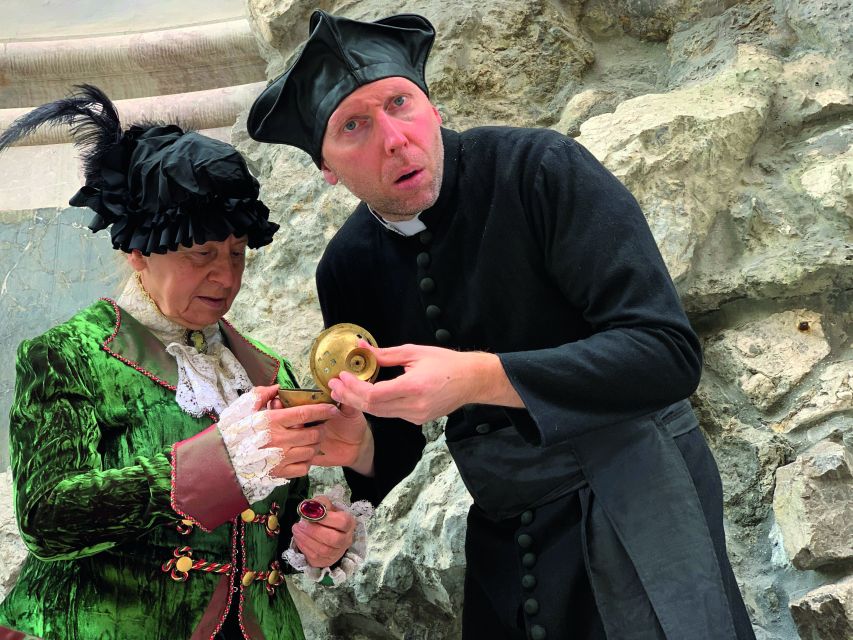
- Professional actors in traditional costumes bring the stories to life on the sidewalk
- A tightly focused theme on witch hunts, prostitution, torture, and executions
- A clear walk through major old-town landmarks including Frauenkirche and the Town Hall area
- Short, scene-driven storytelling that explains why certain events unfolded the way they did
- German-only narration, so plan for that language reality
- Rain or shine, with a 90-minute duration that keeps it manageable
Also holding a platform in Munich
- From Munich: Neuschwanstein & Linderhof Castle Full-Day Trip
★ 4.6 · 14,646 reviews - Neuschwanstein & Linderhof Castle-Fairytale Day Tour from Munich
★ 4.5 · 7,275 reviews - Munich: Third Reich & WWII Walking Tour
★ 4.6 · 6,181 reviews
A 90-minute walk where Munich turns gothic fast
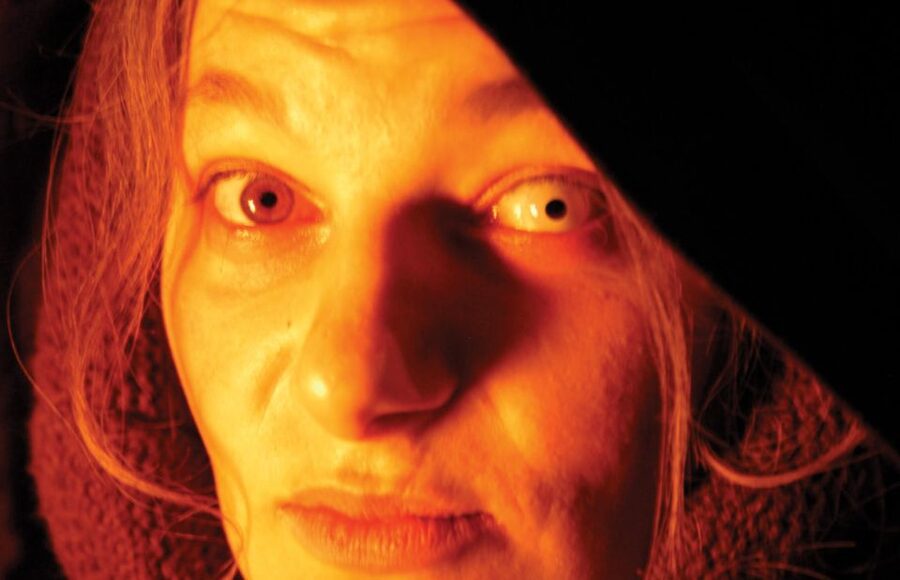
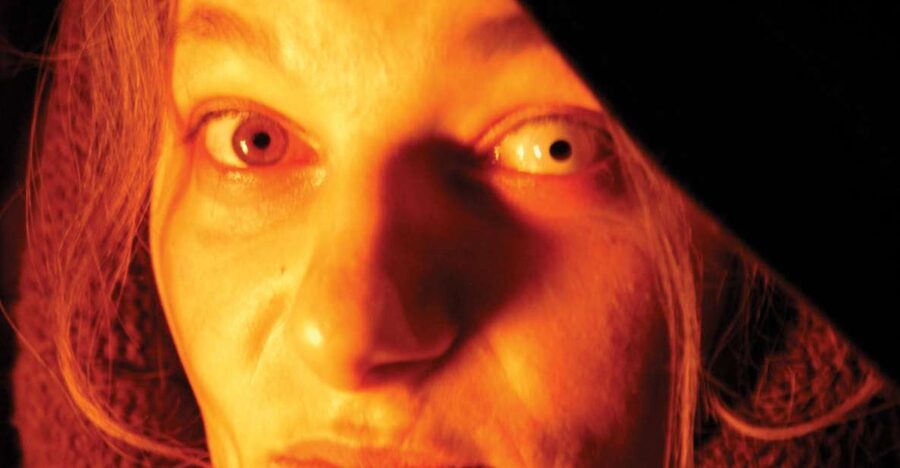
This is a story-first evening tour, not a museum-style lecture. You follow a guided route through the old center while actors reenact the darker threads of Munich’s past, from accusations and punishments to the city’s changing attitude about where certain lives belonged.
I love that the show has structure. You do not wander in foggy generalities, you move from one specific place to the next, and each stop carries a reason. You also get a mix of fear and dark humor, like the guide turning superstition into a practical question: why the devil is tied to local building lore, and why the wind seems to play along near the Frauenkirche.
The tone is intense, so if you are sensitive to themes of torture or execution, keep that in mind. The tour is not graphic in the way of a horror film, but it does talk plainly about punishments and the people caught in the system.
Starting at Karlsplatz, follow the big blue bag
Your meeting point is Karlsplatz/Stachus, under the archway of the Karlstor. Look for your guide carrying a big blue bag with white text that reads Weis(s)er Stadtvogel, which makes it easier to spot in a busy square.
This matters because a 90-minute tour moves quickly. You want to be standing in the right place at the right minute so you can start the first scene on time, instead of arriving late and scrambling to catch up.
Because the guide and actors work together as a team, timing affects the flow of the reenactments. If you want to see how each scene ties to the next street corner, being punctual helps.
Neuhauser Tor to the Jesuit-era streets, Munich as a courtroom
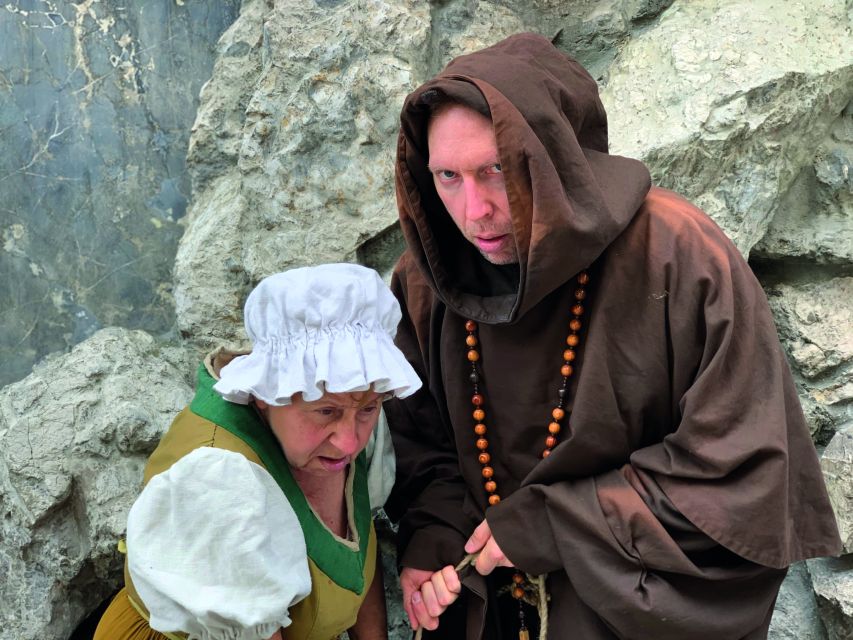
The tour begins at Neuhauser Tor, where delinquents were led to their execution out of town. That opener sets the tone: Munich is framed as a city with rules, punishments, and public morality enforced through physical journeys.
From there, you head through Salzstraße and toward the former Jesuit school connected to the period of witch hunts. This is where the tour does something smart: it does not only point at buildings, it points at power. You get a reenacted argument between Duchess Renata and Jesuit Father Ignatius, and it gives you a feel for how accusations could be tied to politics, religion, and influence.
A practical tip here: stay attentive during the walking parts. The route segments are short, and the narrative often threads through streets and doorways you might otherwise ignore. If you drift, you can miss the connection between what the actors say and what you see on the façade.
St Michaelis Church and Schöner Turm, superstition with real stakes
As the story moves to St. Michaelis Church, the tour focuses on an “unusual storm” tied to a tower collapse during construction. The reenactment frames blame through the lens of the time, linking bad women to disaster, which helps you understand how easily fear could become a verdict.
Then you move on to the Schöner Turm for another grim Munich thread, the sad story of an unfortunate goldsmith. This is one of those stops that shows why the tour’s theme goes beyond witches. You are learning how accusations could land on different people, for different reasons, all within a society where authority and rumor mattered.
One consideration: the content is heavy, but the tour keeps it moving. If you want slower pacing and longer explanations, this 90-minute format might feel intense. If you like “short scene, next stop,” you will probably find it just the right length.
Onward connections from Munich:

Frauenkirche in the spotlight, devil lore and windy answers
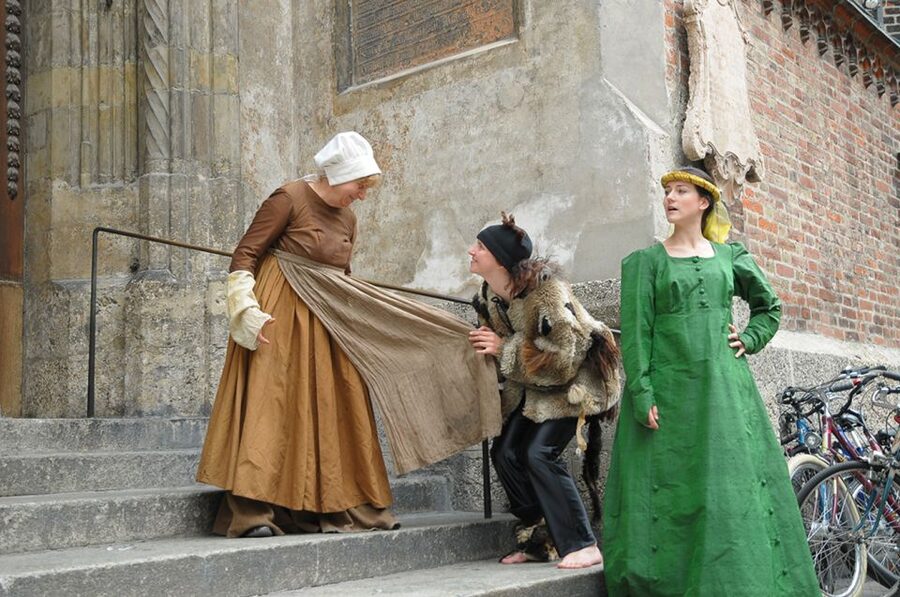
At Frauenkirche, the tour introduces the Prince of Darkness. Yes, that sounds theatrical because it is, but the point is local legend tied to the church and its construction story.
You get explanations built around why the devil is said to have helped the master builder, plus why it is so windy around this landmark. You also hear the playful, eerie detail about the devil’s shoe size, which is exactly the kind of dark folklore detail that makes the tour memorable.
This stop is also where I think the acting matters most. The actors and guide can turn a landmark you have seen in photos into a place with a story you can repeat. When the lore hits, it feels like the city is talking back to you.
If you tend to prefer factual history without dramatization, you may still enjoy this stop for the “why people believed this” angle. The devil character is a vehicle for explaining worldview, not just a scare tactic.
Town Hall yard and the alchemist story you can’t skip
Next comes the Town Hall area, where you are led into the alchemist scene with Marco Bragadino waiting for you. The tour frames him as a supposed gold smith, and the reenactment helps you grasp how alchemy and fraud could overlap in public imagination.
I like this portion because it adds variety. Earlier scenes focus on witchcraft and punishment, and here you shift toward expertise, deception, and the wish for impossible transformation. It is a different angle on fear and belief, still rooted in a real historical context.
You also hear about potions, rides on brooms, and frightening folk details like toads’ tongues and children’s hands. Those details are not just strange facts. They show how accusations often used the language of the time, mixing religion, medicine-like ideas, and superstition to make allegations sound convincing.
St Peter’s Church and the Old Town Hall torture chamber
At St. Peter’s Church, the tour turns toward daily life for the hangman. You learn how he looked, why people tried to avoid him, and details about how a gallows rope could be obtained.
This part hits a key point people often miss: punishment was a system with workers, not just a moral lesson. By focusing on the hangman’s ordinary presence in the city, the tour makes the machinery of fear feel real.
Then you head to the Old Town Hall, where you cross the former torture chamber while hearing gruesome stories. Even if you are not a fan of dark themes, this stop is valuable because it explains why punishment was built into civic space, not only into distant execution grounds.
If you have kids with you, consider your comfort level carefully. The tour does include horror elements, even though it is delivered as a historical story with acting.
Platzl and Munich’s red light district, from the past into the 1970s
The Platzl area is where the tour moves away from witch hunts and execution sites and toward a different kind of social reality. You hear how the Platzl was home to Munich’s red light district until the Olympic Games of 1972.
The guide also connects this to why prostitution does not exist anymore in the historic center since the 1970s. That historical shift adds a useful second half to the tour: it shows that public morality and enforcement can change over time, even in the same streets.
A fun cultural touch comes in here too, with a reference to the song Skandal im Sperrbezirk by Spider Murphy Gang. Even if you do not know the track, it gives context for why modern Munich still remembers this era.
Price and logistics, is $46 worth it?
At $46 per person for 90 minutes, this tour sits in the “value depends on your taste” category. If you want pure facts, you might find the theatrical format less efficient. But if you like history you can picture, the built-in acting scenes justify the cost.
The included pieces matter here. You get a competent, entertaining guide plus a professional team of actors in historic costumes. That means you are paying for a show layered onto a walking route through real landmarks, not just a guided stroll with a script.
In practical terms, the language is the biggest “logistics” factor. The tour is in German, and one note you should take seriously is that there is no English or other language option stated. If your German is limited, the story might still feel visual, but you will miss a lot of the detail.
Finally, it runs rain or shine. That is normal for Munich in general, but for this specific format, it means you should dress for wet streets and keep your expectations flexible.
Should you book this Munich scary tour?
Book it if you want a walking tour with actors at the center, and you like the idea of learning why Munich’s darker legends took hold in specific places. You’ll probably enjoy it most if you are comfortable with serious themes like witch hunts and executions, and if you like your history with characters, arguments, and folklore.
Skip it if German-only narration would frustrate you, or if the torture and execution topic would sour the evening. You also might not love it if you prefer long, slow museum-style explanations, because the whole format is built for forward motion and short scenes.
If you do book, arrive on time at Karlsplatz/Stachus and wear shoes you trust. This tour rewards attention, and the payoff is that the old streets, churches, and town buildings end up carrying stories you can point to right on the map.
FAQ
Is the tour in German?
Yes. The live guide language is German.
How long is the tour?
The duration is 90 minutes.
Where does the tour start?
It starts at Karlsplatz/Stachus, under the archway of the Karlstor.
How do I recognize the guide?
The guide will be wearing a BIG BLUE BAG with white words that say Weis(s)er Stadtvogel.
Does the tour run in bad weather?
Yes, it takes place rain or shine.
Is the tour wheelchair accessible?
Yes, it is listed as wheelchair accessible.
What is the main theme of the tour?
The tour focuses on witch hunts, prostitution, torture, and executions.
What landmarks are included on the walk?
You will walk along Neuhauser Tor, St. Michaelis Church, the Frauenkirche, the Town Hall yard, St Peter’s Church, and the Old Town Hall. The tour also references the Platzl area.
What is included in the ticket price?
The ticket includes a competent and entertaining guide and a professional team of actors in historic costumes.
Can I get a refund if plans change?
Yes. Free cancellation is available up to 24 hours in advance for a full refund.
Fresh on the arrivals board for Munich

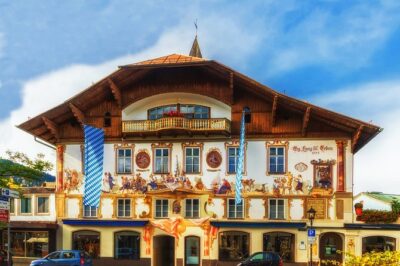
Munich Tours & Activities, compared.
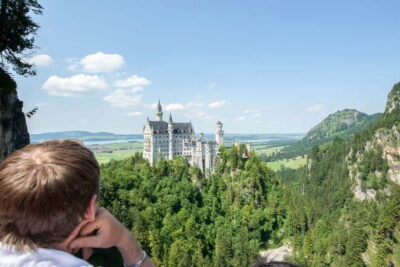
Neuschwanstein & Linderhof Castle Full-Day Trip
Read our review →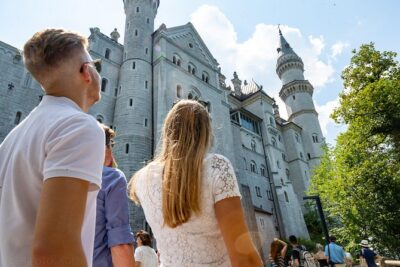
Neuschwanstein & Linderhof Castle-Fairytale Day Tour from Munich
Read our review →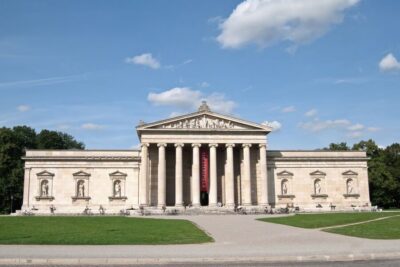
Dachau Concentration Camp Memorial Site Tour from Munich by Train
Read our review →
Munich Hop-On Hop-Off Tour: 1-Day or 2-Day Ticket
Read our review →
Browse the lists this tour appears in