
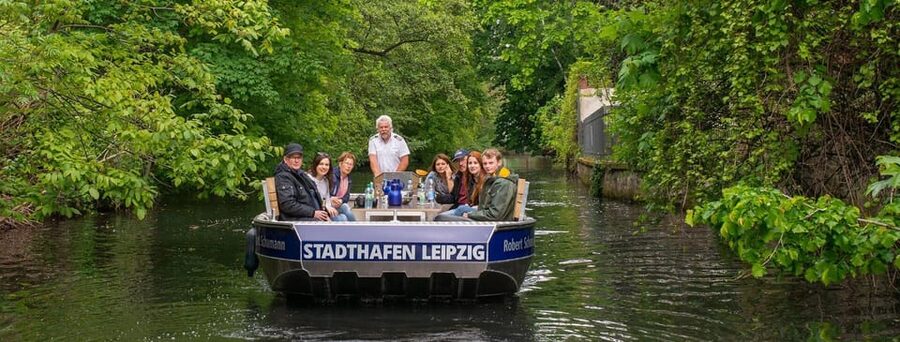
Reviewed · 2-HOUR EXPERIENCES
Leipzig: 2-hour Auwald Motorboat Tour
This boat ride is a shortcut to nature. You glide through Leipzig’s inner-city alluvial forest by electric motor, with a captain who explains what you are seeing along the Elster flood bed and the Pleiße river system. It is an easy 2-hour way to trade traffic and screens for birds, plants, and a calmer pace.
Two things I really like are the quiet, low-impact feel of the electric motor and how much you learn about flora and fauna without it turning into a lecture. One thing to keep in mind is that the tour runs even when it is wet, so you should plan for rain and bring what you need.
In This Review
- Key things you should notice before you go
- Leipzig Auwald by boat: quiet nature time close to everything
- Route overview: city harbor, Elster flood bed, Scheibenholz, and back
- Starting at Leipzig city harbor: the first shift from city to river
- Elster flood bed: a natural “in-between” that explains the river system
- Scheibenholz racecourse area: historic stop, nature back on the map
- Connewitz lock: the working-water moment that adds realism
- The Pleiße through dense alluvial forest: where the wildlife theme turns into a hunt
- Floßgraben mouth turnaround: the best place to reset your eyes
- Price and value: what $25 buys in two hours
- What your guide really does: stories plus real facts
- Rain matters: how to pack so the tour still feels great
- Who this fits best (and who might want a different plan)
- Should you book the Leipzig 2-hour Auwald motorboat tour?
- FAQ
- How long is the Leipzig Auwald Motorboat Tour?
- How much does the tour cost?
- Where do I meet for the boat tour?
- What is the language of the tour?
- Does the tour run in bad weather?
- Are drinks included on the boat?
- Can I get a rain poncho if it is raining?
- What is the main wildlife focus of the tour?
- What is the cancellation policy?
Key things you should notice before you go
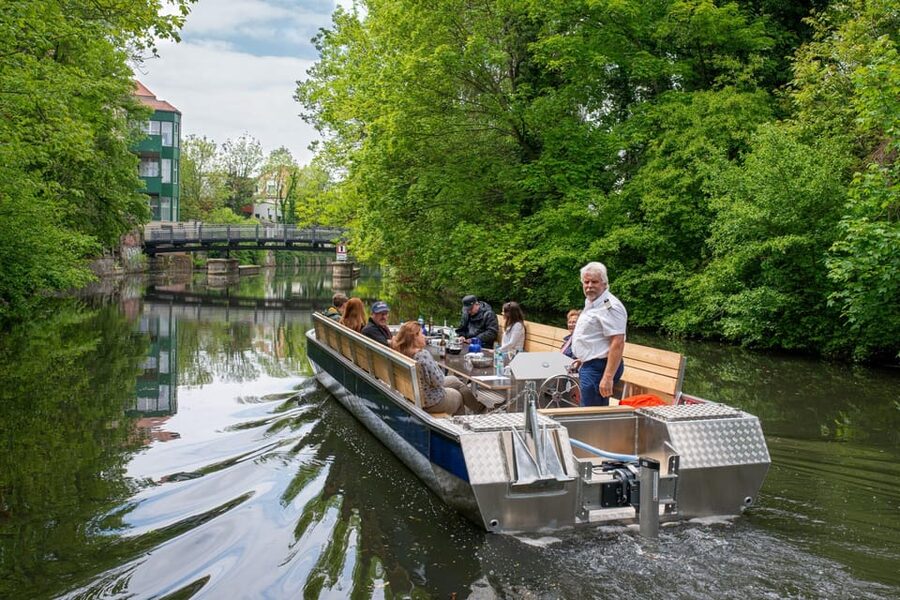
- Electric motor, quiet atmosphere: a calmer ride that makes bird sounds and captain stories easier to catch
- Leipzig’s biggest preserved inner-city alluvial forest: you see how big nature can be without leaving town
- Wildlife focus, including kingfishers: the captain points out what to look for in birds, fish, and mammals
- Connewitz lock experience: a real working waterway moment, not just scenery
- Floßgraben turnaround point: the route loops back from a picturesque mouth area
- Captains named Tom and Klaus in past departures: expect lively anecdotes and engaged guiding
Leipzig Auwald by boat: quiet nature time close to everything
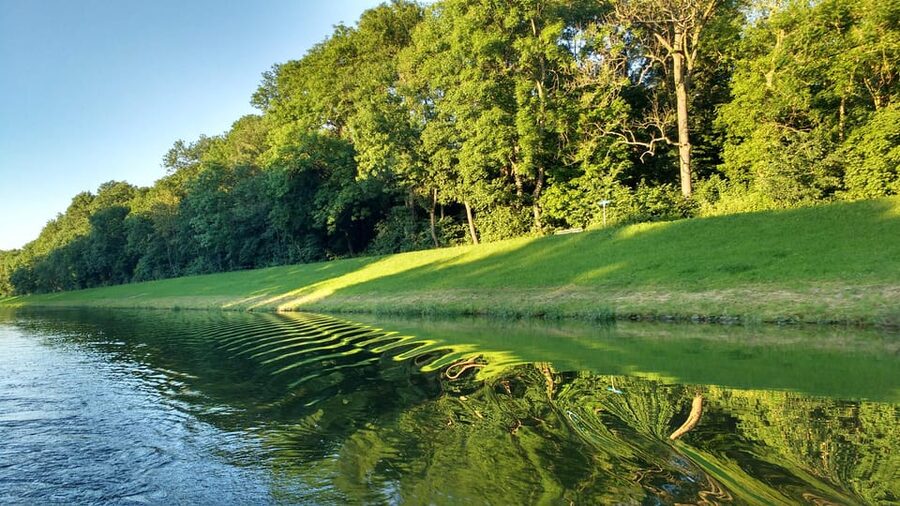
If you want a Leipzig experience that feels different from museums and main squares, this 2-hour Auwald motorboat tour is a smart pick. You start at the city harbor and work your way into a preserved river world, where trees, reeds, and riverbanks shape the whole mood.
What makes it especially good for real life is the pacing. Two hours is long enough to feel like you escaped, but short enough that you can still enjoy the rest of your day. And since the boat uses an electric motor, the vibe stays gentle. You are not fighting engine noise. You can actually hear the details your captain is sharing.
Also holding a platform in Leipzig
- Leipzig: City History Canal Sightseeing Tour on a Motorboat
★ 4.7 · 7,671 reviews - Leipzig: The Original Night Watchman Bremme Tour
★ 4.5 · 3,815 reviews - Combo Tour in Leipzig: Guided City Tour & City Sightseeing
★ 4.7 · 2,317 reviews
Route overview: city harbor, Elster flood bed, Scheibenholz, and back
The basic flow is simple and scenic. You begin at the jetty by the harbor and head out along the Elster flood bed, moving toward the historic spot near the Scheibenholz racecourse. After that, the route continues into the network around the Connewitz lock, then follows the course of the Pleiße through dense alluvial forest.
The tour turns around at the picturesque mouth of the Floßgraben, and that is where you start your return journey. That turnaround matters. It helps the whole trip feel like a guided loop, not a straight line where you only see one direction.
A practical note: the tour includes rain. That means the river view and the forest mood can change fast. A gray sky can still be beautiful, but your comfort depends on what you bring.
Starting at Leipzig city harbor: the first shift from city to river
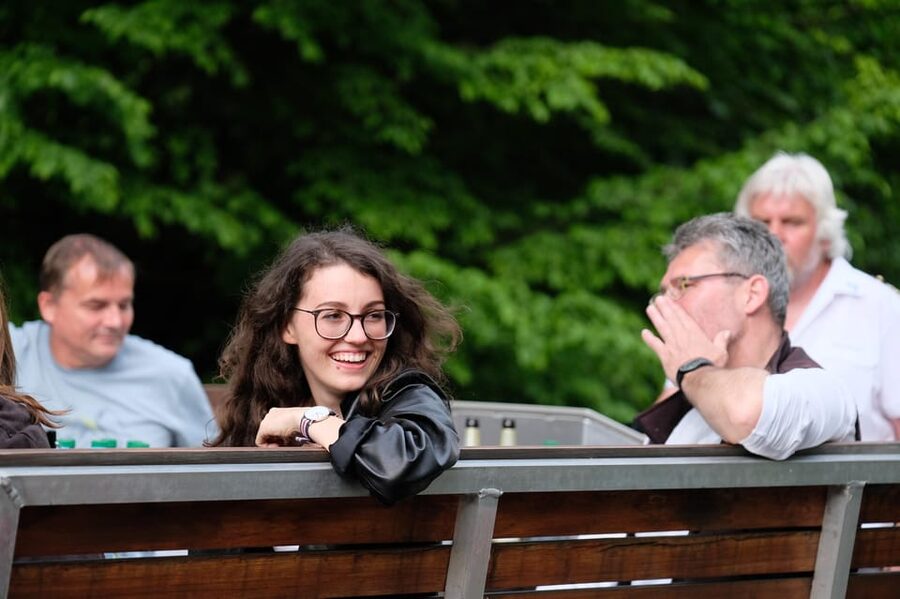
Leaving from the Leipzig city harbor is a big part of why this tour works. You get a quick sense of how close the water system is to everyday life here. One minute you are near the city edge. The next, you are moving into channels shaped by flooding and slow-moving water.
As you follow the Elster flood bed, you start noticing the transition from built-up edges to living bank. Flood bed areas can feel open at first, then more enclosed as vegetation thickens. That shift sets you up for the best part of the trip: when the boat pushes into the alluvial forest feel.
Elster flood bed: a natural “in-between” that explains the river system
The Elster flood bed segment is not just “getting there.” It is where the captain’s education hooks in. Flood bed landscapes are all about movement and change, because water levels and flow patterns shape what grows there.
This is where your guide’s flora and fauna focus really pays off. Instead of treating plants and animals like decorations, you start learning how river habitats function. You might hear explanations about how different species take advantage of calmer backwaters, river edges, and seasonal shifts.
And since the boat is quiet, you have a better chance of catching those moments where a bird suddenly appears, or where you notice something moving along the bank.
Scheibenholz racecourse area: historic stop, nature back on the map
Approaching the historic location at the Scheibenholz racecourse gives the trip a neat contrast. It is a reminder that humans and waterways have always been connected here. Even if your eyes are focused on trees and water, that kind of landmark helps you understand the setting in a broader way.
This segment also makes the tour feel more than a single habitat. You are traveling through Leipzig’s river story, not just floating in one location. When you then move toward the lock and deeper forest parts, it feels like a natural progression.
One small drawback with this kind of route: if you are expecting nonstop wildlife spotting on every second, you might not always get it. Nature runs on its own schedule. The value here is that you learn what you are likely to see, so you can look with purpose instead of hoping.
Onward connections from Leipzig:

Connewitz lock: the working-water moment that adds realism
The Connewitz lock stop is one of the practical highlights. Locks make the river system feel real, because they show you that this environment is managed and connected to transportation and water regulation.
In a guided setting, a lock is also a story machine. Your captain can connect what you see on the water to how rivers behave across neighborhoods. It is the kind of moment that breaks up the ride so it stays interesting, even when the wildlife sighting rate slows down.
And because the boat is running on an electric motor, the whole moment stays calm. You are not getting the noise of a heavy engine. It feels more like watching the river do its job.
The Pleiße through dense alluvial forest: where the wildlife theme turns into a hunt
After the lock, you follow the course of the Pleiße through dense alluvial forest. This is where the trip earns its reputation. The alluvial forest is one of the largest preserved inner-city alluvial forests in Central Europe, and that scale is the point.
In practical terms, a larger alluvial forest means more habitat variety. More variety usually means more chances to spot birds, fish activity near edges, and signs of mammals moving through or around the waterline. Your captain will share facts that help you read the habitat.
One review highlight that matters for you: captains tend to stay engaging even when conditions are not perfect. On rainier days, past departures included guides who adjusted and still delivered stories, so you are not stuck in a dull “we are just watching water” mode. The learning stays active.
Floßgraben mouth turnaround: the best place to reset your eyes
The turning point is the picturesque mouth of the Floßgraben. That turnaround is not just a technical point. It is a chance to look at the full picture before you head back.
This is also a great moment to refocus on wildlife. In alluvial environments, some species show up more around certain water transitions, like where channels widen or meet slower-moving areas. Your captain’s commentary can guide your eyes toward what to watch for.
And yes, the wildlife theme includes the kingfisher. Even if you do not spot one immediately, the fact that your guide specifically mentions it signals that you are on the right route for the right kind of habitat.
Price and value: what $25 buys in two hours
At $25 per person for a 2-hour guided ride, the value comes from three places.
First, you are paying for time in a real natural area without the friction of planning transport, routes, and equipment. Second, you get a captain-led education on flora and fauna, not just a view from the seat. Third, the electric motor adds a practical comfort factor, since the experience stays relaxed and quieter than typical motorboat rides.
Drinks are not included, so you will want to plan for that if you know you get thirsty during longer outings. Rain ponchos can be bought, which helps if weather flips on you.
Balanced take: it is still only two hours, so it is not a birdwatching marathon. If you want hours of stillness and binocular time, you may want a longer nature plan later. But if you want a fun, guided introduction with lots of information and a clear route, this price-to-time ratio is strong.
What your guide really does: stories plus real facts
This is the kind of tour where the guide’s personality matters because you are moving through a habitat you cannot fully “survey” from the water. A good captain turns the ride into a guided interpretation.
From past experiences, captains like Tom and Klaus have been singled out for being entertaining, joke-friendly, and good at filling time with both information and anecdotes. I like that mix because it keeps you alert. You are not just passively looking. You start anticipating what might be mentioned next.
You can also benefit if you enjoy practical nature learning. Your captain explains flora and fauna in a way that helps you spot patterns. For example, you might learn why certain bird types choose edges, what kinds of riverbank plants can indicate habitat conditions, or what animals might appear around water transitions.
If you are someone who usually feels like nature tours are either too technical or too vague, this one tends to hit the middle.
Rain matters: how to pack so the tour still feels great
The tour takes place in the rain. That is not a problem if you pack for it. The simple rule: dress according to the weather and consider what you will be comfortable wearing for two hours outdoors.
On the sunny side, you should take sun cream or a sun hat if necessary. That matters in Germany too, because river routes can still get bright even when clouds move in.
If you forgot something, rain ponchos can be bought. And since boarding and disembarking happen at the Schreberstraße 20 jetty area, you will want to be ready for quick transitions on and off the boat. Keep your essentials simple and close at hand.
Who this fits best (and who might want a different plan)
This tour is best for you if you:
- want an easy, guided nature experience inside Leipzig
- like learning while you move, not only while standing still
- enjoy river scenery and wildlife facts
- want a short outing that works as a half-day anchor
It might be less perfect if you:
- need a very quiet, low-stimulation experience with zero storytelling
- only travel on days with ideal weather and hate the idea of getting wet
- expect guaranteed kingfisher sightings every single time, because wildlife follows real schedules
One more quick thought: the tour language is German, so if you do not speak German, your enjoyment may depend on how comfortable you are following explanations without full comprehension. The route is visually interesting, but the value spike here is the captain’s commentary.
Should you book the Leipzig 2-hour Auwald motorboat tour?
Yes, if you want a high-value, low-effort nature outing that stays close to the city. For $25, you get a guided loop through key parts of the water system, a quiet ride thanks to the electric motor, and an active focus on flora and fauna that helps you look smarter during the trip.
Skip it only if you cannot handle rain at all, or if German-only guiding would frustrate you. If you are comfortable dressing for weather and you like guided learning, this is one of those “do it once, then brag about it later” Leipzig experiences.
If you book, bring sun protection if it is bright, and plan for rain either way. Two hours is just enough time to feel nature working, without losing your day.
FAQ
How long is the Leipzig Auwald Motorboat Tour?
The tour lasts 2 hours.
How much does the tour cost?
The price is $25 per person.
Where do I meet for the boat tour?
You board and disembark at the jetty near Schreberstraße 20, and the meeting is directly at the jetty.
What is the language of the tour?
The tour is conducted in German.
Does the tour run in bad weather?
Yes, the tour takes place in the rain.
Are drinks included on the boat?
No. Drinks are not included and you can buy them on board.
Can I get a rain poncho if it is raining?
Rain ponchos can be bought.
What is the main wildlife focus of the tour?
The captain shares information about flora and fauna, including the colorful kingfisher, along with birds, fish, and mammals that live in the habitat.
What is the cancellation policy?
You can cancel up to 24 hours in advance for a full refund.
Fresh on the arrivals board for Leipzig





2-Hour Experiences, compared.

Berlin’s Best: 2 Hour Walking Tour Third Reich and the Cold War
Read our review →

Browse the lists this tour appears in