Reviewed · GERMANY
Kaßberg – die schönste Seite von Chemnitz
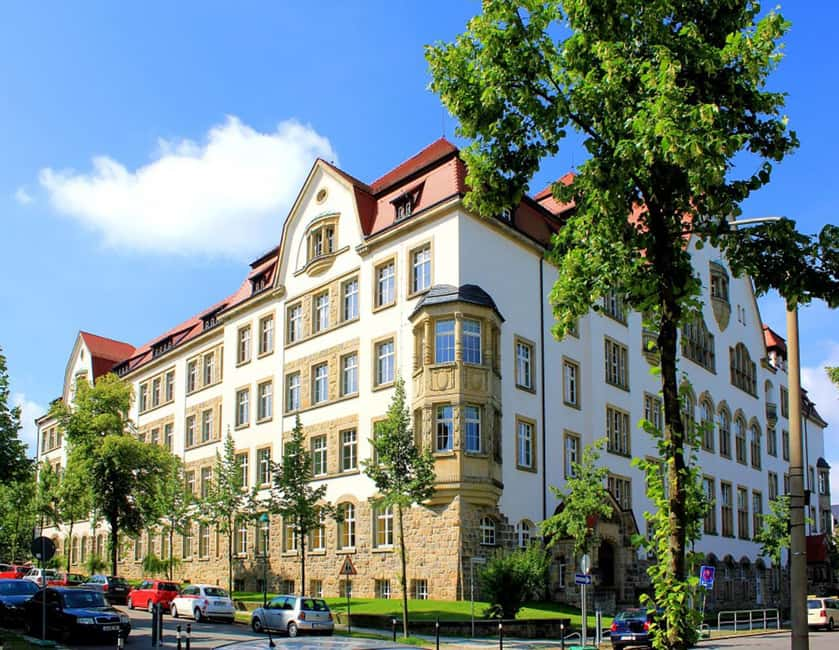
Kaßberg is Chemnitz at its most elegant. In 90 minutes, you get a walk through one of Europe’s biggest connected neighborhoods of Art Nouveau and Wilhelminian design, with street after street of carefully detailed facades and stories you can actually picture.
I especially love two things here: first, the way the neighborhood plan still makes sense to visitors, with an orthogonal street grid that follows the slopes; second, the balance of architecture plus human history, including the Kaßberg Prison Memorial and GDR-era memories.
One heads-up: the guide’s stories can drift into current affairs sometimes, and if you mainly want strict Gründerzeit and building history, you may wish the tour stayed more architectural.
In This Review
- Key highlights you should know before you go
- Kaßberg’s Art Nouveau facades, and why this neighborhood feels different
- The “I dared” origin story, and how air and industry shaped the plan
- The street grid on the slopes, plus the squares that break up the walk
- Historic industry on the edges, and why the neighborhood had a “work and live” logic
- Civic architecture on the walk, and what to look for on the facades
- Kaßberg Prison Memorial: a heavy stop placed inside a beautiful neighborhood
- German-language guide, 90 minutes, and how to get the most value
- Price and the value question: about $23 for a neighborhood you can keep exploring
- Who should book Kaßberg, and who might prefer something else
- Should you book Kaßberg die schönste Seite von Chemnitz?
- FAQ
- How long is the Kaßberg guided tour?
- How much does the Kaßberg tour cost?
- Where is the Kaßberg tour located?
- Is the tour guided?
- What language is the tour in?
- Is the tour suitable for families?
- What styles and sights are the main focus?
- Is there a memorial stop on the route?
- Can I cancel for a full refund?
- Is there an option to pay later?
Key highlights you should know before you go
- Art Nouveau and Wilhelminian blocks across about 2 square kilometers, protected as an area monument since 1991
- Street plan that follows the hill, with streets parallel or right angles to the slope, plus green squares like Kaiserplatz
- 480 historic buildings in the protected zone, mostly multi-storey residential plus civic and school buildings
- High-impact stop at the Kaßberg Prison Memorial, tied to GDR and National Socialism history
- Current context in the narration, including local rent figures shared during some tours
- German-language live guide with anecdote driven storytelling, sometimes with dry humor
Kaßberg’s Art Nouveau facades, and why this neighborhood feels different
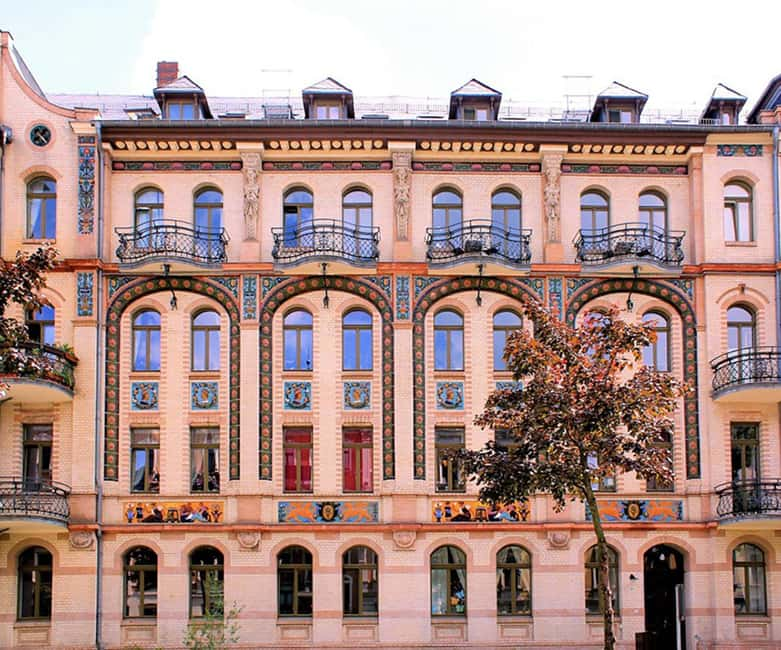
Kaßberg is not the kind of sight you just glance at and move on. Even though it’s a residential area now, the streets read like a timeline of how Chemnitz grew and re-made itself. The big idea is simple: this is one of the largest contiguous districts in Europe where Art Nouveau and Wilhelminian style buildings sit side by side, street after street.
What I like most is that the beauty is practical. You can walk the neighborhood without needing special tickets or an indoor schedule. The architecture does the work, because whole blocks were planned to look coherent, not like a patchwork. That coherence is exactly why Kaßberg feels like a real place, not a museum set.
Also, this is a good choice if you want something more “local life” than a city-center sprint. You’re spending time in a residential neighborhood where the design helped people live better, and you can still see why it attracted builders and families.
Next departures posted for Chemnitz:
- Chemnitz city tour
★ 4.9 · 159 reviews
The “I dared” origin story, and how air and industry shaped the plan
Kaßberg’s beginning is wonderfully specific, and it helps you understand the neighborhood layout when you’re actually on the street. In 1855, a Chemnitz teacher named Johann Friedrich Stahlknecht built the first house on the Kaßberg. The property later bordered what was called Hohe Straße.
Here’s the detail that makes the story stick: because the area was still relatively undeveloped, Stahlknecht’s move was considered daring. His house carried the fourfold inscription I dared. After that, he wrote about the advantages of living there in articles for a Chemnitz daily newspaper, which drew more builders.
Then industrialization accelerated. The Kaßberg hills became a preferred place to live partly because the air was less polluted than in other parts of the city. That might sound like a throwaway line, but it changes how you read the neighborhood when you’re walking it. This wasn’t only style. It was location and quality of life.
The neighborhood’s size is about 2 square kilometers, and the main building period you’ll see reflected in the streets is roughly 1870 to 1930. It also helps explain why the whole area feels intentionally planned instead of random.
The street grid on the slopes, plus the squares that break up the walk
If you want an easy mental map, Kaßberg gives you one. The core characteristic is an orthogonal network of streets. Streets run parallel or at right angles to the slope, so you get a repeatable rhythm while the terrain changes under your feet.
As you walk, watch for the green spaces that were inserted into the grid. These squares are part of the design, not filler. Kaiserplatz, Stephanplatz, Wielandplatz, and Andréplatz are named as part of the street network, and they give you “reset points” during the tour.
Practical tip: these squares are perfect for quick orientation. When your brain is trying to track facades and side streets, a small open space helps you re-center. If you like photography, these spots tend to give you a better line of sight down a street than between tightly packed buildings.
This planning also helps families and first-time visitors. Even if you don’t know Chemnitz, you can still follow the route and feel like you’re moving logically rather than wandering.
Historic industry on the edges, and why the neighborhood had a “work and live” logic
One reason Kaßberg works as a guided walk is that it wasn’t just pretty housing. Chemnitz companies operated along the edges of the Kaßberg, so many residents were connected to local industry.
The tour framing you can expect includes industrial names from the area, such as the Sächsische Maschinenfabrik (formerly Richard Hartmann), Maschinenfabriken Germania (formerly J. S. Schwalbe & Sohn), Union and C. G. Haubold, plus facilities like a Baum safe factory, the Presto-Werke, and the brothers’ textile factory Goeritz et al.
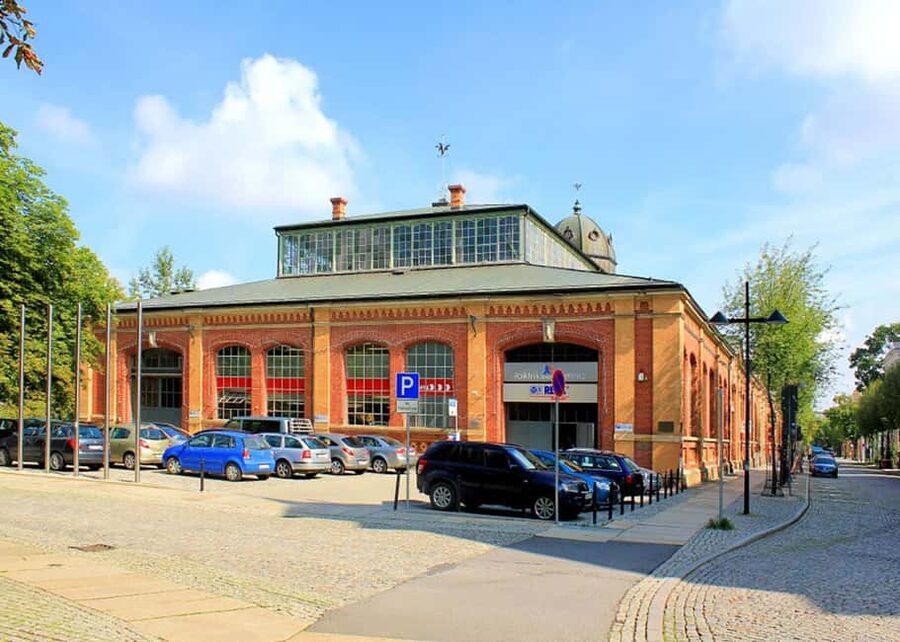
You might notice that many civic buildings were also built here by the city administration: the Royal District and Regional Court, the Royal Tax Authority, the Imperial Post Office, the Royal Prison, the Royal Gymnasium, and a Higher Secondary School, among others.
Why it matters for you: neighborhoods like this usually had a full ecosystem. When you see courts, schools, and postal buildings mixed with residential streets, you start to understand how life functioned day to day. This isn’t only about façade details. It’s about the built environment doing a job.
Drawback to keep in mind: the tour is guided in German, and the storytelling is anecdote driven. If you speak limited German, you’ll still enjoy the visual side, but you might miss some of the finer points about institutions and their roles.
Civic architecture on the walk, and what to look for on the facades
Even if you’re not an architecture nerd, Kaßberg gives you visual cues quickly. The key is to look for consistency and repetition. This district is known for decorative facades with close attention to detail across entire streets. That’s exactly what you should train your eyes on during the walk.
As you move, keep an eye out for different “types” of buildings even if they’re in the same general style family. Residential blocks, municipal buildings, and school buildings all tend to show up in different forms, and the guide’s job is to connect those forms to the neighborhood’s growth period.
If you’re hoping for a smooth “here is every style and every year” explanation, you may or may not get that. One participant wished for more historical background focused tightly on Gründerzeit. Another appreciated the guide’s broader connection of past structures to present-day relevance. So your experience likely depends on what the guide chooses to highlight that day.
My advice: treat it like a story walk. Let the guide set the pace, then pick two to three streets or squares to really watch. You’ll get more out of that than trying to memorize everything.
Kaßberg Prison Memorial: a heavy stop placed inside a beautiful neighborhood
The Kaßberg Prison Memorial is the kind of stop that changes the tone of a walk. The area isn’t only about decorative streets. It also includes a place of remembrance: it commemorates the ransom of prisoners in the GDR and the time of National Socialism.
What I find useful about having this stop inside the Kaßberg context is that it prevents the neighborhood from turning into a pure style appreciation exercise. You see how the same streets that once represented growth and investment later held darker realities.
There’s also a detail that shows up in some tour routes: some guides include discussion connected to a former Stasi deportation prison. If your tour mentions that, it’s worth listening closely, because it ties the memorial context to the lived experience of surveillance and confinement.
Practical note: this is a memorial site. Keep your tone respectful, and don’t treat it like a quick photo break. If you’re traveling with kids, you might want to preview gently that the tour includes a serious history segment.
German-language guide, 90 minutes, and how to get the most value
This experience runs about 90 minutes and is led by a live German guide. That timing matters. You’re not meant to wander for hours. You’re meant to get a curated walk where the guide connects the dots between street design, building purpose, and historical turning points.
I like tours like this because they create momentum. You don’t have to decide where to go next. You can focus on noticing: street grid, squares, facades, and how the narrative changes as the tour hits civic and memorial themes.
To get maximum value, come with two small habits:
- Look at the map shape in your head. Kaßberg’s grid and squares help you track progress.
- Choose one theme for yourself: architecture style, neighborhood planning, or human history. You’ll hear everything, but focusing your attention keeps it satisfying.
And yes, there’s humor here. One review praised the guide’s dry humor, which can make the history easier to swallow. Another review found the tour a bit too political for their taste. Translation: expect a personality and a story style, not a sterile lecture.
Price and the value question: about $23 for a neighborhood you can keep exploring
At about $23 per person for a 90-minute guided tour, this is priced like a solid city neighborhood experience. It’s not an all-day spend, so you’re buying efficiency plus interpretation.
Here’s the real value angle: Kaßberg is protected as an area monument since February 1991 and includes around 480 buildings. Without a guide, you might appreciate the facades, then leave with a vague sense of what you saw. With a guide, you get the connective tissue: why the area developed, why the street layout makes sense, and where major civic and prison-related sites fit into the story.
Some tours also add practical, modern context. One participant was surprised by cold rent figures the guide mentioned, around 5 to 7 euros per square meter. Even if that specific number isn’t said on your tour, the general approach is worth noting. When a guide connects historic buildings to today’s living reality, the neighborhood becomes more than an architectural snapshot.
If you’re visiting with family, this can be a good stop because the district is made for walking and the story pacing can keep younger minds engaged. If you prefer only indoor, ticketed attractions, you might find it too “street-based” for your taste.
Who should book Kaßberg, and who might prefer something else
This tour suits you if you want:
- A neighborhood-level look at Chemnitz, not just a one-building highlight
- Architecture lovers who care about facades and planning
- Families who like walking and story time, since the experience is framed as culture for the whole family
- Travelers who appreciate that history includes both beauty and hardship, with a memorial stop built into the route
You might want a different option if:
- You dislike politics being mixed into explanations, since one participant felt those segments should be skipped
- You want ultra-deep Gründerzeit and year-by-year detail, since another participant wanted more historical background concentrated on that topic
If you’re unsure, Kaßberg is still a strong pick because even the “just look” part is satisfying. A well guided walk just makes it stick.
Should you book Kaßberg die schönste Seite von Chemnitz?
I think you should book it if you want a compact, high-value way to understand Chemnitz beyond the center. For around $23, you’re getting a guided interpretation of a major Art Nouveau and Wilhelminian district, plus a meaningful memorial stop, all within 90 minutes.
Book with confidence if you’re comfortable with a German-language tour and you like street walking. Skip it only if you strongly prefer strictly architectural commentary with no branching into other themes. Otherwise, Kaßberg is the kind of place where the details reward your attention, and the stories give them weight.
FAQ
How long is the Kaßberg guided tour?
The tour lasts 90 minutes.
How much does the Kaßberg tour cost?
The price is listed as $23 per person.
Where is the Kaßberg tour located?
It is in Germany, in Chemnitz, focused on the Kaßberg district.
Is the tour guided?
Yes, it includes a guided tour on the Kaßberg.
What language is the tour in?
The live tour guide speaks German.
Is the tour suitable for families?
The experience is described as culture for the whole family.
What styles and sights are the main focus?
The tour highlights a district known for Art Nouveau and Wilhelminian style buildings, with detailed decorative facades across streets.
Is there a memorial stop on the route?
Yes, the Kaßberg Prison Memorial is part of the area and commemorates events connected to the GDR and National Socialism.
Can I cancel for a full refund?
Yes, free cancellation is available up to 24 hours in advance for a full refund.
Is there an option to pay later?
Yes, you can reserve now & pay later, so you pay nothing today.