
Reviewed · MUNICH TOURS & ACTIVITIES
Hidden Architectural Gems of Munich (Max. 16 guests)
A good architecture walk changes how you see streets. This one pairs official city guiding with an architect’s eye, so Munich’s details start making sense fast. I especially like Philipp’s architect-guided explanations and the street art plus river-water stops that you simply would not target on your own. The main catch: it is not suitable for wheelchair users.
This is a small group tour (max 16 people) in Munich’s south, timed for a focused 150 minutes. Expect a mix of major landmarks and offbeat corners, from Münchner Volkstheater to Bahnwärter Thiel, then down toward the Isar river, Little Venice, and an end at Gans Woanders. At $30 per person, it’s a lot of curated walking time with a real local official guide (English, German, or Spanish) and a digital map to extend your day.
In This Review
- Key highlights to look for
- A 16-person architecture tour in Munich’s south with Philipp
- Piazza Zenetti start: how to spot your guide and set your pace
- Volkstheater and the street art stop: seeing Munich form in layers
- Bahnwärter Thiel and Beginner’s Wall: creative design in public space
- Isar river walk: bridges and streets that explain Munich’s planning
- Little Venice and Scherbenviertel: colorful river corners for photo breaks
- MS Utting and Alte Utting: a steamboat beer garden plus water history
- Gans Woanders finish: a whimsical end to an architecture loop
- Price and value for $30 in 150 minutes
- Who should book this architecture-focused walking tour
- Should you book this Hidden Architecture walk?
- FAQ
- Where does the tour meet?
- How long is the tour?
- How big is the group?
- What is included in the price?
- What should I bring, and what is not allowed?
- What languages is the guide available in?
Key highlights to look for
- Philipp, official Munich guide and architect who connects design choices to city life
- Small-group format (max 16), which makes questions easy and the pace more human
- Street art stops, including Beginner’s Wall and Bahnwärter Thiel as a creative hub
- Isar river route with bridges and historic streets that explain how Munich thinks
- MS Utting and Alte Utting setup, combining a steamboat beer garden with water history
- Finish at Gans Woanders, a playful, artsy beer garden where the tour mood stays fun
A 16-person architecture tour in Munich’s south with Philipp
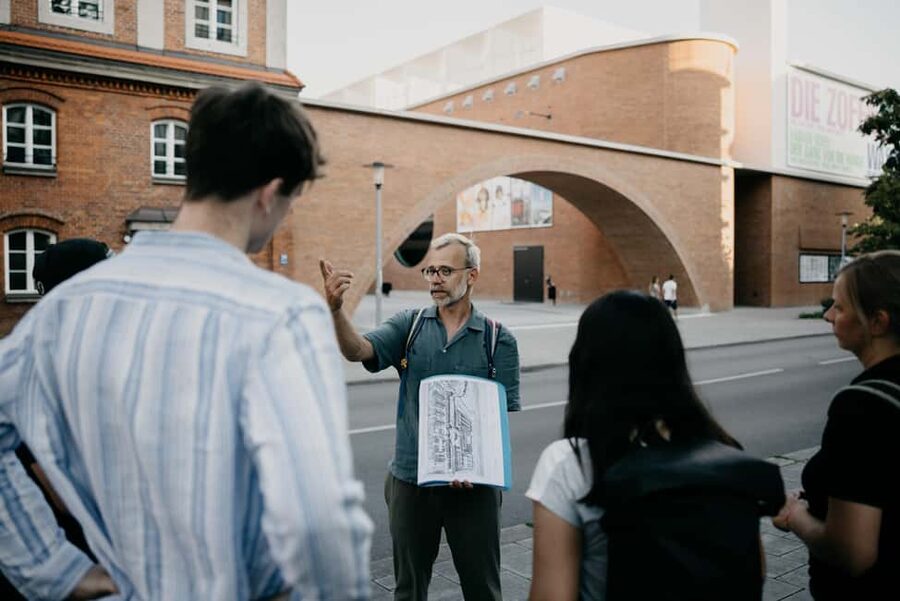
I like tours where the guide does more than point. This one is built around an architect’s way of looking, using Munich streets and buildings like clues, not just photo backdrops. Philipp is both a Certified Official Munich Tour Guide (Member of MGV & BVGD) and an architect, so you get explanations with structural logic, plus the city context that makes it all land.
You’ll also feel the small group size. Max 16 people means you’re not lost in a crowd, and it is easier to ask a question when it pops up. The tour is family-friendly too, so if you’re traveling with kids who can handle a 150-minute walk, it can work well.
The best part for me is the mix of styles. You move from formal architecture near Münchner Volkstheater into street art culture around Beginner’s Wall and Bahnwärter Thiel, then you shift to Munich’s river story and the neighborhood texture near Little Venice and Scherbenviertel.
Also holding a platform in Munich
- From Munich: Neuschwanstein & Linderhof Castle Full-Day Trip
★ 4.6 · 14,646 reviews - Neuschwanstein & Linderhof Castle-Fairytale Day Tour from Munich
★ 4.5 · 7,275 reviews - Munich: Third Reich & WWII Walking Tour
★ 4.6 · 6,181 reviews
Piazza Zenetti start: how to spot your guide and set your pace
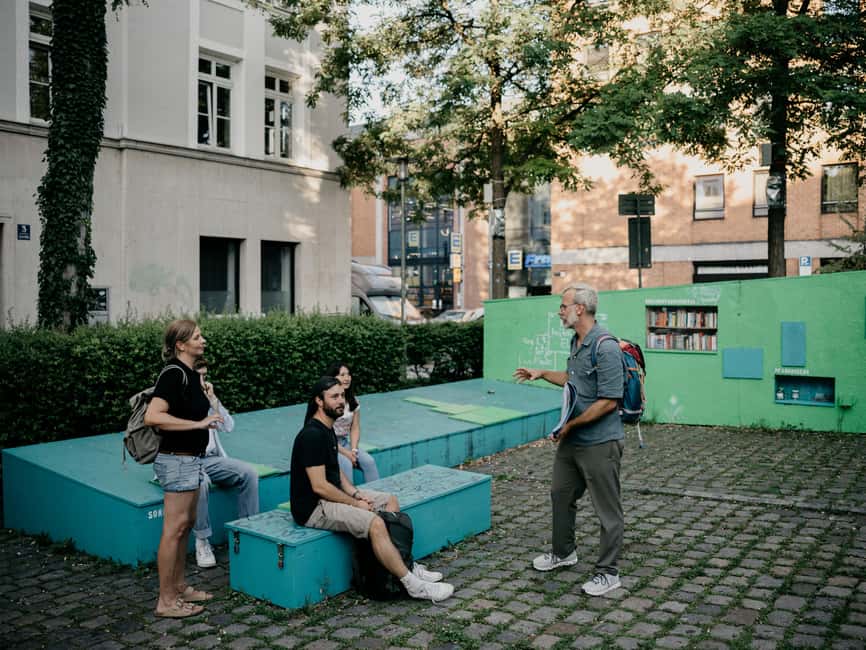
You begin at Piazza Zenetti Square, an easy-to-find start because of its distinctive grey and turquoise street furniture. The practical tip here is that you do not need to hunt for a hidden sign. You just show up, orient yourself, and look for the guide with a tablet slung over his shoulder.
If you’re coming by subway, plan on U3 or U6, exit at Poccistrasse, then walk about 10 minutes. That walk matters because it sets your pace. You are about to spend the next 150 minutes doing stop-and-look architecture, and comfortable shoes will keep you focused instead of annoyed.
For timing, you also want to dress for the weather. Warm clothing is recommended, and that makes sense because Munich evenings and river-adjacent areas can cool down. Food and drinks are not included, so if you want something to nibble later, it’s worth thinking ahead.
Volkstheater and the street art stop: seeing Munich form in layers
The tour starts with Münchner Volkstheater, a strong anchor point because it gives you a “big shape” to understand Munich’s design decisions. From there, the route shifts into the kind of culture many visitors miss: public creativity you can read straight from the walls and spaces around you.
One of the smartest parts of this itinerary is that it does not treat architecture and street art as separate worlds. You’ll see how the city’s official-looking forms connect to expressive, informal layers. That mindset change is what makes the walk feel fresh even if you’ve been to Munich before.
It also helps that your guide is steering the narrative. Philipp brings attention to small details and why they are there, and you end up noticing features you would normally walk past without a second glance. That is the difference between a route and an experience.
Bahnwärter Thiel and Beginner’s Wall: creative design in public space
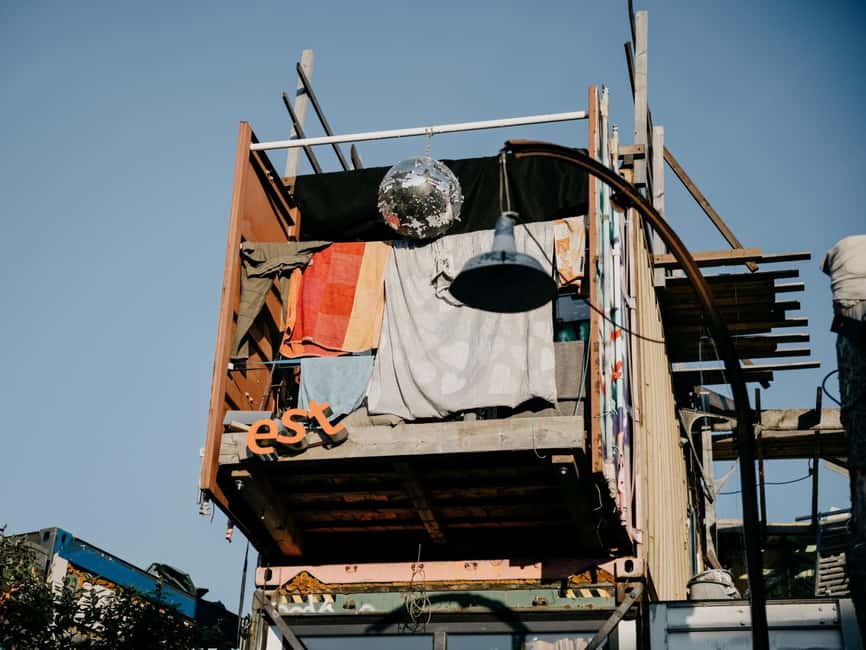
Next up is Bahnwärter Thiel, a cultural hub built on imagination. It’s the kind of place where you can understand street-level creativity as part of the city’s architecture, not an afterthought. Philipp’s approach matters here, because he connects the creativity you see to how space gets used and reshaped by people.
You’ll also pass through the street art area connected to Beginner’s Wall. The value is not just the art itself. You’ll learn how it functions as a visual language in the city, and how it changes what the neighborhood feels like as you walk.
This section is ideal if you like modern Munich, the version that’s not only museums and monuments. It is also a good energy reset, because after the more formal theater start, you get to see how design can be playful and direct.
Isar river walk: bridges and streets that explain Munich’s planning

After the creative stops, the tour turns toward the Isar river and the city’s infrastructure story. This is where you start reading Munich with better eyes, because bridges and river edges reveal a lot about planning and daily movement.
Your route includes Dreimühlenstraße and Wittelsbacherbrücke, plus Claude-Lorrain-Straße. Bridges are not just crossings here. Philipp uses them as viewpoints to explain why the city connects spaces the way it does, and how river-adjacent areas influenced Munich’s urban shape.
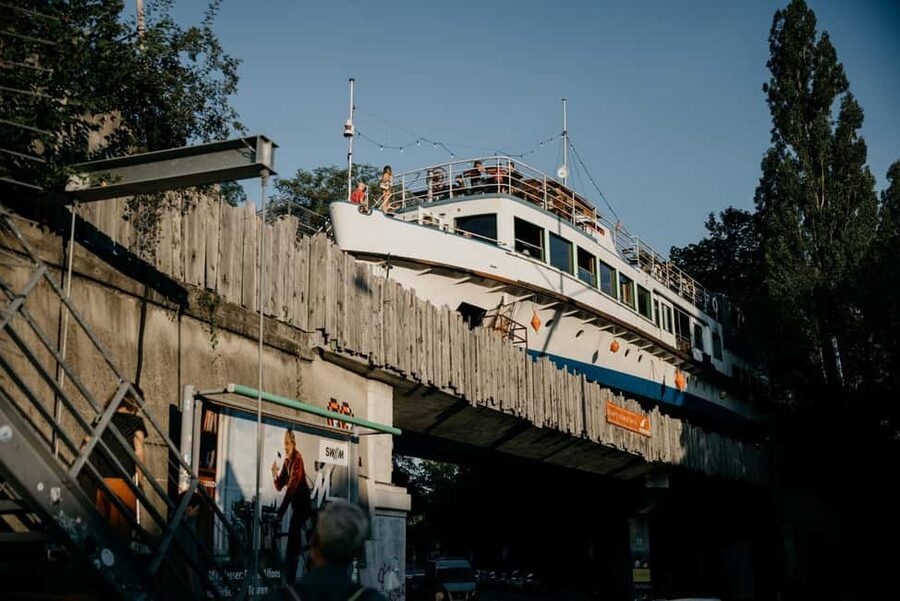
You’ll also encounter MS Utting around bridge Lagerhausstrasse, which becomes a key moment later. Even before you fully reach the steamboat, you’ll feel the tour shifting from buildings to systems: water, movement, and the built form that follows.
Onward connections from Munich:

Little Venice and Scherbenviertel: colorful river corners for photo breaks
Then you hit the softer side of Munich’s river areas. You’ll spend time around Little Venice, and the walk includes the Scherbenviertel area too. This is where the city starts looking like a living collage of architecture, water, pathways, and people.
Little Venice is a strong stop because it makes the Isar feel intimate rather than distant. From street-level, it looks like a pocket of calm inside the city rhythm. If you enjoy photographing small details, this is a great moment to slow down and look for reflections, steps, and how the built environment hugs the river edge.
This is also a good portion for families, as long as kids can handle a bit of walking. The surroundings are visually rewarding, so it’s easier to keep attention without rushing.
The one practical consideration is that river-area sections can feel colder, especially later in the day. Warm clothing helps, and those comfortable shoes pay off again if the ground is uneven in spots.
MS Utting and Alte Utting: a steamboat beer garden plus water history

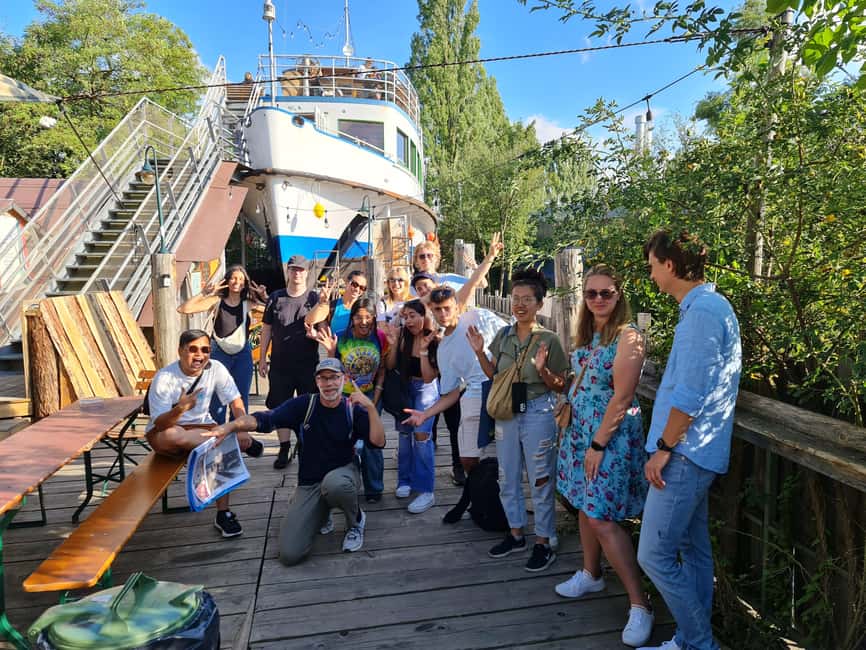
The tour’s signature experience lands around MS Utting, where you’ll connect to the story of Alte Utting, the beer garden on a steamboat. This is not just a quirky photo opportunity. It ties together the tour’s central theme, Munich’s relationship with water.
Philipp also explains the city’s water history, and that’s what makes this stop more than a gimmick. When you understand the river’s role in Munich’s growth, the architecture around you stops being random. You start seeing function behind form.
What I like about this moment is that it gives you a cultural break. Even if food and drinks are not part of the tour, being at a beer garden setting lets you imagine the local rhythm, and you can decide whether to grab something once the tour ends.
Because this segment sits near the steamboat and river area, it can be a little cooler. Plan for that, and you’ll enjoy the atmosphere more.
Gans Woanders finish: a whimsical end to an architecture loop

You finish at Gans Woanders, described as a whimsical beer garden with artistic flair. Ending here makes sense because it turns the walking theme into a relaxed finale. After 150 minutes of looking at spaces and structures, you get a place to exhale and let the creative ideas you picked up actually sink in.
This stop also works well because it gives you something to do right away. If you want a post-tour drink or snack, it’s in the right spirit of Munich, and you are already oriented to the area.
Most importantly, the ending reinforces the tour’s tone. It is not only facts and structure. It’s a guided way to notice how culture and architecture mix in everyday corners.
Price and value for $30 in 150 minutes
At $30 per person for 150 minutes, I think this is strong value if you care about design, street culture, and how Munich works as a city. You’re not paying only for walking time. You’re paying for a guide who is an architect and an official guide, plus a digital map to keep exploring afterward.
What makes the price feel fair is the mix: major landmark start at Münchner Volkstheater, then Bahnwärter Thiel and street art areas, then a full river-oriented section with bridges and the steamboat beer garden connection. That’s a lot of variety for a half-day length.
Also, because the group is capped at 16, you get better access to the guide. When a tour is small, your questions land and the explanations feel tailored to what you notice.
Just remember what’s not included. Food and drinks are not part of the tour, and transportation to the meeting point is also on you. But that’s normal for a walking-focused experience, and it actually lets you choose what you eat and where.
Who should book this architecture-focused walking tour
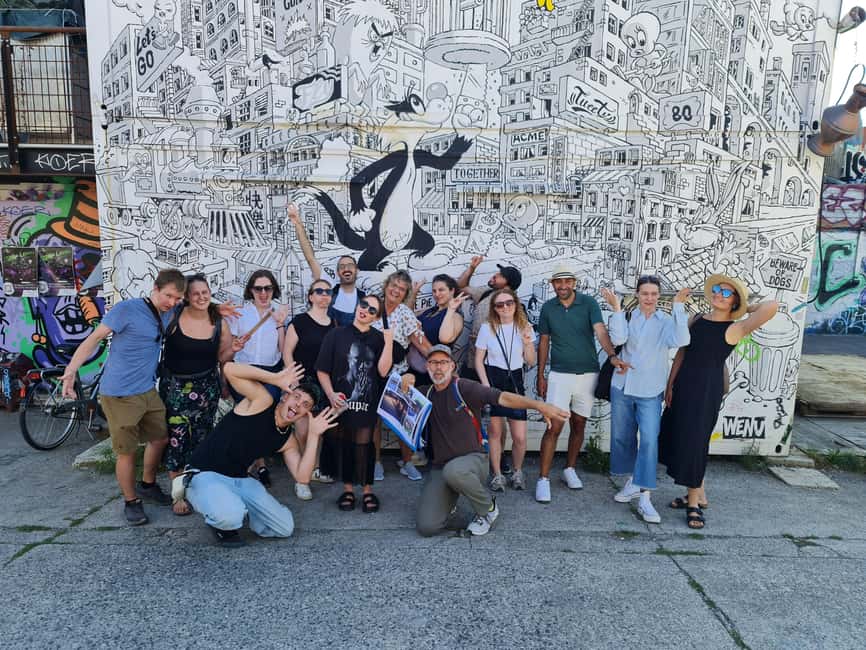
Book this if you want to see Munich in a way that goes beyond typical landmark checklists. You’ll get architecture thinking plus street culture, and then you’ll connect it to the Isar river through real places like Little Venice and the steamboat beer garden scene.
It’s a great fit for:
- People who like asking questions and want clear explanations, not just directions
- Travelers who enjoy street art and public creativity alongside architecture
- Anyone planning a trip with extra time in Munich’s south neighborhoods
It’s not a great fit if you need wheelchair accessibility, since it is not suitable for wheelchair users. Also, bring warm clothing and stick to comfortable shoes, because you will be walking and standing during guided stops.
Should you book this Hidden Architecture walk?
If you like walking tours that leave you with a changed way of seeing, I’d say yes. The combination of an official guide plus an architect mindset, capped at 16 people, makes the experience feel personal without turning it into a slow, meandering stroll.
The itinerary also makes sense for a first-time or repeat Munich visitor. You get a classic starting point, you hit street art culture, and you end with a place that matches Munich’s playful side. Just come prepared for walking and cool weather, and treat the $30 as paying for expert interpretation, not just sightseeing.
FAQ
Where does the tour meet?
You meet at Piazza Zenetti Square, identifiable by its distinctive grey and turquoise street furniture.
How long is the tour?
The tour lasts 150 minutes.
How big is the group?
The group is small, with a maximum of 16 guests.
What is included in the price?
Included are Philipp (your local official tour guide and architect), insight into the hidden architectural treasures, and a digital map with favorite places to visit in Munich.
What should I bring, and what is not allowed?
Bring comfortable shoes and warm clothing. Smoking is not allowed.
What languages is the guide available in?
The live tour guide is available in English, German, and Spanish.
Fresh on the arrivals board for Munich



Munich Tours & Activities, compared.
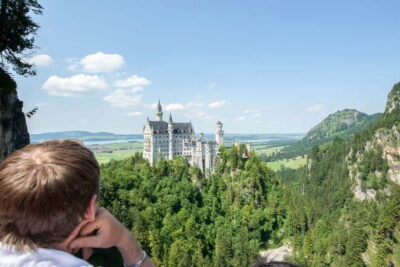
Neuschwanstein & Linderhof Castle Full-Day Trip
Read our review →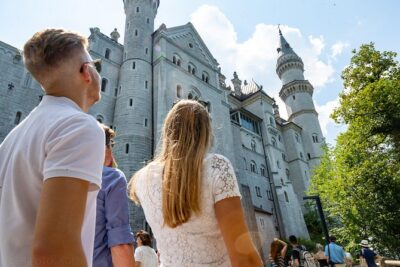
Neuschwanstein & Linderhof Castle-Fairytale Day Tour from Munich
Read our review →
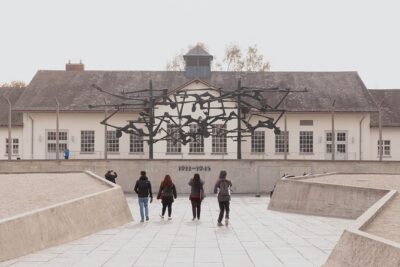
Dachau Concentration Camp Memorial Site Tour from Munich by Train
Read our review →
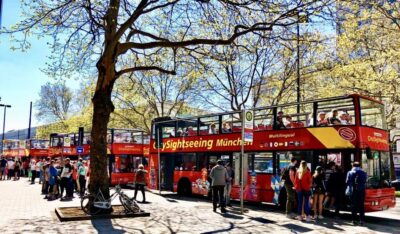
Munich Hop-On Hop-Off Tour: 1-Day or 2-Day Ticket
Read our review →
Browse the lists this tour appears in