
Reviewed · HAMBURG TOURS & ACTIVITIES
Hamburg: Speicherstadt and HafenCity Tour
Hamburg always feels like two cities at once. This tour pairs the old trade power of the Speicherstadt with the new, polished lines of HafenCity. It is a focused way to understand how Hamburg thinks, yesterday and today.
I like two things a lot. First, you get to look at the imposing storehouse architecture and hear why it was built for work and convenience, not decoration. Second, there is a choose-your-own-smell moment: you can decide on the spot whether you would rather follow your nose to a coffee roaster or head toward a Spice Museum.
One drawback to plan around: the tour is German only, and there is no food or drinks included. If you are going on a Monday, the visit to the Kesselhaus is not part of the experience that day.
In This Review
- Key things to know before you go
- Getting oriented at Sandtorkai 74
- Speicherstadt: Hanseatic-era storehouses built for convenience
- Choosing your nose moment: coffee roaster or Spice Museum
- How the architecture tells time, not just taste
- Kesselhaus stop, and why it matters for the theme
- HafenCity walk: modern waterfront design with a maritime feel
- Elbe Philharmonic Hall: the controversial finish with a 2007 start
- Price and time: is it worth 18 per person?
- What language and pacing mean for your experience
- Where this tour fits in a Hamburg day
- Should you book this tour?
- FAQ
- What is the duration of the Hamburg Speicherstadt and HafenCity tour?
- Where do I meet the tour guide?
- How much does the tour cost?
- Is food included?
- Is the tour guided in German?
- Is the Kesselhaus visit included on Mondays?
- Is the tour wheelchair accessible?
- Does the tour include stops for a coffee roaster or a Spice Museum?
- Where does the tour end?
Key things to know before you go
- Speicherstadt trade planning: Storehouses designed for function, not beauty, which changes how you read the buildings.
- Harmonic contrast: Different architects, one unified feel, plus visible, practical building elements.
- Follow-your-nose choice: Decide between a coffee roaster stop or a Spice Museum stop as you go.
- Kesselhaus visit (except Mondays): A key add-on that ties the area’s industrial past to the tour theme.
- Elbe Philharmonic Hall at the end: You finish at a famous, controversial landmark project that started in 2007.
Getting oriented at Sandtorkai 74
Meet at Sandtorkai 74, right at the corner of Sandtorkai and Kaiserkai. Look for the square in front of the stairs, and the white wall with a hole in the middle. It is the kind of detail that can save you time if you arrive a few minutes early and want to avoid circling.
This is also the kind of tour where meeting point accuracy matters. In two hours, you do not want to lose minutes searching. If you are traveling from elsewhere in Hamburg, give yourself a small buffer so you can actually start the walk feeling calm.
The language is German, so if you are not comfortable with it, you will want to treat this as a “visual guide” experience. The upside is that the tour format tends to rely on clear explanations, with guides using visual aids. In past sessions, guides have been praised for being well prepared with an iPad full of photos to support what they were saying, which helps you follow the story even if your German is limited.
Also holding a platform in Hamburg
- Hamburg: Sex and Crime in St. Pauli Tour for Ages 18 +
★ 4.7 · 17,793 reviews - Hamburg: 1.5-Hour Harbor and Speicherstadt Day Cruise
★ 4.6 · 14,200 reviews - Hamburg: 90-Minute Evening Lights Harbor Cruise
★ 4.5 · 7,728 reviews
Speicherstadt: Hanseatic-era storehouses built for convenience
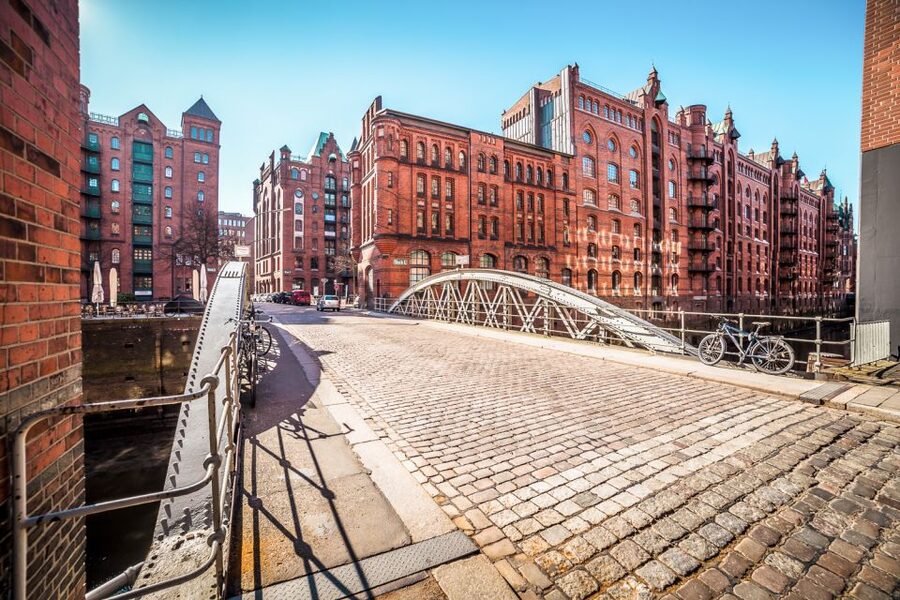
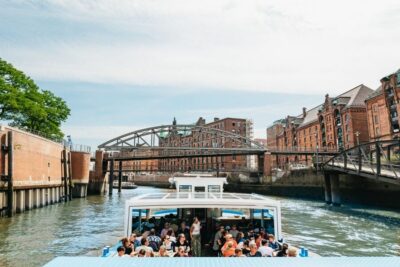
The Speicherstadt is the part that makes you slow down. The canals, brick, and warehouse scale can feel almost movie-set dramatic, but the tour’s angle is refreshingly practical. You do not just admire it, you learn why it looks the way it does.
You will hear how the storehouses connect to the days of the Hanseatic League. That matters because Hamburg’s merchant power was not about fancy buildings. It was about moving goods reliably and storing them safely. When you understand that trade mindset, the architecture changes in your eyes. The imposing storehouses stop being only impressive and start becoming readable, like a system.
One key idea I like here is the “harmonic bigger picture” concept. The houses were designed by different architects, yet they work together as a coherent whole. As you walk, the tour helps you notice how individual buildings contribute to that overall feel, including exposed elements and practical construction choices. It is a strong reminder that good design does not always mean “pretty first.” Sometimes it means “works first,” and people learn to appreciate the beauty later.
Choosing your nose moment: coffee roaster or Spice Museum
There is a playful, smart element in the tour that I think you will enjoy even if you are not a museum person. You follow your nose and decide what you want to do in the moment, either toward a coffee roaster or toward a Spice Museum.
This is valuable for two reasons. First, it makes the tour feel less like a lecture and more like a decision-making walk. Second, it lets you match the story to your interests. If you like sensory, modern production, the coffee roaster direction fits. If you want something more about imports, trade goods, and how spices traveled through ports, the Spice Museum option makes sense.
A practical note: because there is no food or drinks included, coffee can be tempting. But the tour gives you permission to choose the kind of break you want rather than forcing a one-size-fits-all stop. If caffeine is your thing, plan for the fact that this might be where you grab a real pause.
How the architecture tells time, not just taste
What I find especially useful is how the tour connects the old and the new without treating them like separate worlds. The Speicherstadt section stresses that the buildings were not planned for beauty. They were planned for convenience, for storage, and for the flow of commerce.
Then you shift toward HafenCity, where the tone changes. The modern architecture is sophisticated and designed with today’s standards in mind, and you walk through the result instead of just reading about it. This contrast is not only aesthetic. It is an explanation of values: the old quarter optimized for logistics, the new quarter optimizes for urban life and public space around the port.
I also like that you are shown how Hamburg keeps using its waterfront position. You feel the maritime setting as part of the story, not as a photo backdrop. Even if you only spend a day in Hamburg, this tour gives you a clearer sense of what the city is trying to preserve, what it is trying to change, and what it is trying to sell to residents and visitors alike.
Kesselhaus stop, and why it matters for the theme
The tour includes a visit to the Kesselhaus, with one catch: it does not happen on Mondays. That means if you are planning around a Monday schedule, you should not expect this exact stop to appear in the day’s route.
So what should you take from the Kesselhaus piece? Think of it as the tour’s “bridge stop.” It adds an extra layer to the Speicherstadt and port story by giving you a closer look at industrial-era presence in the wider harbor setting. Even if you are not an architecture fanatic, these named stops help you anchor the history in places, not just concepts.
If you like tours that connect the dots, this inclusion helps. If you only care about grand exterior views, the Kesselhaus stop might feel less important than the canal streets and the big modern landmarks. Either way, it is a meaningful part of the pacing in a compact two-hour format.
Onward connections from Hamburg:

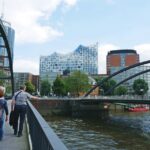

HafenCity walk: modern waterfront design with a maritime feel
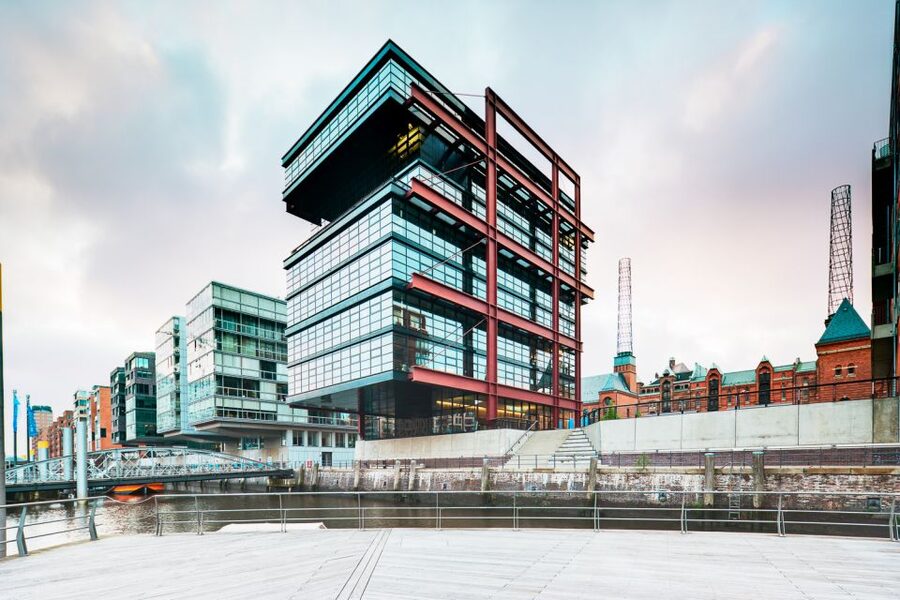
After the Speicherstadt, you head into HafenCity, where the city looks forward. The architecture here is modern and polished, and the tour gives you time to walk, look, and absorb the spatial feel of the new district.
This portion works well because it is not just “look at buildings.” The guide helps you connect the architecture to what Hamburg is doing with its waterfront. You get to see impressive buildings take shape as an answer to a different modern question: how do you turn port space into a place people can live, work, and visit?
One practical consideration: because the tour is only two hours, HafenCity time will be what it is. You will get an informed overview rather than a deep architectural study. If you know you want to linger for photos or to explore inside buildings, you might want to treat this tour as the first chapter and then plan a longer follow-up on your own afterward.
Still, finishing with the sense of maritime flair is a big win. HafenCity would be easy to experience as “just another modern neighborhood.” The guide’s focus helps keep the harbor identity front and center.
Elbe Philharmonic Hall: the controversial finish with a 2007 start
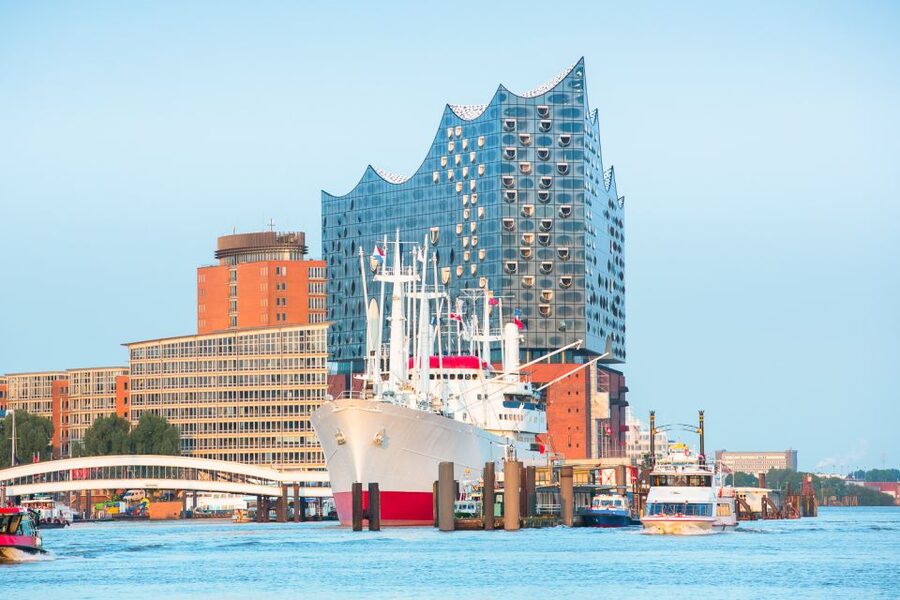
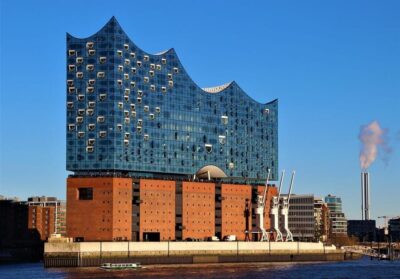
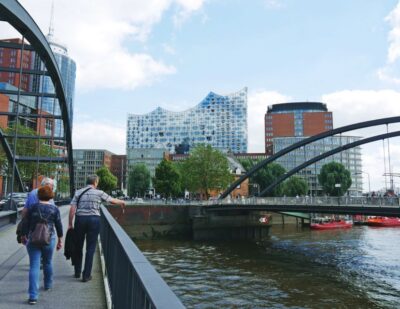
At the end of the HafenCity and Speicherstadt walk, you reach the Elbe Philharmonic Hall. It is an exciting and controversial project, and the construction began in 2007.
Ending here is smart because it forces the whole tour into a single frame. You started with functional storehouses linked to trade and storage. You moved into modern planning and contemporary urban design. Then you arrive at one of Hamburg’s biggest cultural statements, still surrounded by debate about what it represents.
If you like landmarks with opinions attached, you will likely enjoy the final stop. If you prefer your tours to avoid controversy, I would just be aware that the hall is presented as a talking point, not just a photo opportunity. Either way, it is a recognizable finish that makes the two hours feel like a complete loop.
Price and time: is it worth 18 per person?
The price is $18 per person for a duration of 2 hours. For that time window, you are getting a guided walk that covers two major Hamburg districts, includes a named stop at the Kesselhaus (except on Mondays), and ends at the Elbe Philharmonic Hall.
Value-wise, what you are really paying for is interpretation. You could walk through Speicherstadt and HafenCity on your own, but you would likely miss the “why” behind the warehouse design choices and how the city shifted from trade logistics to modern urban waterfront planning. The guide element is also not treated casually. In the praised feedback, guides have been described as prepared with an iPad for photo support, and the explanations have been noted as both informative and entertaining.
One more value point: there is no included food or drinks, so budget a small personal expense if you want a coffee or a snack during the coffee roaster or spice-related stop. If you plan for that, the tour stays a good deal.
This tour is a great fit if you:
- Want a clear overview without committing to a half-day
- Prefer guided context over wandering with guesswork
- Enjoy architectural contrasts, especially when the story is tied to trade and urban planning
- Travel with at least some interest in museums, but like having options
It is less ideal if you:
- Want English-only guidance
- Need long museum time inside multiple venues
- Are only interested in one district, old or new, and not both
What language and pacing mean for your experience
The guide language is German, and that affects how you should approach the tour. If you speak German at a basic level, you can probably follow most of it. If your German is limited, you can still do well by leaning on visuals and the guide’s explanations tied to specific places.
The best part of the German-only format, in my opinion, is that the tour is designed around exterior spaces and named stops. That helps you keep up. You are not stuck reading labels the whole time. You are moving through a story.
Pacing also matters. Two hours is tight, so the tour is a curated walking overview rather than a slow, deep museum day. If you love long stays in interiors, plan to add time on your own after the tour where your curiosity pulls you.
Where this tour fits in a Hamburg day
If you have only a single day in Hamburg, this tour gives you a structure. Speicherstadt sets the trade and storage foundation. HafenCity shows the modern direction. The Elbe Philharmonic Hall gives you a memorable close.
If you have two days, this is a strong “orientation” booking. It helps you later decide what to revisit. You might want to return to the Speicherstadt streets for different photo angles, or you might want more time in HafenCity if the modern architecture really grabs you.
If you are planning around weather, note that the tour is largely walk-based. That is another reason the meeting point precision matters.
Should you book this tour?
Yes, I think you should book it if you want a fast, guided, high-impact look at two sides of Hamburg, old warehouse trade logic and new waterfront design. The inclusion of the Kesselhaus stop (when available), plus the end point at the Elbe Philharmonic Hall, makes it feel like more than a casual stroll.
Book it even if your German is not perfect, as long as you like learning by walking and looking. The tour’s format, including strong visual support from the guide, makes it easier to follow.
Skip it only if German-only guidance will make you tune out completely, or if you prefer your time filled with long museum visits and food included in the ticket price.
FAQ
What is the duration of the Hamburg Speicherstadt and HafenCity tour?
It lasts 2 hours.
Where do I meet the tour guide?
The meeting point is directly at Sandtorkai 74, on the corner of Sandtorkai and Kaiserkai, by the square in front of the stairs and on the white wall with the hole in the middle.
How much does the tour cost?
The price is $18 per person.
Is food included?
No. Food and drinks are not included.
Is the tour guided in German?
Yes. It is a live tour with a German guide.
Is the Kesselhaus visit included on Mondays?
No. The Kesselhaus visit is included except on Mondays.
Is the tour wheelchair accessible?
Yes, the tour is wheelchair accessible.
Does the tour include stops for a coffee roaster or a Spice Museum?
You can decide whether you would like to visit a coffee roaster or a Spice Museum as part of the experience.
Where does the tour end?
It ends at the Elbe Philharmonic Hall area, which is at the end of HafenCity and Speicherstadt.
Fresh on the arrivals board for Hamburg

Hamburg Tours & Activities, compared.
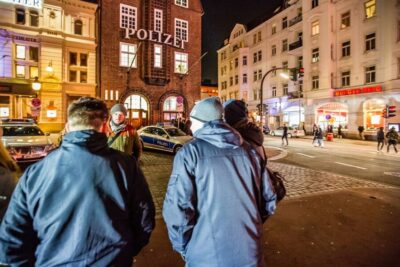
Sex and Crime in St. Pauli Tour for Ages 18 +
Read our review →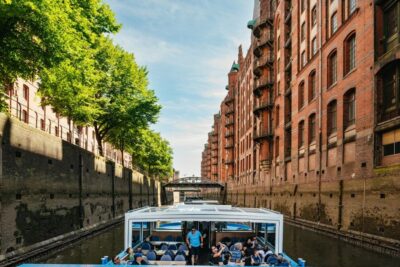
1.5-Hour Harbor and Speicherstadt Day Cruise
Read our review →
Reeperbahn Lust & Laster Tour for Adults Only
Read our review →Browse the lists this tour appears in