
Reviewed · CITY TOURS
Hamburg: Private Tour Down Town around City Hall
If you like cities with layers, Hamburg delivers. This private downtown walk turns the Hanseatic past into something you can actually picture, from old town halls to the underground world beneath your feet. You’ll get practical history plus a route packed with recognizably Hamburg sights.
I especially like how the tour explains big turning points in a way that sticks. The story behind the Hanseatic harbor basin, the Great Fire of 1842, and the city’s rapid shift from older half-timbered streets to a modern commercial center all feel connected, not like random trivia. Add in the guide’s humor and energy, and the tour stays easy to follow.
One thing to consider is that it’s only 2 hours. That means you’ll see key stops up close, but you won’t have time for long museum-style deep reading at each location, so it helps if you’re happy with a focused “see it, understand it, move on” pace.
In This Review
- Key highlights worth your time
- Hamburg Downtown, City Hall to Under City: what makes it work
- Price and group size: simple math for a private tour
- Where the walk begins: finding the route fast around central Hamburg
- Mönckebergstraße and the churches: the city shows you its rhythm
- Kontorhausviertel and Chilehaus: architecture as a historical shortcut
- The story beneath your feet: bunkers and pneumatic mail
- Harbor origins and the Great Fire of 1842: why Hamburg looks the way it does
- Africa House and St. Nicholas’ Church: trade routes meet memory
- Trostbrücke: a short stop with emotional weight
- Hamburg Rathaus and the Chamber of Commerce: where the story returns to power
- The guide effect: humor, clarity, and names you might hear
- Is this tour worth booking for you?
- Should you book this private tour around Hamburg City Hall?
- FAQ
- FAQ
- How long is the Hamburg downtown private tour around City Hall?
- How much does the tour cost, and what is the group size limit?
- Where does the tour start?
- What route will we follow?
- Which attractions and landmarks are included on the guided portion?
- What languages are available for the live guide?
- Is it possible to cancel and get a full refund?
Key highlights worth your time
- Old Rathaus and Chamber of Commerce area: the power center of the Hanseatic city, shown with context instead of just dates
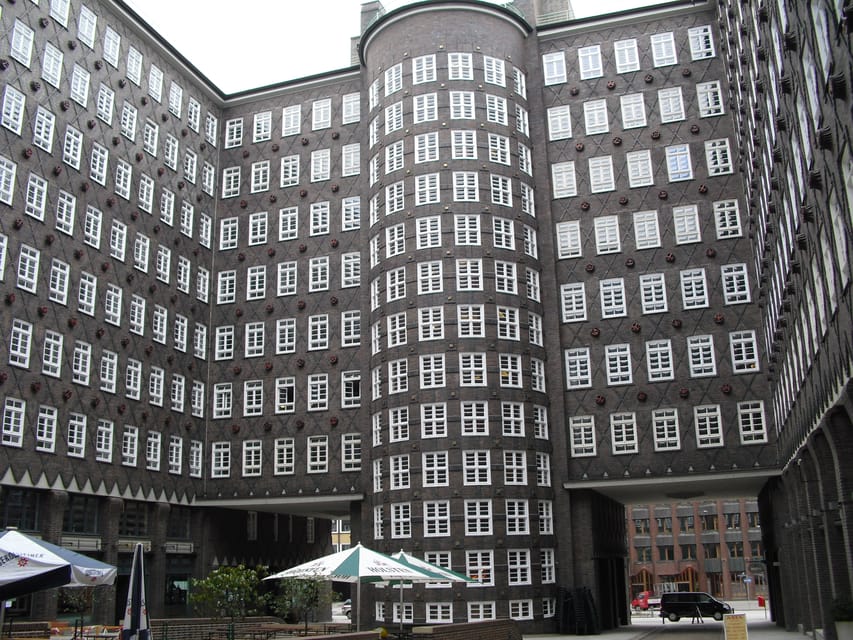
- Chilehaus and Kontorhausviertel views: architecture used as a story tool for Hamburg’s change
- Largest German bunker system, 700+ bunkers: Hamburg’s wartime infrastructure explained in plain language
- Pneumatic mail system from 1864: a surprising detail that makes industrial-era Hamburg feel real
- Mö on Mönckebergstraße plus churches: the downtown “everyday life” streets and landmarks in one tight loop
Hamburg Downtown, City Hall to Under City: what makes it work
Hamburg has a talent for mixing polished downtown surfaces with darker chapters underneath. This tour is built for that exact contrast. You walk through the city’s most public places, then you get stories about systems and events that shaped what people could do, trade, and survive.
I like that the tour is not only “look at this building.” It gives you the why behind what you’re seeing. When you learn how Hamburg operated as a Hanseatic trading city and how the urban layout changed after major disasters, the streets stop feeling like a backdrop and start feeling like part of the plot.
You’ll also notice a consistent theme in the guides: they connect with the group. Guides named Birgit and Jörn Löding show up in past feedback, and the recurring note is humor paired with solid factual guidance. If you want history that stays human, not lecture-mode, this style usually fits well.
Also holding a platform in Hamburg
- Hamburg: Sex and Crime in St. Pauli Tour for Ages 18 +
★ 4.7 · 17,793 reviews - Hamburg: 1.5-Hour Harbor and Speicherstadt Day Cruise
★ 4.6 · 14,200 reviews - Hamburg: 90-Minute Evening Lights Harbor Cruise
★ 4.5 · 7,728 reviews
Price and group size: simple math for a private tour
The price is $294 per group for up to 15 people, and the tour runs for 2 hours. That structure matters because it changes the value equation. Instead of paying per person, you can spread the cost across your group.
Here’s the practical way to think about it:
- With the full group size (15 people), the top-end per-person cost is about $19.60.
- If you book for a smaller group, your per-person cost rises, but you still get a private, guided route designed for your group size.
This is also one of those tours where “private” is not just a label. With a guide talking directly to your group, it’s easier to ask quick questions and keep the pace aligned with what you care about: architecture, civic history, or those underground systems.
Where the walk begins: finding the route fast around central Hamburg
Your starting point can vary depending on the option booked, and you’ll be routed through central Hamburg around the City Hall area. The route line gives you a clear idea of the geography, including Hamburg Central Station, Mönckebergstraße, key churches, the Chilehaus area, Africa House, St. Nicholas’ Church, the Trostbrücke area, then onward to Hamburg Rathaus and the Chamber of Commerce vicinity.
Because this is a downtown loop, you’re not crisscrossing the city. You’ll get a strong “greatest hits” feel for a compact timeline, which is ideal if you have limited days.
Tip that helps: arrive with a little mental map. If you already know that Chilehaus and Hamburg Rathaus anchor the end goals, you’ll enjoy every stop in between more, because you can “place” what you’re learning.
Mönckebergstraße and the churches: the city shows you its rhythm
The tour starts by pulling you into the shopping and civic pulse of Hamburg at Mönckebergstraße, the promenade locals call Mö. This matters because it’s not only a pretty street. It’s where you feel how Hamburg functions as a modern commercial city, directly tied to the shift the guide explains from older street patterns to newer urban development.
From there you move into landmark territory with St. James’ Church and later St. Peter’s Church. Churches can feel like the same “tour stop” in many cities. Here, the difference is that the guide uses them as reference points in Hamburg’s longer story: trade, growth, recovery, and rebuilding.
What to watch for: when you hear the guide connect churches to civic identity, you’ll start noticing how these buildings act like visual anchors. They help you orient yourself in time, not just in space.
Kontorhausviertel and Chilehaus: architecture as a historical shortcut
One of the best parts of this tour is how it treats architecture like a readable document. In the Kontorhausviertel area, you’ll get background on the commercial buildings that shaped Hamburg’s modern look, then you land at Chilehaus.
The Chilehaus is described as imposing, and that’s accurate. Even if you’re not an architecture buff, it’s the kind of building that grabs your attention instantly, then rewards you once you know what it represents.
A key theme you’ll hear tied to this area is Hamburg’s fast transformation after major disruption. The tour explains how the city moved from older narrow streets and half-timbered patterns toward a more modern commercial setup within a short space of time. When you connect that to what these offices and streets represent, you understand why this area looks the way it does.
Practical photo note: the best shots often come when you stop at street corners or along the promenade stretches where the building line is clear. Don’t rush through Chilehaus, even if your urge is to keep walking. Let the guide point out what makes it feel so powerful.
Onward connections from Hamburg:

The story beneath your feet: bunkers and pneumatic mail
Hamburg has a side most people never see, and this tour gives you a way in. You’ll learn about the largest German underground bunker system, with 700+ bunkers. It’s one of those facts that can sound abstract until the guide frames it as infrastructure, built for survival, and tied to how the city operated during the 20th century.
Next, you’ll get a surprising industrial detail: Hamburg’s first pneumatic post, put into operation on 24 October 1864. Pneumatic mail systems are the kind of thing you’d normally read in a history book, but here it shows up as a local, mechanical piece of the city’s modernization.
If you like history that changes how you look at everyday streets, this segment is a strong reason to book. You’ll walk past ordinary downtown walls and start thinking about what was hidden, planned, and engineered underneath.
Harbor origins and the Great Fire of 1842: why Hamburg looks the way it does
Two historical anchors shape a lot of what you see on the tour.
First is the Hanseatic harbor story. The guide connects downtown sights with Hamburg’s early role as a trading hub, including the first harbor basin inaugurated in 1189. Even without standing at the basin itself the whole time, you get the sense that Hamburg’s power grew from access, logistics, and ships.
Second is the Great Fire of 1842, which raged for four days and destroyed large parts of the old town. This is where the tour stops being “cool facts” and starts explaining cause and effect. When you understand that major fire, it becomes easier to make sense of why the city’s layout and development patterns look modern in places where you might have expected older structures.
You’ll also hear how this connects to the city’s rapid redevelopment and the shift toward a commercial identity. That theme ties back to the downtown streets and offices you see later, so the history doesn’t feel like a separate track. It becomes a thread.
Africa House and St. Nicholas’ Church: trade routes meet memory
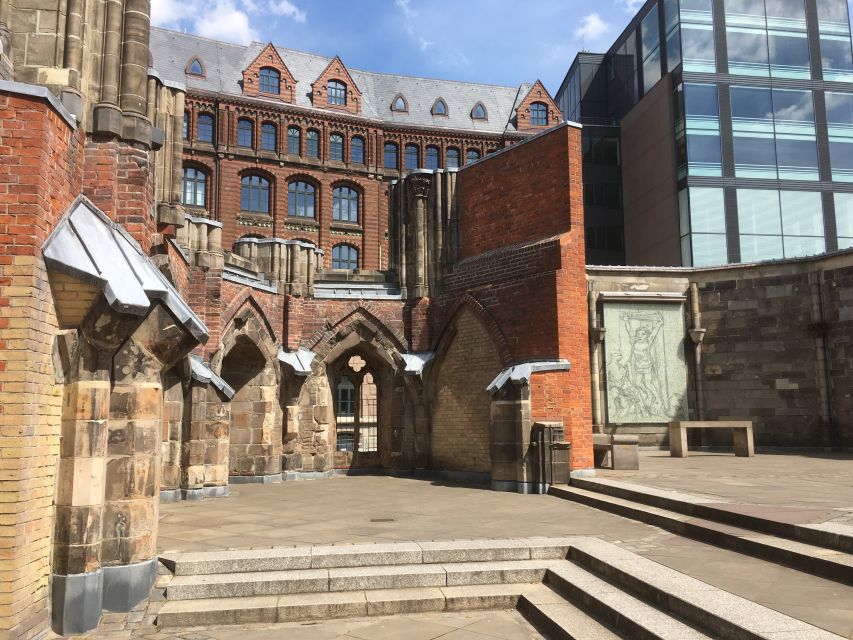
The tour includes a stop for the Africa House, which helps balance the story. You’re not only following civic governance and European architecture. You’re also getting a hint at how Hamburg’s trading networks connected to wider worlds.
This matters because it keeps the Hanseatic story from staying too narrow. Hamburg was a port city. Port cities think beyond their own borders, and the tour’s mix of places supports that.
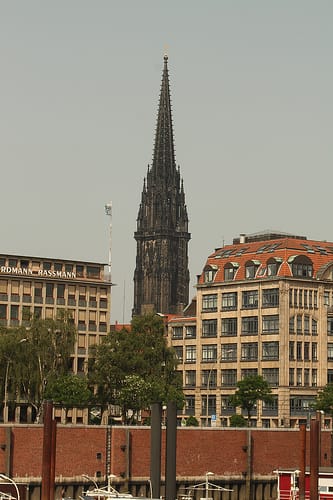
You’ll also visit St. Nicholas’ Church, a landmark tied to Hamburg’s identity. Churches in a port city often hold special weight because they serve as community symbols, not just religious spaces.
If you want a tour that connects commercial trade to human-scale landmarks, this pairing works well. It gives you both the global and the local in one flow.
Trostbrücke: a short stop with emotional weight
The tour ends up at the Trostbrücke, a place where the name itself signals a reflective tone. This is one of those stops that can feel brief on a map, but memorable in person because you sense that the city is not only about progress.
Your guide will bring historical context to what the bridge represents, so it’s not just a photo op. If you like your tours to include at least one moment that makes you pause, this is that moment.
Hamburg Rathaus and the Chamber of Commerce: where the story returns to power
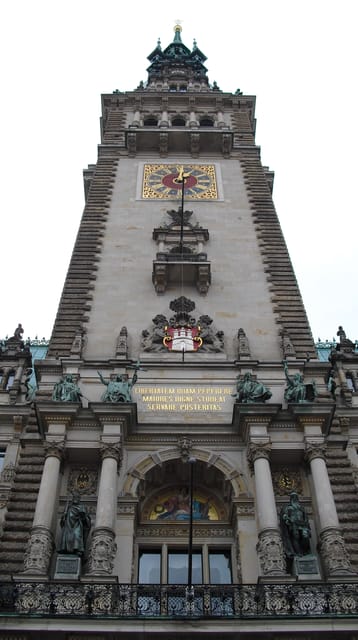
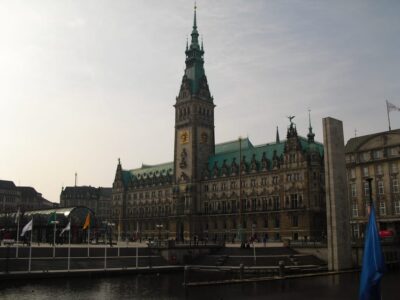
Finally, you come to the Hamburg Rathaus area, with the Chamber of Commerce also on the route. This is the city’s public face for governance and business. By the time you arrive here, you’ve heard enough background to make the buildings feel like part of a functioning system, not just a dramatic facade.
What I like about finishing at the City Hall orbit is the payoff. You started with the downtown rhythm of Mönckebergstraße, then moved through churches, commercial architecture, and both visible and hidden infrastructure stories. Now you see where it all converges: decision-making and civic identity.
It’s also a practical finishing structure. City Hall and nearby central civic buildings make it easy to orient yourself for the rest of your day, whether you want to keep exploring on foot, grab lunch nearby, or connect onward.
The guide effect: humor, clarity, and names you might hear
One of the most praised aspects is how the guide keeps things lively while staying factual. Past feedback highlights humor and the sense that the guide makes the stones feel alive, meaning the city’s buildings get personality through story.
It’s also helpful that multiple languages are available: English, Spanish, French, and German. If you want to follow complex history without straining, this is a real value point, especially on a compact 2-hour schedule.
You might hear guides such as Birgit and Jörn Löding, and other named local guides have been noted too. Even when names vary, the common pattern is that you don’t just get a script. You get explanations that stay connected to what you see outside the window.
Is this tour worth booking for you?
I’d book this if you want a guided walkthrough of central Hamburg that links architecture, civic history, and unexpected local details. The standout topics for most people are the underground bunker system, the pneumatic post, and the way the Great Fire of 1842 connects to what the city looks like today.
Choose something else if your ideal day is long museum time or if you want heavy, slow-paced wandering without structure. This tour is focused. It’s designed to cover a lot of ground quickly, so it suits a “short but meaningful” day.
If you’re traveling with a private group, the format is also smart. Up to 15 people makes it workable for families, friends, or a small club, and the guide can steer questions to match your interests.
Should you book this private tour around Hamburg City Hall?
Yes, if you like history that feels specific to place. The route hits the downtown anchors you’d want anyway, and the guide adds the missing layers, like the 700+ bunkers, the 1864 pneumatic mail system, and the Hanseatic trade roots tied to 1189.
No, if you’re expecting a long, stop-at-everything photo marathon or a deep dive into one single museum. This is a tight, downtown sweep designed to make Hamburg’s key landmarks and turning points click in your head fast.
FAQ
FAQ
How long is the Hamburg downtown private tour around City Hall?
It lasts 2 hours.
How much does the tour cost, and what is the group size limit?
The price is $294 per group, for groups of up to 15 people.
Where does the tour start?
The meeting point may vary depending on the option booked. The listed starting-area option is StadtRAD, and you should confirm the exact meeting location when booking.
What route will we follow?
The tour route includes Hamburg Central Station, Mönckebergstraße, St. James’ Church, Sprinkenhof, Chilehaus, Reichenstraßen, Africa House, St. Nicholas’ Church, Trostbrücke, Chamber of Commerce, and Hamburg Rathaus.
Which attractions and landmarks are included on the guided portion?
You’ll see highlights such as the old town hall area around City Hall, St. Nicholas’ Church, Africa House, Mönckebergstraße (locally called Mö), Chilehaus, Trostbrücke, and stops around the Kontorhausviertel and nearby churches.
What languages are available for the live guide?
The live tour guide is available in English, Spanish, French, and German.
Is it possible to cancel and get a full refund?
Yes. The activity offers free cancellation up to 24 hours in advance for a full refund.
Fresh on the arrivals board for Hamburg

City Tours, compared.
1-Hour City Tour by Boat with Guaranteed Seating
Read our review →
Berlin City walk Government District and Places of Democracy
Read our review →
City History Canal Sightseeing Tour on a Motorboat
Read our review →
Browse the lists this tour appears in