
Reviewed · GUIDED WALKS IN HAMBURG
Hamburg Private Guided Tour (walking)
Hamburg makes sense on foot. This private guided walking tour strings together the city’s big story beats in just 3 hours, with time at major sights like St. Michael’s Church and HafenCity. I like the small-group feel, up to 9 people, because you actually get answers and local context instead of rushing past buildings. I also like that the route mixes classic landmarks with newer Hamburg, so you leave with both old port history and modern design in your head.
One thing to plan for: Hamburg weather can be dramatic, and it can be very windy. If you hate cold walks, build in flexibility, and know there’s an on-the-spot taxi option if needed.
In This Review
- Key highlights worth planning around
- Entering Hamburg’s story with a 3-hour private loop
- Your guide in practice, and why names like Alex, Jutta, Maureen, and George matter
- St. Michael’s Church: baroque marble, gold, and the Alster view payoff
- Speicherstadt warehouses: red brick trade history in about 10 minutes
- Hamburg Town Hall: a neo-Renaissance landmark with a late-1800s date
- Deichstrasse and the port puzzle: old houses plus the 104 km fact
- HafenCity: state-of-the-art planning and the Elbphilharmonie as a landmark
- St. Nikolai WWII memorial: short, quiet, and not skipped
- The Alster lake moment and the Portuguese Quarter, plus where to eat after
- Walking, wind, and when to call for the taxi
- Price and value: $390.08 per group, up to 9 people
- Logistics that keep the day simple
- Should you book this Hamburg private walking tour?
- FAQ
- How long is the Hamburg private guided walking tour?
- What is the maximum group size?
- Is the tour offered in English?
- Where does the tour start and where does it end?
- Are there any entrance fees at the stops?
- Does the tour include food or drinks?
- Is hotel pickup or drop-off included?
- What if I don’t like walking?
- What is the cancellation policy?
Key highlights worth planning around
- A true private tour (up to 9): You get a guide geared to your group, not a mass schedule.
- Three hours, many eras: Baroque church, port warehouses, neo-Renaissance town hall, and modern waterfront planning.
- Alster river views from St. Michael’s: A built-in payoff, especially when the light is good.
- Speicherstadt in a single stop: Red brick warehouses tied to the trading goods that made Hamburg wealthy.
- HafenCity and the Elbphilharmonie exterior focus: You see the modern landmarks, with limited interior access.
- WWII memory stop at St. Nikolai: Quick, meaningful pause without taking over the whole tour.
Entering Hamburg’s story with a 3-hour private loop
This is the kind of tour that helps you get your bearings fast. In about 3 hours, you cover the core downtown plus the port-adjacent districts, so you can understand where Hamburg’s power came from and why it grew the way it did. And because it’s private, the guide can steer the conversation toward what you care about, whether that’s architecture, trade history, or just how the city works day to day.
I also like the pacing concept here. The itinerary is built around short stops at each major site, which means you’re not stuck for too long in any one place. It feels “walk, see, understand, move on,” which is ideal for a first visit or a cruise day when you still want a real sense of place.
More Guided Walks in Hamburg
- Hamburg: Guided Walking Tour for Magic Fans
★ 4.8 · 1,992 reviews - Reeperbahn Walking Tour with St. Pauli Local
★ 4.8 · 577 reviews - Hamburg: Speicherstadt Walking Tour with Coffee Tasting
★ 4.6 · 360 reviews
Your guide in practice, and why names like Alex, Jutta, Maureen, and George matter
The biggest praise in the reviews is consistent: the guides are friendly, fun, and take pride in showing people their city. In particular, guides like Alex, Maureen, Jutta, and George pop up repeatedly, and the pattern is similar across them.
What stands out from their experiences with groups:
- They wait and adjust when meeting points are hard to find. Jutta is specifically noted for waiting when a group had trouble locating the start.
- They customize the pace when people need it. Maureen is praised for making real adjustments when a couple of participants struggled to keep up.
- They shape the route to interests. George quickly sized up what mattered to the person he was touring and altered the tour accordingly.
- They help beyond the walk. George is also credited with assisting with ticketing where needed and making sure you knew how to get back afterward.
If you want more than a checklist of stops, that guide flexibility is a big value. Hamburg is easy to get around, but history and architecture take on new meaning when someone explains why these places matter.
St. Michael’s Church: baroque marble, gold, and the Alster view payoff
Stop 1 is St. Michael’s Church (Michaeliskirche), and it’s not just a nice building. This baroque church dates to 1763, and it’s described as the first Protestant church in Hamburg. Expect a strong visual wow factor, including a lot of marble and gold.
You’ll also get one of the best practical payoffs of the tour: the fine views over Hamburg and the Alster River. Even if you’re not chasing perfect photos, the view helps you map the city in your mind. You start to see how waterfront districts relate to inland streets, and you understand why Hamburg’s port story is tied to water everywhere.
Time here is listed as about 15 minutes, and admission is marked as free for this stop. That makes it a good anchor point early in the tour, when you still need the big-picture orientation.
Speicherstadt warehouses: red brick trade history in about 10 minutes
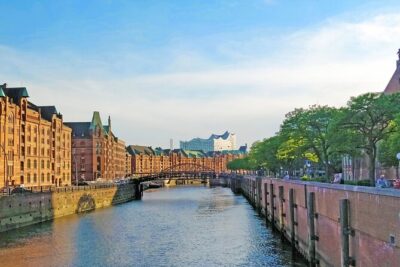
Next comes Speicherstadt, a historic warehouse district built with red brick architecture. The focus here is the storage and trade that once powered Hamburg’s economy. The details you’ll hear are the kind you can’t easily spot on your own, like the warehouses dating to 1888 and storing items such as coffee, tea, cacao, spices, tobacco, and more.
This stop works well even if you only have a short time window. Warehouse districts can look repetitive from the street, but with a guide, the repeating patterns start to feel intentional. You learn what kinds of goods mattered, and why the buildings were designed the way they were.
The stop is listed as 10 minutes, and admission is marked as free. It’s a quick hit that sets you up for HafenCity later, because you’ll start to see how Hamburg moved from industrial storage to planned urban waterfront.
Hamburg Town Hall: a neo-Renaissance landmark with a late-1800s date
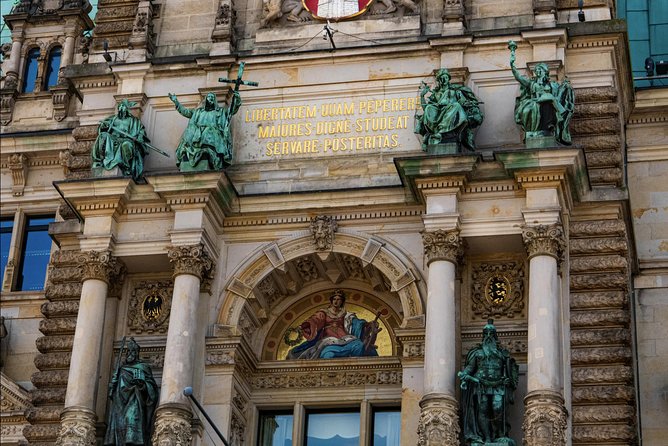
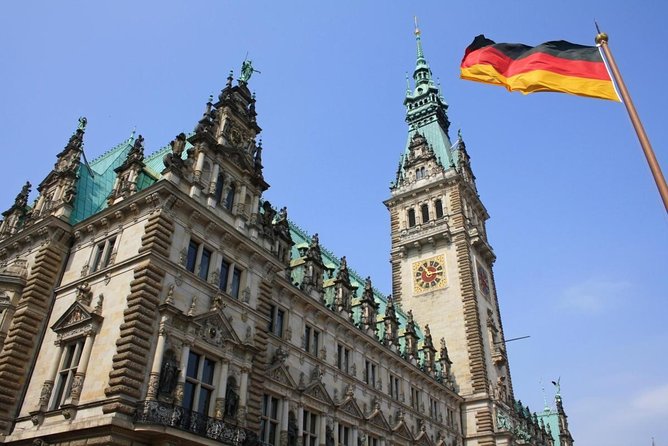
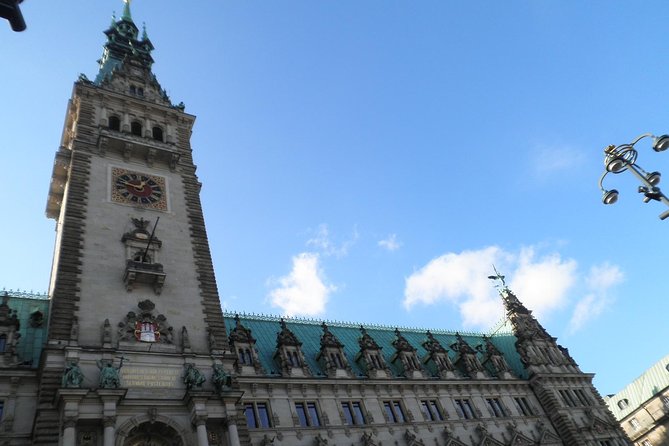
Stop 3 is Hamburg Town Hall (Rathaus), described as neo-Renaissance and dated to 1897. Even when you’re standing outside, the style cues you into a particular civic message, and it helps connect the port wealth to the institutions that ran the city.
Time here is short, around 10 minutes. That’s smart on a walking tour because you get a moment to take it in, then you move toward the older street textures that give you the contrast.
Admission is listed as free for this stop. So you don’t feel like you’re spending energy figuring out a ticket. You can just watch, listen, and walk.
More German cities at walking speed:




Deichstrasse and the port puzzle: old houses plus the 104 km fact
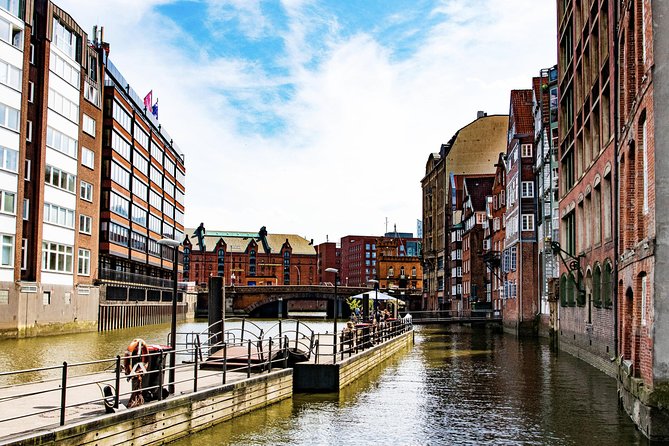
As you move through Deichstrasse, you get a different scale of Hamburg. This is a historic street with houses from the 17th century, and it’s a nice reminder that the city isn’t only warehouses and grand civic buildings. Small street segments like this are where you often feel the city’s texture most.
You’ll also get a port-focused explanation that helps the whole tour click. Hamburg is described as the third-largest port in Europe, and the note that it’s the only port in a city 104 km from the open sea is a great piece of context. That one detail explains why the waterways and logistics matter so much here.
There’s also a mention of the connection between city hall and central station, so the route isn’t random. You’re walking a corridor that ties the civic center to transportation flow, which is useful if you plan to use public transit later.
This stop is brief, about 5 minutes. If you want more photos of old facades, you can ask your guide for a couple of extra moments nearby, but don’t expect the tour to turn into a slow wandering day.
HafenCity: state-of-the-art planning and the Elbphilharmonie as a landmark
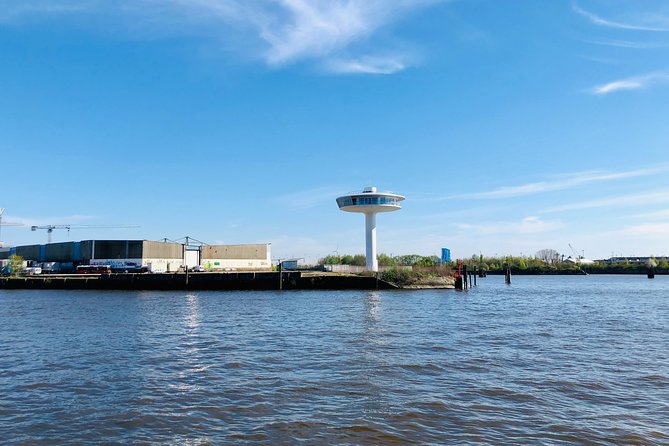
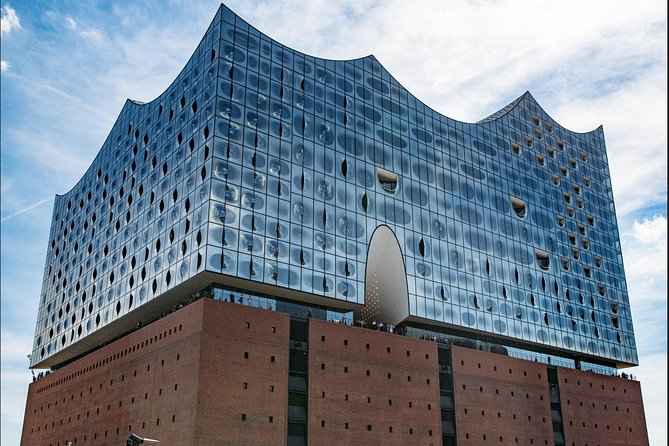
Stop 5 takes you into HafenCity, a major city planning project. This is where the tour shifts from the historic port era to modern urban design. Expect to notice architecture that looks new compared to Speicherstadt, and you’ll get the story of why HafenCity was developed and what it’s trying to do in terms of city space.
This stop is listed at about 10 minutes, and admission is marked as free for the area. Here’s the practical catch: the Elbphilharmonie concert hall is noted as a new landmark inaugurated in 2016, but it’s also stated that you can’t look into the concert hall. So you’ll get the outside landmark experience, plus commentary, but not an interior visit.
If you’re hoping for a concert or a guided inside look, this tour is not that. It’s the right choice if your goal is understanding and seeing the shape of the modern city from the street.
St. Nikolai WWII memorial: short, quiet, and not skipped
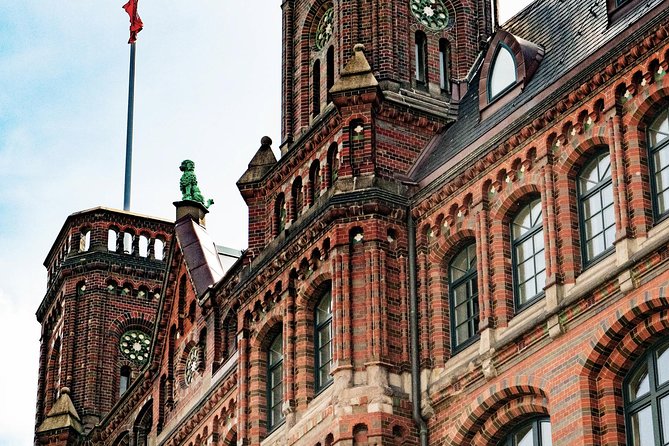
Stop 6 is the Mahnmal St. Nikolai WWII memorial. It’s listed as about 5 minutes and admission is free. This kind of stop can feel heavy, but the tour length keeps it from dominating the day.
It matters because Hamburg’s modern identity is tied to how the city rebuilt after WWII. A short memorial stop gives you context for why certain spaces and reconstructions exist. It also balances the earlier trade-and-architecture focus with something human and historical.
If your group prefers to spend a little longer here, you can ask, but since the tour is time-boxed, expect it to stay brief unless your guide adjusts.
The Alster lake moment and the Portuguese Quarter, plus where to eat after
The itinerary includes a lake right in the middle of the city, and with the tour’s emphasis on Alster views from St. Michael’s, this part usually helps you feel the city’s waterfront rhythm. It’s also a good reset break. Walking in Hamburg can get windy and cold, and a moment near the water helps you breathe and regroup.
The tour also calls out the Portuguese Quarter as a dedicated area. Even if you just scan the streets, this is a fun cultural change of pace compared to port warehouses and civic buildings. It gives you a sense of how Hamburg’s neighborhoods layer on identity beyond the tourist headline sites.
Finally, you’ll end up in an area with lots of restaurants and bars, which is handy because your tour ends with no food included. So when you finish, you’re not stranded in an empty zone. You can head straight into dinner without another long transit plan.
Walking, wind, and when to call for the taxi
This is a walking tour, and it’s built for people who can handle moving through several districts in a few hours. The good news is that it operates in all weather conditions, and you’re clearly told to dress appropriately because Hamburg weather can change fast and it can be very windy.
So wear layers, bring something windproof, and consider shoes you can trust on any slick pavement. If you personally know you struggle on long walks, plan smarter instead of suffering. The tour notes that if you don’t like walking, the guide can order a taxi cab on the spot, with payment made to the taxi driver only.
Also, the tour is near public transportation. So even if you decide to adjust your route in the middle, you’re not stuck far from transit options.
Price and value: $390.08 per group, up to 9 people
At $390.08 per group for about 3 hours, this is priced like a true private experience. The value equation depends on your group size.
- If you book with multiple people, the effective cost drops fast because it’s per group, not per person.
- If you’re traveling as a couple, you still get good value because a private guide changes the experience, especially for history and route flexibility.
- The tour includes a local guide and a private tour, plus several stops marked as free for admission.
One subtle value point: you’re not paying separately for most major sights listed. That matters in a city where ticket lines can eat time. And because the average booking time is about 41 days in advance, it’s a popular way to do Hamburg, so earlier planning can help you lock in the date you want.
Logistics that keep the day simple
The start point is Rathaus (Rathaus 20095 Hamburg, Germany) and the tour ends at Michaeliskirche (Michaeliskirche 20459 Hamburg, Germany). The listing also notes the tour can end at other locations based on your preference, which is a nice option if you’re trying to align with your hotel area.
You’ll receive a mobile ticket, and the tour is offered in English. It also states that service animals are allowed and that most travelers can participate. In other words, it’s designed for a wide range of visitors as long as you’re comfortable walking.
Should you book this Hamburg private walking tour?
Book it if:
- You want a private guide and don’t want to feel like you’re just following a brochure.
- You want the quick best-of mix: church views, Speicherstadt trade history, Town Hall civic grandeur, HafenCity modern planning, and a WWII memorial stop.
- Your group includes people who benefit from a flexible pace. Multiple guides are specifically noted for adjusting when needed.
Skip it or consider a different format if:
- You want long museum time or deep interior visits. This route is mostly exterior and short-stop viewing, and the Elbphilharmonie interior is not available here.
- You cannot handle wind and walking at all. The taxi option can help, but it won’t turn it into a totally sedentary day.
If you’re planning your first Hamburg visit, this tour is one of the easiest ways to understand the city quickly, then enjoy the rest of your time with clearer context.
FAQ
How long is the Hamburg private guided walking tour?
The tour runs about 3 hours.
What is the maximum group size?
A maximum of 9 people per booking.
Is the tour offered in English?
Yes, the tour is offered in English.
Where does the tour start and where does it end?
It starts at Rathaus (20095 Hamburg) and ends at Michaeliskirche (20459 Hamburg). The tour can also end at other locations if you request it.
Are there any entrance fees at the stops?
Several stops are marked with admission ticket free, including St. Michael’s Church and others listed on the route. The concert hall is noted as not possible to look into.
Does the tour include food or drinks?
No, food and drinks are not included.
Is hotel pickup or drop-off included?
No, hotel pickup and drop-off are not included.
What if I don’t like walking?
If you don’t like walking, the guide can order a taxi cab on the spot. You would pay the taxi driver directly.
What is the cancellation policy?
You can cancel for a full refund if you cancel up to 24 hours in advance of the experience start time. If you cancel less than 24 hours before, the amount you paid will not be refunded.
Fresh on the arrivals board for Hamburg

Guided Walks in Hamburg, compared.




Browse the lists this tour appears in