
Reviewed · BOAT TOURS IN HAMBURG
Hamburg: 2-Hour Sightseeing Cruise to Blankenese
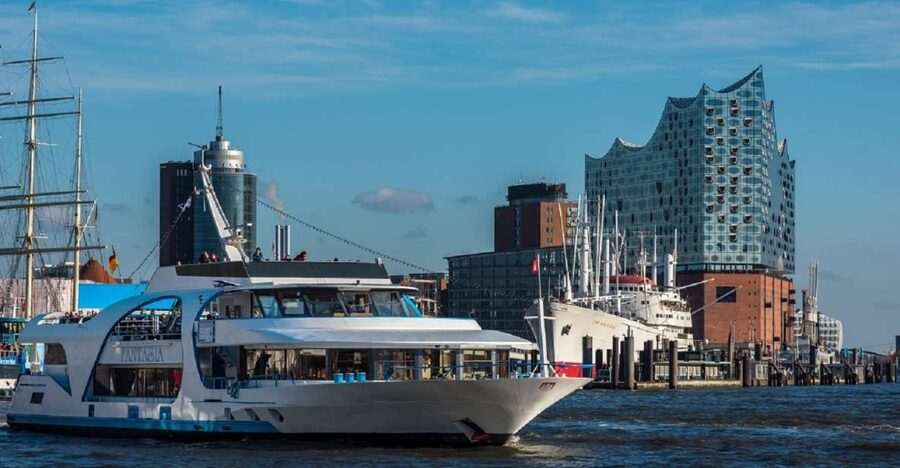
Hamburg looks better from the water. This 2-hour Elbe skyline cruise mixes slick city architecture with the real working harbor you do not see from a normal sightseeing walk. You pass the Elbphilharmonie, glide toward Blankenese, and ride right along the action.
I like two things a lot. First, the boat gives you a relaxed, “no waiting for trains” way to take in both the famous sights and the industrial stretch, including the Airbus area and container terminals. Second, the experience comes with live commentary in German plus an audio option through the Rainer Abicht app if you want another language.
One thing to plan for: live narration is German only, and if you do not read much German, you will want to rely on the audio app with your own headphones. Also, the “Hamburg to Blankenese” theme is strong, so confirm with the staff at the start that your departure is the one that reaches the Blankenese Treppenviertel.
In This Review
- Key highlights
- Why this Hamburg harbor cruise feels like a real shortcut
- Getting to Landungsbrücken Bridge 1 and finding your ship
- From St. Pauli piers to the Fish Market, watching Hamburg at work
- Parkhafen, Waltershofer Hafen, and Finkenwerder: the working-harbor education part
- Airbus Haus 20 and the aircraft-making story you can actually see
- Treppenviertel Blankenese: where the cruise switches tone
- Köhlbrand Bridge and Blohm + Voss docks: big engineering, straight views
- Hansahafen and HafenCity: where old port meets newer city planning
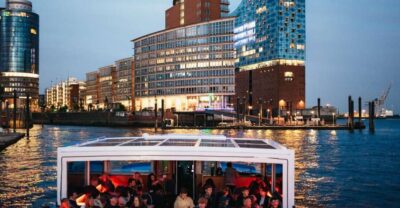
- The Elbphilharmonie finale: the skyline symbol from the river
- Price and what makes it worth $47 for 2 hours
- Language reality: live German plus the Rainer Abicht audio app
- Onboard tips that make the 2 hours smoother
- Should you book this Hamburg-to-Blankenese harbor cruise?
- FAQ
- How long is the Hamburg sightseeing cruise to Blankenese?
- How much does the cruise cost?
- Where do I meet for the tour?
- Is there a live tour guide?
- Are other languages available besides German?
- Do I need to bring headphones?
- Does the route include Blankenese?
- Which main sights are included in what you see from the boat?
- Are drinks included on board?
- Are small dogs or wheelchair users allowed?
Key highlights
- Live German narration from an onboard guide, with an audio alternative via the Rainer Abicht app
- Elbphilharmonie views and big-city waterfront angles you only get from water
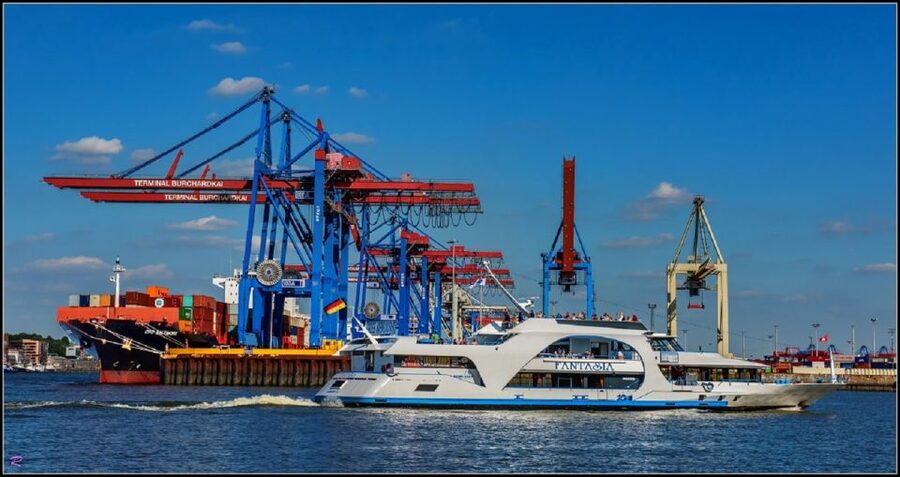
- Industrial Hamburg by the waterline, including Airbus and container terminals
- Blankenese Treppenviertel pass-by, where the architecture shifts from industry to upscale hillside charm
- Köhlbrand Bridge and Blohm + Voss docks on a single, 2-hour loop
Why this Hamburg harbor cruise feels like a real shortcut
Hamburg can feel split in two: the pretty postcard waterfront and the serious industrial machine that keeps the port moving. This cruise threads both worlds together. In just 2 hours, you get skyline drama and working-harbor reality, all without planning multiple stops or coordinating buses and ferries.
I also like that the cruise is designed around flow. You start at the Landungsbrücken area and move along the Elbe, so each new landmark comes into view naturally, one after another. There is no awkward “what do I do next” moment. You just stay seated, look out, and follow the guide’s story.
The route also makes practical sense for a first-time visit. You see the port’s scale, then you see how the city’s culture symbols sit inside that same landscape. That contrast is where the value lives.
More Boat Tours in Hamburg
- Hamburg: 1.5-Hour Harbor and Speicherstadt Day Cruise
★ 4.6 · 14,200 reviews - Hamburg: 90-Minute Evening Lights Harbor Cruise
★ 4.5 · 7,728 reviews - Hamburg: 2-Hour XXL Port of Hamburg Cruise Tour
★ 4.7 · 6,979 reviews
Getting to Landungsbrücken Bridge 1 and finding your ship
Your starting point is the Landungsbrücken, Bridge 1. Staff from Rainer Abicht Elbreederei are there to tell you which ship is docked and when it departs. This matters because the boarding situation is not always identical day to day, and the staff can get you to the correct dock fast.
Aim to arrive a bit early. Not because the process is slow, but because you want a clean window to find your exact location, settle in, and (if needed) confirm your audio setup before departure. The tour asks you to bring headphones, so you do not want to be fiddling with them once the boat is already moving.
If you are coming from the city center by public transit, give yourself extra time for the final leg to the docks. Hamburg’s waterfront can feel easy once you are there, but the last few minutes to the correct bridge are best handled calmly.
From St. Pauli piers to the Fish Market, watching Hamburg at work
The first stretch takes you past the St. Pauli Piers. This is where you start to get that classic port-city feel, with the mix of everyday harbor activity and landmark visibility. From the water, you notice how Hamburg’s waterfront is built for movement, not just for looking.
Next up is the Fish Market Hamburg area. Even if you are not there for breakfast or shopping, the water view helps you understand the location’s importance. Fish-market zones often cluster near the busiest practical routes, and this kind of sightline teaches you how the city organizes itself around trade and logistics.
Then you glide to Elbstrand. This is a shoreline stretch that helps break up the hard-edged industrial feel with something more open. From a boat, you can see how the Elbe’s banks shape where people build, where ships line up, and how the city uses the waterfront for more than one purpose.
My tip: if you want great photos, pick one side of the boat when you board and commit. Views change as the boat turns, but it is easier to get consistent framing when you choose a side early.
Parkhafen, Waltershofer Hafen, and Finkenwerder: the working-harbor education part
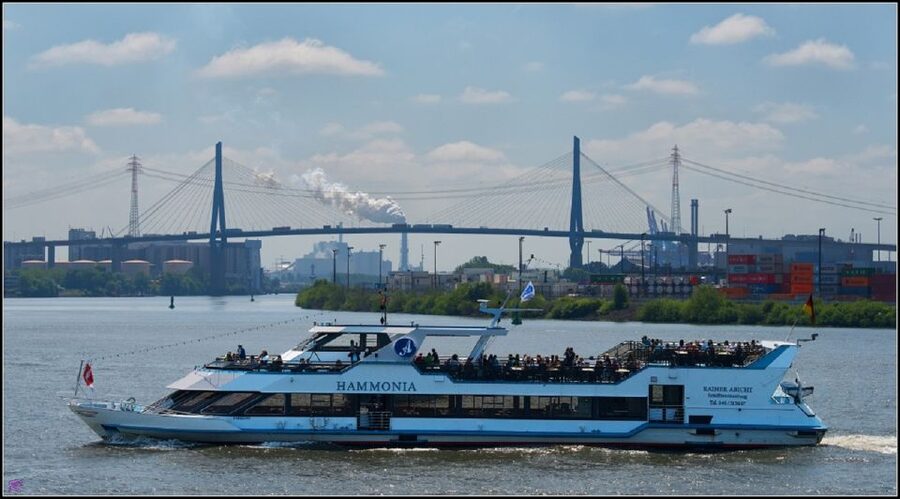
As you move toward Hamburg – Parkhafen and Waltershofer Hafen, the vibe shifts more clearly into industrial territory. This is where the cruise earns its keep. On land, these areas can look confusing or inaccessible. On the boat, you get a straightforward vantage point.
After that, you pass Finkenwerder. This stop acts like a bridge between big-port infrastructure and the specific “who builds what here” story Hamburg tells. You start to understand that the harbor is not just ships and containers. It is also manufacturing, planning, and specialized facilities tied directly to the river.
This section is usually where the cruise feels most “different from sightseeing.” You are not only chasing landmarks. You are seeing the system that makes the landmarks possible.
Airbus Haus 20 and the aircraft-making story you can actually see
One of the headline highlights is Airbus Haus 20, described as the place where planes are built. That is a big claim for a short cruise, but the benefit is that it shows up on your route in a way that is hard to replicate from a walking tour.
From the boat, you get a sense of scale. Aircraft work is not subtle, and this kind of facility is the opposite of the old-world “church tower view” kind of sightseeing. If you like modern industry or you enjoy understanding how cities function beyond tourism, this part is worth leaning into.
Practical note: there is no promise you will get close-up detail on every building. Still, seeing the Airbus-related area from the water makes the story feel grounded, not abstract.
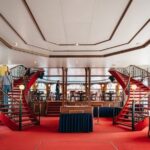
More harbours and rivers from deck height:
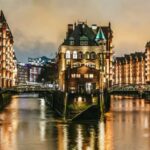
Treppenviertel Blankenese: where the cruise switches tone
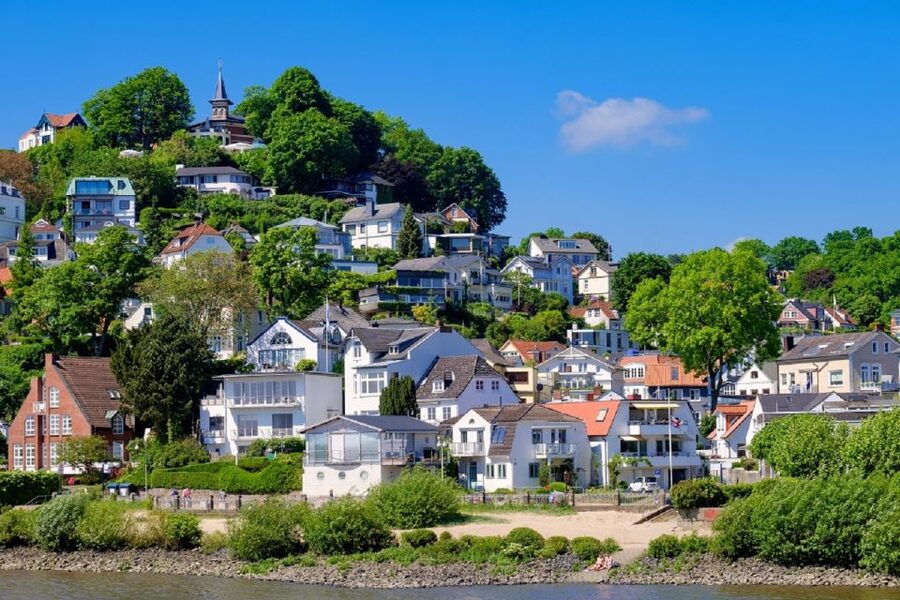
Then the route heads toward Treppenviertel Blankenese, a wealthy and lavish area of Hamburg viewed from the boat. This is the moment when many people feel the cruise balance hit its sweetest spot. You leave hard industrial edges and look at architecture that feels more residential and carefully designed.
Blankenese also gives you variety in sightlines. From the water, hillside or elevated neighborhoods tend to show their geometry quickly, even if you have never been there before. You start to see why a place like this becomes a destination.
One word of advice: your cruise is named for Blankenese, but routes can sometimes vary by departure. When you meet staff at Landungsbrücken Bridge 1, ask them directly if your sailing includes the Treppenviertel Blankenese pass-by. It takes one minute and saves confusion later.
Köhlbrand Bridge and Blohm + Voss docks: big engineering, straight views
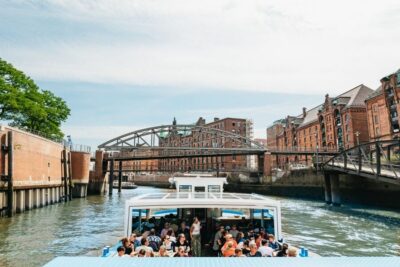
Passing Köhlbrand Bridge is a strong skyline-and-structure moment. Bridges are great on cruises because they create a frame. You can use them to understand how different parts of the harbor connect, and they help you orient your visual map of the city.
After that, you see Blohm + Voss Dock 5. Then the route brings you past Cruise Center Steinwerder, followed by Blohm + Voss Dock 11. That back-to-back sequence matters. Seeing multiple docks in one flow helps you grasp that this is not a single facility. It is a whole dock ecosystem tied to ship work and maintenance.
These stops are also where the industrial scale becomes more than scenery. You can feel the size of vessels and infrastructure just by the way the river space gets organized. Even if you do not know shipbuilding terms, the physical reality does most of the teaching.
Hansahafen and HafenCity: where old port meets newer city planning
As the cruise continues, you pass Hansahafen and then HafenCity. This is the part of the route where Hamburg’s present and future start to look like they overlap.
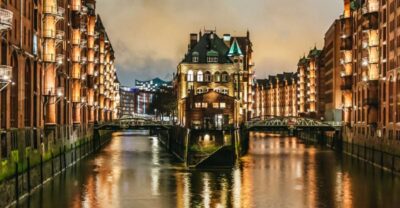
Hansahafen keeps the port working. HafenCity is more city-forward. On the water, you can see how redevelopment and modern districts still sit on top of, or right beside, logistics functions. That mix is one reason Hamburg feels unusual compared to other German cities. It is not “either industry or culture.” It is both, sometimes in the same view.
If you like urban planning, this section gives you something you do not get from a typical city center walk: a continuous line of sight along riverfront zones that have very different purposes.
The Elbphilharmonie finale: the skyline symbol from the river
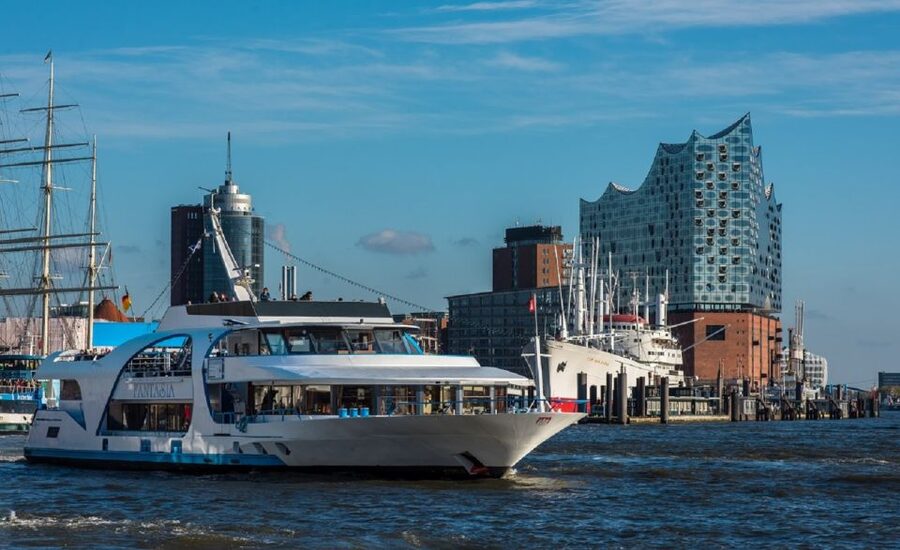
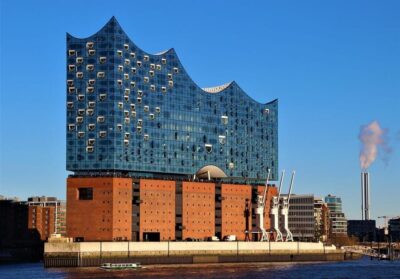
The cruise ends by returning past Elbphilharmonie. Whether you are a classical-music fan or not, this building is the kind of landmark you recognize instantly from photos, but you will appreciate more from water.
From the river, the Elbphilharmonie sits in context. It is not floating in isolation. You see the way it sits alongside port infrastructure and the broader skyline. It turns “famous building” into “part of a working city.”
Photo tip: if you want the full architectural profile, wait until the ship aligns and slows the angle of view. The best shot is usually a few seconds into the approach, not the instant you first spot the building.
Price and what makes it worth $47 for 2 hours
At about $47 per person for a 2-hour tour, the value is not just the ride. It is the combination of:
- a guided layer (live German narration)
- a scenic route that covers multiple Hamburg waterfront zones
- key landmarks in a single trip, including Airbus-area sights, container terminal areas, and the Elbphilharmonie
A walking-only approach could cover some sights, but you would not replicate the industrial vantage point or the smooth, continuous harbor lines. A full-day combo might feel more flexible, but you also give up time and simplicity.
This cruise is a good “set your eyes on the big picture” choice. If you only have a short window in Hamburg, this kind of harbor cruise helps you orient for later exploring.
Language reality: live German plus the Rainer Abicht audio app
The onboard guide provides live commentary in German. If you want a different language, the included solution is the Rainer Abicht app from Apple App Store or Google Play. The tour data also indicates the audio guide is available in multiple languages, including Chinese, English, French, Italian, Russian, Spanish, Dutch, Danish, Swedish, Norwegian.
Here is the practical part. Bring your own headphones and plan to use the app if you need language support. Do not assume the boat will hand out personal audio devices on your behalf.
Also, make your expectations match the format. Live narration plus audio options is excellent, but it still means you will be “listening differently” than people who understand German. If you are comfortable with English, Spanish, French, or other included audio languages, you will probably feel good during the whole ride.
Onboard tips that make the 2 hours smoother
This is a straightforward tour, but a few details matter:
- Bring passport or ID (it is listed as required).
- Bring your own headphones for the audio app.
- Expect drinks sold on board, not included.
- If you travel with a small dog, you can bring it only with a leash and a muzzle.
- The tour is listed as wheelchair accessible, but it is also noted as not suitable for wheelchair users. If that matters for you, confirm directly with the operator before you book.
Timing-wise, you check availability to see starting times. That means you may have multiple departures to choose from. If your priority is a specific skyline photo moment, check which departure fits your plans.
Finally, dress for being on the water. Even in comfortable weather, a river breeze can make it feel cooler than the street.
Should you book this Hamburg-to-Blankenese harbor cruise?
If you want a quick, high-value way to see Hamburg as both a modern city and a working port, I would book it. The route covers the Elbe skyline, the Elbphilharmonie, and the industrial side with Airbus and container terminal themes, all in a manageable 2 hours.
If you rely heavily on understanding every spoken detail, plan ahead. Use the Rainer Abicht app and bring headphones, because the live guide is German.
If you care about wheelchair suitability, double-check the conflicting accessibility notes with the operator. And if Blankenese is your must-see, confirm at the start at Landungsbrücken Bridge 1 that your departure follows the Blankenese pass-by.
Overall, this is a practical first-visit cruise, especially if you like seeing how big cities actually run.
FAQ
How long is the Hamburg sightseeing cruise to Blankenese?
The duration is 2 hours.
How much does the cruise cost?
The price is $47 per person.
Where do I meet for the tour?
Meet at Landungsbrücken, Bridge 1. Staff from Rainer Abicht Elbreederei will help you find the correct ship and departure time.
Is there a live tour guide?
Yes. There is live commentary provided in German by an onboard guide.
Are other languages available besides German?
Yes. You can download the Rainer Abicht app for audio commentary in multiple languages, including Chinese, English, French, Italian, Russian, Spanish, Dutch, Danish, Swedish, and Norwegian.
Do I need to bring headphones?
Yes. Please bring your own headphones.
Does the route include Blankenese?
The experience includes a stop at Treppenviertel Blankenese, as part of the cruise route.
Which main sights are included in what you see from the boat?
You pass landmarks and areas including Elbphilharmonie, Köhlbrandbrücke, Airbus (Airbus Haus 20), container terminals, and Blohm + Voss docks, along with HafenCity and other harbor areas.
Are drinks included on board?
No. Drinks are available to purchase.
Are small dogs or wheelchair users allowed?
Small dogs are allowed only with a leash and a muzzle. For wheelchair use, the information is mixed (it says wheelchair accessible, but it also says not suitable for wheelchair users), so you should confirm directly with the provider before booking.
Fresh on the arrivals board for Hamburg
Boat Tours in Hamburg, compared.
1.5-Hour Harbor and Speicherstadt Day Cruise
Read our review →
1-Hour Harbor Sightseeing Cruise with HafenCity
Read our review →
Browse the lists this tour appears in