
Reviewed · FAIRYTALE CASTLES & PALACE TOURS
From Munich: Royale Palace of Linderhof with Oberammergau
Linderhof hits fast, and in person it feels unreal. I love the guided walkthrough through Ludwig II’s most playful palace rooms, and I especially liked the theatrical Venus Grotto details that make the whole story click. One thing to factor in, though: the entrance fee is extra, and lunch is on your own.
This is a full-day drive that trades Munich convenience for Bavarian variety. You start with a peaceful stop at Ettal Abbey, then move into rococo splendor and Moorish fantasy buildings, and finish in Oberammergau, famous for its Passion Play. For a smoother day, you’ll want comfortable shoes and a bit of patience for mountain-road timing.
In This Review
- Key points worth knowing
- From Munich to the Alps, and Why This Day Trip Works
- Ettal Abbey: A 14th-Century Reset Before Ludwig II
- Linderhof Palace: Rococo Rooms, the Hall of Mirrors, and Ludwig II’s Odd Genius
- Venus Grotto: Wagner’s Tannhäuser and the Swan-Boat Detail
- Moorish Kiosk and Moroccan House: When Bavaria Gets Playfully Strange
- Grounds Time: Gardens, Formal Walks, and a Chance to Breathe
- Oberammergau: A Town Stop With Real Culture, Not Just a Photo
- Price and Value: What $147 Buys You (and What It Doesn’t)
- Timing, Comfort, and the Small-Group Advantage
- Who Should Book This Linderhof and Oberammergau Tour
- Should You Book This Tour?
Key points worth knowing
- Small group size (up to 8) makes it easier to hear the guide, especially inside the palace
- English live guide keeps the details understandable, not just pretty
- Skip-the-ticket-line helps you spend more time at the main sights
- Ettal Abbey first is a great palate cleanser before Ludwig II’s palace world
- Oberammergau stop gives you a taste of the town beyond the Passion Play headlines
- Entrance fee and lunch are not included, so budget a little extra
From Munich to the Alps, and Why This Day Trip Works
Leaving Munich on a scheduled tour is one of the best ways to get out of “airport-brain” and into real Bavaria. You cover real distance without having to figure out routes, parking, or trains. And because it’s a small group, the day doesn’t feel like you’re being herded through hallways with fifty strangers.
What I like about this format is the rhythm. You get a grounded, quiet start at Ettal Abbey, then you switch gears into Ludwig II’s theatrical imagination at Linderhof Palace and the Venus Grotto. After that, you’re not stuck in one museum-like bubble. You get to walk the grounds at your pace, then finish in a working town where woodcarving and painted houses are part of daily life.
The day is long enough that you should treat it like a “full-day commitment,” not a quick detour. The stated duration can run about 6 to 9 hours depending on timing, so plan for a late dinner.
More turrets against the hills:
- From Munich: Neuschwanstein & Linderhof Castle Full-Day Trip
★ 4.6 · 14,646 reviews - Neuschwanstein & Linderhof Castle-Fairytale Day Tour from Munich
★ 4.5 · 7,275 reviews - Neuschwanstein Castle Tour from Munich
★ 4.5 · 5,117 reviews
Ettal Abbey: A 14th-Century Reset Before Ludwig II
The tour’s first major stop is Ettal Abbey, in the Ettal area just as the Alps begin to feel closer. You’ll see a real monastery community, not a staged landmark. It’s home to a community of about 50 monks, and the abbey itself is 14th century.
Even if you’re not a church-architecture superfan, this stop makes the rest of the day better. Ettal Abbey gives you a calmer contrast point before the rococo overload. You also get a sense of how the region lives beyond the “royal postcard” stuff. In other words, you’re not only touring Ludwig II’s fantasies, you’re seeing the religious and cultural landscape that shaped Bavaria long before those palace rooms were painted and polished.
Practical tip: treat this as your moment to reset. Use the restroom before you head into palace ticketing, and take a slow walk while you can.
Linderhof Palace: Rococo Rooms, the Hall of Mirrors, and Ludwig II’s Odd Genius
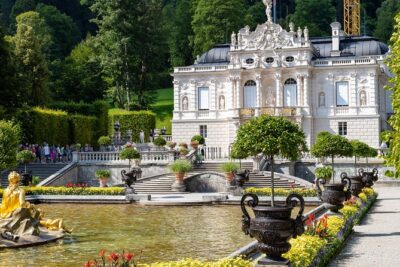
This is the reason most people sign up, and once you step into Linderhof Palace, it’s easy to see why. Linderhof was built in the late 19th century for King Ludwig II. It’s the smallest of his three palaces, and it’s the only one he lived to see finished. That fact alone adds a layer of inevitability, like the palace was meant to be completed no matter what.
The guided portion is where you’ll get your money’s worth. A palace like this can feel like “pretty rooms” if you’re left alone. With an English guide, you get the why behind the flourishes, from the style choices to the symbolism in how Ludwig decorated the space.
A few highlights that are worth mentally marking:
- The palace is rococo, meaning lots of curves, ornament, and a theatrical sense of movement in the design.
- The Hall of Mirrors is famous for its decor, including a carpet made of ostrich plumes.
- You’ll also see ivory candelabra, a detail that screams wealthy obsession, in the best way.
And yes, the scale matters. Because it’s smaller than Ludwig’s other palaces, the flow can be easier. You still get the wow factor, but you’re less likely to feel exhausted after an endless corridor crawl.
Venus Grotto: Wagner’s Tannhäuser and the Swan-Boat Detail
After the palace rooms, the tour moves to the Venus Grotto, and this is where Ludwig II’s theatrical side becomes very clear. The grotto was built as an illustration of Wagner’s Tannhäuser, and it’s tied to Ludwig’s personal favorites.
Even if you don’t know the opera, you can still read the intention. It’s not just decoration. It’s stagecraft. The grotto is meant to feel like you’ve stepped into a myth. That’s part of why it’s a “jewel of Bavaria” type stop.
One of the coolest details is how Ludwig enjoyed it. The grotto included a tradition tied to water and fantasy, including the idea that Ludwig liked to row across it in a swan boat. That little piece of imagery makes the grotto feel less like a static room and more like a living performance Ludwig envisioned for himself.
Practical tip: Venus Grotto is best viewed with time. If you rush, you miss how the setting supports the story. Listen to the guide early, then slow down for your second pass.
Moorish Kiosk and Moroccan House: When Bavaria Gets Playfully Strange
The palace tour doesn’t end with rococo rooms. You also have time to explore the Moorish Kiosk and the Moroccan House, plus the surrounding buildings and gardens associated with Ludwig II’s tastes.
These structures are a big reason I like this tour. They show you that Ludwig wasn’t only obsessed with German royalty style. He pulled in faraway influences and dressed them up with a royal budget. The Moorish Kiosk includes a peacock throne, which is exactly the kind of detail that makes you stop and stare instead of walking past as background.
Then there’s the Moroccan House, another ornate structure that adds to the feeling that this complex was designed for someone who wanted his world to feel like a dream. You’ll get a sense of how Ludwig used architecture as storytelling, not just as shelter or display.
If you like gardens and small buildings more than giant museum halls, you’ll probably enjoy this portion a lot. It’s also a nice change of pace from inside rooms with tight ticketed time.
Also holding a platform in Munich

Grounds Time: Gardens, Formal Walks, and a Chance to Breathe
After the guided palace and grotto portion, you get some free time to explore the grounds on your own. This is important, because no tour guide can pace the world inside your head for you. Even a well-run tour can make you move at guide speed.
Use your time to do two things:
- Walk the formal gardens slowly, so the design looks intentional instead of random.
- Look for areas where you can stretch your legs.
A review mention that the grounds can include hiking trails, which is great if you want an outdoors moment. The goal here isn’t to “get a workout.” It’s to shift your day from indoor wow to fresh air variety.
Practical tip: wear shoes that handle uneven paths. Even if you don’t plan to hike, palace grounds have real ground under your feet, not just flat tourist pavement.
Oberammergau: A Town Stop With Real Culture, Not Just a Photo
On the way back to Munich, you stop in Oberammergau, a town famous for the Passion Play, held once every 10 years. Even if you are not visiting during a play year, the town’s identity is tied to that tradition, and you’ll feel it in the way people preserve the style and crafts.
Oberammergau is also known for woodcarvers and for richly painted houses. That matters because it turns the town stop from a quick “landmark photo” into something you can actually wander. You’ll have time to tour the town before lunch, which is useful. It lets you break up the day’s long driving with a human-scale walk.
From the experience info, you’ll tour the town and get a recommended lunch spot. One guide, Katrine (a Munich local in at least one experience), was praised for sharing local customs and for pointing guests toward a great lunch choice. That kind of practical advice is exactly what makes a town stop more than a checklist pause.
Practical tip: if you want the best chance of a calm lunch, don’t treat it like you’ll find a perfect place with no research. Take the guide recommendation seriously.
Price and Value: What $147 Buys You (and What It Doesn’t)
At $147 per person, this tour sits in the “worth it if you care about the sites” category. Here’s why the value can be strong:
You get:
- Pickup and drop-off at Munich hotels in the city center area
- A local guide in English
- A guided visit covering Linderhof Palace and the Venus Grotto
- Time on your own in the grounds, plus stops at Ettal Abbey and in Oberammergau
You do not get:
- The entrance fee (Euro 8.50)
- Lunch (you plan and pay separately)
So, the real decision is about whether you want one guide-run day that connects multiple key places with minimal hassle. If you’d rather travel independently, you might save money. But if you want a smooth day with coherent pacing, this pricing makes sense. You are paying for the convenience, the guided interpretation, and the fact that you’re seeing several highlights without having to stitch together transportation yourself.
One more value check: the tour is limited to 8 participants. That small group size typically means less waiting and better guide attention. If you’ve ever been stuck behind someone who’s determined to read every label, you know why that matters.
Timing, Comfort, and the Small-Group Advantage
Most day trips from Munich feel long, but this one has a few details that make the stretch easier. You’re in a small group, and the van is described as especially comfortable for sightseeing. That comfort matters more than people think when you’re going from palace to grotto to town stop with real walking.
Also, “skip the ticket line” helps. You still pay the entrance fee, but skipping the line reduces the chance that you lose time to check-in chaos. It keeps the day feeling like it has momentum.
Duration can run about 6 to 8 hours, though the summary also lists 9 hours. Either way, treat it as a serious day. Bring water, and consider a light snack if you tend to get hungry. Since lunch isn’t included, your energy plan is on you.
Who Should Book This Linderhof and Oberammergau Tour
This is a great fit if you want:
- A guided experience at Linderhof Palace and the Venus Grotto where story details matter
- A day that mixes royal showmanship with a calmer stop at Ettal Abbey
- A small-group pace that feels more personal than mass tourism
It may not be the best choice if you have mobility impairments, since it’s specifically listed as not suitable.
If you’re traveling with older kids or teens who like drama, architecture, or odd-but-fascinating royal choices, this tour can land well. Ludwig II was not subtle, and the sights reflect that in a way that’s fun to experience with someone who enjoys a good “how is this real” moment.
Should You Book This Tour?
I’d book it if you care about Ludwig II beyond the one famous palace photo. This tour gives you the full flavor: palace rooms, the Hall of Mirrors with ostrich-plume carpet, the theatrical Venus Grotto, and the surprising Moorish and Moroccan buildings that explain how imaginative Ludwig could be. Then you top it off with a real town stop in Oberammergau, where the culture is visible even when the Passion Play is not happening.
Skip the tour only if you’re trying to keep costs super tight, or if you don’t want to plan for an extra Euro 8.50 entrance fee plus lunch. Also think twice if your mobility needs make long walking or uneven grounds hard.
If you want a high-impact day with a guide who can make the details click, this is one of those Munich day trips that actually feels like you left the city and went somewhere specific.
Fresh on the arrivals board for Munich



Fairytale Castles & Palace Tours, compared.
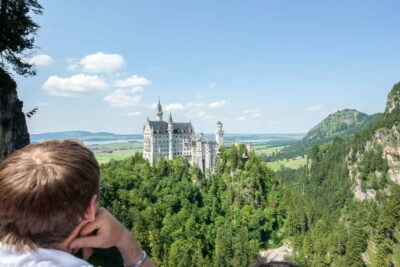
Neuschwanstein & Linderhof Castle Full-Day Trip
Read our review →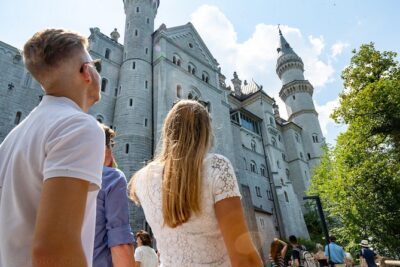
Neuschwanstein & Linderhof Castle-Fairytale Day Tour from Munich
Read our review →

Premium Neuschwanstein Castle and Linderhof VIP Tour from Munich
Read our review →
Browse the lists this tour appears in