
Reviewed · LEIPZIG TOURS & ACTIVITIES
Federal Administrative Court Leipzig: A journey into the heart of German justice
Courts have stories you can feel. At Leipzig’s Federal Administrative Court, German justice becomes something you can walk through, in a building packed with judgment rooms and symbolic details. I especially love the grand courtroom atmosphere and the way the tour points your eyes at the architectural language of power.
Then the stories get specific, and that is the real payoff. You learn how major decisions shaped administrative law, with references like the 1933 Reichstag fire trial and the October 1907 case involving Karl Liebknecht. One watch-out: at 1.5 hours, the pace is brisk, so if you want to linger, it may feel short.
In This Review
- 6 Highlights That Make This Court Tour Worth It
- A Federal Court That Shapes Administrative Law in Real Life
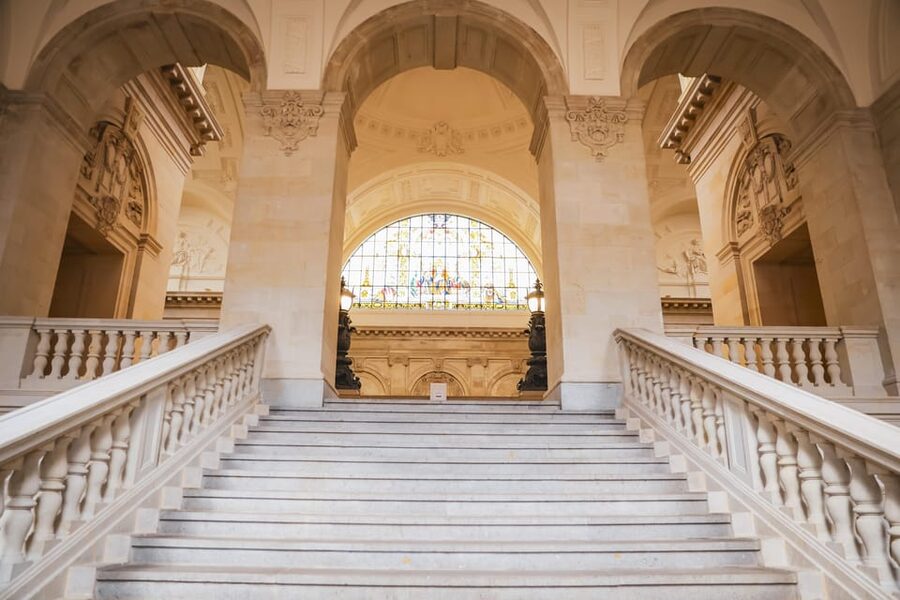
- Walking the 1879 Imperial Court of Justice in Wilhelmine Architecture
- Historic Court Rooms With Legal Drama, Minus the Popcorn
- The Presidential Apartment Stop Adds a Human Scale to Official Power
- From Imperial Justice to GDR-Era Art Museum, Back to Court in 2002
- How the Guide Keeps the Tour Interesting and Not Snoozy
- Price and Time: $14 for 1.5 Hours of Courtroom History
- Who This Tour Fits Best (And Who Might Want Something Else)
- Should You Book the Federal Administrative Court Tour?
- FAQ
- How long is the Federal Administrative Court tour?
- Where do I meet for the tour?
- What does the tour include?
- What legal and historical topics will I see during the tour?
- What languages are available?
- Is the tour wheelchair accessible?
- Are kids allowed?
- Are pets allowed?
- What if I need to cancel?
6 Highlights That Make This Court Tour Worth It

- Historic meeting rooms, where the past is not behind glass, but in the same spaces where legal decisions happened.
- Imperial courtroom details, including national coats of arms and imperial paintings in the main court hall.
- Judicial dress you can picture, especially the crimson robe and beret still associated with federal judges.
- Landmark legal moments, tied to cases such as the Reichstag fire trial of 1933 and Karl Liebknecht’s October 1907 defense linked to published writings.
- A former presidential apartment visit, giving you a rare sense of the court’s day-to-day prestige beyond the bench.
- A building with changed roles, from imperial court to a GDR-era art museum, then back to judicial use in 2002.
A Federal Court That Shapes Administrative Law in Real Life

The Federal Administrative Court is Germany’s top court for administrative law. In 14 senates, judges decide disputes and help steer how the law develops, which is a big deal if you care about how rules turn into outcomes.
Why this matters for you: you are not just viewing a pretty old building. You are hearing how administrative law works at the highest level, then seeing the room where that authority is expressed. That mix, history plus function, is what keeps this tour from feeling like a lecture.
Also holding a platform in Leipzig
- Leipzig: City History Canal Sightseeing Tour on a Motorboat
★ 4.7 · 7,671 reviews - Leipzig: The Original Night Watchman Bremme Tour
★ 4.5 · 3,815 reviews - Combo Tour in Leipzig: Guided City Tour & City Sightseeing
★ 4.7 · 2,317 reviews
Walking the 1879 Imperial Court of Justice in Wilhelmine Architecture
The building dates to 1879, built during the Wilhelmine era as the Imperial Court of Justice. That means you get an architecture style designed to project seriousness, permanence, and state authority.
In the big courtroom, the tour focuses on national coats of arms and imperial paintings. You do not have to be an architecture nerd to get it, because the building teaches you through symbols. The space is meant to tell you that decisions here are meant to last, and the tour helps you read those visual cues.
You’ll also get guided attention to the official dress still associated with federal judges, including the crimson robe with a beret. Seeing that tradition explained in context makes it feel less like costume and more like institutional identity.
Historic Court Rooms With Legal Drama, Minus the Popcorn
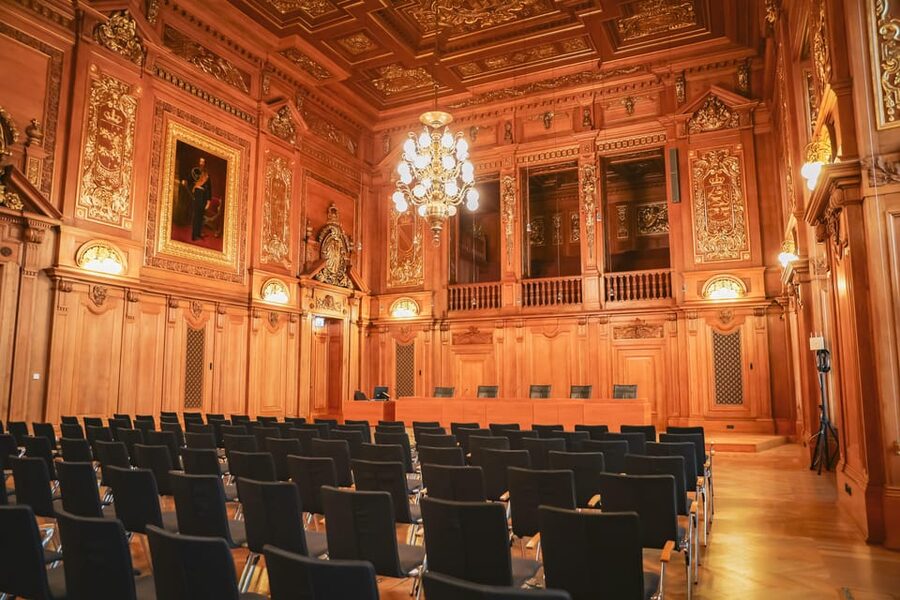
One reason I like court tours is that they turn abstract history into concrete context. Here, the tour uses important judgments and historical decisions to show how legal thinking changes over time.
You’ll hear about the infamous Reichstag fire trial of 1933, a case that still echoes in discussions about law, power, and due process. Even if you only remember the headline from school, hearing it placed into a courtroom setting makes the stakes feel real.
The tour also points to the October 1907 trial tied to Karl Liebknecht. The story is especially interesting because it connects legal defense directly to the publication of writings. It’s a reminder that courts have always had to wrestle with the boundaries between speech, public authority, and what counts as legal responsibility.
A practical consideration: this tour is not aimed at legal students. It explains enough to make the context click, but you might want to bring a curious mindset if the cases themselves are new to you.
The Presidential Apartment Stop Adds a Human Scale to Official Power
Most courthouse visits stay on the public-facing side. This one adds something different, a visit to the former presidential apartment.
That stop changes the tone in a good way. Instead of only thinking about procedures and symbolism, you start to picture the court as a workplace with routines, status, and the everyday life around major decisions. The fact that it is included means the tour goes beyond architecture into how leadership was housed within the institution.
You get to see how the court’s prestige was lived, not just performed. If you like history that has texture, this part is often what makes the tour feel memorable rather than checklist-like.
From Imperial Justice to GDR-Era Art Museum, Back to Court in 2002
Buildings in Germany often carry multiple lives, and this one does too. The tour explains how it changed use over time, including its period as an art museum during the GDR era.
That shift is worth paying attention to. A courtroom and an art museum may both involve rules about space and public access, but the purpose changes the way you experience the building. The tour helps you connect those dots, so you can see how the same walls can serve different ideas of culture and authority.
Then comes the return to judicial use as the seat of the Federal Court in 2002. For you, that detail makes the building feel like an active part of modern Germany, not a frozen relic. You are standing in a space that kept moving with the country’s political and cultural shifts.
Onward connections from Leipzig:




How the Guide Keeps the Tour Interesting and Not Snoozy
A lot can go wrong on tours like this. Court history can turn into dates, and dates can turn into boredom fast. What makes this one work is the delivery, friendly and organized, with an entertaining storytelling style.
In the most positive feedback, people highlight that the tour is informative without dragging. That aligns with what you should look for when you book: you want someone who can tie architecture, history, and current legal context into a single flow. The tour is designed to do that, and it shows in the pacing.
One more tip for you: since the tour is held in German, do your homework lightly. Even a small effort like learning a few court-related words will help you follow faster. If you need English support, the tour notes that English is available on request, so it is worth asking ahead.
Price and Time: $14 for 1.5 Hours of Courtroom History
At about $14 per person for a 1.5-hour guided tour, the value is surprisingly strong. You are paying for access plus interpretation, and not every museum or city landmark gives you a guided walkthrough of active-style court spaces.
Here’s how I’d think about it as a traveler:
- If you enjoy architecture and institutions, this is a low-cost way to get both, in one focused session.
- If you want a long, slow experience, the time limit might feel tight. Some people even wish they could see and hear more, and with a court building, there really is a lot to notice.
So the $14 price is not the bargain part, the bargain part is that you get guided storytelling tied to specific legal moments and concrete room details. It is the kind of tour that can make a short stop in Leipzig feel like it had purpose.
For your timing, build in a small buffer. The meeting point is in front of the court at Simsonplatz 1, and you’ll want to arrive about 10 to 15 minutes early so you can settle before the tour starts.
Who This Tour Fits Best (And Who Might Want Something Else)
This tour is a great match if you like:
- legal history and how rules shape society
- architecture with political symbolism
- short, structured tours that still feel personal
It is not a match for everyone. It is not suitable for children under 14, and it also has clear boundaries on group behavior, with restrictions on party groups and similar events. Pets are not allowed, though assistance dogs are allowed.
If your travel style is museum meandering with lots of independent exploration, you might find the fixed route limiting. But if you like a guide to point out what matters, this tour does that job well.
Should You Book the Federal Administrative Court Tour?
Yes, you should book if you want a smart, focused introduction to how Germany’s administrative justice works, inside a building that looks like it was designed to command attention. The combination of historic courtroom spaces, named legal moments like the Reichstag fire trial and the Karl Liebknecht case, and the added visit to a former presidential apartment makes the tour feel more complete than a typical building walkthrough.
Book with caution only if you need a long timeline for lingering. With just 1.5 hours, you’ll likely leave with a few favorite details and a wish for more time to ask extra questions.
FAQ
How long is the Federal Administrative Court tour?
The tour lasts about 1.5 hours.
Where do I meet for the tour?
Meet in front of the Federal Administrative Court at Simsonplatz 1.
What does the tour include?
It includes a guided tour of the court, visits to historic courtrooms, and a visit to the former presidential apartment.
What legal and historical topics will I see during the tour?
You’ll learn about the court’s role in administrative law and hear about historical decisions such as the Reichstag fire trial of 1933 and the October 1907 trial linked to Karl Liebknecht.
What languages are available?
The tour is live in German, with English available on request.
Is the tour wheelchair accessible?
Yes, the tour is wheelchair accessible.
Are kids allowed?
The tour is not suitable for children under 14.
Are pets allowed?
Pets are not allowed, but assistance dogs are allowed.
What if I need to cancel?
You can cancel up to 24 hours in advance for a full refund.
Fresh on the arrivals board for Leipzig




Leipzig Tours & Activities, compared.

City History Canal Sightseeing Tour on a Motorboat
Read our review →

Combo Tour in Leipzig: Guided City Tour & City Sightseeing
Read our review →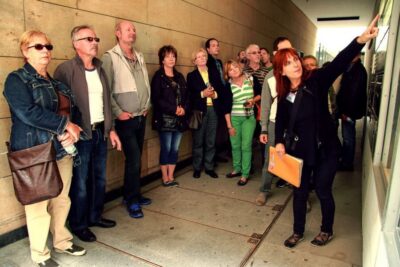



Browse the lists this tour appears in