
Reviewed · MUNICH TOURS & ACTIVITIES
Exploring Munich in a Rikscha
A Munich rickshaw tour beats walking in a big way. You cover key sights fast, then your guide fills in the gaps with stories that stretch from Munich’s early roots to WWII and life today, all while you roll through town on eco-friendly transport. The guide behind the wheel, Pablo Catalan, is repeatedly described as fun, smart, and safety-minded, which matters more than you think when you are moving through busy streets.
What I like most is the combination of Marienplatz first and English Garden next. Marienplatz helps you orient to the city’s heart, and the English Garden gives you a breather that feels like a real place, not a photo stop. I also love how this is set up for a private group with tight timing, so you are not lost in a crowd.
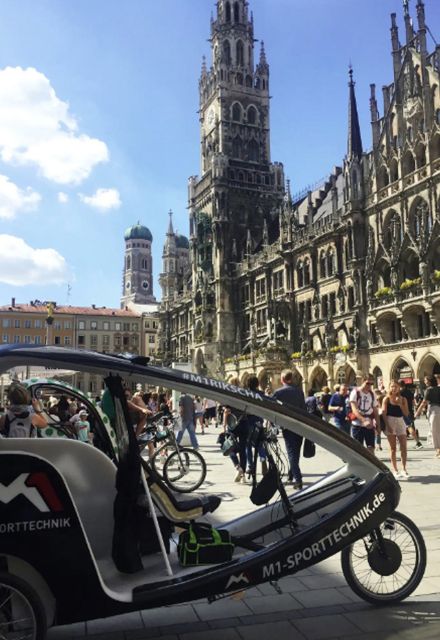
One consideration: the rickshaw itself is simple. One review notes it felt more like a basic bike with a front seat bench than the more polished look you might expect from photos, and rain can be less comfortable because there is not much shelter. If you plan to tour in wet weather, bring a rain layer and plan for a slightly drier ride by wearing the right gear.
In This Review
- Key highlights worth your time
- How a Munich rickshaw tour feels different from buses or walking
- Starting at Burgstraße 2, then easing into Marienplatz
- Max-Joseph-Platz, Munich Residenz, and Odeonsplatz in short, guided hits
- Max-Joseph-Platz: a smooth transition from the square to the monuments
- Munich Residenz: the power center without the full time commitment
- Odeonsplatz: where the stories can feel bigger than the stop
- The English Garden stretch, where the tour slows down for a reason
- Price and group setup: what $116 per group really means
- Pablo Catalan’s guiding style: safe driving and real local context
- Comfort notes: what to expect from the rickshaw ride
- Who this Munich rickshaw tour suits best
- Should you book this Munich rickshaw tour in Munich?
- FAQ
- Where do I meet for the rickshaw tour?
- How long is the tour?
- How many people can ride in one rickshaw?
- What languages are available for the live guide?
- Is the tour wheelchair accessible?
- Can I cancel or book without paying today?
Key highlights worth your time
- Marienplatz charm with a short, guided orientation to Munich’s old-town core
- English Garden time (about 20 minutes) so you actually feel the space, not just pass by
- Story-led history stops that connect places to Munich’s past and present
- Small capacity rickshaws designed for up to two adults and one child
- Pablo Catalan’s style: described as interesting, safe, and very comfortable for guests
How a Munich rickshaw tour feels different from buses or walking
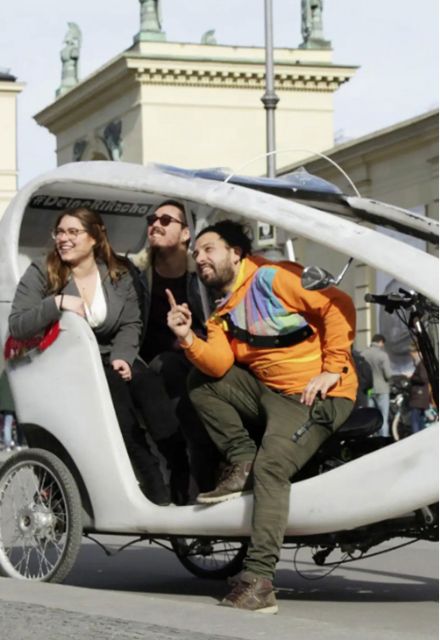
A rickshaw tour is basically a smart shortcut. You still see the places you want, but you are not spending your energy doing stop-and-go walking, especially around central squares. In a city like Munich, that matters because the spacing between “must see” stops can be deceptively tiring.
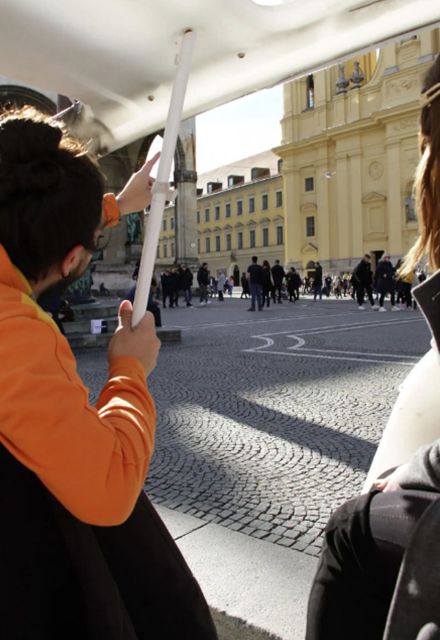
The other big difference is angle and attention. On a bike-style vehicle, you tend to get closer views of facades and street details. Then your guide’s job becomes storytelling, not just pointing, and that is where the experience turns from sightseeing into understanding.
The eco-friendly part is real in spirit, too. You are using modern rickshaw transport instead of a bus, which keeps things more personal and lets you feel the rhythm of the streets.
Also holding a platform in Munich
- From Munich: Neuschwanstein & Linderhof Castle Full-Day Trip
★ 4.6 · 14,646 reviews - Neuschwanstein & Linderhof Castle-Fairytale Day Tour from Munich
★ 4.5 · 7,275 reviews - Munich: Third Reich & WWII Walking Tour
★ 4.6 · 6,181 reviews
Starting at Burgstraße 2, then easing into Marienplatz
You meet at Burgstraße 2, right in front of the Garibaldi wine shop, just a few steps from Marienplatz. That is a practical start point because it puts you at the center of the action quickly, with fewer minutes wasted on transfers.
From there, you ride to Marienplatz for about 10 minutes of guided time. This is the kind of stop that helps you get oriented fast. Even if you have seen photos, standing near the square’s main energy usually clicks: you understand where key streets branch off and how the old-town core is shaped.
A short, guided round here is also a good pacing choice. You get enough context to enjoy the next stops without burning your attention span before you reach the English Garden.
Max-Joseph-Platz, Munich Residenz, and Odeonsplatz in short, guided hits
After Marienplatz, the route shifts through central landmarks with quick guided moments, around 10 minutes at each stop. That sounds brief on paper, but in practice it works because each stop is story-led rather than a long museum-style visit.
Max-Joseph-Platz: a smooth transition from the square to the monuments
At Max-Joseph-Platz, you get a guided walk-through that helps you read the streetscape. This kind of stop is ideal when you want “why this matters” more than “look at this building for 45 minutes.”
Munich Residenz: the power center without the full time commitment
Next is Munich Residenz for another short guided segment. You are not signing up for a full palace visit here. Instead, you get the orientation view, so when you later decide whether you want more time inside, you already know what you are looking at and why it mattered.
Onward connections from Munich:

Odeonsplatz: where the stories can feel bigger than the stop
Finally, Odeonsplatz gives you a look at another central square with serious historical weight. Because the tour keeps moving, you avoid the common problem of over-staying at a single landmark too early in the day. You finish the old-town loop feeling like you have a map in your head.
The English Garden stretch, where the tour slows down for a reason
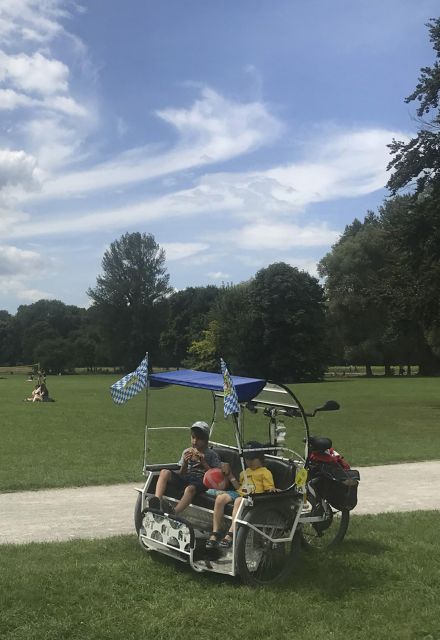
Then you get to the part many people remember: the English Garden. You spend about 20 minutes here, which is longer than the earlier stops. That extra time is the difference between a quick ride-by and actually getting a sense of the park.
The English Garden works on two levels. First, it is visually beautiful in a calm, open way that contrasts with the dense central squares. Second, it is a place where local life plays out, even when you are just there briefly. That helps you understand Munich beyond monuments and war-era facts.
If you are the type who likes to pause and absorb, this is your moment. Use the stop to reset your brain before you head back to the meeting point.
Price and group setup: what $116 per group really means
The price is $116 per group up to 2, for a tour lasting about 1 hour. Because this is a private group, you are not paying for seats you do not use. You are paying for a guide and a dedicated vehicle for your party size.
Capacity matters here. Each rickshaw allows a maximum of two adults and one child. If you are traveling as two adults only, you are within the sweet spot. If you are a family, this setup can be a smart way to keep everyone together without turning the day into a logistical puzzle.
Is it good value? For me, yes, if your priorities are history plus efficient sightseeing plus comfort compared to walking. If you are traveling solo and want maximum flexibility, you may find it better to compare it against other private options, because the pricing is per group rather than per person.
Pablo Catalan’s guiding style: safe driving and real local context
The name that comes up again and again is Pablo Catalan. The feedback points to three things that are worth your attention:
- He drives in a way guests describe as safe.
- He is intelligent and history-aware, so the talk feels connected rather than random.
- People also describe the tour as fun and comfortable.
That combo is what you want in a city-center tour. You do not just need facts, you need a guide who can package them in a way that fits the time you have and the route you are following.
The tour also promises a storytelling arc: Munich’s foundation, the Second World War, and the present day. When a guide ties modern streets to past events, you tend to remember what you saw. It stops being a checklist and becomes a story you can retell.
And if you want next steps after the ride, the guide offers recommendations for other places and activities. That is especially useful if you are only in Munich for a short time.
Comfort notes: what to expect from the rickshaw ride
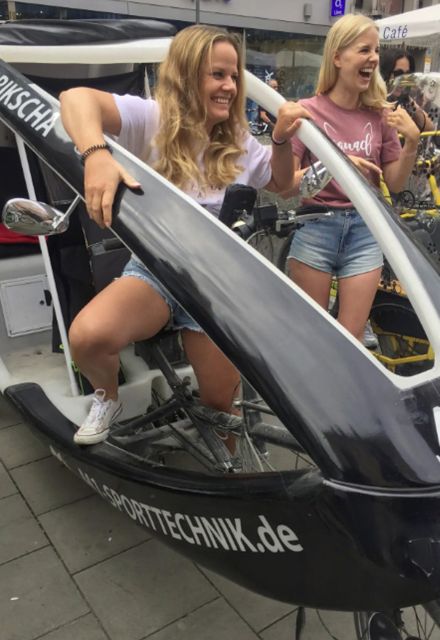
This is not a luxury carriage. One review describes the rickshaw as simple, like a bicycle with a front seat bench. That affects how you plan your clothing and comfort.
You should also know it is not suitable for wheelchair users. So if mobility is a factor, you will need a different option.
Rain is the other practical issue. One guest specifically noted the rickshaws could be made better for rainy driving. So if your schedule includes possible showers, dress for getting a bit wet and consider bringing a small rain layer.
Finally, because it is a short tour with multiple stops, you will want to be ready to move quickly at each location. This is a “ride and learn” format, not a long wandering day.
Who this Munich rickshaw tour suits best
This tour fits best if you want a fast, guided overview with local storytelling, and you like the idea of seeing Munich from a close, street-level perspective. It is also a strong choice if you have limited time and still want to tick off the major highlights.
It is particularly good for:
- Couples who want a private history-focused ride
- Families with up to one child who want to avoid splitting up
- Travelers who dislike long walks between central landmarks
- Anyone who wants Munich’s old center plus the English Garden in one easy block
If you love spending hours inside major sites, you might still do that later. This tour is more about orientation and context than about full interior visits.
Should you book this Munich rickshaw tour in Munich?
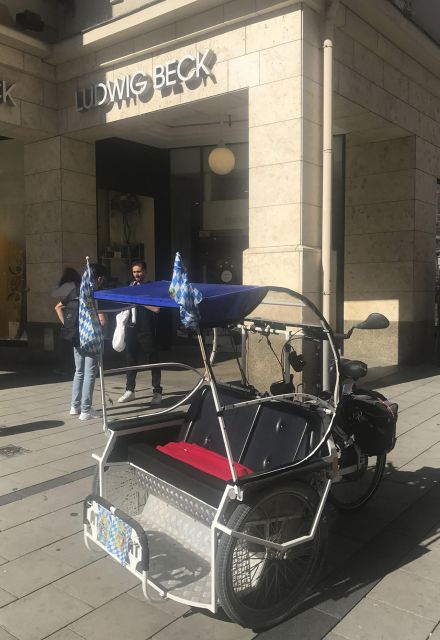
I would book it if you want a private, story-led way to see Marienplatz, the Residenz area, Odeonsplatz, and then get a calmer reset in the English Garden, all in about an hour. The guide experience, especially the safe-driving and history knowledge described with Pablo Catalan, is a big reason this works.
Skip it or rethink it if you are extremely sensitive to weather comfort, because the vehicle is simple and rain can be an issue. Also skip it if accessibility needs a wheelchair-friendly setup.
If your goal is to leave Munich with a clearer mental map and better understanding of how the city connects past to present, this is the kind of tour that delivers. You get the big names, you get the context, and you do not burn the day walking.
FAQ
Where do I meet for the rickshaw tour?
You meet at Burgstraße 2, in front of the Garibaldi wine shop, just a few steps from Marienplatz.
How long is the tour?
The experience is listed as 1 hour, with stop time distributed across Marienplatz, Max-Joseph-Platz, Munich Residenz, Odeonsplatz, and the English Garden.
How many people can ride in one rickshaw?
Currently, each rickshaw allows a maximum of two adults and one child.
What languages are available for the live guide?
The live guide can conduct the tour in Spanish, German, and English.
Is the tour wheelchair accessible?
No. It is not suitable for wheelchair users.
Can I cancel or book without paying today?
You get free cancellation up to 24 hours in advance for a full refund, and there is also a reserve now & pay later option.
Fresh on the arrivals board for Munich

Munich Tours & Activities, compared.
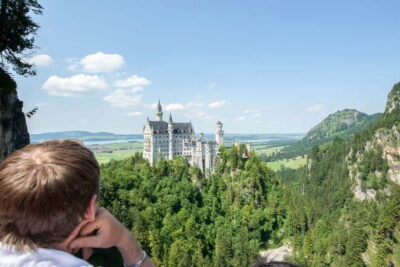
Neuschwanstein & Linderhof Castle Full-Day Trip
Read our review →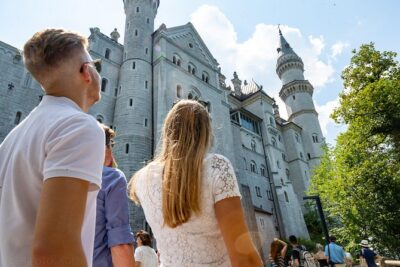
Neuschwanstein & Linderhof Castle-Fairytale Day Tour from Munich
Read our review →
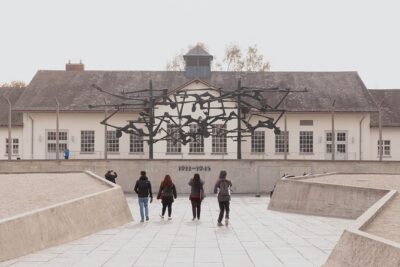
Dachau Concentration Camp Memorial Site Tour from Munich by Train
Read our review →
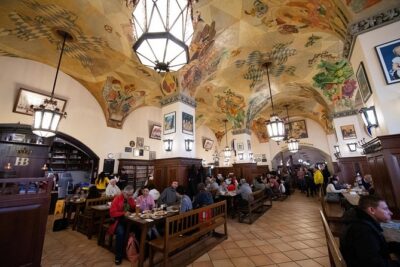
Munich Hop-On Hop-Off Tour: 1-Day or 2-Day Ticket
Read our review →
Browse the lists this tour appears in