
Reviewed · HAMBURG TOURS & ACTIVITIES
Elbe Philharmonic Hall, HafenCity and Speicherstadt tour
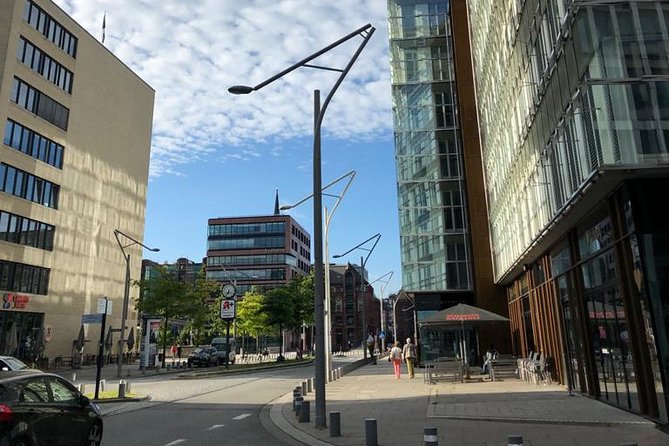
Hamburg turns into a storybook along the waterfront. This tour strings together HafenCity, the UNESCO Speicherstadt, and the Elbphilharmonie area in one smooth 2-hour loop. You get a local guide who helps you read what you’re seeing, from today’s megaproject to the port life that built the city.
Two things I especially like: the small-group size (max 15), which makes it easier to ask questions, and the fact that so many of the stops are ticket-free on the day, so your money goes into the guidance, not admissions. The main consideration is that a few highlights along the way have separate entry fees if you want to go inside (and the experience does require good weather).
In This Review
- Key points at a glance
- Two Hamburgs in one walk: HafenCity meets UNESCO Speicherstadt
- Meeting at Überseequartier, then walking into HafenCity
- HafenCity: Europe-scale planning and the meaning of the waterfront
- Kibbelstegbrücke: the storm-surge reality check
- Magdeburger Hafen and Maritime Museum area views
- Grasbrookpark: a small pause between big projects
- Sandtorhafen Traditionsschiffhafen: where the old port spirit still shows
- Speicherstadt: walking into the world’s largest warehouse complex
- Fleetschlösschen: from industrial use to a café and pub
- Spicy’s Gewuerzmuseum and the power of small museums
- WASSERSCHLOSS Speicherstadt: an iconic warehouse-era landmark
- Elbphilharmonie: the modern landmark sitting on an old port shell
- Kehrwieder and the feeling of islands that aren’t islands anymore
- Überseebrücke and the port promenade vibe at the end
- Price and value: what $28.92 buys in 2 hours
- Practical tips to make the 4:00 pm walk work for you
- Who should book this HafenCity and Speicherstadt tour
- Should you book? My honest take
- FAQ
- What is the duration of the Elbe Philharmonic Hall, HafenCity and Speicherstadt tour?
- Where does the tour meet?
- Where does the tour end?
- What is the group size limit?
- Is the tour ticket mobile?
- Are admission tickets included for all stops?
- Does the tour run in any weather?
Key points at a glance
- Max 15 travelers means you get a more personal, conversational pace
- Easy meetup at Überseequartier and an end near Baumwall Station
- UNESCO Speicherstadt plus key HafenCity waterfront viewpoints in one walk
- Mostly ticket-free stops, so you can enjoy the big sights without extra cost
- Elbphilharmonie viewing area fits right into the modern city planning story
- A local guide helps you connect architecture, ports, and daily life
Two Hamburgs in one walk: HafenCity meets UNESCO Speicherstadt
If you only know Hamburg as a pretty harbor city, this tour will upgrade that idea fast. You’ll see how Hamburg is split between a working port past and a future-looking new district, and you’ll notice the difference the moment you start moving. HafenCity feels clean, modern, and planned. Speicherstadt feels older, brick-heavy, and full of echoes from the trade and warehouse era.
What makes it work is that the walk is not just scenic. It’s structured around the big themes: urban development, maritime infrastructure, and how the city preserves what it can while still changing. That means when you pause for a view, you also understand what you’re looking at, why it’s there, and what Hamburg expected to happen next.
And yes, the contrast is dramatic in a good way. I like it because it gives you context, not just photos. You’ll leave with “oh, that’s why this area looks like this” clarity.
Also holding a platform in Hamburg
- Hamburg: Sex and Crime in St. Pauli Tour for Ages 18 +
★ 4.7 · 17,793 reviews - Hamburg: 1.5-Hour Harbor and Speicherstadt Day Cruise
★ 4.6 · 14,200 reviews - Hamburg: 90-Minute Evening Lights Harbor Cruise
★ 4.5 · 7,728 reviews
Meeting at Überseequartier, then walking into HafenCity
The tour starts at Überseequartier (address: Überseequartier, 20457 Hamburg), and the meetup point is designed to be straightforward. You’ll meet your guide near the station area, which matters because walking tours go off the rails when you’re hunting for a meeting spot.
The schedule also helps. The start time is listed as 4:00 pm, which often gives you nicer light for waterfront photos and architectural shots. The tour runs about 2 hours, so it’s long enough to connect the dots, but short enough that you won’t feel like you’ve joined a full-day mission.
Group size is capped at 15, which usually translates into a calmer experience. You can hear your guide, you’re not stuck behind a wall of people, and detours for small viewpoints make sense.
HafenCity: Europe-scale planning and the meaning of the waterfront
HafenCity is the modern anchor of the route, and you’ll spend real time looking at it rather than just passing by. In the wider sense, this is one of those “Hamburg is rebuilding itself” projects. It’s described as an enormous inner-city development area, once connected to the free port, now designed for residents, hotels, offices, and daily visitors.
During your time in HafenCity, you’ll get a feel for how a waterfront district functions as both a home and a business machine. The tour’s focus at this stage is what HafenCity represents in practice: a planned neighborhood built from port land, with predicted everyday foot traffic once it’s complete.
You’ll also catch key details that make the area understandable on the ground:
- Scale cues, like the way new buildings line up with older harbor geometry
- Movement cues, like how bridges and quays shape walking paths
- Institution cues, where universities and public spaces signal long-term city use
This is especially helpful if you’re the type of traveler who doesn’t just want to see architecture, but wants to understand the logic behind it.
Kibbelstegbrücke: the storm-surge reality check
A quick stop at Kibbelstegbrücke (ticket free) is more than a bridge photo moment. It’s there because Hamburg’s waterfront is not just pretty. It has to be functional in extreme weather, including storm surges.
When you stand near it, your guide’s explanation can shift the way you see the rest of the waterfront. Instead of thinking only about aesthetics, you’re reminded that engineering decisions and flood protection shape what gets built and where.
It’s a short moment, but it adds weight to the tour.
Magdeburger Hafen and Maritime Museum area views
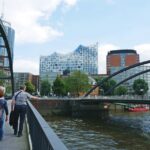
At Magdeburger Hafen, you’ll get a “modern HafenCity skyline” feel with a view direction that connects you to the maritime context. It’s described as typical fleets and modern buildings, and the view references the Maritime Museum area and Elbarkaden.
This stop is good for orientation. If you’ve never been to Hamburg, it helps you understand where you are relative to the harbor basins and key waterfront landmarks. It also makes the later jumps into Speicherstadt easier to follow because you can mentally map the river edges and docks.
Onward connections from Hamburg:


Grasbrookpark: a small pause between big projects
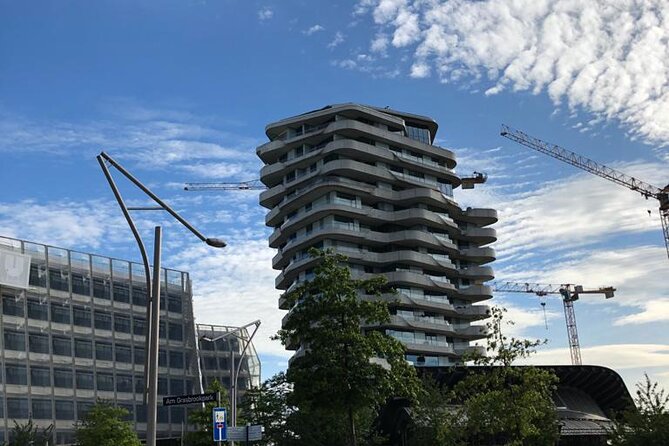
You’ll also pass through Grasbrookpark, a small neighborhood park in HafenCity near Grasbrookhafen, between Überseequartier and the Marco Polo terraces area. Parks like this might sound like a throw-in, but they actually do something important in a city-walk.
They give your eyes a break. They also show that HafenCity is not only about offices and warehouses. It’s meant to function as a lived-in part of the city, with green space in the middle of port-inspired design.
Sandtorhafen Traditionsschiffhafen: where the old port spirit still shows
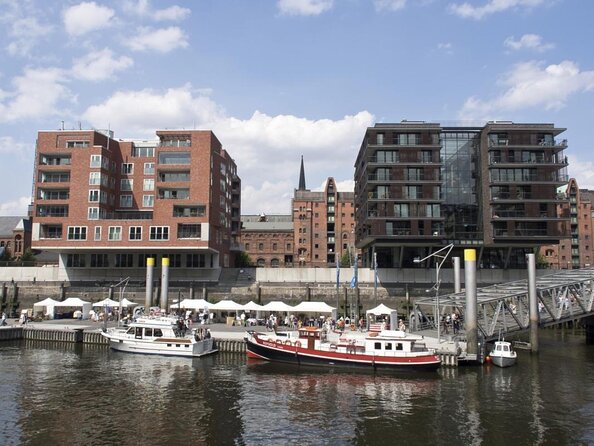
Then the tour shifts into something more directly maritime: the Sandtorhafen / Traditionsschiffhafen stop. This is the traditional shipping port in the heart of Hamburg, tied to the Hamburg Maritim Foundation.
What I like here is that you’re not just looking at docks. You’re in a place designed to preserve and share maritime heritage. The approach is practical: historic ships, port facilities, and work equipment are presented with restoration and public access in mind.
If you enjoy “working city” vibes, this part lands well. It’s also an important bridge between HafenCity’s forward-looking planning and Speicherstadt’s trade and storage past. The port is the common thread, even when the buildings change.
You’ll also hear how quays and access structures matter. The Sandtorkai, Hamburg’s oldest quay wall, had major restoration effort in 2002, and the pontoon system is reached via historic access bridges. Even if you only catch glimpses, your guide’s narration helps those details make sense.
Speicherstadt: walking into the world’s largest warehouse complex
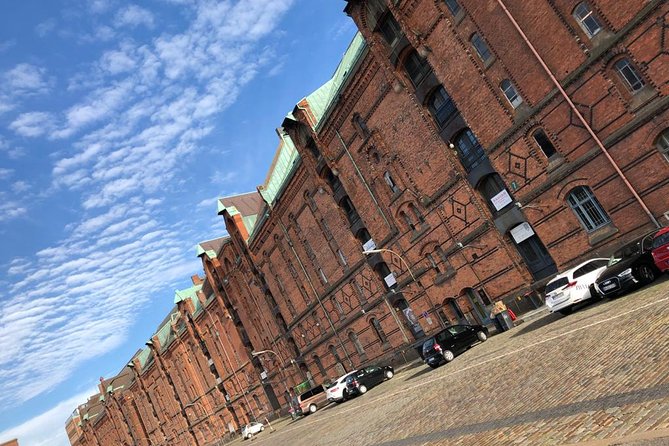
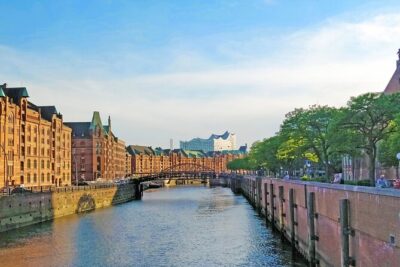
Speicherstadt is the heavyweight of the tour, and you’ll get about 45 minutes here. It’s described as Hamburg’s world-class warehouse district, the world’s largest historic warehouse complex, and it’s on the UNESCO World Heritage List (with the neighboring Kontorhaus district).
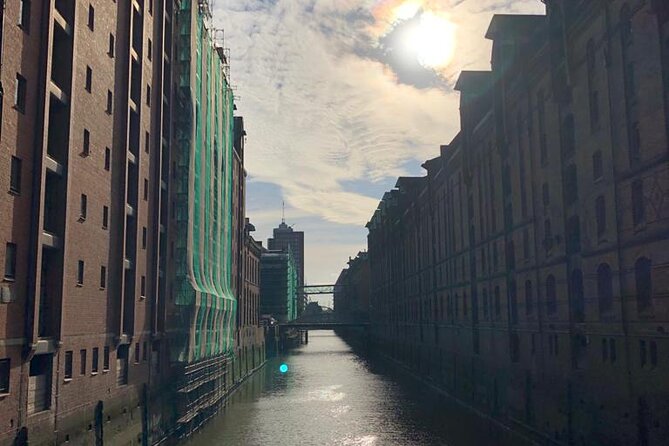
This is the moment where the tour stops being just “modern versus old” and becomes “trade system versus city form.” Speicherstadt is packed with brick architecture, canals, and that warehouse logic where goods were moved, stored, and managed. The UNESCO designation is not just a label. It’s a signal that this place is worth preserving because the structure and layout represent a significant part of European industrial and port history.
Fleetschlösschen: from industrial use to a café and pub
In the Speicherstadt area, you may also pass Fleetschlösschen. It’s described as part of the ensemble and located near Brooktorkai / St.-Annen-Brücke. The building is listed and has been part of the UNESCO Speicherstadt area since July 2015.
What’s interesting is the “former toilet building” detail. Today it’s a café and pub in a former coffee hatch. This matters because it shows how the district survives by adapting. Instead of freezing the warehouses in time, the city finds new uses for old structures.
Spicy’s Gewuerzmuseum and the power of small museums
Another stop area includes Spicy’s Gewuerzmuseum, a private museum founded in 1991. If you’re curious about everyday commodities behind the big trade story, a spice museum connects to the human side of warehouse culture.
It’s ticket not included on the tour, but the stop itself can still be worth it if you want to see how quirky cultural add-ons live inside historic port spaces.
WASSERSCHLOSS Speicherstadt: an iconic warehouse-era landmark
You’ll also see WASSERSCHLOSS Speicherstadt, a famous four-story building built between 1905 and 1907 as part of the third construction phase. It’s one of the oldest and most famous buildings in the complex.
Even if you do not enter, this is a good photo stop and a good listening stop. A structure like this carries “function” in its design, and your guide’s explanation helps you understand why the building’s form belongs in a warehouse district.
Elbphilharmonie: the modern landmark sitting on an old port shell
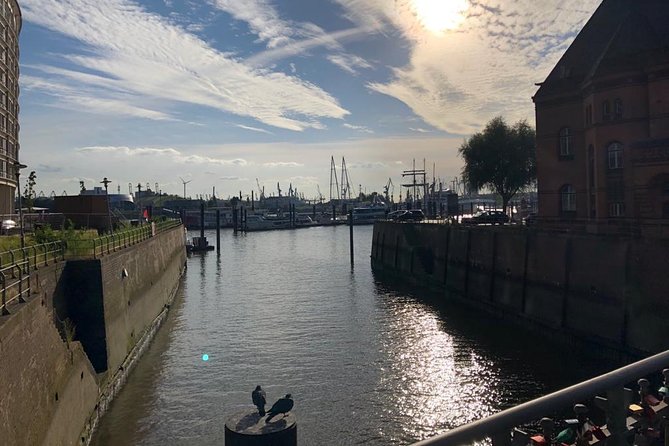
The tour includes the Elbphilharmonie stop, with viewing time (ticket not included). The big idea here is contrast again, but in a different way than HafenCity versus Speicherstadt.
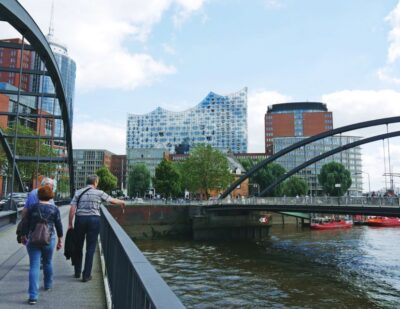
The Elbphilharmonie is built using the shell of an older building, Kaispeicher A (built in 1963). On top of that, a modern structure with a glass facade creates the Elphi look that many people recognize instantly, often compared to sails, waves, icebergs, or a quartz crystal.
This stop is a good payoff if you came to Hamburg because you want that signature image and you also want to know where it came from. The Elbphilharmonie sits right at the port edge near the Norderelbe and between Sandtorhafen and Grasbrookhafen basins. That placement is key, because it ties the landmark to the working harbor geography.
Kehrwieder and the feeling of islands that aren’t islands anymore
Before or after the big landmark moment, the tour hits Kehrwieder. This is one of the former islands in Hamburg’s city area, part of the HafenCity district. It’s also described as being in the power cut area of the Lower Elbe and related to older fortified city expansions.
This stop matters if you’re learning Hamburg’s layout. It gives you a sense that the city’s water boundaries have shifted over time, and that port land used to be broken into different island-like zones. You start to see why the city’s street patterns and waterways feel the way they do.
Überseebrücke and the port promenade vibe at the end
Near the end of your tour, you’ll reach Überseebrücke, a covered pedestrian bridge connected to Hamburg’s port infrastructure. It’s described as leading from the flood protection system of Vorsetzen to a pontoon area in Hamburg’s Niederhafen, near the former Jonashafen level.
This is a great final tone-setter. You’ve spent two hours learning about planning, warehouses, quays, and historic ships. Then you finish at a point that literally acts as a connector across water boundaries. It’s the kind of detail that makes Hamburg feel engineered and maritime at the same time.
The tour ends at Baumwall Station (20459 Hamburg), which is a nice practical finish point if you want to continue exploring by tram or walking onward.
Price and value: what $28.92 buys in 2 hours
At $28.92 per person for about 2 hours, this is the kind of tour that works when you think in terms of value, not just headline price.
Here’s the value logic:
- The group stays small (max 15), which usually improves the experience quality you feel in real life.
- A lot of major stops are ticket free on the day, including HafenCity and UNESCO Speicherstadt viewing time.
- Even when some sites show as ticket not included, you’re still seeing the architecture and learning context. You’re not paying extra just to stand in front of a landmark.
Also, the tour uses a mobile ticket, which is a small practical win. I like it because it cuts down on friction when you’re juggling transit, photos, and a schedule.
One more value angle: you’re paying for interpretation. HafenCity and Speicherstadt can look impressive without explanation, but they can feel confusing without context. A good guide helps you read the city like a map.
Practical tips to make the 4:00 pm walk work for you
This is a walking-focused experience, and it depends on good weather. You should plan for outdoor time even if some stops are short. Wear comfortable shoes and dress in layers, because Hamburg waterfront weather can change fast.
A few practical habits I recommend:
- Start the tour with a clear goal: are you here for architecture, port history, or city planning? Your guide can adjust explanations to match.
- Bring a phone or camera, but also pause long enough to listen. The best moments are often not the longest ones.
- If you’re interested in extra indoor stops like Miniatur Wunderland, Fleetschlösschen, Spicy’s Spice Museum, or WASSERSCHLOSS, plan for separate tickets since those are marked as not included.
Finally, if you want deeper answers, the small group size is your advantage. Ask where Hamburg is going next, not only what it used to be.
Who should book this HafenCity and Speicherstadt tour
This tour is a strong match if you:
- Like architecture with a purpose, not just pretty facades
- Want a first-time understanding of how Hamburg’s port shaped the city
- Enjoy small groups and a guide who can keep things moving without rushing
- Prefer a smart walk that hits Elbphilharmonie-area views plus UNESCO Speicherstadt in one go
It may not be the best fit if you want a long museum day or you’re hoping everything is included with no separate admissions. Some highlights around Speicherstadt are listed as ticket not included, so you might need to decide ahead of time if you want optional add-ons.
Should you book? My honest take
Yes, I think it’s a book-it kind of tour if you want a high-impact overview of Hamburg’s most famous waterfront zones in two hours. You get the payoff trio: HafenCity scale and planning, UNESCO Speicherstadt brick-and-water atmosphere, and the Elbphilharmonie landmark presence.
I’d book it especially if you enjoy learning as you walk and you like the comfort of a max 15-person group. Just go in knowing that a few stops are marked as ticket not included, so if you care about entering places like Miniatur Wunderland or the spice museum, you’ll need to plan extra time or tickets.
FAQ
What is the duration of the Elbe Philharmonic Hall, HafenCity and Speicherstadt tour?
The tour runs for about 2 hours.
Where does the tour meet?
You meet at Überseequartier, 20457 Hamburg, Germany, and the start time is listed as 4:00 pm.
Where does the tour end?
The tour ends at Baumwall Station, 20459 Hamburg, Germany, near the top station of Bäumenall.
What is the group size limit?
The experience is limited to a maximum of 15 travelers.
Is the tour ticket mobile?
Yes, it uses a mobile ticket.
Are admission tickets included for all stops?
Not all stops include admission. Some stops are ticket free, while others are marked as admission ticket not included (for example Miniatur Wunderland, Fleetschlösschen, Spicy’s Gewuerzmuseum, WASSERSCHLOSS, and the Elbphilharmonie).
Does the tour run in any weather?
It requires good weather. If it’s canceled due to poor weather, you’ll be offered a different date or a full refund.
Fresh on the arrivals board for Hamburg

Hamburg Tours & Activities, compared.
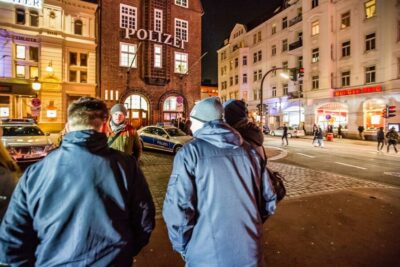
Sex and Crime in St. Pauli Tour for Ages 18 +
Read our review →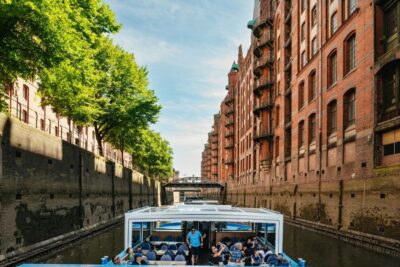
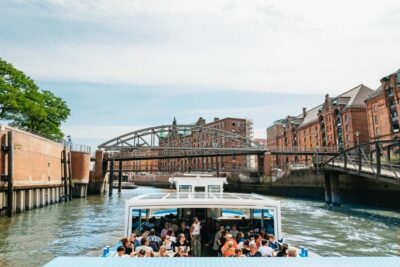
1.5-Hour Harbor and Speicherstadt Day Cruise
Read our review →

Reeperbahn Lust & Laster Tour for Adults Only
Read our review →Browse the lists this tour appears in